
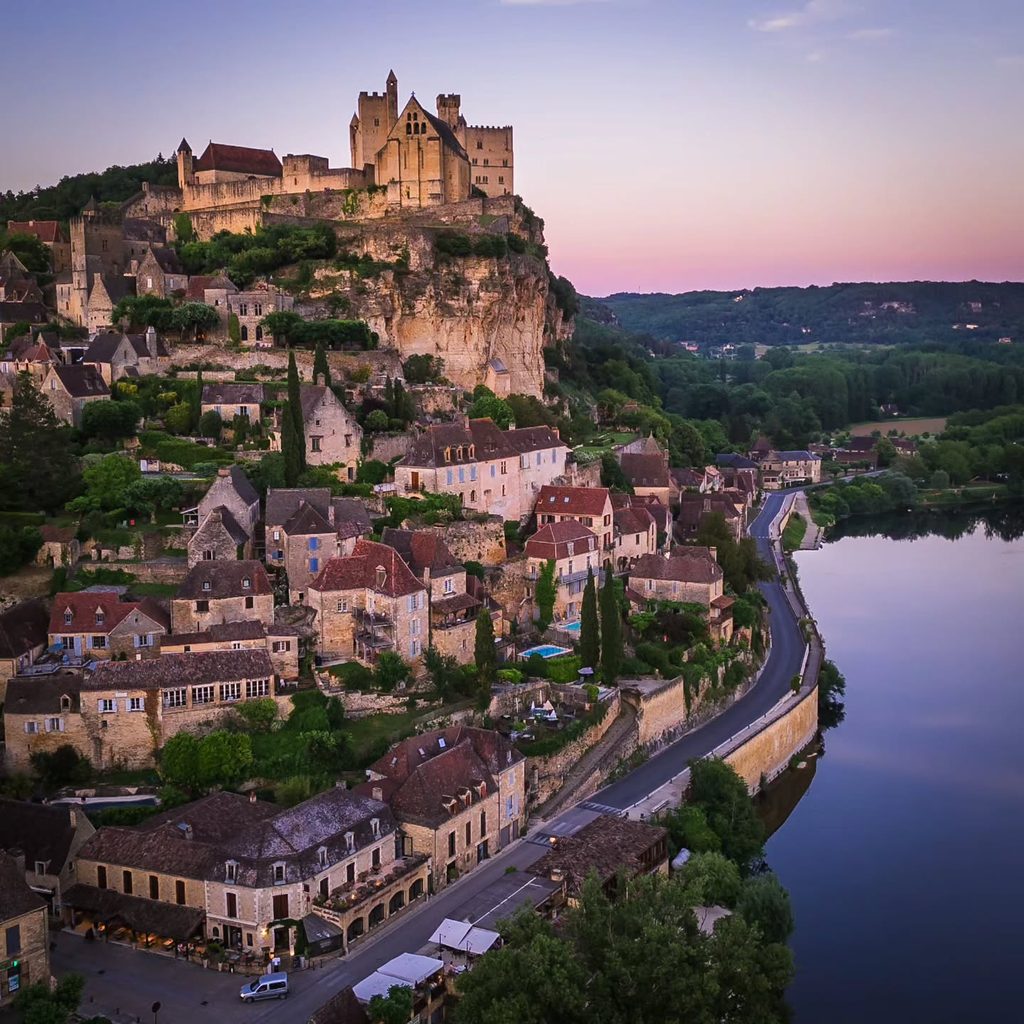
If you have ever seen a photo of Beynac et Cazenac, you’ve probably noticed the castle first. It sits high above the Dordogne, with the old village stretching down the hillside towards the river. But once you arrive, you’ll quickly realise there’s more to see than just Château de Beynac.
I love that you can experience the village from different angles. You can wander through its narrow medieval streets, look for old gates and stone houses, then head down to the river for a completely different view of the castle. If you have more time, you can take a traditional gabarre cruise or go canoeing on the Dordogne.
Beynac is small, so you don’t need a packed itinerary. I’d allow at least half a day for the castle, village and river. If you want to add a boat trip, a relaxed lunch or another nearby castle such as Castelnaud, give yourself a full day. Just bring comfortable shoes because some of the streets between the river and castle are quite steep.
Is Beynac et Cazenac Worth Visiting?
Yes, especially if you’re already exploring the Périgord Noir. Beynac is quite small, but the combination of Château de Beynac, the medieval village and the Dordogne makes it an easy place to spend a few enjoyable hours.
The castle is the main attraction, but I’d make time to walk through the old streets before heading down to the river. From there, you get a completely different view of the castle sitting above the village.
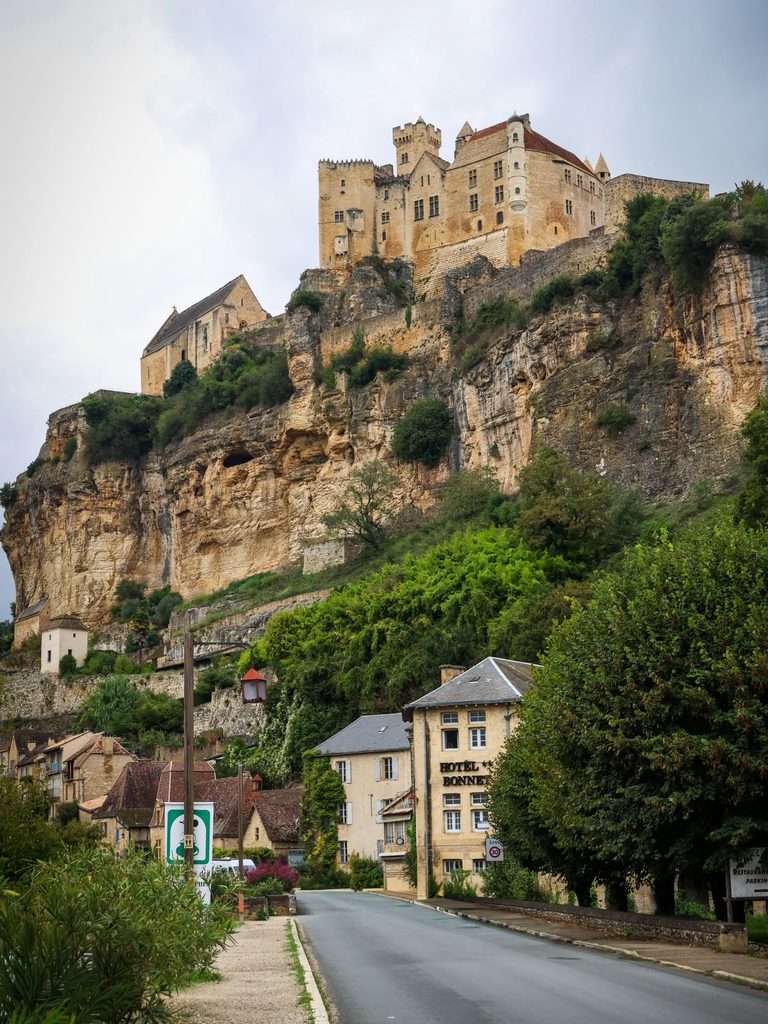
Just be prepared for some uphill walking. Beynac is built on a steep hillside, and some of the old streets are uneven. If you don’t want the climb from the river, there is parking closer to the château, which makes the visit easier.
I’d allow at least half a day for Beynac. If you want to add a gabarre cruise, canoe trip or lunch by the Dordogne, give yourself a full day.
Visit Château de Beynac
The obvious place to start is Château de Beynac. Sitting high above the Dordogne, the castle is hard to miss and has been watching over the valley for centuries. It dates back to the 12th century and was once home to the Lords of Beynac, with its location playing an important role during the medieval conflicts between France and England.
Walking through the castle gives you a better idea of what life here was like. You can see the guard room, State Room, justice room, music room, banquet hall and medieval kitchens, along with the seigneurial residence. There is also a room connected with Richard the Lionheart, which is interesting if you enjoy the history surrounding the castle.
The visit is self guided, with information available on your phone, so I’d make sure your phone is charged before you arrive. I’d allow around an hour to an hour and a half, especially if you want to take your time and stop for the views.
And don’t rush through the upper parts of the château. The views across the Dordogne Valley are one of my favourite reasons to visit. From up here, you can look down over the river and spot other castles and villages in the distance.
Walk Through the Medieval Village
Once you have seen the castle, don’t immediately head back to the car.
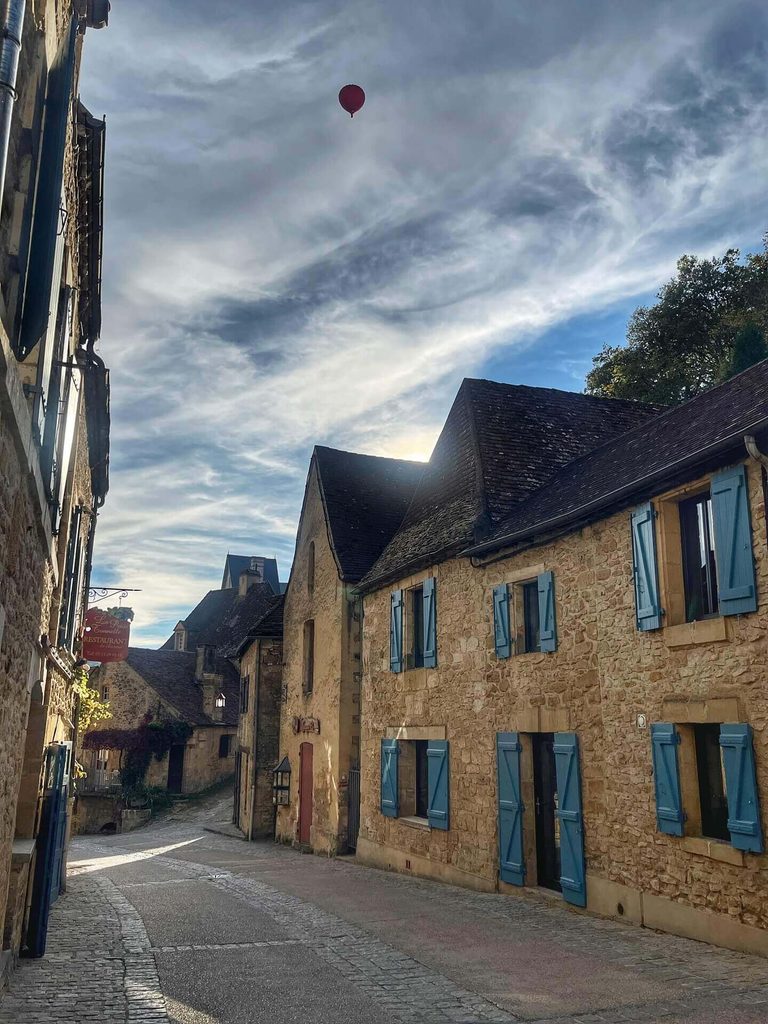
The old village is one of the best parts of Beynac. The streets are narrow, the houses are built from local stone and many of the roofs use traditional lauze stone tiles. You will also come across old doorways, small paved spaces, fortified entrances and steps leading between different levels.
The village is compact enough that you do not really need a map for a casual walk. I would simply wander downhill after visiting the castle and see where the streets take you.
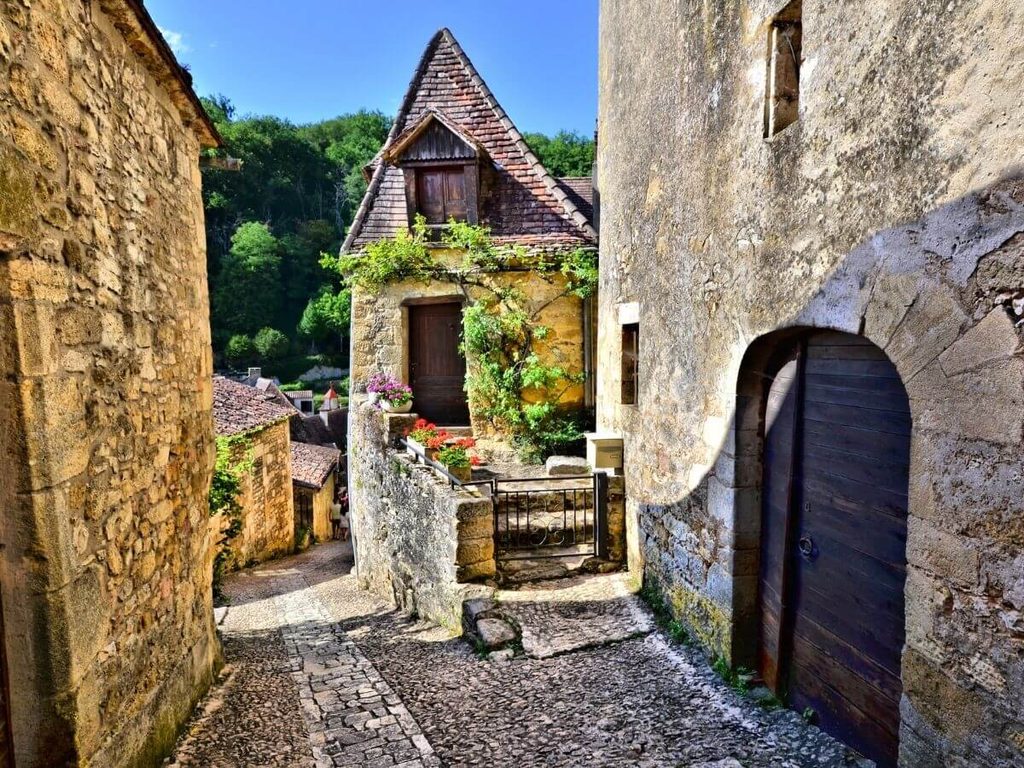
As you walk, look back occasionally. The castle appears between houses and rooftops from several angles, and these smaller views are often better for photographs than standing directly in front of the main entrance.
The village has also attracted artists over the years. The local commune mentions artists including Félix Vallotton, Paul Signac and Gustave Loiseau, as well as Paul Éluard, who spent time in Beynac.
Find the Porte Veuve
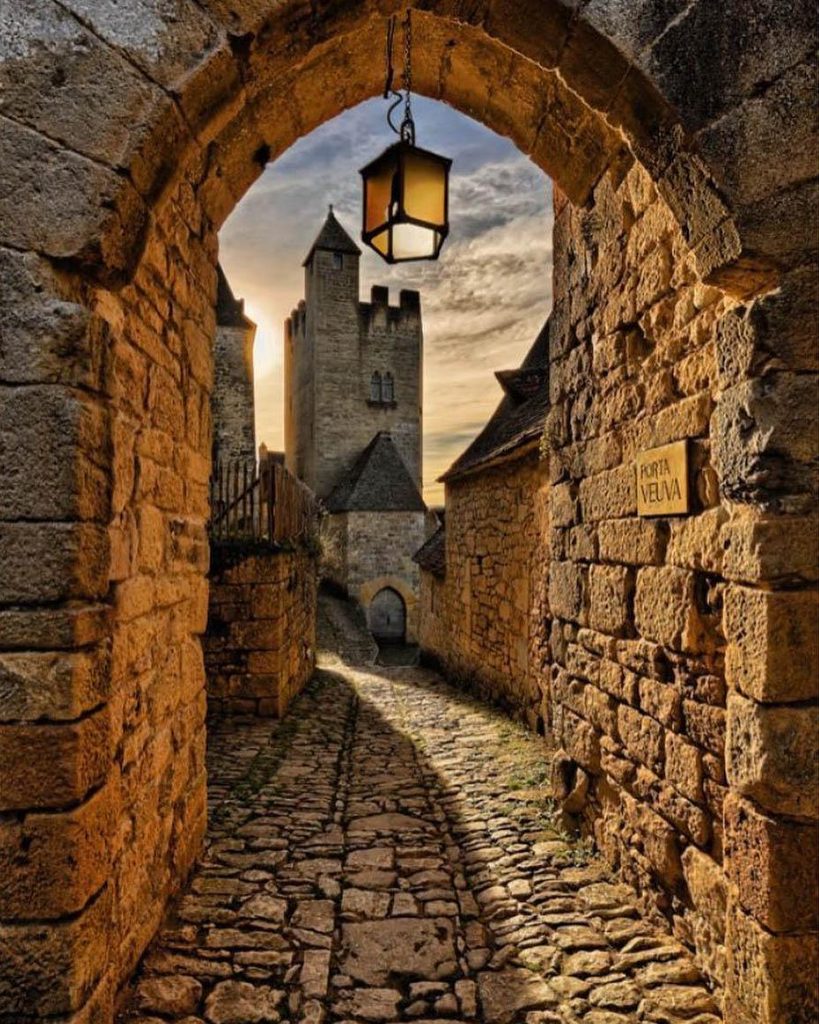
The Porte Veuve is easy to miss if you’re simply following the main streets, so keep an eye out as you walk through the old village. It was one of the former entrances to the fortified settlement and is described by the commune as the last gate separating the town from the château.
Its name is connected with the old guard post that disappeared at the end of the 17th century. It only takes a few minutes to stop here, but I think it’s worth doing. Once you know what you’re looking at, the old gates and walls make the village feel much more like a medieval settlement rather than simply a collection of pretty stone houses.
Look for the Tour du Couvent
The Tour du Couvent is another small historic detail that’s easy to walk past. The tower was originally a medieval knight’s tower and stands near the remains of a former Augustinian convent.
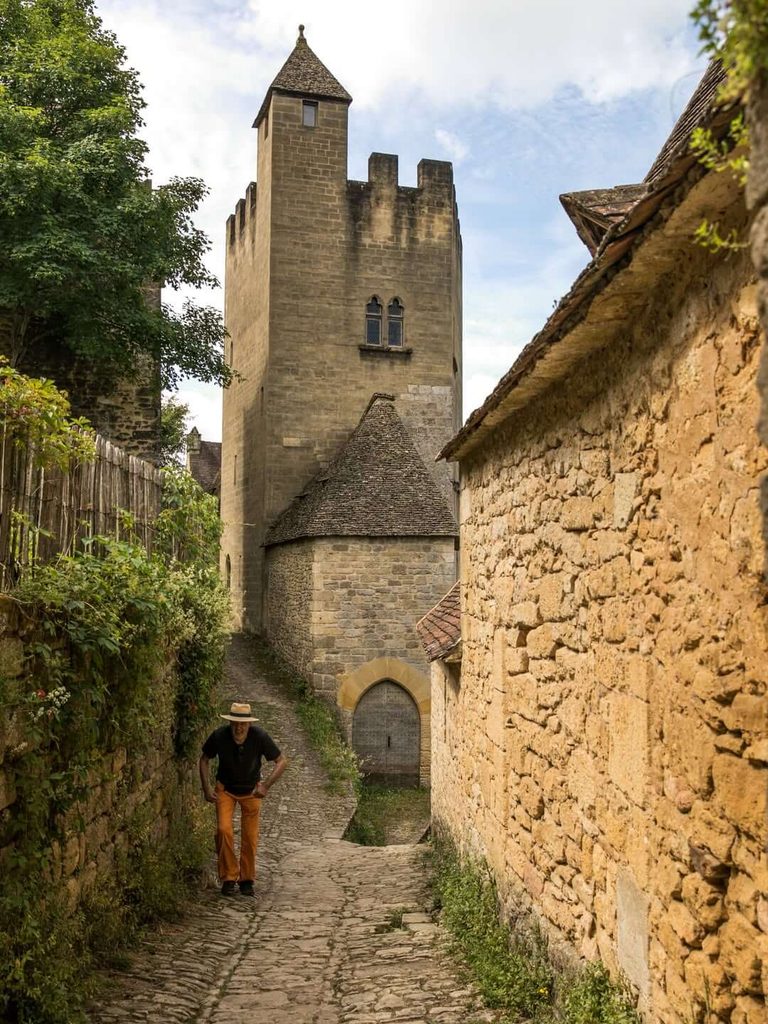
During the 13th century, some of the homes belonging to the castle’s vassals moved higher up the village, outside the original castle enclosure. You don’t need to spend long here, but it’s worth looking for while you’re exploring the old streets.
This is one of those places where I’d avoid rushing. Beynac is small, and taking your time is part of the experience.
Visit the Churches in Beynac and Cazenac
If you enjoy old architecture, there are two churches worth looking out for.
Notre Dame de l’Assomption in Beynac began as a seigneurial chapel before becoming the village church. It’s conveniently located within the old village, so you can easily include it while walking between the château and river.
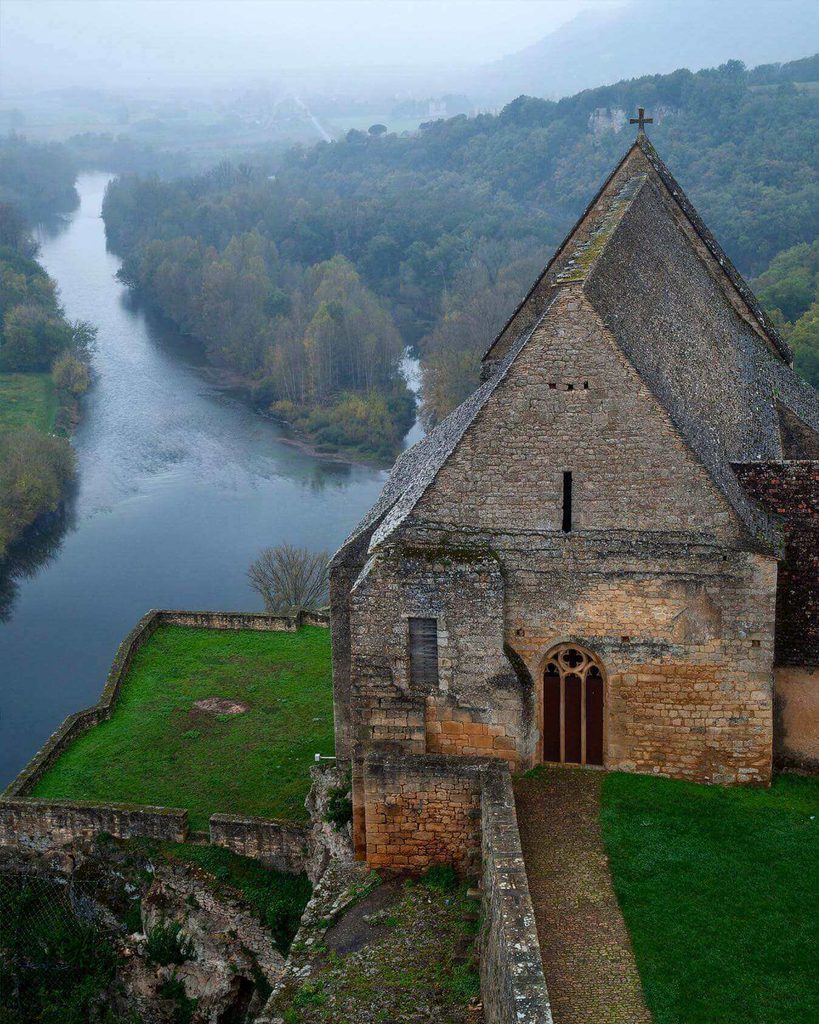
The church in Cazenac is further away from the busiest part of Beynac and offers another glimpse into the area’s religious history. I wouldn’t plan your whole visit around the churches, but they are worth a look if you have some extra time.
Walk Down to the Dordogne River
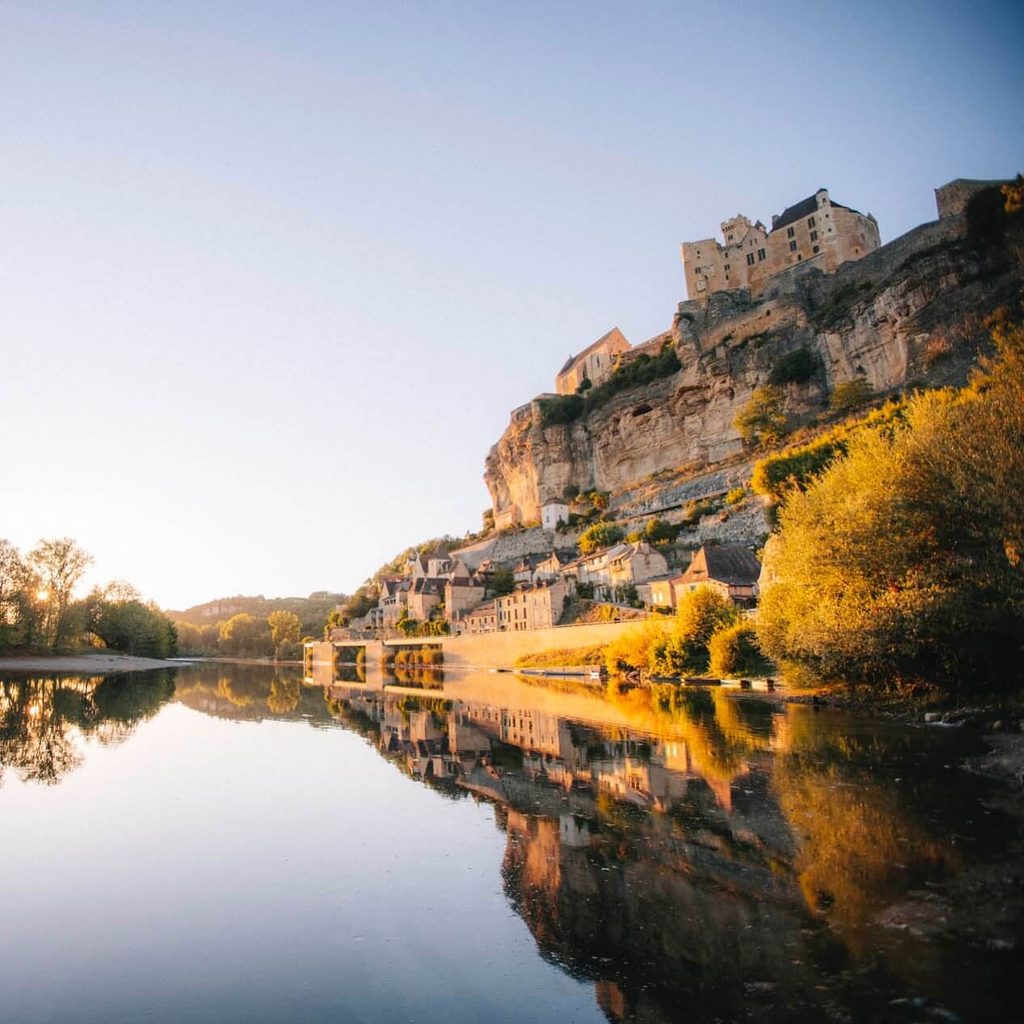
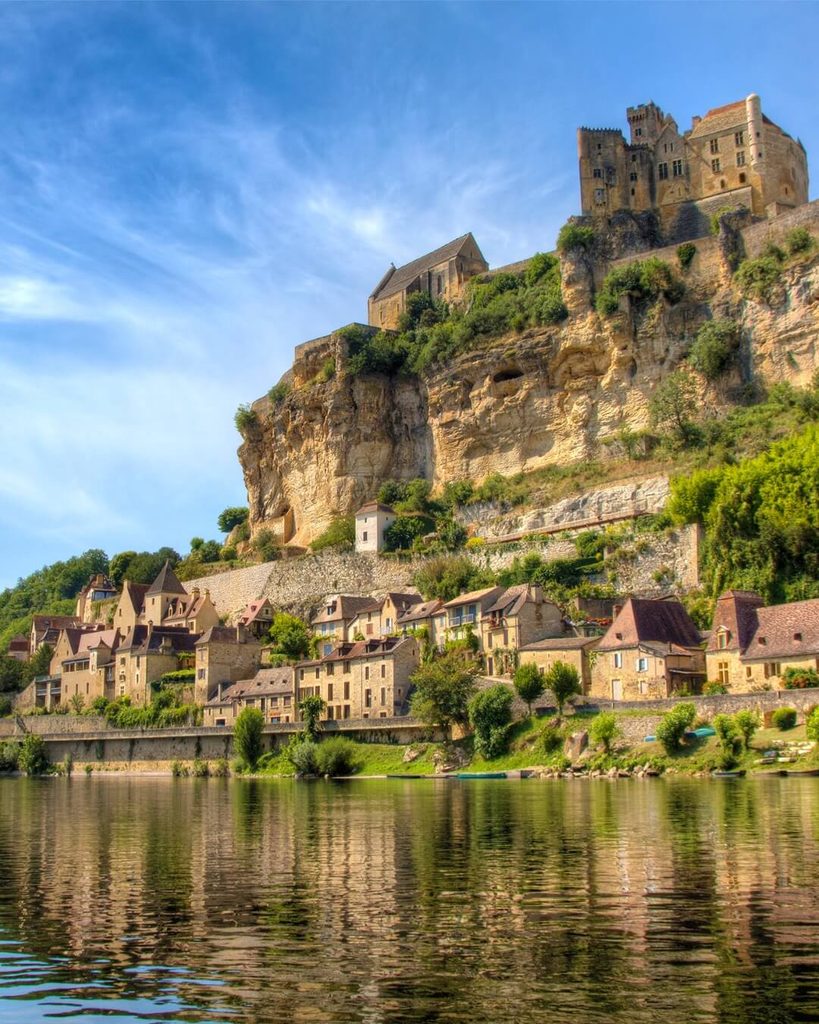
After exploring the higher parts of Beynac, make your way down towards the Dordogne. I really like this change of perspective because the castle looks completely different from the river level.
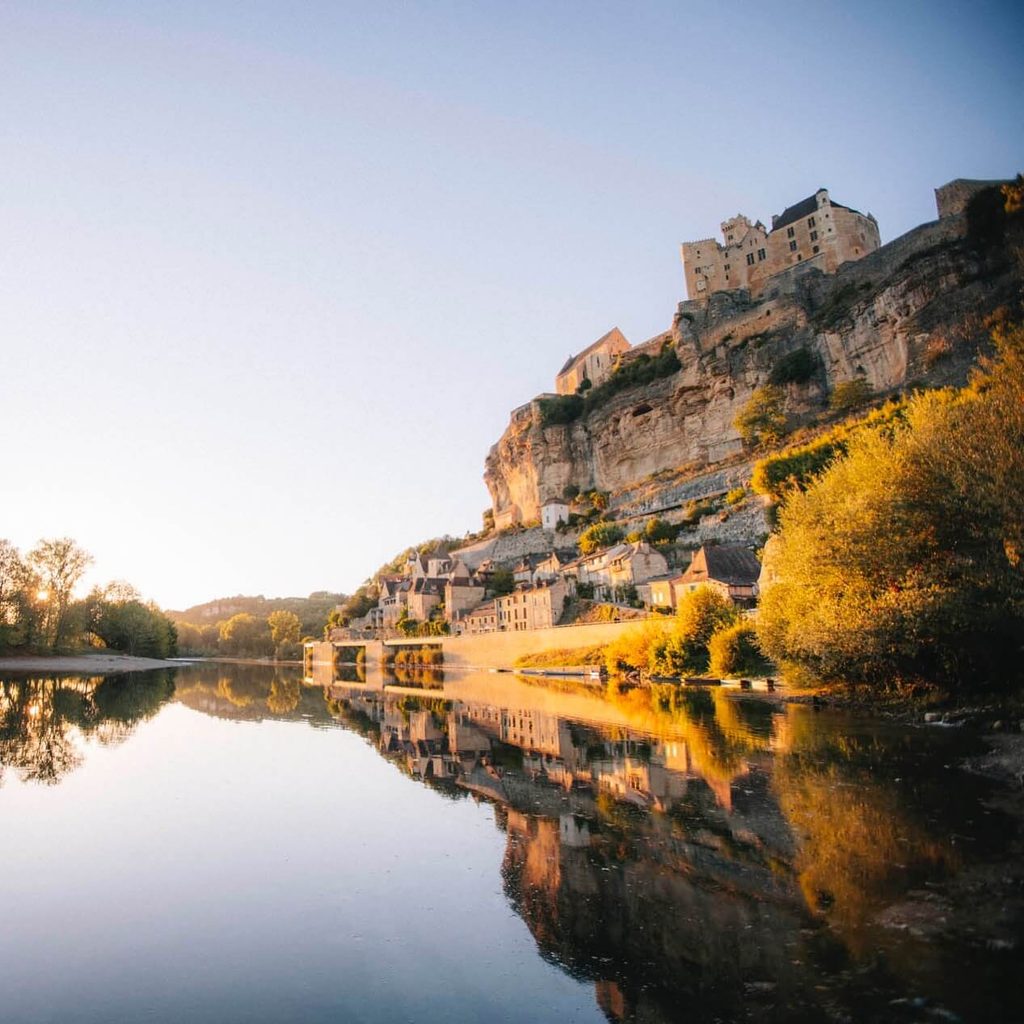
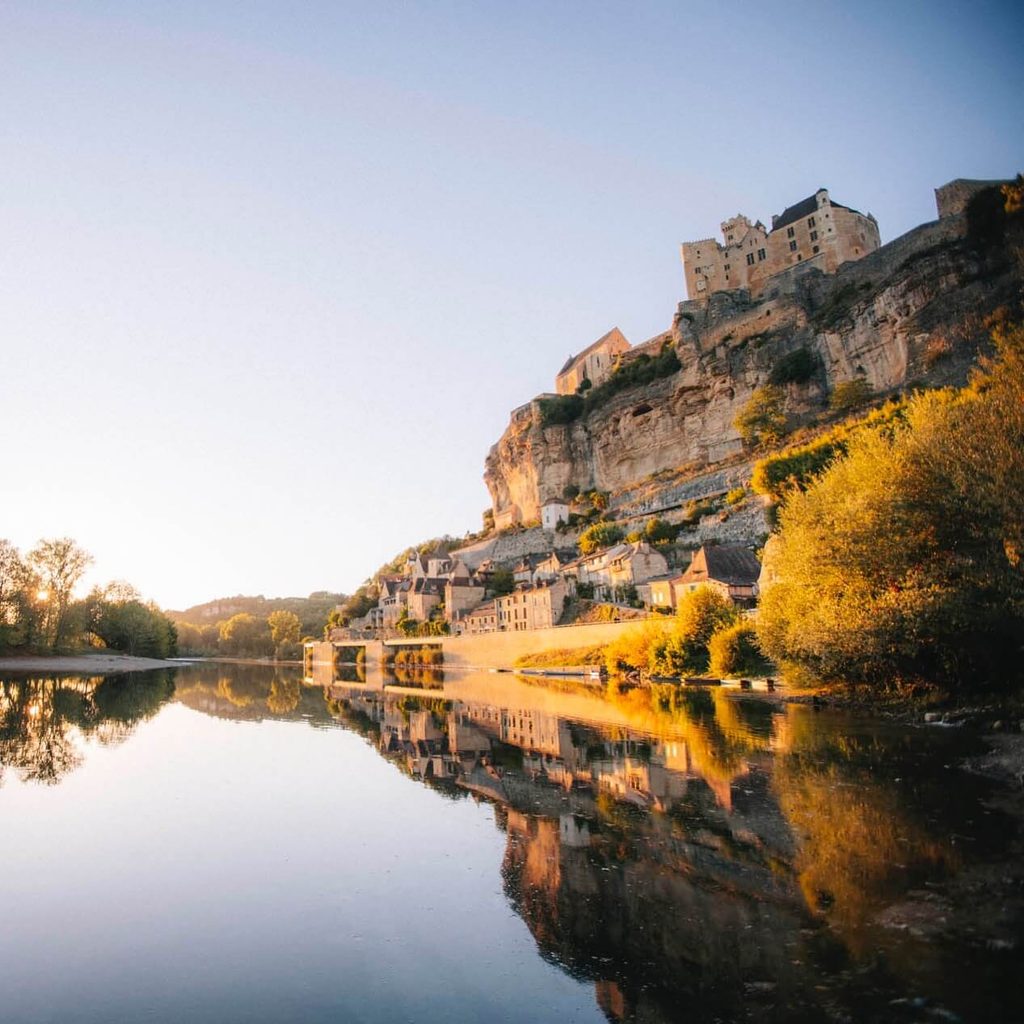
From above, you’re looking down over the river and valley. From the riverbank, you have to look up at the castle, which gives you a much better idea of how high it actually sits.
The riverfront is also one of my favourite places to take photos of Château de Beynac. If you arrive early, it can be pleasantly quiet, and it’s a good place to slow down before lunch or a boat trip.
The Dordogne has been an important route through this region for centuries. These days, you’re much more likely to see canoes and sightseeing boats than the old river cargo boats.
Take a Traditional Gabarre Ride
If you want to get out on the Dordogne without having to paddle, a traditional gabarre ride is a good choice. These flat bottomed boats are connected to the river’s old trading history, but today they carry visitors along the water instead.
The nice thing about a gabarre is that you can simply sit back and enjoy the views. From the river, you’ll see Beynac from below, along with other castles and villages along the valley.
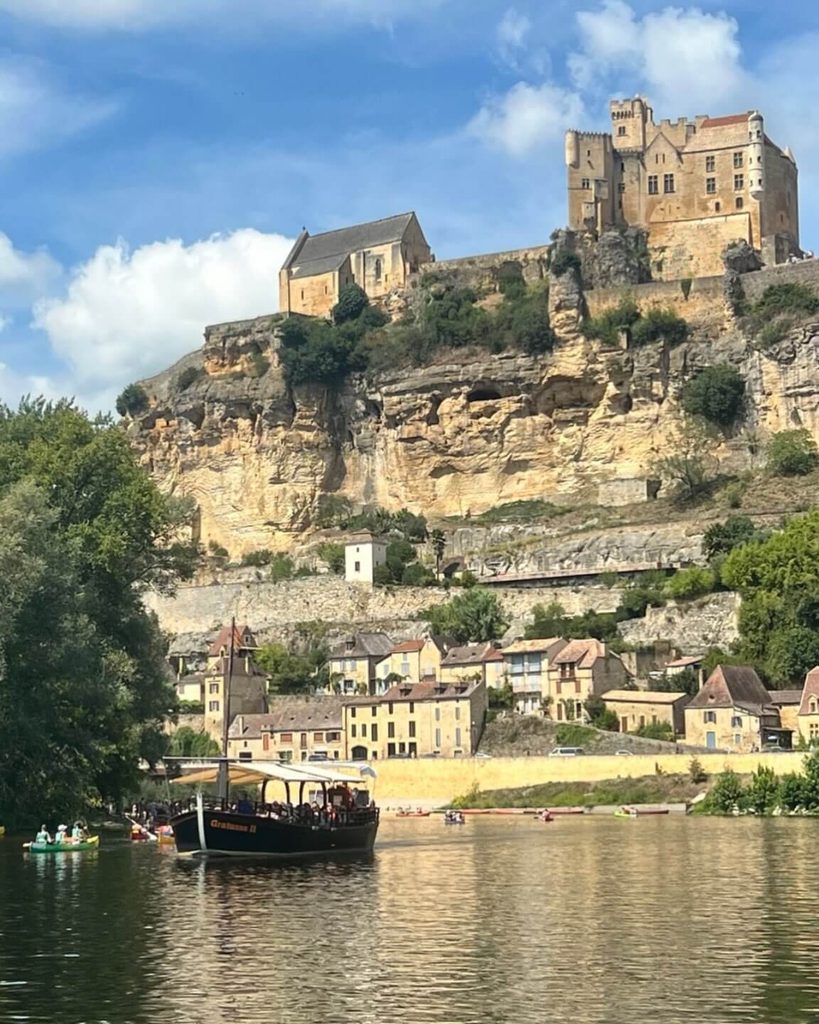
I’d recommend this if you’re travelling with children, don’t want a strenuous activity, or have already done enough walking for one day. It’s also a nice way to break up a morning of sightseeing.
Just check the departure times before you arrive. Gabarre trips are seasonal, and schedules can change, so I wouldn’t build your entire day around a particular sailing without checking the current timetable.
Go Canoeing on the Dordogne
If you want to spend more time on the river, renting a canoe is a fun way to see Beynac and the surrounding villages from a completely different angle. Instead of looking down at the Dordogne from the castle, you’ll be right on the water, with the cliffs, villages and castles rising above you.
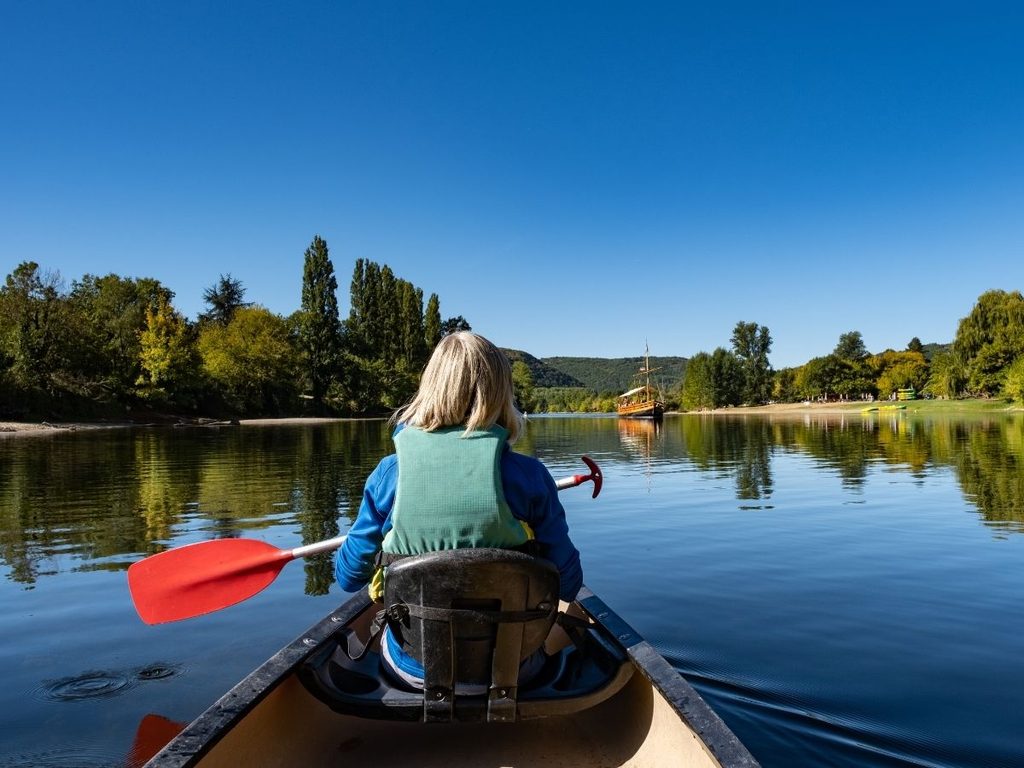
There are canoe routes around Beynac, Castelnaud, La Roque Gageac, Cénac, Montfort and Carsac. One route from Beynac towards Cénac and Domme covers about 12 kilometres by river and passes several villages along the way.
I’d choose this over a gabarre if you enjoy being outdoors and don’t mind doing some paddling. It also gives you more freedom to stop along the river and take your time. Just remember that a canoe trip takes considerably longer than a sightseeing cruise, so allow several hours rather than trying to squeeze it into a short visit.
See Beynac From a Hot Air Balloon
For a completely different view, you can take a hot air balloon over the Dordogne Valley. Flights give you a chance to see Beynac from above, along with places such as Castelnaud, Les Milandes and La Roque Gageac.

This is certainly more of a splurge than a normal sightseeing activity, and I wouldn’t say you need to do it to enjoy Beynac. But if you’re celebrating a special occasion, enjoy photography or simply like the idea of seeing the Dordogne from above, it could be worth considering.
Balloon flights depend heavily on the weather, so don’t plan your entire trip around a particular flight without some flexibility. If conditions aren’t right, flights may need to be postponed.
Visit the Archaeological Park
If you’re travelling with children, the archaeological park is worth adding to your list, particularly if everyone has had enough of castles by this point.
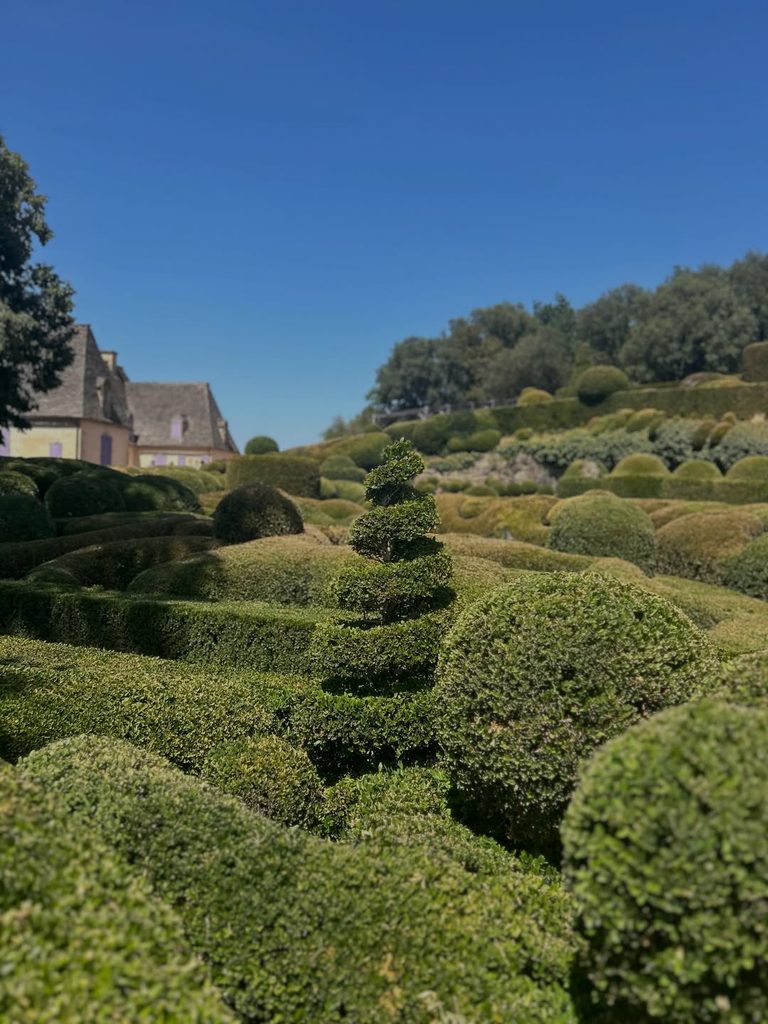
The park looks further back into the area’s history, with reconstructed features showing how people lived and worked in earlier periods. You can learn about activities such as farming, pottery, weaving and metalworking.
I like this change of pace after visiting Château de Beynac. It also gives children something more hands on to look at and helps put the area’s long history into perspective.
You won’t need to spend a huge part of the day here, so it can fit quite easily into a wider itinerary.
Browse the Local Shops
Beynac isn’t somewhere I’d come specifically to shop, but the small stores around the village are worth a look while you’re exploring.
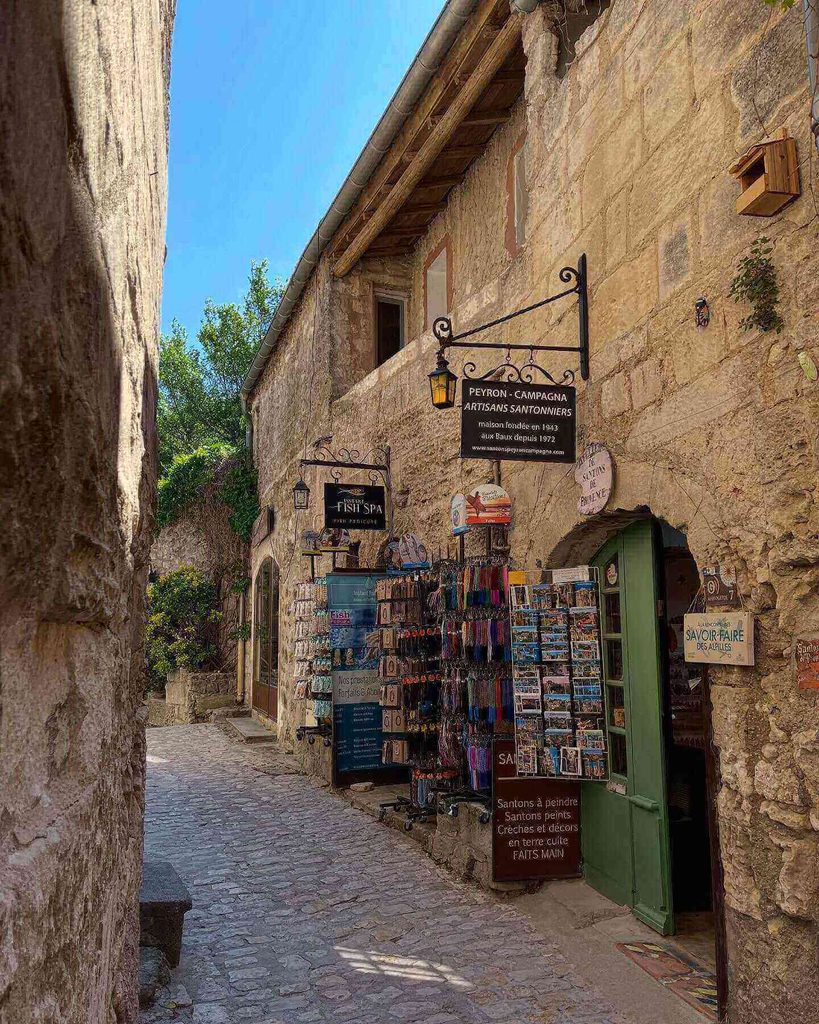
You’ll find regional food products, ceramics, artwork, crafts and the usual selection of small souvenirs. I’d be more tempted by something local that you can actually eat or use than a generic souvenir from a tourist shop.
This is also a good place to stop for an ice cream or coffee after walking down from the château. After all the uphill and downhill streets, you’ll probably appreciate the break.
Visit the Farmers’ Market
If you’re visiting during summer, check whether your trip lines up with the local farmers’ market. The 2026 Marché des Producteurs de Pays in Beynac et Cazenac is scheduled for Monday mornings from June 1 through September 14, from 8 AM to 1 PM, at Parking du Capeyrou.

It’s a good opportunity to pick up local produce and regional food rather than simply browsing souvenir stalls. If you’re staying in an apartment or holiday rental, you could easily buy a few things for later.
I’d also use the market as a reason to slow down. Have breakfast or coffee nearby, wander around the stalls and then head into the village afterwards. Just check the current market information before travelling, as these dates are seasonal.
Try Périgord Food
You don’t have to go far in the Dordogne before food becomes part of the trip. Around Beynac, you’ll find plenty of opportunities to try dishes associated with the Périgord, including duck, foie gras, confit de canard, walnuts and local cheeses.

If you’re stopping for lunch, I’d avoid trying to rush through a meal between attractions. A proper lunch is a good excuse to sit down for a while, especially after walking around the castle and steep village streets.
If you’re travelling by car or staying nearby, another option is to buy some local products and put together a simple picnic. Finding a quiet spot near the Dordogne, eating local food and watching the river go by can be just as enjoyable as sitting in a restaurant.
For me, this is another reason to allow a full day in Beynac if you have the time. You can actually enjoy the place instead of spending the whole visit watching the clock.
How to Spend a Full Day in Beynac
A full day gives you much more breathing room, and this is what I’d choose if you don’t want to feel rushed.
Start at Château de Beynac in the morning, then take your time walking through the village as you make your way down towards the river. Have lunch around the village or along the Dordogne.
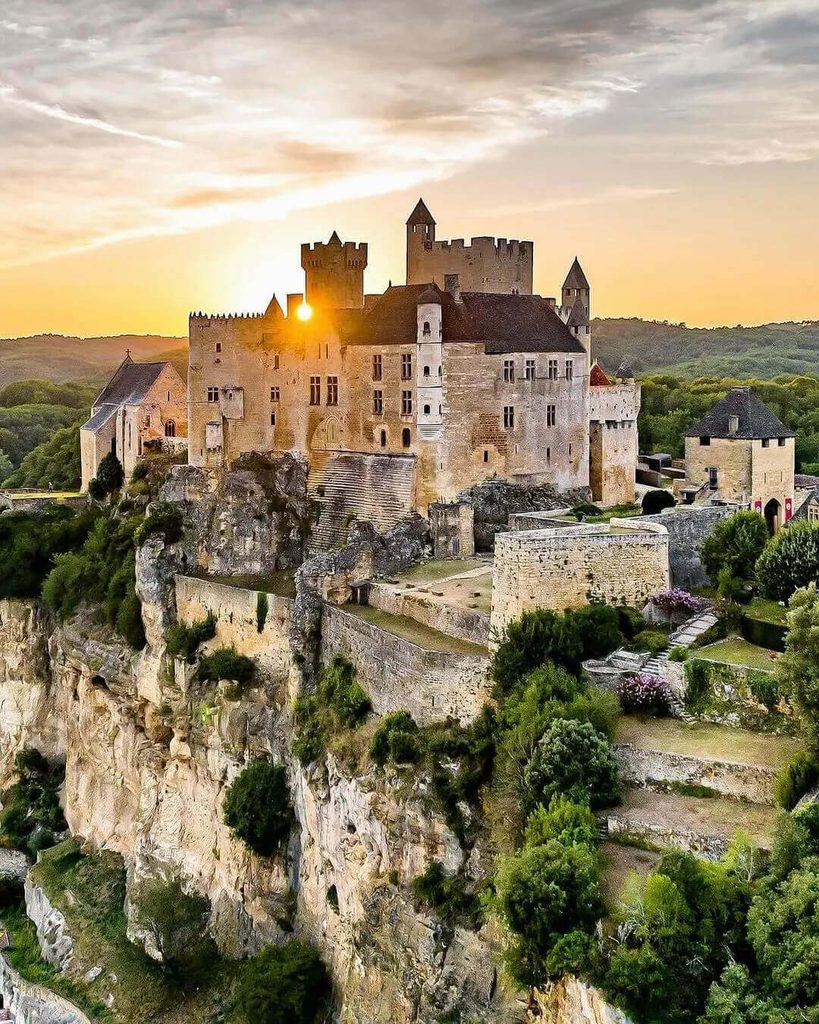
In the afternoon, you have a couple of options. A gabarre ride is the easier choice if you want to sit back and enjoy the scenery. If you’d rather be active, a canoe trip lets you spend much longer on the river.
If neither appeals to you, use the afternoon to visit somewhere nearby, such as Marqueyssac or Château de Castelnaud.
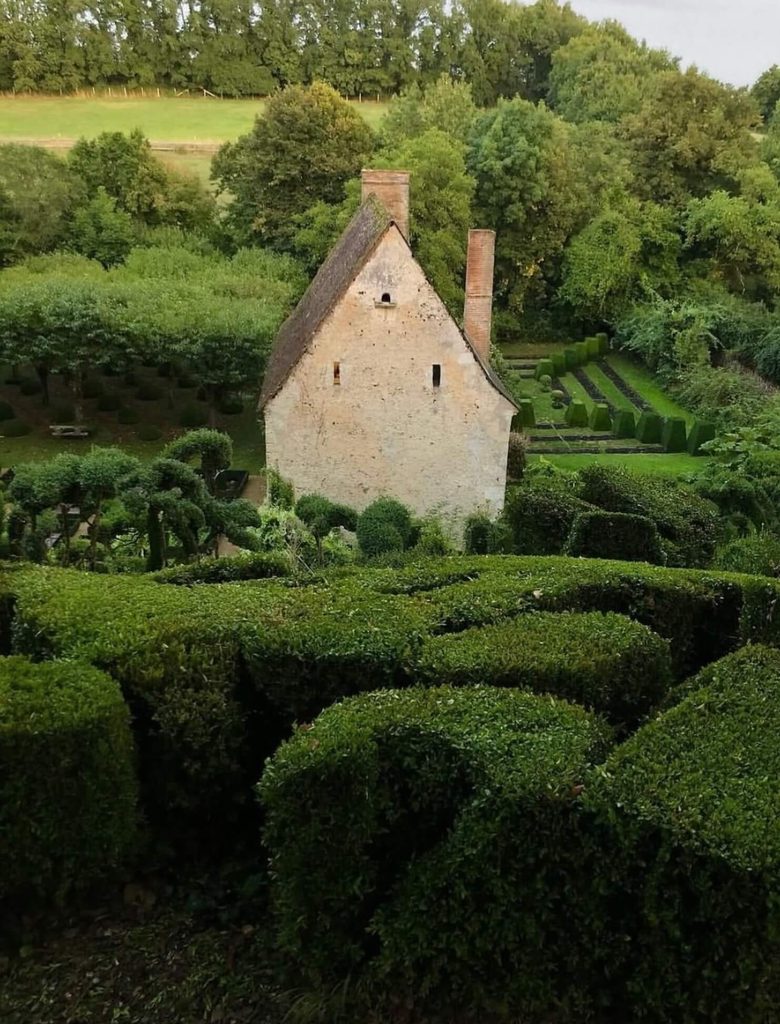
I’d resist the temptation to pack too much into the day. Places can look very close together on a map, but parking, walking and summer traffic can add up. Beynac is much nicer when you leave yourself some time to simply wander.
How Long Do You Need in Beynac et Cazenac?
How much time you need really depends on what you want to do. Beynac is small enough for a short visit, but there is a big difference between simply seeing the castle and actually having time to enjoy the village and river.
2 to 3 Hours
Two or three hours is enough if Beynac is one stop on a busy Dordogne itinerary.
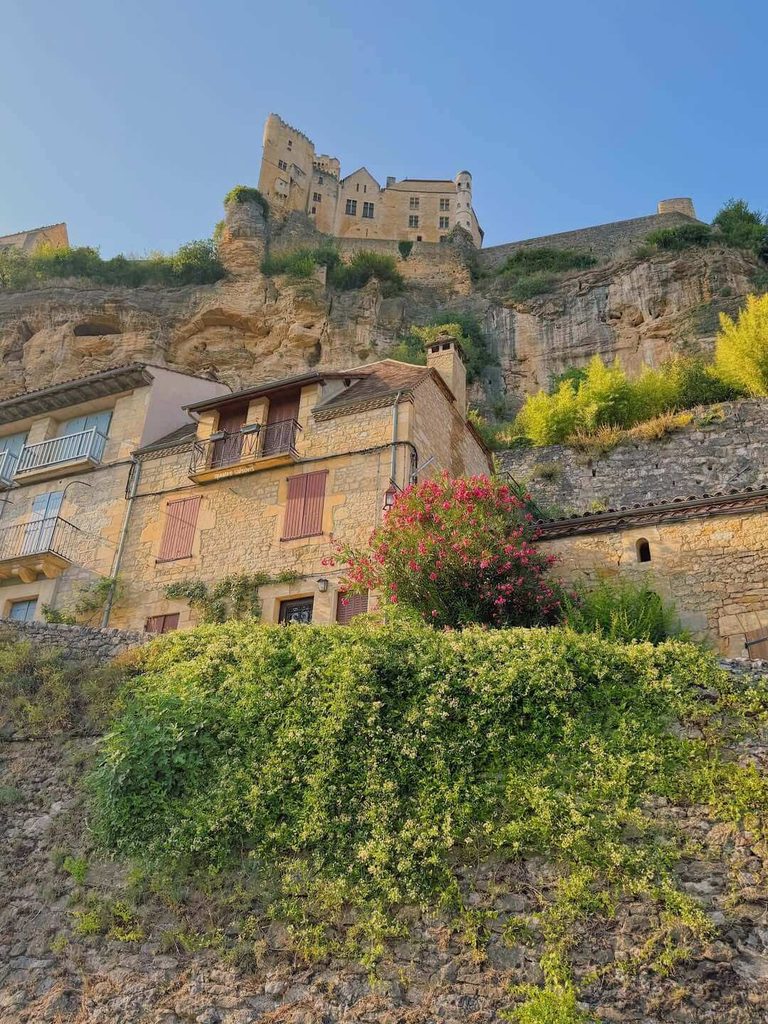
I’d use this time to visit Château de Beynac, then walk through the old village on your way back down towards the river. You can see the main sights and get a feel for the village without trying to fit in extra activities.
You probably won’t have much time for a long lunch or a boat trip, so I’d keep your plans fairly simple.
4 to 5 Hours
For a first visit, this is probably the amount of time I’d aim for.
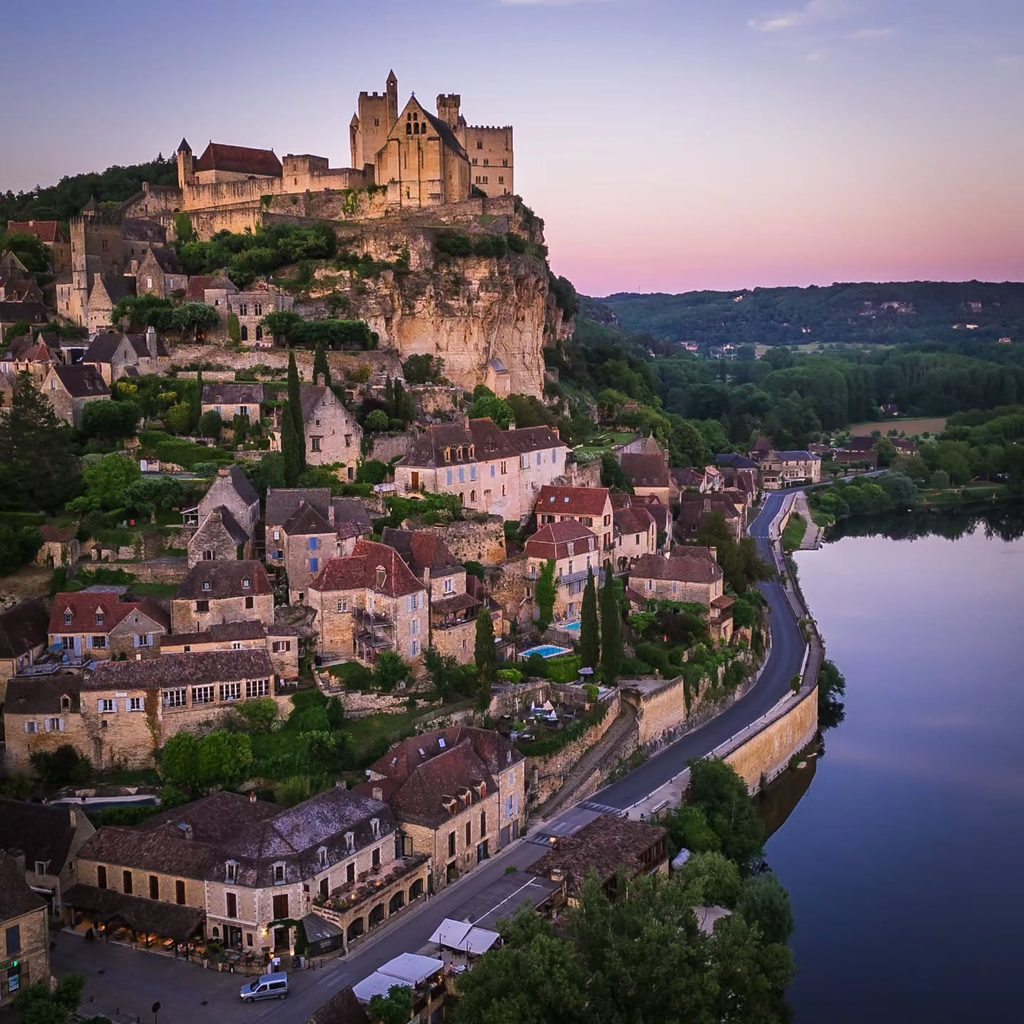
You can visit the château without rushing, wander through the medieval streets, stop to look at places such as the Porte Veuve and Tour du Couvent, and then walk down to the Dordogne.
There’s also enough time to sit down for lunch or a drink. I prefer this pace because you’re not constantly thinking about the next stop.
Full Day
A full day gives you the chance to see Beynac at a much more relaxed pace.
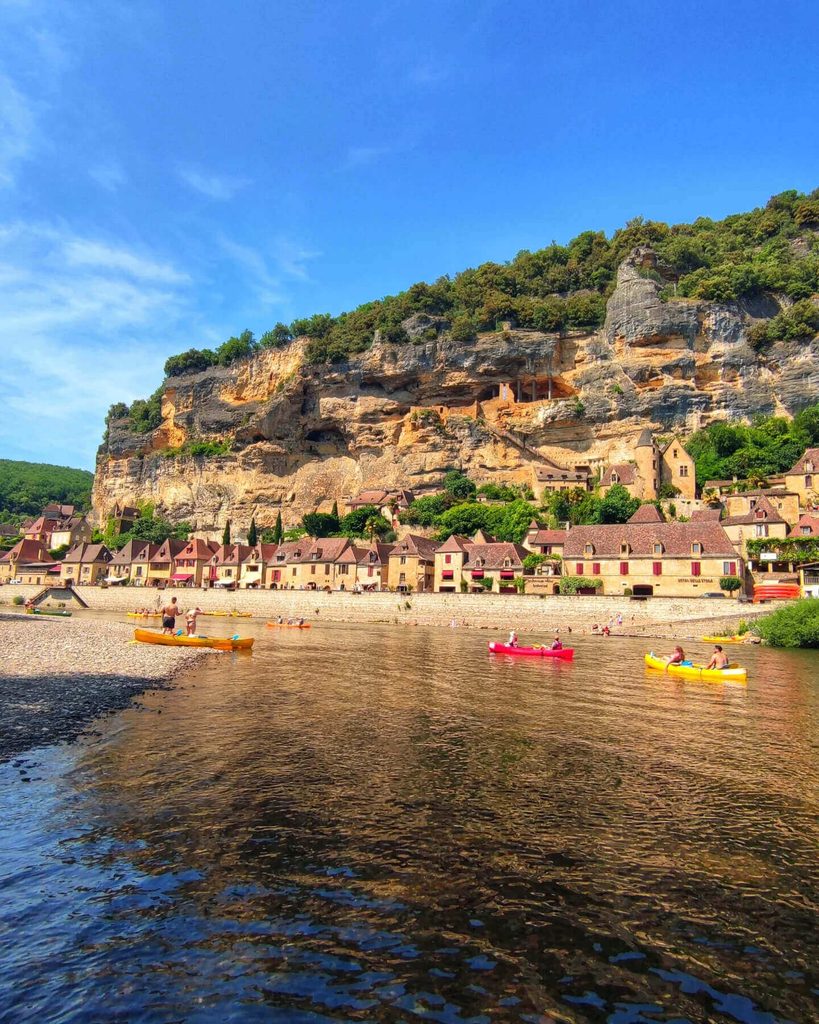
You could visit the castle in the morning, explore the village and have lunch near the river, then spend the afternoon on the Dordogne. A gabarre ride is the easy option, while canoeing is better if you want to be more active.
Alternatively, use the afternoon to visit one nearby attraction such as Castelnaud or Marqueyssac. I’d choose one rather than trying to squeeze several into the same day.
Where to Stay Near Beynac et Cazenac
Where you stay depends mostly on whether you want atmosphere, easy river access or a bigger choice of restaurants.
Stay in Beynac
Staying in the village is a good option if you like being able to walk around before breakfast or after most day visitors have left.
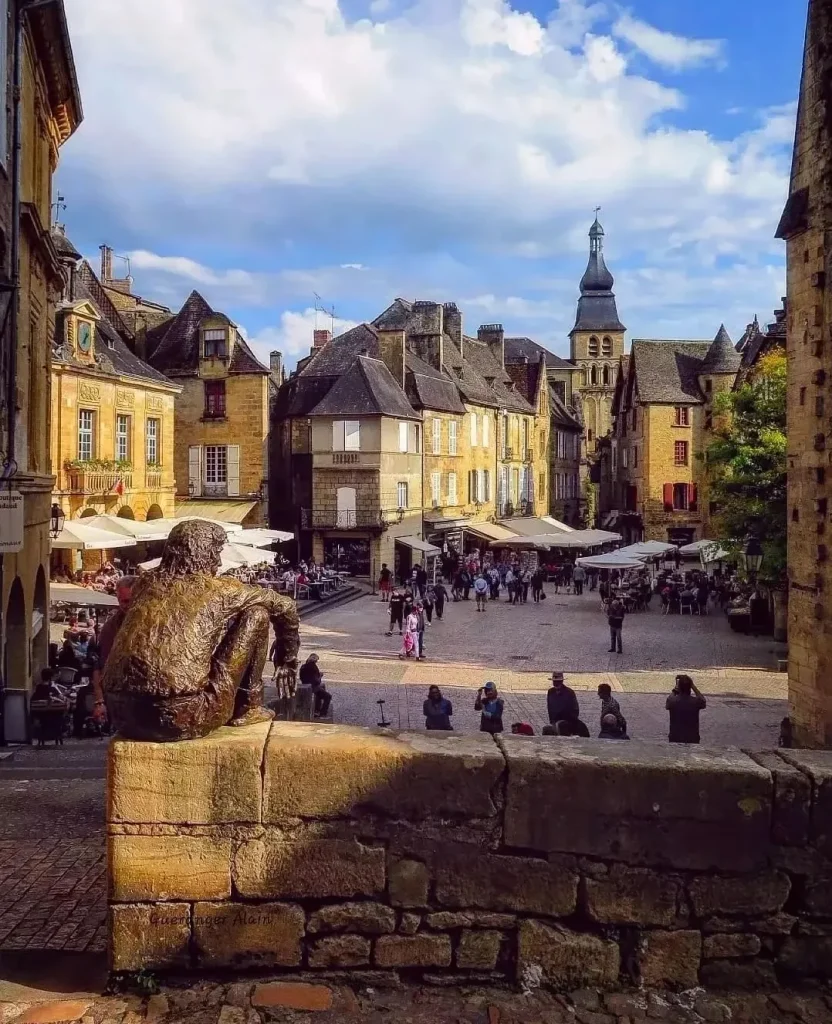
You won’t have to keep getting back in the car, and there’s something nice about seeing the castle and old streets when they’re quieter. Just remember that Beynac is built on a steep hillside, so accommodation higher up can involve some walking.
Stay Near the Dordogne
Staying somewhere along the river works well if you’re planning canoeing, boat trips or spending plenty of time outdoors.
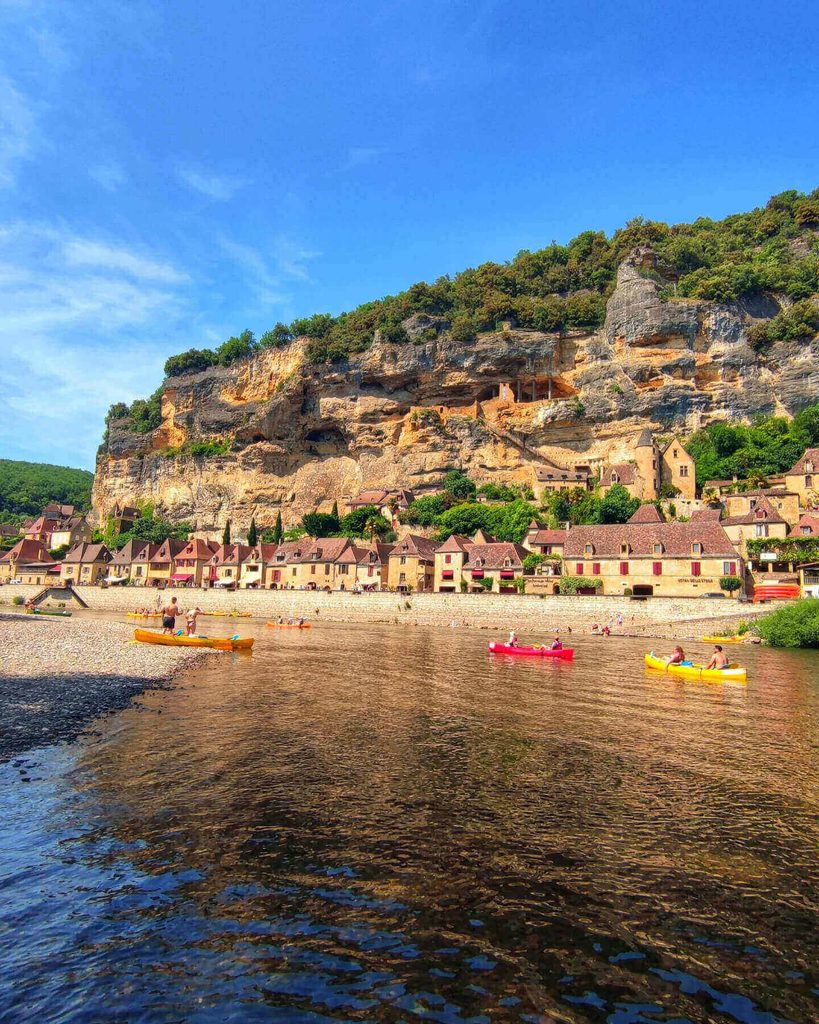
You’ll find countryside accommodation around the valley, and many places have pools, which can be a welcome bonus during the warmer months. This option is also useful if you’re travelling by car and want somewhere with easier parking.
Stay in Sarlat
Sarlat is worth considering if you prefer having more restaurants, accommodation choices and things to do in the evening.
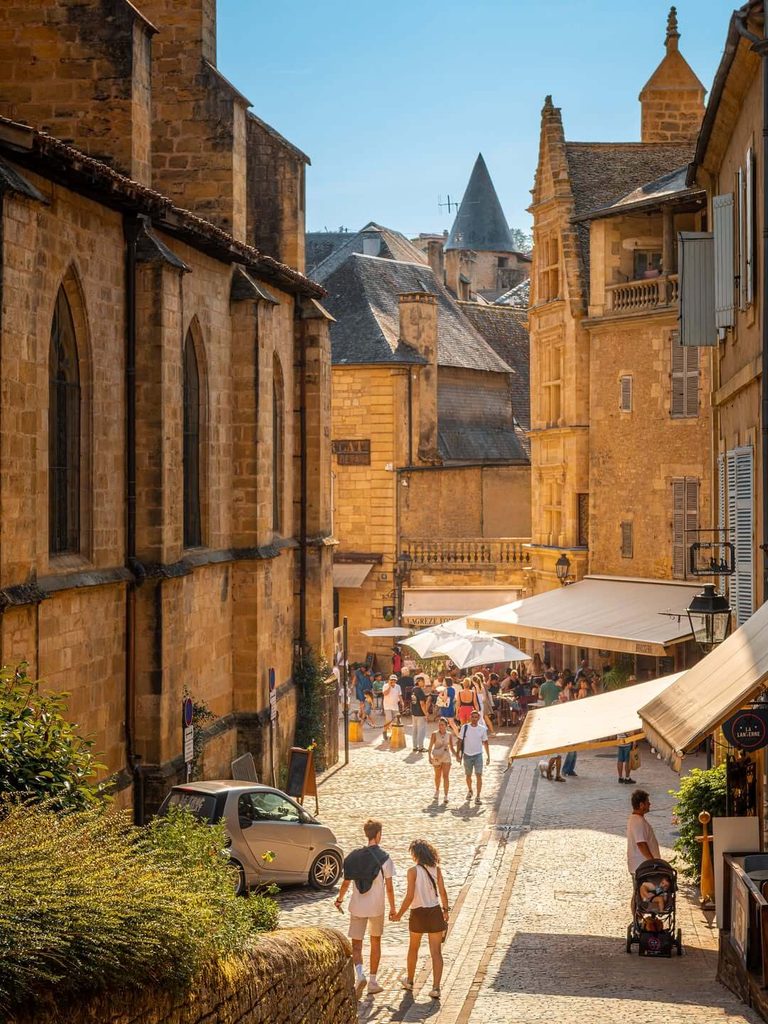
It also works well as a base for a wider Dordogne road trip. Château de Beynac is close enough to Sarlat to combine the two easily, so you can spend the morning exploring Beynac and return to Sarlat for dinner.
If you’re visiting for the first time, I’d choose Beynac for atmosphere and Sarlat for convenience. Both can work well, depending on the type of trip you’re planning.
Best Time to Visit Beynac et Cazenac
Spring
Spring is a good time to visit if you mainly want to walk around the village and explore the surrounding countryside. The temperatures are generally more comfortable than in the height of summer, and the landscape around the Dordogne is looking fresh.
It’s also a good period if you prefer quieter visits. Some seasonal attractions and river activities may have more limited schedules, though, so check before travelling.
Summer
Summer is when Beynac is at its busiest. You’ll have the longest opening hours and plenty of opportunities for gabarre rides, canoeing and other river activities.
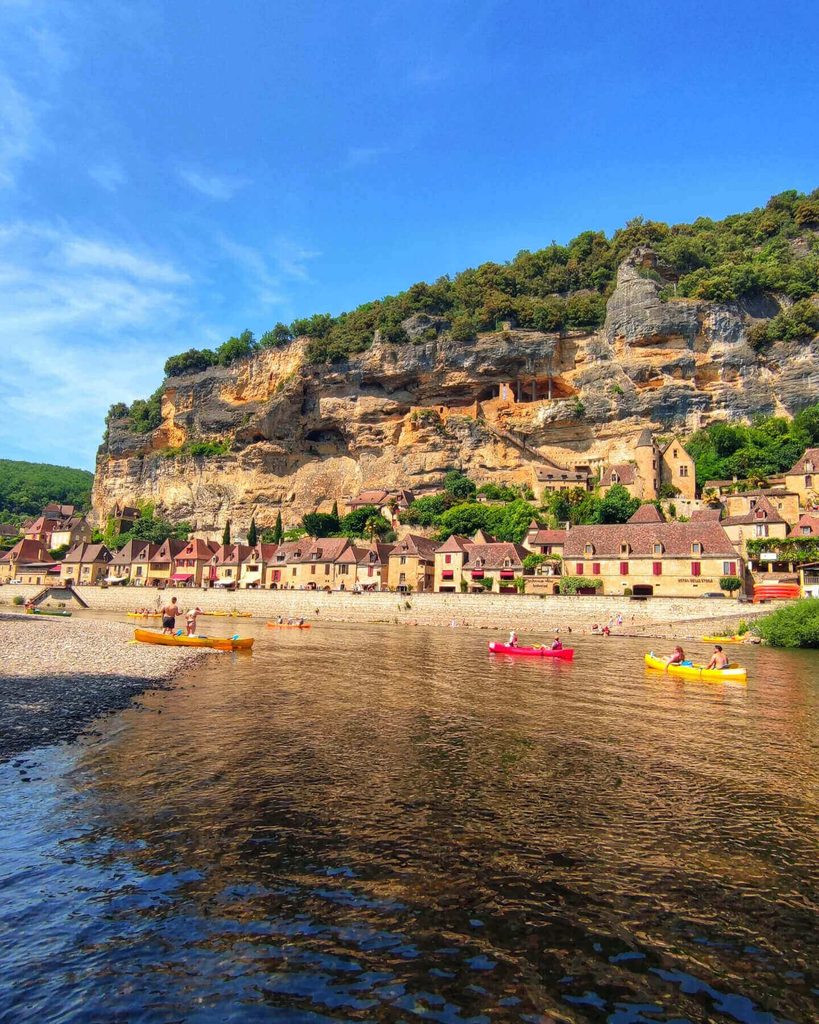
July and August can get crowded, particularly around the castle and riverfront. I’d arrive early if you want to walk around before the village fills up. An early start also makes the uphill walk to the château much more comfortable on a hot day.
Early Autumn
September is one of the times I’d seriously consider for a Dordogne trip. You can still get warm, sunny days, but the atmosphere is often a little calmer than in July and August.
It’s also a nice time for walking, sitting beside the river and taking your time over lunch without feeling that you need to rush through the day.
Winter
Winter is much quieter, which can be lovely if you enjoy historic villages without many visitors around. The trade off is that some attractions and businesses have reduced seasonal opening hours or may close altogether.
I’d check the opening times for the château, restaurants and any river activities you want to do before setting off.
Final Thoughts
Beynac et Cazenac is somewhere I’d slow down for.
The castle is the obvious reason to visit, and it deserves your time, but the village itself is what makes the stop feel complete. Walking through the old streets and then seeing the castle from beside the Dordogne gives you a much better sense of how the whole place fits together.
If you only have a few hours, keep it simple. Visit Château de Beynac, walk through the medieval village and spend some time by the river.
With a full day, add a gabarre or canoe trip and leave plenty of time for lunch. If you’re exploring the wider Dordogne, you can then add places such as Castelnaud, Marqueyssac, La Roque Gageac, Domme or Sarlat.
For me, that’s the best way to visit Beynac. Don’t treat it as somewhere you need to rush through just to see the castle. Give yourself enough time to walk around, stop for a drink, look back at the château from the river and enjoy the setting.