
Sainte Enimie is the kind of French village where I would happily slow down for a day rather than rush through with a camera and a checklist. It sits beside the Tarn River in the Gorges du Tarn, surrounded by steep limestone cliffs and a small medieval centre filled with stone houses, narrow lanes and old steps.
The village is easy to explore on foot, and I’d start by simply wandering through the old streets. Along the way, you can see the Burle spring, visit the church and explore the remains of the old Benedictine monastery. The story of Princess Énimie, which is closely tied to the village, also adds an interesting layer to the visit.
But there is plenty to do beyond the historic centre. You can hike to the Hermitage, canoe along the Tarn, swim in the river during warmer months, or drive to nearby Castelbouc and Saint Chély du Tarn. The surrounding Causses also offer walking trails and viewpoints over the gorge.
That mix is what I like about Sainte Enimie. You can spend the morning exploring a medieval village and the afternoon outdoors by the river. If you’re planning a visit, these are the best things to do in Sainte Enimie, along with the practical tips I’d want to know before going.
Best Things to Do
Walk Through the Medieval Streets of Sainte Enimie
The first thing I would do after arriving in Sainte Enimie is simply walk around. The old centre is small enough to explore without a strict route, and some of the nicest details are tucked away in the quieter lanes.
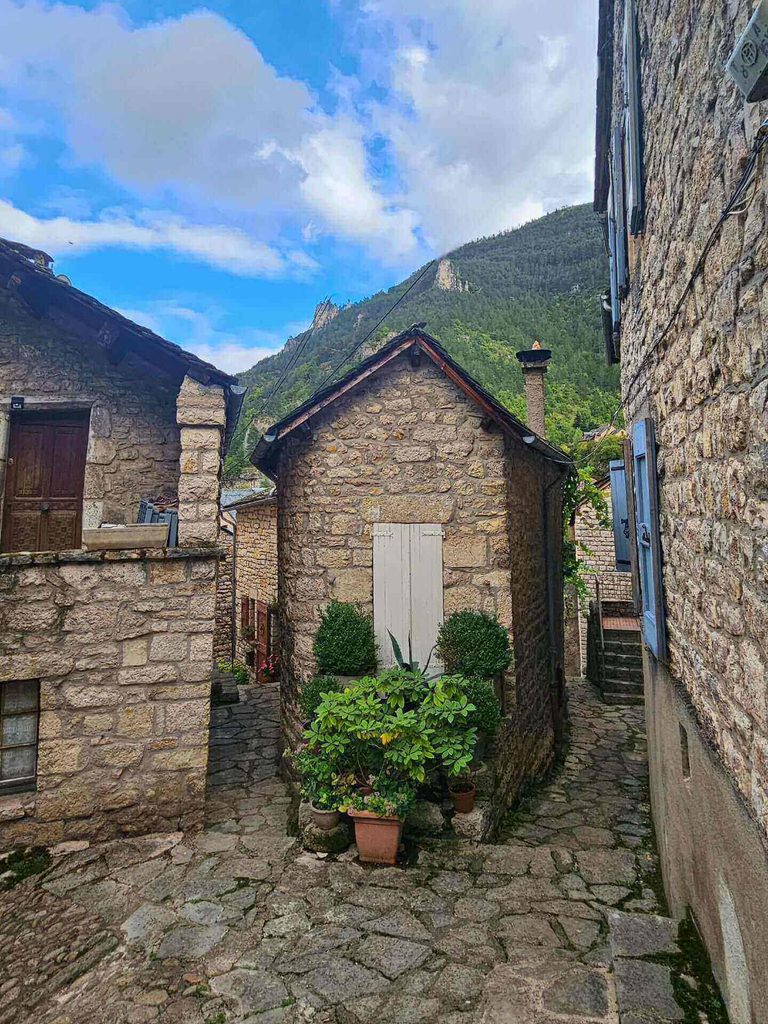
You’ll find narrow stone streets, steep steps, old limestone houses, wooden shutters and small balconies. The village is built on a slope above the Tarn, so expect some uneven paving and uphill sections. I would wear comfortable shoes, especially if you plan to continue up to the Hermitage.
The main streets have a few restaurants and shops, while the smaller lanes are much quieter. Take your time, stop for a coffee and look back towards the river as you climb.
Look for the Old Calade Streets
Keep an eye out for the old stone paving known as calades. These steep streets were built to work with the hillside and are one of the details that give the village its medieval character.
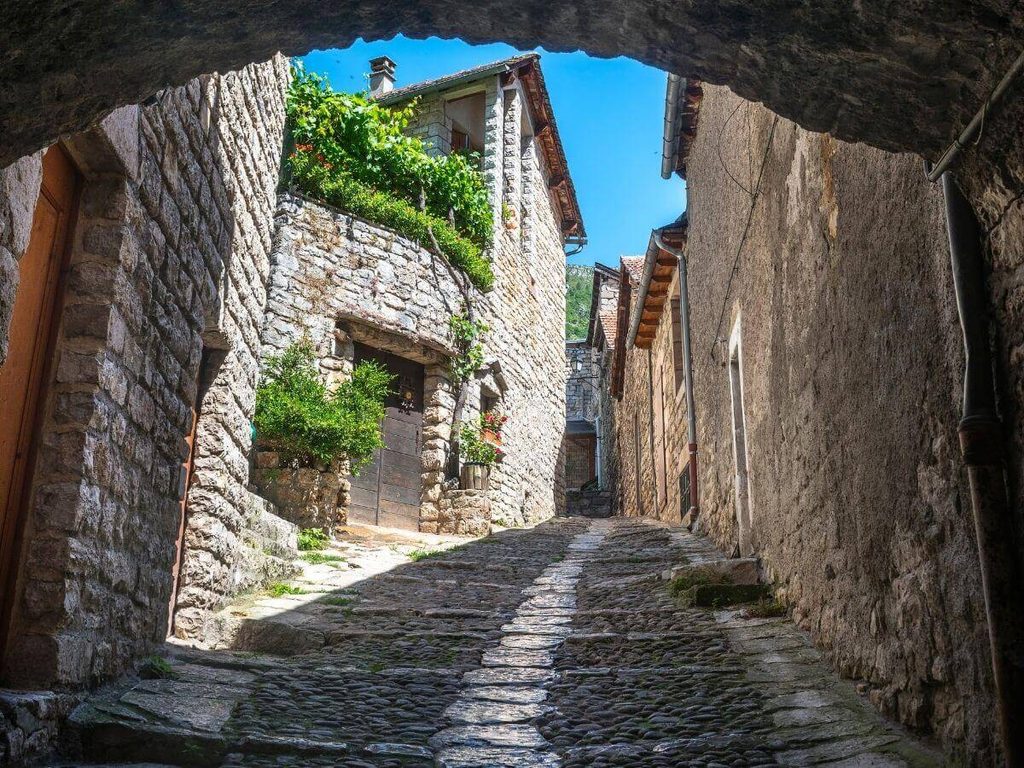
They can be slippery after rain, so shoes with a good grip are useful.
Visit the Burle Spring
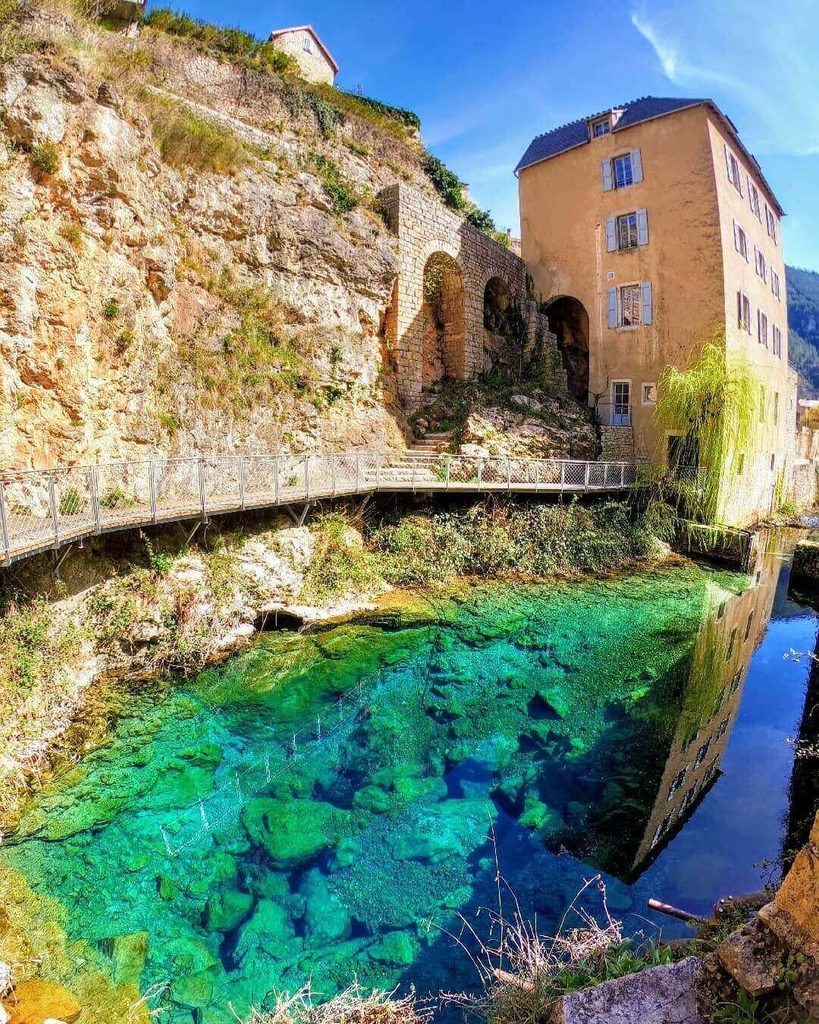
The Burle spring is one of the easiest sights to include in your walk through Sainte Enimie. It is a natural spring with distinctive blue looking water and is closely connected with the legend of Princess Énimie.
According to the traditional story, Énimie came here hoping to be cured of leprosy and was healed by the spring. She later stayed in the area and became associated with the religious community that developed around Sainte Enimie.
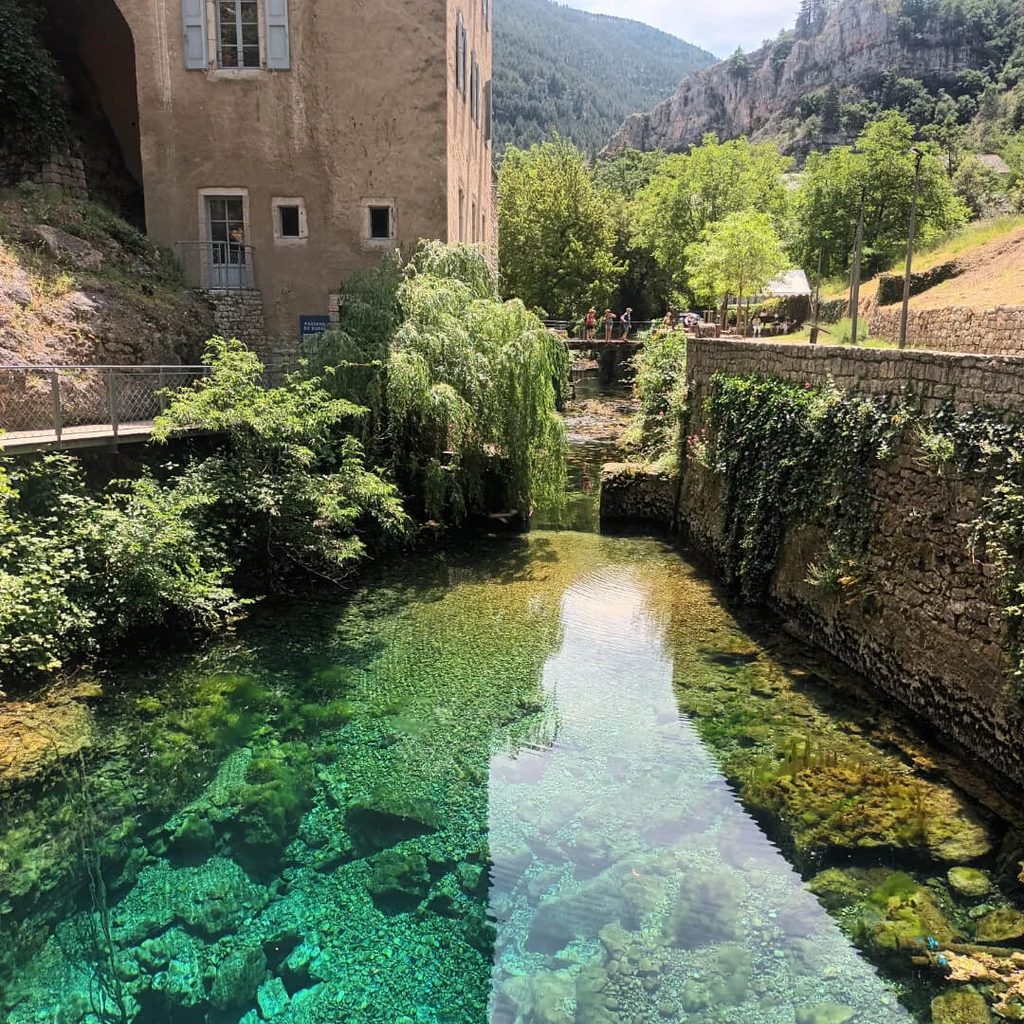
The story was preserved in medieval literature, including La vida de Santa Enimia, an Occitan poem from the 13th century.
The spring doesn’t take long to see, but knowing the story behind it makes the stop much more interesting.
Visit Notre Dame du Gourg
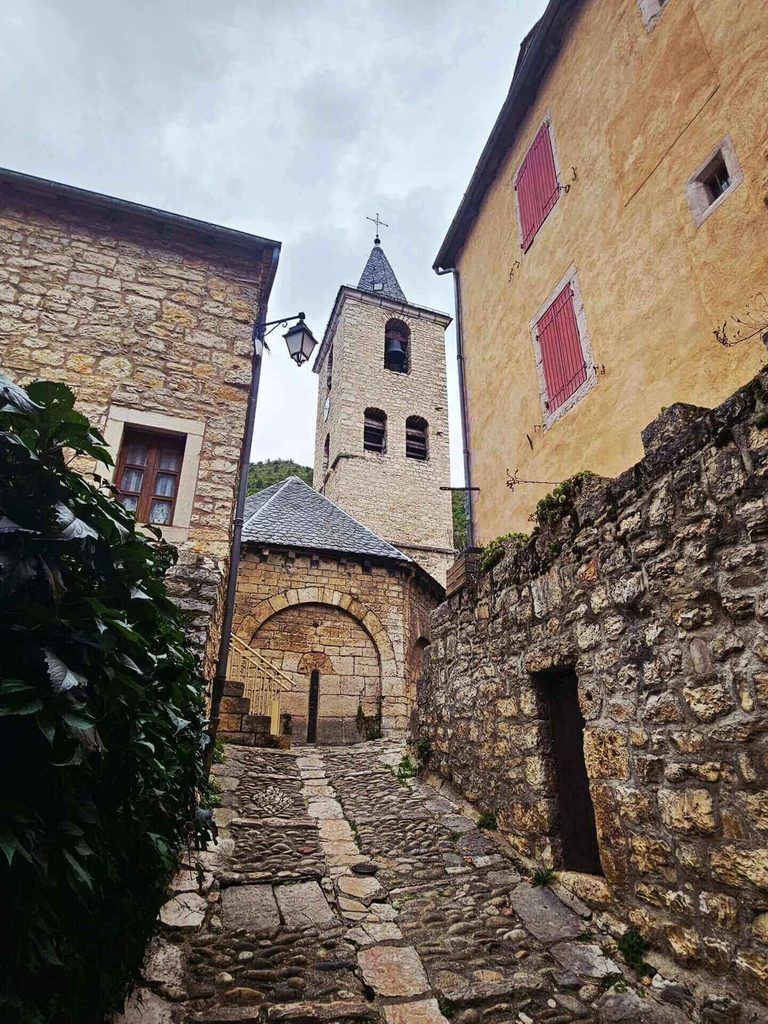
Notre Dame du Gourg is the Romanesque church in the old village. If it is open when you pass, I would take a few minutes to look inside.
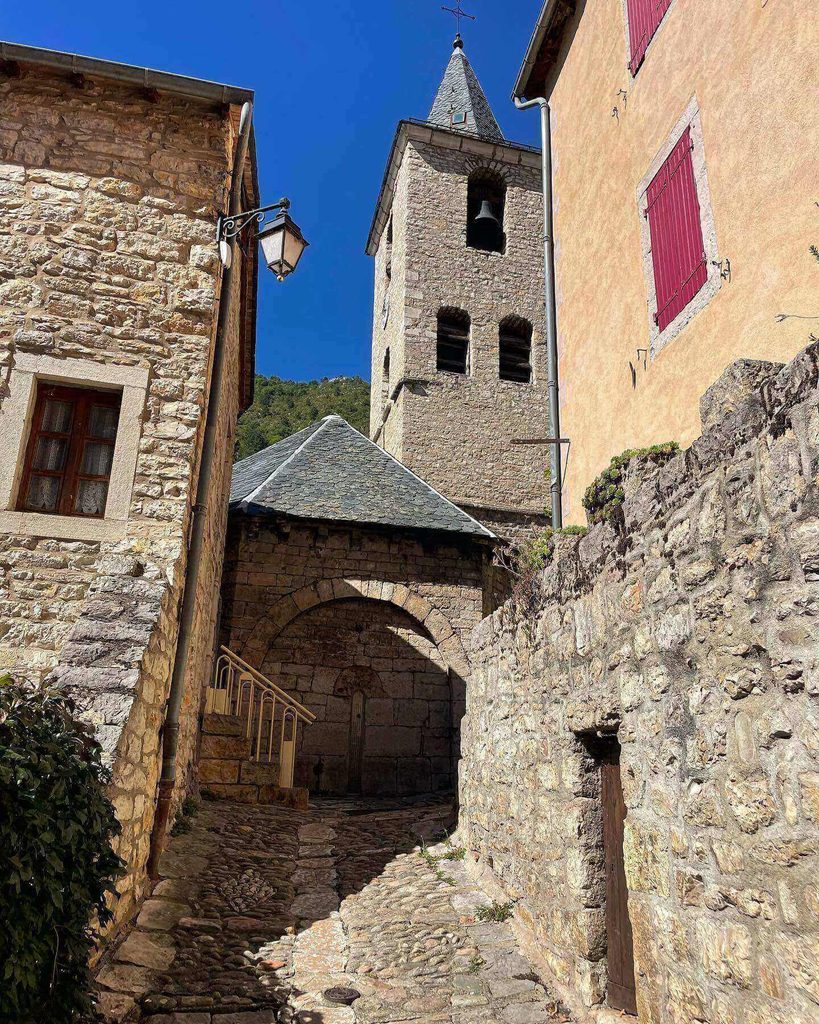
It isn’t a huge church, but its architecture and religious artwork give you another glimpse into Sainte Enimie’s past. It also fits naturally into a walk that includes the Burle spring and the remains of the old monastery.
See the Remains of the Benedictine Monastery
The old Benedictine monastery played an important role in the development of Sainte Enimie. Today, only parts of the original complex remain, including the chapter house and other surviving sections.
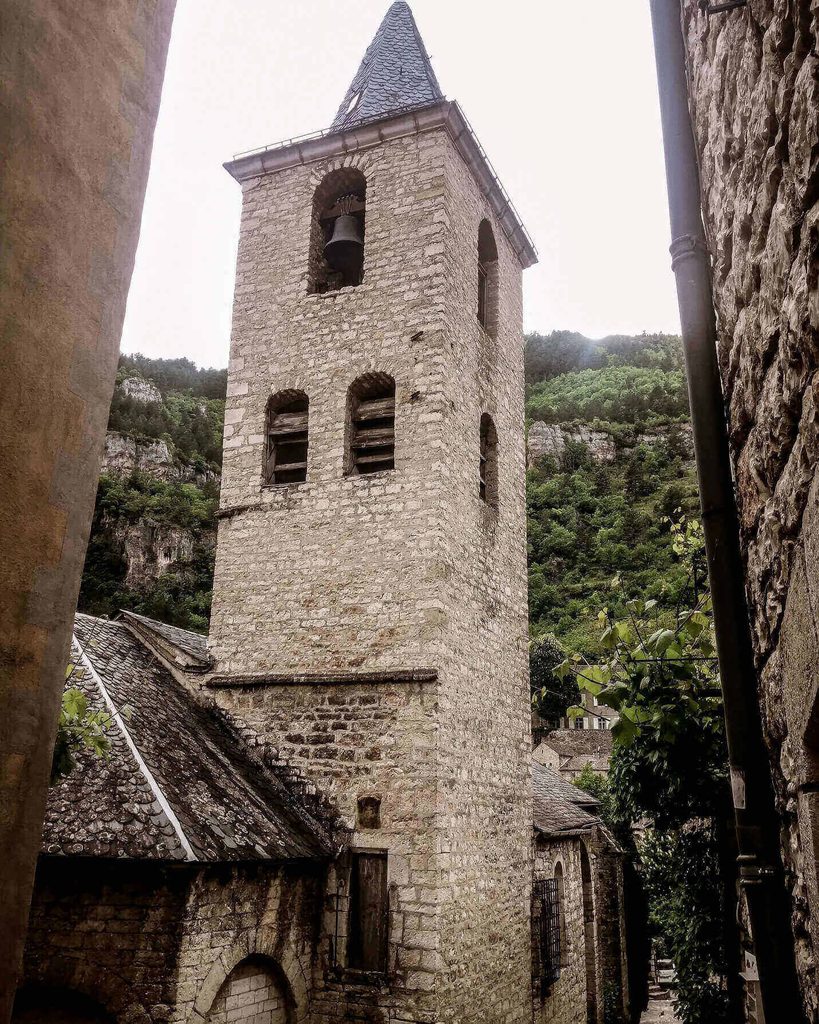
Much of the monastery disappeared over time, particularly during the changes brought by the French Revolution.
I like that you’re seeing actual fragments rather than a perfectly restored building. It gives you a chance to imagine what this part of the village looked like when the monastery was active.
Hike to the Hermitage of Sainte Enimie
If you have time for one proper walk, I’d consider the Hermitage.
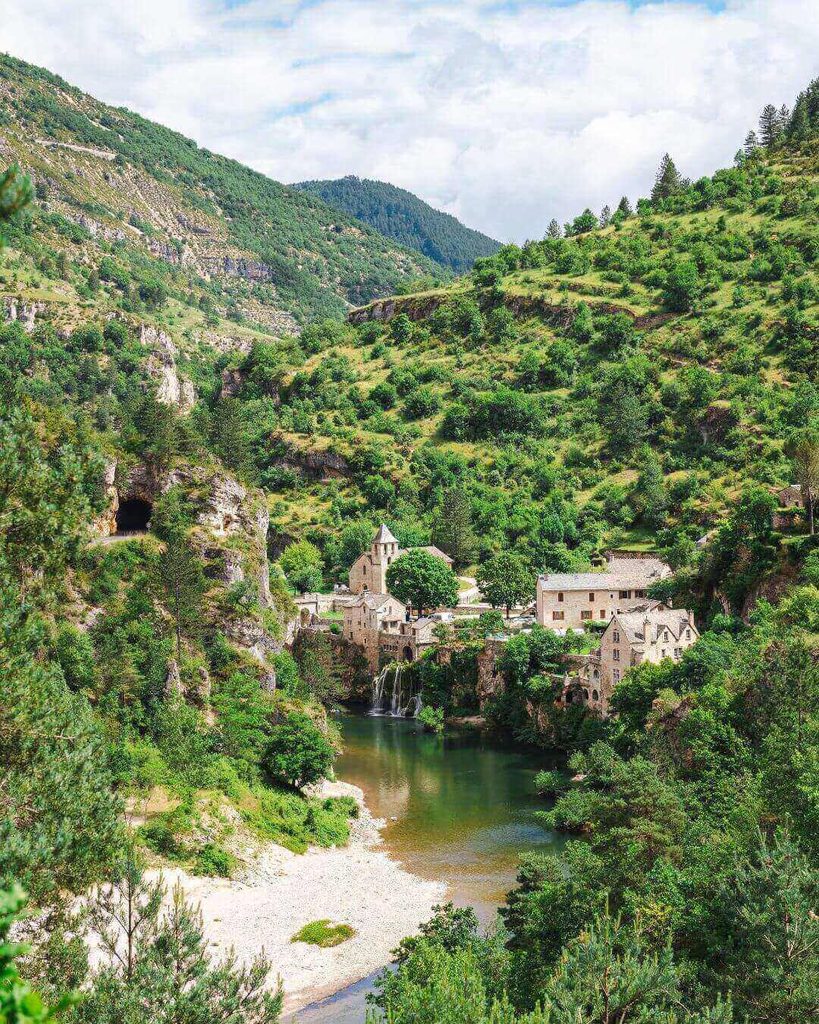
The route climbs above the village to the chapel and grotto associated with Énimie. It is a much more demanding walk than exploring the old centre, but you get lovely views back over Sainte Enimie and the Tarn.
Allow around an hour or more for the return walk, depending on your pace and route. Wear proper walking shoes and take water.
In summer, I’d avoid the hottest part of the day. Morning or late afternoon is much more comfortable for the uphill sections.
Learn the Story of Princess Énimie
You will hear the story of Énimie several times around Sainte Enimie, so it helps to know the basics.
According to legend, Énimie was a Merovingian princess who suffered from leprosy. She came to the area and was said to have been cured after washing in the waters of the Burle spring.
The story says she stayed in the area and became connected with a religious community. Her story has been passed down through medieval literature and local tradition and remains closely linked with the village.
Just remember that Énimie’s story is a religious legend, while the medieval buildings and archaeological remains you see around Sainte Enimie are part of the area’s documented history.
Look for Cardabelles
Cardabelles are dried flowers traditionally associated with the Causses. You may spot them attached to doors or walls around Sainte Enimie and nearby villages.
There is also a local tradition that the flower can indicate changes in weather because it opens and closes depending on humidity.
It’s a small detail, but once you know what to look for, you’ll probably start noticing them as you walk around.
Go Canoeing or Kayaking on the Tarn
If you’re visiting in the warmer months, canoeing on the Tarn is one of the activities I’d consider.
There are several routes around Sainte Enimie, ranging from short trips to half day and full day outings. One popular route runs from Castelbouc to Sainte Enimie, with calmer sections and some small rapids.
The scenery is the real attraction. From the river, you get a different view of the limestone cliffs, wooded slopes, small beaches and villages along the gorge.
You don’t have to commit to a full day trip either. Some operators offer shorter routes, including sections of around 6 to 8 kilometres.
Life jackets are provided, and swimming ability may be required. Check the current conditions and age requirements before booking.
Spend Time Beside the Tarn
Sometimes it’s nice to stop sightseeing for a while.
The Tarn runs directly beside Sainte Enimie, with places where you can sit near the water, have lunch or take a break from walking. In summer, swimming may also be possible in suitable areas where local conditions allow it.
The river can look calm and clear, but remember that it is a natural waterway. Follow local advice and use designated swimming areas.
This is also a good option if you’re travelling with children and want to give everyone a break between sightseeing stops.
Visit Saint Chély du Tarn
Saint Chély du Tarn is a small village further along the Gorges du Tarn and makes a good addition to a Sainte Enimie itinerary.
You’ll find an old stone bridge, traditional buildings and waterfalls close to the river. It’s compact, so an hour or two is usually enough to walk around and enjoy the setting.
Some canoe routes also pass through or near the village, so you can combine it with a river trip instead of making it a separate stop.
See Castelbouc and Its Castle
Castelbouc is another worthwhile stop along the Gorges du Tarn. The ruined castle above the hamlet is easy to spot, while the old houses below are built tightly against the limestone cliffs.
Walk through the narrow lanes and head towards the river for a closer look at the village and gorge.
Castelbouc is also a popular starting point for canoe trips to Sainte Enimie. If you’re planning this, check the operator’s parking, meeting point and shuttle arrangements before setting off.
Stop at the Pas de Soucy
The Pas de Soucy is one of the more unusual stops along the Gorges du Tarn. Here, the river squeezes through a particularly rocky and narrow section of the gorge, creating a rougher stretch of water surrounded by limestone.
The best way to appreciate it is from the viewpoint rather than trying to get close to the river itself. From above, you can see how narrow the gorge becomes and how the rocks have shaped the river over time.
There is also a local legend involving Énimie and a dragon, adding another connection to the stories you’ll hear around Sainte Enimie. You don’t need to spend a long time here, but it makes a good short stop while driving through the gorge.
I’d include Pas de Soucy as part of a wider road trip rather than driving from Sainte Enimie just to see this one spot. It works well when you’re already heading towards other villages and viewpoints along the Tarn.
Visit Domaine des Boissets
Domaine des Boissets gives you a different side of the area. Instead of focusing on the river and medieval village, you get a chance to see how people traditionally lived and worked on the Causses.
The property sits on the Causse de Sauveterre, roughly 15 minutes from Sainte Enimie by road. There are historic buildings, exhibitions and viewpoints looking across the Gorges du Tarn, along with walking routes through the surrounding countryside.
One interpretation trail takes around two hours and covers roughly 5 kilometres. There is also a longer route connecting Sainte Enimie with the Domaine des Boissets, but that requires considerably more time and effort.
I’d bring water, particularly in summer, because some sections have limited shade. Comfortable shoes are also useful if you plan to walk beyond the main buildings.
This is a good stop if you’ve already explored Sainte Enimie’s old centre and want to understand the landscape around the village rather than spending the whole day beside the river.
Hike Along the Gorges du Tarn
Walking is one of the best ways to see parts of the Gorges du Tarn that you simply won’t notice from the road.
The GR736 follows the Tarn through the gorge, while other paths climb towards the surrounding Causses. You don’t have to tackle a multi day hike to enjoy them. There are shorter sections that can be fitted around a visit to Sainte Enimie or one of the nearby villages.
A simple day could be a morning walk, lunch back in Sainte Enimie and a quieter afternoon beside the Tarn.
Some routes are more demanding than they first appear, especially where they climb away from the river. In hot weather, shade can also be limited, so take plenty of water, wear proper walking shoes and start early if temperatures are high.
Before setting off on a longer route, check the distance, elevation and return arrangements. A walk that looks short on a map can take much longer once you factor in the climbs.
Try Canyoning, Via Ferrata or Caving
If walking and sightseeing aren’t quite enough, the area around Sainte Enimie has plenty of more active options.
Canyoning can involve walking, swimming and scrambling through rocky sections of the gorge. Via ferrata lets you follow protected climbing routes above the valley, while caving takes you underneath the limestone into the area’s underground landscape.
Local activity providers offer different combinations of these activities, as well as canoeing and paddleboarding.
I’d check the requirements before booking rather than simply turning up. Age limits, fitness requirements, equipment and weather conditions can all affect whether an activity goes ahead.
If you’re new to adventure activities, canoeing is probably the easier introduction to the gorge. If you already enjoy climbing or outdoor sports, the via ferrata or canyoning routes give you a completely different experience.
Take in the View from Roc des Hourtous
For a completely different perspective of the Gorges du Tarn, make your way towards Roc des Hourtous on the edge of the Causse Méjean.
The viewpoint looks towards Les Détroits, one of the narrowest sections of the gorge. From up here, the Tarn looks very different from how it does when you’re standing beside the river.
You can see how tightly the river has cut through the limestone and how steep the surrounding cliffs really are. It also gives you a better sense of the scale of the gorge.
I’d consider visiting later in the day when the light starts to change, although make sure you leave enough daylight if you have to drive back afterwards.
Try Local Food in Sainte Enimie
After a morning of hiking or several hours on the Tarn, you’ll probably appreciate the food around Sainte Enimie even more.
Restaurants in the village and surrounding area tend to focus on regional ingredients and traditional cooking from Lozère and Occitanie. Look for Pélardon, the small goat’s cheese associated with the Cévennes, along with local meats, potatoes and hearty regional dishes.
You don’t need to make every meal a big restaurant experience. A simple lunch near the river can be exactly what you want after a hot morning outdoors.
If you’re visiting in July or August, I’d make dinner reservations when possible. Sainte Enimie is a small village, and the more popular restaurants can fill up quickly during the busiest part of summer.
It’s also worth checking restaurant opening days outside the main season, as some places operate on reduced schedules.
My One Day Sainte Enimie Itinerary
If I had one full day in Sainte Enimie, I’d try to balance sightseeing with some time to enjoy the river. There is enough to see here to keep you busy, but I wouldn’t try to squeeze every nearby village and viewpoint into the same day.
8:30 am: Arrive and park
I’d get to Sainte Enimie fairly early, especially in summer. Parking becomes harder once more visitors arrive, and starting early also gives you a quieter walk through the old centre.
9:00 am: Explore the medieval centre
Start by walking through the old streets without worrying too much about following a set route. Look at the stone houses, old doorways and narrow lanes, and stop at the small squares along the way.
The village is compact, so you can see quite a lot in an hour without rushing.
10:00 am: Visit the Burle spring, church and monastery remains
After exploring the streets, make your way to the Burle spring and learn about the legend of Princess Énimie. Then continue to Notre Dame du Gourg and the remains of the old Benedictine monastery.
These stops don’t take very long individually, but together they give you a better understanding of why Sainte Enimie developed where it did.
10:45 am: Walk towards the Hermitage
If you’re comfortable with an uphill walk, this is the point where I’d head towards the Hermitage. The climb takes more effort than walking around the village, so give yourself enough time and take water.
The reward is the view back towards Sainte Enimie and the Tarn. If it’s hot, don’t rush this part. Starting earlier is much more comfortable than doing the climb in the afternoon heat.
12:15 pm: Return to the village for lunch
Head back into Sainte Enimie and find somewhere for lunch. After the morning walk, I’d keep this fairly relaxed rather than trying to fit another attraction in immediately.
If you’re visiting during the busy summer months, booking ahead can save you from wandering around looking for a table.
1:30 pm: Choose between the river or a canoe trip
This is where I’d leave the afternoon flexible.
If you’re visiting in warmer weather, a short canoe trip on the Tarn is a great way to see the gorge from a completely different angle. You don’t have to spend the whole afternoon on the water. A shorter route can work well when you only have one day.
If you’d rather slow down, stay beside the Tarn instead. Have a drink, sit near the water or find a suitable place to swim if conditions allow.
4:30 pm: Drive towards Castelbouc or Saint Chély du Tarn
If you still have some energy, take a short drive through the gorge and choose either Castelbouc or Saint Chély du Tarn.
I’d pick just one rather than trying to see both quickly. Castelbouc is a good choice for its castle and cliffside setting, while Saint Chély du Tarn is smaller and known for its river, stone bridge and waterfalls.
6:00 pm: Find a viewpoint
Before heading back, stop somewhere along the gorge where you can look down over the Tarn and surrounding cliffs.
The softer evening light can make this a particularly nice time for photographs, and it’s also a good opportunity to simply sit for a few minutes after a busy day.
7:30 pm: Return to Sainte Enimie for dinner
Finish the day back in the village. If you’re staying overnight, this is when you’ll really notice the difference from the daytime. The streets are quieter, and you can take another short walk before or after dinner.
I wouldn’t try to fit every attraction into one day. Sainte Enimie is much more enjoyable when you leave yourself enough time to stop, have lunch, sit beside the river and enjoy the scenery instead of constantly checking the clock.
Best Time to Visit Sainte Enimie
The best time to visit Sainte Enimie really depends on what you want to do. Summer is the easiest season for canoeing and swimming, while spring and autumn are better if you mainly want to walk, explore the village and drive through the gorge without the busiest summer conditions.
Spring
Spring is a lovely time to explore Sainte Enimie if walking is high on your list.
Temperatures are generally more comfortable than in July and August, which makes the uphill walk to the Hermitage and longer hikes around the Gorges du Tarn easier to manage. The countryside is also looking greener after winter, so the drive through the gorge can be particularly enjoyable.
The main thing to keep in mind is that the tourist season is only getting started. Some canoe operators, restaurants and other seasonal businesses may have limited opening days.
If you’re visiting in April or early May, I’d check opening times before travelling, especially if you have your heart set on a particular activity.
Summer
Summer is the busiest time to visit Sainte Enimie, but it is also when the river becomes a big part of the experience.
This is the best period if you want to go canoeing, swimming or spend long afternoons beside the Tarn. The longer daylight hours also make it easier to explore several parts of the gorge in one day.
The trade off is that Sainte Enimie and the surrounding villages can get busy, particularly around the middle of the day. Parking can also become more difficult during peak periods.
I’d try to arrive early and do your village sightseeing in the morning. You can then spend the hotter part of the afternoon on the river or somewhere beside the water.
If you’re staying overnight, summer accommodation and restaurants can also fill up quickly, so booking ahead is sensible.
Autumn
Autumn is a good option if you prefer quieter villages and cooler conditions.
The temperatures are generally more comfortable for hiking, and driving through the Gorges du Tarn feels more relaxed once the main summer crowds have gone. It’s also a good season for combining a village visit with walks on the surrounding Causses.
The downside is that some seasonal businesses start reducing their hours after summer. Canoe trips and other outdoor activities may have fewer departures, while some restaurants may close on certain days.
I’d check what’s open before travelling rather than assuming summer schedules continue into September and October.
Winter
Winter gives Sainte Enimie a completely different feel.
The village is much quieter, and you can walk around without the summer crowds. If your main interest is the historic side of Sainte Enimie and you enjoy peaceful road trips, that can be appealing.
However, many tourist businesses and seasonal activities operate on reduced schedules or close for the winter. You may also have far fewer choices for restaurants and organised activities.
I wouldn’t choose winter for a canoeing or swimming trip. I’d choose it if you specifically want a quiet visit and are happy to plan around whatever is open.
How to Get to Sainte Enimie
A car is the easiest option for exploring Sainte Enimie and the wider Gorges du Tarn.
The gorge stretches quite a long way, and several places worth visiting are separated by winding roads rather than straightforward walking routes. Having a car makes it much easier to visit places such as Castelbouc, Saint Chély du Tarn and the various viewpoints along the gorge.
It also gives you the freedom to stop whenever you see somewhere interesting. Just allow extra driving time because the roads through the gorge are winding and you won’t always travel as quickly as the distance on the map suggests.
Getting There by Public Transport
You can reach Sainte Enimie without a car, but you’ll need to plan the journey more carefully.
During the summer season, regional liO bus services connect Sainte Enimie with places including Mende, Florac and Le Rozier. The wider area can also be reached using combinations of regional trains and buses.
The main issue is frequency. Services can be seasonal, and connections aren’t necessarily designed around sightseeing itineraries. Before booking accommodation, check the current timetable and make sure the return journey works with your plans.
If you’re travelling without a car, I’d also consider staying in Sainte Enimie rather than trying to visit several distant parts of the gorge in one day.
Driving to Sainte Enimie
For a road trip, the A75 is the main motorway connection for the wider area. From there, smaller roads lead towards the Gorges du Tarn and Sainte Enimie.
The final approach is part of the experience, but don’t underestimate the driving time. The roads through the gorge are narrow and winding in places, and you’ll probably want to stop at viewpoints or villages along the way.
If Sainte Enimie is part of a larger road trip, I’d leave some flexibility in your schedule rather than planning every stop down to the minute.
Where to Stay in Sainte Enimie
Staying overnight makes sense if you’re planning to see more than just the village itself. The Gorges du Tarn covers a fairly large area, and having a night or two gives you much more time for canoeing, hiking and visiting the nearby villages.
Stay in the Village
This would be my choice if you want to experience Sainte Enimie rather than simply use it as a base.
Staying in the village means you can walk around in the evening after most day visitors have left. You can have dinner nearby, take a quiet walk through the old streets and start exploring early the next morning without having to drive in.
The village is small, so don’t expect a huge selection of hotels. Booking ahead is particularly sensible during July and August.
Stay Near the River
If your main reason for visiting is the Tarn, look for accommodation near the river.
Campsites and riverside properties can work particularly well in summer. You can spend more time outside, and you’re in a convenient position for canoeing, swimming and relaxing beside the water.
This option is especially appealing if you’re travelling with children or want a more outdoorsy trip rather than a traditional hotel stay.
Stay Outside the Village
Don’t feel that you have to stay in Sainte Enimie itself.
There are accommodation options throughout the wider Gorges du Tarn, and staying outside the village can give you more choice, particularly if you’re travelling by car.
It can also make sense if you’re planning to spend several days driving through the gorge and visiting different villages. Just check the driving times before booking. A place that looks close on a map can take longer to reach because of the winding roads.
Practical Tips for Visiting Sainte Enimie
A few simple things can make a big difference here.
Wear shoes with a good grip.
The medieval streets aren’t always smooth, and you’ll encounter steep sections and uneven stone paving. Good shoes become even more important if you’re walking to the Hermitage.
Bring water with you.
Don’t rely on being able to buy a drink every time you need one, particularly if you’re heading onto the surrounding trails. In summer, I’d carry more water than I think I’ll need.
Start early in summer.
The village is much easier to explore before the middle of the day, and arriving early also gives you a better chance of finding convenient parking.
Book canoe trips ahead.
Summer is the busiest season on the Tarn, and popular departures can fill up. If canoeing is one of the main reasons you’re visiting, I’d organise it before arriving.
Bring swimwear in warm weather.
Even if swimming isn’t part of your original plan, you may find yourself wanting to spend some time beside the river on a hot afternoon.
Is Sainte Enimie Worth Visiting?
Yes, especially if you enjoy historic villages and outdoor scenery.
What I like about Sainte Enimie is how easily you can combine the two. You can spend an hour wandering through medieval streets, then be beside the Tarn a few minutes later. You can visit an old church in the morning and spend the afternoon paddling through the limestone gorge.
I’d probably enjoy it less if I wanted a destination filled with museums, shopping and nightlife. Sainte Enimie is small, and there simply isn’t that kind of entertainment here.
For a road trip through Lozère and the Gorges du Tarn, though, it makes a very good stop. I’d give it at least a full day if you want to explore properly rather than simply stopping for lunch and taking a few photos.
Final Thoughts
Sainte Enimie is easy to underestimate because the village itself is small.
Give it a few hours, though, and there’s more here than you might expect. The medieval streets, Burle spring, church and monastery tell the story of the village, while the Tarn and surrounding limestone cliffs give you a completely different reason to stay.
If I were planning a trip here, I’d combine both sides. Spend the morning exploring Sainte Enimie on foot, then use the afternoon for the river, a hike or a drive through the wider gorge.
That balance is what makes the visit work for me. You get the history without spending the whole day sightseeing, and you get the scenery without simply driving through and moving on to the next stop.
If you’re already travelling through the Gorges du Tarn, I’d make room for Sainte Enimie rather than treating it as just another quick roadside stop.