
The first time I saw Strasbourg Cathedral, I wasn’t standing in the main square with a perfect view. I was wandering through Strasbourg’s Old Town when the cathedral’s enormous spire suddenly appeared above the rooftops. Even from a distance, it was impossible to ignore.
Strasbourg is filled with beautiful canals, half timbered houses, and charming streets, but the cathedral is what truly defines the city. For centuries, it has dominated the skyline and attracted visitors from around the world.
Its Gothic architecture, fascinating history, famous astronomical clock, and panoramic tower views make it one of the most memorable places to visit in Alsace.
What I love most about Strasbourg Cathedral is that there’s something here for every type of traveler. Whether you’re interested in history, architecture, photography, or simply seeing the city’s most iconic landmark, it’s easy to spend a couple of hours exploring its many details.
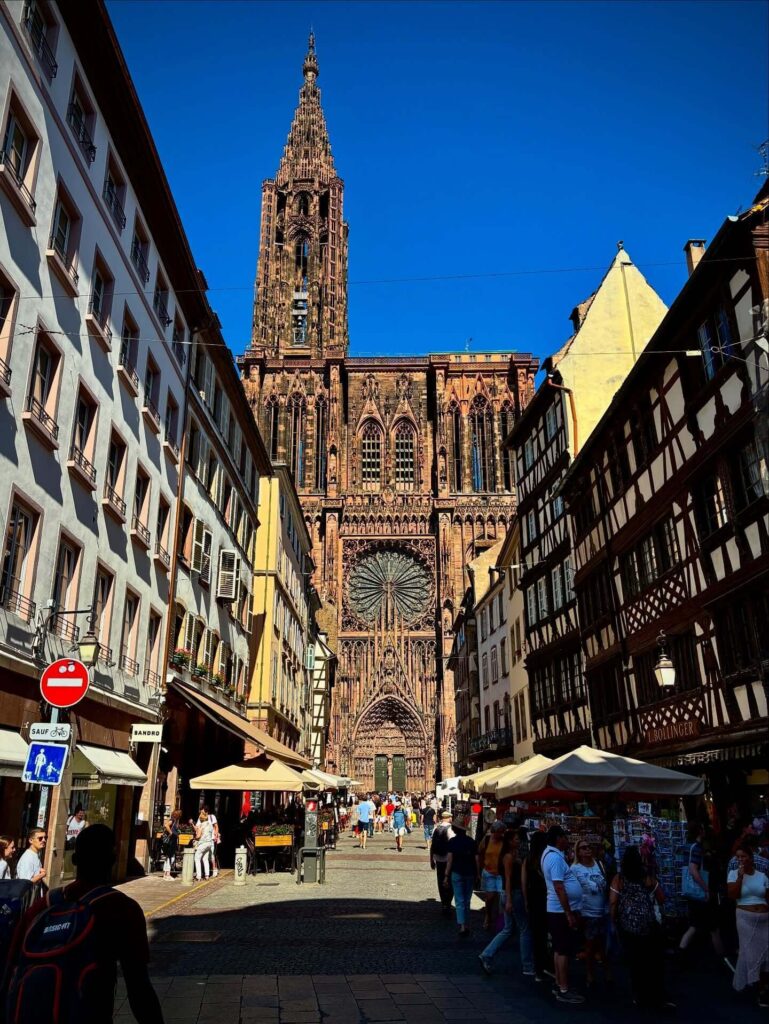
If you’re planning a visit, this guide covers everything you need to know, including what to see inside, whether the tower climb is worth it, the best time to visit, and a few tips that can help you make the most of your time at Strasbourg Cathedral.
Why Strasbourg Cathedral Is So Famous
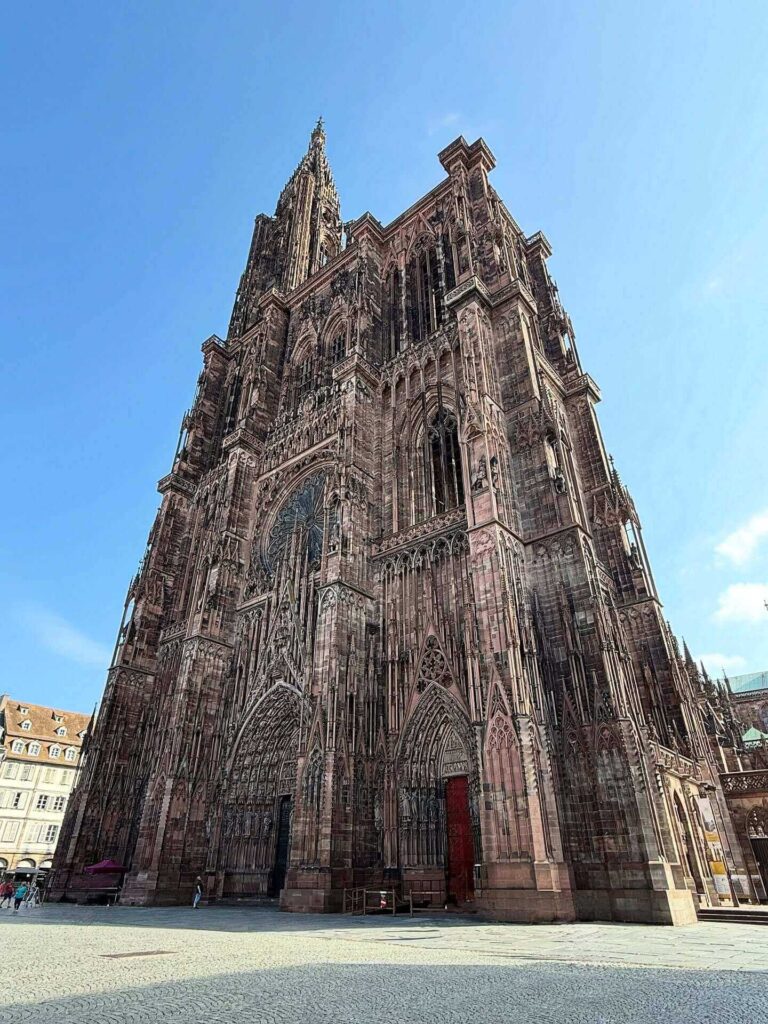
France is home to many impressive cathedrals, but Strasbourg Cathedral stands out for a few reasons. Its towering height, distinctive pink sandstone facade, and prominent position in the heart of the city make it one of the most recognizable landmarks in the country.
It Was Once the Tallest Building in the World
When construction was completed in 1439, Strasbourg Cathedral became the tallest building in the world, reaching 142 meters (466 feet).
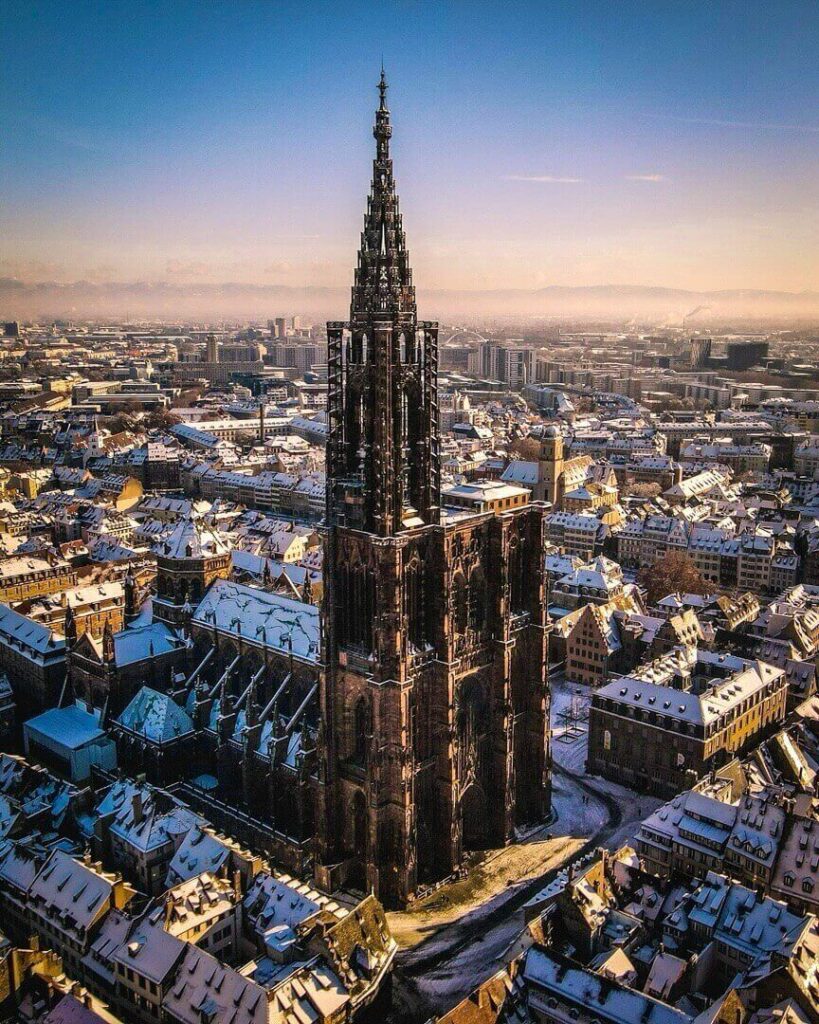
It held that record for more than 200 years, an incredible achievement considering it was built long before modern construction equipment existed.
Even today, its height is impressive. As you walk through Strasbourg’s historic center, the cathedral’s spire seems to appear above almost every rooftop.
Its Architecture Is Unlike Any Other Cathedral
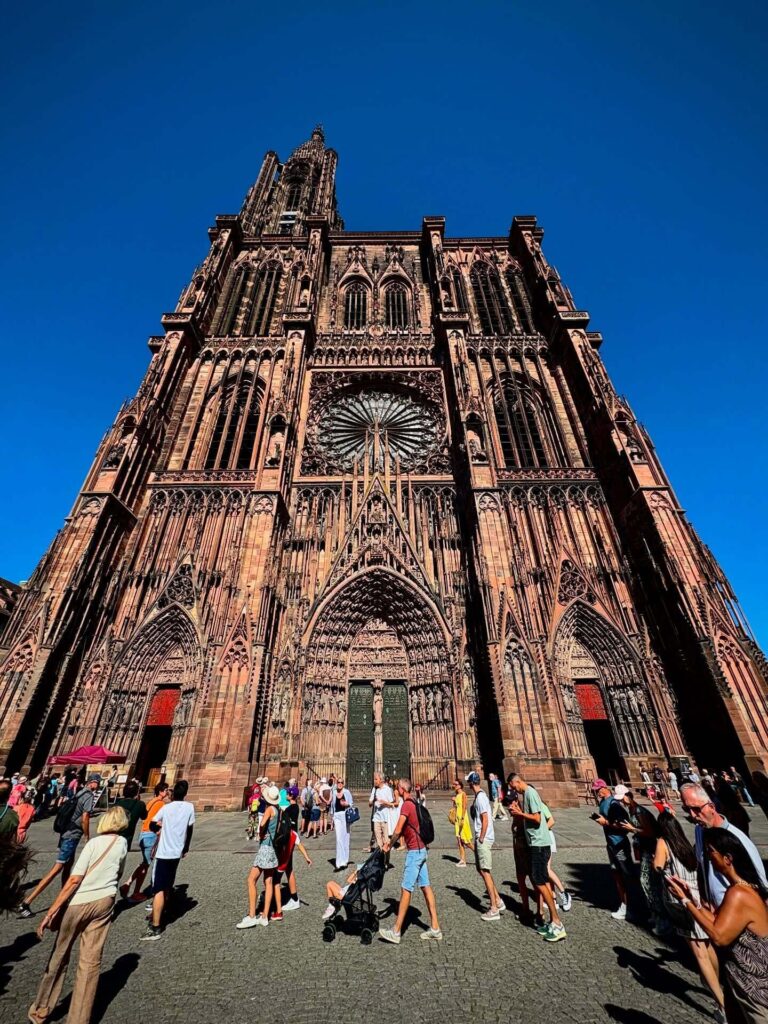
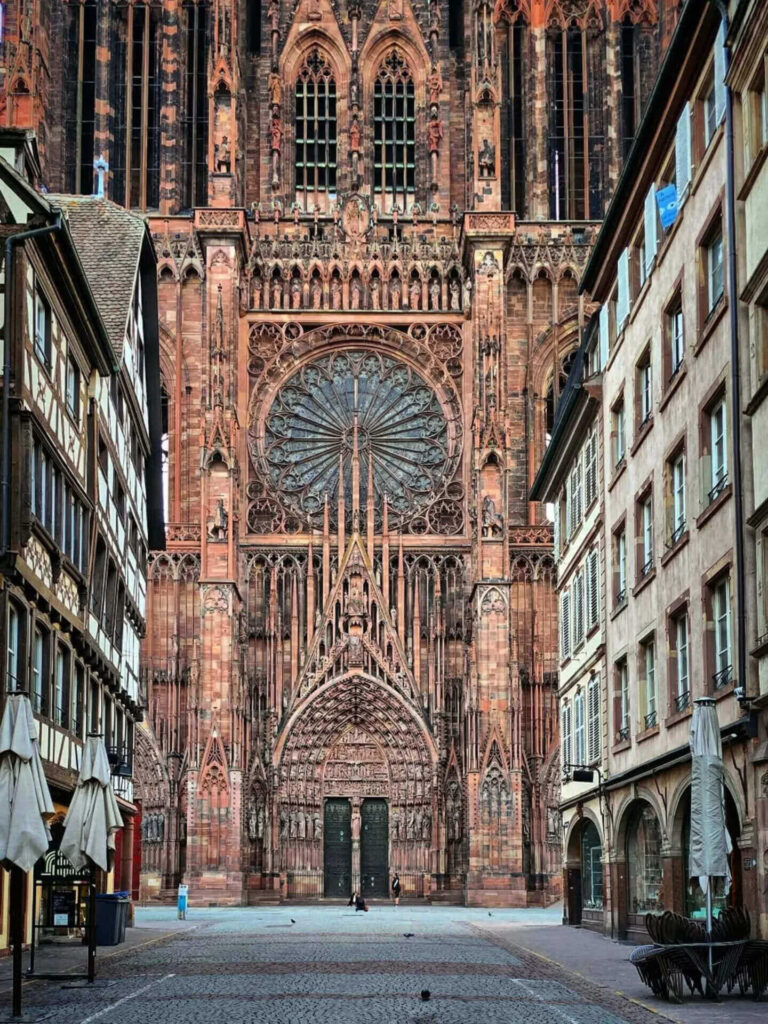
One of the first things you’ll notice is the cathedral’s unusual color. Unlike many European churches built from gray stone, Strasbourg Cathedral was constructed using pink sandstone from the nearby Vosges Mountains.
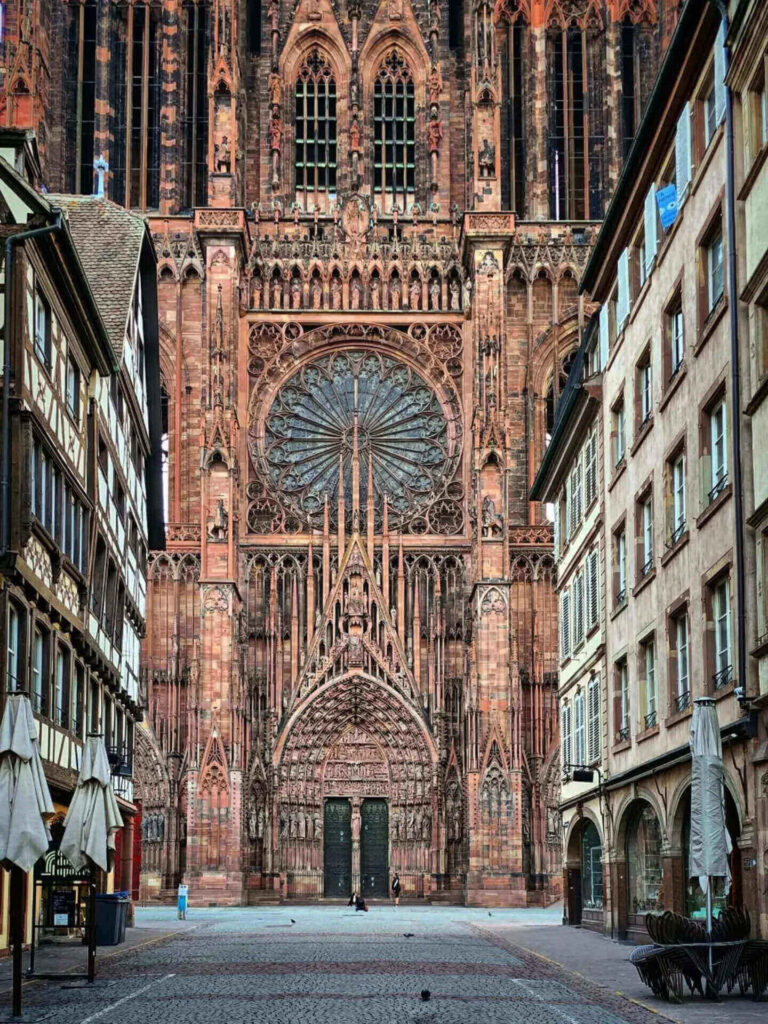
The color changes throughout the day depending on the light, often appearing pink, gold, or soft orange. Combined with the intricate carvings and detailed facade, it gives the cathedral a look that feels quite different from other Gothic churches in Europe.
It Defines Strasbourg’s Skyline
For centuries, the cathedral has been the defining feature of Strasbourg’s skyline. Its single spire can be seen from many parts of the city, making it a constant presence as you explore the historic center.
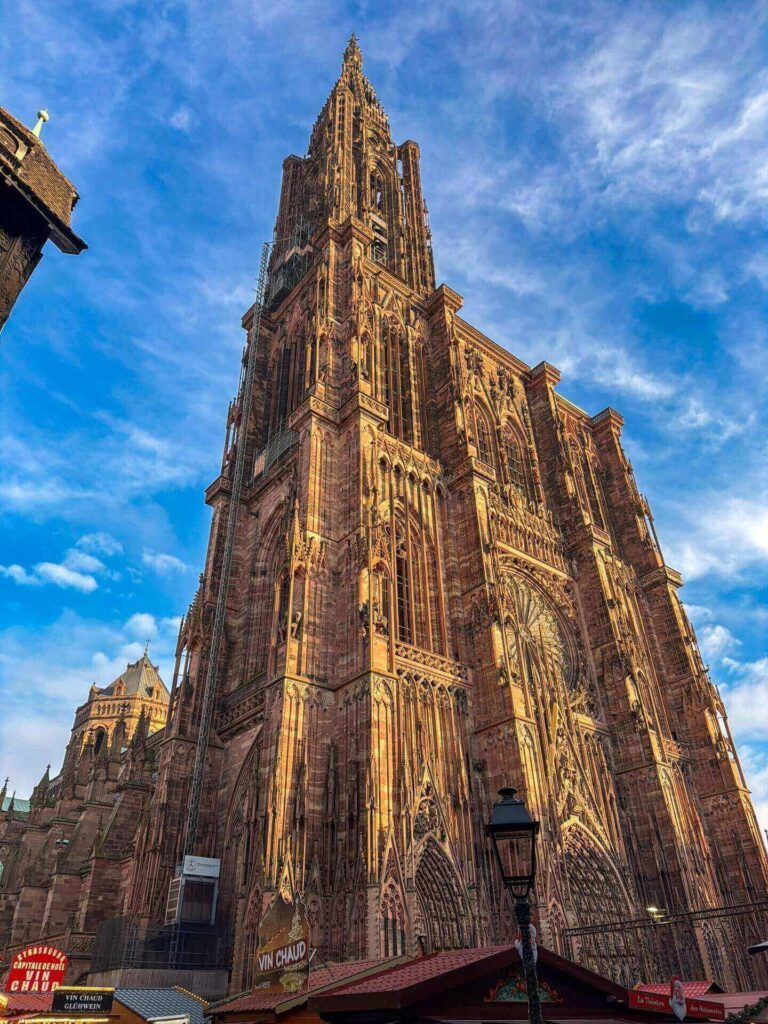
Unlike many Gothic cathedrals that feature two matching towers, Strasbourg Cathedral has just one completed spire. This distinctive silhouette has become one of its most recognizable features.
It Inspired Artists and Writers
The cathedral has impressed visitors for centuries. Victor Hugo famously described it as a “gigantic and delicate marvel,” a description that still feels accurate today.
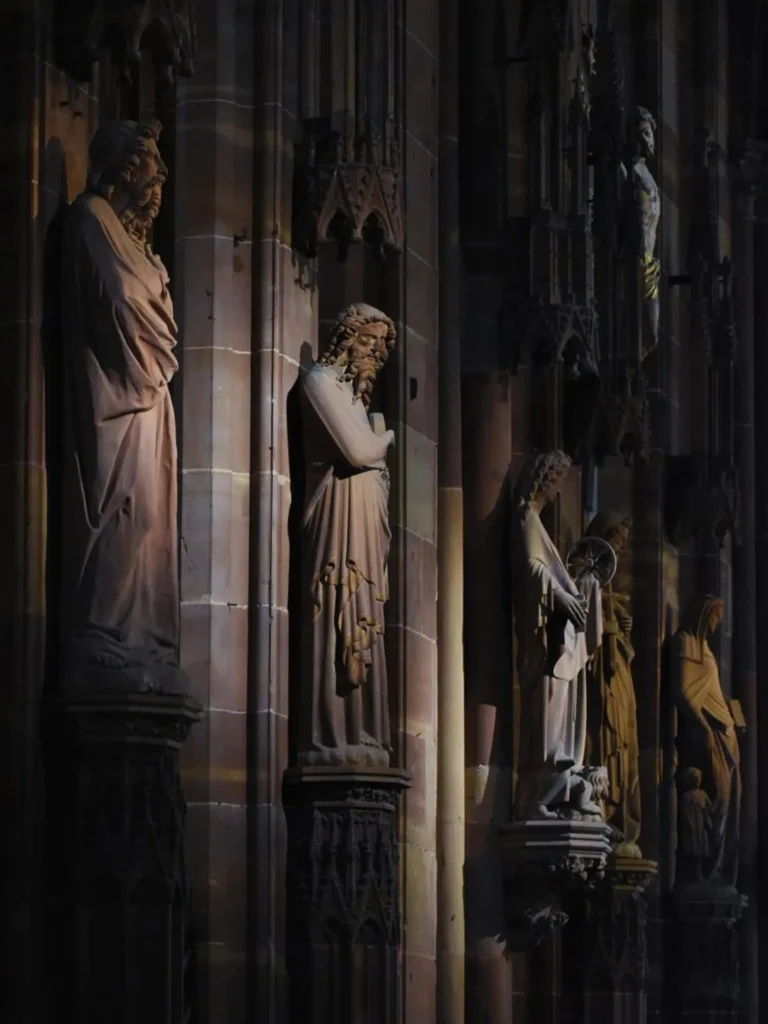
From a distance, the building appears enormous, but up close you’ll notice the extraordinary detail in its carvings, sculptures, and stonework. It’s this combination of scale and craftsmanship that continues to make Strasbourg Cathedral one of the most admired churches in Europe.
The History of Strasbourg Cathedral
Strasbourg Cathedral is impressive at first glance, but I think it becomes even more fascinating once you learn its history. What visitors see today wasn’t built in a few decades. The cathedral evolved over several centuries, with generations of builders, architects, and craftsmen contributing to the structure we see today.
Before the Gothic Cathedral
Long before the current cathedral existed, this site was already an important place of worship. Several earlier churches stood here over the centuries, including religious buildings dating back to Roman times.
As Strasbourg grew into an important trading and political center during the Middle Ages, city leaders wanted a cathedral that reflected its growing influence. The result would eventually become one of the most ambitious building projects in medieval Europe.
The Early Construction Phase
Construction of the cathedral began in 1015 under Bishop Werner of Habsburg. The original church was built in the Romanesque style, which was common throughout Europe at the time and featured thick walls, rounded arches, and a more solid appearance than the cathedral we see today.
However, the project faced several setbacks. Fires damaged parts of the structure, forcing builders to rebuild and modify sections over time. These challenges ultimately helped shape the cathedral’s evolution as architectural styles changed across Europe.
The Gothic Transformation
During the twelfth century, builders began incorporating Gothic design elements into the cathedral. This marked a major turning point in its appearance.
The heavier Romanesque style gradually gave way to soaring arches, larger windows, more elaborate carvings, and greater height. Construction continued for generations, with different architects adding their own ideas and techniques.
That’s one reason the cathedral feels so rich in detail. It reflects centuries of craftsmanship rather than the vision of a single builder.
Completion of the Famous Spire
The cathedral reached its most iconic milestone in 1439 with the completion of its famous spire.
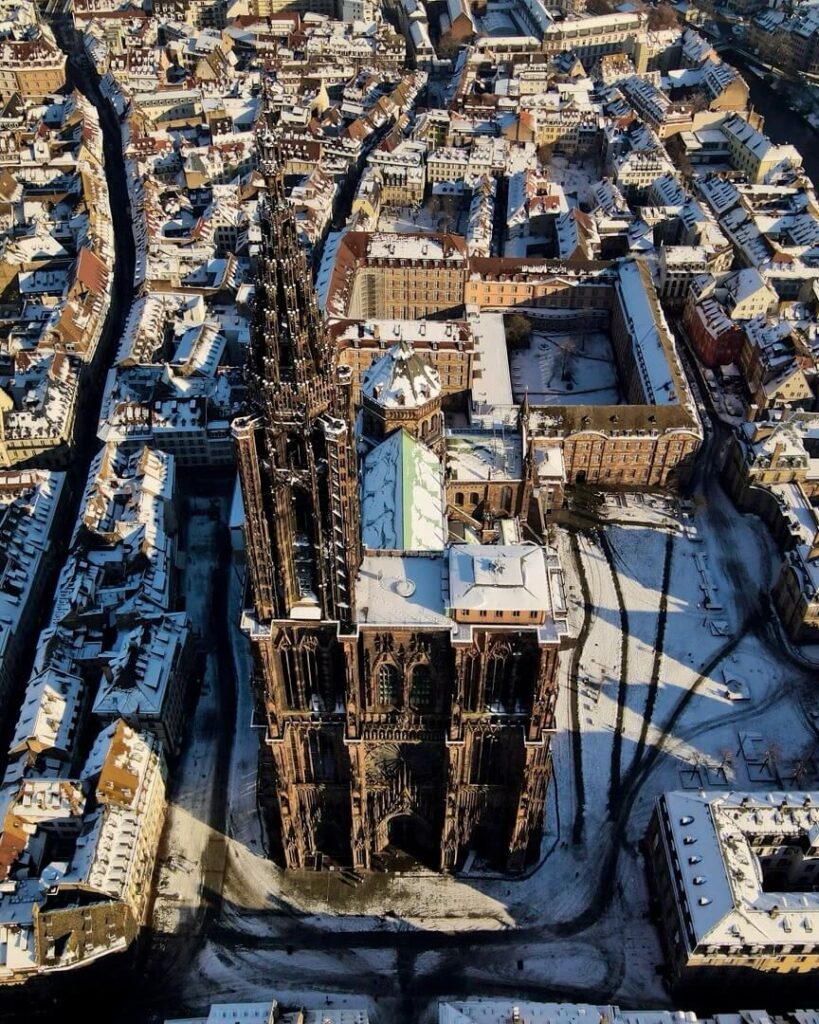
At 142 meters (466 feet), it became the tallest building in the world and remained so for more than two centuries.
Even today, it’s hard not to be impressed by the scale of the achievement. Medieval builders created one of Europe’s greatest architectural landmarks without the tools and technology available today.
Strasbourg Cathedral Through the Centuries
Like the city itself, Strasbourg Cathedral has experienced periods of political change, religious conflict, and war.
During the Protestant Reformation in the sixteenth century, the cathedral became a Protestant church for more than a century before eventually returning to Catholic use.
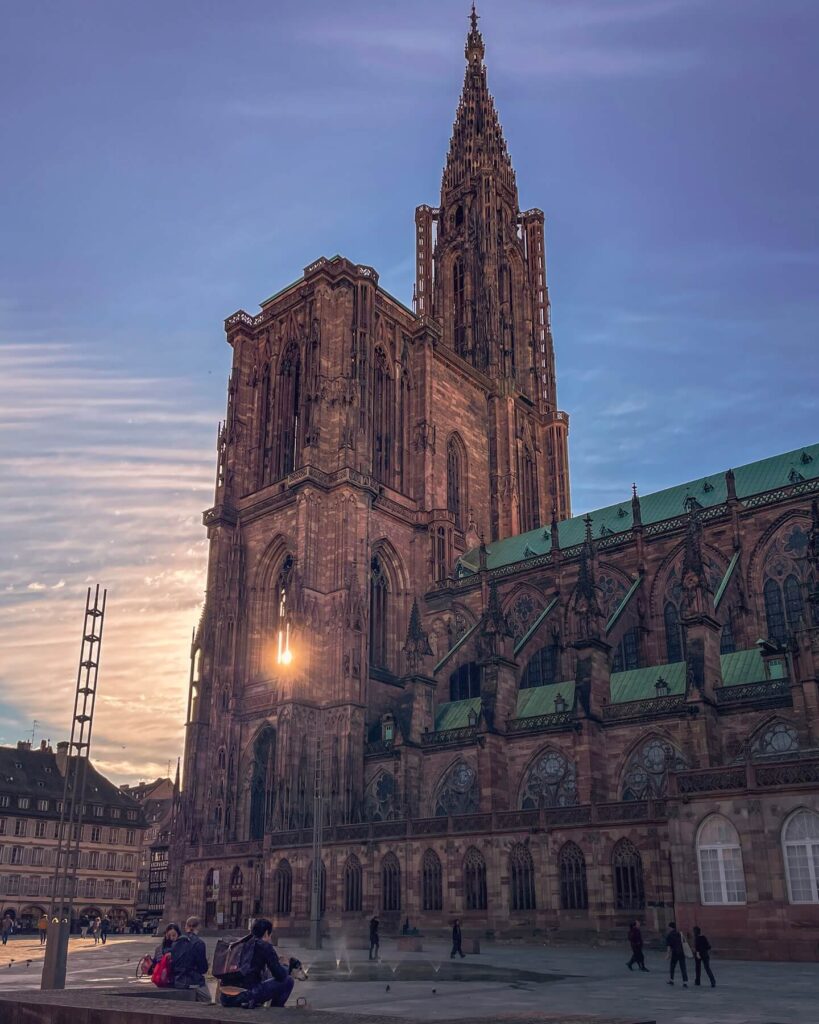
Later, when Strasbourg became part of France in the seventeenth century, the cathedral remained a central symbol of the city and continued to play an important role in religious and civic life.
The cathedral also survived both World War I and World War II despite the Alsace region frequently changing hands between France and Germany. Its survival means visitors today can still admire much of the original medieval stonework and craftsmanship.
Ongoing Preservation
Although the cathedral is more than 500 years old, preservation work never really stops. Weather, pollution, and the passage of time constantly affect the sandstone exterior, making restoration an ongoing process.
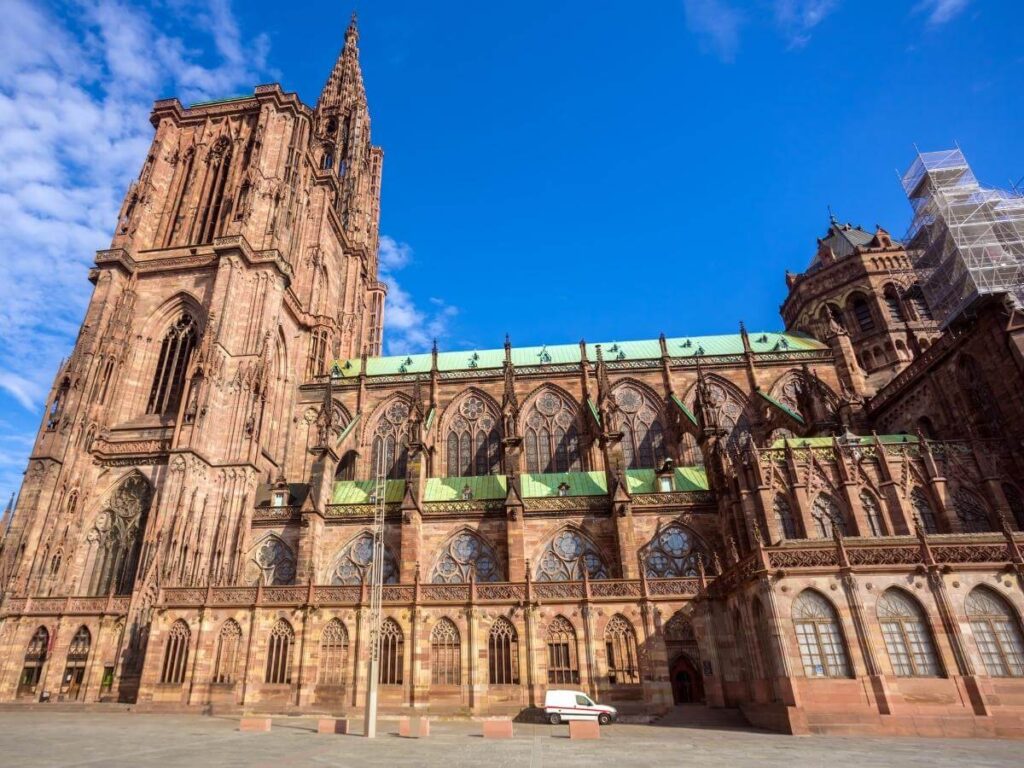
During your visit, you may even notice sections covered by scaffolding. While it can be slightly disappointing from a photography perspective, it’s also a reminder that preserving a monument of this scale requires continuous care.
Thanks to these restoration efforts, Strasbourg Cathedral remains one of the finest examples of Gothic architecture in Europe.
What to See Outside Strasbourg Cathedral
Before heading inside, I highly recommend spending some time exploring the cathedral’s exterior. It’s easy to walk straight into the building, especially when you’re eager to see the famous astronomical clock or climb the tower, but some of the cathedral’s most impressive features are actually found outside.
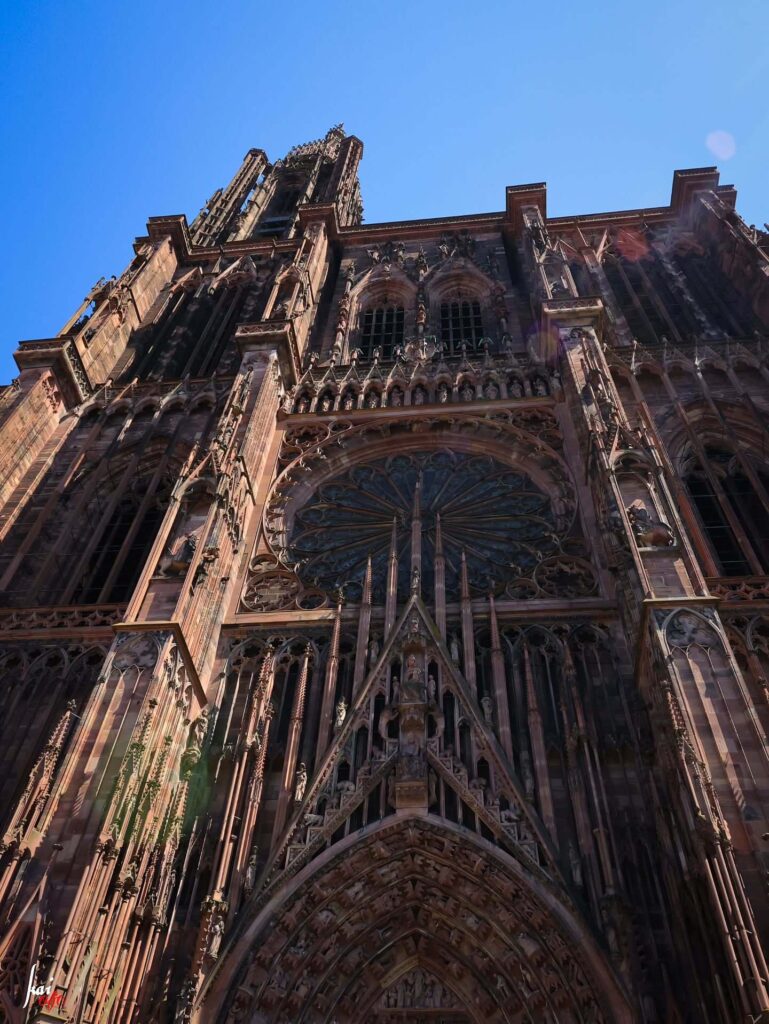
The closer you look, the more details you’ll notice. What initially appears to be a single grand facade is actually covered with hundreds of sculptures, decorative carvings, and architectural details that tell stories dating back hundreds of years.
The West Facade
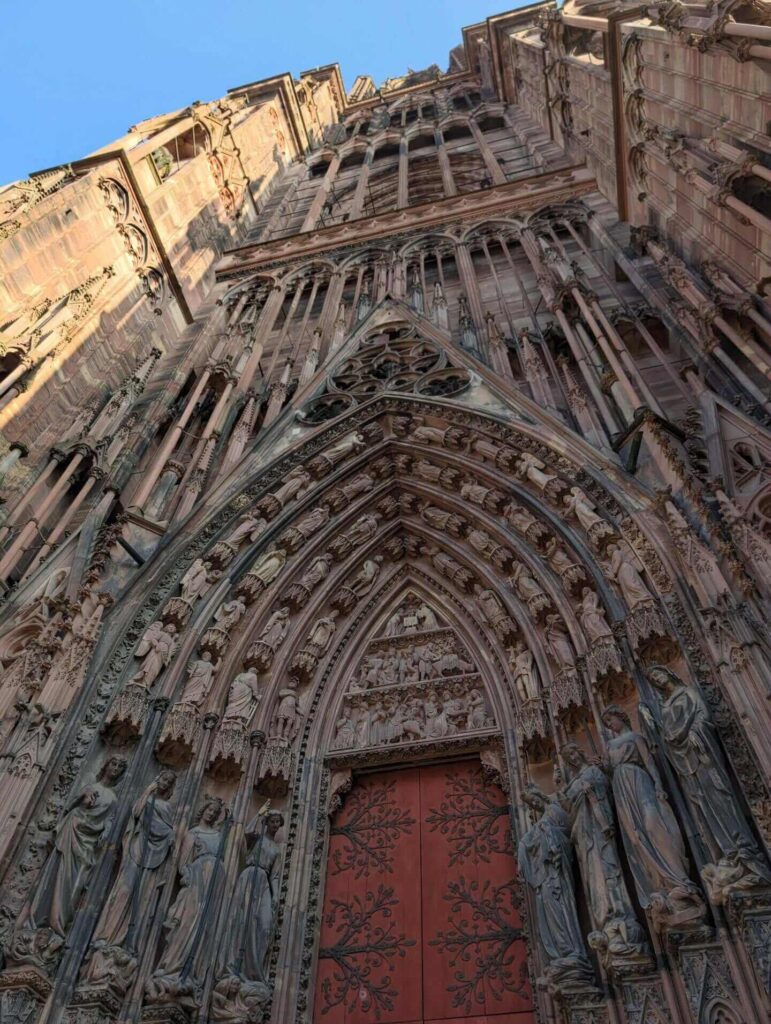
The western facade is often considered one of the finest examples of Gothic architecture in Europe, and it’s not difficult to see why.
Nearly every section of the facade is covered with intricate stonework. Statues of saints, angels, kings, and biblical figures fill niches and arches, while decorative carvings cover the spaces in between. Even if you’re not particularly interested in architecture, the sheer amount of detail is impressive.
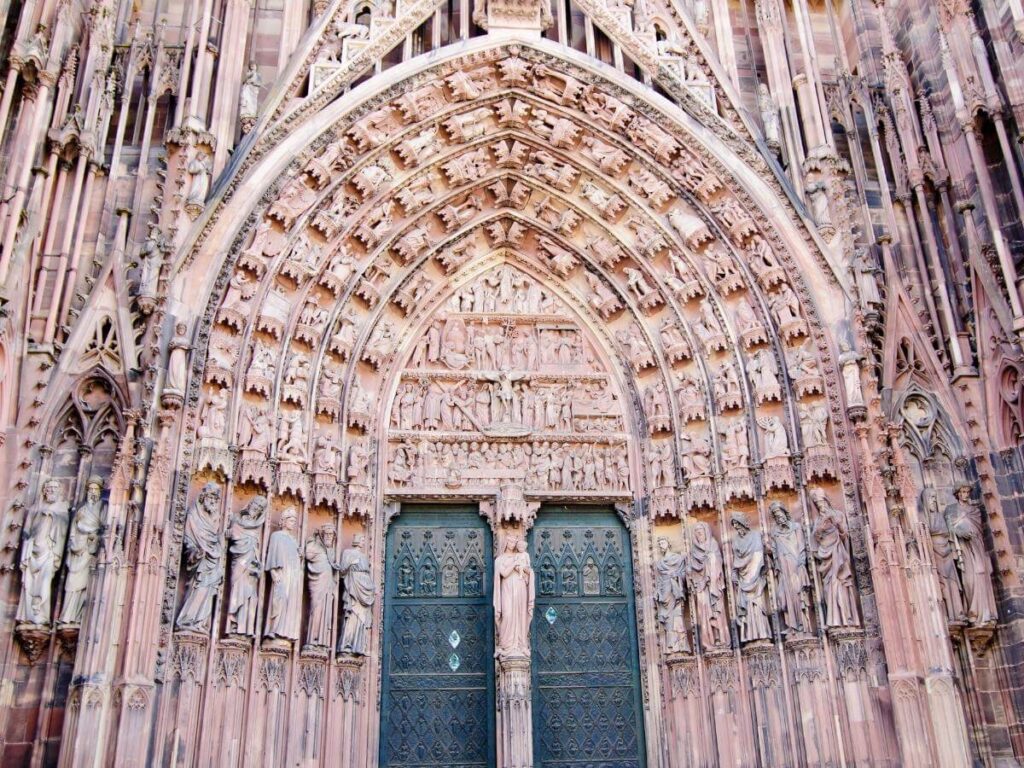
What surprised me most was how easy it is to miss some of the craftsmanship from ground level. The facade is so large that many visitors simply admire it from a distance and move on.
If you have time, step back to appreciate the overall design, then move closer and focus on the smaller details. You’ll start noticing sculptures and carvings that you probably didn’t see at first glance.
The Rose Window
One of the most striking features of the facade is the enormous rose window above the main entrance.
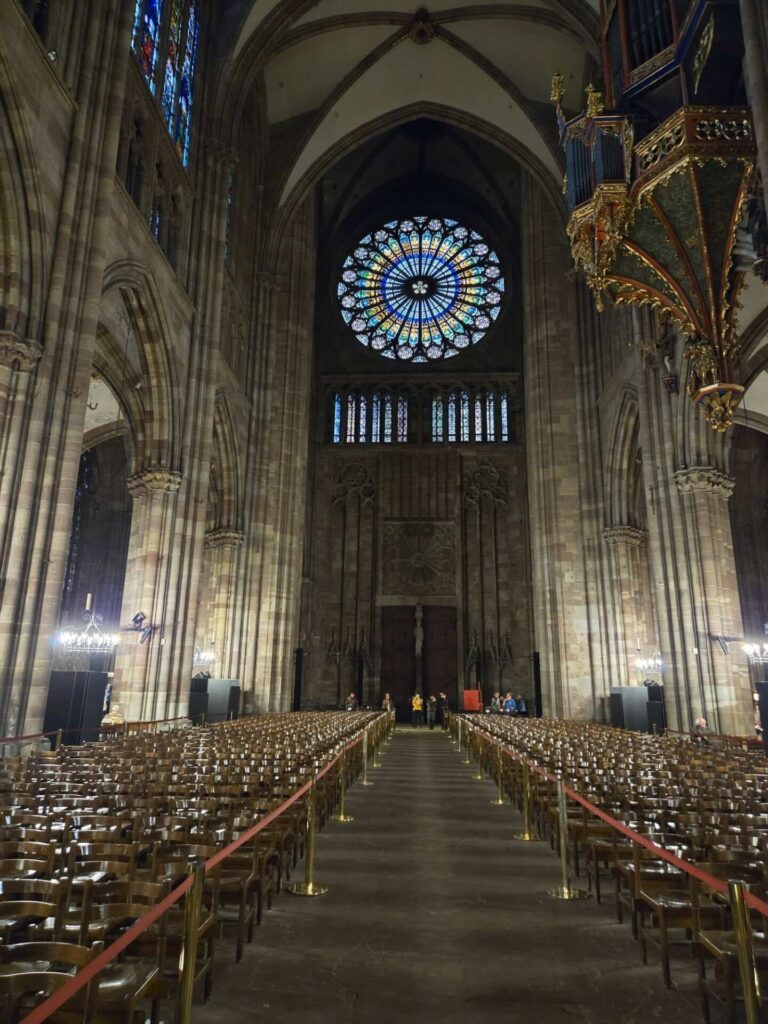
From a distance, it serves as a beautiful focal point, but it’s even more impressive when viewed up close. The delicate stone tracery creates an intricate pattern that feels almost impossible for medieval builders to have achieved without modern technology.
It’s worth taking a few minutes here before entering the cathedral. The craftsmanship becomes even more remarkable when you remember that this window was created centuries ago using tools far simpler than those available today.
The Main Portal
The cathedral’s main entrance is another area that deserves a closer look.
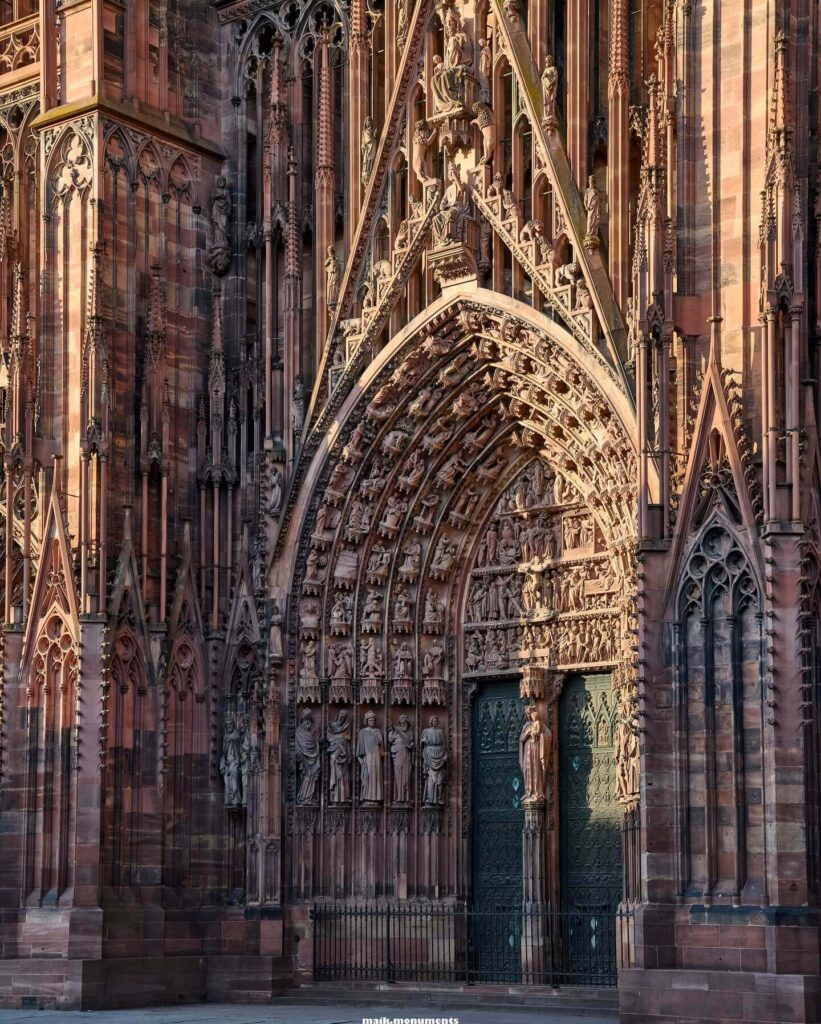
Surrounding the doorway are detailed carvings that depict scenes from Christian tradition. During the Middle Ages, these sculptures served an important purpose. Since many people couldn’t read, the artwork helped communicate religious stories and teachings visually.
Today, even visitors with little knowledge of religious history can appreciate the level of artistry involved. The figures are incredibly expressive, and the amount of detail carved into the stone is remarkable considering its age.
Place de la Cathédrale
The square in front of the cathedral is one of my favorite places to pause and simply take in the view.
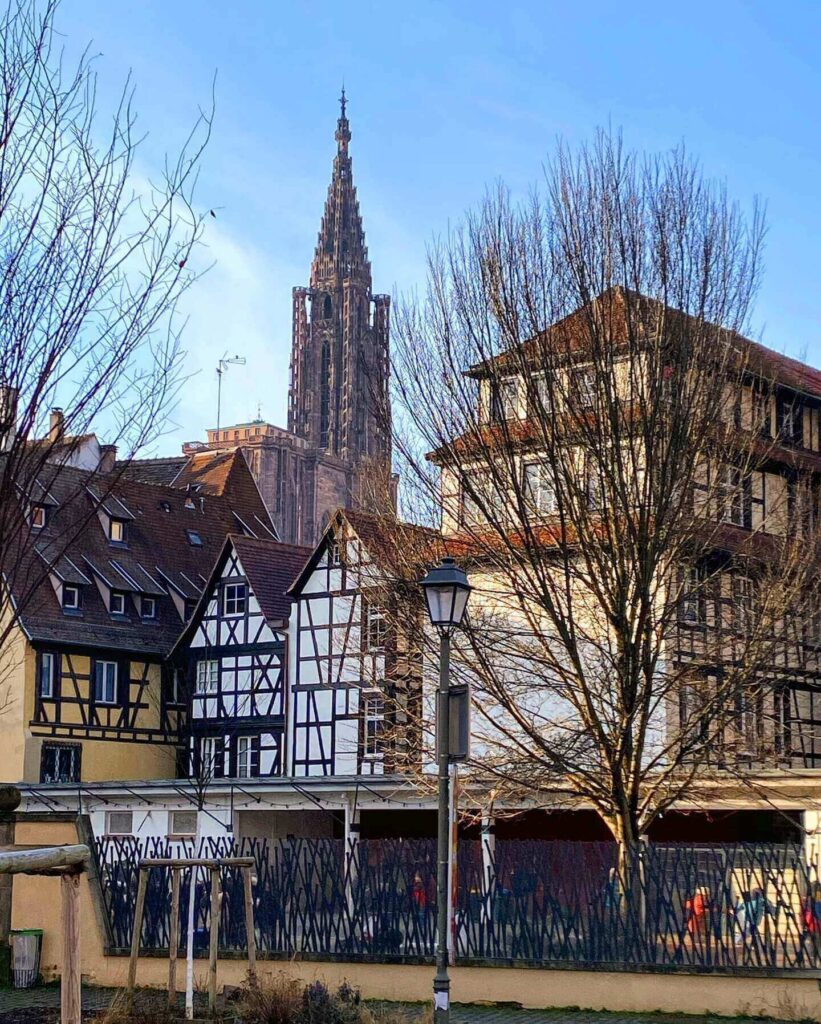
This is where you’ll get the best sense of the cathedral’s scale. Standing in the square and looking up at the towering facade makes it easier to appreciate just how dominant the building is within Strasbourg’s historic center.
The square is also a great place to soak up the atmosphere of the city. You’ll find cafés, restaurants, historic buildings, and plenty of people stopping to admire the cathedral from different angles. If the weather is nice, it’s worth lingering here for a while before continuing your visit.
Seeing the Cathedral After Dark
One of my favorite memories of Strasbourg was returning to the cathedral after sunset.
During the day, Cathedral Square is often busy with visitors, tour groups, and street activity. In the evening, the atmosphere becomes much calmer. The illuminated facade takes on a completely different appearance, with shadows highlighting details that are easy to overlook in daylight.
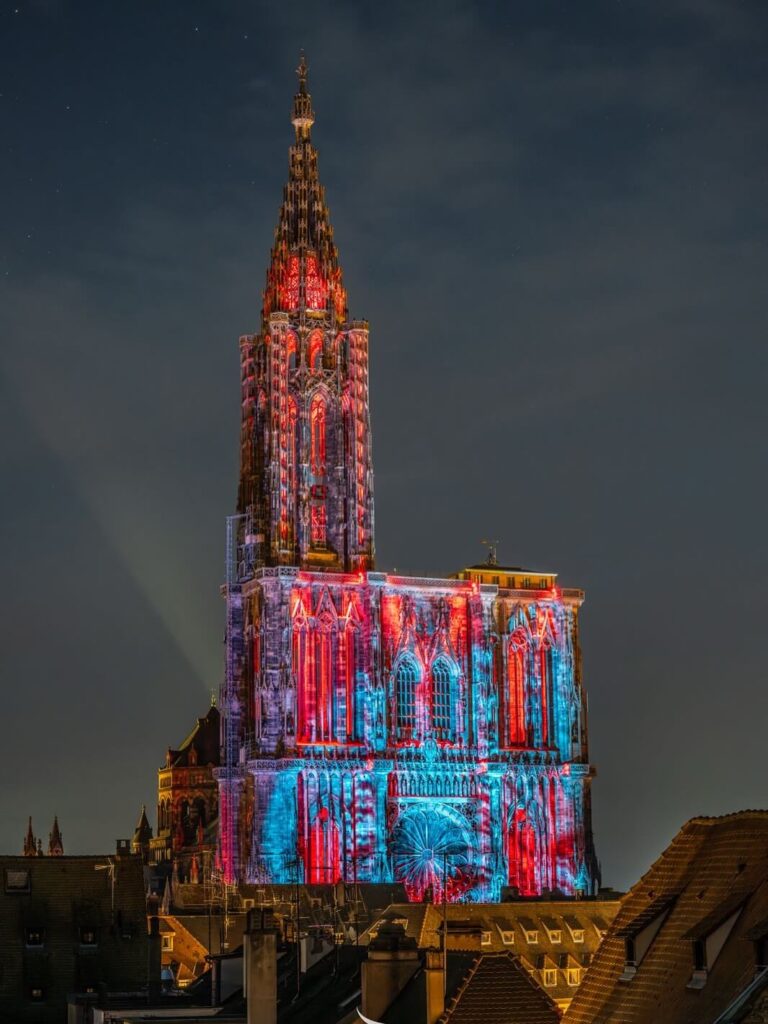
If your schedule allows, try to see Strasbourg Cathedral both during the day and at night. The experience feels surprisingly different, and seeing the building illuminated against the dark sky was one of the highlights of my time in Strasbourg.
What to See Inside Strasbourg Cathedral
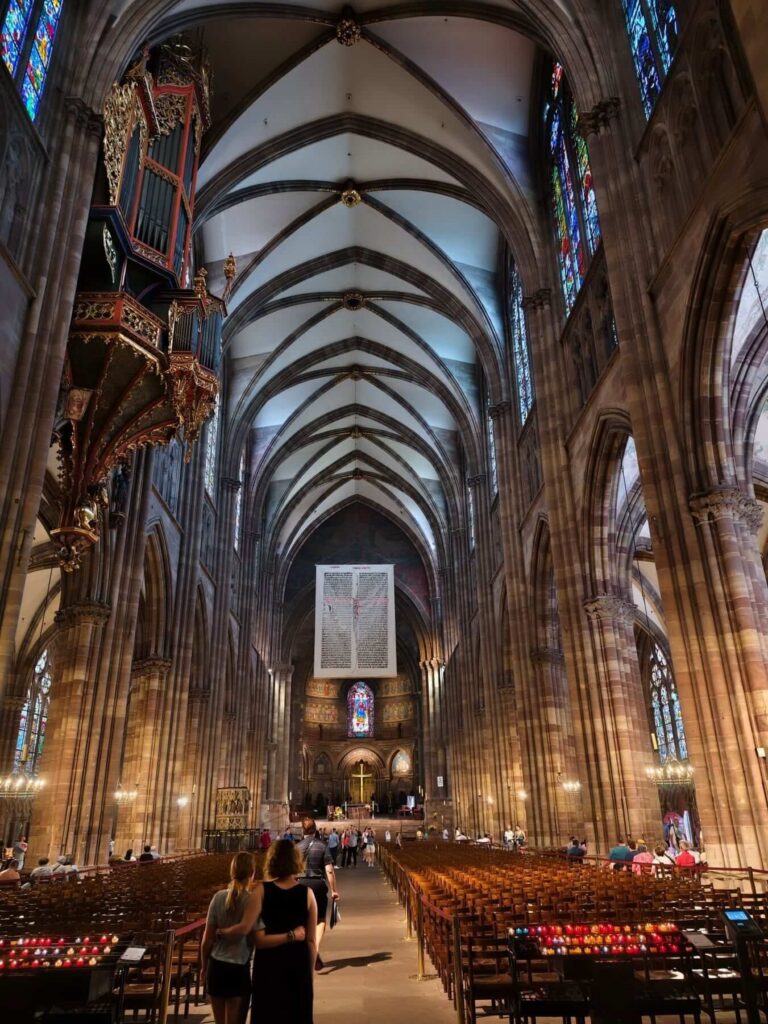
As impressive as Strasbourg Cathedral looks from the outside, I found the interior even more memorable. Stepping through the main entrance feels like entering a completely different world.
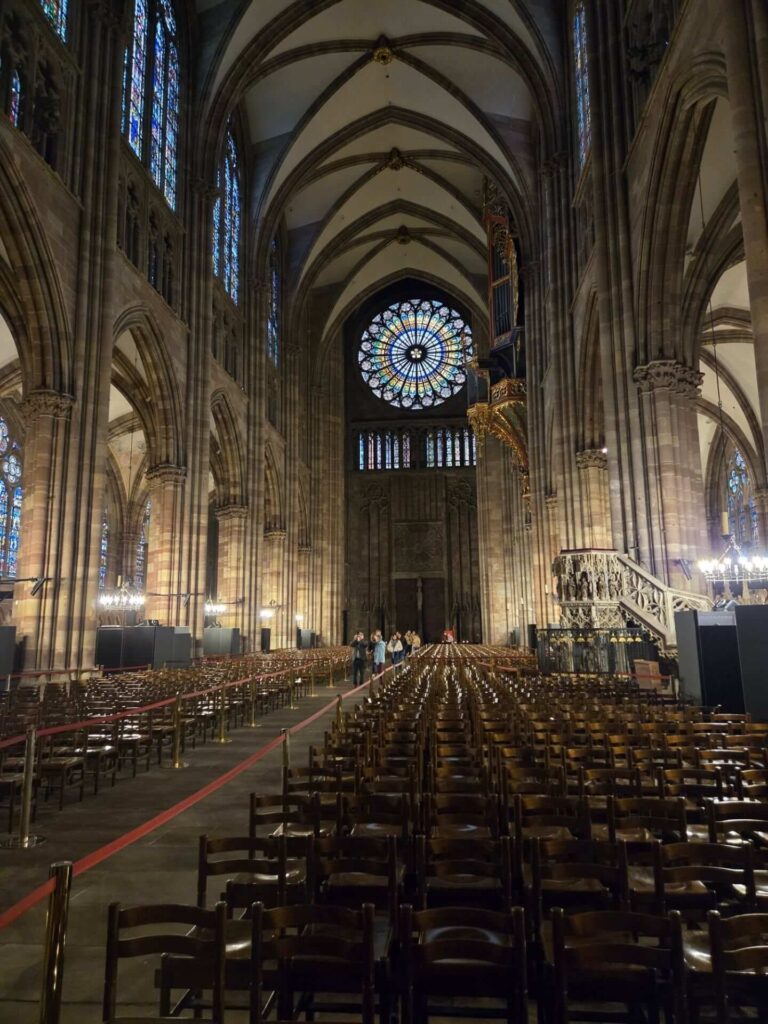
The busy streets and crowds outside quickly fade away, replaced by soaring stone columns, colorful stained glass, and an atmosphere that has remained largely unchanged for centuries.
Even if you’re not someone who typically visits churches while traveling, I’d still recommend taking your time here. Some of the cathedral’s most fascinating details are found inside, and it’s easy to spend an hour or more exploring them.
The Nave
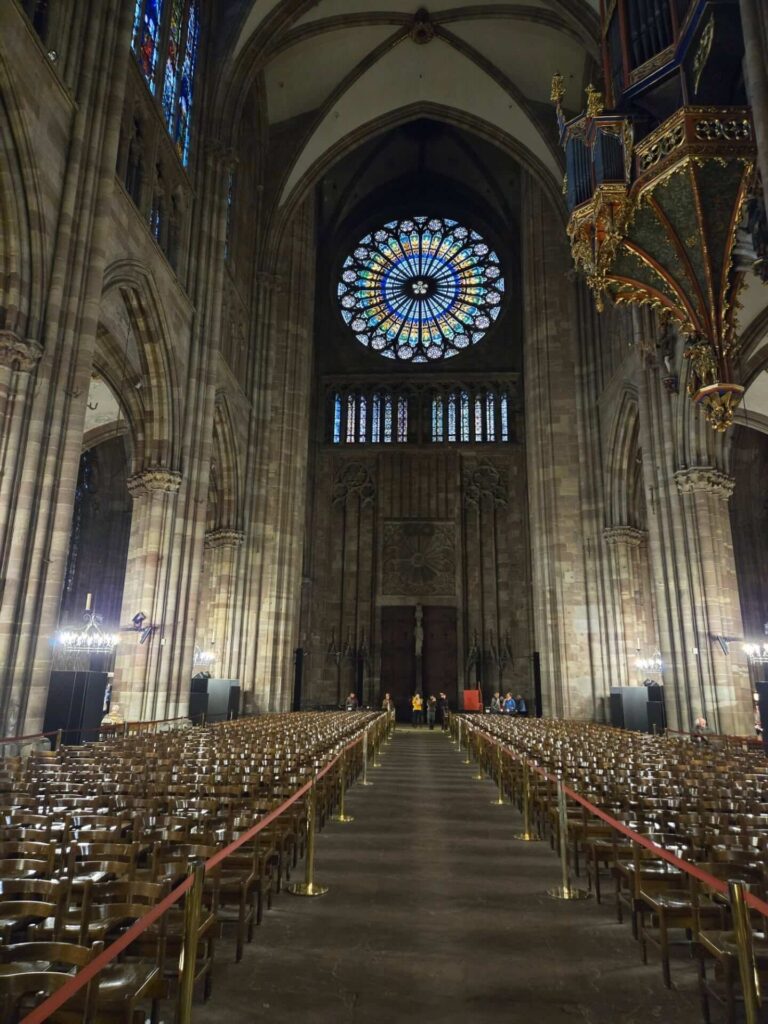
The nave is usually the first thing visitors notice when they enter, and it’s hard not to stop for a moment and simply look around.
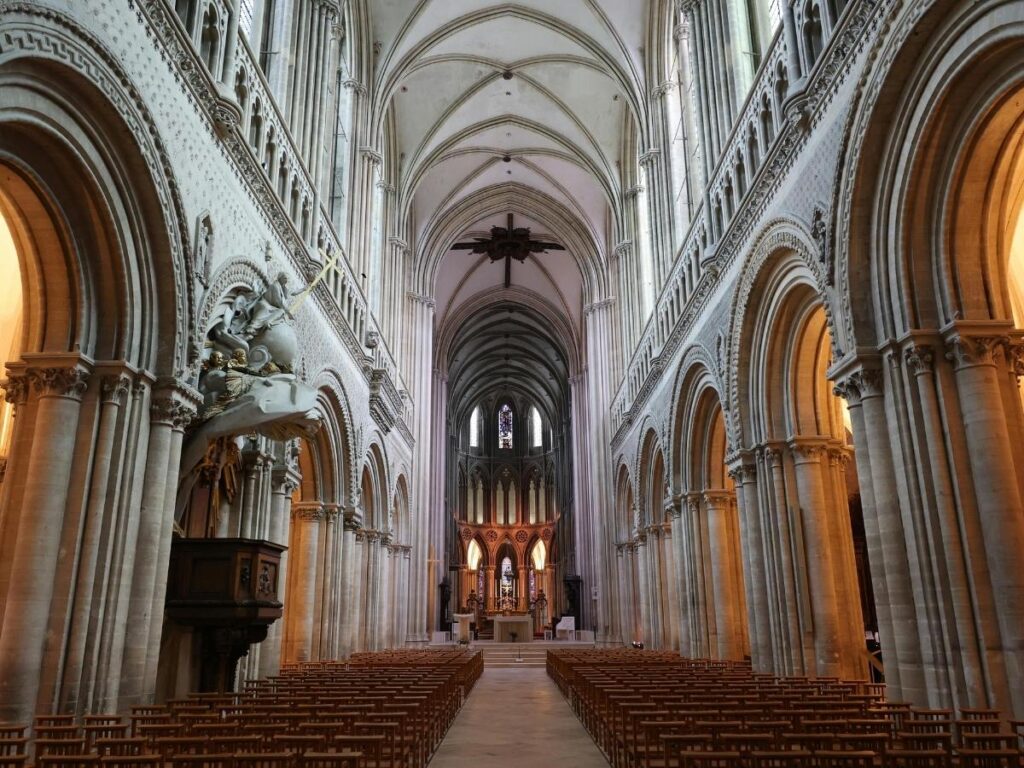
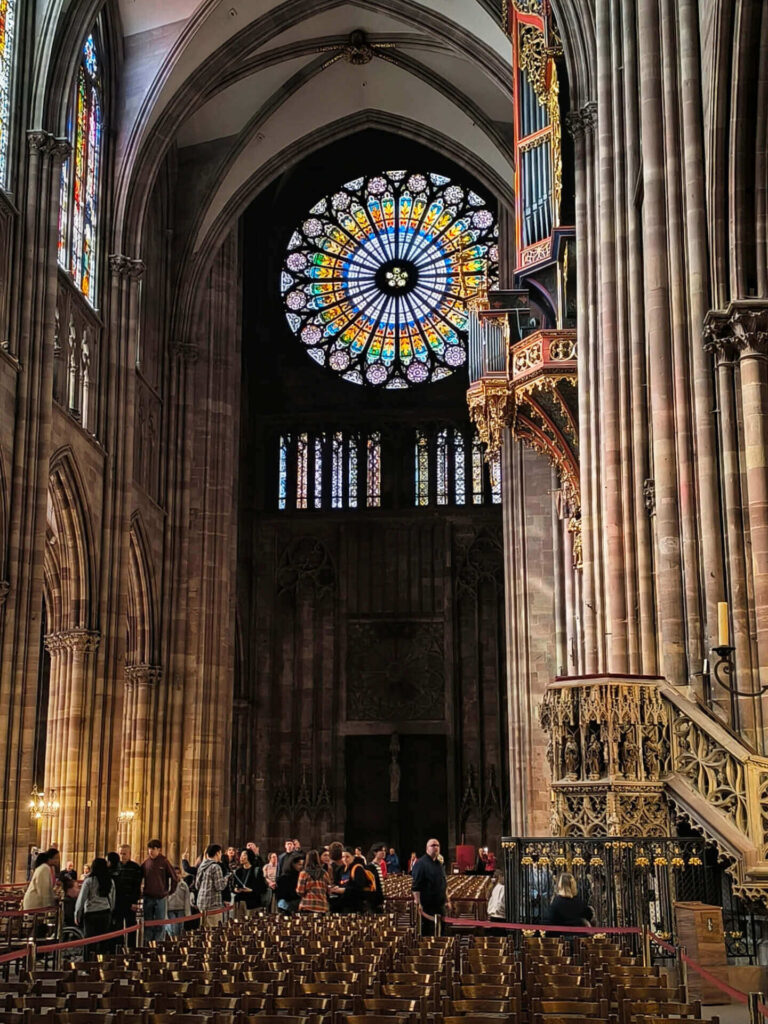
The space feels enormous, with massive stone pillars stretching upward toward the vaulted ceiling. What struck me most wasn’t just the height, but the sense of scale. It’s difficult to imagine that much of what you’re seeing was built hundreds of years ago using medieval tools and techniques.
I wouldn’t rush through this area. Take a few minutes to stand in the center of the nave and look upward. The architecture was intentionally designed to draw your eyes toward the ceiling, creating a sense of grandeur that still feels impressive today.
The Stained Glass Windows
One of the highlights of the cathedral is its collection of stained glass windows, some of which date back to the twelfth and thirteenth centuries.
Considering everything the cathedral has endured over the centuries, including wars and political changes, it’s remarkable that so much of this glass has survived.
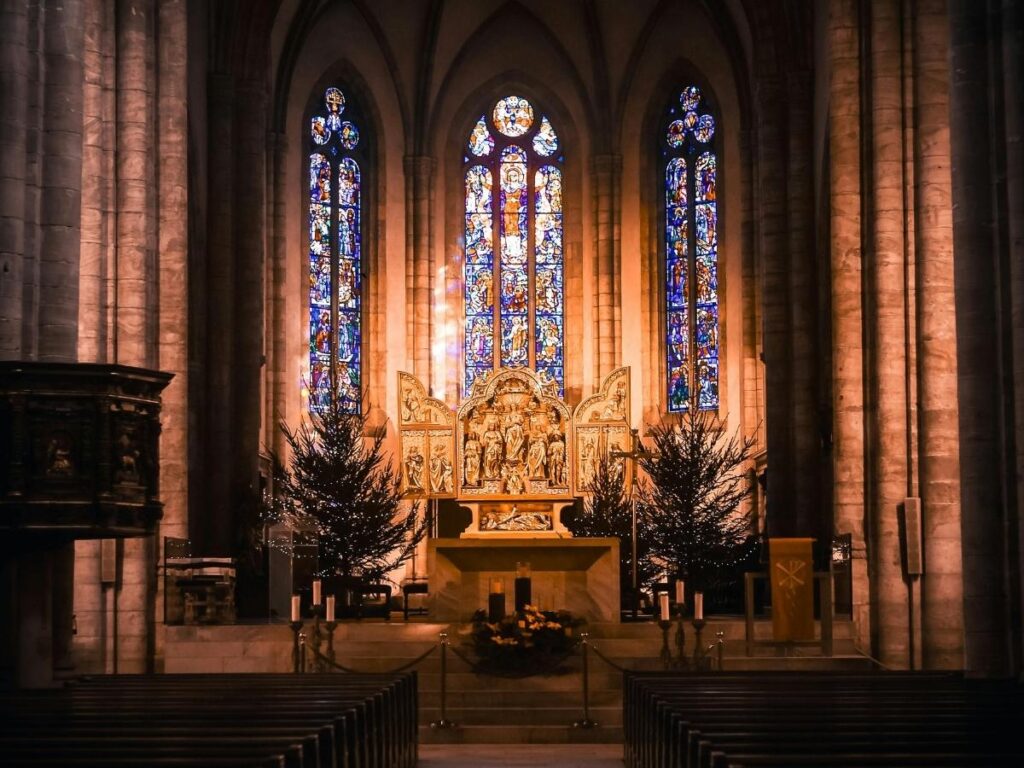
As sunlight passes through the windows, colorful patterns spread across different parts of the interior, creating an atmosphere that changes throughout the day.
If you’re visiting on a sunny day, spend some time walking through different parts of the cathedral and noticing how the light shifts. I found myself repeatedly looking back at windows I had already passed because they appeared completely different as the sunlight changed.
The Pillar of Angels
One of the cathedral’s most famous works of art is the Pillar of Angels, a beautifully carved sculpture dating from the thirteenth century.
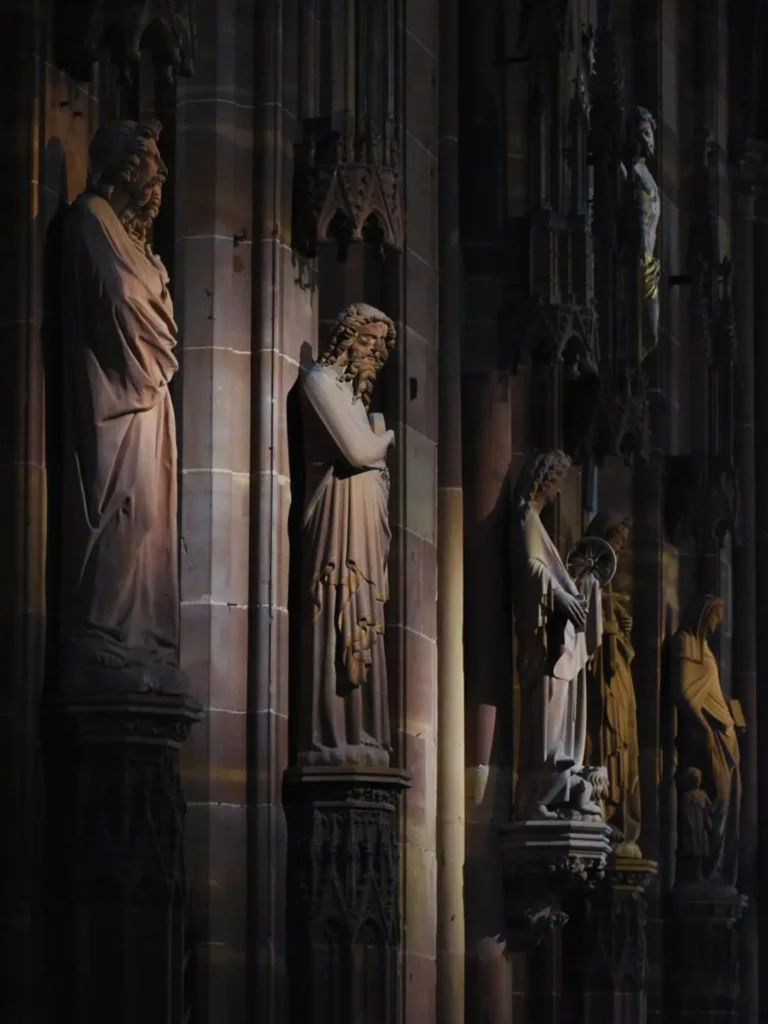
At first glance, it may not seem as dramatic as the cathedral’s towering ceilings or stained glass, but the craftsmanship is extraordinary once you take a closer look. The sculpture features angels surrounding scenes from Christian tradition, with details that have remained remarkably well preserved over the centuries.
It’s also surprisingly easy to miss. Many visitors walk past it without realizing its significance, so it’s worth seeking out during your visit.
The Ornate Pulpit
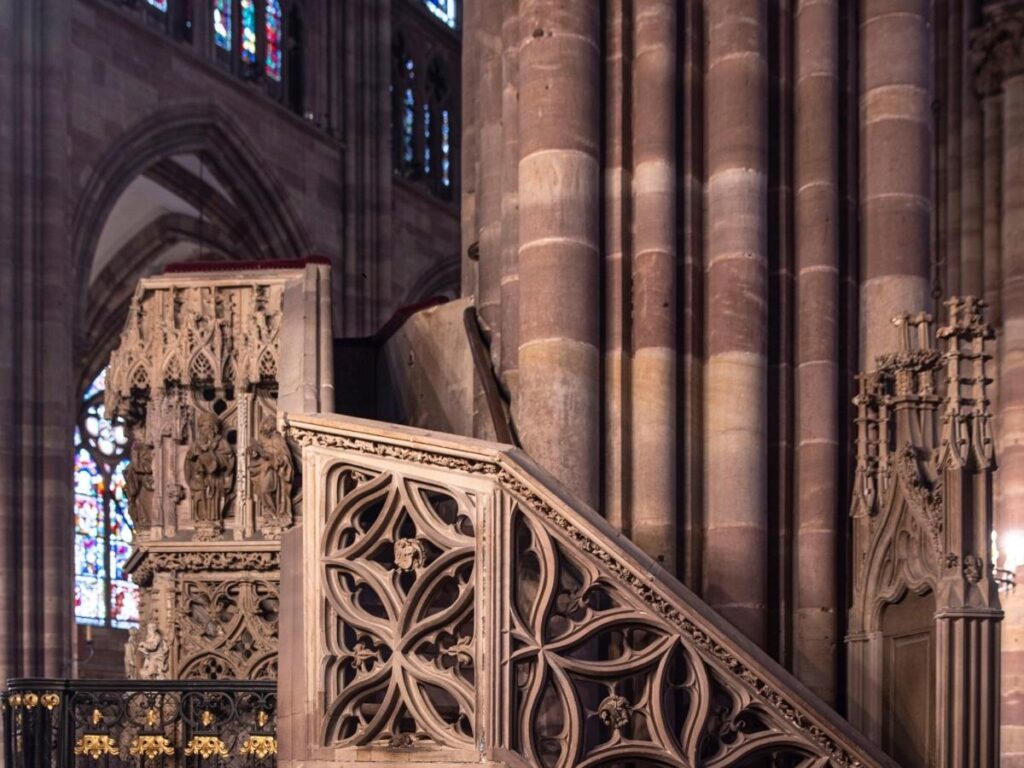
Another feature that caught my attention was the cathedral’s pulpit.
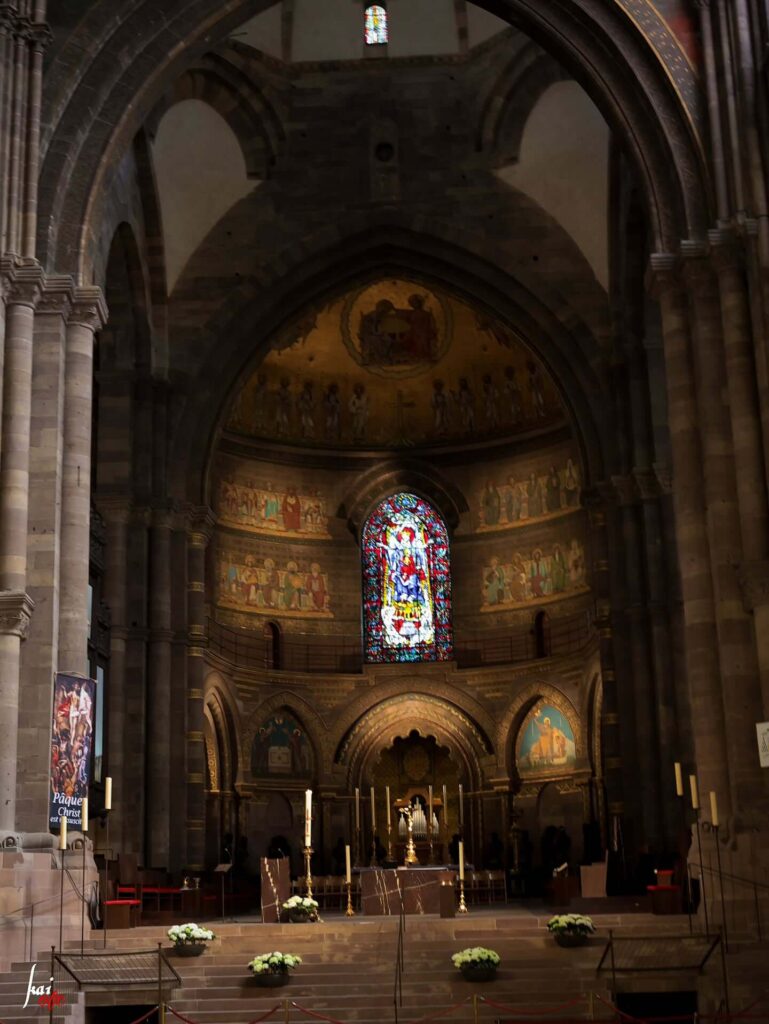
Supported by intricate carvings and decorative figures, it showcases the level of skill medieval craftsmen brought to even the smallest architectural elements. The closer you look, the more details you’ll notice, from delicate stonework to expressive sculpted figures.
Even if you aren’t familiar with religious architecture, it’s easy to appreciate the artistry involved.
The Grand Organ
High above the nave hangs Strasbourg Cathedral’s famous organ, one of the building’s most recognizable interior features.
Before I learned anything about its history, I was drawn to the organ simply because of its appearance. The decorative casing is beautifully detailed and almost looks like a work of art in its own right.
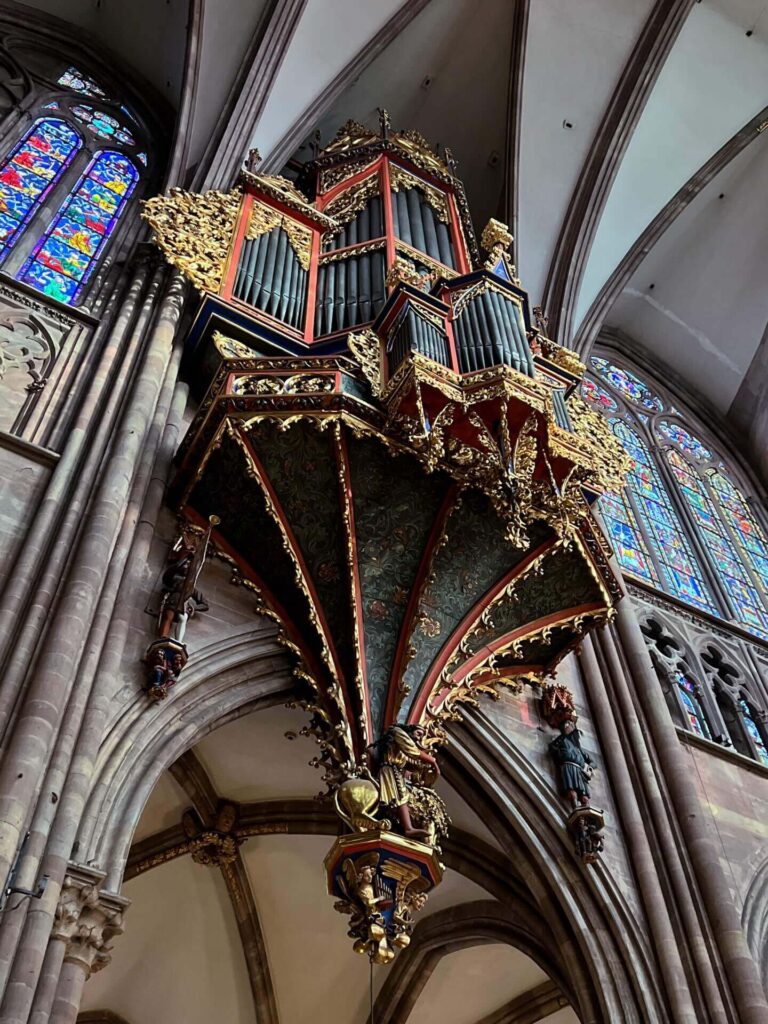
The organ has been modified and restored several times over the centuries, but it remains an important part of the cathedral today. If you’re lucky enough to hear it being played during a service or concert, it adds a completely different dimension to the experience. The sound filling such a vast space is something that’s difficult to forget.
As beautiful as these individual highlights are, one of my favorite things about Strasbourg Cathedral is simply wandering through the interior and taking everything in. Some of the most memorable details aren’t listed on maps or guidebooks.
They’re the small carvings, quiet corners, and unexpected views that you discover while exploring at your own pace.
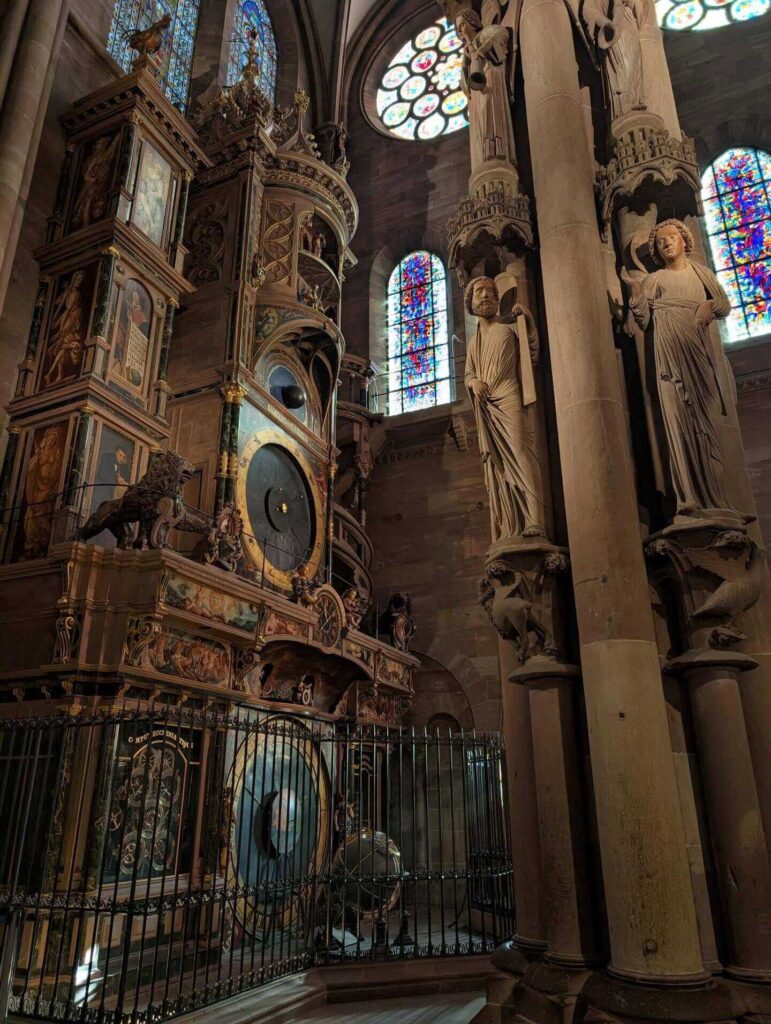
The Astronomical Clock
For many visitors, the astronomical clock is one of the highlights of Strasbourg Cathedral. While the cathedral’s architecture is impressive, this remarkable clock offers something completely different.
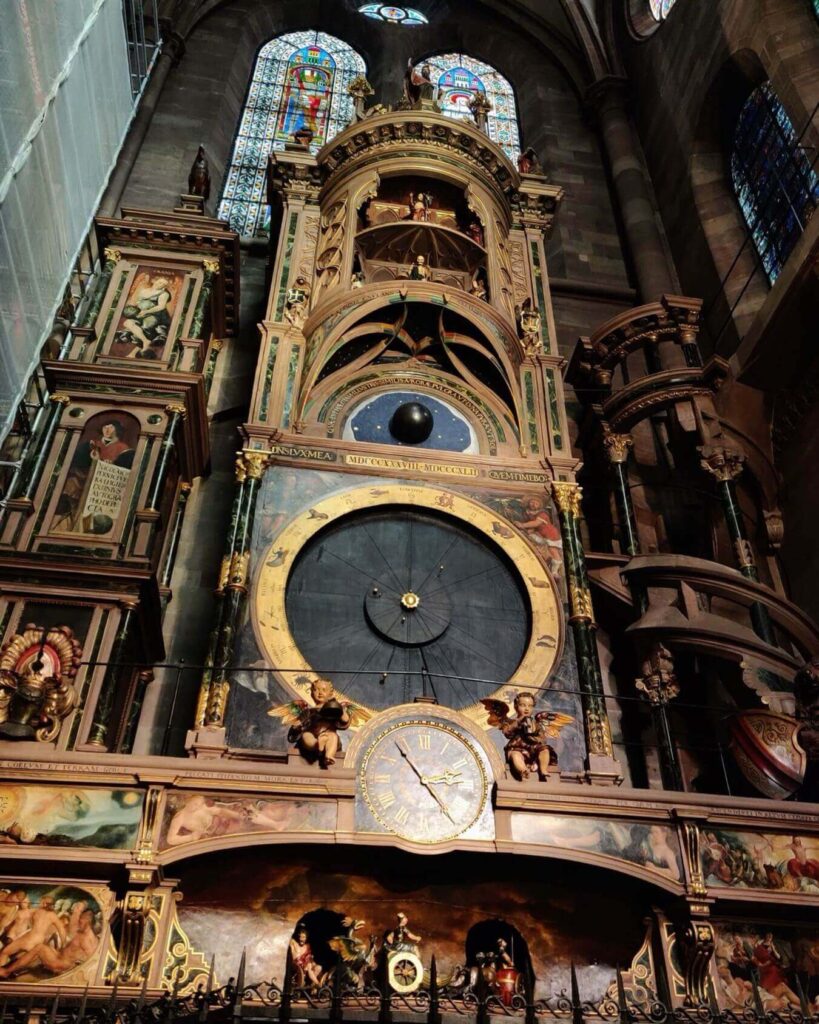
It combines science, religion, art, and engineering in a way that still fascinates visitors today.
What Makes the Astronomical Clock Special?
Built during the Renaissance, the clock does much more than tell the time. It tracks astronomical information, religious holidays, and the movements of the sun and moon, all through an intricate mechanical system created centuries before modern technology existed.
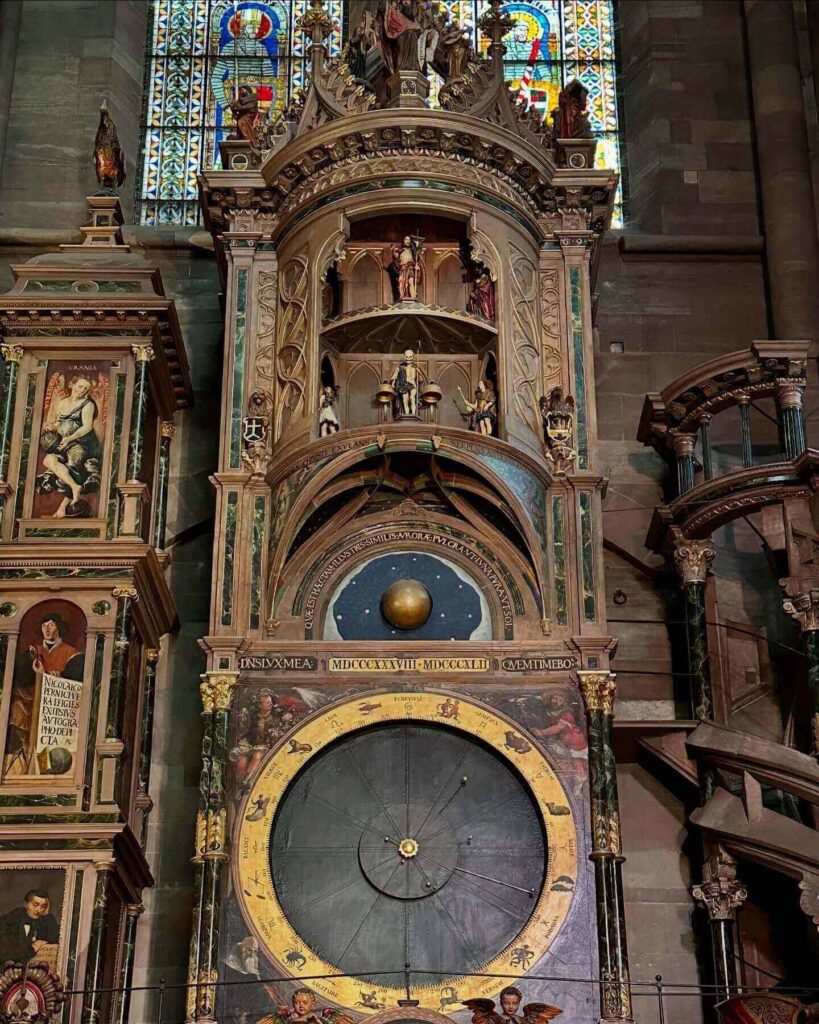
Beyond its technical achievements, the clock is also beautifully decorated with sculptures and detailed artwork, making it as much a work of art as it is a scientific instrument.
The Daily Clock Show
One of the most popular experiences inside the cathedral is watching the clock’s animated display. At a scheduled time each day, a series of moving figures comes to life, showcasing the clock’s remarkable mechanics.
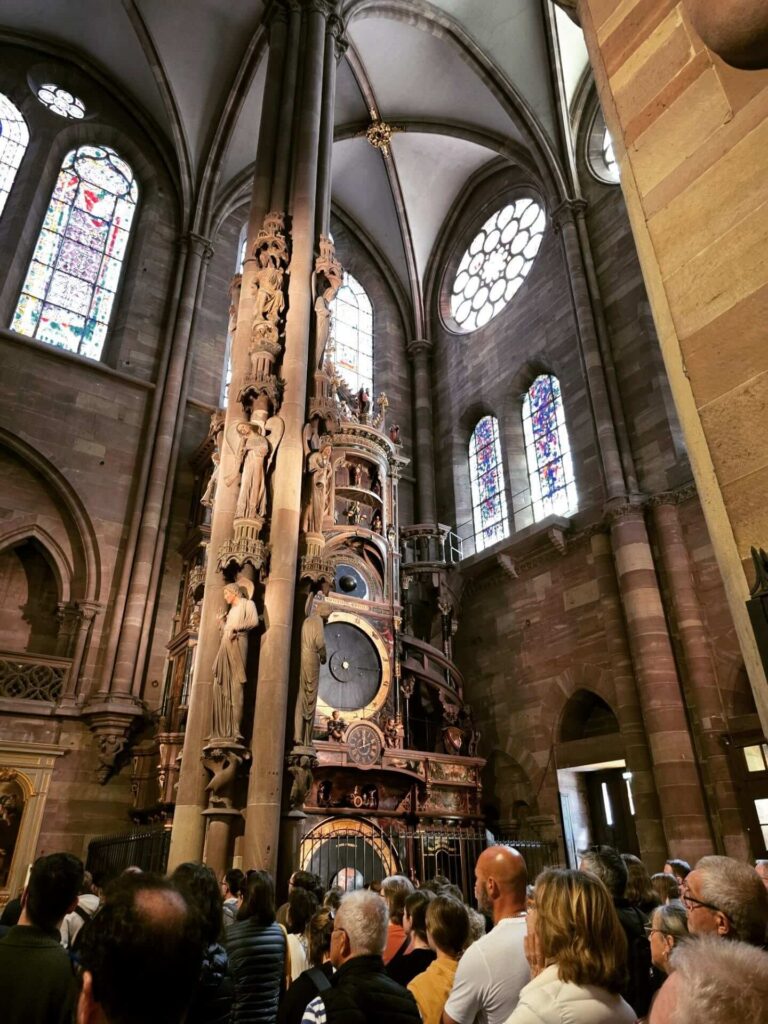
The show only lasts a few minutes, but it’s a fascinating glimpse into the craftsmanship and ingenuity behind one of the world’s most famous astronomical clocks. Since it attracts plenty of visitors, arriving a little early is a good idea.
Is the Astronomical Clock Worth Seeing?
Absolutely. Even if you’re not particularly interested in clocks or engineering, it’s hard not to be impressed by something in this complex that was built hundreds of years ago.
For me, the most fascinating part wasn’t just how the clock works, but the fact that it still functions today. It’s one of the cathedral’s most unique attractions and well worth adding to your visit.
Climbing Strasbourg Cathedral
If you’re comfortable climbing stairs, I think the cathedral tower is one experience you shouldn’t miss. While the interior of Strasbourg Cathedral is beautiful, seeing the city from above gives you a completely different perspective.
It’s also one of the best viewpoints in Strasbourg, especially if it’s your first time visiting and you want to appreciate how the historic center fits together.
Can You Climb Strasbourg Cathedral?
Yes, visitors can climb to the cathedral’s observation platform by purchasing a separate ticket.
The climb takes you through parts of the cathedral that most visitors never see. As you make your way upward, you’ll get a closer look at the building’s stonework and architectural details, which helps you appreciate just how ambitious this project was for its time.
How Many Steps Are There?
The climb involves around 330 steps, and there is no elevator.
While it’s not particularly difficult, you should be prepared for a steady climb. The staircases can feel narrow in some sections, which is typical of medieval structures. Most visitors in reasonable physical condition shouldn’t have any trouble, but comfortable shoes definitely help.
What You’ll See Along the Way
The climb isn’t just about reaching the top. Part of the experience is seeing the cathedral from angles that aren’t visible from the ground.
As you ascend, you’ll notice intricate stone carvings, Gothic architectural details, and sections of the structure that reveal the incredible craftsmanship involved in building the cathedral. It also gives you a better sense of the cathedral’s scale, something that’s difficult to fully appreciate from below.
The View from the Top
Once you reach the observation platform, the effort feels well worth it.
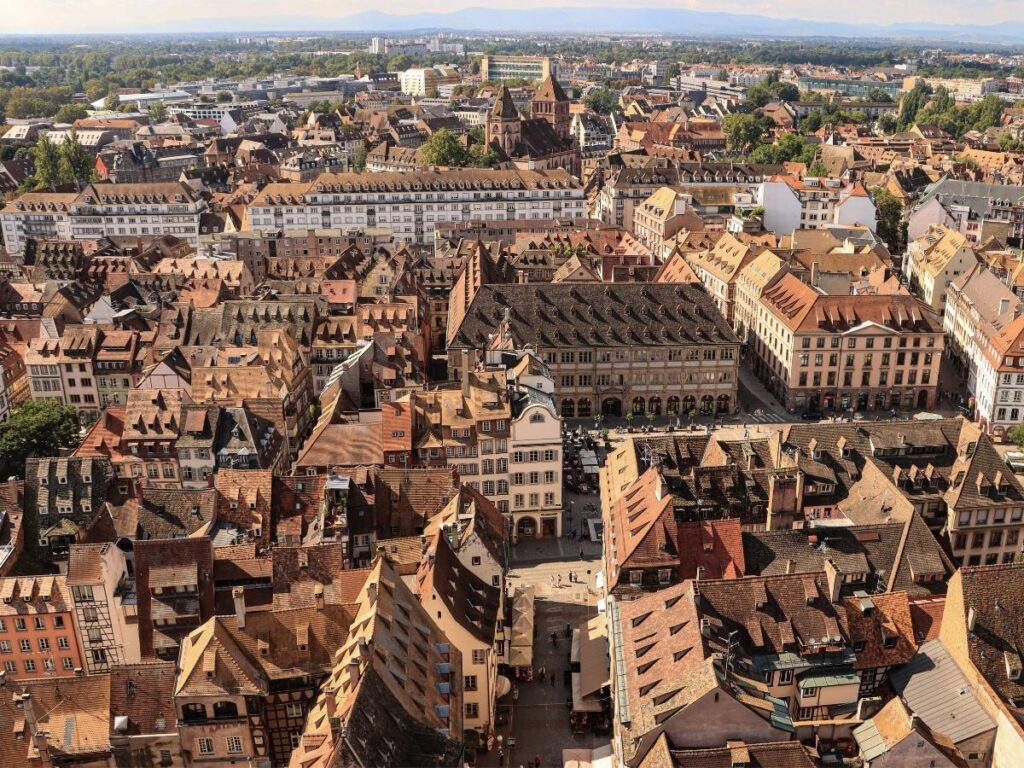
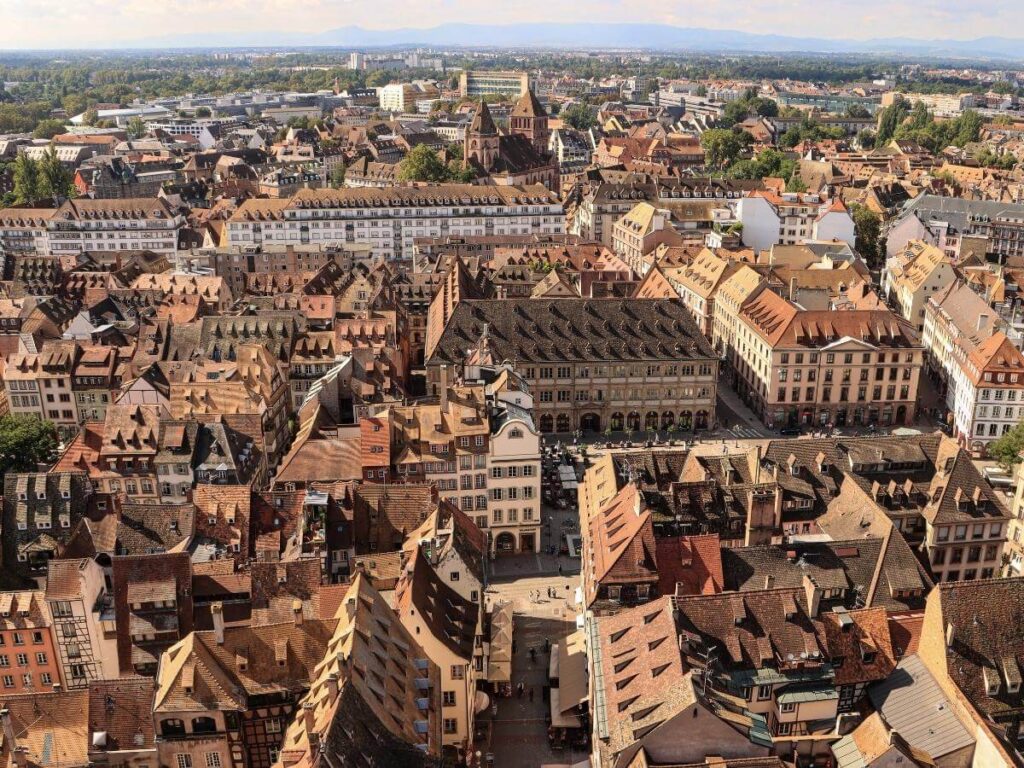
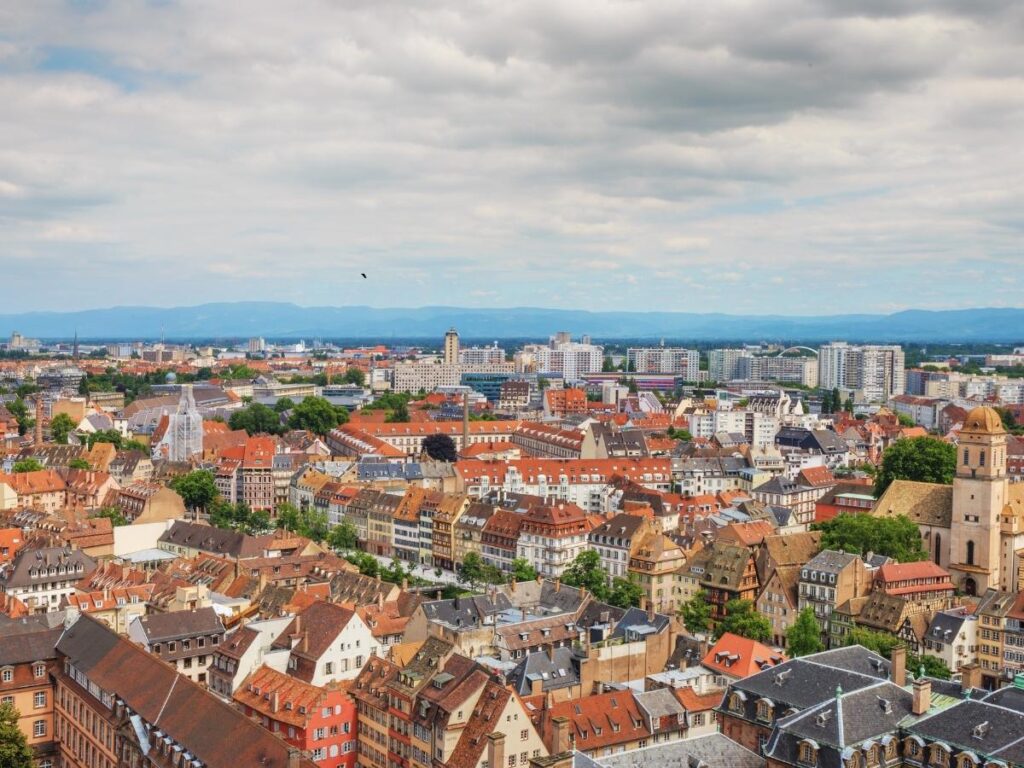
The views stretch across Strasbourg’s historic center, with its maze of narrow streets, church spires, and traditional rooftops. You’ll also be able to spot the Ill River winding through the city and, on a clear day, even see the Vosges Mountains in the distance. Looking east, you may catch glimpses of neighboring Germany across the Rhine.
What I enjoyed most was seeing the contrast between the medieval heart of Strasbourg and the modern city that surrounds it. It’s a perspective you simply can’t get from street level.
Is the Climb Worth It?
For me, absolutely.
If you’re deciding whether to pay for one extra experience at Strasbourg Cathedral, I’d choose the tower climb. The interior is impressive, but the views from the top add another layer to the visit and help you understand the city’s layout and history.
Photographers will especially enjoy the opportunity to capture Strasbourg from above, but even if you’re not interested in photography, the panoramic views alone make the climb worthwhile.
Planning Your Visit to Strasbourg Cathedral
A little planning can make your visit to Strasbourg Cathedral much smoother, especially during weekends and the busy Christmas market season. While the cathedral is easy to visit independently, knowing a few practical details beforehand can help you make the most of your time.
Strasbourg Cathedral Opening Hours
The cathedral is generally open throughout the year, although opening hours can vary due to religious services, special events, and seasonal schedules.
Since Strasbourg Cathedral is still an active place of worship, certain areas may occasionally be inaccessible during services. I recommend checking the official website before your visit if you want the latest opening times or plan to see the astronomical clock.
Strasbourg Cathedral Tickets
One of the best things about visiting Strasbourg Cathedral is that entry to the main cathedral is free.
However, attractions such as the tower climb and the astronomical clock presentation require separate tickets. If you’re visiting during summer or the Christmas season, it’s worth arriving early, as these experiences can be particularly popular.
Accessibility Information
As a medieval building, Strasbourg Cathedral has some accessibility limitations. The main interior is generally accessible, but uneven flooring can be found in certain areas.
The biggest challenge is the tower climb, which involves around 330 steps and no elevator. If accessibility is a concern, it’s a good idea to check the latest visitor information before your visit.
Best Time to Visit Strasbourg Cathedral
One of the great things about Strasbourg Cathedral is that there’s really no bad time to visit. The cathedral is impressive throughout the year, but the atmosphere around it changes quite a bit with the seasons. Depending on what kind of experience you’re looking for, you may find one time of year more appealing than another.
Spring
Spring is probably my favorite season to visit Strasbourg Cathedral. After the quieter winter months, the city begins to come alive again. Outdoor cafés reopen, flowers start appearing around the historic center, and the streets feel lively without being overwhelmingly crowded.
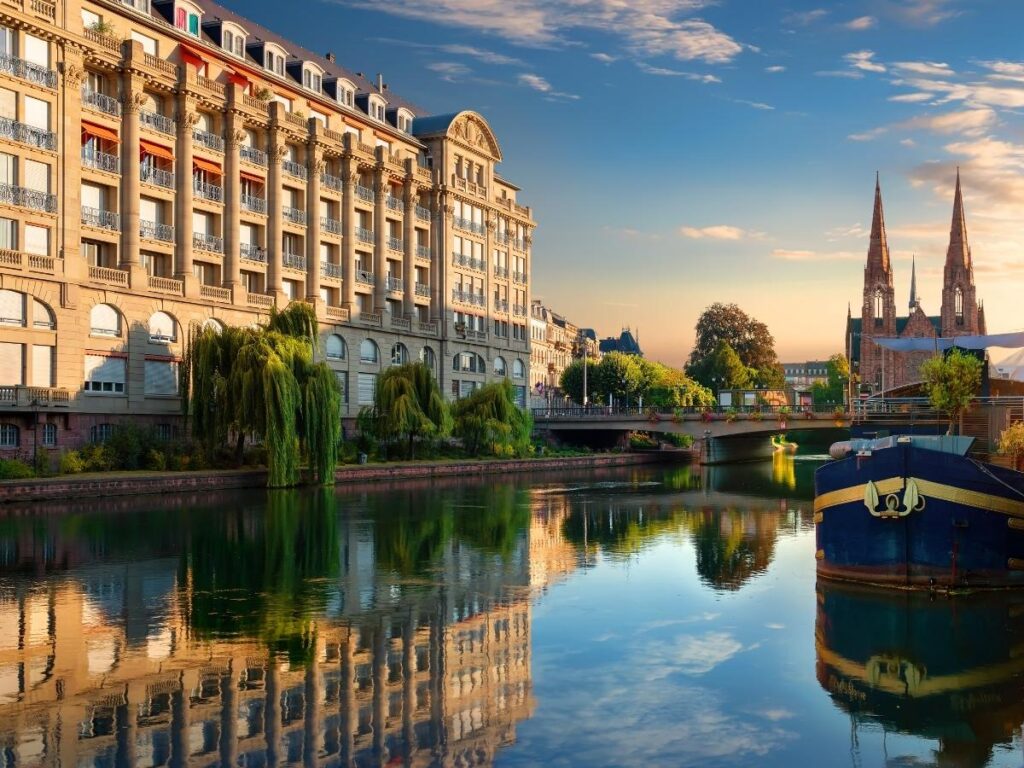
The weather is usually comfortable for walking, which makes it easy to combine a cathedral visit with exploring nearby areas like Grand Île and La Petite France. Spring is also a great time for photography, as the softer light and generally mild conditions make spending time outdoors much more enjoyable.
Summer
Summer is the busiest time of year in Strasbourg, and you’ll immediately notice the extra energy around Cathedral Square. The longer daylight hours mean you have plenty of time for sightseeing, outdoor dining, and evening strolls through the historic center.
The downside is that you’ll be sharing the experience with more visitors. Popular attractions such as the cathedral tower and astronomical clock can attract larger crowds, especially during the middle of the day. If you’re visiting in summer, I’d recommend arriving early in the morning when the square is quieter and the temperatures are more comfortable.
Fall
Fall is one of Strasbourg’s most underrated seasons. The summer crowds begin to thin out, but the weather often remains pleasant enough for sightseeing and outdoor exploration.
I particularly enjoy this time of year because the city feels a little more relaxed. The softer autumn light is excellent for photography, and the cooler temperatures make walking around the historic center much more comfortable. If you prefer fewer crowds while still enjoying good weather, fall can be an excellent choice.
Winter
Winter offers a completely different experience and is arguably the most atmospheric time to visit Strasbourg Cathedral.
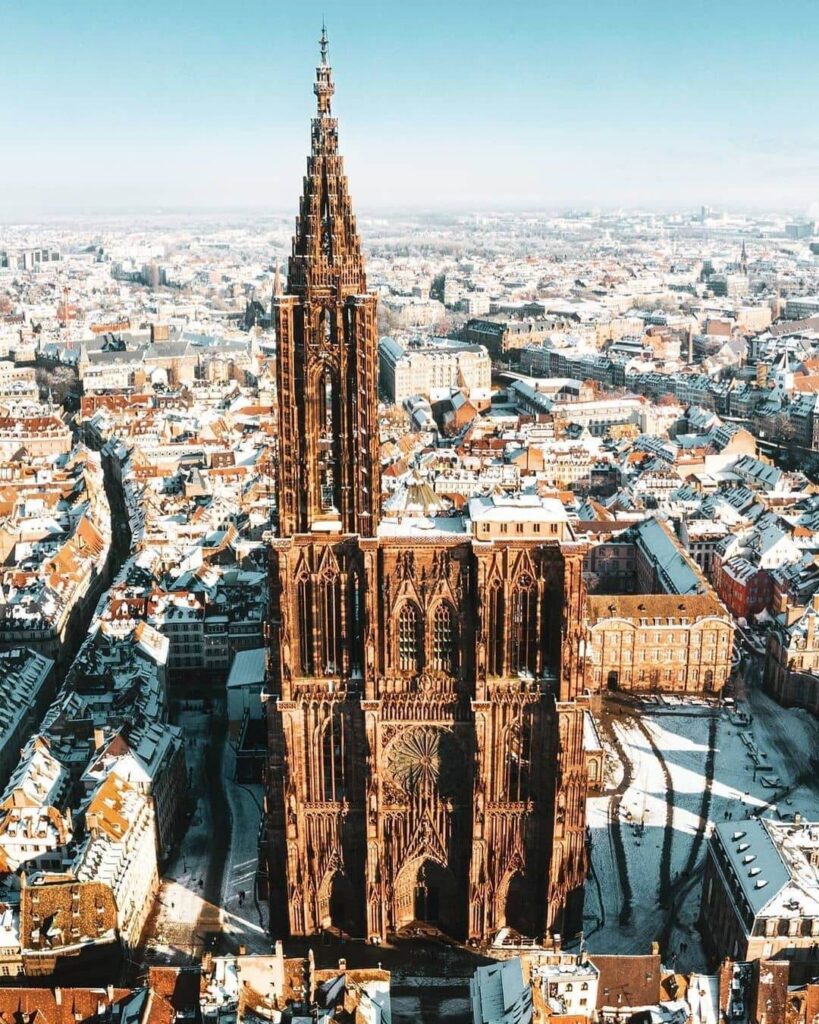
As temperatures drop, festive lights and seasonal decorations begin appearing throughout the city. The cathedral takes on a particularly magical appearance when illuminated in the evening, especially against the backdrop of Strasbourg’s holiday celebrations.
While the weather can be cold, winter is one of the most memorable times to visit. Seeing the cathedral lit up after dark, surrounded by festive decorations and bustling streets, creates an atmosphere that’s difficult to find elsewhere in Europe.
Visiting During the Strasbourg Christmas Market
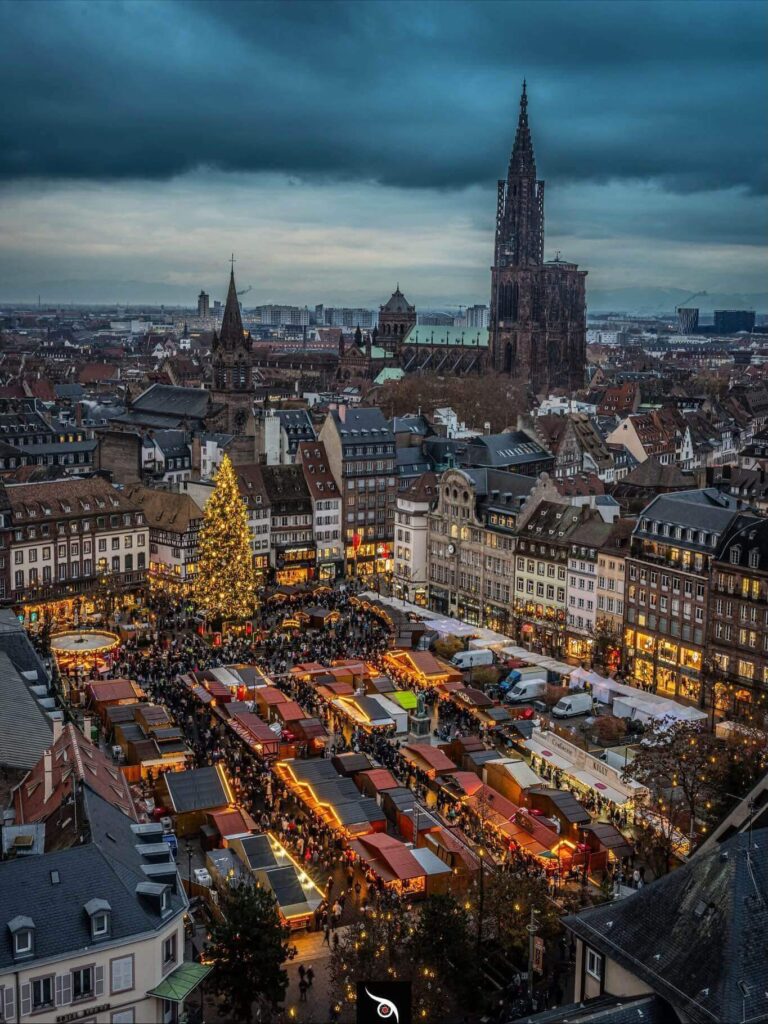
If you’re visiting in late November or December, you’ll experience one of Europe’s most famous Christmas markets. The cathedral becomes one of the focal points of the celebrations, surrounded by festive stalls, decorations, and twinkling lights.
Crowds are much larger during this period, but seeing Strasbourg Cathedral illuminated during the Christmas season is one of the most memorable experiences the city has to offer.
How Much Time Do You Need?
How long you spend at Strasbourg Cathedral really depends on how interested you are in history, architecture, and photography. While it’s possible to see the main highlights fairly quickly, I think the cathedral is one of those places that rewards slowing down and looking beyond the obvious landmarks.
Quick Visit
If you’re short on time, 30 to 45 minutes is enough to see the cathedral’s main highlights.
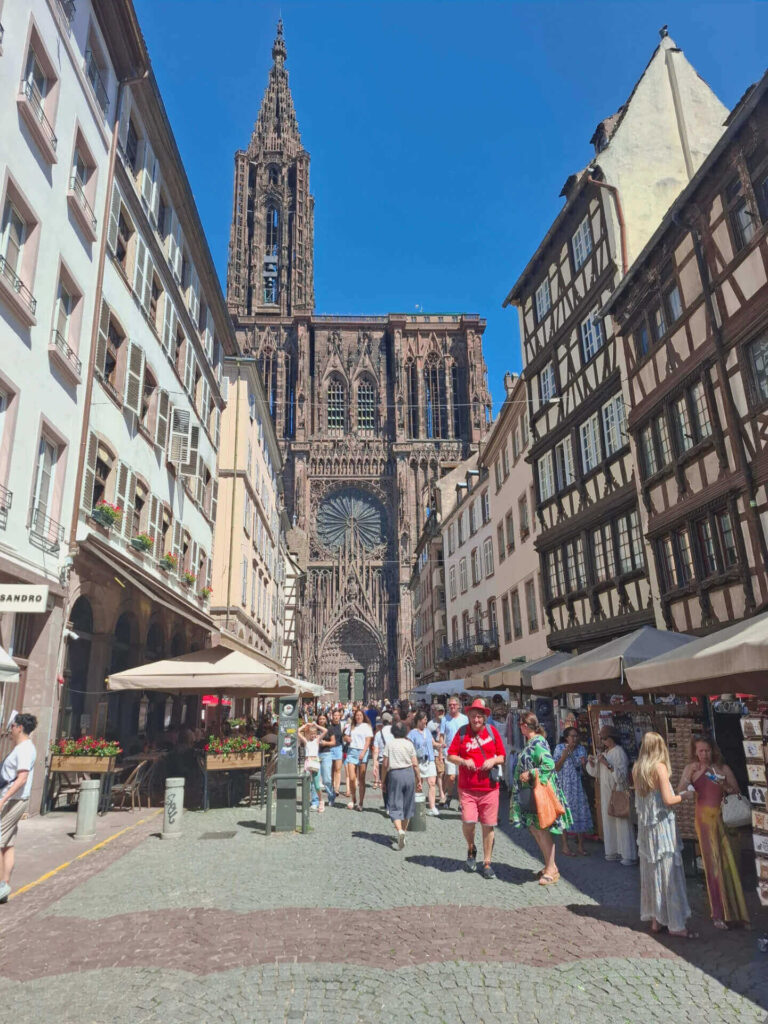
During a quick visit, you can admire the impressive exterior, step inside to explore the nave, and see some of the cathedral’s most famous features. This works well for travelers visiting Strasbourg on a day trip or those trying to fit several attractions into a limited schedule.
Standard Visit
For most visitors, I’d recommend setting aside at least one to two hours.
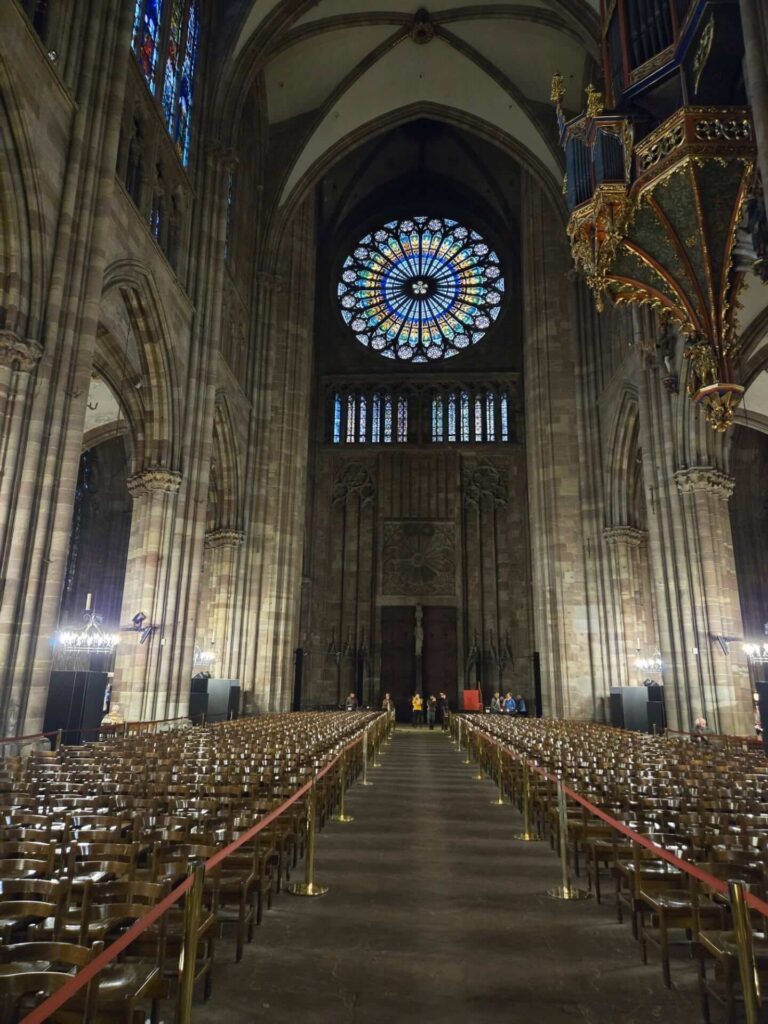
This gives you enough time to explore the interior at a comfortable pace, admire the stained glass windows, see the astronomical clock, and spend some time walking around Cathedral Square. You’ll also have time to stop for photos and appreciate details that are easy to miss when rushing through.
Things to Do Near Strasbourg Cathedral
One of the best things about visiting Strasbourg Cathedral is its location. Many of the city’s top attractions are just a short walk away, making it easy to build an entire day of sightseeing around the cathedral.
Explore La Petite France
After visiting the cathedral, I highly recommend heading to La Petite France.
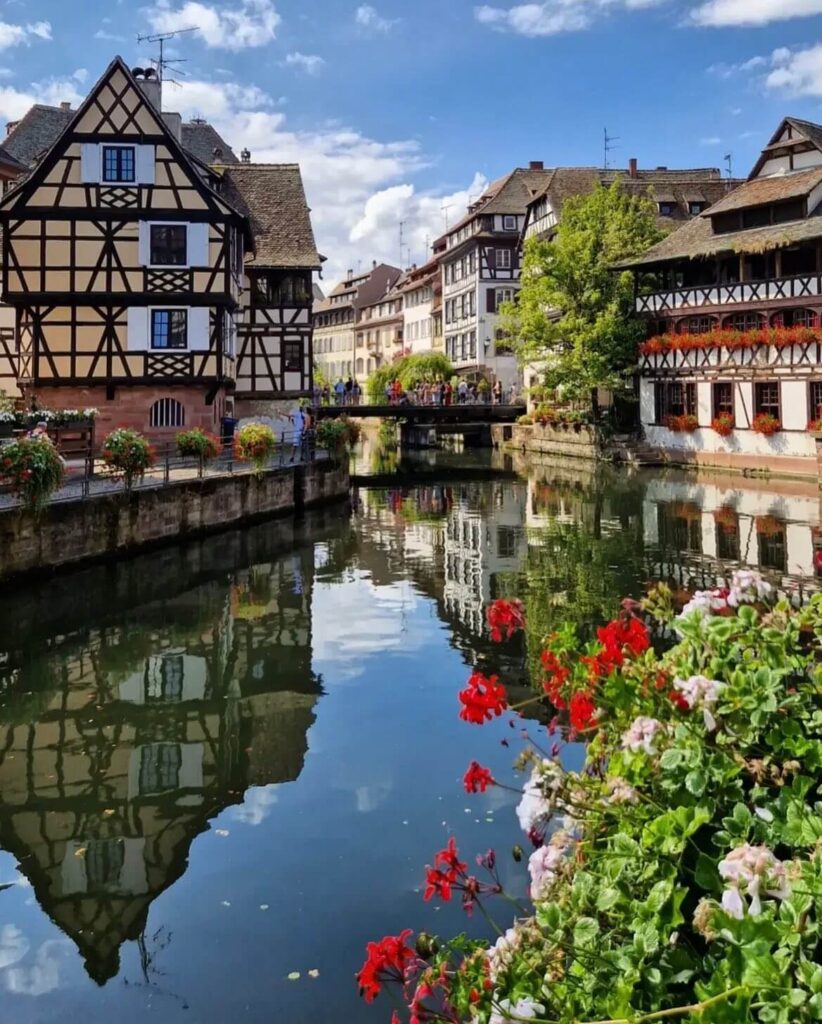
This is one of Strasbourg’s most photographed neighborhoods, known for its canals, flower filled bridges, and traditional half timbered houses. It’s the kind of area where I found myself wandering without any particular destination, simply enjoying the atmosphere and stopping whenever something caught my eye.
There are also plenty of cafés and restaurants along the waterfront if you’re ready for a break after sightseeing.
Visit Palais Rohan
Located right next to the cathedral, Palais Rohan is one of Strasbourg’s most important historic buildings.
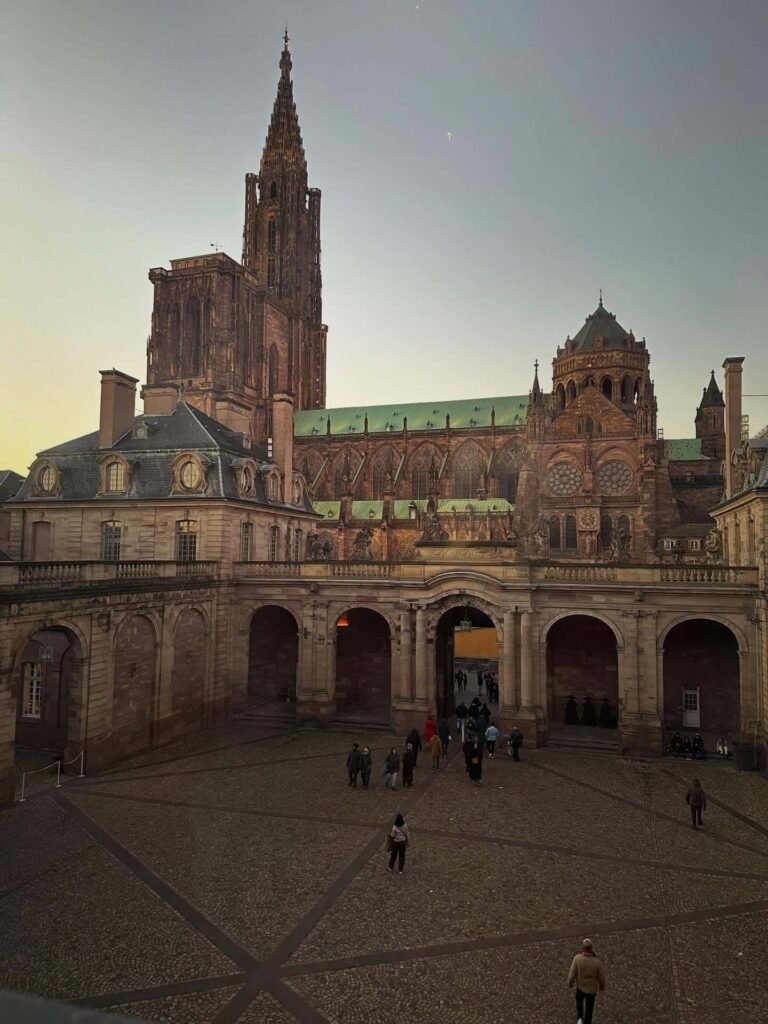
The former prince bishops’ palace now houses several museums covering art, archaeology, and decorative arts. Even if you don’t visit the museums, the building itself is worth seeing for its elegant architecture and historical significance.
Walk Through Grand Île
The cathedral sits within Grand Île, Strasbourg’s UNESCO listed historic center.
One of my favorite ways to experience Strasbourg is simply by wandering through its narrow streets and squares. You’ll come across beautiful historic buildings, hidden courtyards, and charming corners that don’t always appear in guidebooks.
Take a Canal Cruise
If you’ve spent most of your time exploring on foot, a canal cruise offers a completely different perspective of the city.
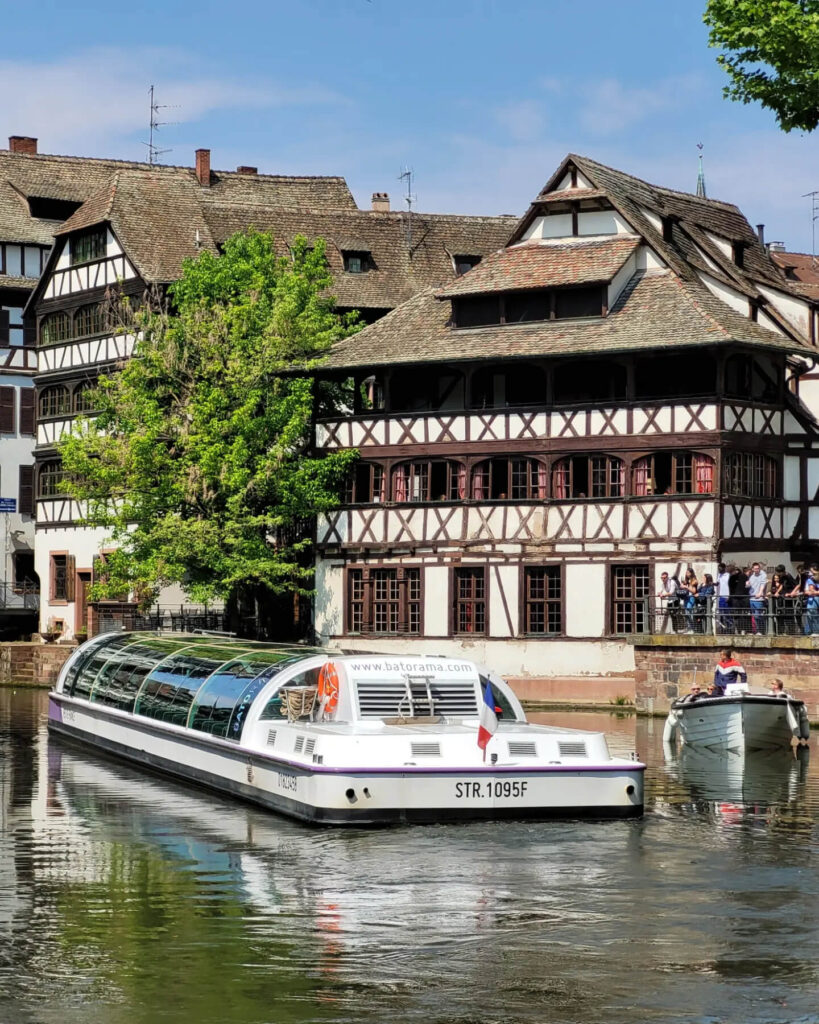
The boats pass through several parts of Strasbourg, allowing you to see the historic center, waterways, and some of the city’s most important landmarks from the water. It’s also a relaxing way to take a break from walking.
Try Traditional Alsatian Cuisine
No visit to Strasbourg feels complete without trying some local food.
The streets surrounding the cathedral are filled with traditional restaurants serving Alsatian specialties. Dishes such as flammekueche, choucroute, and baeckeoffe are popular local favorites, while kugelhopf is worth trying if you’re looking for something sweet.
Whether you stop for a quick lunch or a leisurely dinner, the area around the cathedral offers plenty of opportunities to experience the region’s unique blend of French and German culinary traditions.
Suggested Strasbourg Cathedral Itineraries
One thing I love about Strasbourg Cathedral is how easy it is to fit into almost any itinerary. Whether you’re visiting Strasbourg on a day trip or spending several days exploring Alsace, the cathedral can be the centerpiece of your visit.
Here are a few itinerary ideas based on how much time you have available.
If You Only Have One Hour
If your time is limited, focus on the cathedral’s highlights rather than trying to see everything.
Start by walking around Cathedral Square to admire the exterior and take in the scale of the building. Then head inside to explore the nave, stained glass windows, and astronomical clock. Before leaving, spend a few minutes wandering around the square and nearby streets, which offer some of the best views of the cathedral.
An hour won’t allow you to see every detail, but it’s enough to experience what makes Strasbourg Cathedral so special.
Half Day Strasbourg Walking Route
If you have a morning or afternoon available, the cathedral works perfectly as the starting point for a walking tour of Strasbourg’s historic center.
Begin at Strasbourg Cathedral and take your time exploring both the exterior and interior. From there, walk next door to Palais Rohan before continuing through the streets of Grand Île, the city’s UNESCO listed historic center.
Finish your walk in La Petite France, where canals, bridges, and half timbered houses create some of Strasbourg’s most recognizable scenery. A leisurely lunch beside the water is a great way to end the experience.
One Day Strasbourg Highlights Itinerary
If you’re spending a full day in Strasbourg, I would start early at the cathedral before the crowds arrive.
Begin with a visit inside the cathedral, followed by the astronomical clock and the tower climb. The morning light is often excellent for photography, and the city tends to be quieter.
In the afternoon, take a canal cruise and spend time exploring La Petite France and the surrounding historic neighborhoods. This is also the perfect opportunity to enjoy a traditional Alsatian lunch and experience more of Strasbourg’s local culture.
As evening approaches, return to the cathedral area. Watching the light change across the pink sandstone facade is one of my favorite experiences in Strasbourg. After sunset, the illuminated cathedral creates a completely different atmosphere and provides a memorable end to the day.
Is Strasbourg Cathedral Worth Visiting?
Absolutely.
Even if you’ve visited famous churches elsewhere in Europe, Strasbourg Cathedral still manages to feel unique. Its distinctive pink sandstone exterior, soaring Gothic architecture, remarkable astronomical clock, and panoramic tower views all combine to create an experience that goes far beyond simply visiting another cathedral.
What stood out to me most was how connected the cathedral feels to the city around it. It isn’t a monument that sits apart from everyday life. Instead, it feels woven into the streets, squares, and daily rhythm of Strasbourg. No matter where you walk in the historic center, the cathedral always seems to be part of the view.
I also think it’s one of those attractions that appeals to a wide range of travelers. History enthusiasts will appreciate its centuries of stories, architecture lovers can spend hours studying the details, and photographers will find endless angles both inside and outside the building.
If you’re visiting Strasbourg for the first time, I wouldn’t hesitate to place the cathedral at the top of your itinerary.
Conclusion
Strasbourg Cathedral is much more than the city’s most famous landmark. It’s a place where history, architecture, art, and culture come together in a way that’s difficult to appreciate until you see it for yourself.
From the intricate facade and centuries old stained glass windows to the famous astronomical clock and panoramic views from the tower, there is far more to discover than many first time visitors expect. Whether you spend thirty minutes exploring the highlights or several hours diving into the details, the cathedral leaves a lasting impression.
If possible, I’d recommend visiting both during the day and after dark. Seeing the cathedral illuminated in the evening offers a completely different perspective and was one of the highlights of my time in Strasbourg.
Whether you’re spending a weekend in the city or exploring the wider Alsace region, Strasbourg Cathedral is one attraction that’s well worth making time for.