
The first thing that surprised me about the Camargue was how much open space there is. You can drive for miles with marshes, rice fields and ponds around you, then suddenly spot a group of white horses in the distance or flamingos gathered in the shallow water.
The scenery feels very different from the Provence many people picture. There are no hilltop villages around every corner. Instead, the Camargue is flat and open, with wetlands, salt marshes, beaches and fields stretching toward the Mediterranean. It can feel quiet at first, but once you slow down, there’s plenty to notice.
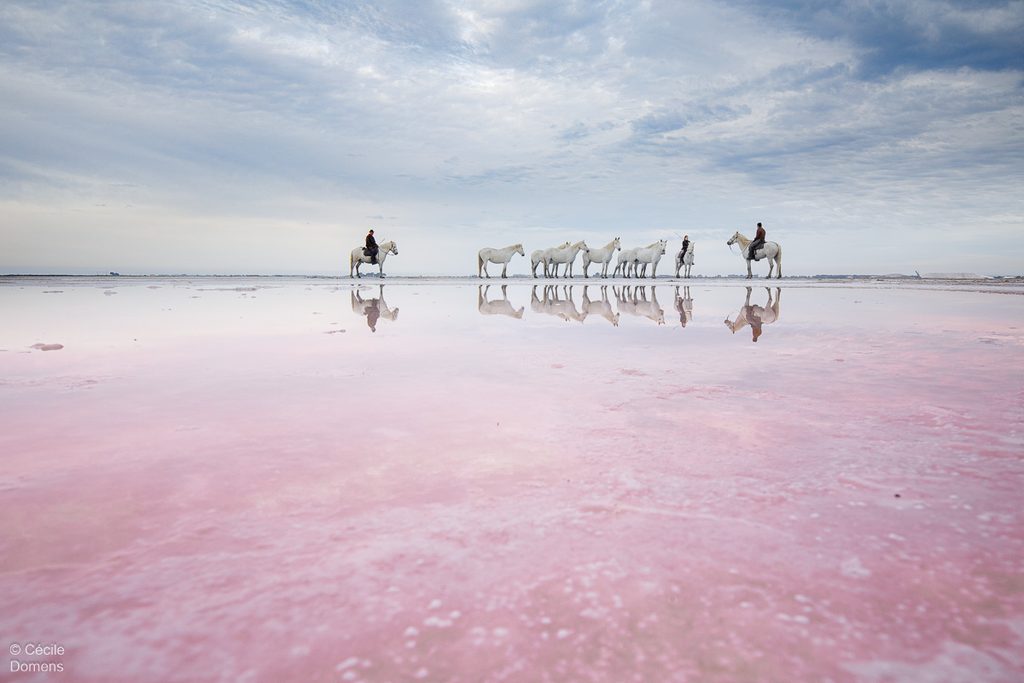
The wildlife is a big part of the experience, especially the flamingos, white horses and black bulls. But I also enjoyed the chance to see the more traditional side of the region, from gardians and working ranches to horseback riding and local food.
One thing I’d plan carefully is transportation. The Camargue is much larger than it looks, and many of the places worth visiting are spread out. A car makes things easier, although you can visit without one if you choose your base carefully and plan your days around tours, bikes and public transport.
In this guide, I’ll cover the best places to visit, where to see wildlife, the beaches, local food and traditions, where to stay, how to get around, the best time to visit, and how I’d plan a Camargue trip depending on how many days you have.
What Is the Camargue?
The Camargue is a large wetland area in southern France, where the Rhône River reaches the Mediterranean. It covers more than 100,000 hectares across Arles, Saintes Maries de la Mer and Port Saint Louis du Rhône, with around 75 kilometres of coastline.
When you visit, you’re exploring a whole region rather than one attraction. The landscape is made up of lagoons, salt marshes, rice fields, reed beds, beaches and open countryside. The distances can be bigger than they look, so I’d avoid trying to see everything in one day.
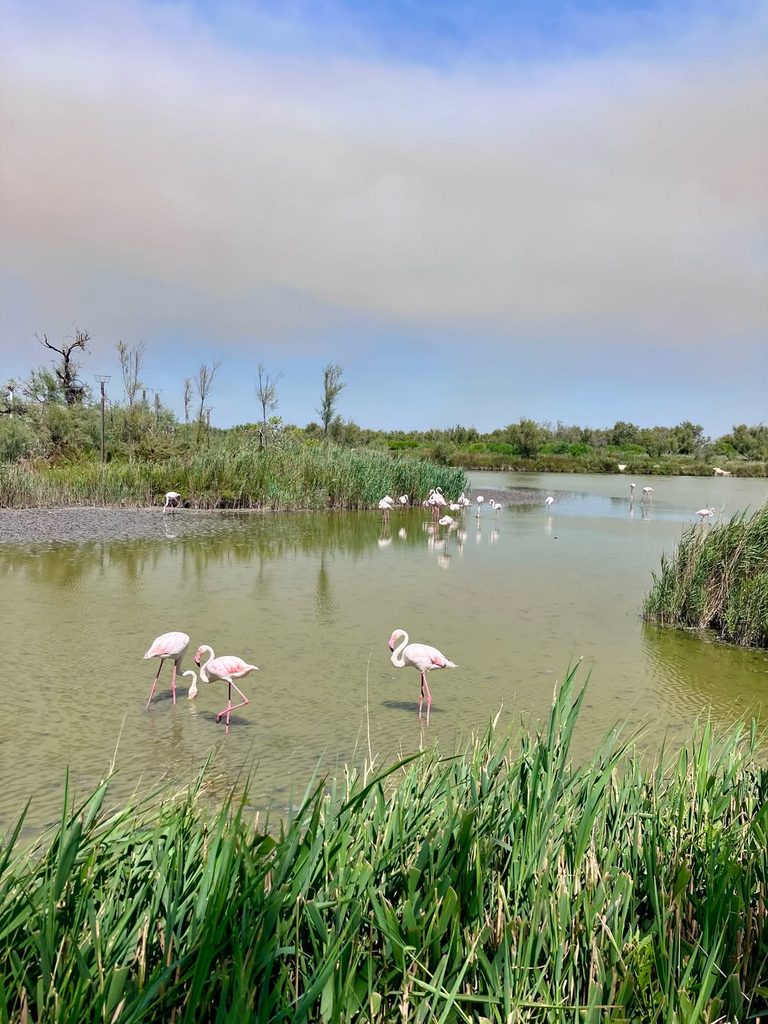
The Camargue is best known for its wildlife, especially pink flamingos, white horses and black bulls. You may spot them while driving around, but places such as Pont de Gau and local manades give you a much better chance to see them and learn about the region.
Is the Camargue Part of Provence?
Yes, it’s part of the Provence Alpes Côte d’Azur region, but it looks very different from the Provence of lavender fields and hilltop villages.
The Camargue is flat, open and closely connected to its wetlands and coastline. I actually enjoy that contrast, and it’s easy to combine a few days here with Arles or a wider Provence trip.
I’d just give yourself enough time. The Camargue isn’t somewhere I’d rush through. The wildlife, quiet roads and open landscape are best enjoyed at a slower pace.
Why Visit the Camargue?
For me, the best thing about the Camargue is the mix of wildlife and local life. You can spend the morning watching flamingos in the wetlands and later see gardians riding horses and working with cattle.
The beaches are another reason to come. Instead of the busy resort feel you’ll find along parts of the French Riviera, the Camargue has long sandy stretches, dunes and plenty of open space.
Food is worth trying too. Look for local Camargue rice, salt, seafood and traditional dishes such as gardiane de taureau.
I’d recommend the Camargue if you enjoy wildlife, photography, horseback riding, cycling or simply spending time outdoors. If you’re looking mainly for museums, shopping and nightlife, I’d spend more time in nearby Arles or Marseille.
The Camargue’s Famous Wildlife
Wildlife is one of the main reasons people come to the Camargue. The wetlands attract a large variety of birds, while the region’s horses and cattle are closely connected to local traditions.
Camargue Flamingos
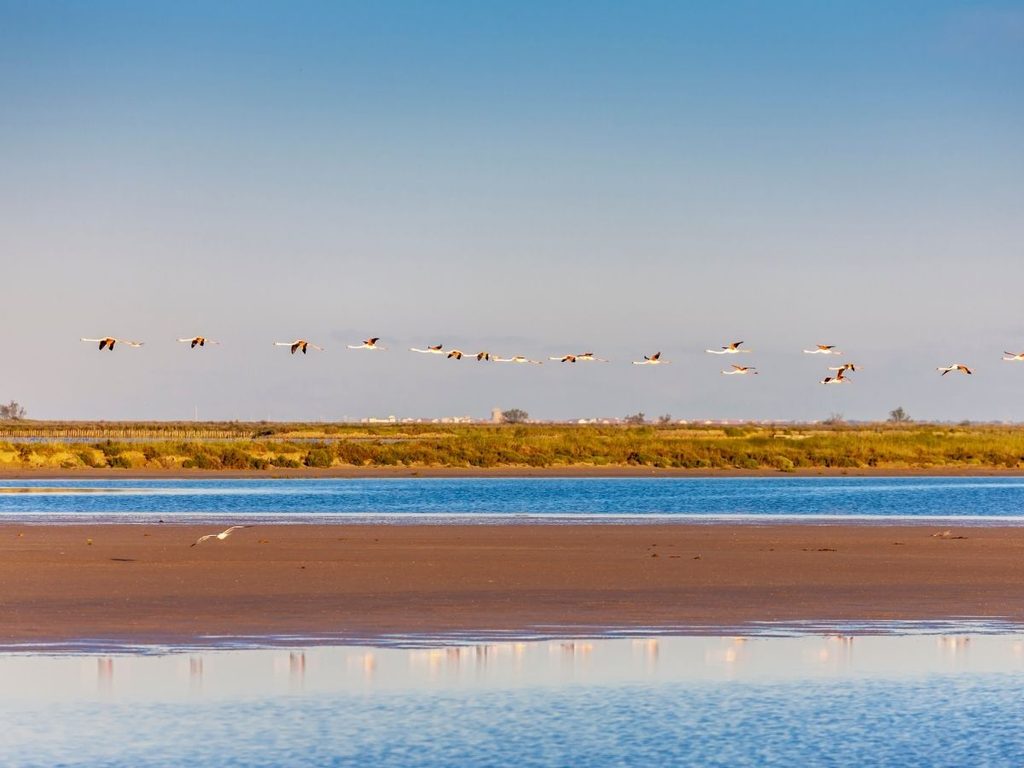
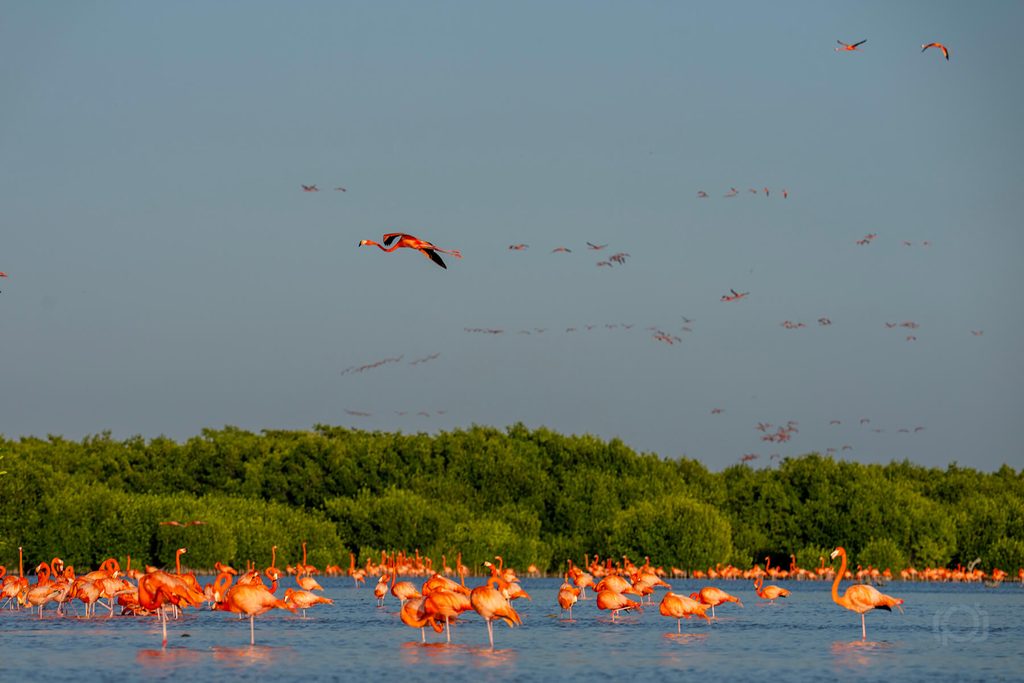
The flamingos are usually at the top of everyone’s list, and seeing them in the wetlands is a memorable experience.
They’re wild birds, though, so I wouldn’t expect to find them exactly where you want them. Their location can change with the season, water levels and feeding conditions.
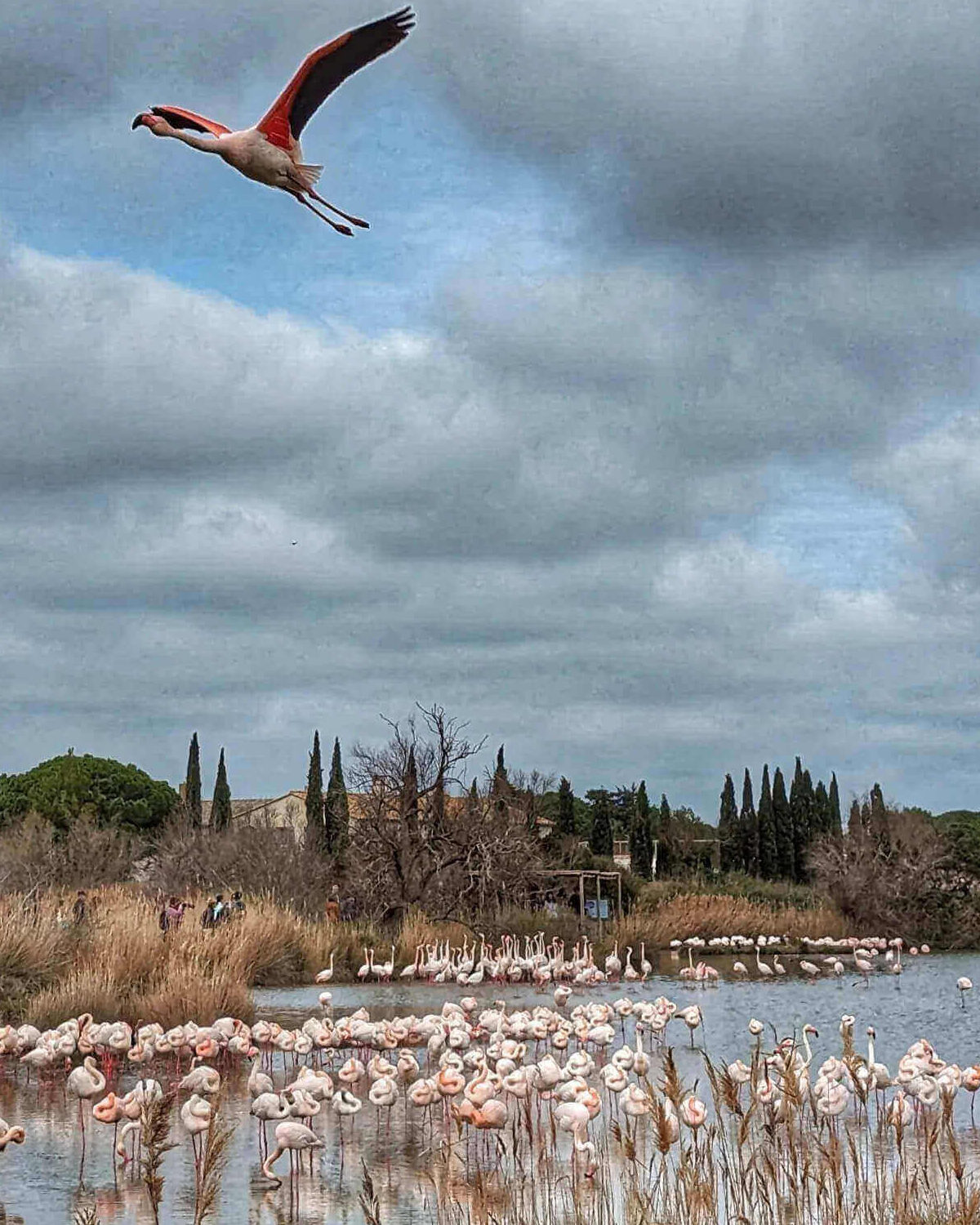
For a first visit, Parc Ornithologique du Pont de Gau is one of the easiest places to see them. The walking trails take you through wetland areas where you can also look for other bird species.
I’d allow at least two hours and bring binoculars if you have them. Early morning or late afternoon is more comfortable in summer, and there’s no need to get close to the birds for a photograph. Keeping some distance lets you watch them behaving naturally.
Camargue Horses
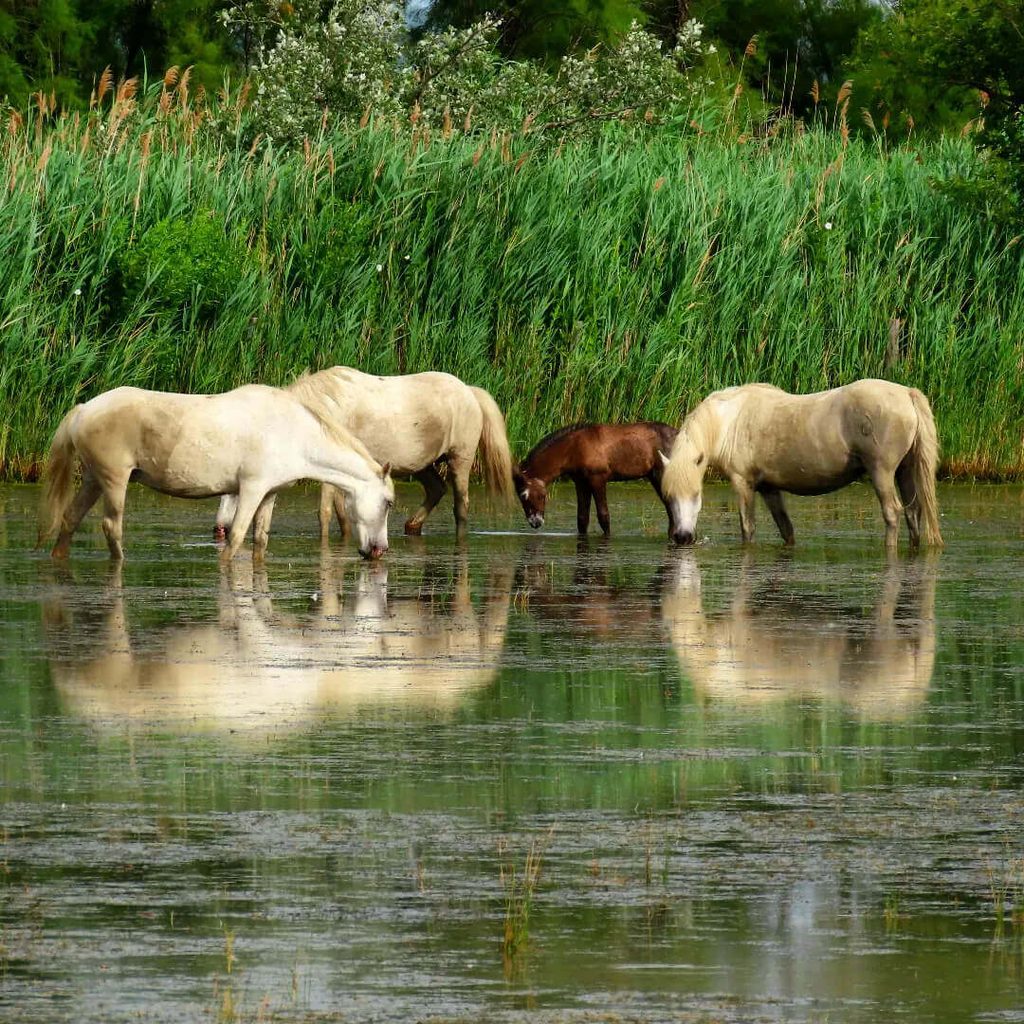
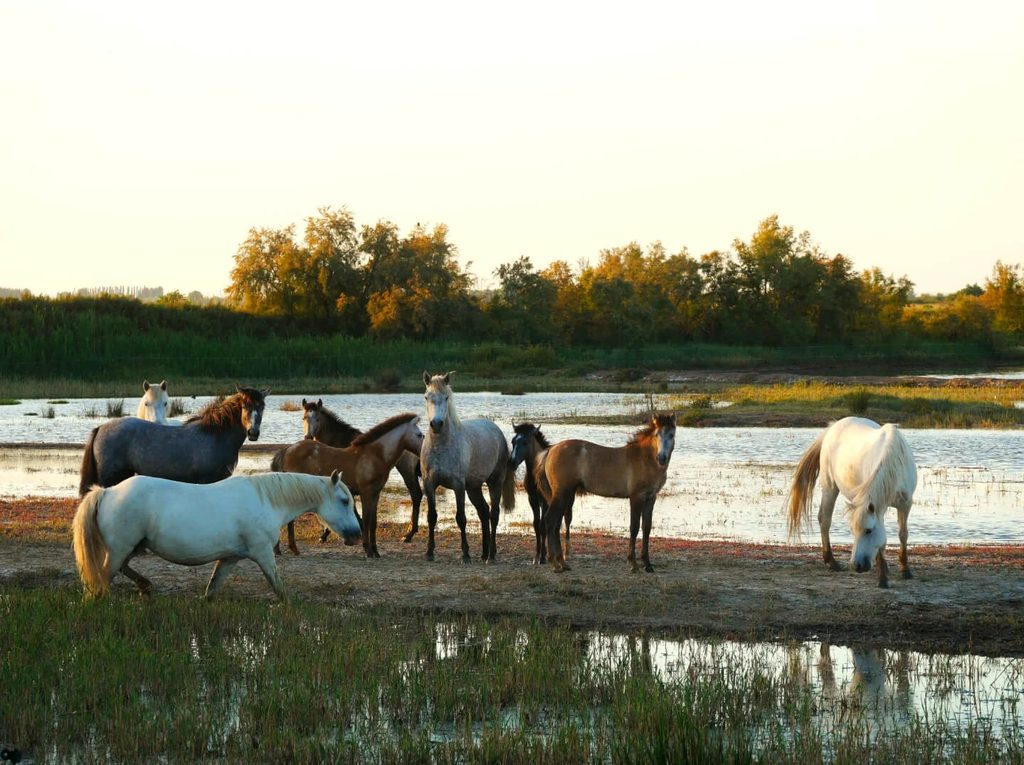
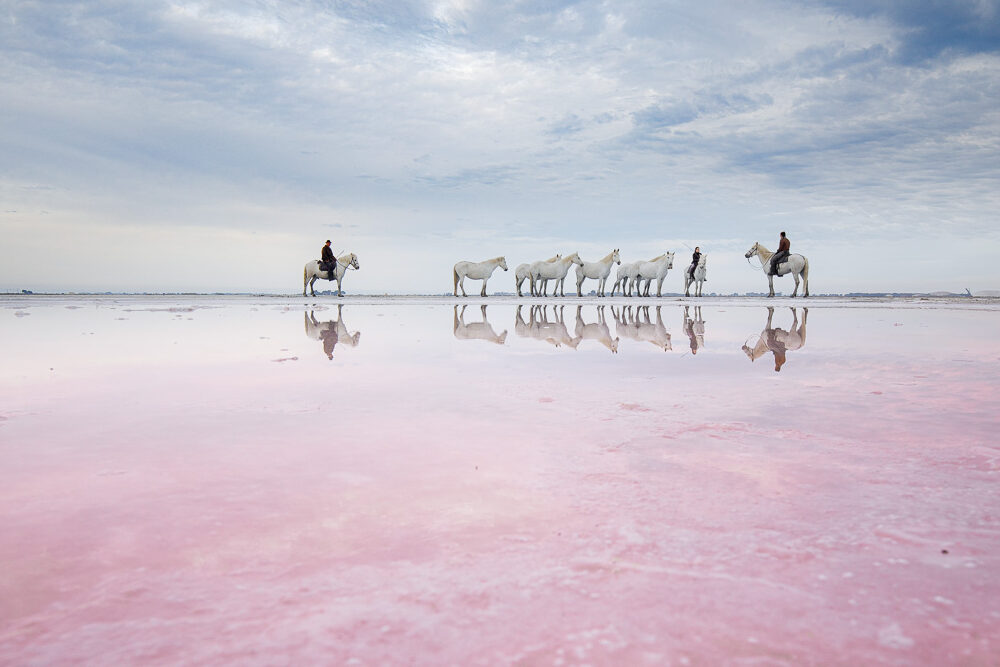
The white Camargue horses are another symbol of the region. They’re generally sturdy, relatively small horses with thick manes and coats that become white as they mature.
You’ll often see them associated with the gardians, the traditional horse riders who work with Camargue cattle. This connection is part of what makes seeing the horses here more interesting than simply spotting them in a field.
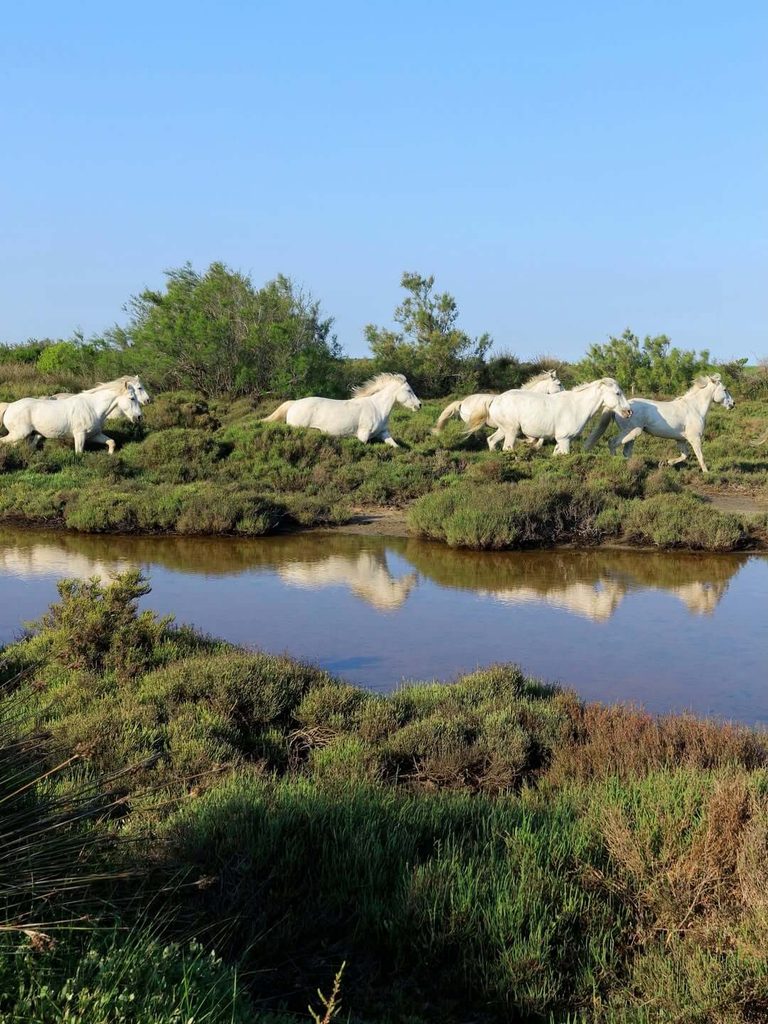
You may come across horses while driving around, but don’t approach them. If you’d like to spend more time with them, horseback riding is a good option, especially around Saintes Maries de la Mer.
Many riding experiences welcome beginners, but check the length and type of ride before booking. I’d choose one that takes you through the marshes and countryside rather than keeping you in a small enclosed area. It gives you a much better feel for the landscape and the role horses still play in the Camargue.
Camargue Bulls
The black bulls of the Camargue are another big part of the region’s identity. You’ll often see them in fields as you drive around, especially near traditional cattle ranches called manades.
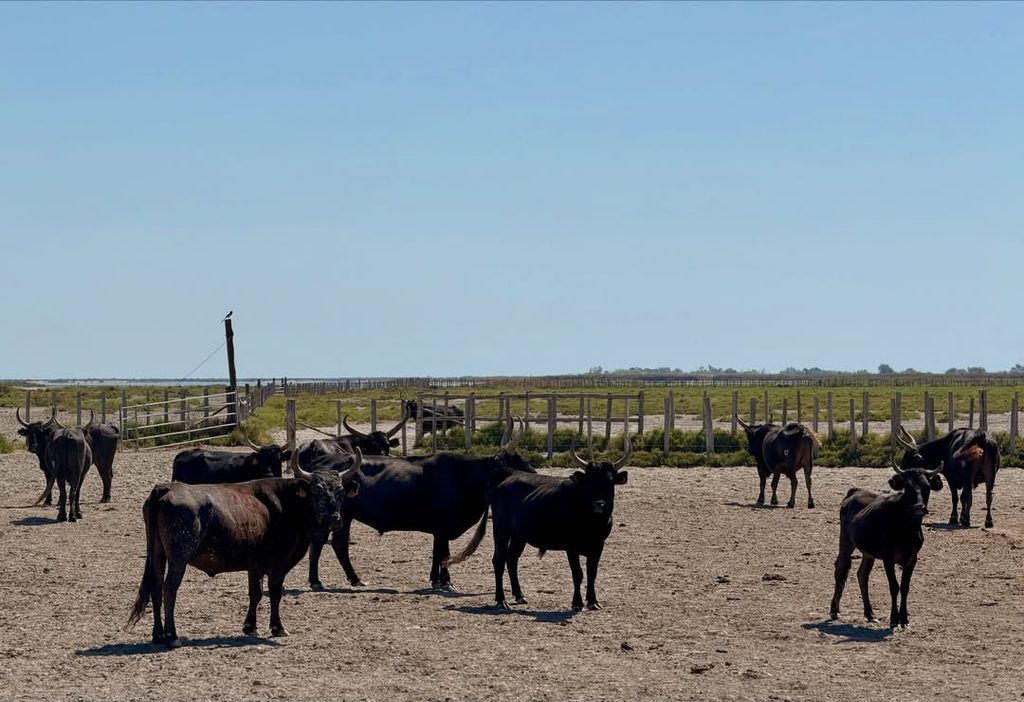
These cattle are relatively small and well suited to the wetland environment. They’re also closely connected with the gardians, who work with the bulls on horseback.
If you’d like to understand this side of the Camargue, I’d visit a manade rather than just watching the bulls from the road. Some ranches welcome visitors and explain how the cattle and horses are raised and how the gardians work. It gives you a better feel for the local traditions.
Other Birds and Wildlife
There’s much more wildlife here than flamingos. The wetlands are home to herons, ducks, waders, raptors and many migratory birds.
Bring binoculars if you have them and don’t rush through the nature areas. Sometimes the best sightings happen when you simply stop beside the water and watch for a few minutes.
Best Places to See Wildlife in the Camargue
You don’t need to visit every reserve. I’d choose one or two based on what you want to see and how much time you have.
Parc Ornithologique du Pont de Gau
This is my first choice for a first visit, especially if flamingos are your priority. The walking trails make it easy to explore the wetlands, and you can also spot plenty of other birds.
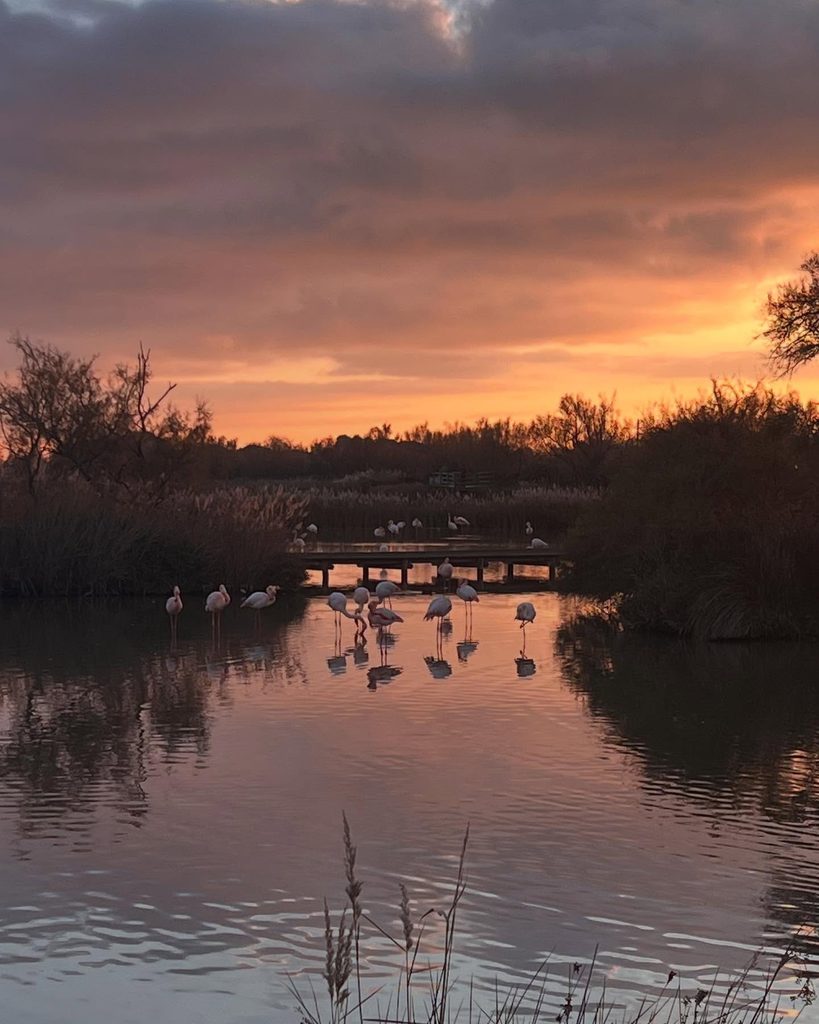
I’d allow around two hours, or longer if you’re into photography. Going early or later in the afternoon is more comfortable in summer.
Réserve Nationale de Camargue
The National Nature Reserve is better if you want a quieter experience surrounded by protected wetlands. It includes the Étang du Vaccarès and is particularly appealing to nature lovers and photographers.
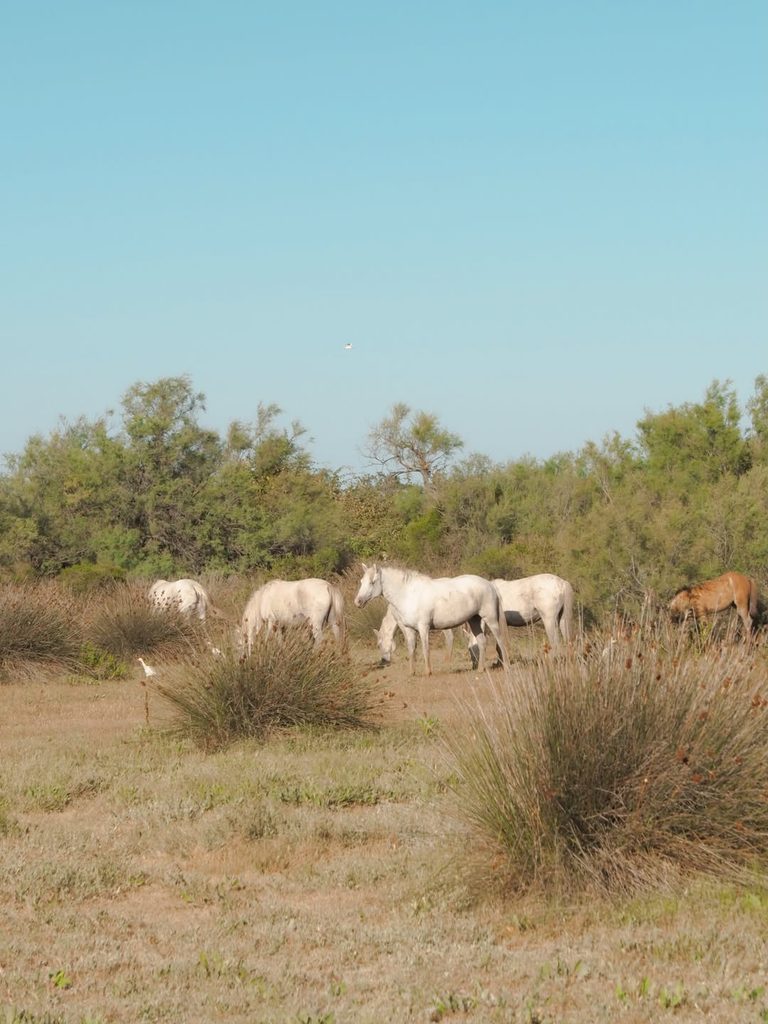
Check access rules before visiting, as some areas have restrictions or designated routes.
Marais du Vigueirat
Marais du Vigueirat is a good option if you’re interested in seeing a wider variety of birds and wetland habitats. The site covers around 1,200 hectares and has recorded more than 300 bird species.
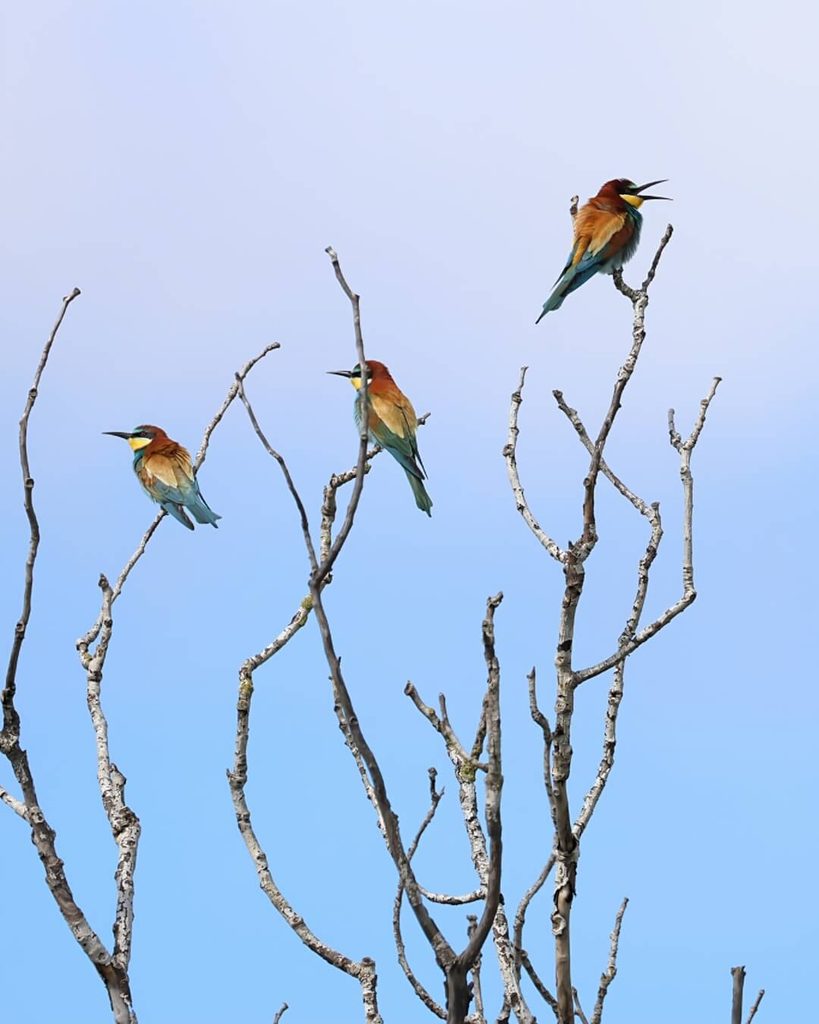
I’d choose this for a longer Camargue trip when you have time to explore at a slower pace.
Domaine de la Palissade
Domaine de la Palissade is another option in the southern Camargue, with coastal and wetland habitats to explore.
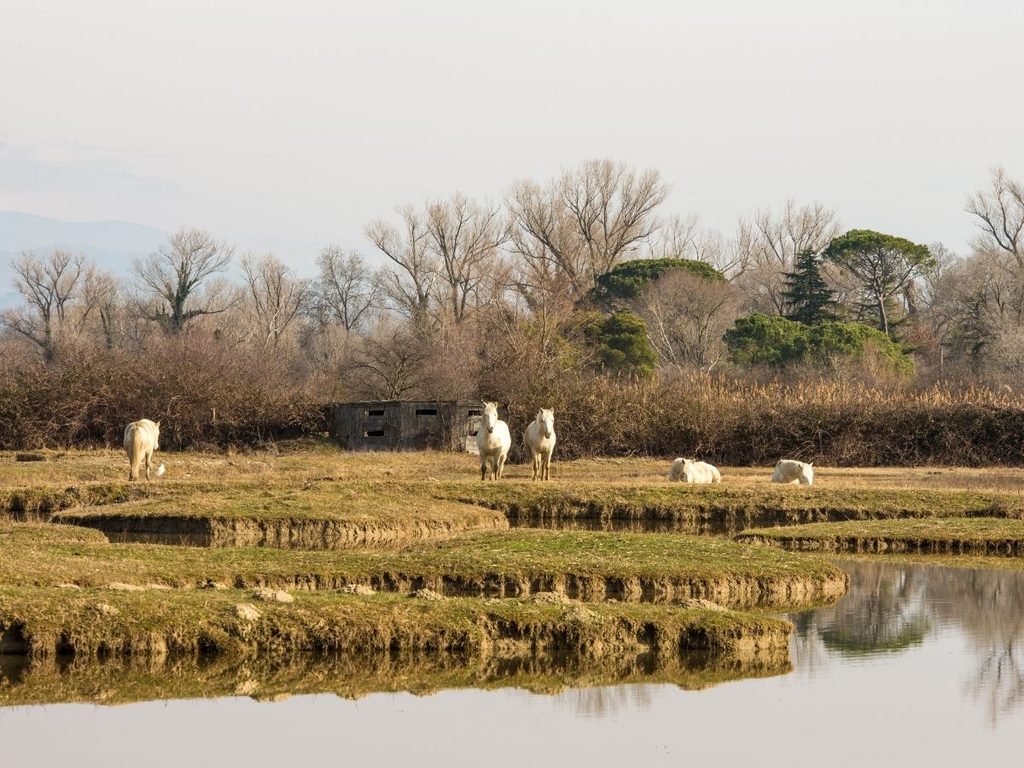
I wouldn’t try to squeeze it into a busy one day itinerary, but it’s worth considering if you’re staying for several days and want to see a different side of the region.
Which Wildlife Site Should You Choose?
For a first visit, Pont de Gau is the easiest choice for flamingos. The Réserve Nationale is better for a quieter nature experience, while Marais du Vigueirat works well if you’re interested in a wider range of birds.
You really don’t need to visit all of them. I’d rather spend a relaxed morning at one good wildlife site than spend the day driving between reserves.
Best Things to Do in the Camargue
There is more to the Camargue than flamingos. You can ride through the marshes, visit a working ranch, cycle along quiet roads or explore the salt flats. Since the region is quite spread out, I’d pick a few experiences rather than trying to do everything in one day.
Watch Flamingos at Pont de Gau
If seeing flamingos is high on your list, Parc Ornithologique du Pont de Gau is a good place to start. The walking trails pass through wetland areas where you can see flamingos and other birds.
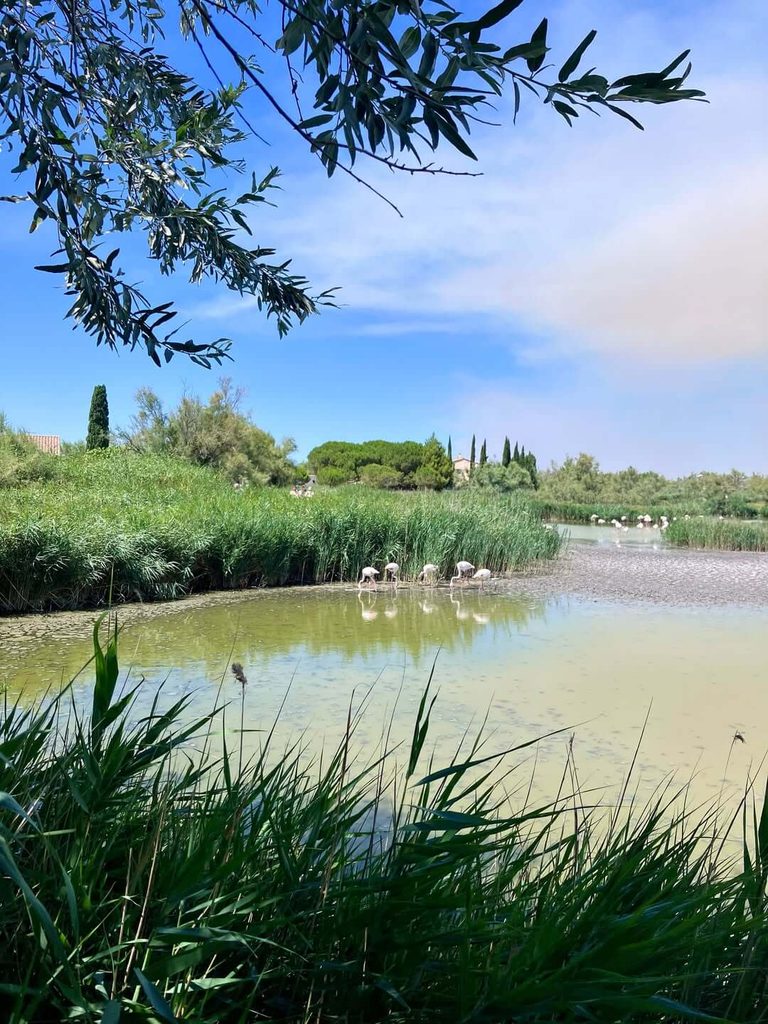
I’d allow around two hours, or longer if you’re interested in photography. Bring binoculars if you have them, and try visiting early or later in the afternoon during summer when it’s cooler.
Visit a Manade
A manade is a traditional Camargue ranch where horses and cattle are raised. Some welcome visitors and offer tours or demonstrations with the gardians.
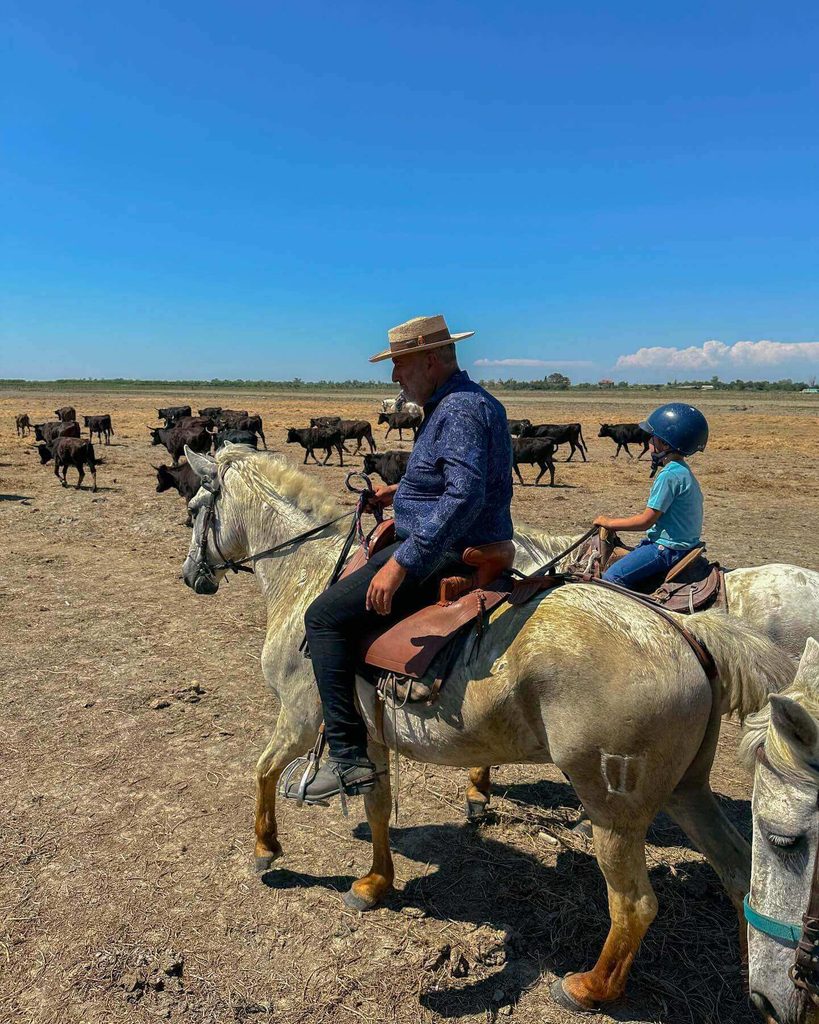
I think this is worth doing even if you’re not particularly interested in horses. It gives you a better understanding of the local traditions and explains why the black bulls and white horses are such a familiar sight around the region.
Explore the Salt Marshes
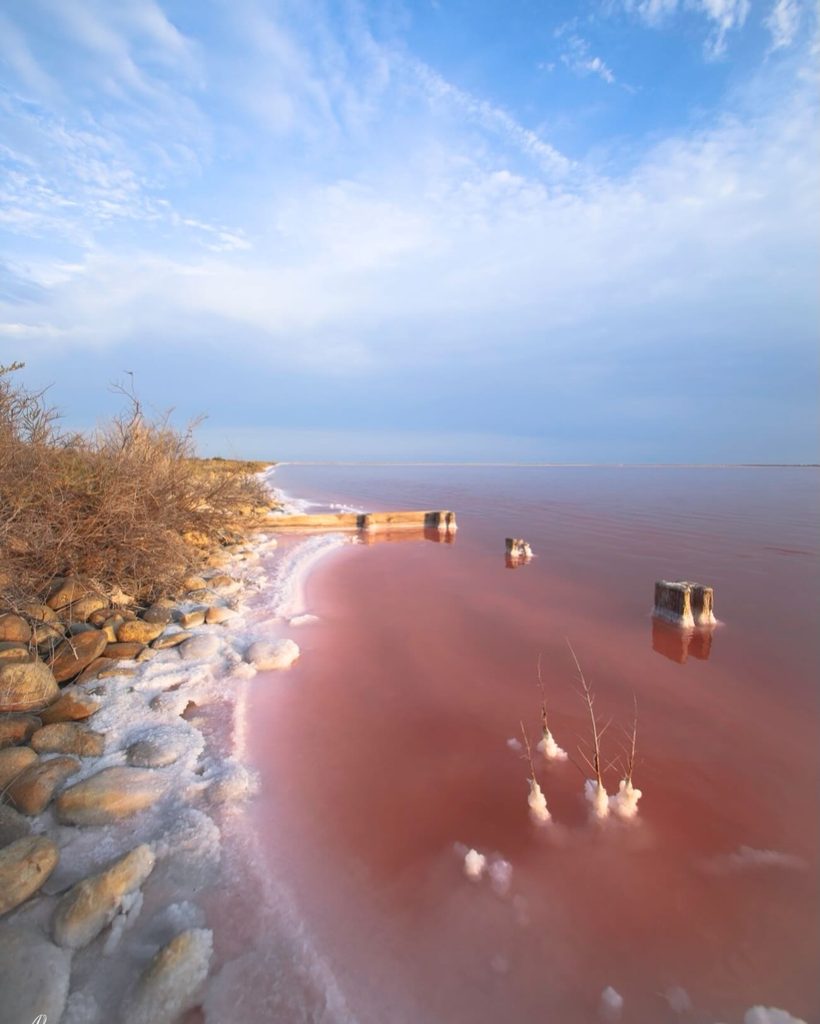
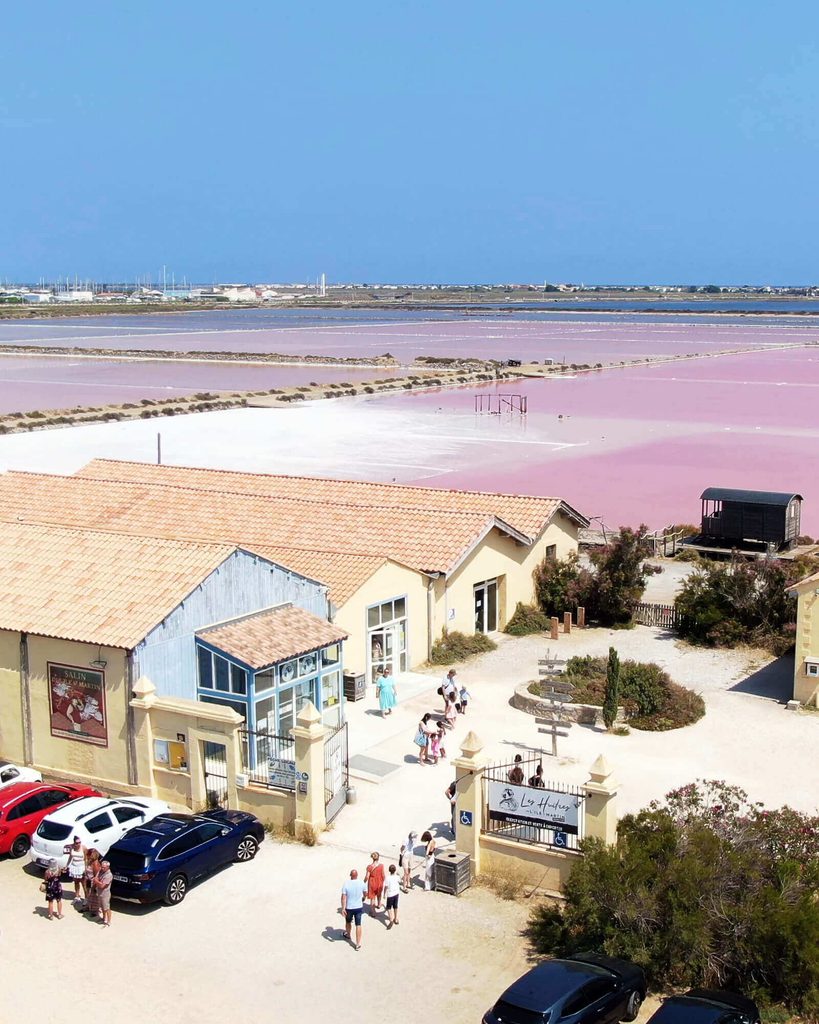
The salt marshes around Aigues Mortes are one of the most unusual parts of the Camargue. The shallow ponds can take on pink or reddish colors depending on the conditions, and the area has been used for salt production for generations.
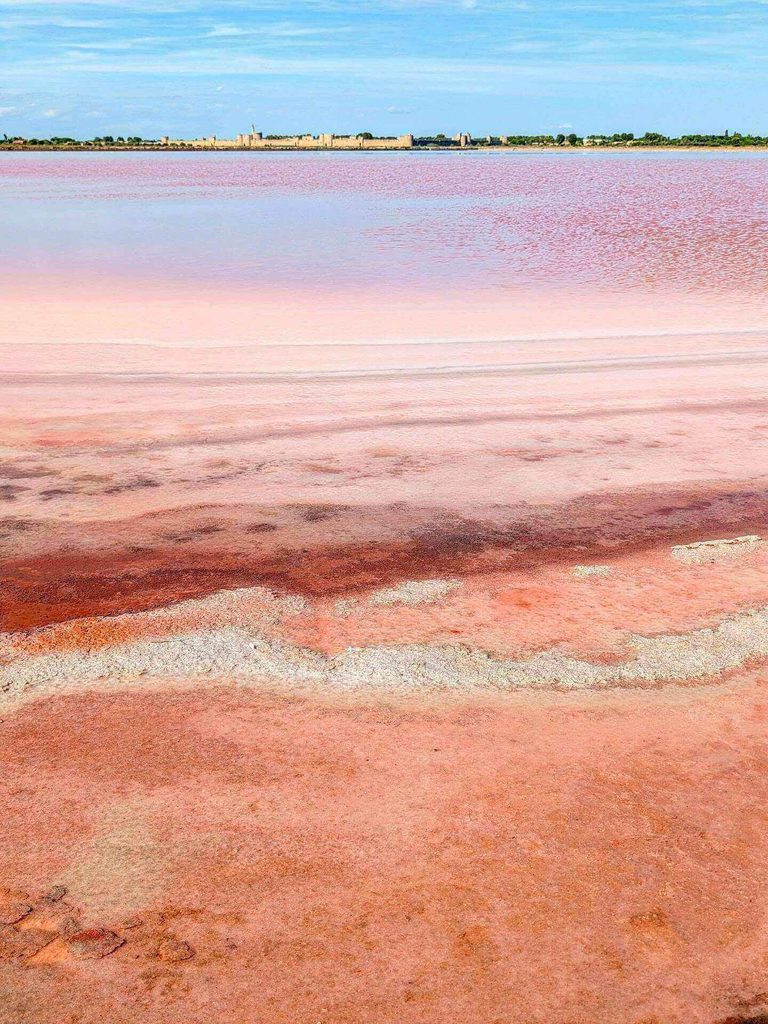
Some parts of the salt works require organized visits, so check current opening times and access before you go. I’d combine a visit with Aigues Mortes, which makes an easy half day or full day outing.
Camargue Salt Flats and Pink Lakes
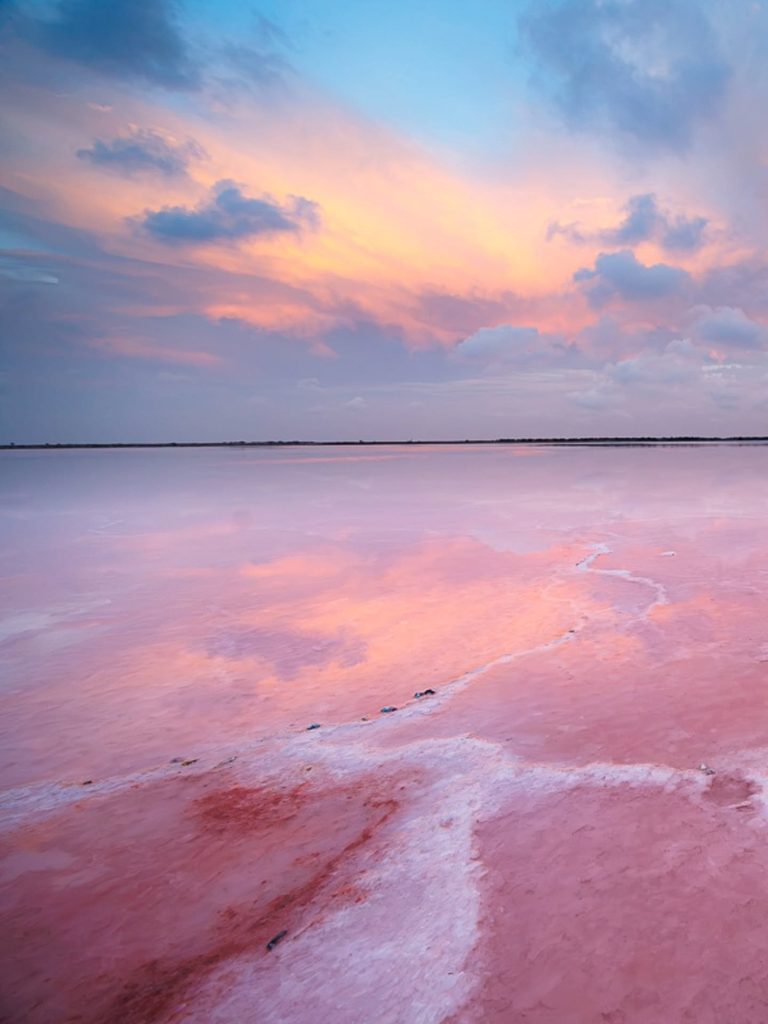
The pink water around the Camargue is one of those things that can look almost unreal in photographs. When the conditions are right, the shallow ponds take on shades of pink, red or even purple, surrounded by the very flat landscape of the salt marshes.
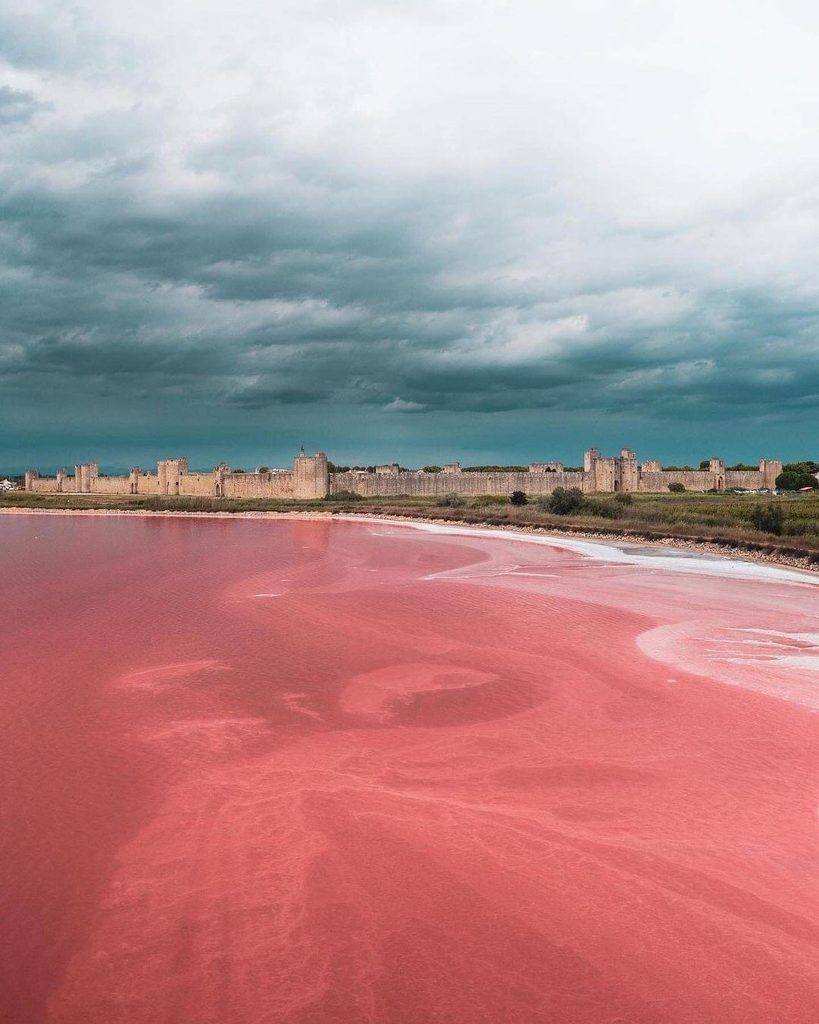
There is a simple reason for the color. Certain microorganisms and algae thrive in the salty water and can give it those unusual shades. The color isn’t the same all year, though, and some ponds may look much less pink than you expect when you arrive.
The salt marshes are interesting even when the water isn’t particularly colorful. Salt production has been part of the Camargue for generations, and you’ll see large salt ponds and, in some areas, huge piles of harvested salt.
Salins d’Aigues Mortes
The salt works near Aigues Mortes are probably the best known place to see this side of the Camargue. The landscape is incredibly flat, with shallow ponds stretching out toward the horizon.
When the water has a strong pink or reddish color, it’s especially good for photography. But I’d still visit even if the colors aren’t as dramatic as the photographs you’ve seen online.
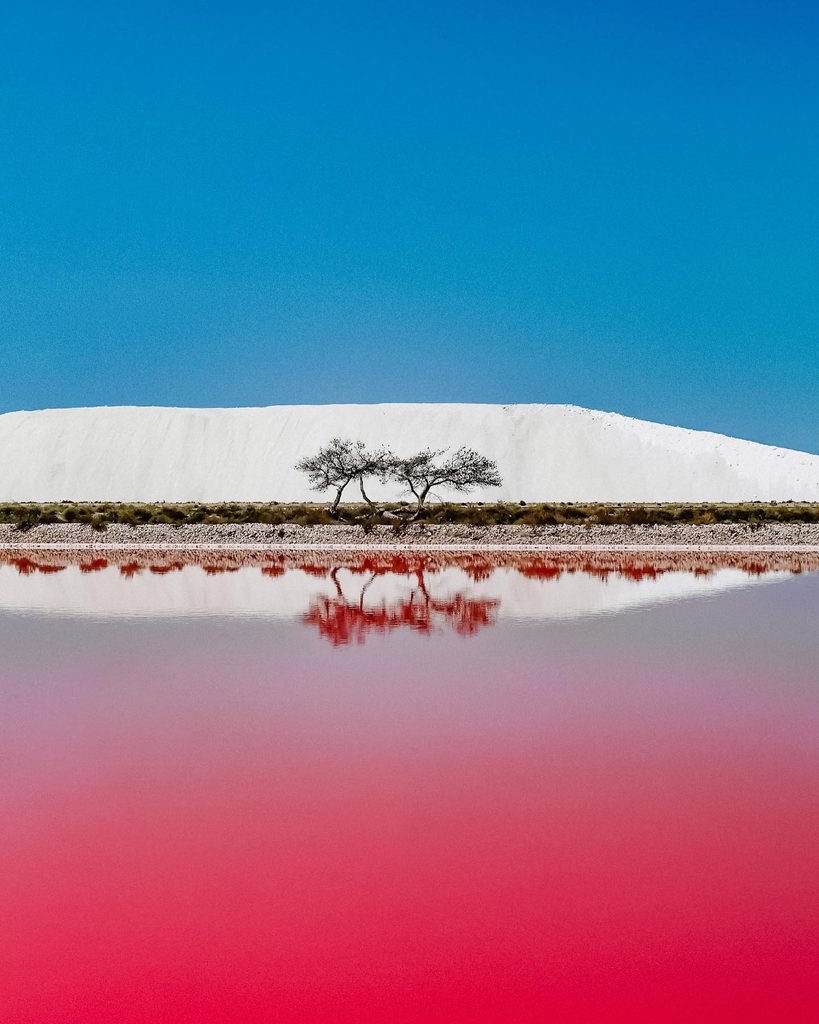
Tours can give you a better understanding of how salt is produced and how the different ponds are managed. I’d check the current opening times and tour schedules before going because access and availability can change depending on the season.
If you’re already visiting Aigues Mortes, it’s easy to combine the two. I’d spend some time exploring the medieval town and then head out to the salt works rather than making the salt flats your only stop.
Salin de Giraud
Salin de Giraud is on the eastern side of the Camargue and has a stronger connection with the region’s salt industry. The surrounding landscape is very open, with salt ponds, wetlands and long stretches of countryside.
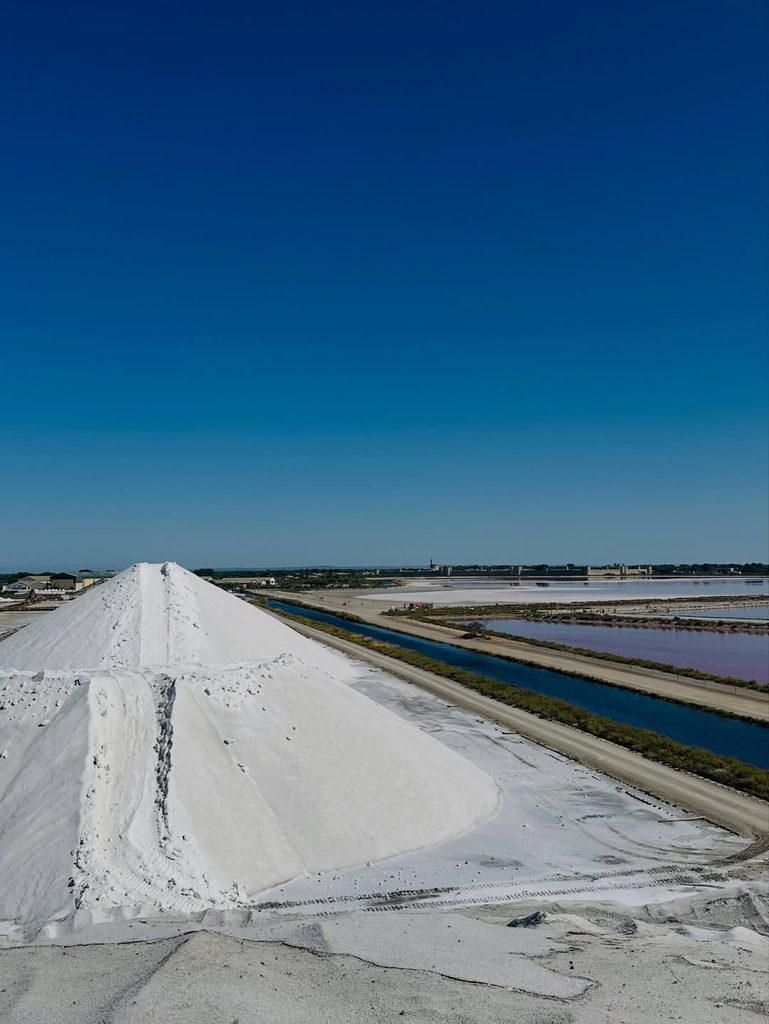
I wouldn’t drive all the way here just to spend a short time in the town. It makes more sense as part of a wider day exploring the southern Camargue, especially if you’re interested in wildlife and quieter areas.
If you have several days in the region, this is a good place to see a different side of the Camargue away from the busier areas around Saintes Maries de la Mer.
Visit Saintes Maries de la Mer
If it’s your first time in Camargue, you’ll probably spend some time in Saintes Maries de la Mer. It’s the main seaside town in the region and one of the easiest places to base yourself.
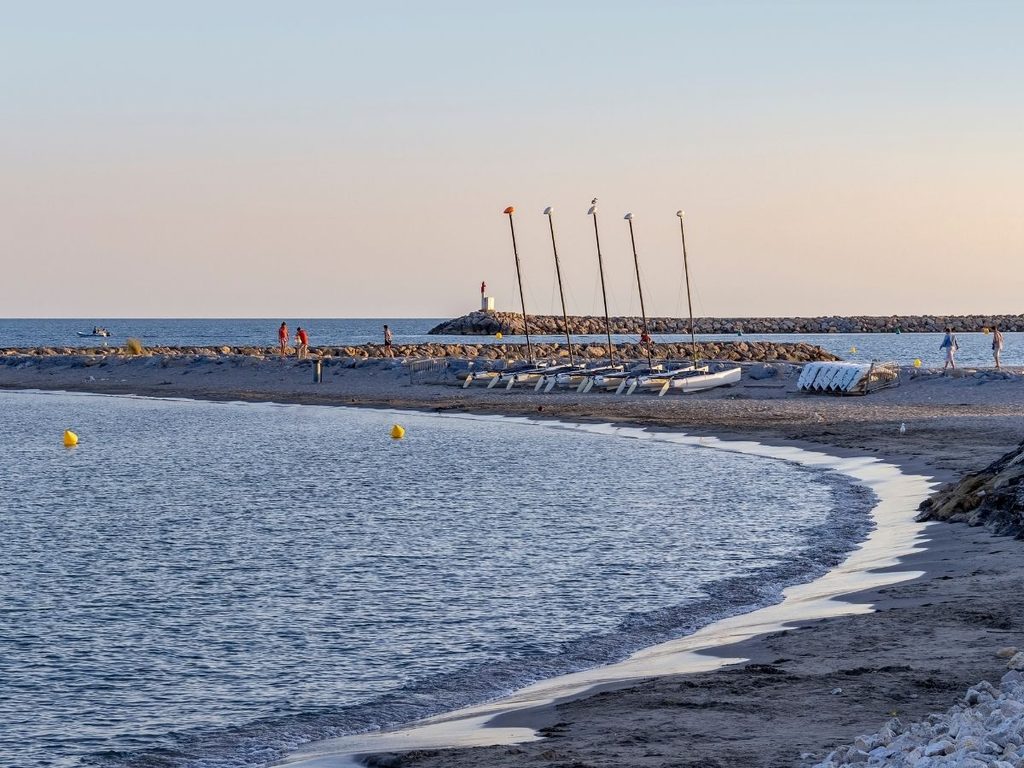
The town is small enough to explore on foot, with the church, harbour, shops, restaurants and beach all fairly close together. I like it as a base because you can spend the morning exploring the wetlands or riding through the countryside and still come back to town for dinner by the sea.
Church of Saintes Maries de la Mer
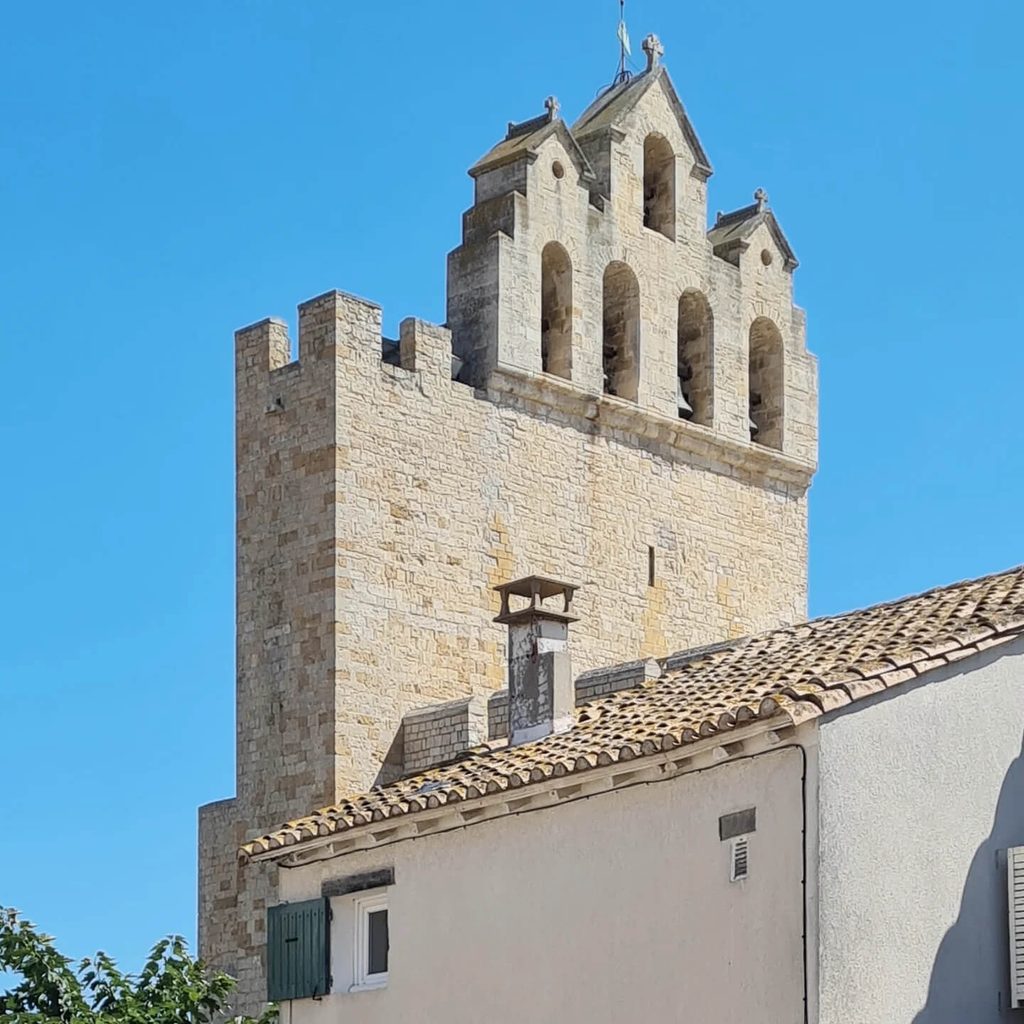
The fortified church is one of the town’s main landmarks and is easy to spot as you walk around.
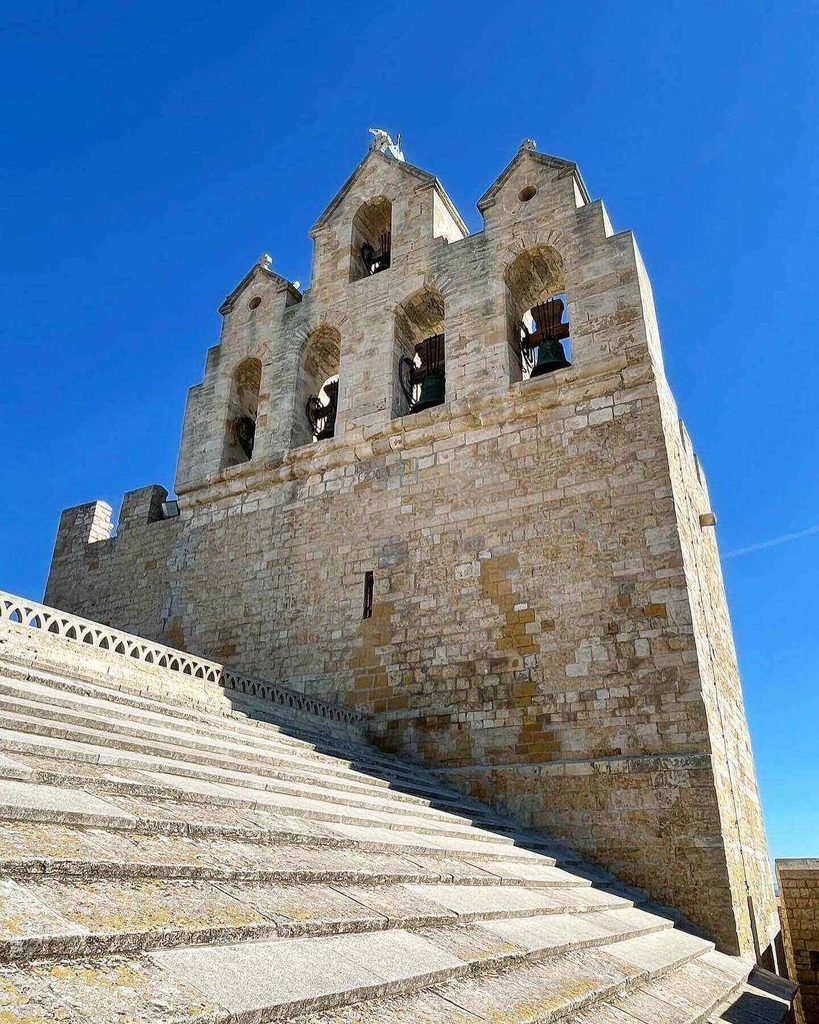
I’d go inside rather than just photographing it from the outside. The church has a strong connection with the town’s religious traditions and its annual pilgrimage, which is an important part of local life.
It doesn’t take a huge amount of time to visit, so it’s an easy stop to fit around lunch or a walk through town.
The Beaches
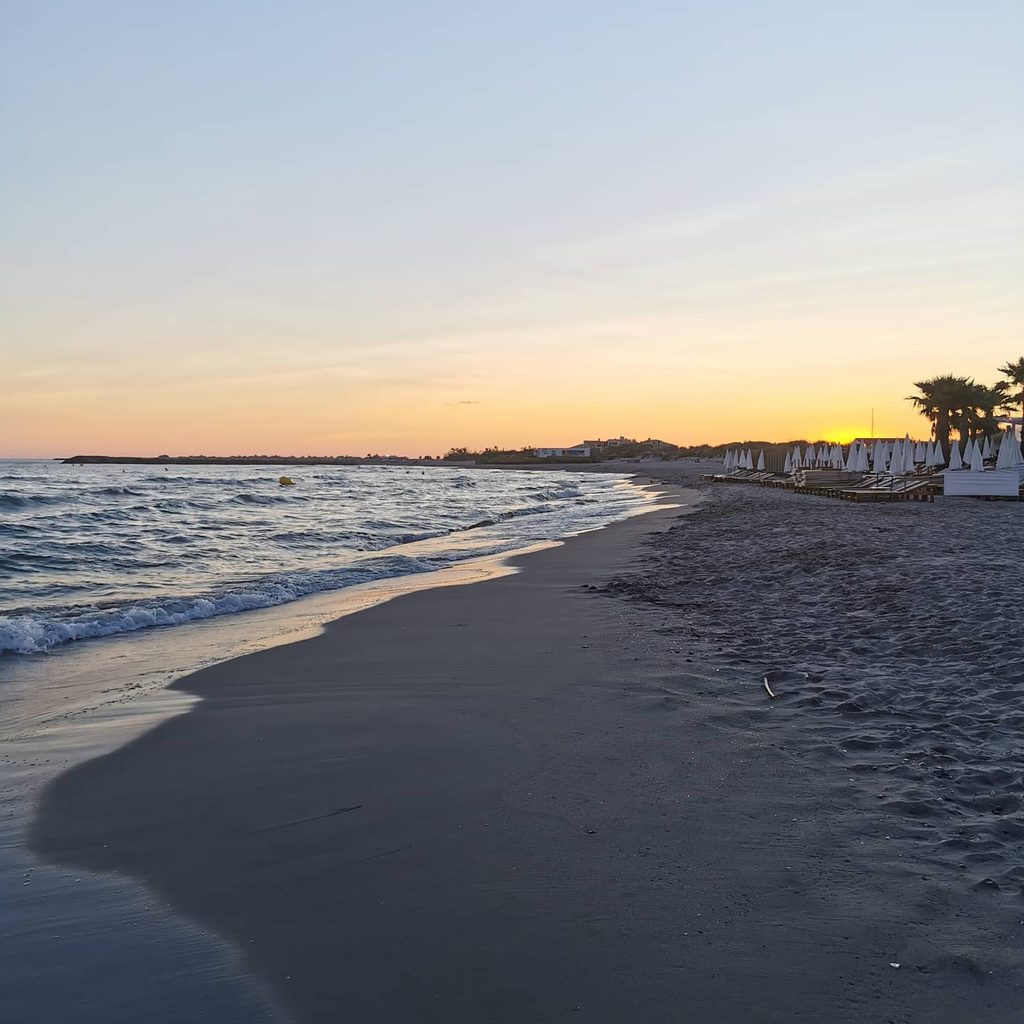
The beach is right beside the town, so you don’t need to travel far if you want some time by the Mediterranean.
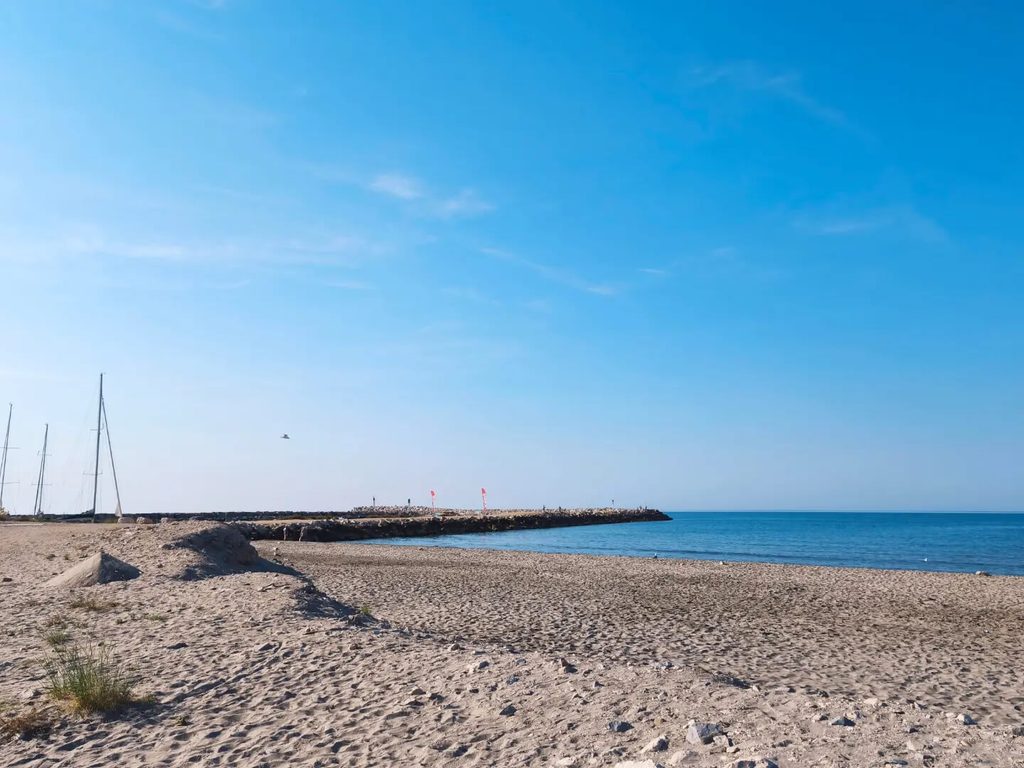
It’s a nice place to slow down after a morning of sightseeing. You can take a walk along the sand, go for a swim when conditions are suitable or simply sit by the water for a while.
I wouldn’t necessarily plan an entire day around the town beach unless you mainly want a relaxed beach day. For me, a few hours here works well when combined with the town or nearby wildlife areas.
The Pilgrimage
Saintes Maries de la Mer is known for its annual pilgrimage, which can completely change the atmosphere of the town.
The May pilgrimage attracts large crowds and has deep religious and cultural importance. If you’re planning to attend, book accommodation well ahead and expect much busier roads and parking than you would on a normal visit.
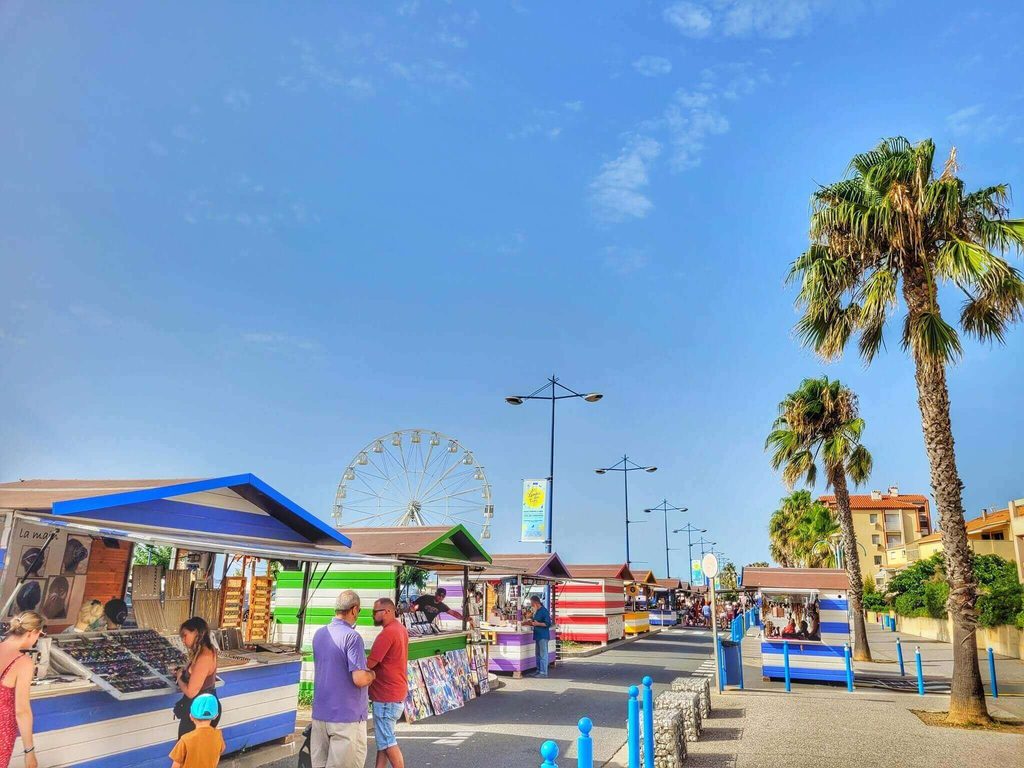
I’d also check the dates before booking your trip. If you want to experience the pilgrimage, it’s something worth planning around. If you prefer a quieter visit, you may want to avoid those dates instead.
The pilgrimage is a good example of why I wouldn’t treat Saintes Maries de la Mer as just another beach town. Its connection with Camargue traditions is a big part of what makes the town interesting.
Visit Salin de Giraud
Salin de Giraud doesn’t get the same attention as Saintes Maries de la Mer, but I think it’s worth considering if you’re spending several days in the Camargue.
The town developed around the salt industry, and you’ll notice that connection when you explore the surrounding area. It’s much quieter than the main seaside towns and can feel like a completely different side of the region.
I wouldn’t drive all the way here just to spend an hour in the town. Instead, combine it with nearby wetlands, salt landscapes or other stops in the southern Camargue.
It’s particularly useful for travelers who want to get away from the busier tourist areas and spend more time exploring the countryside.
Camargue Beaches
The Camargue has some surprisingly long stretches of sandy coastline, but the beach experience is quite different from places such as Nice or Cannes.
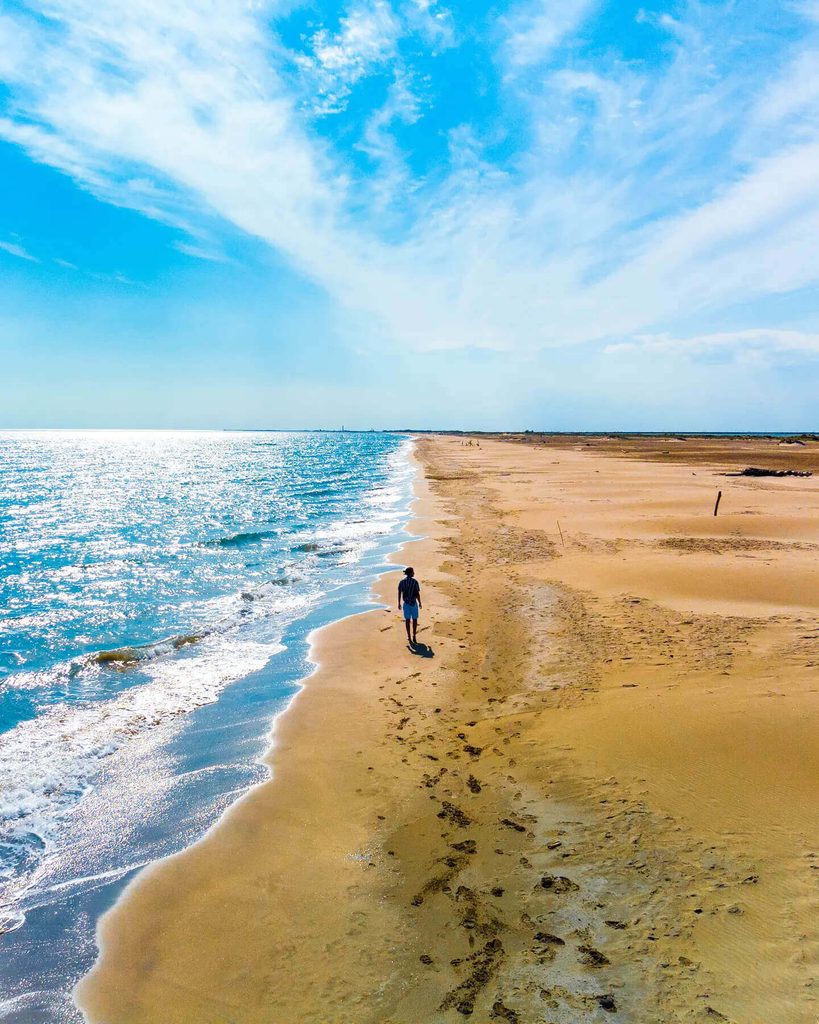
Many beaches feel open and exposed, with fewer buildings and facilities around them. That’s part of the appeal, but it also means you need to be a little more prepared if you’re heading to a remote beach.
Saintes Maries de la Mer
This is the easiest beach option for most visitors. You can walk from the town center to the beach, then head back for lunch or a drink without needing the car.
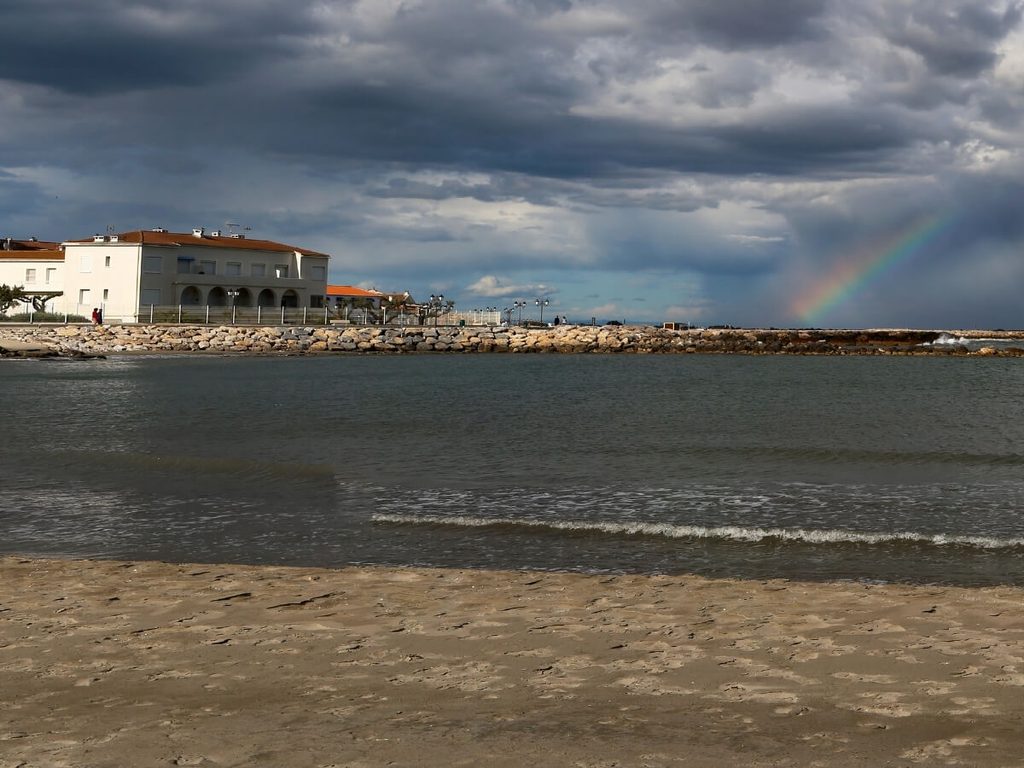
It’s a good choice if you want a relaxed beach afternoon rather than a remote coastal experience.
Plage de Piémanson
Piémanson offers a more open beach setting and is a good option if you’d rather get away from the town.
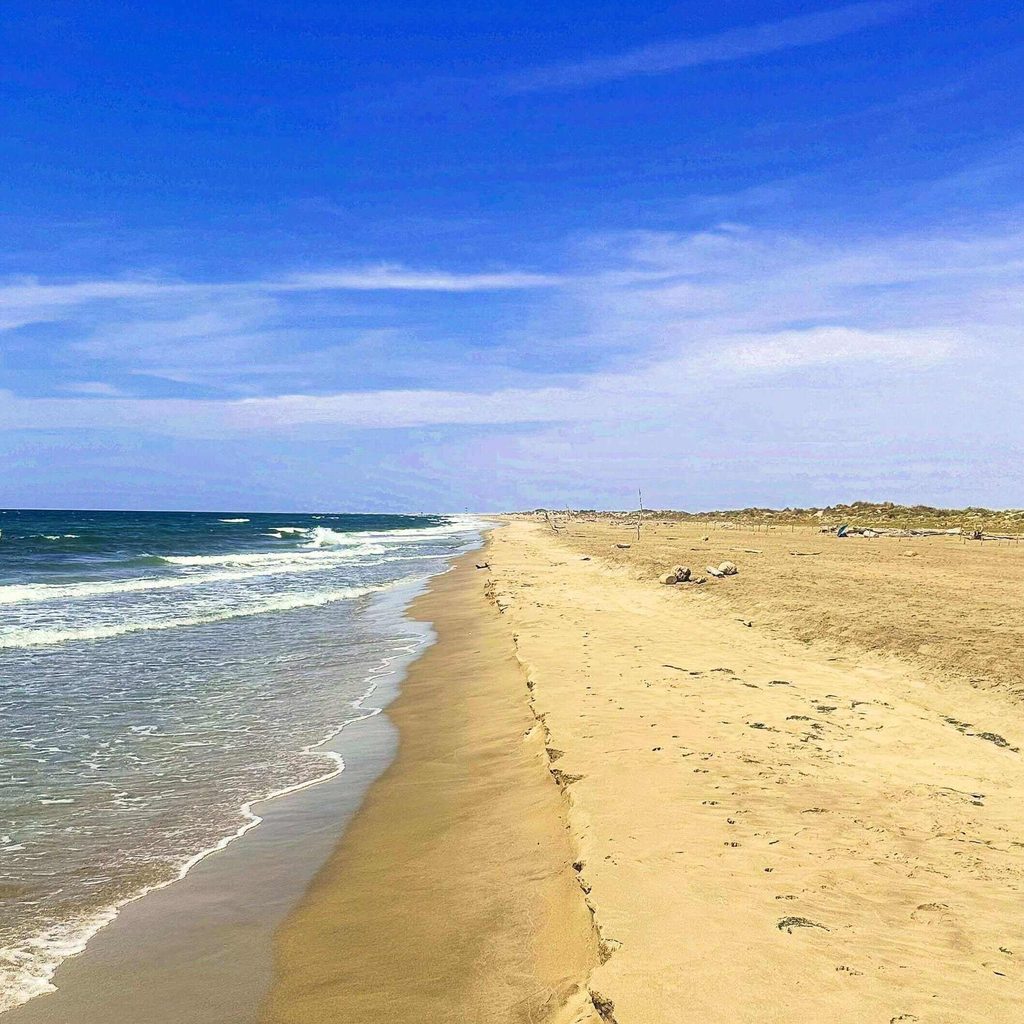
I’d check current access and local conditions before driving there, particularly outside the main summer season. Bring what you need because facilities can be more limited than they are in Saintes Maries de la Mer.
Camargue Culture and Traditions
The wildlife and local culture of the Camargue are closely connected. Horses and cattle aren’t simply symbols used in tourism. They’re part of the region’s traditional way of life, and you’ll see that connection in the work of the gardians, the manades and local festivals.
The Gardians
Gardians are the traditional horse riders who work with Camargue cattle. You’ll often see them riding the region’s distinctive horses and wearing traditional clothing.
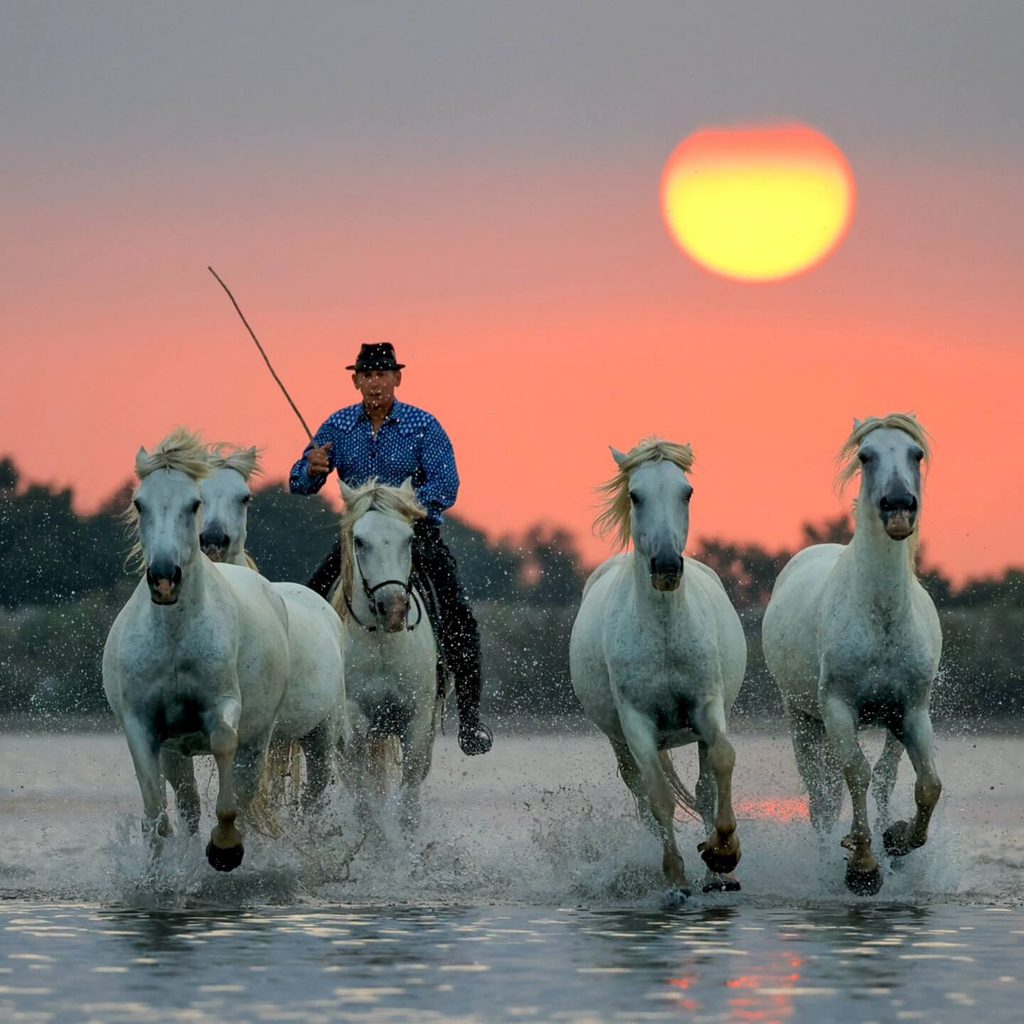
Seeing a gardian from a distance is interesting, but a visit to a manade or a demonstration gives you much more context. You can learn how the cattle are managed and why horses remain so important to this way of life.
If you’re interested in Camargue culture, I’d definitely make time for one of these experiences rather than treating the horses and bulls as something to photograph from the roadside.
Manades
A manade is a traditional Camargue ranch associated with horses and cattle. Some welcome visitors and offer tours, demonstrations or meals.
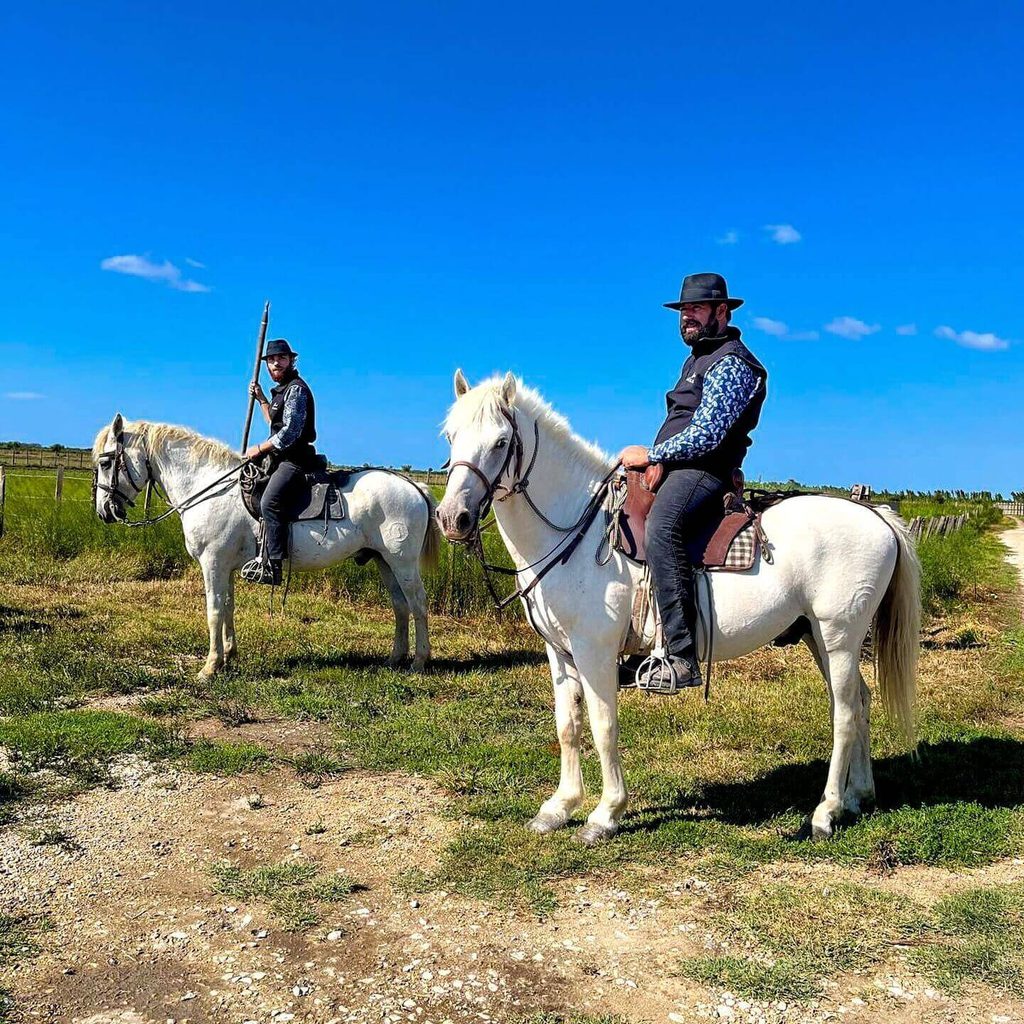
What you’ll see depends on the ranch and the time of year, so I’d check what’s included before booking. Some visits are more educational, while others give you a closer look at the work of the gardians.
I’d book ahead during the busy season. These are working ranches, so visits aren’t always something you can arrange at the last minute.
Course Camarguaise
If you’re interested in local traditions, you may come across Camarguaise, a traditional sport involving Camargue bulls and razeteurs.
It isn’t the same as Spanish bullfighting. The razeteurs try to remove small objects attached to the bull’s horns while avoiding the animal.
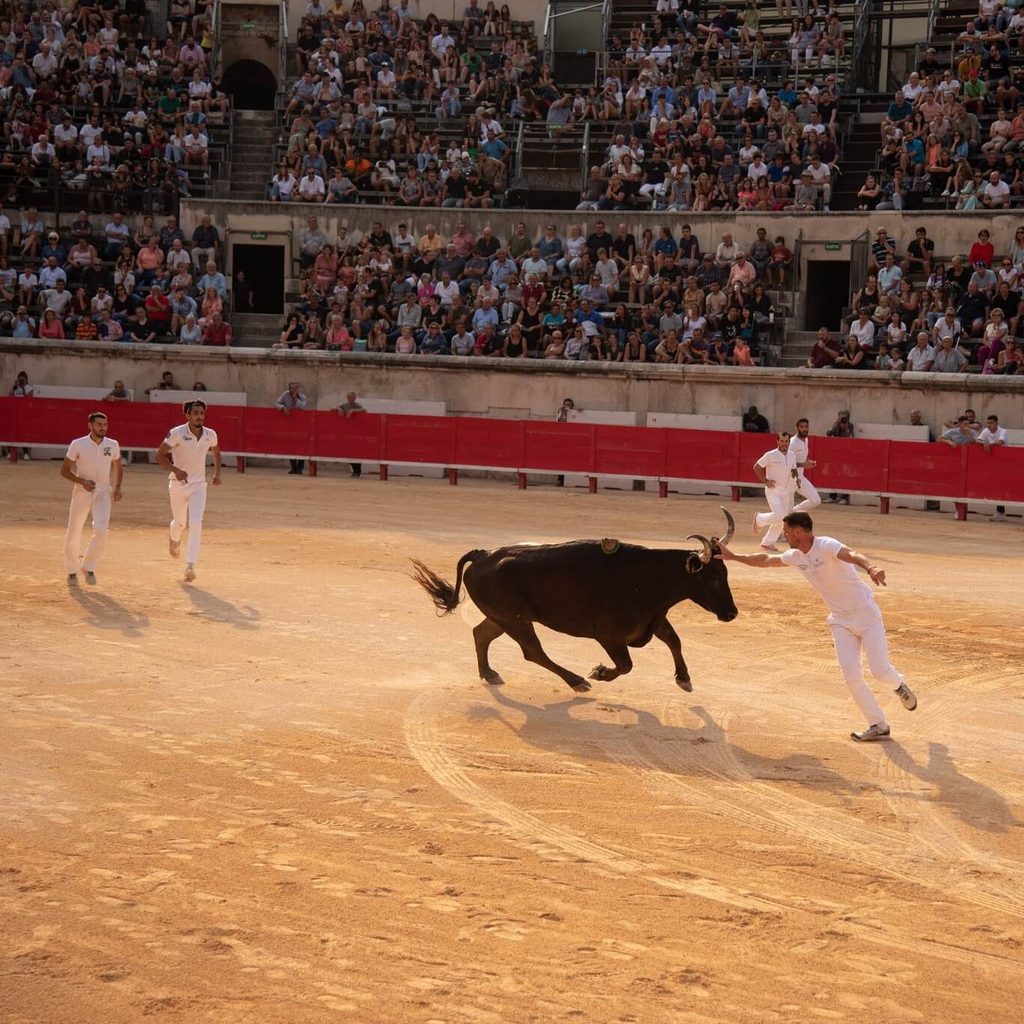
The sport is closely tied to local festivals and village life. If you happen to be in the area when a course is taking place, it can be an interesting way to see a tradition that you won’t encounter in other parts of France.
If you’re unsure about the event or its traditions, I’d read a little about it beforehand. Understanding what’s happening makes watching it much more interesting.
Camargue Food and Local Products
Food is another reason I like adding the Camargue to a southern France trip. The local food reflects the landscape around it, so you’ll find rice from the wetlands, salt from the salt marshes, seafood from the Mediterranean and traditional dishes made with local beef.
You don’t need to plan your entire trip around food, but I’d definitely try a few local specialties while you’re here. Restaurants around Saintes Maries de la Mer and Aigues Mortes are good places to look, especially if you want to try regional dishes.
Camargue Rice
Rice has been grown in the Camargue for generations and is one of the region’s best known agricultural products. You’ll notice the rice fields as you drive through the countryside, particularly in the wetter parts of the region.
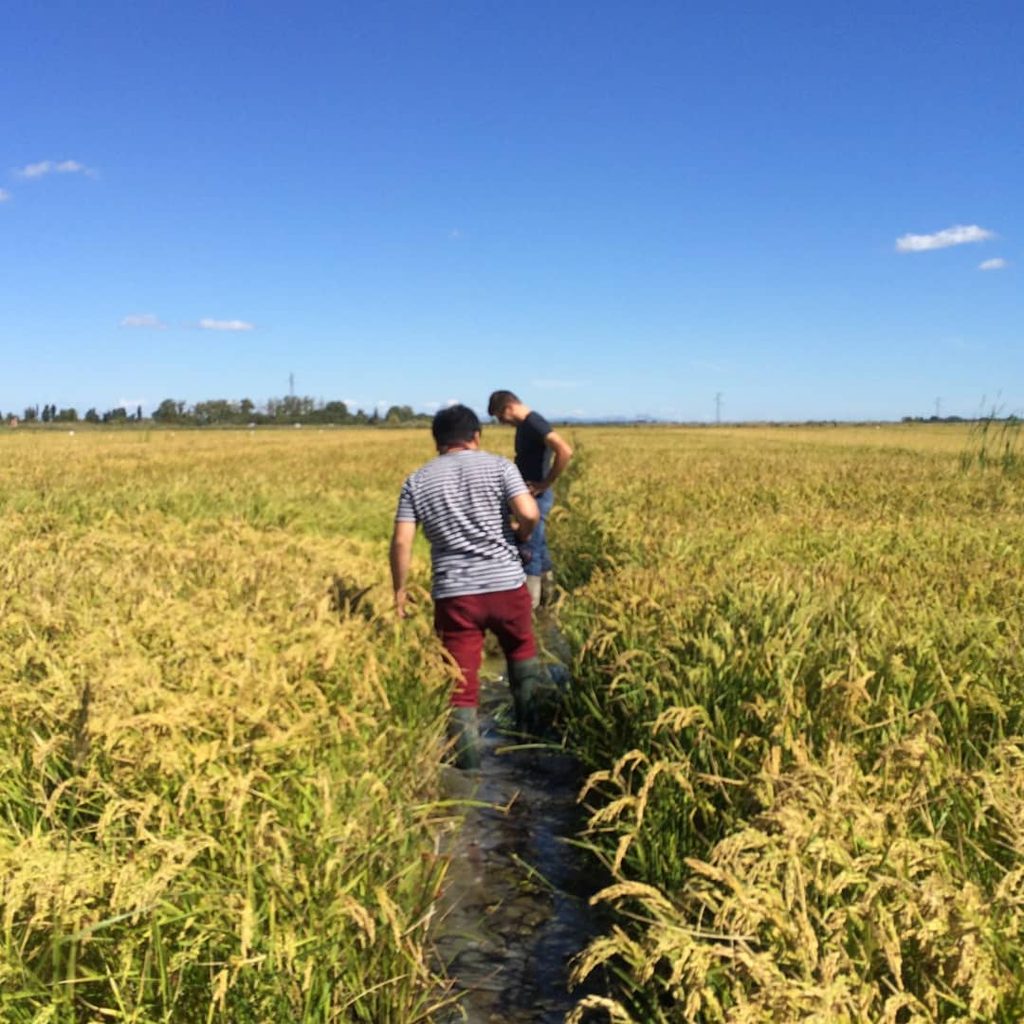
You’ll find Camargue rice used in local dishes and sold in shops and markets. If you enjoy cooking, it’s also an easy food souvenir to take home.
Salt
Salt is another important local product. The huge salt producing areas around the Camargue are part of the landscape, particularly near Aigues Mortes and Salin de Giraud.
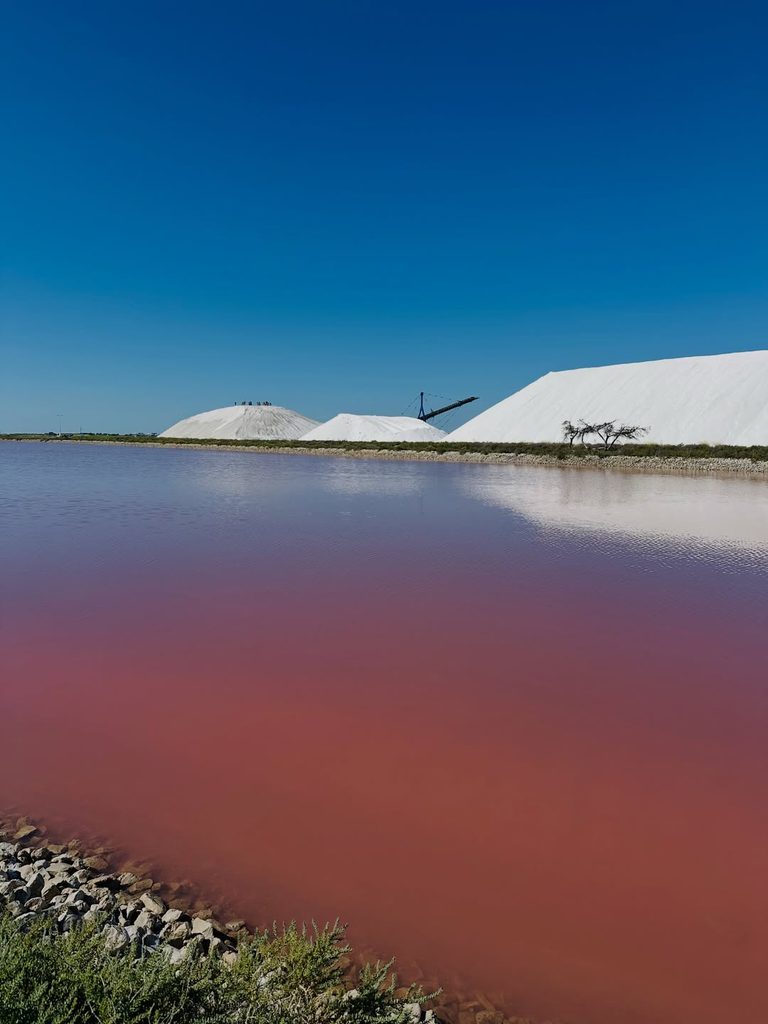
You can buy local salt in shops and markets, but visiting the salt works gives you a much better idea of how much work goes into producing it. It also helps explain why the salt marshes look the way they do.
Seafood
With the Mediterranean right beside it, seafood naturally features on many menus. Around Saintes Maries de la Mer, you’ll find restaurants serving fish, shellfish and other seafood dishes.
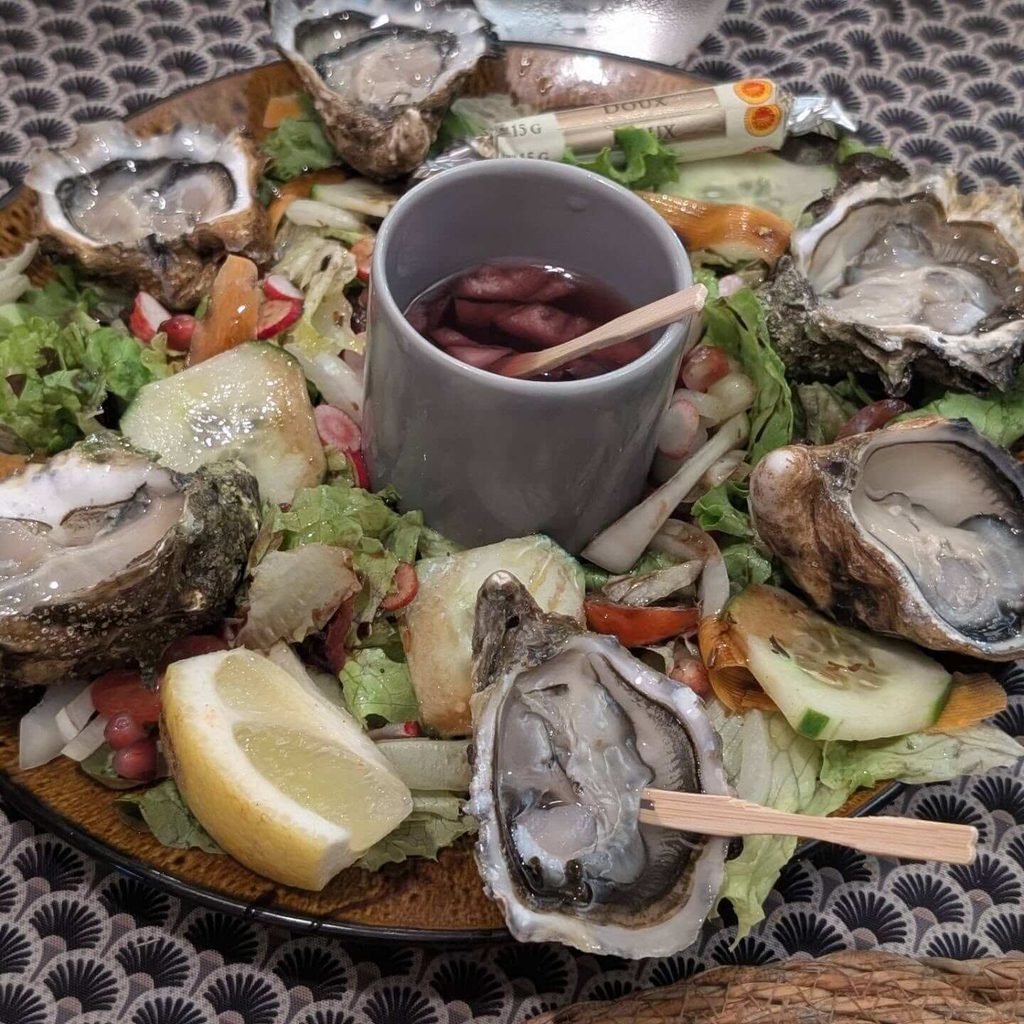
I’d look for somewhere that uses local ingredients rather than choosing a restaurant simply because it has the best view. If you’re staying in town, the evening is a good time to sit down for a relaxed meal after a day exploring the wetlands.
Gardiane de Taureau
One of the dishes you’ll come across is gardiane de taureau, a slow cooked beef stew traditionally associated with the Camargue.
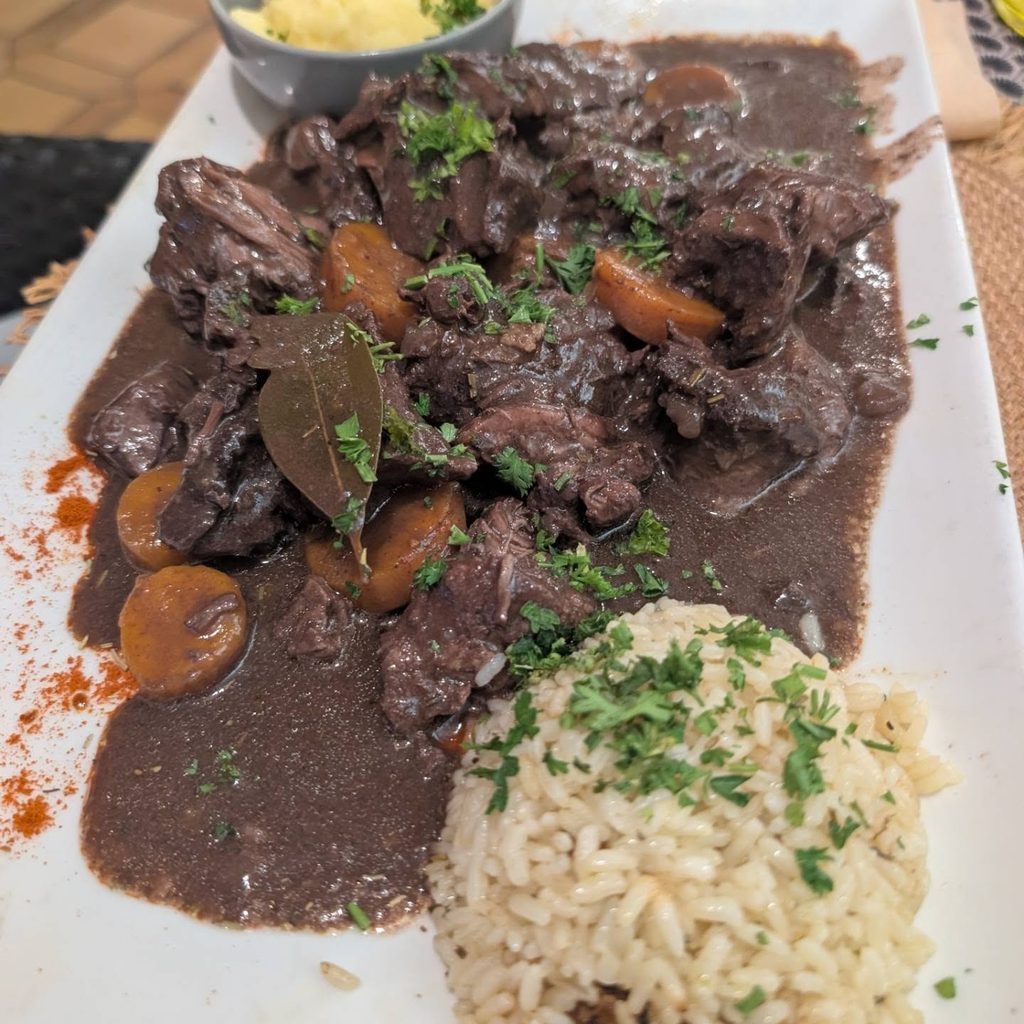
It’s often served with rice, which makes sense given how closely both ingredients are connected to the region. If you eat meat, I’d try it at least once while you’re here.
Vegetarian Food
Vegetarian travelers may need to plan a little more carefully, particularly in smaller villages and traditional restaurants.
Wild & Without mentioned having difficulty finding interesting vegetarian choices during their trip, especially outside the larger tourist areas. Saintes Maries de la Mer and Aigues Mortes generally give you more options, but I’d still check menus ahead of time if you have specific dietary requirements.
Where to Stay in the Camargue
Choosing where to stay matters more here than it might in a compact city. The Camargue is spread out, so staying on the wrong side of the region can mean spending quite a lot of time driving each day.
For a first visit, I’d choose my base according to the experiences I want rather than simply picking the cheapest accommodation.
Stay in Saintes Maries de la Mer
Best for: first time visitors, beaches, restaurants and horse riding.
This would probably be my first choice for a classic Camargue trip. You can walk around town, reach the beach easily and find plenty of places offering horse riding and other activities nearby.
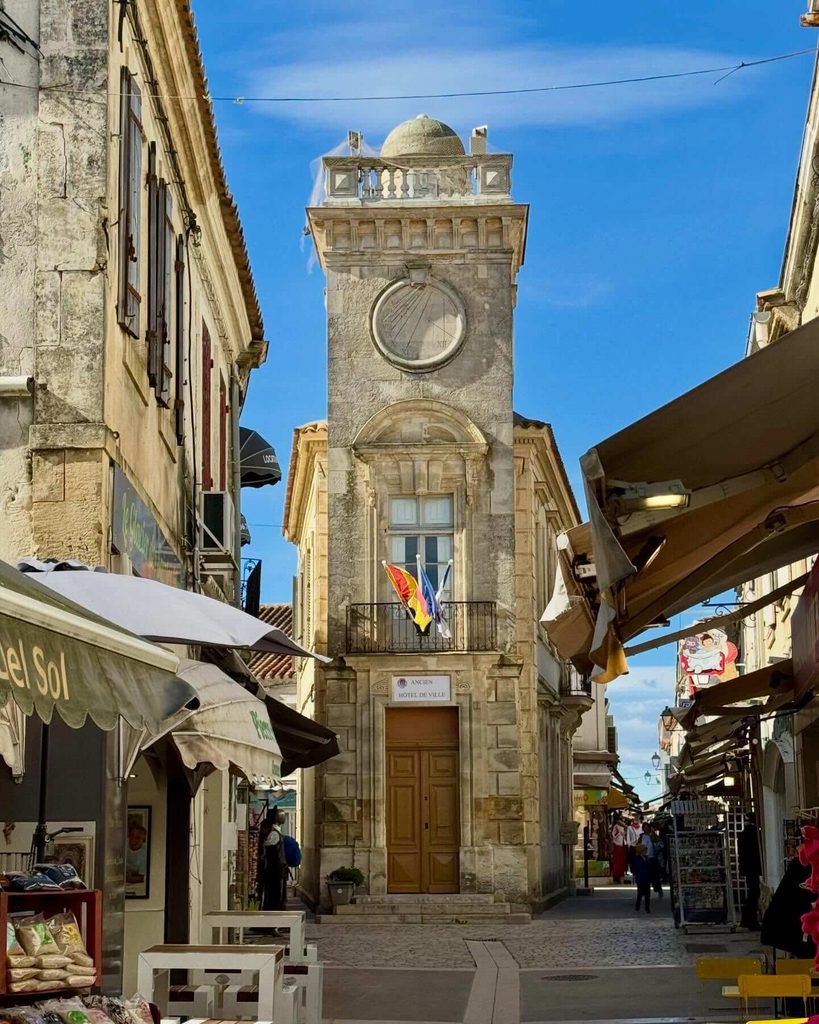
It’s also nice to have somewhere to go for dinner without getting back in the car. After spending the day exploring the wetlands, being able to walk from your accommodation into town is a small thing that makes a difference.
If you’re staying for two or three nights and don’t want to move hotels, this is the base I’d consider first.
Stay in Aigues Mortes
Best for: history, the salt works and exploring the western side of the region.
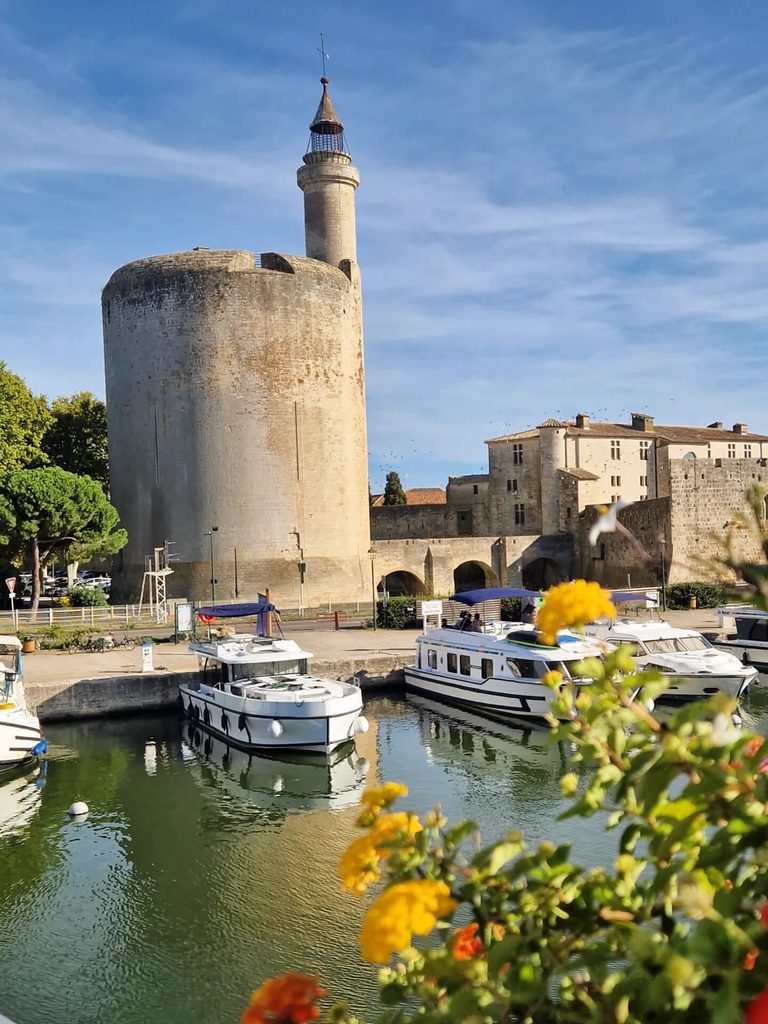
Aigues Mortes gives you a completely different atmosphere from Saintes Maries de la Mer. Instead of a seaside town, you’re staying beside medieval walls and an old historic center.
It’s particularly convenient if the salt marshes are high on your list. I also like it as an evening base because you can spend the day exploring and then walk around the old town after dinner.
Stay in Arles
Best for: combining the Camargue with Provence or travelling by train.
Arles is a practical choice if the Camargue is only part of a larger southern France trip. You’ll have more accommodation and restaurant choices, along with better transport connections than in the smaller Camargue settlements.
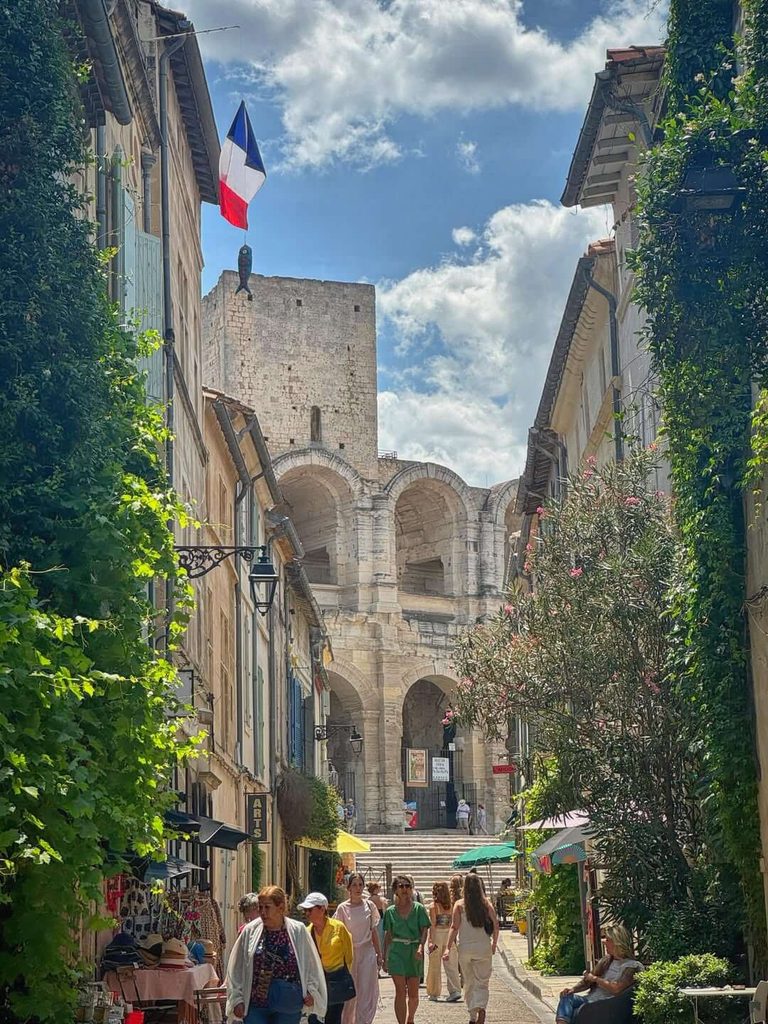
It’s also a good base if you don’t want to rent a car for your entire holiday. You can stay in Arles and arrange a guided trip into the Camargue or rent a car for specific days.
The downside is that you’re further from some of the wildlife areas and beaches, so I’d factor that extra travel time into your plans.
How to Get to the Camargue
By Car
A car is the easiest way to explore the Camargue. The main sights are spread out, so having your own vehicle means you can move between wildlife areas, beaches, salt marshes and smaller villages without having to plan your entire day around public transport.
It’s also useful if you want to stop whenever you see something interesting along the road. Just remember that some roads are quite remote, so don’t head out without enough water and fuel.
By Train
There isn’t a train station in the middle of the Camargue, so you’ll need to continue your journey after arriving.
Arles is one of the most useful arrival points if you’re coming by train. From there, you can rent a car, arrange a guided excursion or continue by local transport depending on where you’re staying.
If you’re travelling without a car, I’d decide on your base before booking your train ticket. It can make the rest of the trip much easier.
By Bus
Buses can be useful for getting between some of the larger towns, but they aren’t the easiest way to explore the more remote parts of the Camargue.
You may be able to reach Saintes Maries de la Mer by public transport, for example, but getting from there to a particular wildlife reserve or beach can take more planning.
Timetables also change, so I’d check the current schedules before relying on buses for a full day of sightseeing.
Best Time to Visit the Camargue
There isn’t really one perfect time to visit the Camargue. The best month depends on what you want to do. Spring and autumn are easier for walking and cycling, summer is better for beach days, and winter can be a good choice if you mainly want quiet landscapes and wildlife.
Spring
Spring is one of my favorite times to explore the Camargue. The weather is generally more comfortable for walking and cycling, and the wetlands are active with birdlife.
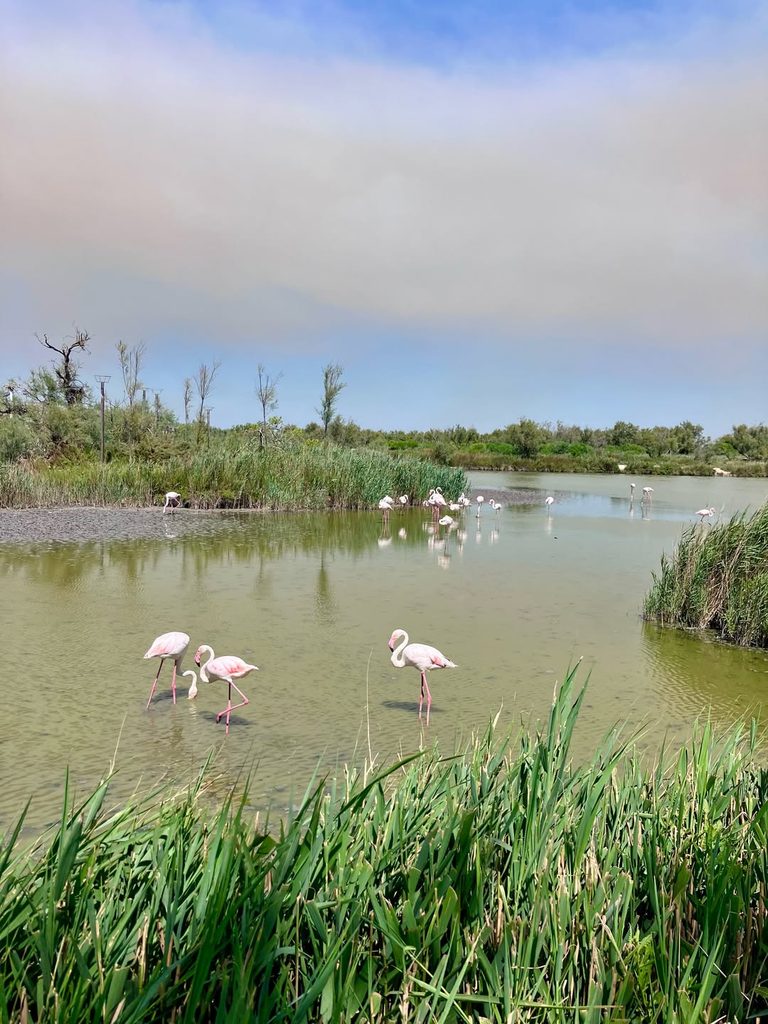
It’s also a good season for horseback riding because you’re less likely to be dealing with the intense summer heat. If you’re visiting Saintes Maries de la Mer in May, check the dates of the annual pilgrimage. The town can become much busier during the event, so accommodation and parking need more planning
Summer
Summer is the obvious choice if you want to spend time on the beaches. The days are long, and the Mediterranean is warm enough for swimming, but temperatures can get quite high.
Mosquitoes can also be more noticeable around the wetlands. If you’re planning to hike, cycle or spend several hours outdoors, I’d start early and avoid the hottest part of the afternoon.
July and August are also among the busiest months, so I’d book accommodation and popular activities ahead of time.
Autumn
Autumn is a nice middle ground. The worst of the summer heat has usually passed, but you can still enjoy plenty of outdoor activities and time by the coast.
It’s a particularly good season for cycling and walking if you want to spend more time exploring without dealing with peak summer temperatures. You’ll also find fewer visitors once the main holiday season is over.
Winter
Winter is much quieter and won’t suit everyone. If you’re coming mainly for swimming and beach days, I’d choose another season.

For wildlife, photography and peaceful walks, though, winter can be interesting. Just check opening hours before heading out because some seasonal attractions, restaurants and activities operate on shorter schedules.
A One Day Camargue Itinerary
If you only have one day in the Camargue, I’d keep things fairly simple. The region is much bigger than it first appears, so trying to fit in several wildlife areas, Aigues Mortes and the beaches will leave you spending most of the day in the car.
Morning: Pont de Gau
I’d start at Parc Ornithologique du Pont de Gau, particularly if seeing flamingos is one of your main reasons for visiting.
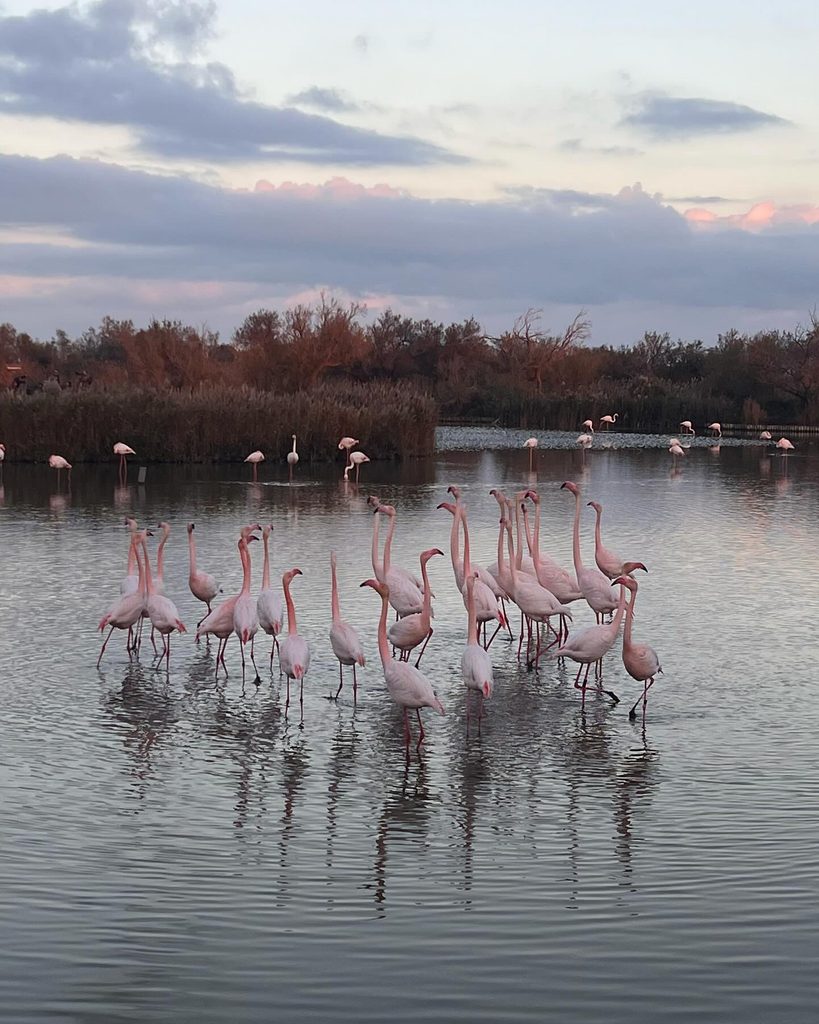
Give yourself a couple of hours to walk the trails rather than rushing around trying to find the birds. You’ll usually see flamingos, but there are plenty of other birds around the wetlands too. Some will be close to the paths and others will be further away, so binoculars are handy.
If you’re visiting in summer, an earlier start is a good idea. It’s more comfortable for walking, and you can avoid the strongest midday heat.
Lunch: Saintes Maries de la Mer
After Pont de Gau, drive to Saintes Maries de la Mer for lunch. It’s an easy place to stop, with plenty of cafés and restaurants in and around the town center.
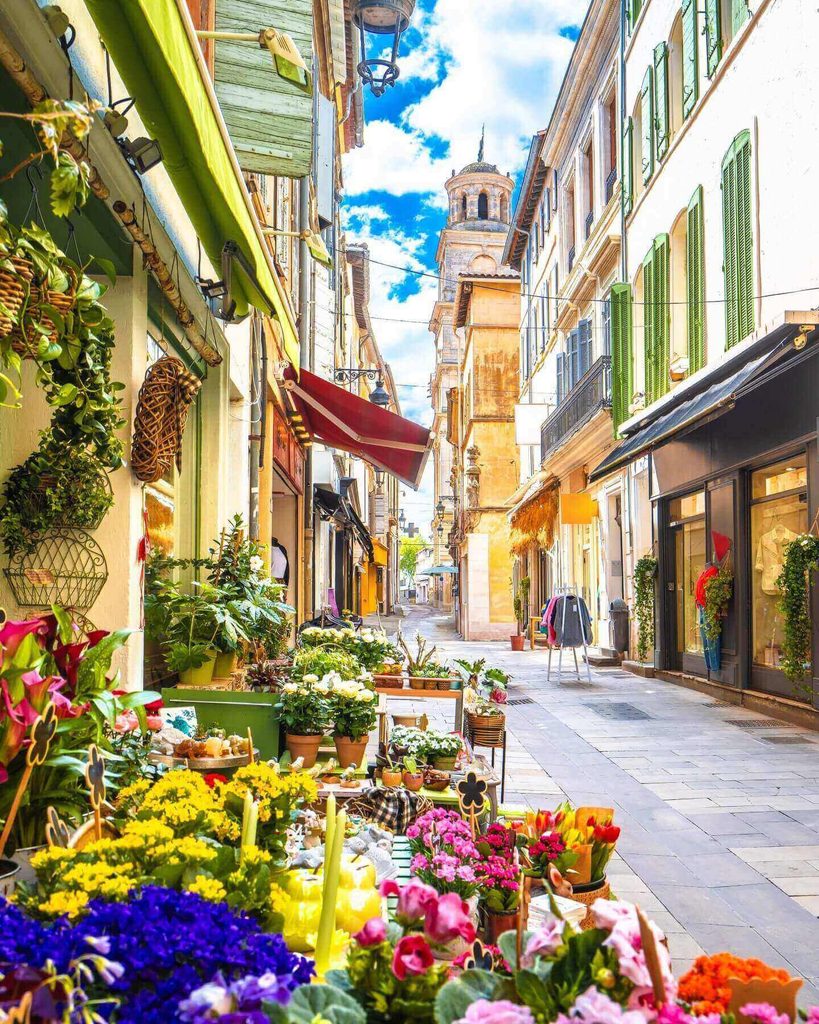
I’d take a little time to walk around after eating rather than immediately getting back in the car. The town is small enough that you can see the main areas without needing much time.
Afternoon: Town and Beach
Spend the afternoon exploring Saintes Maries de la Mer. The fortified church is worth a quick visit, and then you can wander through the streets before heading down to the beach.
You don’t need to dedicate the entire afternoon to swimming unless that’s your main reason for coming. Even an hour or two beside the Mediterranean is a nice way to break up a day of wildlife watching.
If you’d rather ride a Camargue horse, you could replace some of your beach time with a short horseback excursion. Just book it ahead and make sure the timing works with your visit to Pont de Gau.
Evening
If you don’t have to leave immediately, I’d stay until later in the day. The temperature usually becomes more pleasant, and the softer light makes the wetlands and coastline look particularly nice.
You can have dinner in Saintes Maries de la Mer before heading back to your accommodation. If you’re planning to explore more of the Camargue the following day, staying here overnight also saves you from another long drive.
Is the Camargue Worth Visiting?
For me, absolutely, especially if you enjoy wildlife, beaches and outdoor travel.
It’s not necessarily the easiest part of southern France to explore spontaneously. The region is large, the main sights are spread out and public transport isn’t as convenient as it is in larger cities. Summer heat and strong winds can also make some activities more tiring than they look on paper.
But once you know that, it’s easy enough to plan around.
Give yourself a little more time than you initially think you’ll need, choose your base carefully and don’t try to squeeze every attraction into one day. The Camargue is much more enjoyable when you aren’t constantly watching the clock.
What I like most is the variety. You can have breakfast in a seaside town, spend the morning watching flamingos, drive past rice fields and black bulls, and then find yourself watching white horses moving through the marshes later in the day.
It’s a very different side of southern France, and that’s exactly why I think it’s worth adding to a Provence itinerary.
Final Thoughts
The Camargue is one of those places I’d rather explore slowly.
You don’t need to visit every nature reserve or fit every activity into your itinerary. Pick a few things you’re genuinely interested in and leave some room for the unexpected.
You might stop because you spotted horses beside the road, spend longer than planned watching flamingos, or find a quiet stretch of beach where you simply want to sit for a while.
For a first visit, I’d give the Camargue at least two days. That gives you enough time for the main wildlife areas, Saintes Maries de la Mer and either Aigues Mortes or the salt marshes without spending the entire trip driving.
If you have four or five days, even better. You can slow down, explore a different part of the wetlands, try horseback riding or cycling, and still have time for the beach and local food.
The Camargue isn’t somewhere I’d visit just to tick off attractions. It’s the kind of place that becomes more interesting when you slow down and pay attention to what’s around you. And for me, that’s what makes it such a memorable part of southern France.