
Before visiting Paris, I honestly assumed Sainte Chapelle would be more of a quick stop between bigger landmarks. In my head, it was one of those places where you walk through for 15 or 20 minutes, take a few photos, admire the stained glass, and move on.
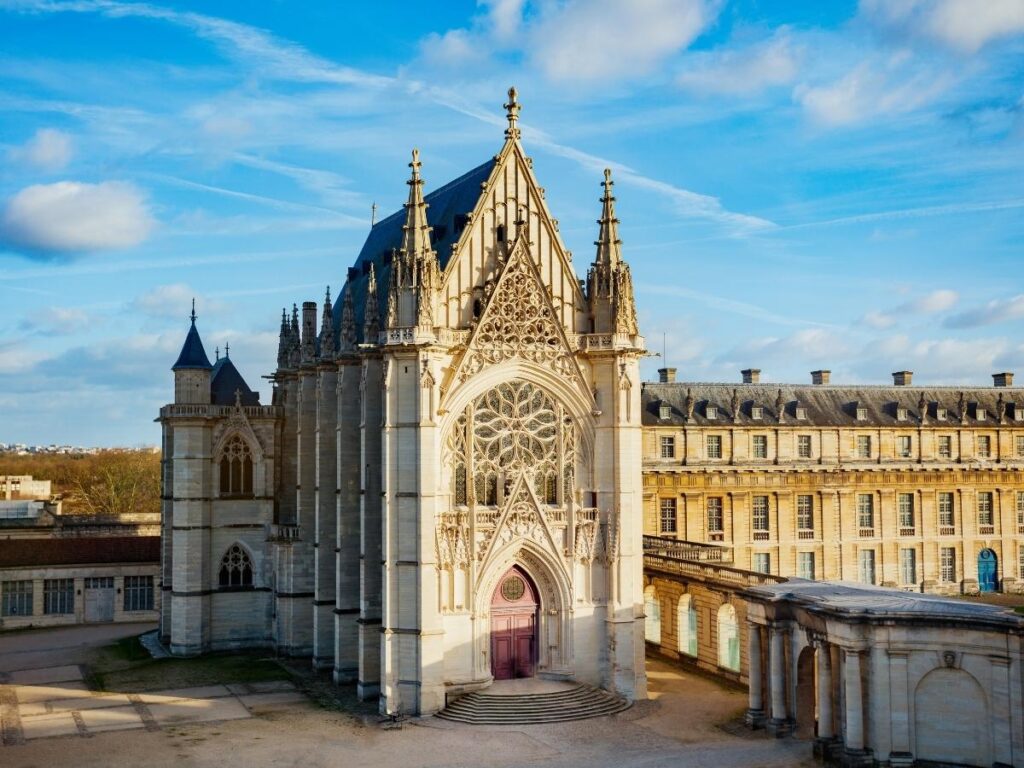
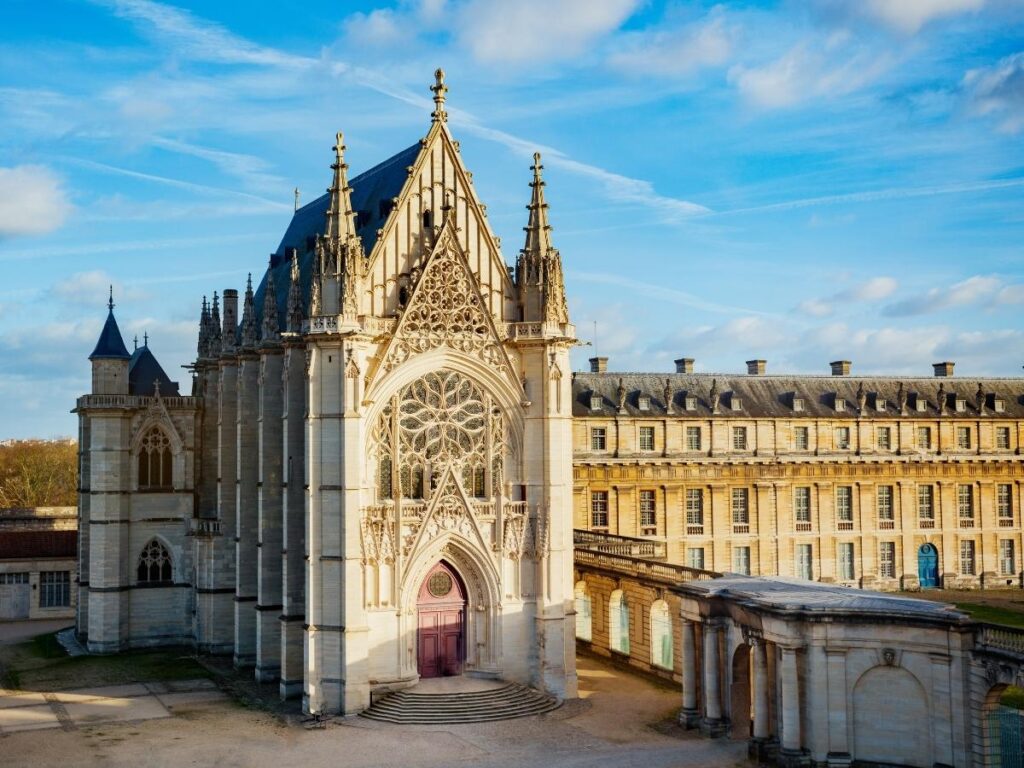
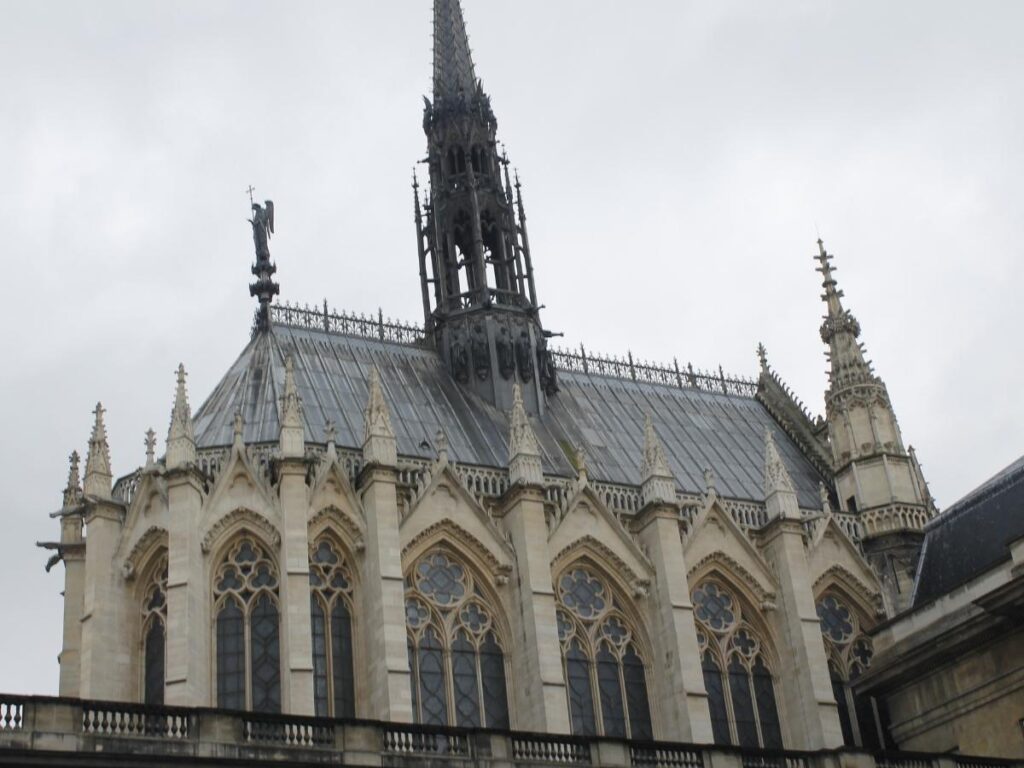
Compared to places like the Eiffel Tower or Notre Dame Cathedral, the exterior of Sainte Chapelle felt surprisingly modest when I first arrived. It’s tucked into a busy area of Île de la Cité, and from the outside, it doesn’t immediately hint at how impressive the interior actually is.
Then I walked upstairs.
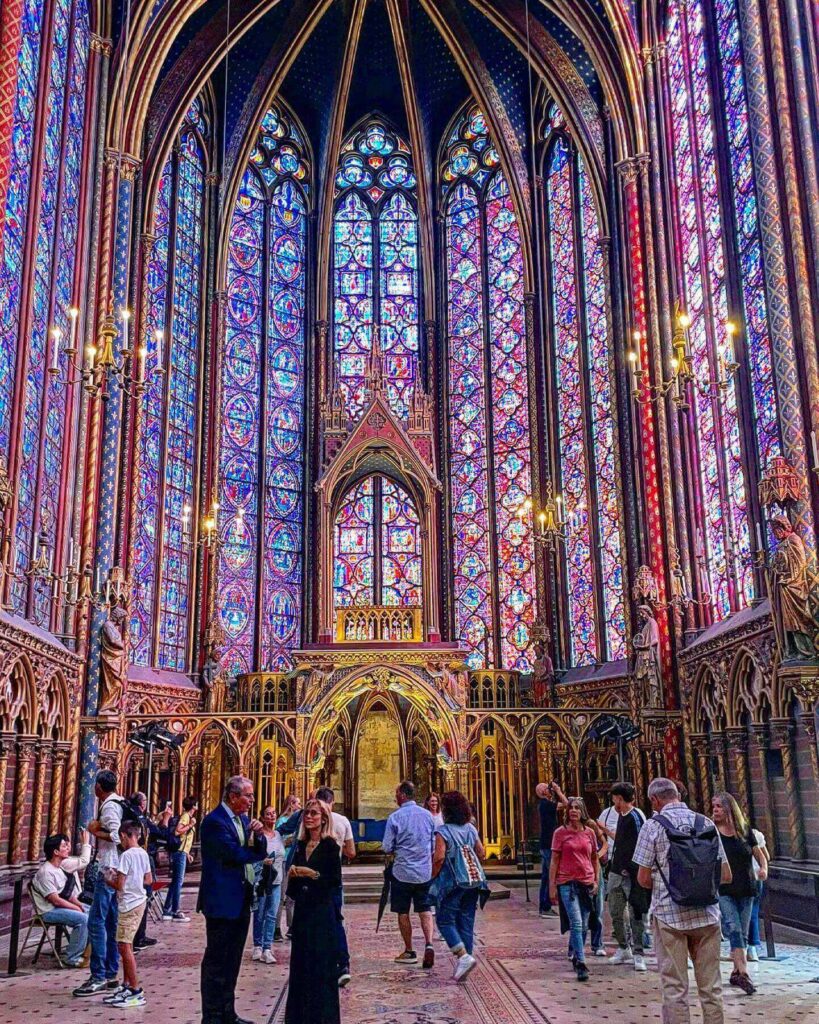
The moment I entered the upper chapel completely changed my impression of the place. I knew Sainte Chapelle was famous for its stained glass, but I still wasn’t prepared for how immersive it felt in person.
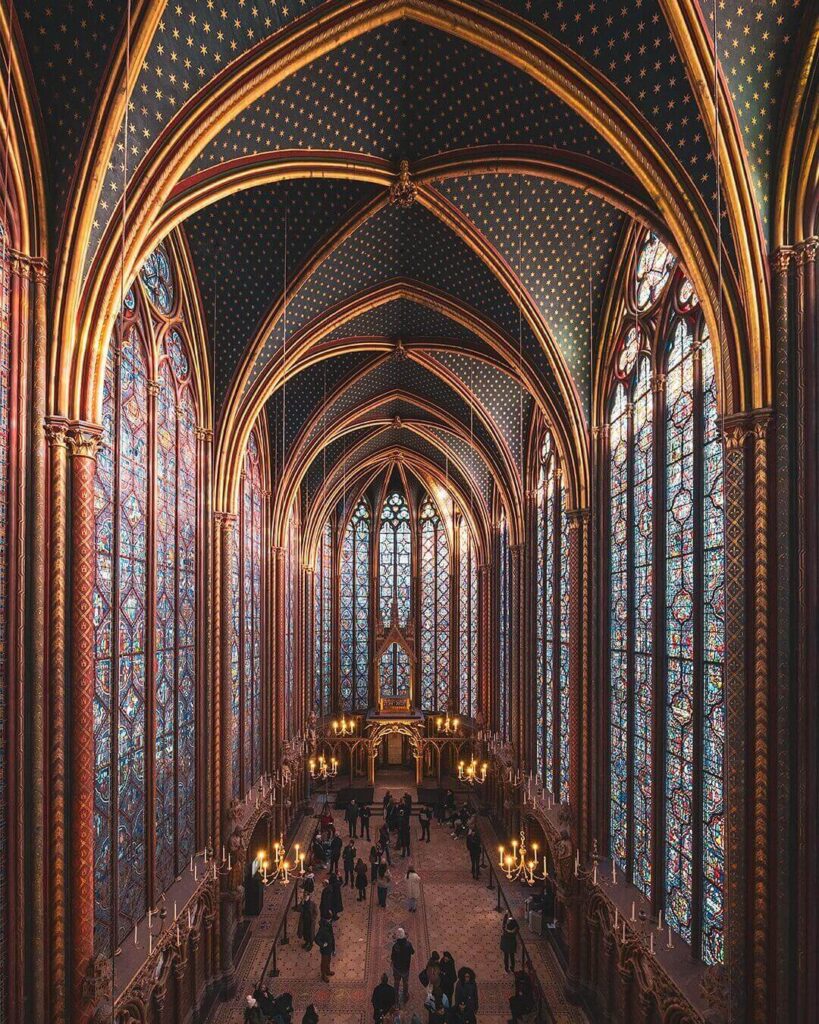
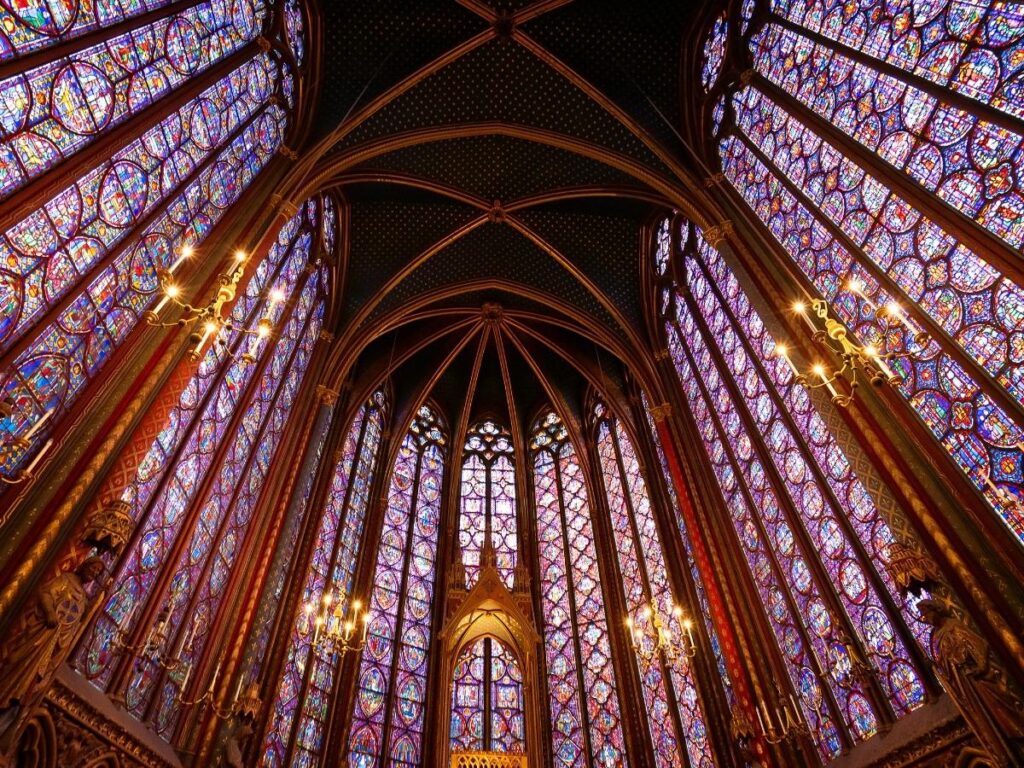
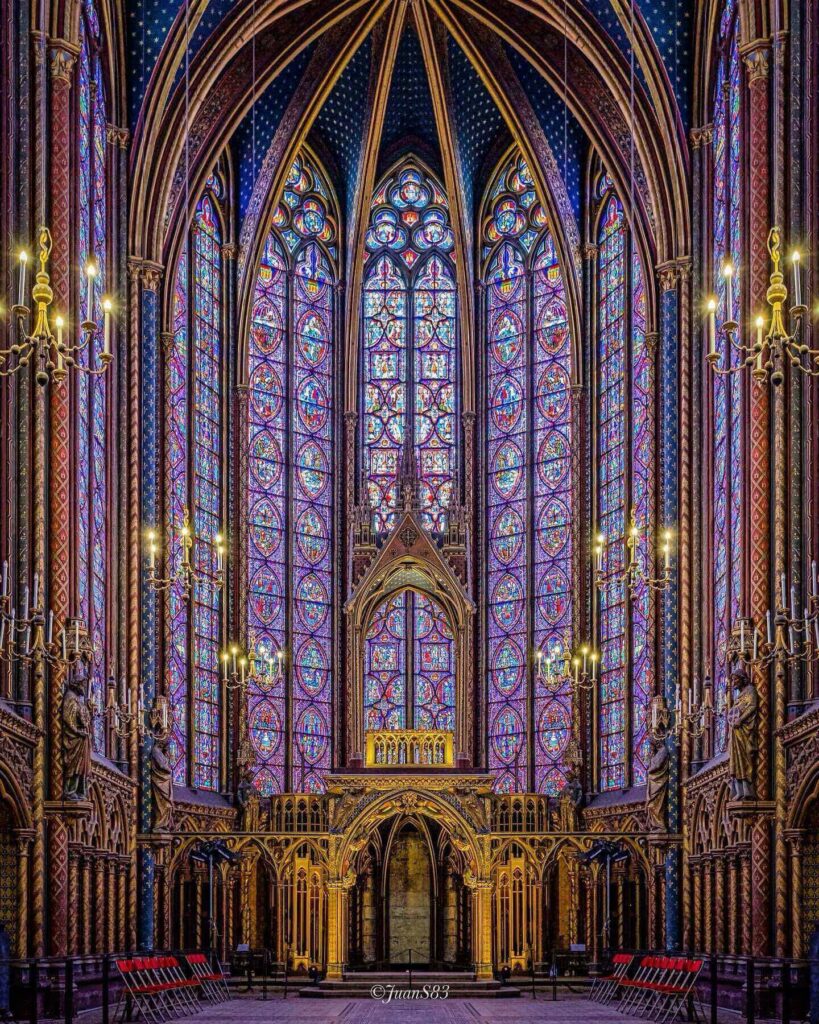
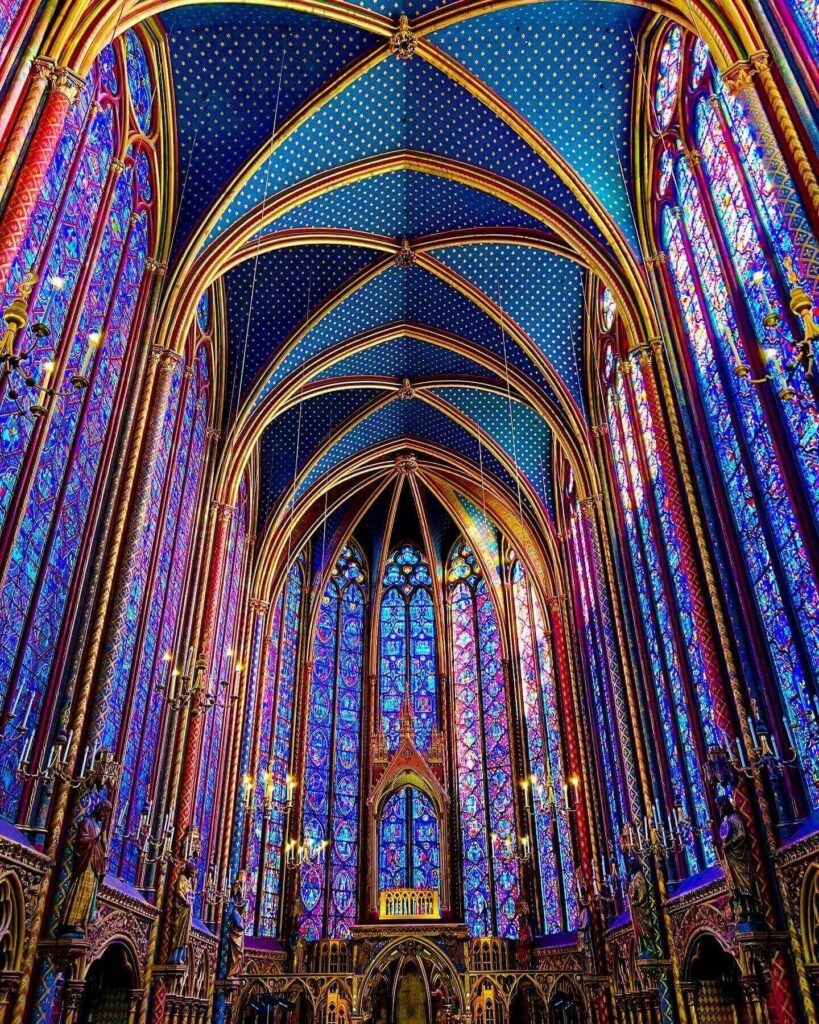
The windows seemed to rise endlessly upward, covering almost every wall with deep blues, reds, and golds that shifted with the sunlight. Instead of feeling like I was standing inside a building, it honestly felt like standing inside color and light.
What surprised me most was how easy it was to slow down there. Even with other visitors around, the chapel still felt calm and quiet. I ended up staying much longer than I expected, mostly just looking upward and noticing details I had completely missed the first time around.
Photos really don’t capture the scale of the windows or how dramatic the space feels once sunlight starts coming through the glass.
By the time I left, Sainte Chapelle had easily become one of the most memorable interiors I visited in Paris. It felt completely different from the city’s larger landmarks, more intimate, more atmospheric, and honestly far more emotional than I expected.
If you’re planning a visit, this guide covers everything you need to know about Sainte Chapelle, including tickets, the best time to visit, practical tips, and whether I think it’s truly worth adding to your Paris itinerary.
What Is Sainte Chapelle?
Sainte Chapelle is a 13th century royal chapel located on Île de la Cité in the heart of Paris. It was commissioned by King Louis IX, later known as Saint Louis, to house important Christian relics, including the Crown of Thorns.
At the time, these relics were considered incredibly valuable, both spiritually and politically, and Sainte Chapelle was built almost like a grand showcase for them.
Today, the chapel is considered one of the finest examples of Gothic architecture in Europe, especially famous for its extraordinary stained glass windows. What makes Sainte Chapelle feel so different from many other churches in Paris is that the design focuses far more on light and color than massive stone architecture.
Instead of heavy walls dominating the space, the stained glass becomes the main feature of the interior. The chapel has two levels, and each feels very different from the other.
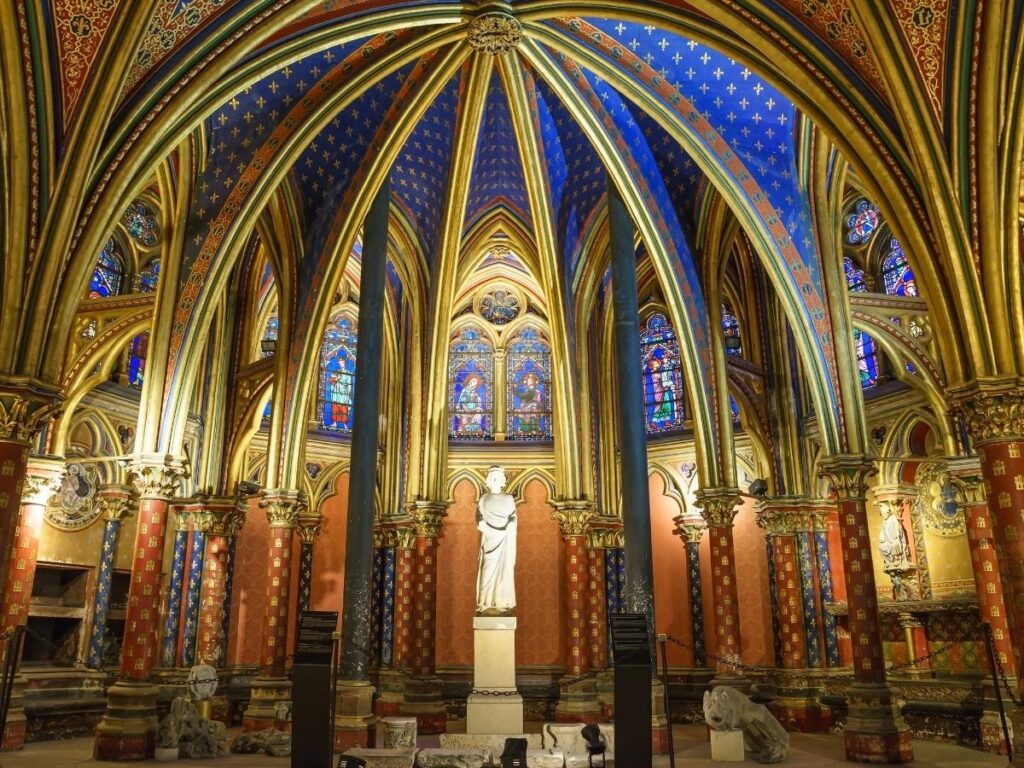
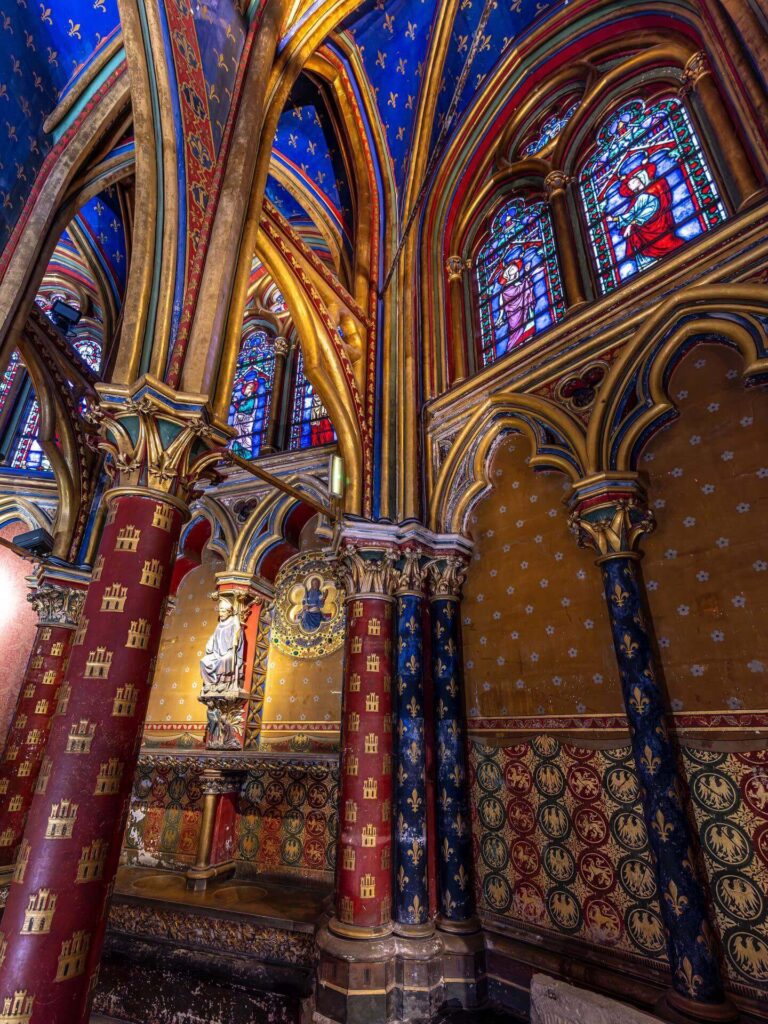
The lower chapel is smaller, darker, and more intimate. It was originally used by palace staff and servants, and while many visitors move through it quickly, the painted ceilings and decorative details are still beautiful to look at.
The upper chapel is where the experience becomes unforgettable. The moment you walk upstairs, the space suddenly opens into towering stained glass windows filled with deep blues, reds, and golds. Even after seeing countless photos beforehand, I still wasn’t prepared for how immersive it felt in person.
Why Sainte Chapelle Feels So Different From Other Paris Churches
Paris has no shortage of beautiful churches and cathedrals, but Sainte Chapelle feels completely different from most of them. Before visiting, I wondered if it would feel repetitive after seeing places like Notre Dame Cathedral, but the atmosphere inside ended up surprising me immediately.
Unlike larger churches that impress through massive halls and heavy stone architecture, Sainte Chapelle feels much more intimate and focused. The moment you walk into the upper chapel, your attention goes straight upward toward the stained glass and light rather than the structure itself.
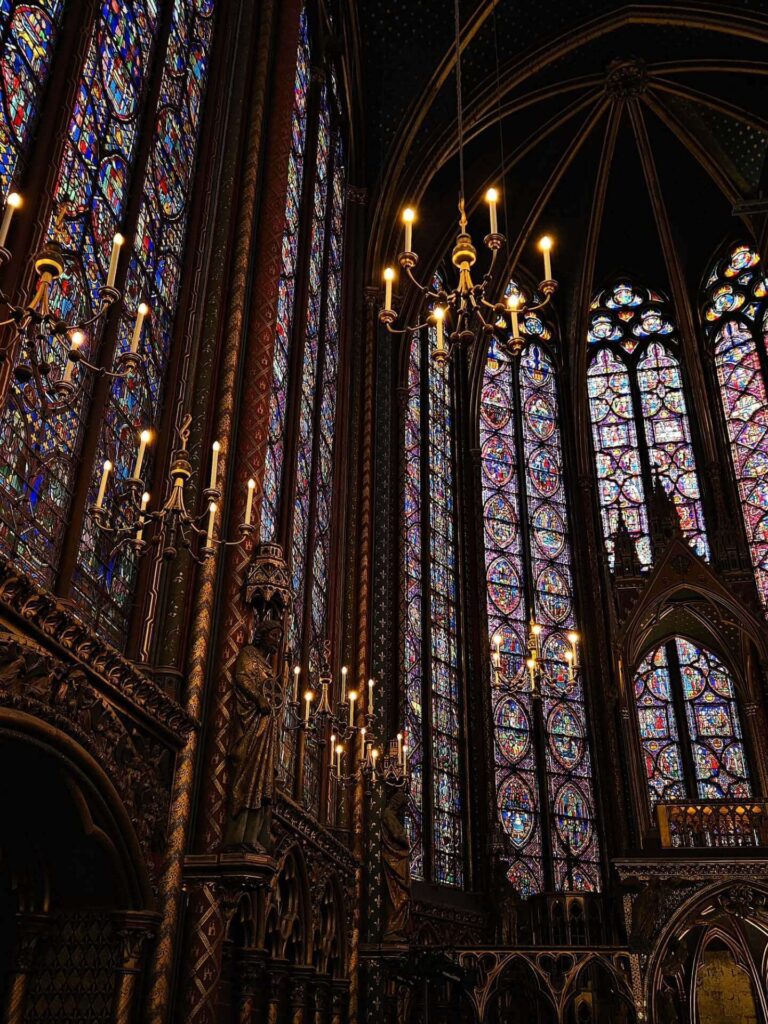
What stood out to me most was how delicate the architecture feels inside. The columns seem impossibly thin compared to the height of the room, and because there’s so little solid wall space, the entire chapel feels bright and almost weightless.
On a sunny day, the experience becomes even more memorable. Deep reds, blues, and golds reflect across the floor and pillars as sunlight moves through the windows, and the atmosphere changes constantly depending on the light outside. Even with other visitors around, the chapel still felt calm and quiet in a way I didn’t expect.
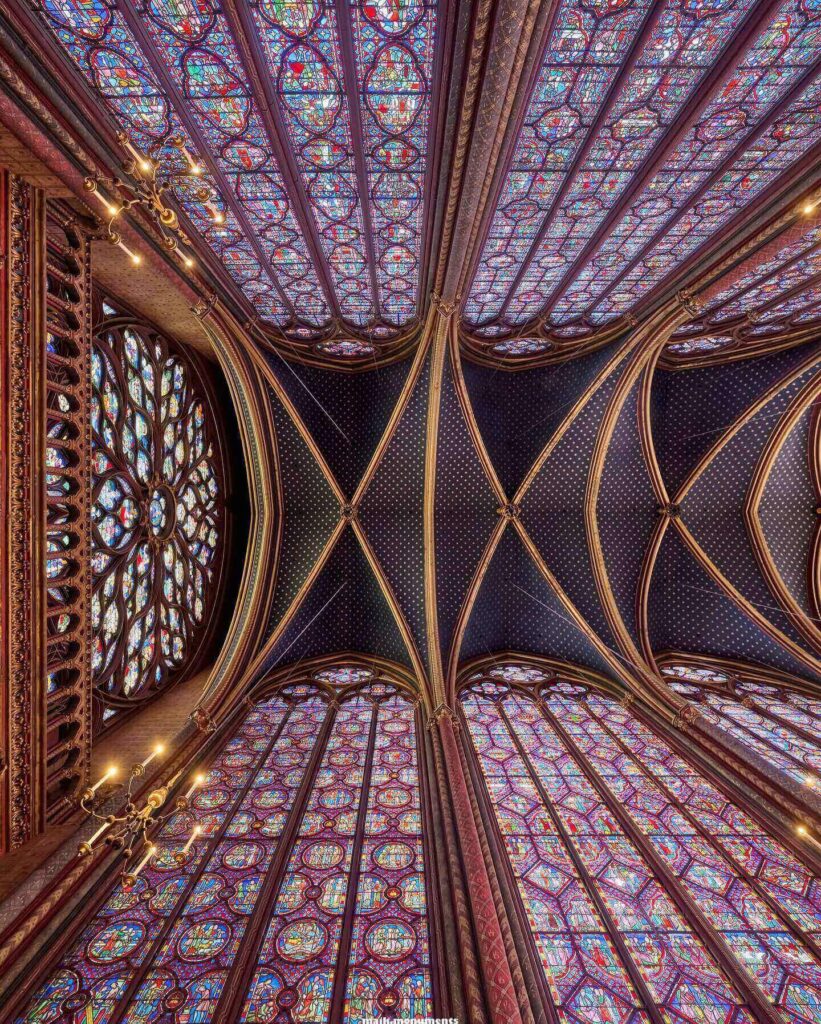
One thing photos really don’t capture well is the scale of the stained glass. Online, the chapel looks beautiful. In person, the windows feel enormous, stretching so high above you that it’s hard to take everything in at once.
I originally planned to spend maybe 30 minutes there, but I stayed much longer simply because I kept noticing details I had completely missed earlier.
The Stunning Stained Glass Windows
How Many Windows Are Inside Sainte Chapelle?
The stained glass windows are easily the highlight of Sainte Chapelle, and honestly, they ended up being even more impressive in person than I expected.
The upper chapel contains 15 enormous stained glass windows rising roughly 15 meters high, together showing more than 1,000 biblical scenes. What stood out to me most was how completely the windows dominate the space.
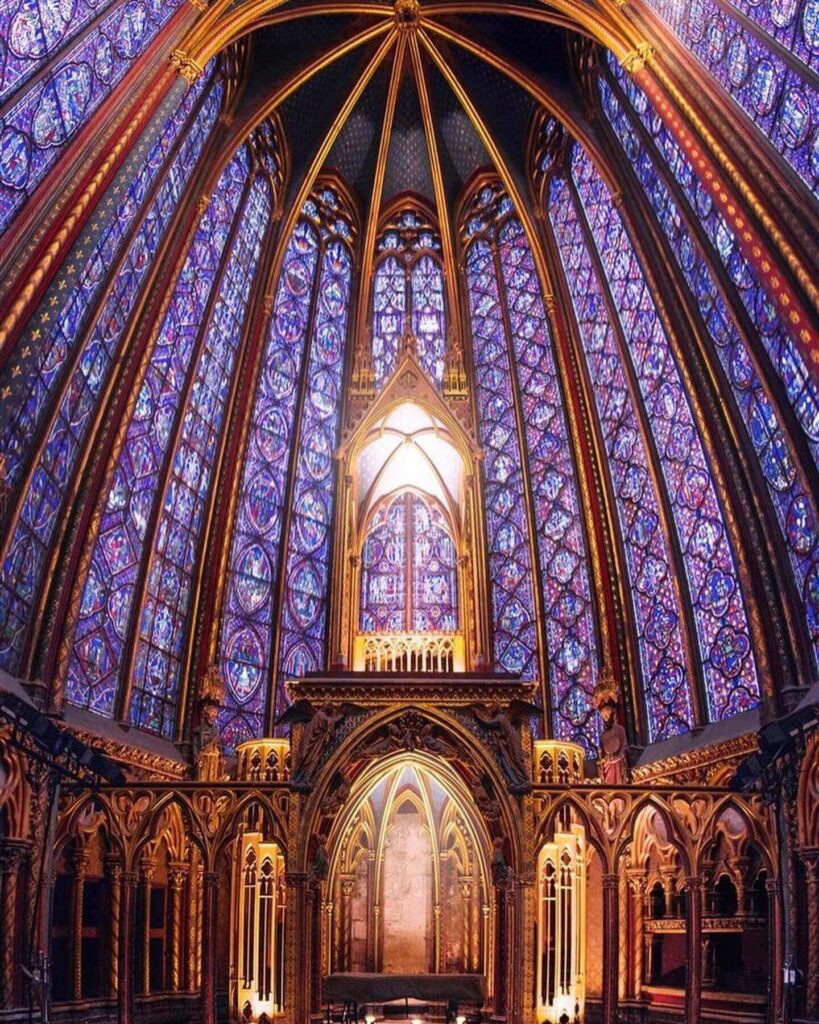
Once you’re upstairs, it almost feels like the walls disappear entirely and the entire chapel becomes filled with color and light instead of stone.
I was also surprised by how much of the glass is still original. Considering Sainte Chapelle dates back to the 1200s and survived events like the French Revolution, the preservation feels remarkable.
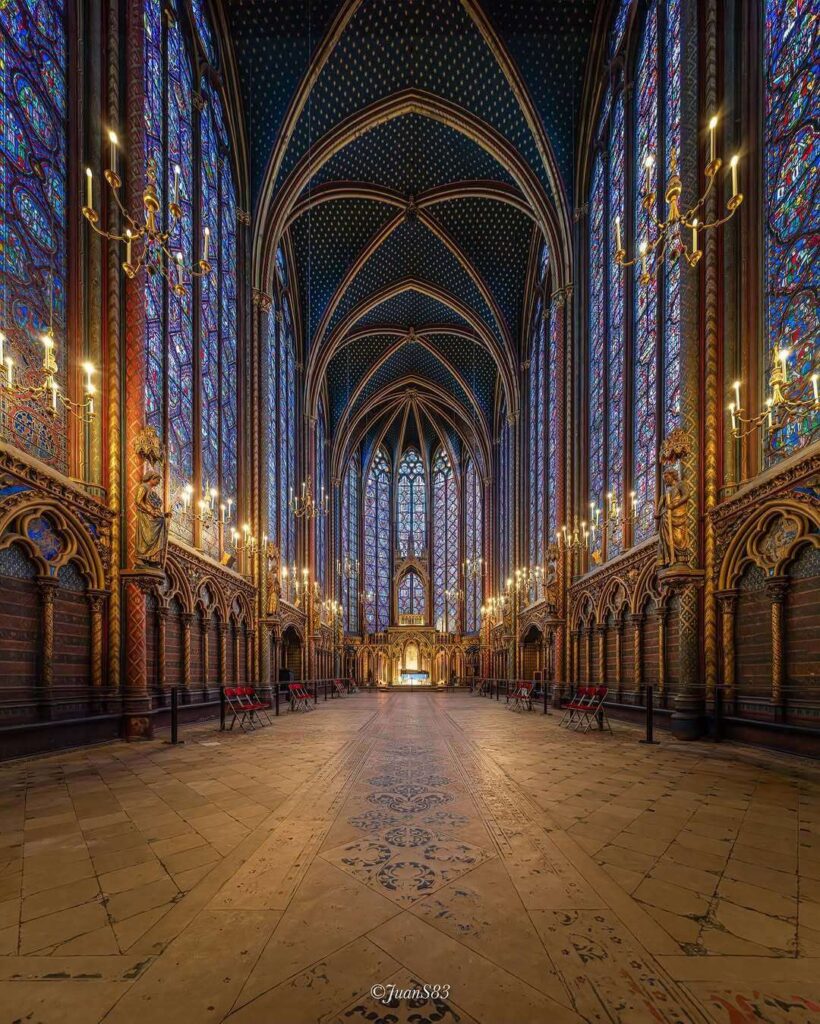
At first glance, the windows feel almost overwhelming because there’s so much detail packed into them. But the longer you stay, the smaller scenes and patterns you start noticing.
What the Windows Actually Show
The stained glass isn’t just decorative, it was designed to tell detailed biblical stories through imagery.
The windows include scenes from Genesis, Exodus, the lives of prophets and kings, the Passion of Christ, and the Book of Revelation. In medieval times, they worked almost like visual storytelling for visitors who couldn’t read, allowing people to follow religious stories through pictures and symbols.
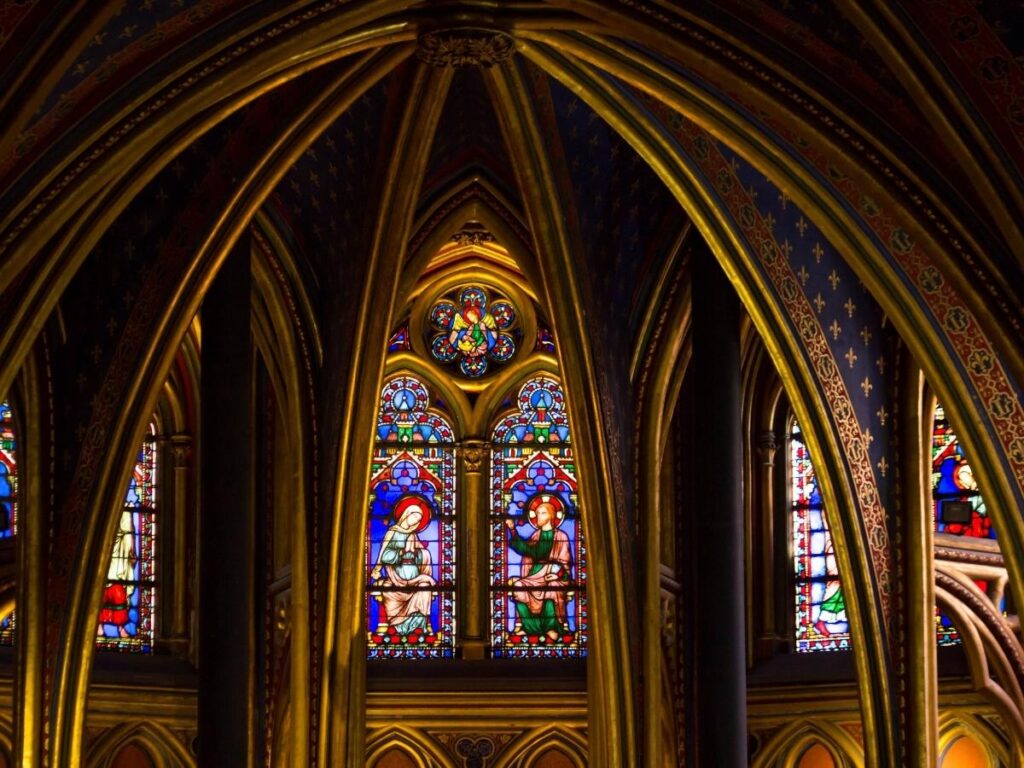
There’s also strong symbolism connected to King Louis IX and the French monarchy throughout the chapel.
One thing I really enjoyed was slowing down and looking closely at the smaller details inside the glass. Some windows contain dozens of tiny scenes stacked on top of each other, and it’s easy to miss how intricate they are if you rush through the chapel too quickly.
Best Time of Day to See the Glass
Lighting makes a huge difference at Sainte Chapelle.
I visited on a sunny afternoon, and the sunlight made the reds, blues, and golds inside the chapel glow intensely. The colors seemed to shift constantly depending on where the light hit the glass.
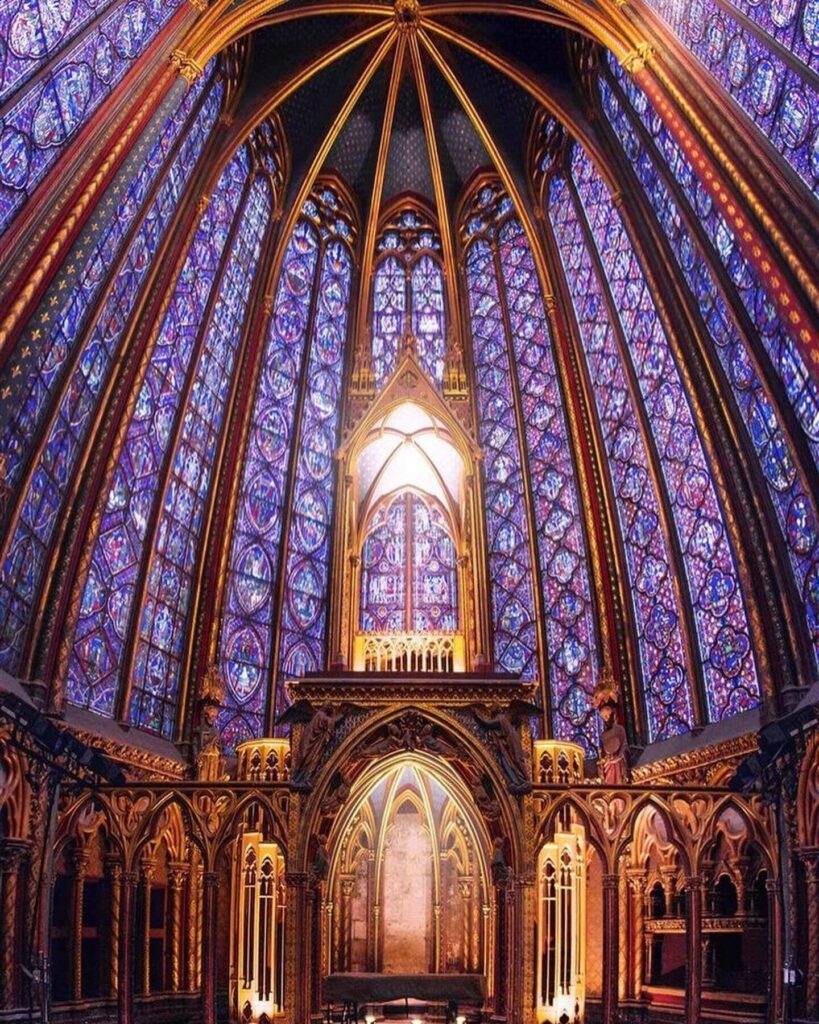
Midday usually creates the brightest interior lighting, while mornings often feel quieter and calmer. Even on cloudy days, though, the chapel still feels beautiful, just softer and less dramatic.
If possible, I’d personally prioritize visiting on a sunny day over focusing too much on the exact time. The sunlight completely transforms the experience inside the upper chapel.
Where to Stand for the Best Views
One thing I noticed pretty quickly inside the upper chapel is that the experience changes depending on where you stand. Most people walk in, take a few photos near the entrance, and move on, but slowing down and viewing the chapel from different angles made the visit much more memorable for me.
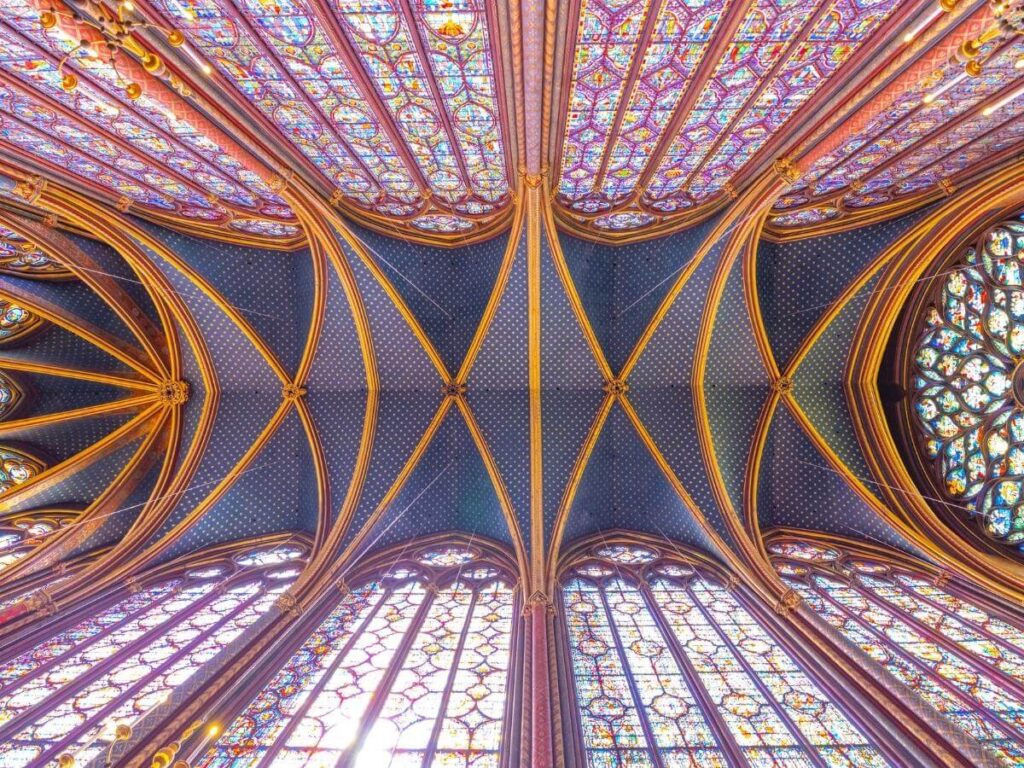
The center of the chapel gives you the best overall view of the stained glass surrounding the room from almost every direction. It’s the spot where you really notice how massive the windows are and how little solid wall space exists inside the upper chapel.
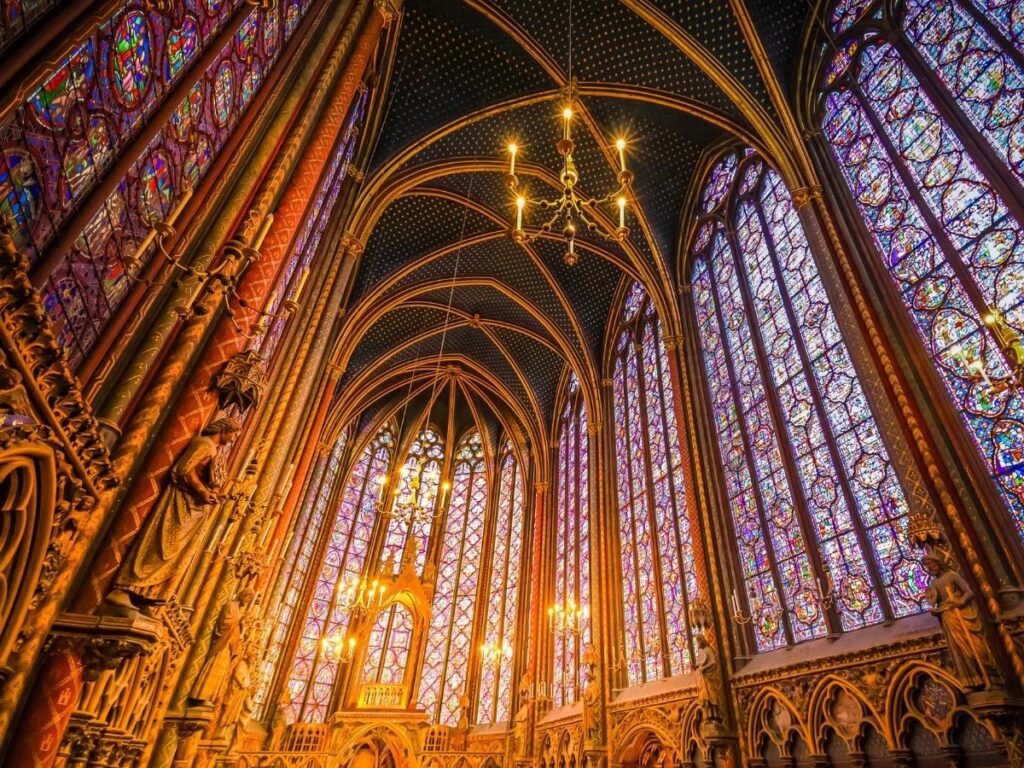
I also loved the view near the entrance staircase. Looking upward from there makes the height of the windows feel especially dramatic, and it’s one of the first moments where the scale of the chapel really hits you.
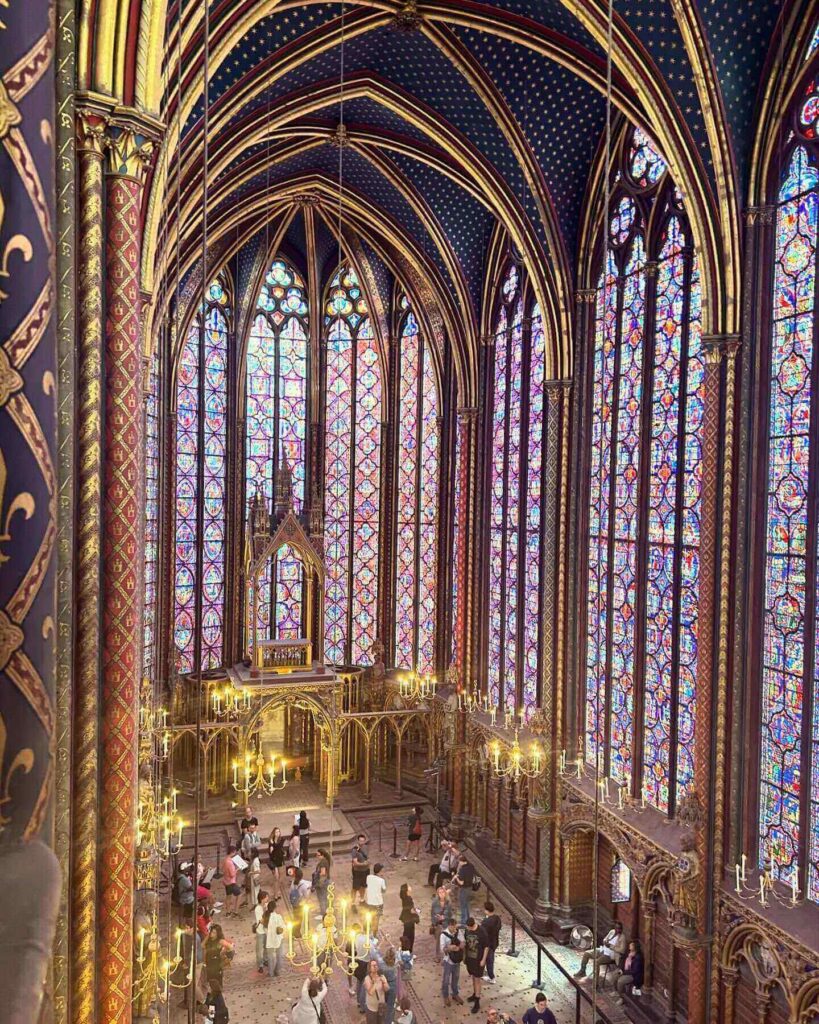
Along the side benches, it’s worth sitting quietly for a few minutes instead of constantly walking around. Once I slowed down, I started noticing smaller details in the stained glass and decorative patterns I had completely missed earlier.
For photos, one of the best angles is directly beneath the rose window. Looking upward from there creates a beautiful perspective of the stained glass spreading across the ceiling above you.
Sainte Chapelle History Explained Simply
Construction of Sainte Chapelle began in the 1240s under King Louis IX and was completed surprisingly quickly for such an elaborate Gothic structure. The chapel was originally built to house sacred Christian relics collected by the king, especially the Crown of Thorns.
At the time, these relics were considered incredibly important both religiously and politically, and King Louis IX wanted Paris to become a major spiritual center in Europe. In fact, the relics were reportedly so valuable that the king spent more money acquiring them than building the chapel itself.
The chapel was divided into two levels based on social status. The stunning upper chapel was reserved mainly for the royal family and important guests, while the lower chapel served palace staff and attendants.
Over the centuries, Sainte Chapelle went through periods of damage and neglect, especially during the French Revolution when religious symbols were removed and parts of the chapel were damaged. Fortunately, much of the stained glass survived, and major restoration work in the 19th century helped preserve the chapel visitors see today.
What Happened During the French Revolution?
Like many religious buildings across France, Sainte Chapelle went through a difficult period during the French Revolution. Since churches and royal symbols were heavily targeted at the time, the chapel lost many of the religious objects and decorations that originally filled the space.
The sacred relics, including the Crown of Thorns, were removed and relocated, and parts of the chapel were damaged or altered. Some decorative elements were destroyed, while the building itself was eventually repurposed for administrative and storage use rather than religious ceremonies.
What’s honestly surprising is how much of the stained glass managed to survive despite everything happening around it. Some sections were damaged over time and later restored, but a large portion of the medieval glass remained intact, which feels pretty remarkable considering the chapel dates back to the 1200s.
The Restoration That Saved Sainte Chapelle
By the 19th century, Sainte Chapelle had fallen into poor condition, and large restoration projects became necessary to preserve the building.
Architects, historians, and restoration specialists worked carefully to repair damaged stained glass, restore sculptures and decorative details, and stabilize the structure itself. Their goal wasn’t to completely reinvent the chapel, but to bring back its original Gothic appearance as closely as possible.
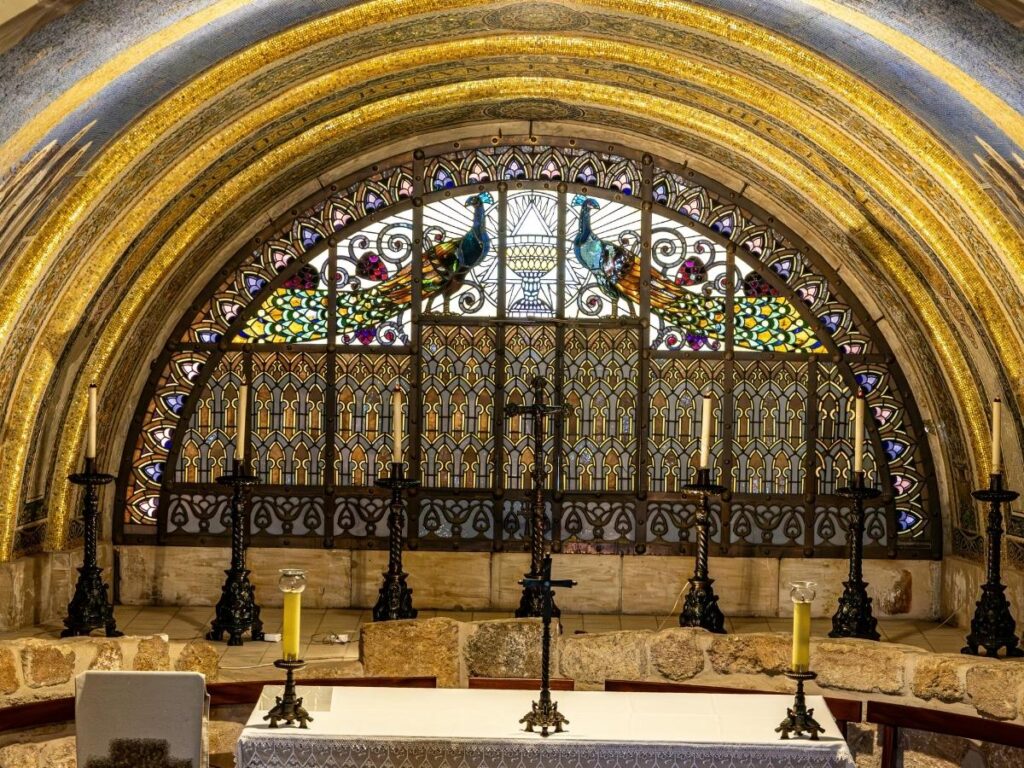
What makes Sainte Chapelle especially impressive today is that so much of what visitors see still remains authentic. Many of the stained glass panels are original medieval pieces, which adds another layer to the experience once you realize how old they actually are.
Without those restoration efforts, Sainte Chapelle likely wouldn’t feel nearly as complete or visually overwhelming as it does today.
Is Sainte Chapelle Worth Visiting?
For me, absolutely yes.
Even in a city filled with famous landmarks, Sainte Chapelle still felt genuinely memorable because the experience is so visually different from most other attractions in Paris. The stained glass alone makes it worth visiting.
I had seen plenty of photos beforehand, but standing inside the upper chapel surrounded by that much color and light felt completely different in person.
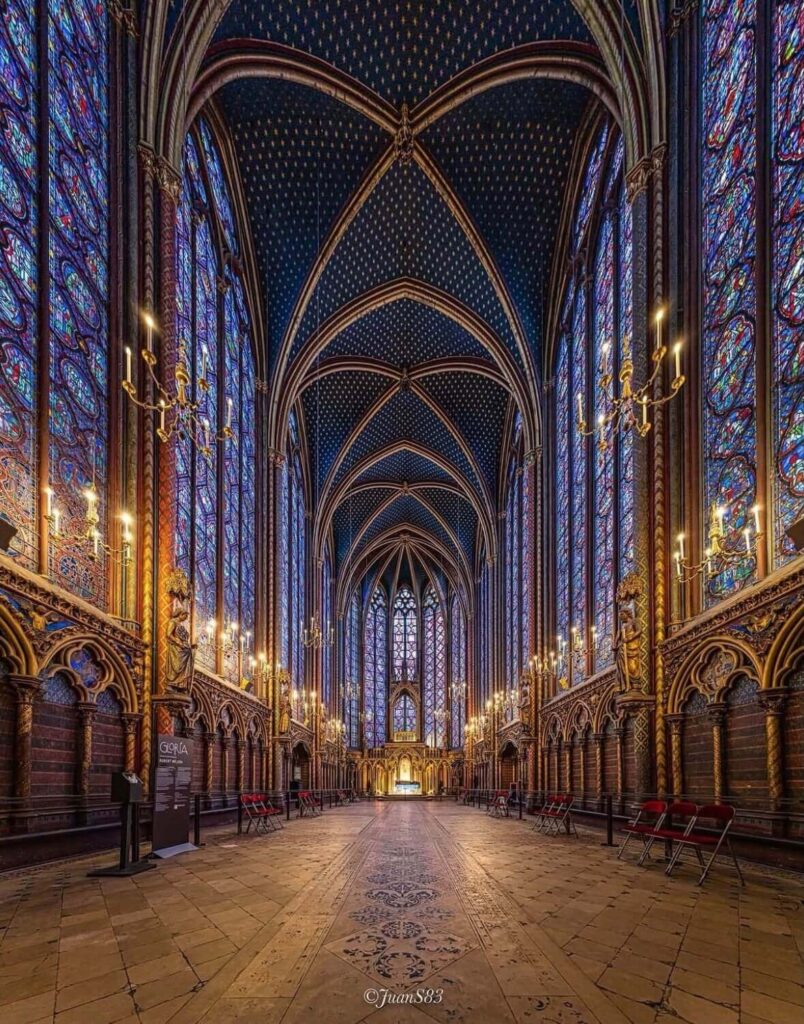
I also liked that the visit felt manageable and easy to fit into a Paris itinerary. Unlike huge museums or larger landmarks that can feel exhausting after a few hours, Sainte Chapelle is relatively small and focused. Because it’s located on Île de la Cité, it also combines easily with nearby places like Notre Dame Cathedral or a walk along the Seine.
What stood out to me most was the atmosphere. Instead of feeling overwhelming, the chapel feels intimate and immersive, especially if you slow down and spend a little time sitting inside the upper level.
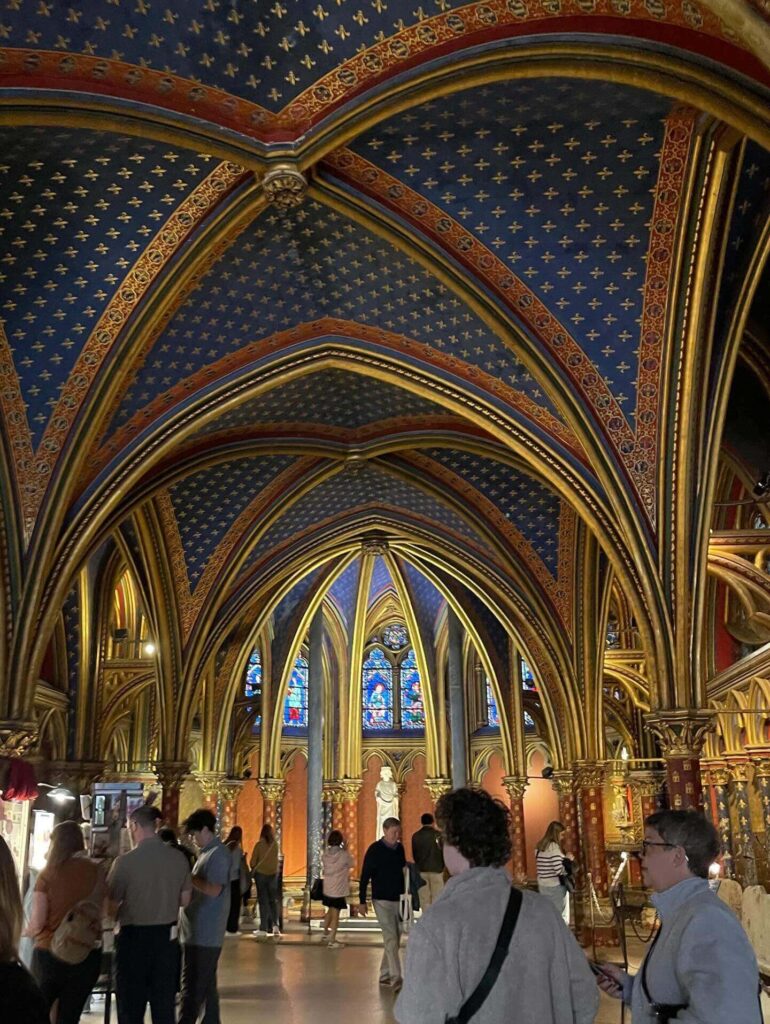
That said, I do think it helps to have realistic expectations. The chapel itself is fairly small, security lines can sometimes take time, and the experience depends a lot on lighting conditions. On sunny days, the stained glass feels dramatically more vivid.
I’d especially recommend Sainte Chapelle for first time Paris visitors, photographers, architecture lovers, and travelers who enjoy quieter, slower experiences.
If you’re extremely short on time, it may not become your top priority in Paris. But personally, it ended up being one of the places I kept thinking about long after the visit.
How Much Time Do You Need at Sainte Chapelle?
Most people can comfortably visit Sainte Chapelle in around 45 minutes to 1.5 hours, depending on how slowly you like to explore. Technically, you can walk through the chapel fairly quickly, but I personally think this is one of those places that becomes much more rewarding when you give yourself time to slow down a little.
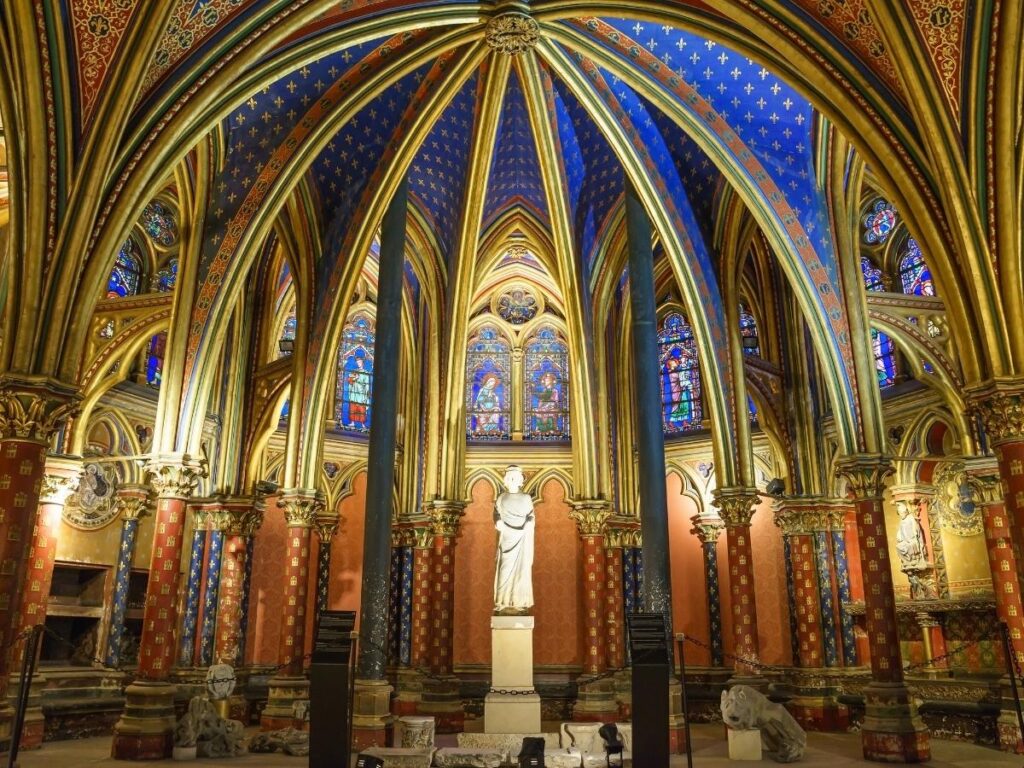
If you’re short on time, a quick visit of around 30 to 45 minutes is enough to see both the lower and upper chapels, admire the stained glass, and take a few photos. A lot of visitors treat Sainte Chapelle as a shorter stop between bigger Paris attractions, and that works perfectly fine if your itinerary is packed.
That said, I found the experience much more enjoyable once I stopped trying to move through it quickly.
Spending closer to an hour or even a little longer gives you time to sit quietly inside the upper chapel, notice smaller details in the windows, and experience how the lighting changes across the space. It also makes photography feel less rushed, especially if you’re waiting for fewer people in certain areas.
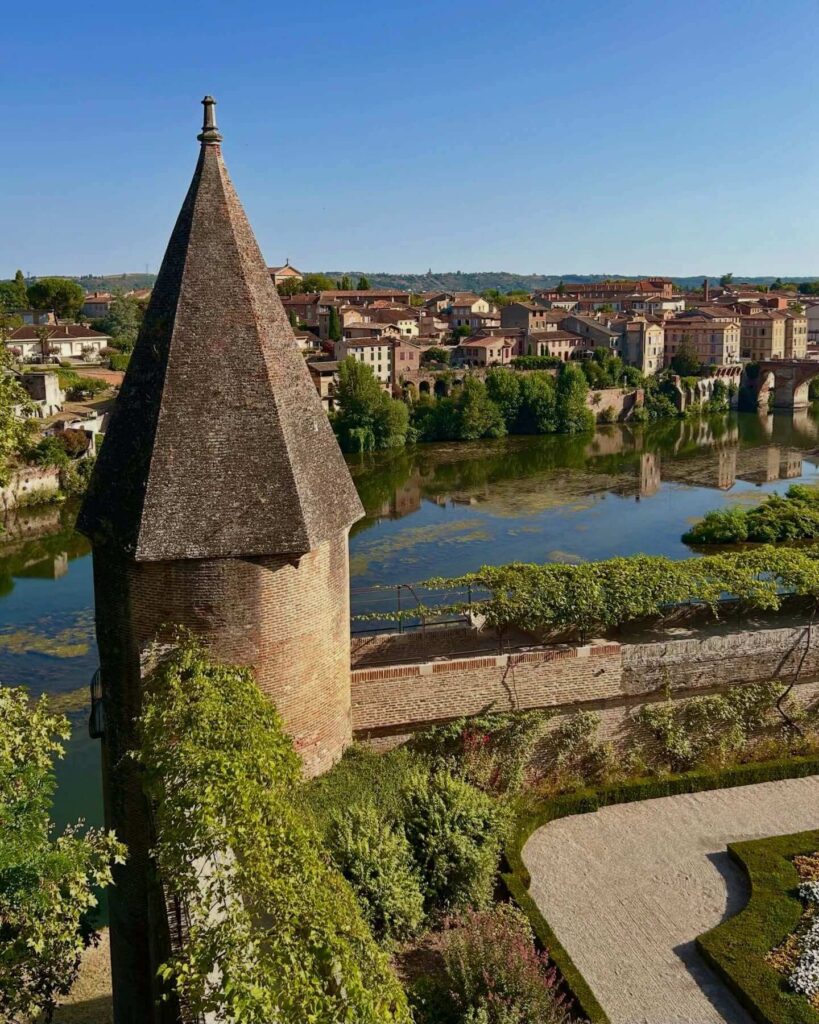
One thing I’d definitely recommend is combining Sainte Chapelle with nearby attractions rather than treating it as a standalone stop. Because it’s located right on Île de la Cité, it fits naturally into a slower day exploring central Paris.
It pairs especially well with places like Conciergerie, Notre Dame Cathedral, the Latin Quarter, or simply walking along the Seine afterward.
Honestly, some of my favorite moments in this area came from wandering without much of a schedule after leaving the chapel.
Sainte Chapelle Tickets and Entry Tips
Do You Need Tickets in Advance?
I’d definitely recommend booking tickets for Sainte Chapelle in advance, especially if you’re visiting during spring, summer, or around holidays. Even though the chapel itself is relatively small, it’s one of the most popular historic sites in central Paris, and the entrance area can become crowded surprisingly quickly.
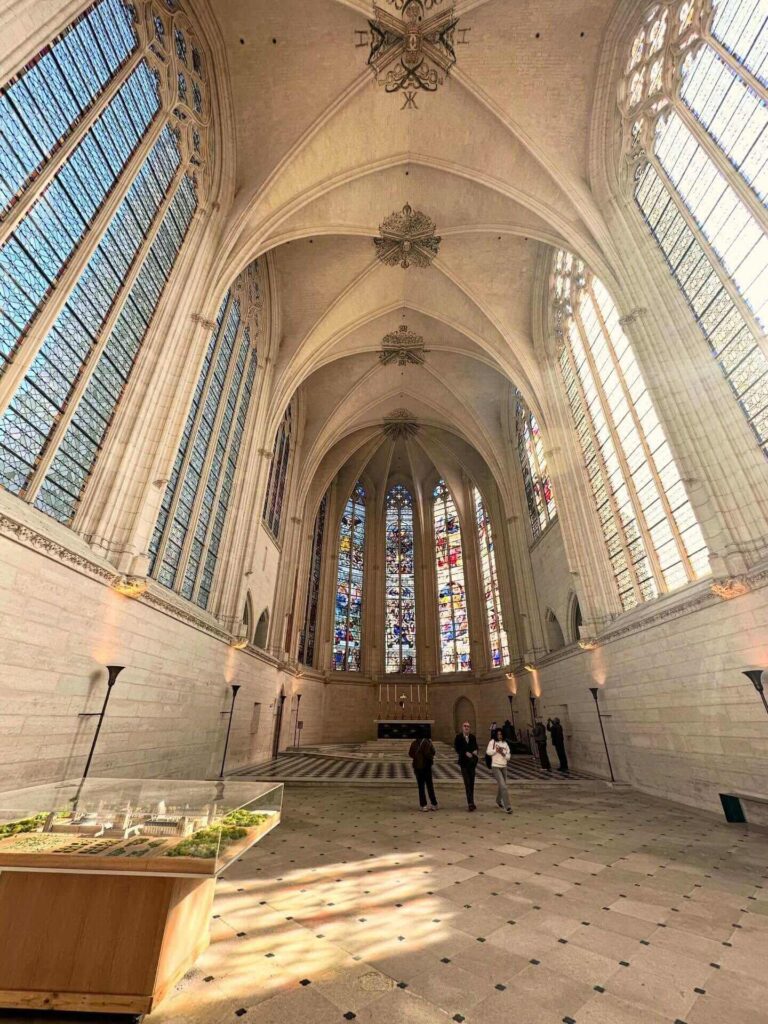
What caught me off guard was how fast lines started building during the middle of the day. Because visitors move through the chapel fairly slowly once inside, entry can back up more than you might expect. Having a timed ticket doesn’t eliminate every wait, but it definitely makes the process smoother and less stressful.
If you’re also planning to visit Conciergerie next door, combination tickets are worth considering since the two attractions pair together really well historically and logistically.
Ticket Types Explained
Most visitors choose between standard entry tickets or combination tickets that include both Sainte Chapelle and the Conciergerie.
If you already have the Paris Museum Pass, Sainte Chapelle is generally included, which makes the visit especially convenient if you’re planning to see several major attractions in Paris.
Before booking, it’s also worth checking whether timed entry reservations are required alongside your pass during busy travel seasons, since policies can occasionally change.
Best Time to Visit Sainte Chapelle
Best Time of Day
The time of day you visit Sainte Chapelle can noticeably change the experience, mostly because the lighting inside affects how dramatic the stained glass looks.
Mornings usually feel the calmest. Crowds tend to be smaller earlier in the day, and the atmosphere inside the upper chapel feels quieter and more relaxed. The light is slightly softer compared to midday, but I actually liked how peaceful the space felt during earlier hours.
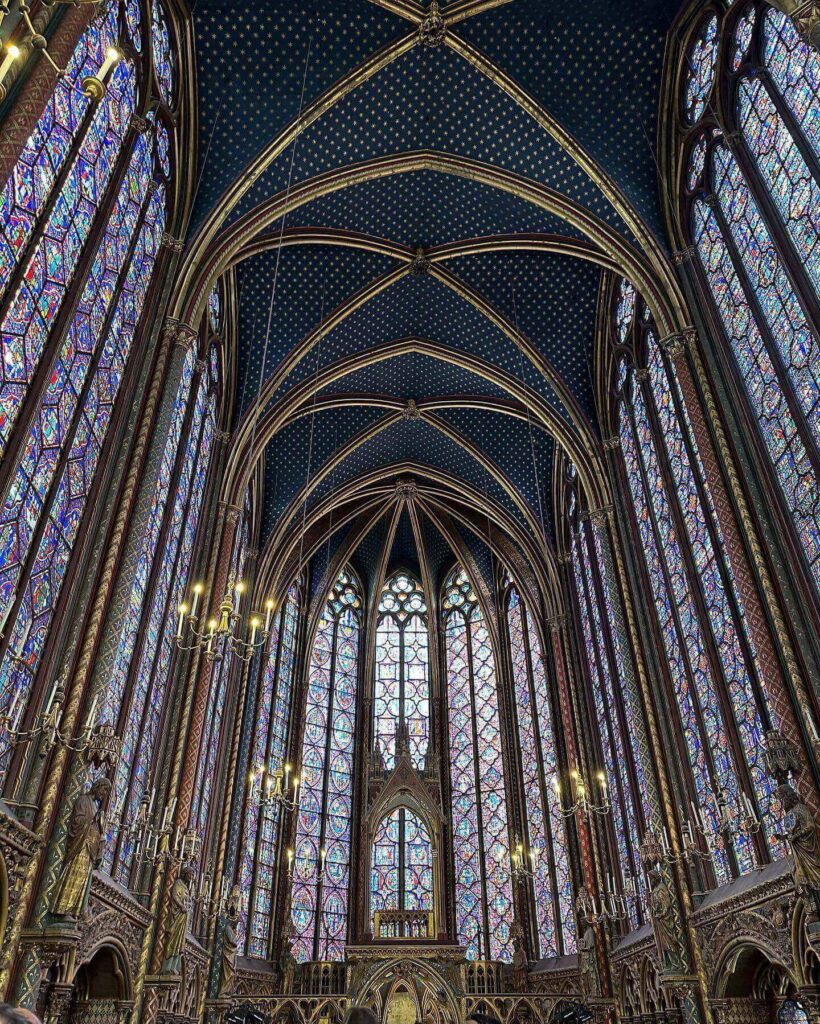
Midday is when the stained glass often looks the most vivid. If you visit on a sunny day, the sunlight pours directly through the windows and fills the chapel with deep reds, blues, and golds. This is probably the best time if your main priority is seeing the glass at its brightest and most colorful.
Late afternoon can also be a really nice option because crowds often begin thinning out again. The lighting becomes softer and slightly less intense, which gives the chapel a calmer atmosphere compared to the busier middle of the day.
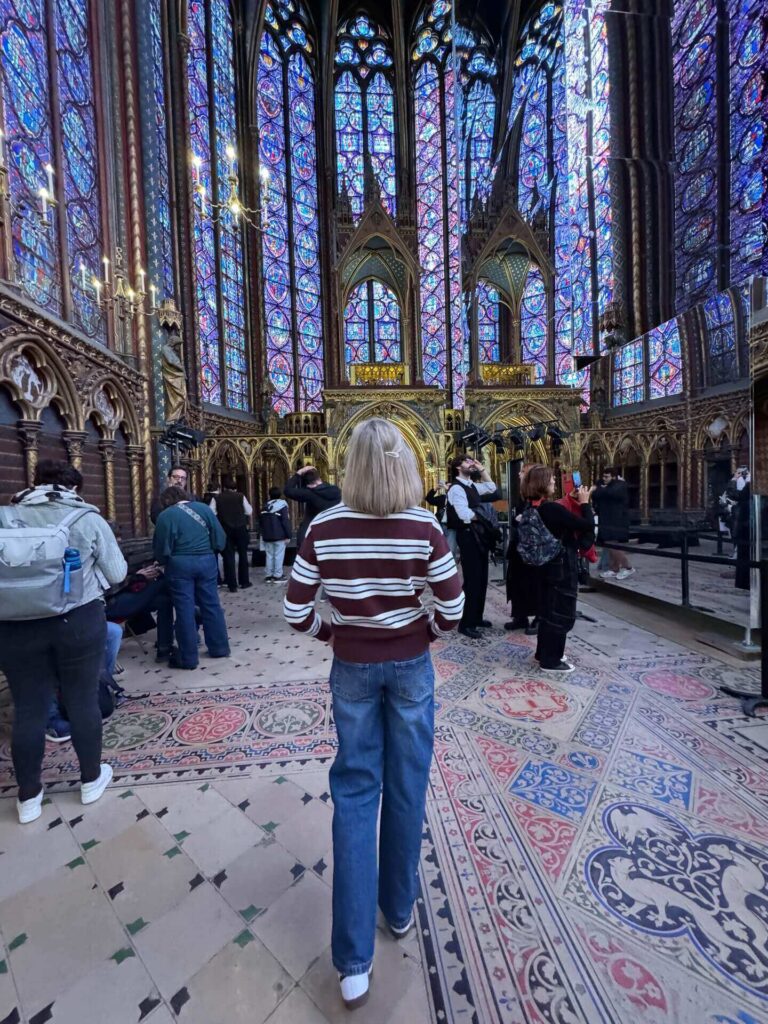
Personally, I’d probably choose either an early morning visit on a sunny day for a quieter experience or midday if seeing the stained glass at maximum brightness is your priority.
Best Season to Visit
Spring honestly feels like the best overall balance for visiting Sainte Chapelle. The weather in Paris is usually pleasant, sunlight conditions are good for the stained glass, and crowds often feel a little more manageable compared to peak summer months.
Summer brings the brightest lighting and longest daylight hours, which makes the stained glass look especially dramatic. But it’s also when tourist crowds are at their highest, so the chapel can feel busier and security lines longer.
Winter creates a completely different atmosphere. The chapel tends to feel quieter and more peaceful, but the lighting inside becomes softer and less vibrant because of shorter daylight hours and cloudier weather. Even so, I could still imagine the experience feeling very beautiful in winter, just in a more subdued and reflective way.
Practical Tips for Visiting Sainte Chapelle
There were a few things about visiting Sainte Chapelle that I honestly didn’t fully appreciate until I got there.
The biggest one is not to judge the chapel by the exterior. From outside, it feels fairly modest compared to many famous Paris landmarks, especially with the surrounding security area nearby. The real experience begins once you walk upstairs into the upper chapel.
I’d also recommend slowing down once you’re inside. A lot of people walk through fairly quickly, but sitting quietly for even a few minutes made a huge difference for me. The longer I stayed, the more details I noticed in the stained glass and ceiling decorations.
Sunny weather also matters more than I expected. When sunlight comes through the windows, the colors inside the chapel become dramatically more vivid. If possible, I’d genuinely try to plan your visit around a clearer day.
For photography, lighting inside can be tricky, especially if you’re trying to capture details without making the windows look overly bright. And if you’re visiting central Paris anyway, Sainte Chapelle works especially well combined with nearby places like Notre Dame Cathedral or the Latin Quarter.
Most importantly, don’t rush the visit. Sainte Chapelle feels much more memorable when you give yourself time to simply absorb the atmosphere.
Sainte Chapelle Concerts: Are They Worth It?
Sainte Chapelle also hosts classical music concerts, and honestly, this is something I’d seriously consider for a future Paris trip.
The chapel already feels atmospheric during the day, but evening concerts seem to change the mood completely. As the light fades outside, the stained glass becomes darker and richer in color, and the music adds another layer to the experience.
Most performances focus on classical music like piano, string ensembles, and composers such as Vivaldi. Some concerts are even candlelit, which feels especially fitting for a space like this.
The tickets are more expensive than standard admission, but if you enjoy music, architecture, and historic settings, I could easily see this becoming one of the most memorable experiences in Paris.
My Honest Thoughts After Visiting Sainte Chapelle
Sainte Chapelle ended up surprising me far more than I expected.
Before visiting, I assumed it would feel like a fairly quick stop between larger Paris attractions. Instead, it became one of the places that stayed with me most after the trip. The upper chapel especially felt much more immersive and emotional than I expected from photos alone.
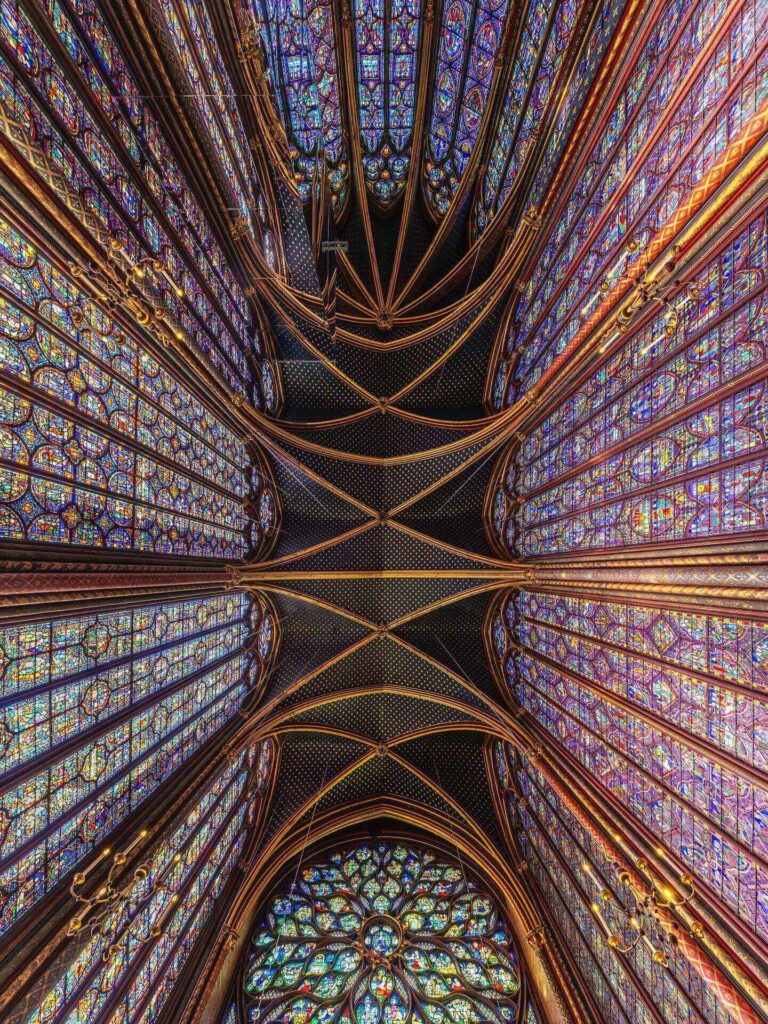
What made it memorable for me wasn’t just the stained glass itself, but the overall atmosphere inside the space. The combination of height, color, sunlight, and quietness created a feeling that was difficult to fully capture in pictures.
Once I stopped trying to rush through and simply stood there looking around, I started noticing more and more details in the windows and ceiling.Even with other visitors inside, the chapel still managed to feel calm and reflective in a way many major tourist attractions don’t.
If you enjoy architecture, photography, history, or simply places with a strong atmosphere, I genuinely think Sainte Chapelle is worth prioritizing during a Paris trip.