
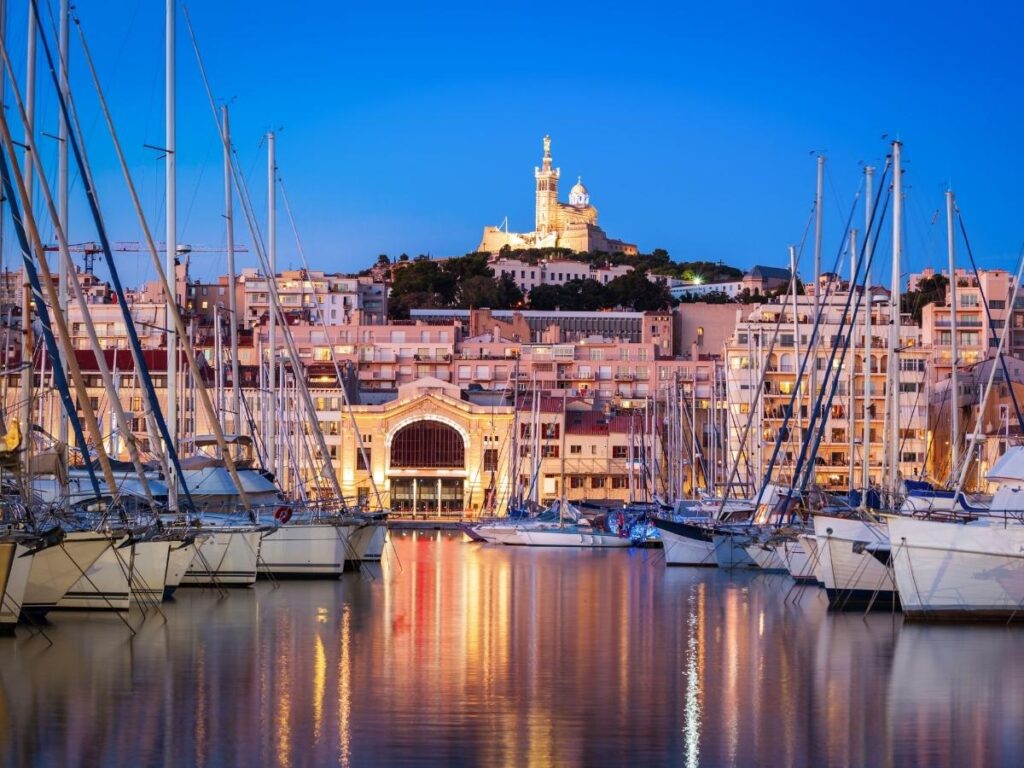
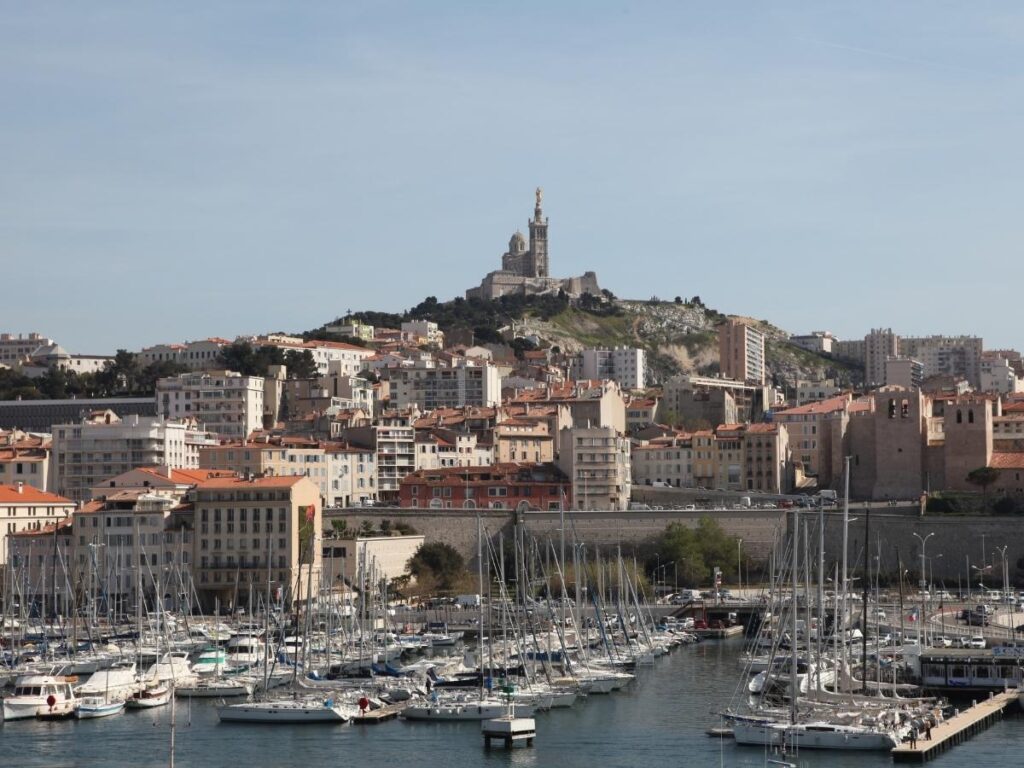
The first thing I noticed about Marseille was how often I kept spotting Notre Dame de la Garde above the city. No matter where I walked, along the Old Port, through narrow side streets, or near the waterfront, the basilica always seemed to appear somewhere in the distance watching over everything below.
After a while, it almost became a reference point while exploring the city. Marseille can feel busy, energetic, and a little chaotic at times, but Notre Dame de la Garde always stands quietly above it all.
Before visiting, I assumed it would mostly be a scenic viewpoint and a quick stop for photos. But once I finally reached the top, it felt much more memorable than I expected.
The biggest surprise for me was the atmosphere. Down in the city, Marseille feels loud and constantly moving. Up at Notre Dame de la Garde, everything suddenly feels calmer.
You can see the coastline stretching into the distance, ferries moving through the harbor, and layers of rooftops spreading across the hills. I ended up staying much longer than I planned simply because I didn’t want to leave the view behind.
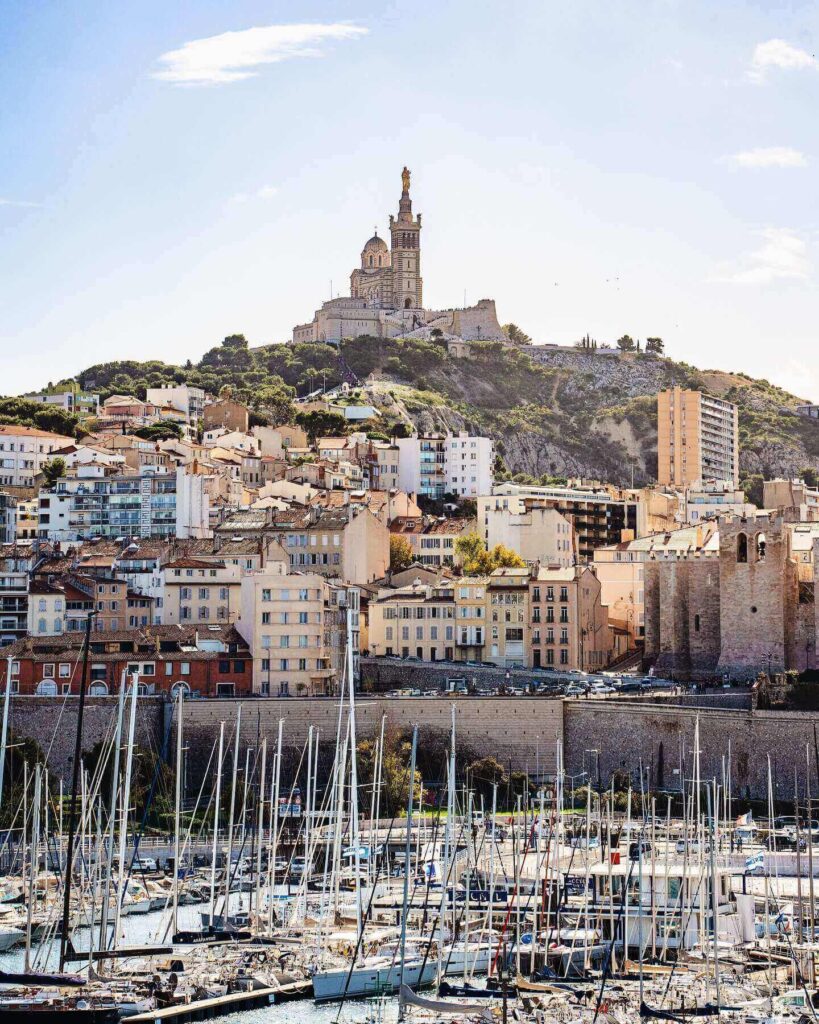
What also stood out to me was how connected the basilica feels to Marseille itself. It doesn’t feel separate from the city or designed only for tourists. Inside, you notice details tied to the city’s maritime history, and outside, locals and visitors sit quietly along the terraces just taking in the view.
If you’re planning a visit, there are a few things worth knowing beforehand that can make the experience much better. In this guide, I’ll cover what the basilica is like inside, how to get there, the best times to visit, photography spots, and a few things I honestly wish I knew before going.
What Is Notre Dame de la Garde?
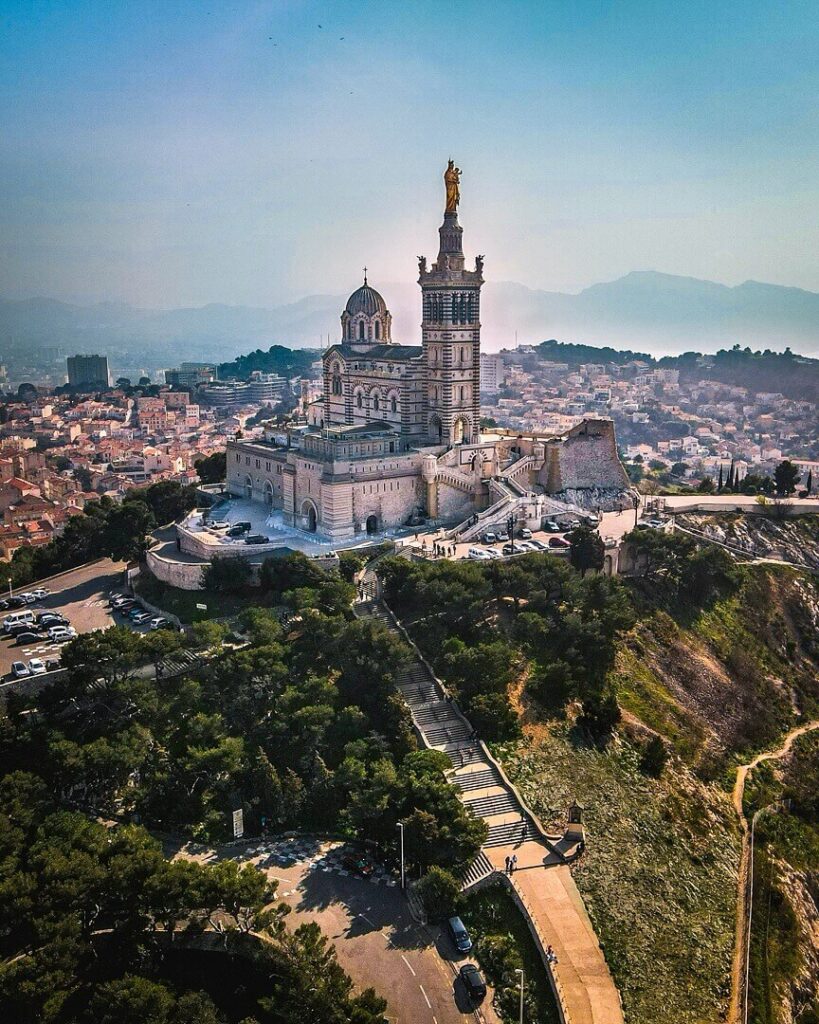
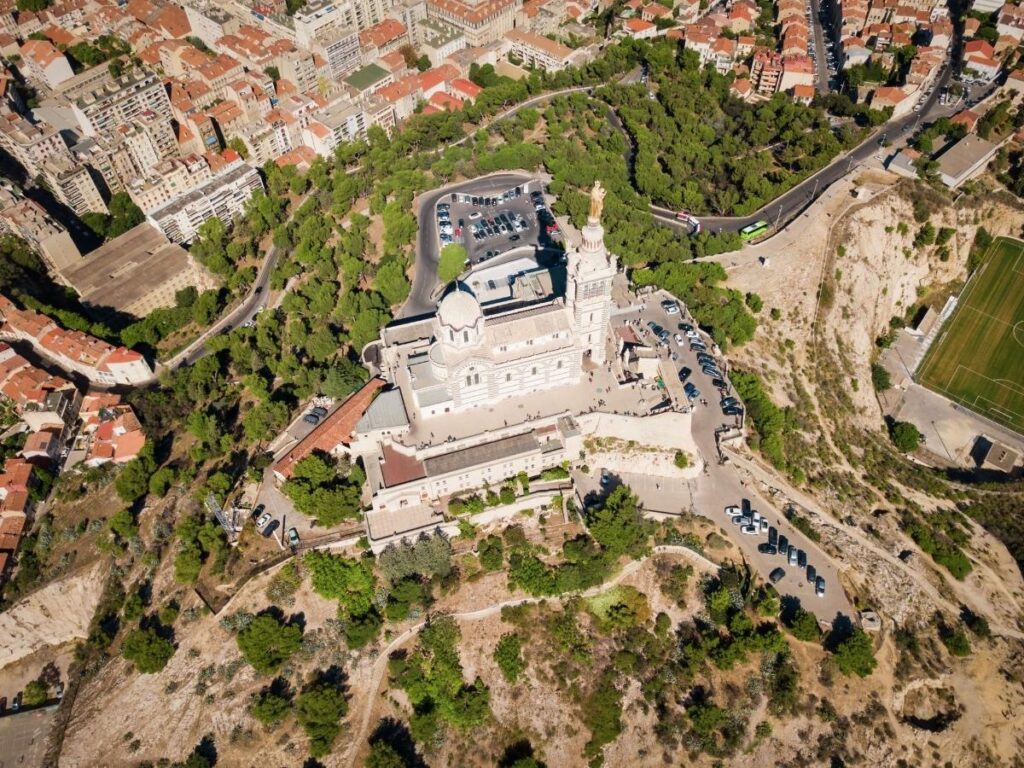
Notre Dame de la Garde is the hilltop basilica that overlooks Marseille from nearly every direction. Sitting on the city’s highest natural point, it has become one of the most recognizable landmarks in southern France and one of the places that gives Marseille its identity.
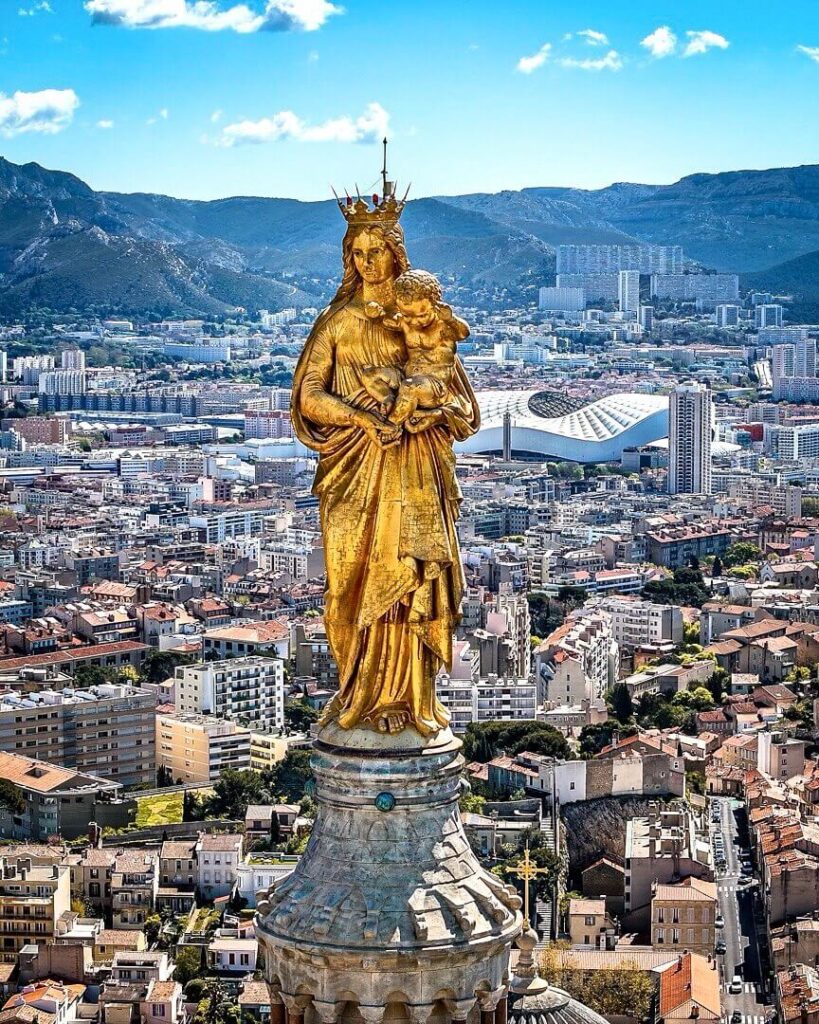
Even before visiting, I felt like I already knew the basilica because I kept seeing it everywhere. Walking through the Old Port, turning into side streets, sitting near the waterfront, it always seemed to appear somewhere above the city. After a while, it almost becomes part of the rhythm of Marseille itself.
Most locals simply call it “La Bonne Mère,” which means “The Good Mother.” Once you spend some time in the city, you start understanding why people feel so connected to it.
Why Marseille Locals Call It “La Bonne Mère”
The nickname isn’t just symbolic or historical. For many people in Marseille, Notre Dame de la Garde genuinely feels personal.
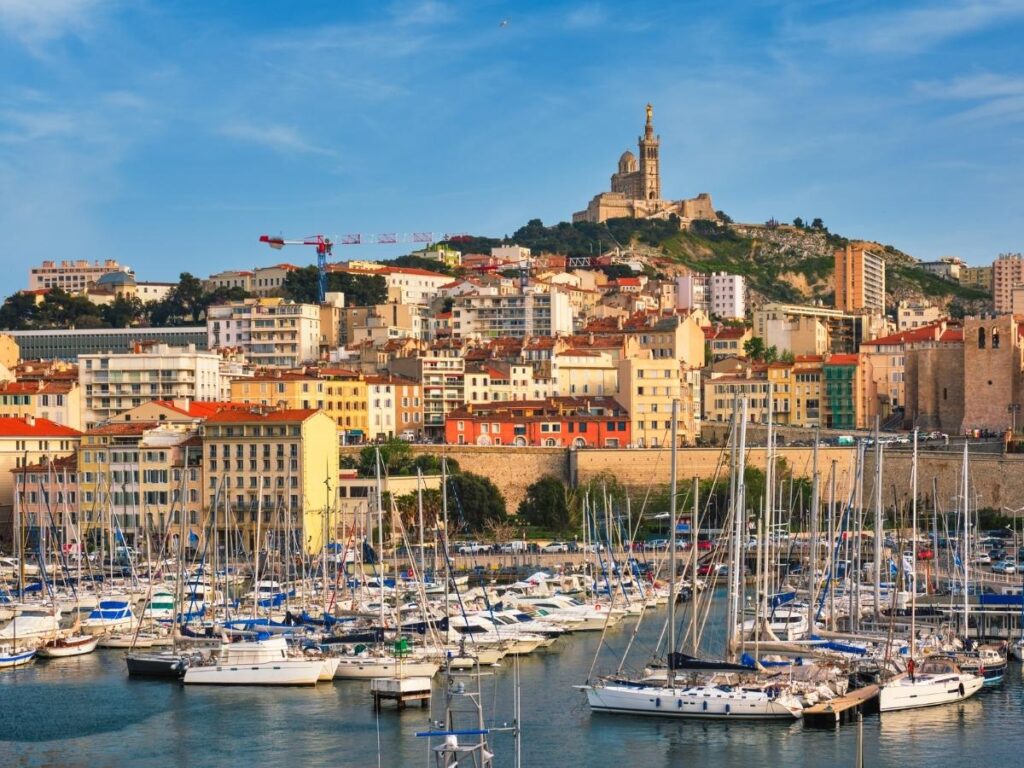
For centuries, sailors and fishermen heading out to sea would look toward the basilica for protection before leaving the harbor. Families have visited for generations to pray, light candles, or simply spend quiet time overlooking the city.
Even today, locals talk about the basilica with a kind of affection that feels different from how people usually describe tourist landmarks.
One thing that stood out to me was how naturally locals referenced it in conversation. Taxi drivers pointed toward it while driving through the city, and several people mentioned it as more than just a viewpoint. It felt woven into daily life rather than existing separately as a monument tourists visit once.
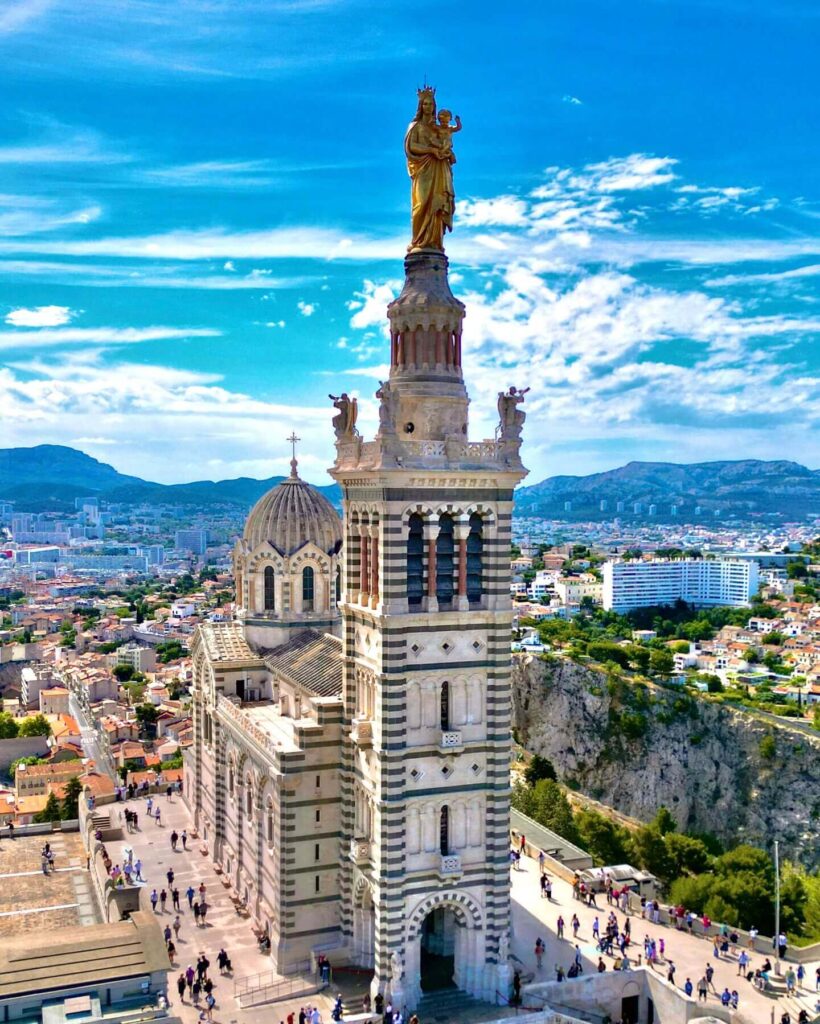
The golden Virgin Mary statue standing on top of the basilica adds to that feeling. You can see it from many parts of Marseille and even from the sea itself. Historically, sailors arriving by boat would spot the statue long before reaching the harbor, which made the basilica feel like a welcoming point back home.
A Quick History of the Basilica
Long before the current basilica existed, the hill was already considered an important strategic location because of its views over Marseille and the Mediterranean.
A small chapel stood here during the Middle Ages, and the site also served military purposes over time. Because the hill overlooks both the sea and the city, it was used as a watchpoint and defensive position for centuries.
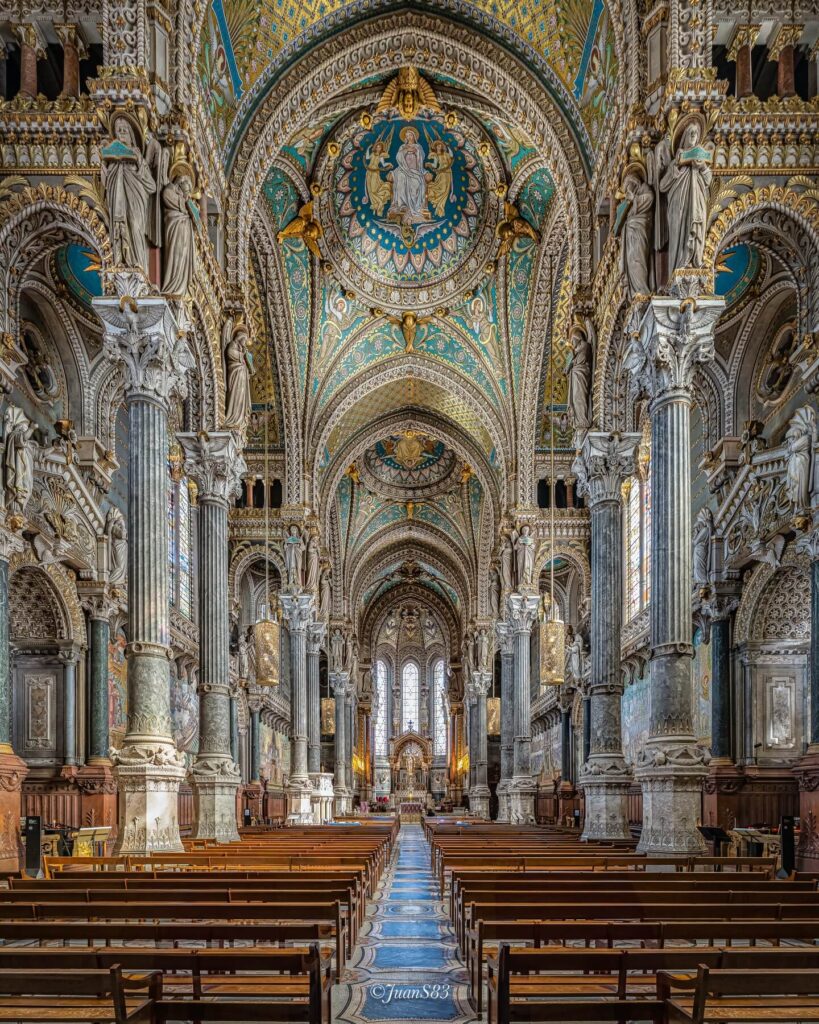
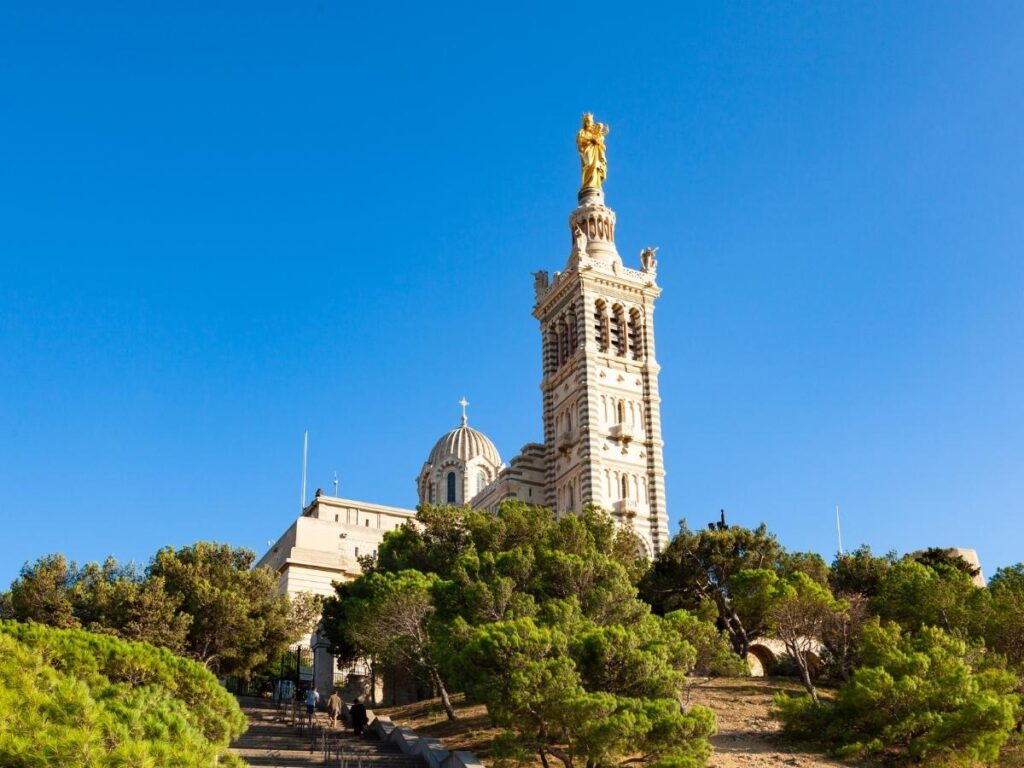
The basilica visitors see today was built during the 19th century in a Romano Byzantine style that looks very different from many churches elsewhere in France. Construction began in 1853, and the striped stone exterior, arches, domes, and detailed mosaics quickly made it one of Marseille’s most recognizable buildings.
The massive golden Virgin Mary statue was added later and eventually became one of the city’s defining symbols. Even from far away, especially when the sunlight hits the gold, it immediately catches your attention above the skyline.
Why Notre Dame de la Garde Feels So Important in Marseille
Some landmarks feel impressive but disconnected from the cities around them. Notre Dame de la Garde doesn’t feel like that at all.
It feels completely tied to Marseille’s atmosphere and identity.
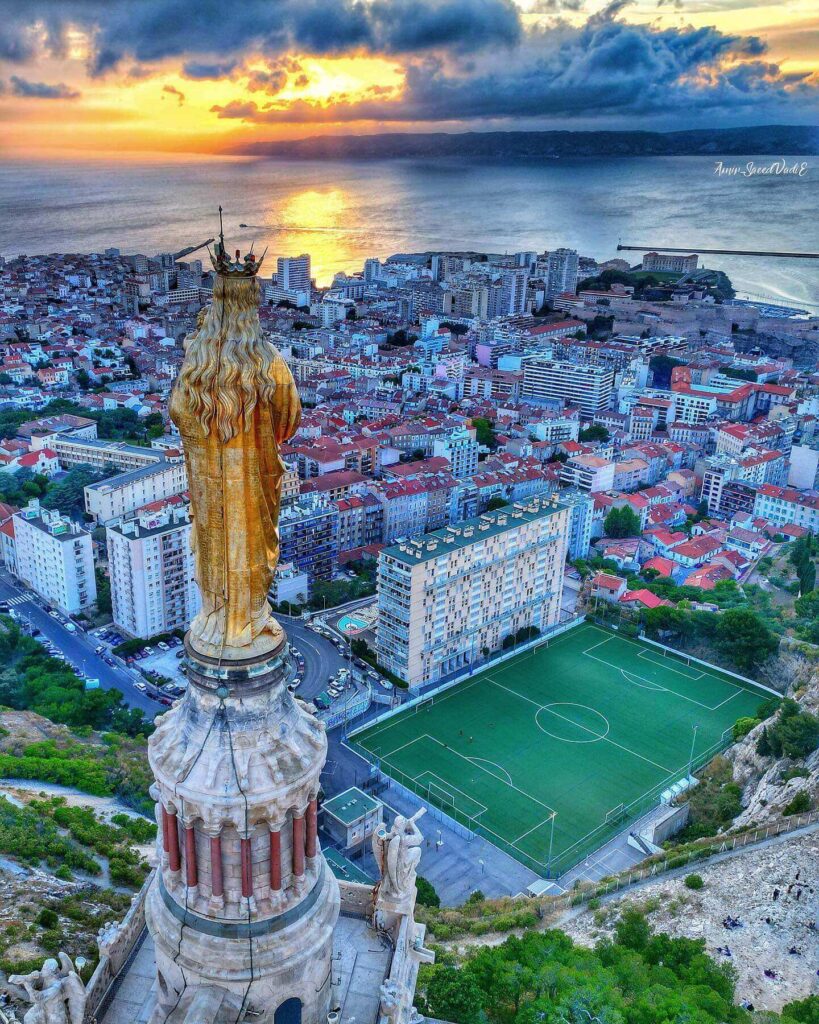
You notice it constantly while exploring the city. Boats pass beneath it in the harbor, locals gather around it at sunset, and visitors climb the hill throughout the day just to spend time overlooking the coastline. It almost feels like Marseille naturally revolves around it.
What surprised me most was that the basilica didn’t feel overly formal or touristy once I arrived. People were taking photos, of course, but others were simply sitting quietly along the terraces, watching the light change over the Mediterranean or looking out toward the sea.
That atmosphere is probably what stayed with me most afterward. Notre Dame de la Garde feels less like a place people rush through and more like somewhere people pause.
Is Notre Dame de la Garde Worth Visiting?
I honestly think Notre Dame de la Garde is one of the places that helps you understand Marseille better.
Before visiting, I expected it to be mostly a scenic overlook with a famous church at the top. And while the views are definitely a huge part of the experience, what stayed with me most was the atmosphere surrounding the entire place.
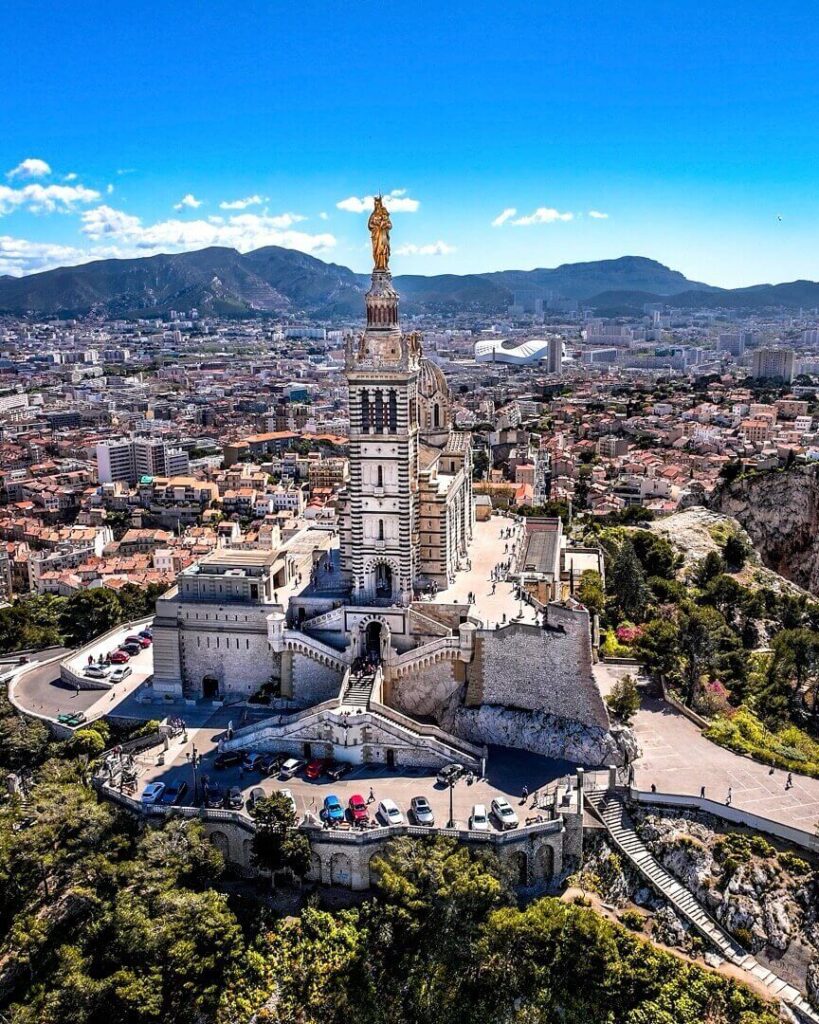
Even if you normally don’t spend much time visiting churches or religious sites while traveling, I still think this spot is worth it. It feels less like a traditional sightseeing stop and more like somewhere people naturally gather to slow down, look over the city, and spend time taking everything in.
What I Loved Most About Visiting
The panoramic views completely changed how Marseille felt to me.
At street level, the city can feel a little overwhelming at first. Some neighborhoods are busy and noisy, the streets twist in different directions, and the geography doesn’t fully make sense until you see it from above.
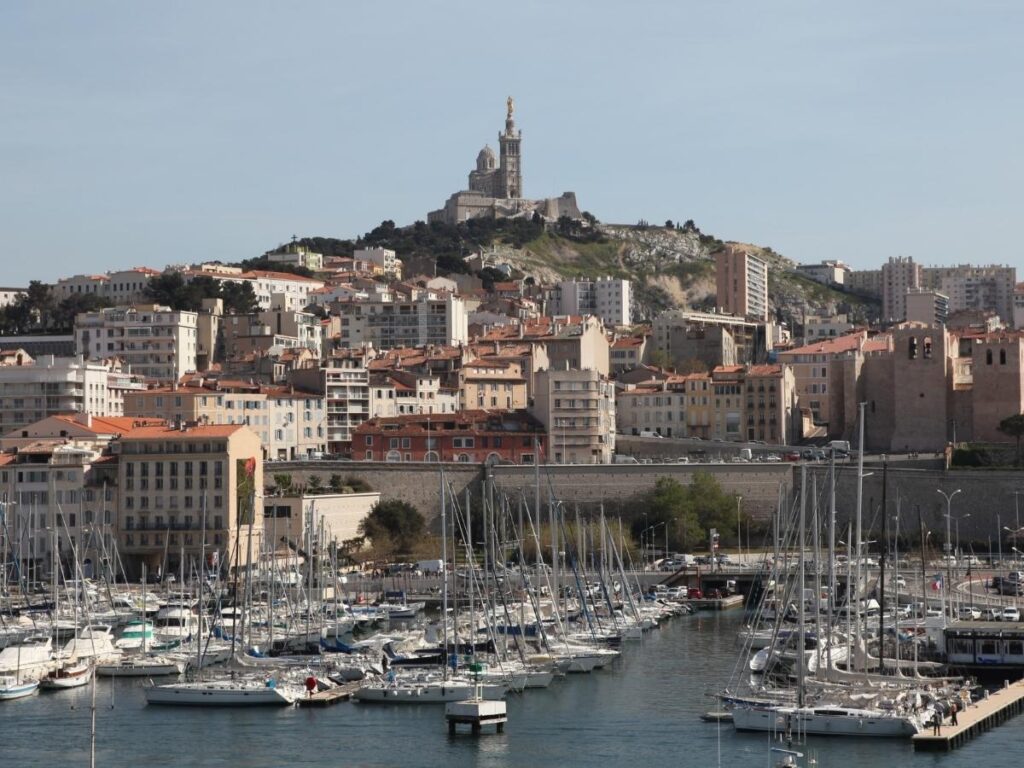
Once I reached Notre Dame de la Garde, everything suddenly connected. You can see the Old Port, the coastline, the islands offshore, and the hills surrounding the city all at once.
I also loved how different the atmosphere felt compared to the center of Marseille below. The city has a lot of energy, especially around the harbor and train station areas, but the hilltop feels calmer and slower. People sit quietly along the terraces, watching boats move through the harbor or simply looking out toward the sea.
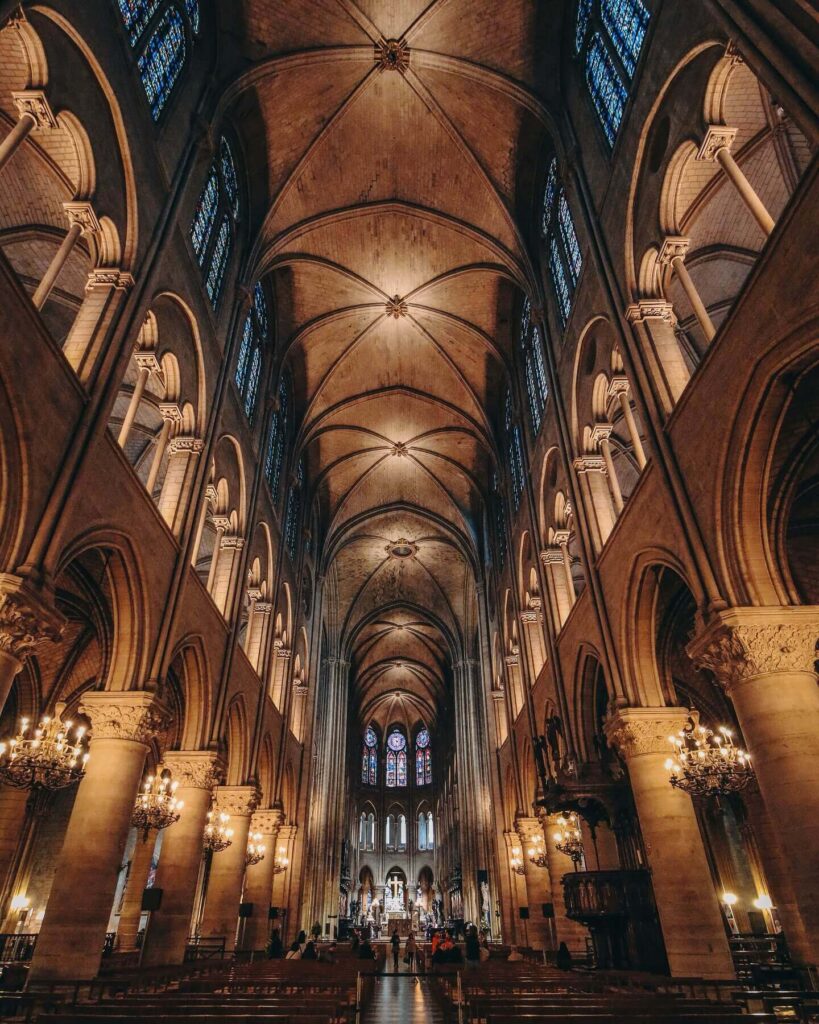
Inside the basilica, the mood changes again. After standing outside in the bright sunlight and wind, stepping into the darker interior feels peaceful and quiet. I wasn’t expecting that contrast to stand out as much as it did.
What surprised me most was how long I stayed. I originally thought this would be a quick stop, but I kept walking around the terraces and finding new angles overlooking the city. It ended up becoming one of my favorite parts of Marseille.
Things That Might Surprise First Time Visitors
One thing I didn’t fully realize beforehand was how steep the walk can feel if you decide to climb all the way up. On a map, it doesn’t always look that far, but some sections are definitely tiring, especially during warmer months.
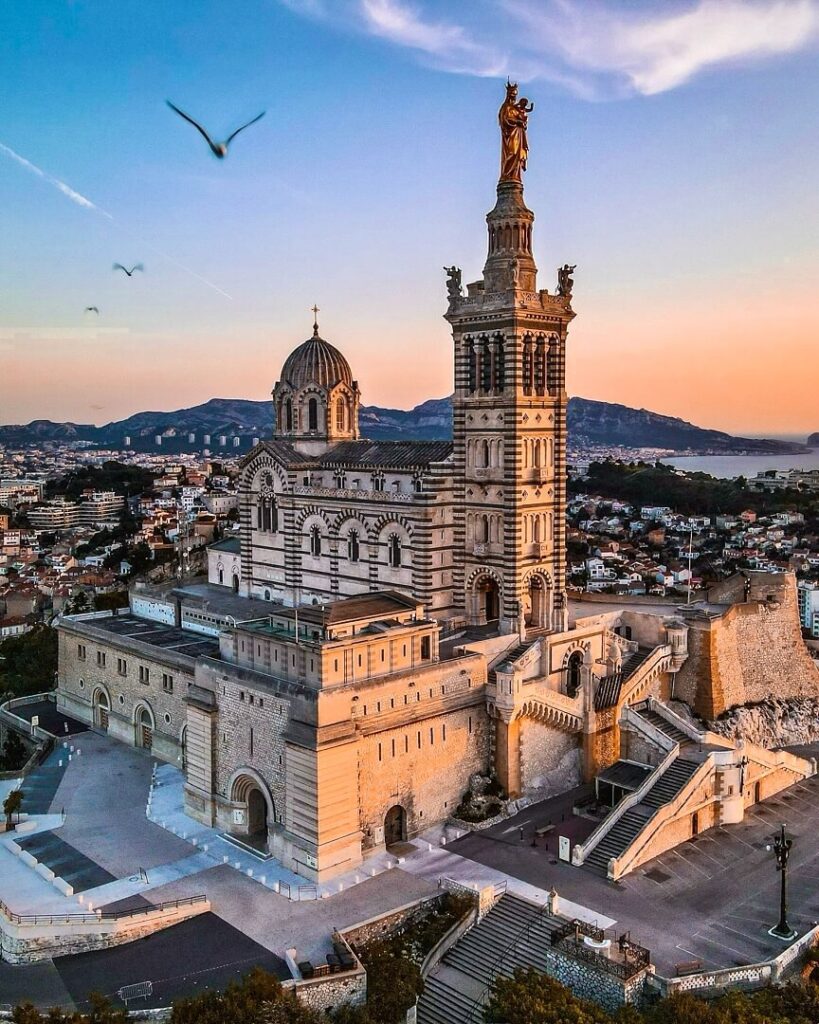
The wind also caught me off guard. Because the basilica sits high above the city, the terraces can become very windy even on sunny days. If you’re visiting near sunset or during cooler months, bringing an extra layer is honestly a good idea.
Another thing that surprised me was the size of the basilica interior itself. It’s beautiful inside, but smaller than some visitors expect. Most people spend more time outside on the terraces and viewpoints rather than inside the church for long periods.
I also think this is one of those places where timing matters more than people expect. Midday can feel crowded and hot during summer, while late afternoon feels much more relaxed and atmospheric.
The Best Views From Notre Dame de la Garde
The views are honestly the main reason most people visit Notre Dame de la Garde, and they completely lived up to expectations for me.
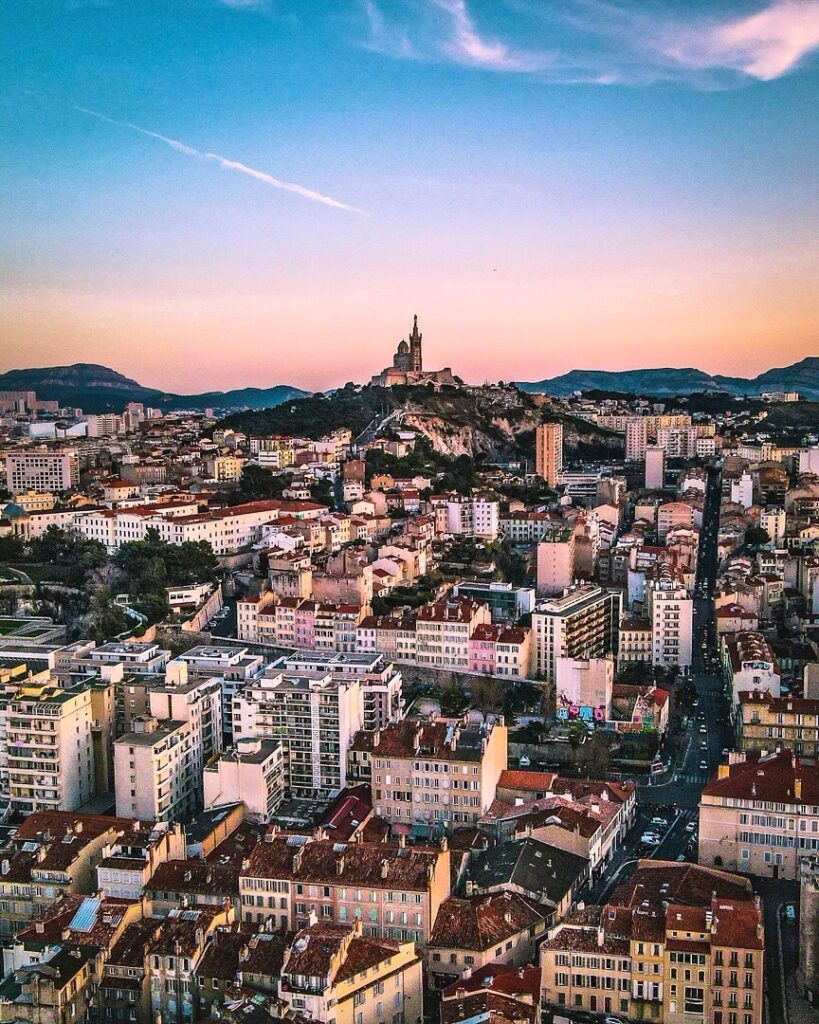
Even after seeing photos before hand, standing up there in person feels very different. Marseille spreads out in every direction, with the Old Port below, the Mediterranean stretching into the distance, and layers of rooftops climbing across the hills.
Because the city sits between the sea and surrounding hills, the landscape feels much bigger and more dramatic than it does at street level.
What You Can See From the Top
From the terraces around the basilica, you can see the Old Port, the coastline, Château d’If, the Frioul Islands, and huge sections of Marseille all at once.
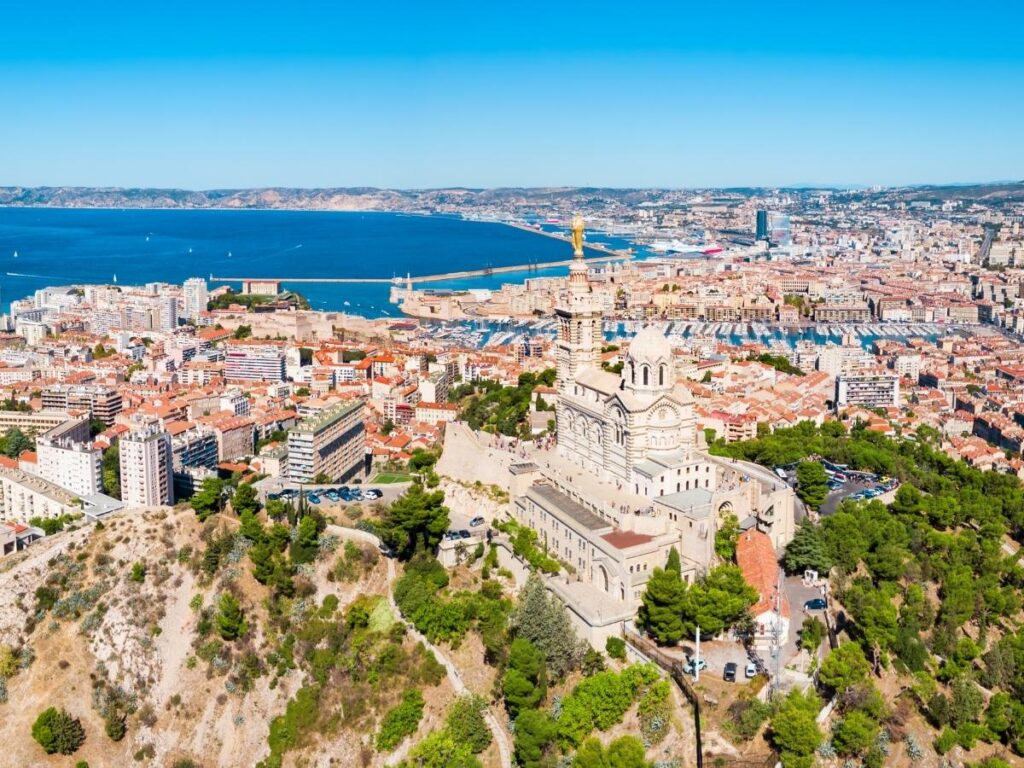
One thing I really liked was how the view changes depending on where you stand. Some areas face the harbor and the busy center of the city, while others open toward the hills and coastline. On clear days, you may even spot parts of the Calanques in the distance.
I also didn’t expect Marseille to look so colorful from above. The terracotta rooftops, blue water, and pale stone buildings give the city a very Mediterranean feel.
Best Photo Spots Around the Basilica
Most visitors stop at the main terrace first, but I’d really recommend walking around the entire basilica before settling in one place.
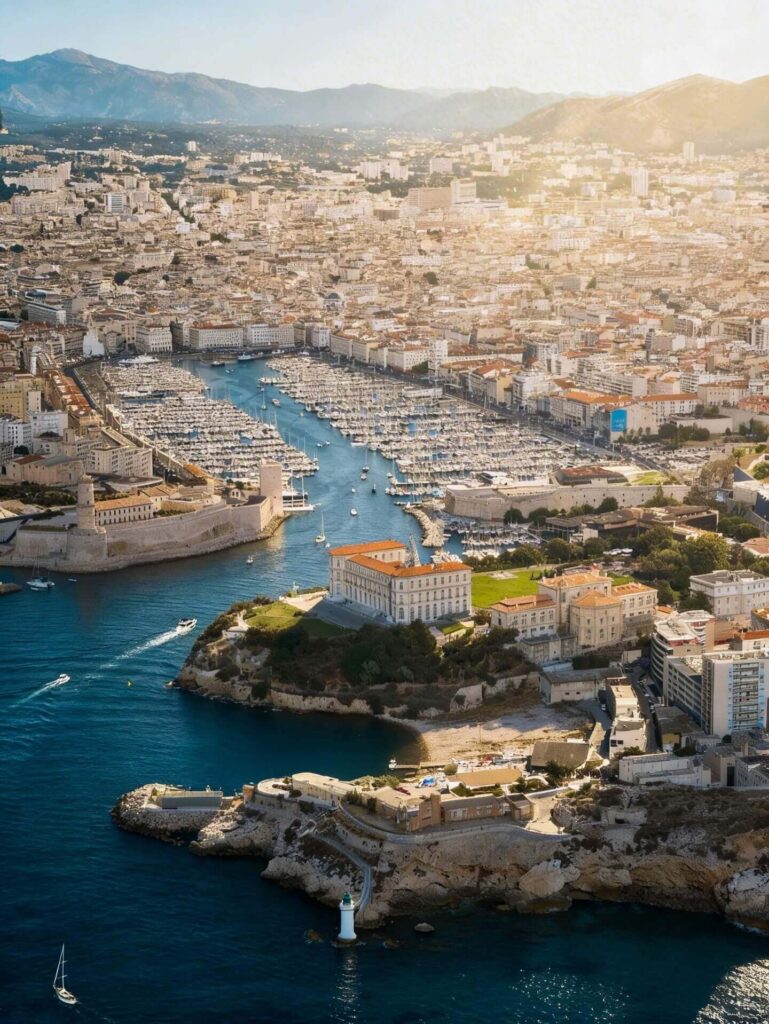
One of my favorite spots was along the outer terrace facing the harbor. The combination of boats, rooftops, and sea creates a classic Marseille view. The staircases around the basilica also give beautiful angles looking upward toward the striped architecture and golden statue above.
If you enjoy photography, this is definitely a place where it’s worth taking your time because the perspective keeps changing as you move around.
Sunset vs Morning Views
Sunset is easily the most popular time to visit. The warm light over the harbor makes the city feel softer and calmer, and people tend to stay longer around the terraces instead of quickly passing through.
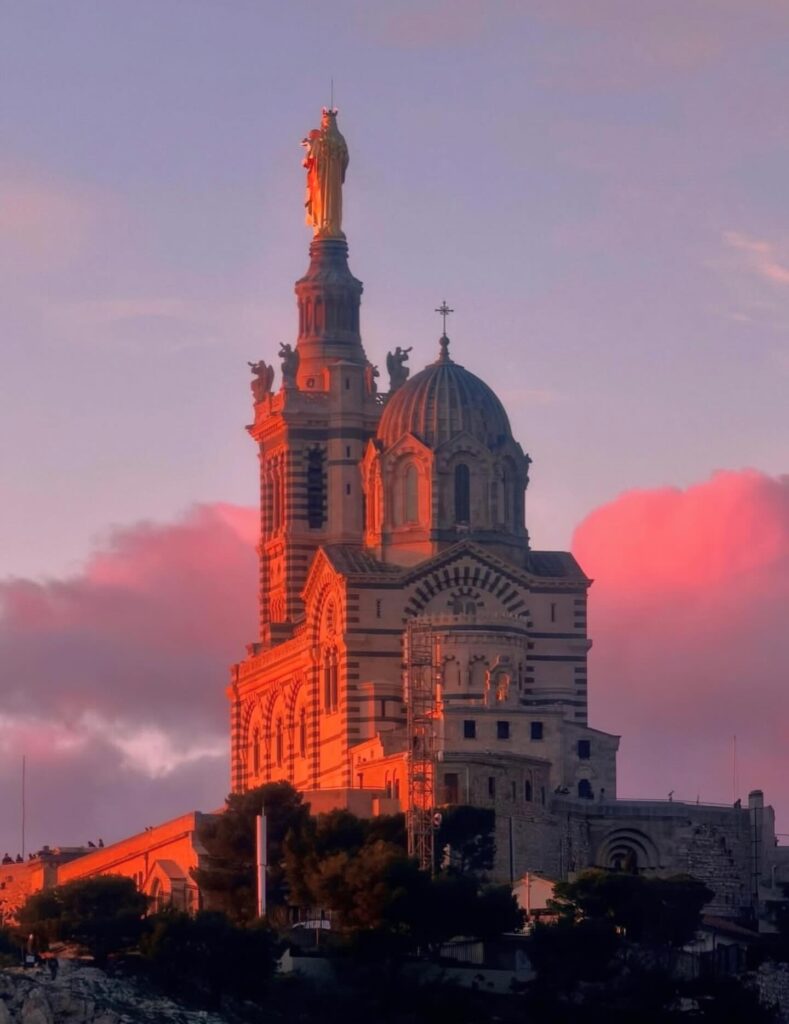
Morning visits feel quieter overall. If you prefer fewer crowds and cooler temperatures, earlier in the day is honestly a much better experience.
Inside Notre Dame de la Garde
Even though the views are what first attract most visitors, I really think the interior of Notre Dame de la Garde is worth slowing down for.
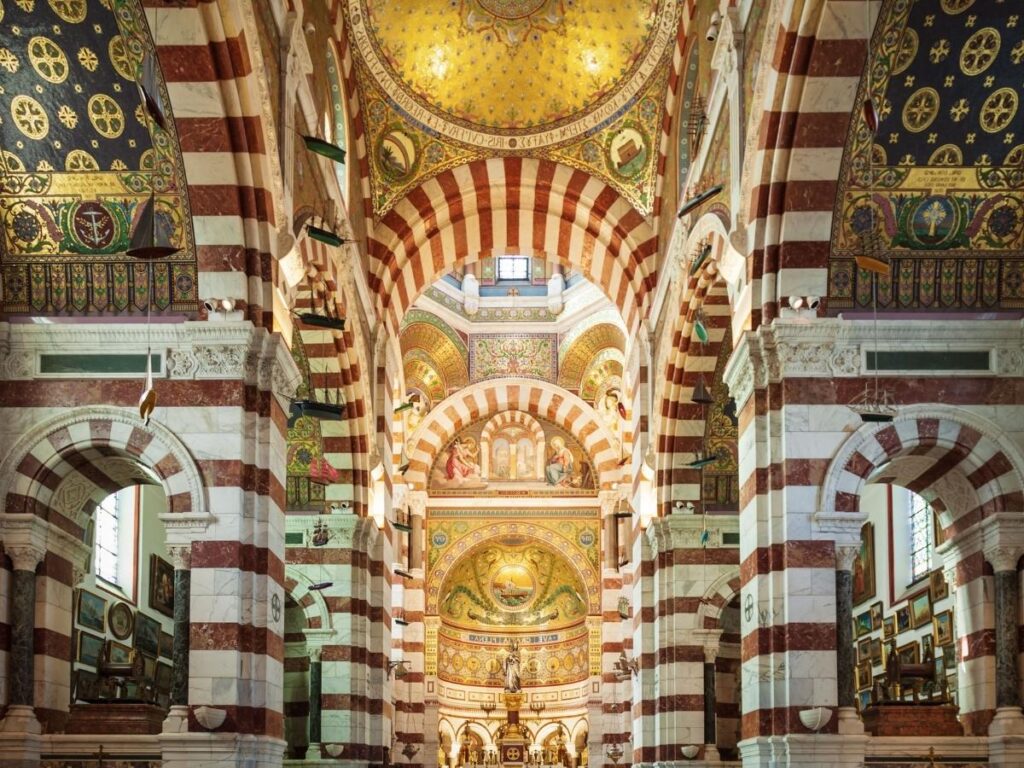
After spending time outside on the windy terraces overlooking Marseille, stepping inside the basilica feels like entering a completely different atmosphere. The noise from outside fades almost immediately, the lighting becomes softer, and everything suddenly feels much calmer and quieter.
I noticed that many people walked through fairly quickly after taking in the views, but the interior ended up being one of the parts of the visit that stayed with me most afterward.
What the Interior Looks Like
The inside of the basilica feels rich in detail without feeling overwhelming.
The ceilings and walls are covered with mosaics, gold accents, striped marble, arches, and decorative patterns that immediately draw your attention upward. Depending on where the light hits, different sections of the church almost seem to glow softly against the darker interior.
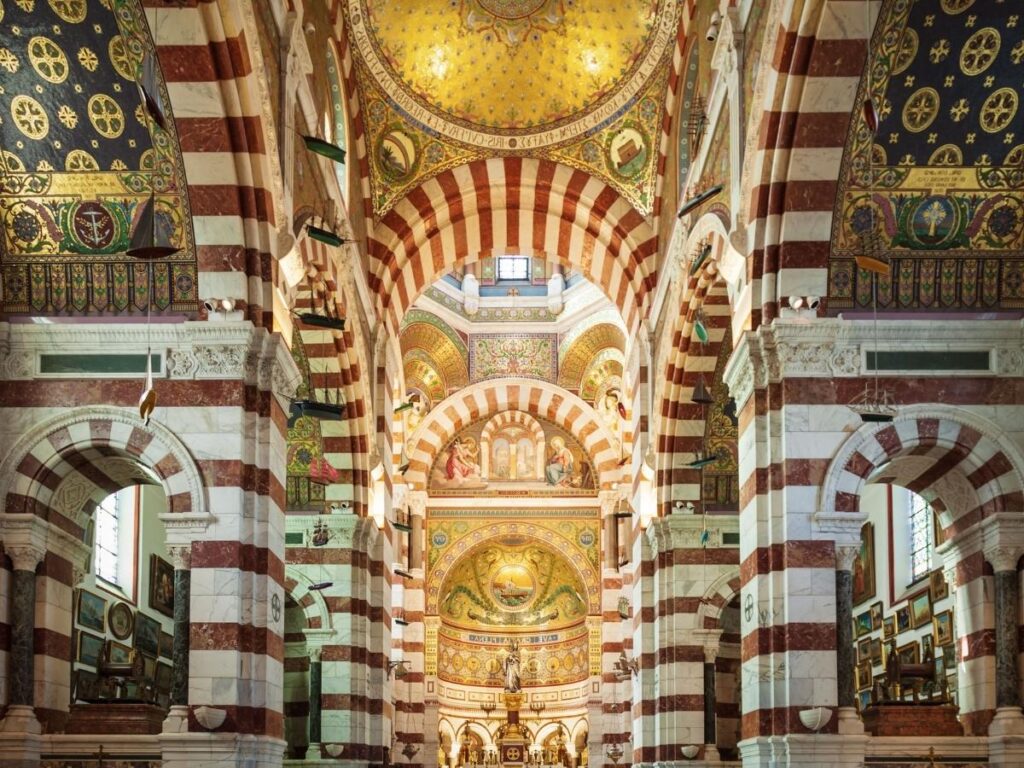
What stood out to me most was how different it feels compared to many churches elsewhere in France. Instead of the lighter Gothic interiors you often see in Paris or northern France, Notre Dame de la Garde has a warmer and more Mediterranean atmosphere because of its Romano Byzantine design.
The lighting inside also changes the mood completely. Outside, everything feels bright, open, and windy. Inside, it feels quieter and more reflective. Even visitors who aren’t religious seemed to naturally slow down once they entered.
The Hanging Boat Models and Maritime Offerings
One of the most unique details inside the basilica is the collection of hanging model boats suspended from the ceiling.
At first, they almost seem unexpected inside a church, but they reflect Marseille’s long connection to the sea. For generations, sailors and fishermen visited Notre Dame de la Garde before leaving the harbor, praying for protection during their journeys. Many of the boats were left as offerings of gratitude after safe returns.
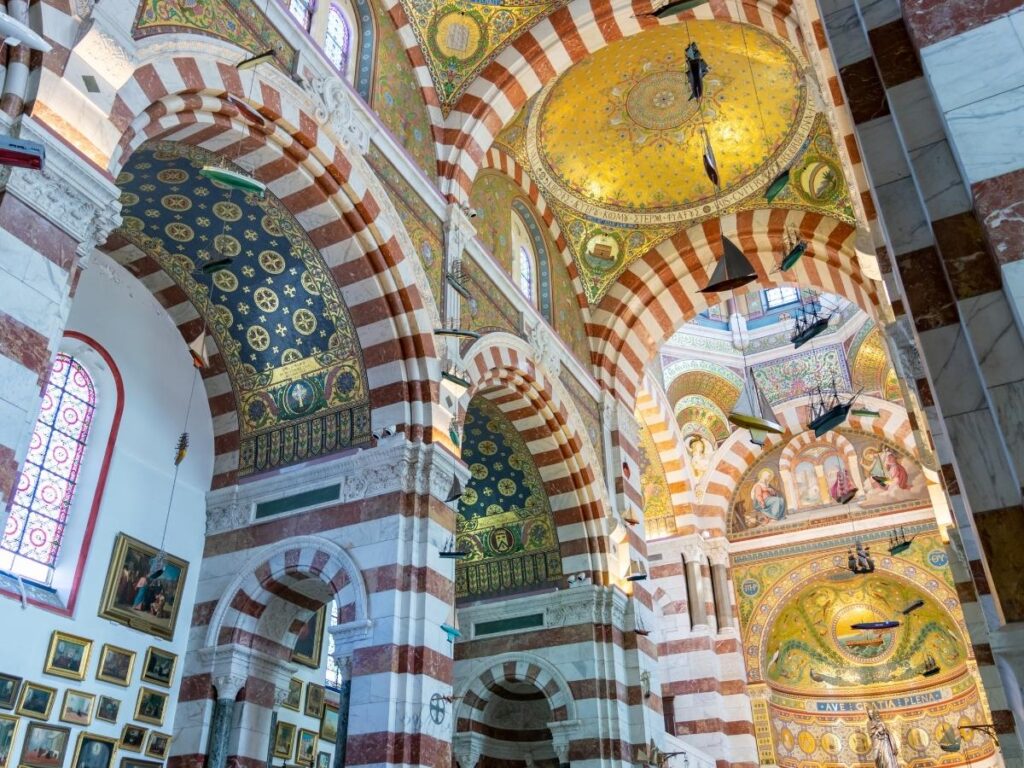
That maritime connection gives the basilica a personality that feels very tied to Marseille itself. It doesn’t feel like a church that could exist anywhere else.
I almost missed the boats at first because I was looking at the mosaics and ceilings, but once I noticed them, they became one of the details I remembered most afterward. They add a very human side to the basilica’s history.
How Long You Need Inside
Most visitors probably spend around 20 to 30 minutes inside the basilica itself, though the overall visit often becomes much longer because of the terraces outside.
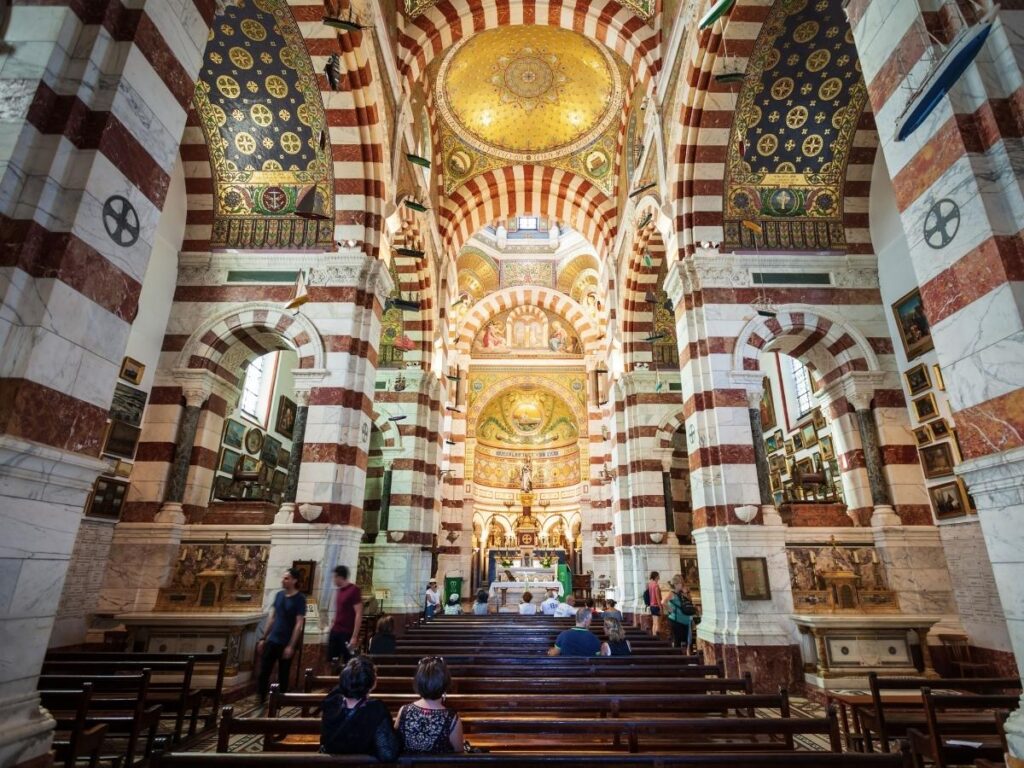
Personally, I’d recommend not rushing through too quickly. Even sitting quietly for a few minutes inside feels like part of the experience. The contrast between the busy city below and the calm atmosphere inside the church is something that photos don’t really capture.
If you enjoy architecture, photography, or slower travel in general, you could easily spend much more time exploring the details throughout the interior and around the surrounding viewpoints.
Important Etiquette Tips
Because Notre Dame de la Garde is still an active religious site, the atmosphere inside feels more respectful and quieter than many tourist attractions.
People generally keep their voices low, and most visitors naturally slow down once they enter. Flash photography should be avoided, especially because the dim lighting is part of what gives the basilica its atmosphere in the first place.
If a service is taking place during your visit, it’s best to move quietly and avoid interrupting people who are there to pray. Even though the basilica is one of Marseille’s most visited landmarks, it still feels like an important local place rather than just a tourist site.
How to Get to Notre Dame de la Garde
There are several ways to reach Notre Dame de la Garde, and the best option really depends on your energy level and travel style.
One thing I didn’t fully realize before visiting is how high above Marseille the basilica actually sits. From down in the city, it doesn’t always look that far away, but once you start heading uphill, you definitely feel the climb.
Walking to the Basilica
Walking up can feel really rewarding if you enjoy slower travel and don’t mind a bit of uphill effort.
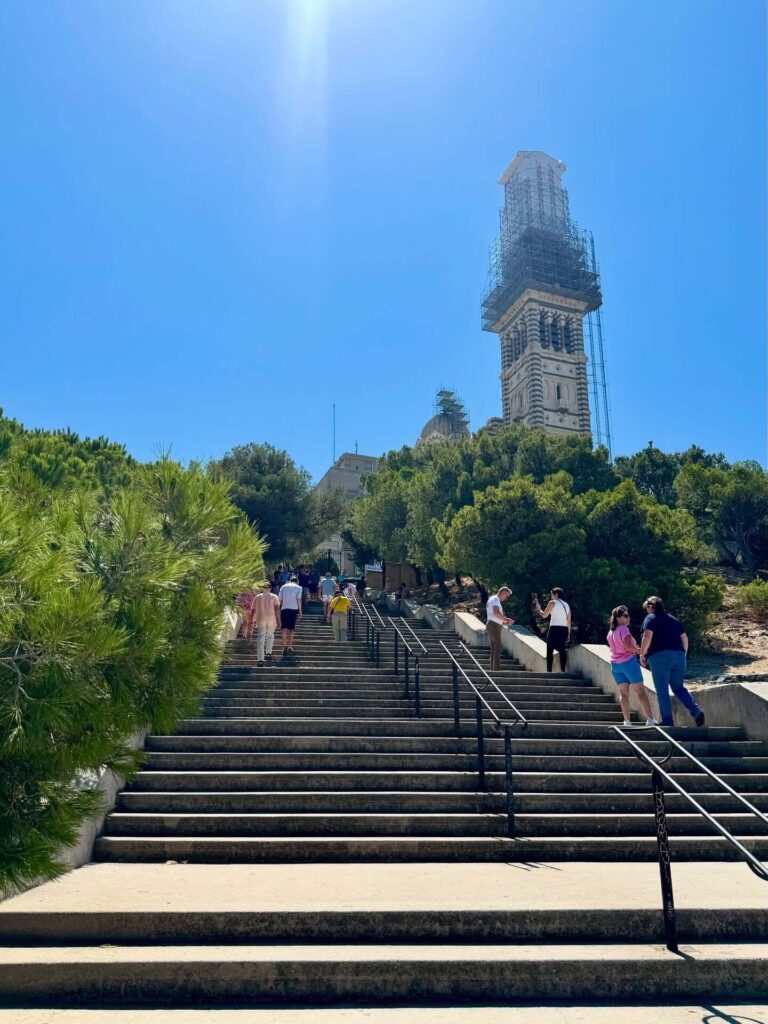
As you climb, the views behind you gradually start opening up, and at certain points you suddenly realize how much of Marseille you can already see. That part honestly made the walk more enjoyable than I expected.
At the same time, the streets are steeper than many first time visitors anticipate, especially during warmer months. Comfortable shoes and water make a big difference, and I’d avoid the hottest part of the afternoon in summer if possible.
Taking the Bus
For most visitors, the bus is probably the easiest and most practical option.
It saves energy while still letting you enjoy the experience at the top without arriving exhausted from the climb. Marseille’s hills can feel surprisingly tiring after a full day of sightseeing, so I think this is the best choice for most first time visitors.
Visiting by Car or Taxi
Taxis and rideshares are simple and convenient, especially if you’re short on time or visiting during hot weather.
Parking is available near the basilica, though the area can become busier around sunset since that’s when many people arrive for the views.
Is the Tourist Train Worth It?
The tourist train is more about the experience than convenience.
It can be fun for families or first time visitors, but if your goal is simply getting to Notre Dame de la Garde comfortably, the regular bus is honestly faster and easier.
Best Time to Visit Notre Dame de la Garde
Timing can completely change how the experience feels.
Best Season to Visit
Spring and early fall are probably the most comfortable times to visit. The weather is pleasant, visibility is usually clear, and the city feels less crowded than peak summer.
Summer offers beautiful blue skies and great views, but the heat and crowds can feel intense during the middle of the day. Winter feels quieter and calmer overall, which some visitors may actually prefer.
Best Time of Day
Morning visits feel peaceful and less crowded, with softer light and cooler temperatures.
Afternoons are usually the busiest period, especially during summer.
Sunset is the most popular time for a reason. The warm light over the harbor makes Marseille feel softer and calmer, and people tend to stay longer around the terraces just watching the city change colors.
Practical Tips for Visiting Notre Dame de la Garde
A few small things can make the visit much more enjoyable.
If you plan to walk uphill, comfortable shoes are important because the climb feels steeper than it first appears. Bringing water also helps during warmer months since the terraces are fairly exposed to the sun.
One thing that surprised me was how windy it gets at the top. Even on sunny days, the breeze can feel strong around the viewpoints, especially near sunset.
I’d also recommend giving yourself more time than you think you need. I originally expected this to be a quick stop and ended up staying much longer simply because the atmosphere kept changing as the light shifted over the city.
And if you enjoy photography, don’t rush straight to the main terrace. Walking around the entire basilica gives you very different perspectives of Marseille.
Nearby Places to Explore After Your Visit
Notre Dame de la Garde fits easily into a broader Marseille itinerary because several interesting areas are nearby.
Le Panier
Le Panier is Marseille’s oldest neighborhood and one of the best places for wandering slowly.
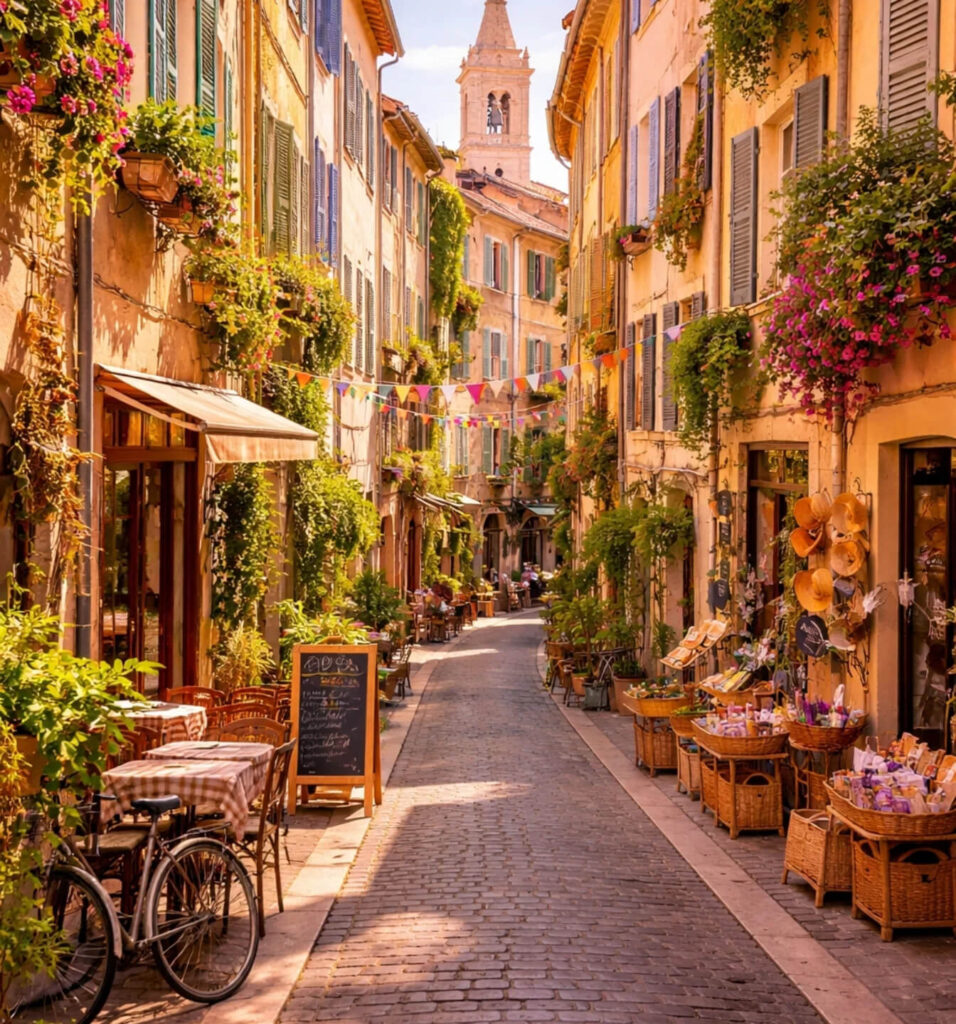
The colorful streets, cafés, staircases, and local shops feel completely different from the open hilltop atmosphere around the basilica. It’s the kind of area where exploring without a plan actually works well.
Old Port (Vieux Port)
The Old Port is the center of Marseille’s waterfront activity.
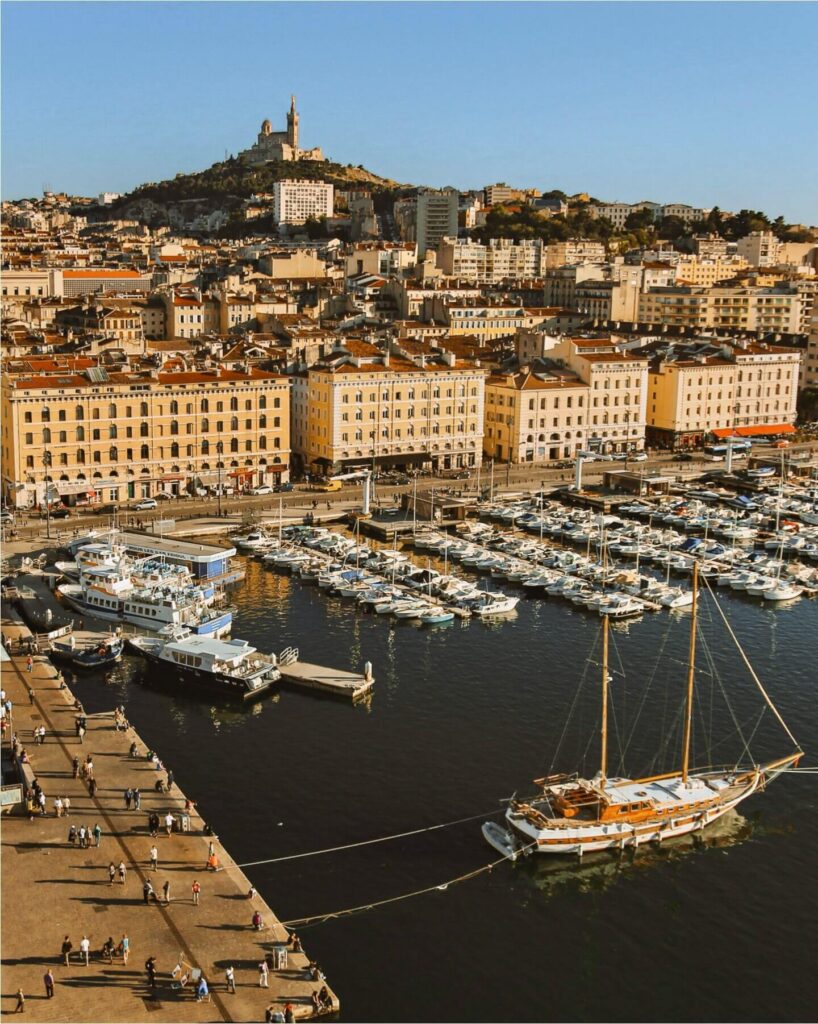
It’s a great place to walk along the harbor, eat seafood, catch ferries, or simply relax near the water after visiting the basilica.
Vallon des Auffes
Vallon des Auffes feels quieter and more local than many central parts of Marseille.
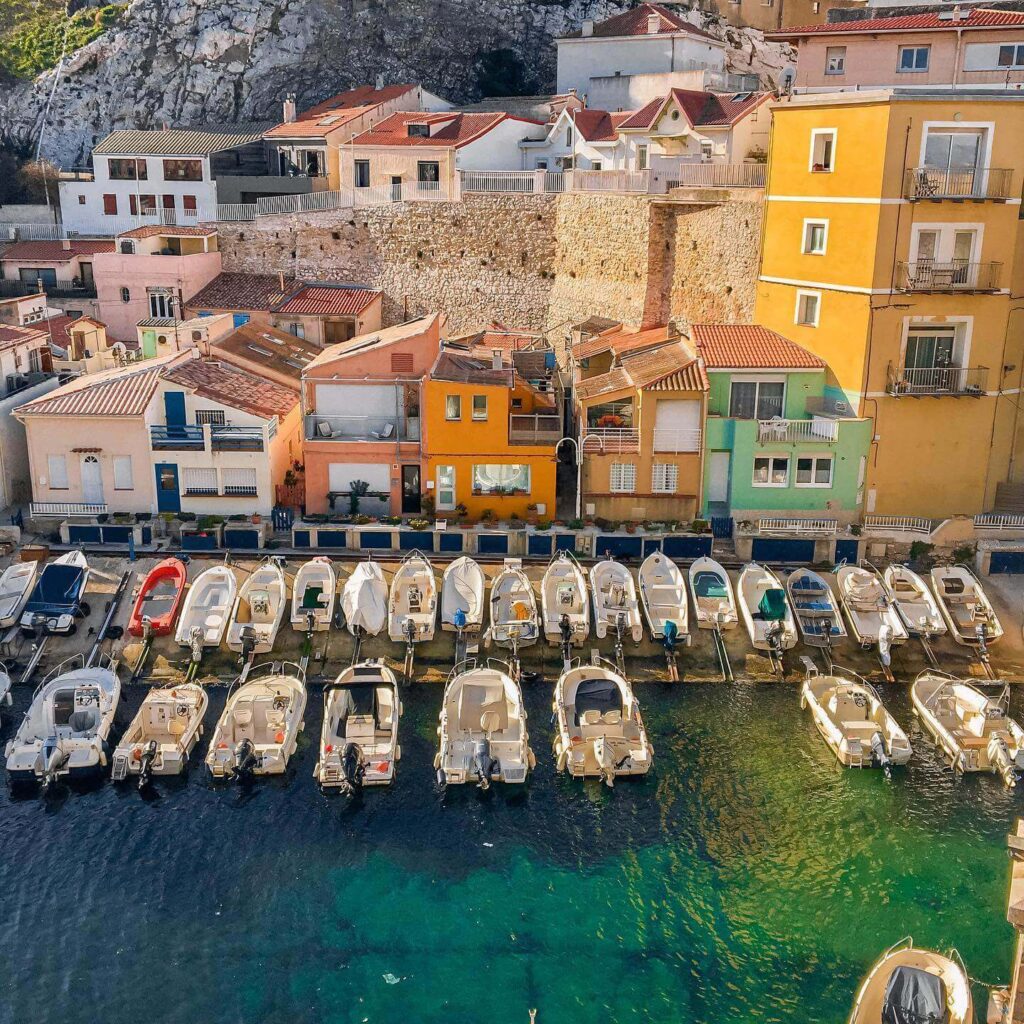
The small fishing port, boats, and waterfront restaurants make it especially nice around sunset when the light hits the water and surrounding buildings.
Château d’If Boat Trips
Boat tours to Château d’If leave from the harbor area and make a great addition to a Marseille itinerary if you have extra time.
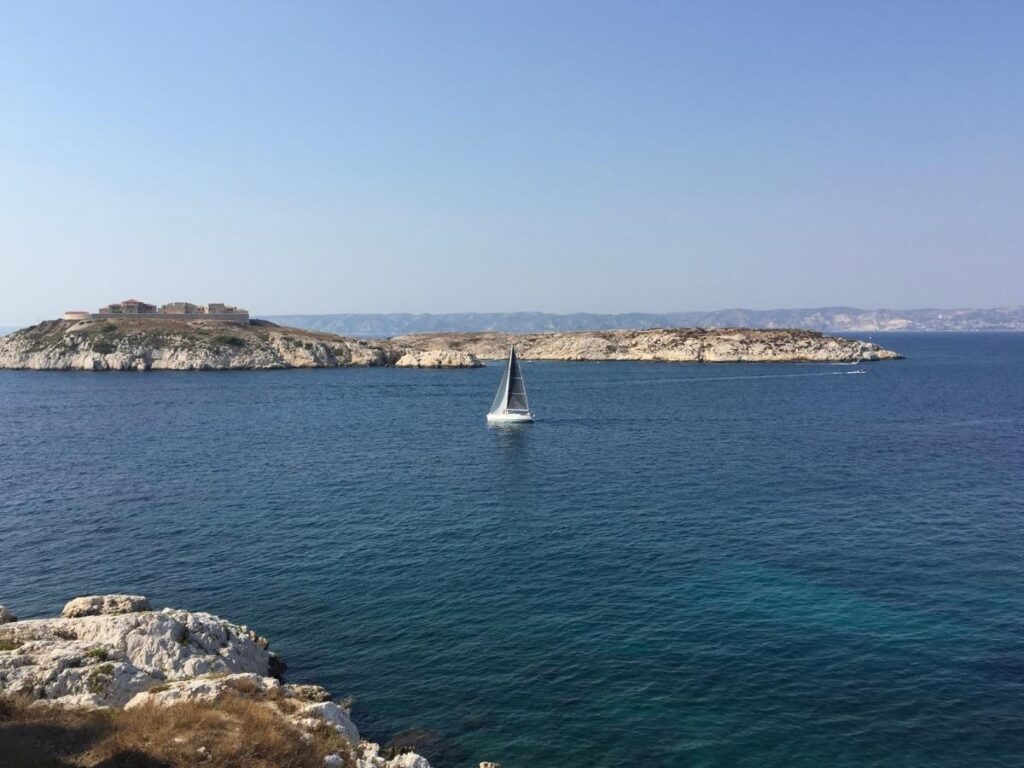
The fortress is closely connected to The Count of Monte Cristo, and seeing Marseille from the water gives you a completely different perspective of the city and coastline.
Suggested Itineraries Including Notre Dame de la Garde
One thing I liked about visiting Notre Dame de la Garde is that it fits naturally into almost any Marseille itinerary. Whether you only have a few hours in the city or a full day to explore, it’s fairly easy to combine the basilica with some of Marseille’s other interesting neighborhoods and waterfront areas.
Half Day Marseille Itinerary
If you only have half a day in Marseille, I’d keep the itinerary fairly simple and focus on the areas that give you the strongest overall feeling of the city.
I’d start around the Old Port in the morning or late afternoon. This area feels like the center of Marseille’s energy, with boats lining the harbor, cafés along the waterfront, and ferries constantly moving in and out. Even just walking along the port for a while gives you a good first impression of the city.
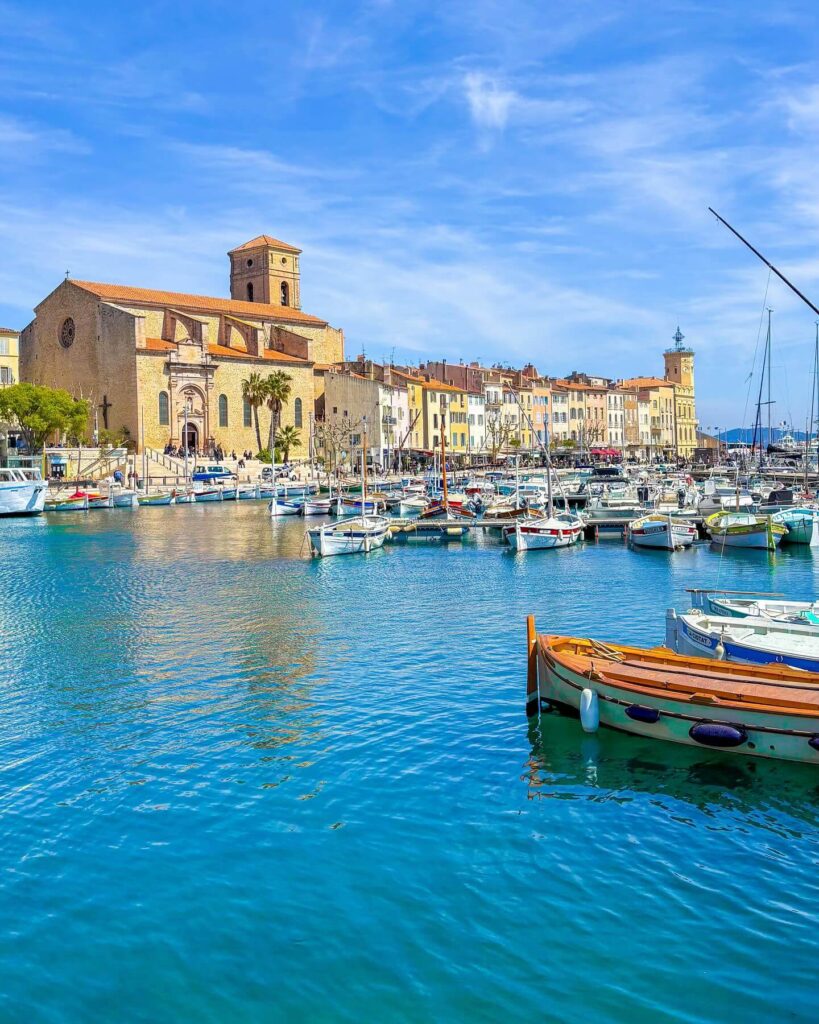
From there, head up to Notre Dame de la Garde. If you don’t feel like walking uphill, taking the bus saves time and energy while still letting you enjoy the experience at the top. Spend some time around the terraces instead of rushing through. The views are honestly one of the highlights of Marseille.
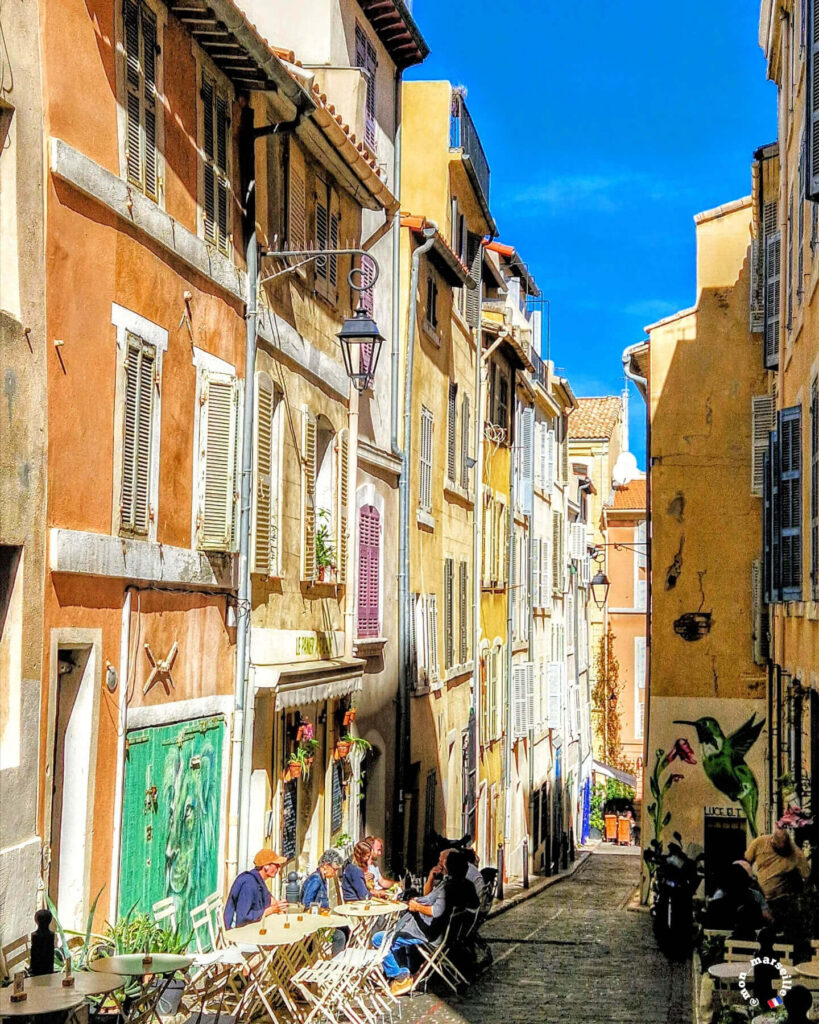
After visiting the basilica, I’d continue into Le Panier. The atmosphere there feels completely different from the open viewpoints above the city. The narrow streets, colorful buildings, cafés, and staircases make it one of the nicest areas for wandering slowly without much planning.
If you still have energy afterward, ending the evening with dinner near the waterfront feels like a very Marseille way to finish the day.
One Day Marseille Itinerary
With a full day in Marseille, you have enough time to explore at a slower pace without feeling rushed between attractions.
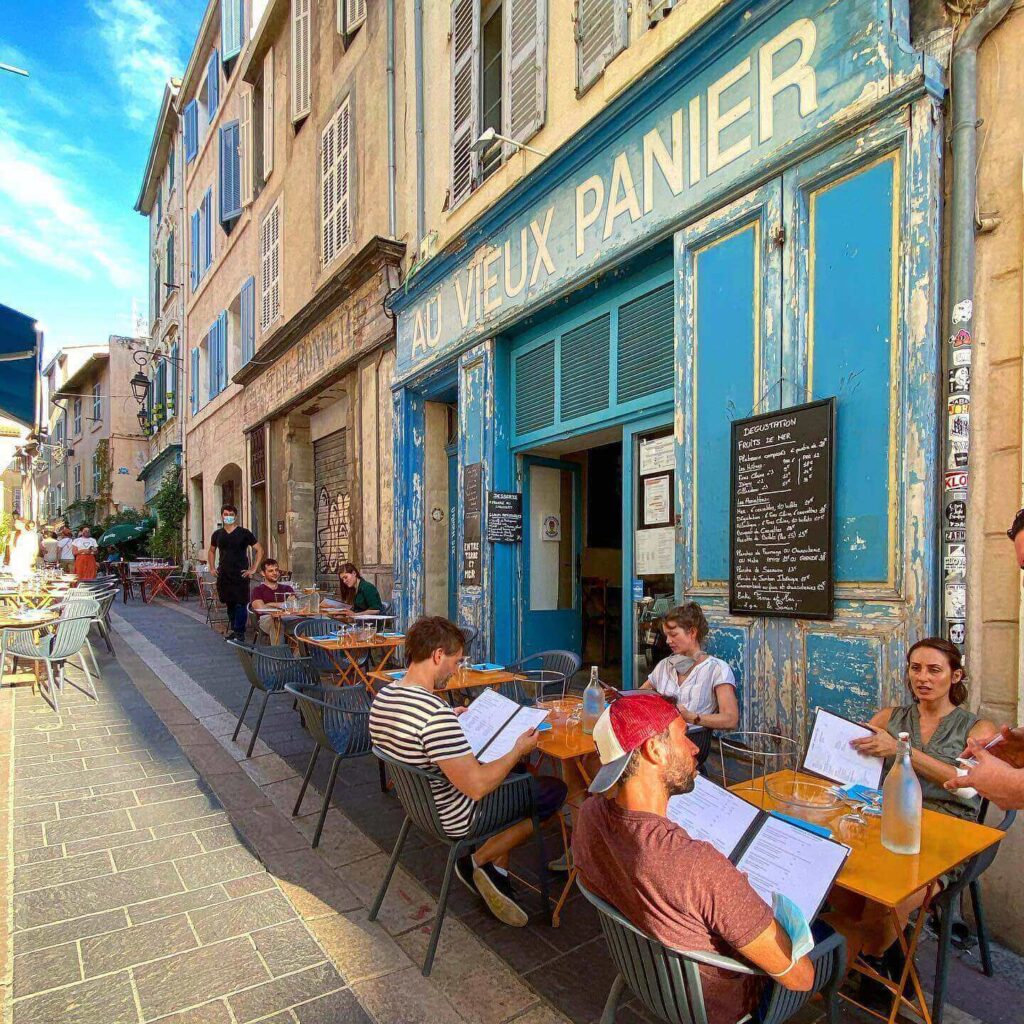
I’d start the morning near the harbor with coffee and breakfast around the Old Port before the area gets too busy. Marseille feels calmer earlier in the day, and it’s a nice time to walk along the waterfront while watching the city slowly wake up.
From there, spend some time exploring Le Panier. It’s one of those neighborhoods where getting slightly lost is part of the experience. Some streets feel lively and artistic, while others are quieter and more residential.
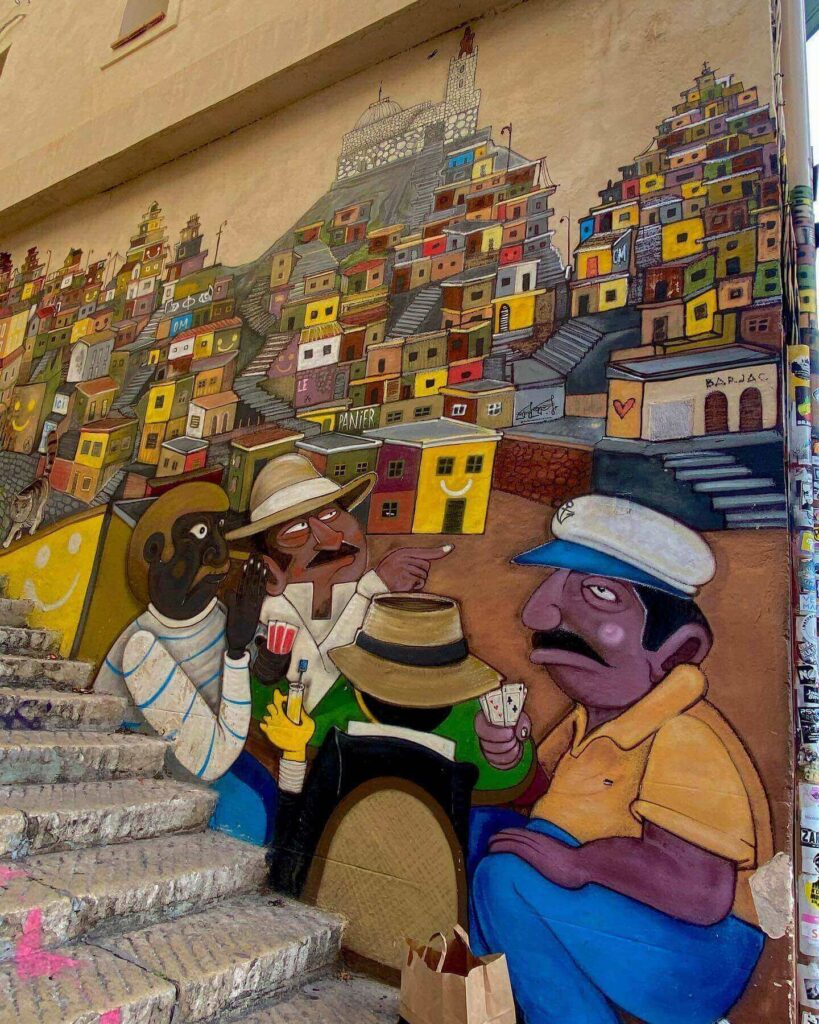
Later in the afternoon, head to Notre Dame de la Garde. Personally, I think this timing works best because the lighting over Marseille becomes softer as the day goes on. If possible, try staying through sunset because the atmosphere changes completely once the city starts glowing in warmer colors.
If you still have time afterward, a short boat trip or coastal walk can be a really nice addition to the day. Seeing Marseille from the water gives you a very different perspective of the city and coastline.
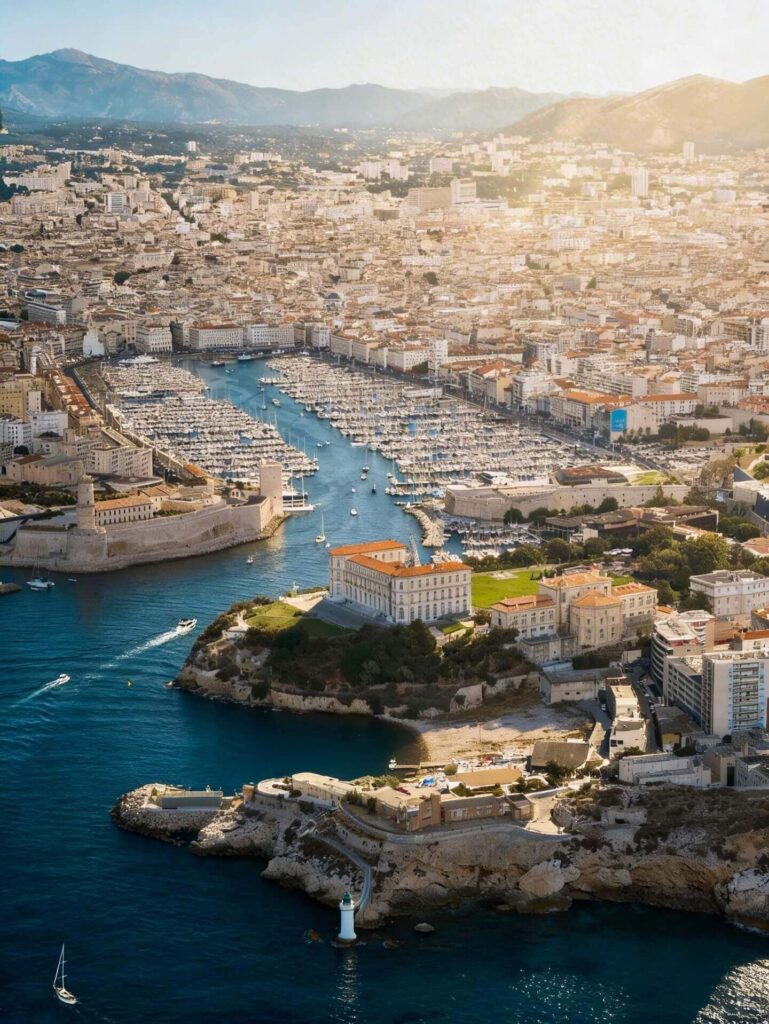
Ending the evening with dinner near the harbor or waterfront is honestly hard to beat.
My Honest Thoughts After Visiting Notre Dame de la Garde
Before visiting Marseille, I honestly assumed Notre Dame de la Garde would mainly be a scenic viewpoint with a famous church at the top. I expected to spend some time taking photos, looking over the city, and then moving on to other parts of Marseille.
Instead, it became one of the places I remembered most afterward.
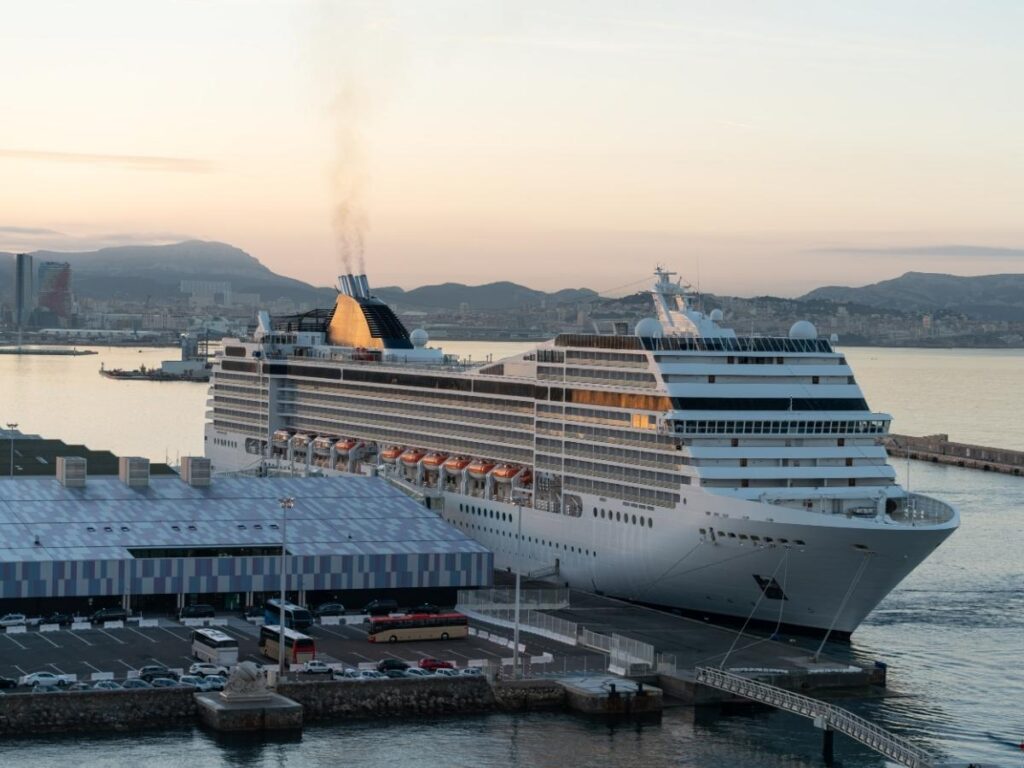
What surprised me wasn’t just the view itself, but how connected the basilica feels to the identity of Marseille. From the terraces, the city suddenly feels easier to understand. You can see how the harbor, the neighborhoods, the coastline, and the surrounding hills all fit together. Marseille stopped feeling random or chaotic once I saw it from above.
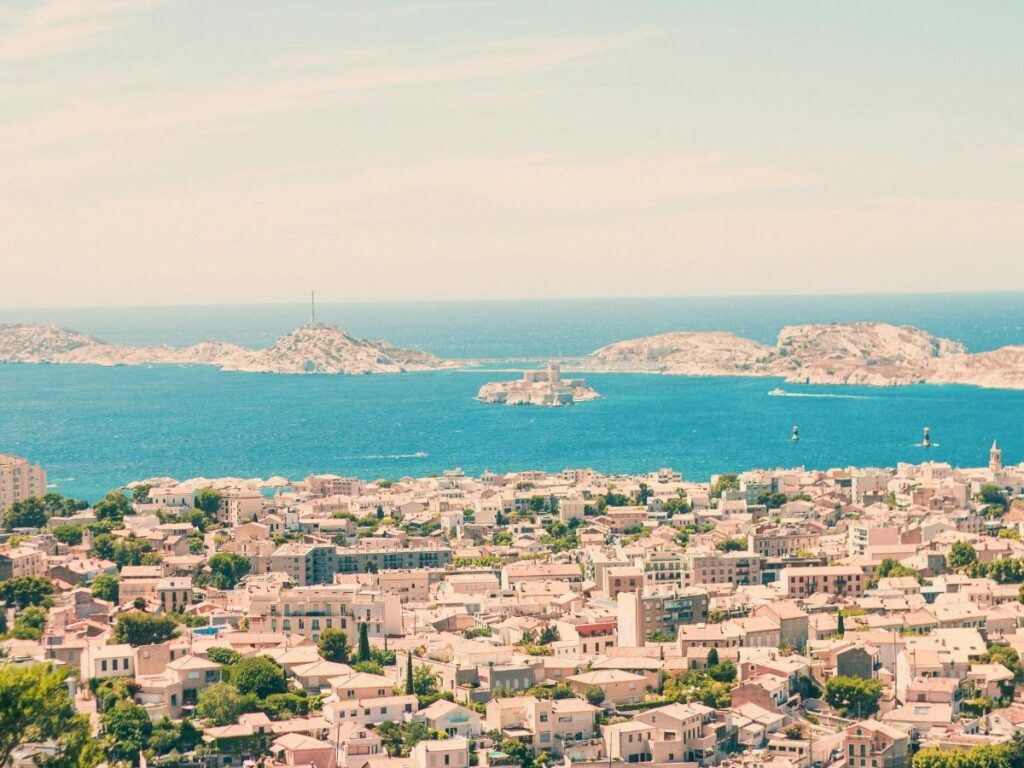
I also liked that the atmosphere didn’t feel overly polished or designed only for tourists. Some people were there quietly lighting candles inside the basilica, others were sitting along the stone walls watching the boats below, and plenty of visitors were simply taking photos and enjoying the views.
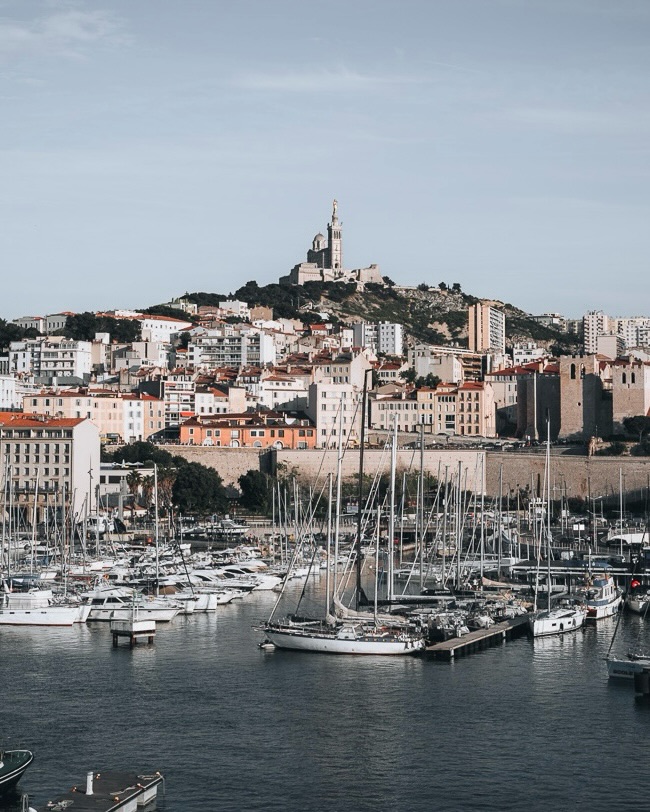
It felt like a place used naturally by both locals and travelers rather than somewhere people rush through just to check off a landmark.
The atmosphere also changes constantly depending on the time of day. Earlier in the afternoon, the terraces felt lively and bright, while closer to sunset everything became calmer and slower. Watching the light shift across Marseille ended up being one of my favorite parts of the experience.
I think that’s what stayed with me most afterward. Notre Dame de la Garde doesn’t just give you beautiful views of Marseille, it changes how the city feels while you’re there.
If I ever returned to Marseille, this would honestly be one of the first places I’d revisit.
Final Thoughts
Notre Dame de la Garde ended up feeling like much more than a quick sightseeing stop.
Between the panoramic views, the maritime history, the atmosphere inside the basilica, and the connection to everyday life in Marseille, the entire experience felt much more personal than I expected before visiting.
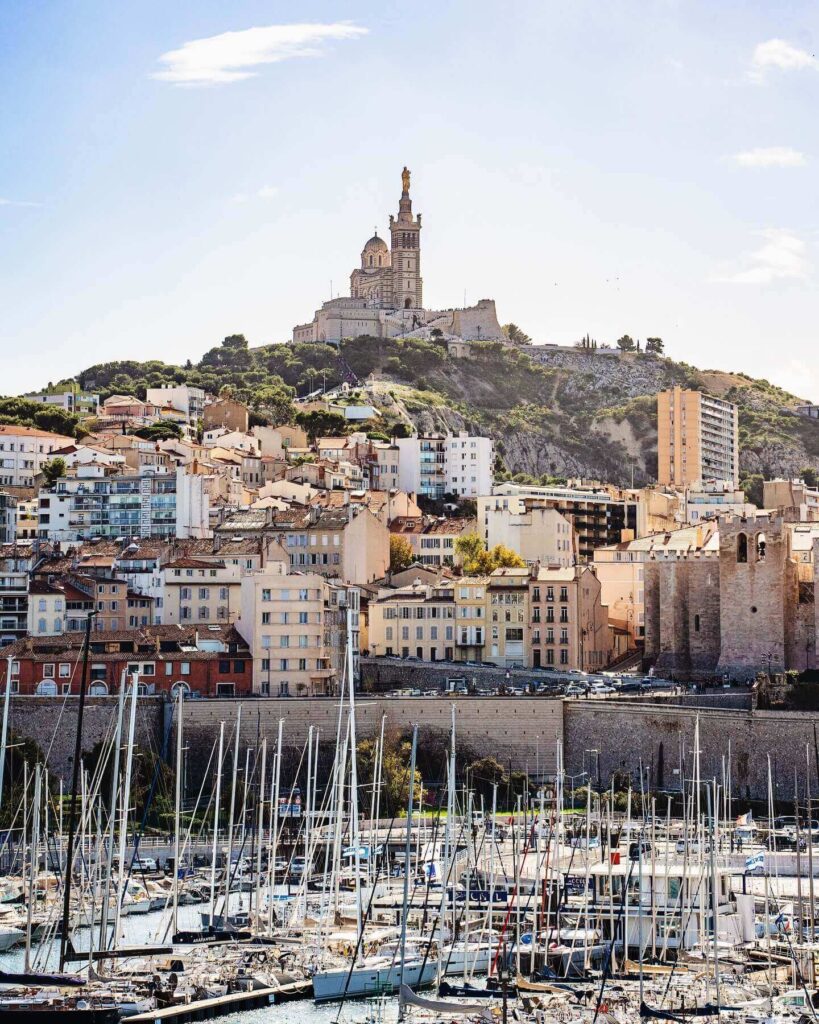
Even if you normally don’t prioritize churches or religious sites while traveling, I still think this is one of the places that helps you understand Marseille best. It gives you a completely different perspective of the city, both visually and emotionally.
If you visit, I’d really recommend slowing down once you reach the top instead of treating it as a quick photo stop. Walk around the terraces, spend some time inside the basilica, and stay long enough to watch the city change beneath you.
That slower experience ended up being the part I remembered most afterward.