
The first time I stood in front of Notre Dame de Paris, it didn’t feel like just another place to check off in Paris. I remember walking toward it from the river and, without really thinking about it, slowing down. There’s something about the way it stands there that naturally draws your attention.
From a distance, it’s not overwhelming. But as you get closer, the details start to stand out. The carvings, the structure, the balance of it all. I ended up spending more time there than I expected, just standing and looking, without feeling the need to rush.
After the Notre Dame fire 2019, the experience feels a bit different. It’s no longer just a well known landmark. There’s a stronger sense of what it represents, and you can feel that in the way people move around it. Some still take photos, but others just pause for a moment, taking it in.
If you’re planning to visit, it’s worth giving it a bit more time than you might think.
Instead of just seeing the front and leaving, walk around it, look at it from different angles, and notice how the atmosphere shifts. In this guide, I’ll keep things simple and useful, covering the history in a way that makes sense, what’s changed since the fire, and what you can realistically expect when you go.
A Quick Look at Notre Dame de Paris
Notre Dame de Paris sits right in the center of Paris, on a small island called Île de la Cité. This is one of the oldest parts of the city, and in many ways, it’s where Paris began.
When you’re there, you can feel that a little. It’s busy, but not in the same way as other parts of Paris. There’s a sense that a lot has happened here over time, and the cathedral is right at the heart of it.
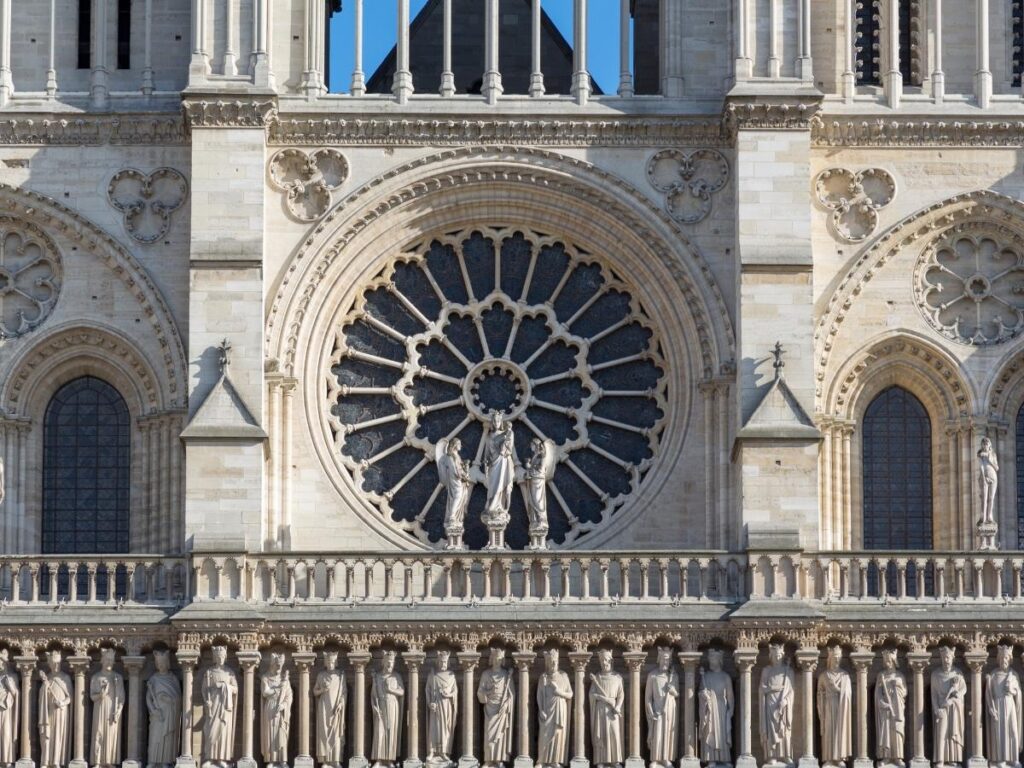
Construction started back in 1163 and took almost two centuries to finish. That alone is hard to picture. Generations of people worked on it, and by the time it was completed, the world around it had already changed.
Over the years, it went through damage, restorations, and additions, so what you see today isn’t just from one period, it’s a mix of different moments in history layered together.
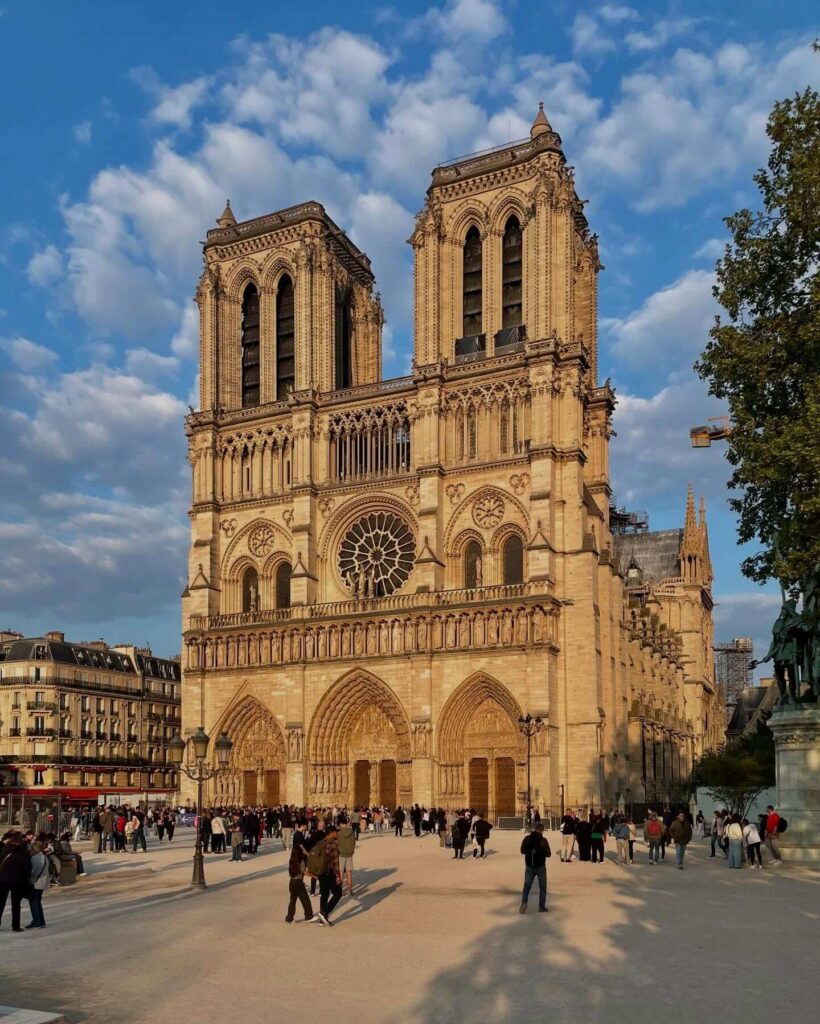
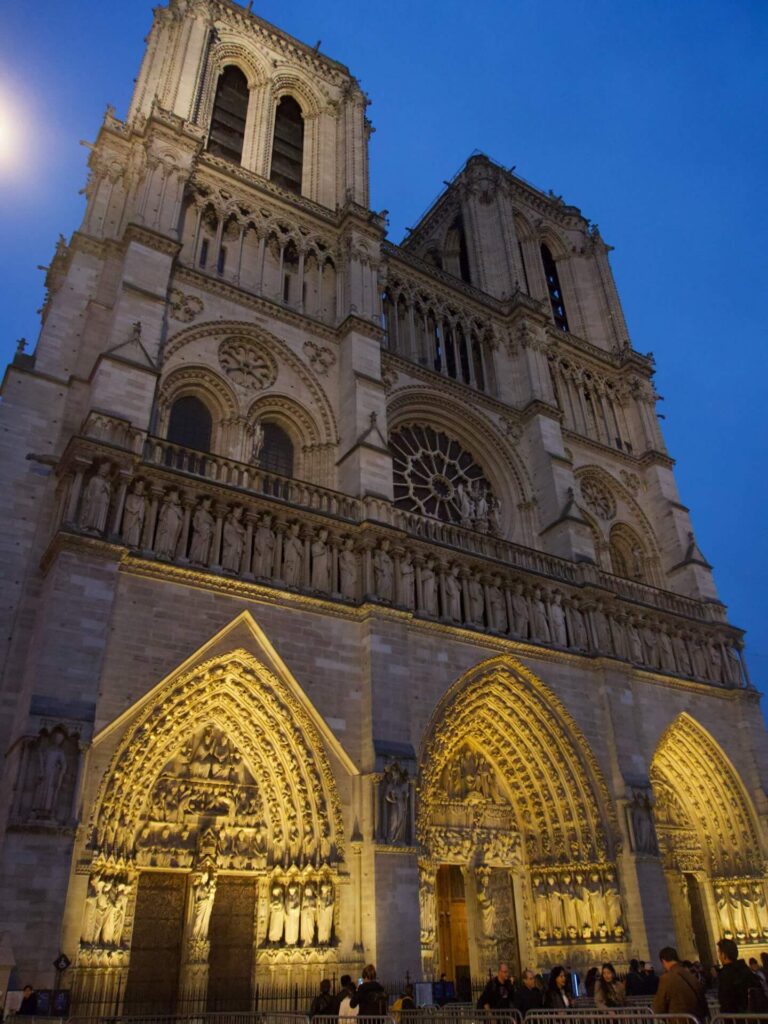
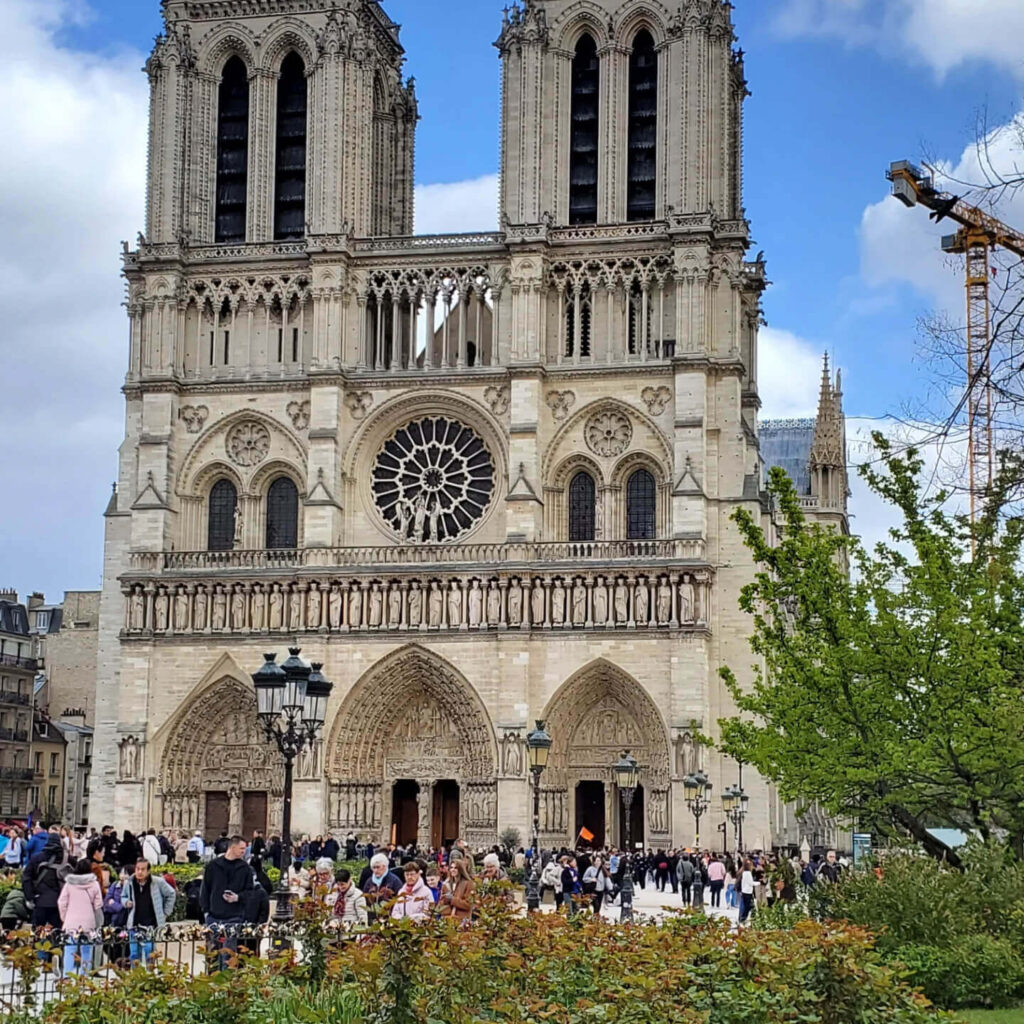
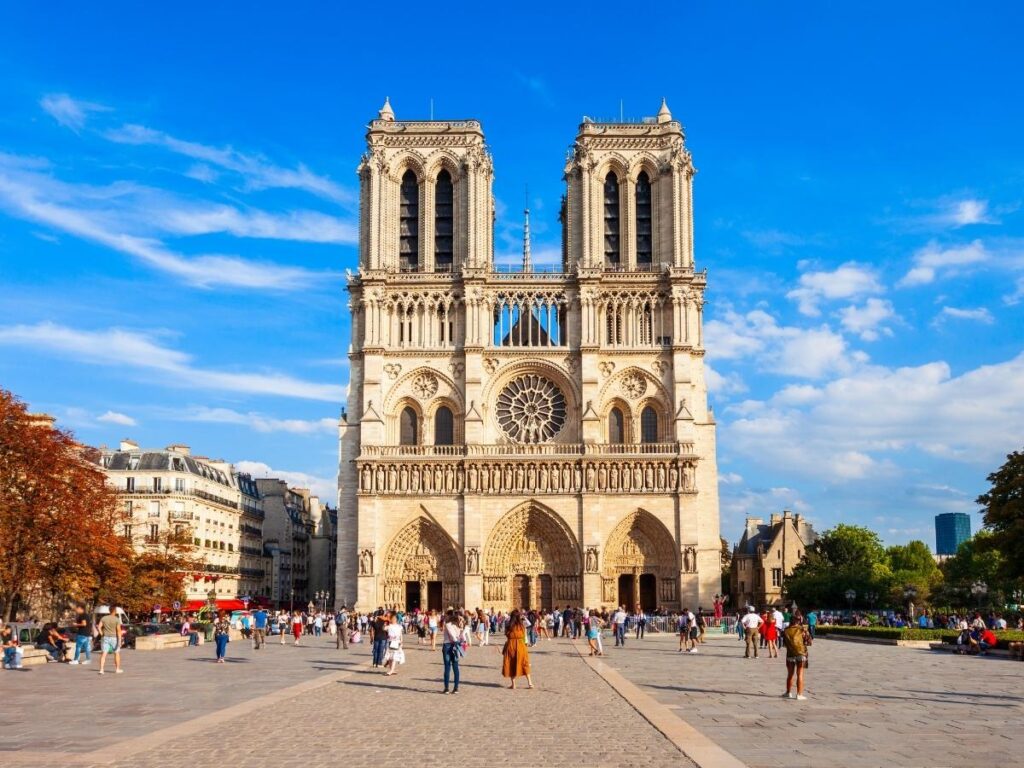
Even if you don’t usually pay attention to architecture, this is one of those places where it’s hard not to notice the details. As you get closer, the scale becomes more obvious. The towers feel taller than you expect, and the front facade has so much going on that it’s difficult to take it all in at once.
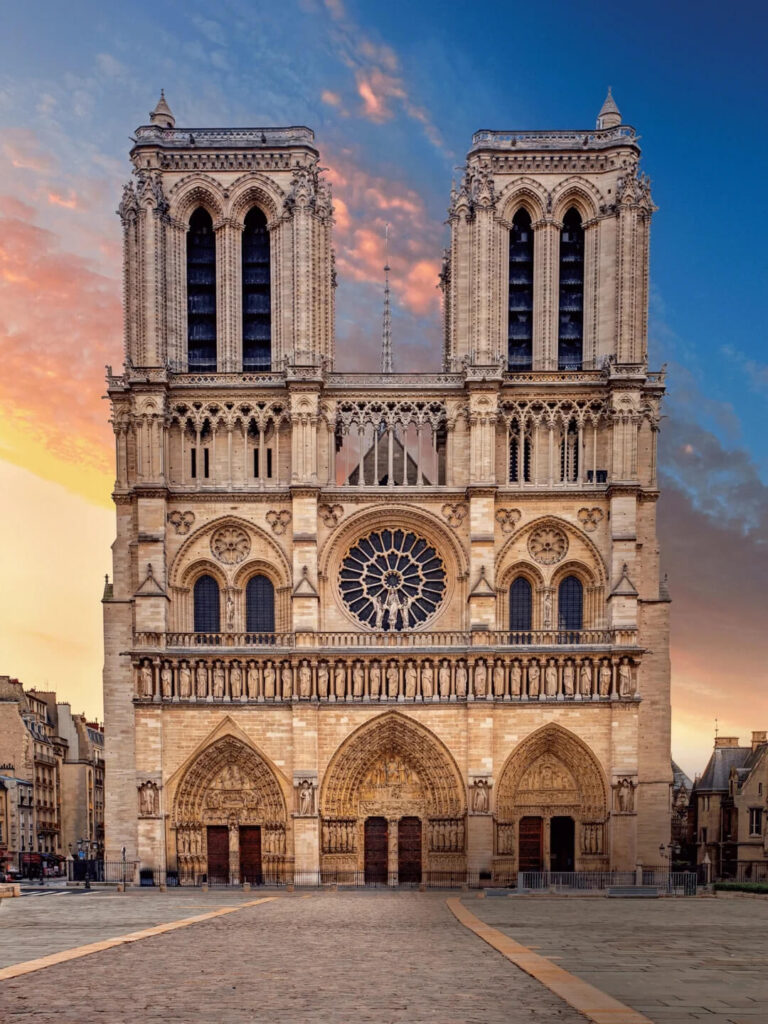
There are rows of statues, detailed carvings, and small elements that you only start to notice if you slow down a bit.
What stood out to me most was how balanced everything feels. It’s detailed, but not chaotic. The symmetry gives it a kind of calm presence, even with all the intricate work. You don’t need to understand Gothic architecture to appreciate it. Just standing there and looking up is usually enough to get a sense of why it’s so well known.
The History of Notre Dame
Medieval Beginnings
Notre Dame de Paris began taking shape in the 12th century, at a time when cities across Europe were starting to build bigger and more ambitious churches. Paris was growing in importance, and there was a clear desire to create something that reflected that.
This was the Gothic period, which focused on height, light, and detail in a way that hadn’t really been done before. Instead of thick, heavy walls and small windows, builders started using techniques that allowed for taller structures and larger openings. That’s why Notre Dame feels so open and vertical compared to older buildings.
But it wasn’t just about engineering. There was also an intention behind how it felt. The idea was to create a space that lifted your attention upward, both physically and emotionally. Even today, when you stand in front of it or imagine the interior, you can sense that intention. It doesn’t feel random. Everything is designed to guide your eyes and your focus.
Major Moments Through Time
Over the centuries, Notre Dame didn’t remain untouched. Like most historic buildings, it went through periods of neglect, damage, and change depending on what was happening in France at the time.
During the French Revolution, things took a sharp turn. The cathedral was damaged, many of its statues were destroyed, and it was even used for purposes that had nothing to do with religion. For a while, it lost much of its original meaning and status.
By the 19th century, it had fallen into a pretty poor state. That’s when restoration work began, led by Eugène Viollet le Duc. He didn’t just repair what was there, he also reimagined parts of it. The spire that many people remember from before the fire, along with several decorative elements, came from this period.
So when you look at Notre Dame today, you’re not just seeing one version of it. You’re seeing layers of history, shaped by different people and different moments.
The 2019 Fire and What Changed
In April 2019, a fire broke out in the cathedral during restoration work. It spread quickly through the roof, which was made largely of old timber, and within hours, the spire collapsed. Watching it happen felt unreal, even from a distance.

For a moment, it seemed like the damage might go much further. But the main structure held. The towers, the facade, and much of the interior framework were saved, which made a huge difference in what could be restored later.
What stayed with me wasn’t just the fire itself, but how people responded to it. There was a sense of collective concern that went beyond France. It felt like people everywhere were watching and hoping it wouldn’t be lost.
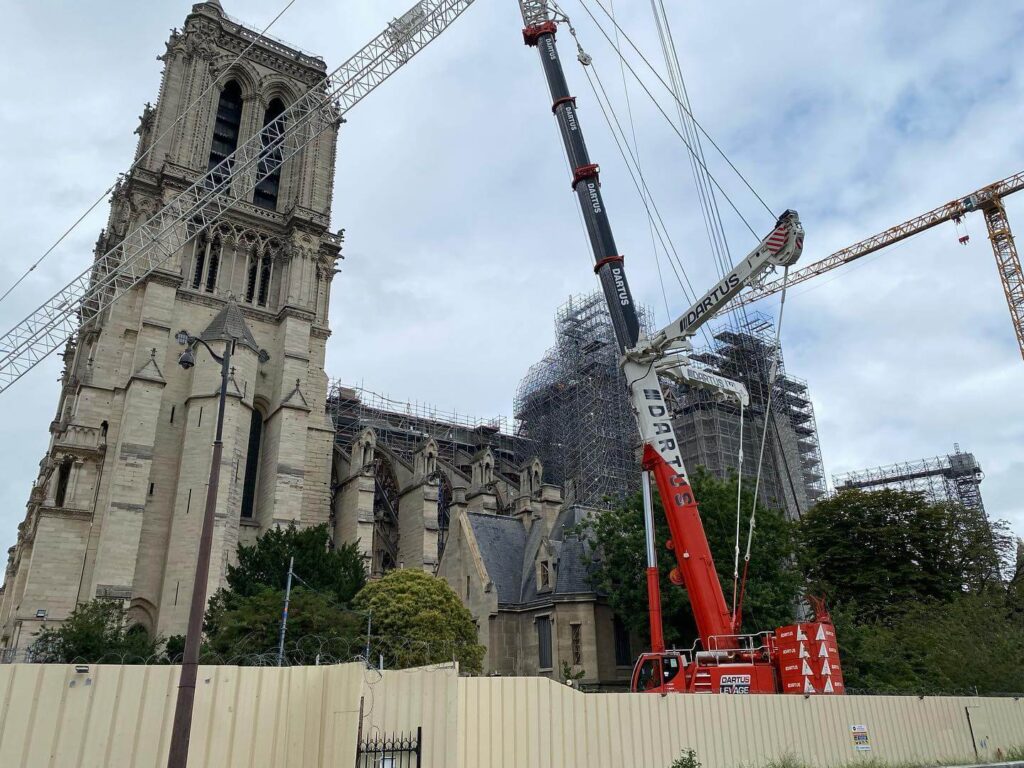
Since then, restoration has been ongoing, with a focus on rebuilding the damaged parts as accurately as possible. It’s a long process, but it’s also a reminder that places like this don’t just belong to one moment in time. They continue to evolve, even after something as dramatic as that fire.
Notre Dame Today
Current Status
Notre Dame de Paris is gradually reopening, but it’s still very much in a phase of careful restoration. When I visited, the area around it was organized in a way that lets you get close enough to see the details, but not everything is fully accessible yet. The inside, in particular, depends on where things stand with the restoration at the time you go.
This is one of those places where it really helps to check the latest updates before your visit. Things are changing slowly but steadily, and access can improve over time. Even so, most people don’t come here just for the interior.
A big part of the experience is simply being around it, walking along the sides, and seeing how it fits into the city.
What’s Being Restored
A lot of the work has focused on rebuilding what was lost in the fire, especially the roof and the spire. The original roof was made from centuries old timber, and that’s the part that burned the most. Now, it’s being reconstructed with a mix of traditional techniques and modern safety measures.
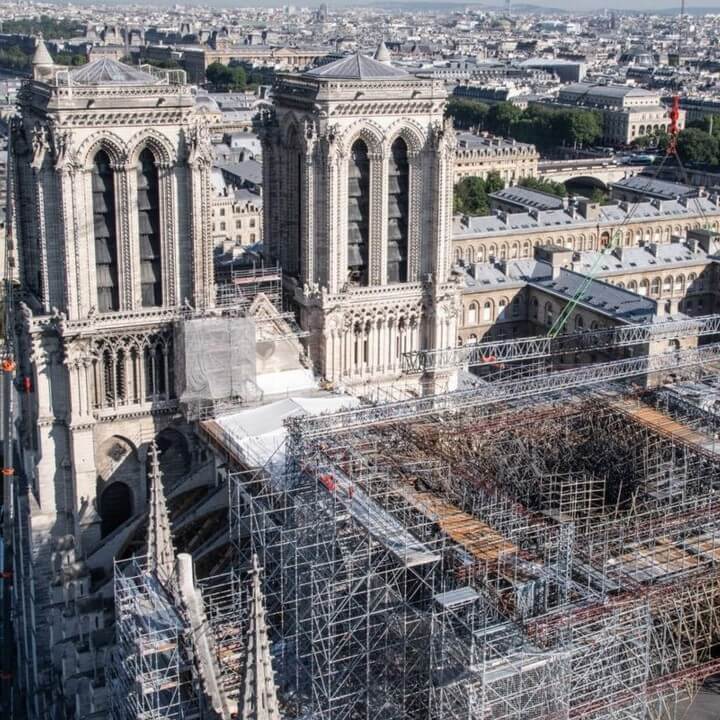
The spire, which collapsed during the fire, is also being rebuilt to match the 19th century design created by Eugène Viollet le Duc. There was some discussion about whether it should be redesigned, but in the end, they chose to restore it as it was.
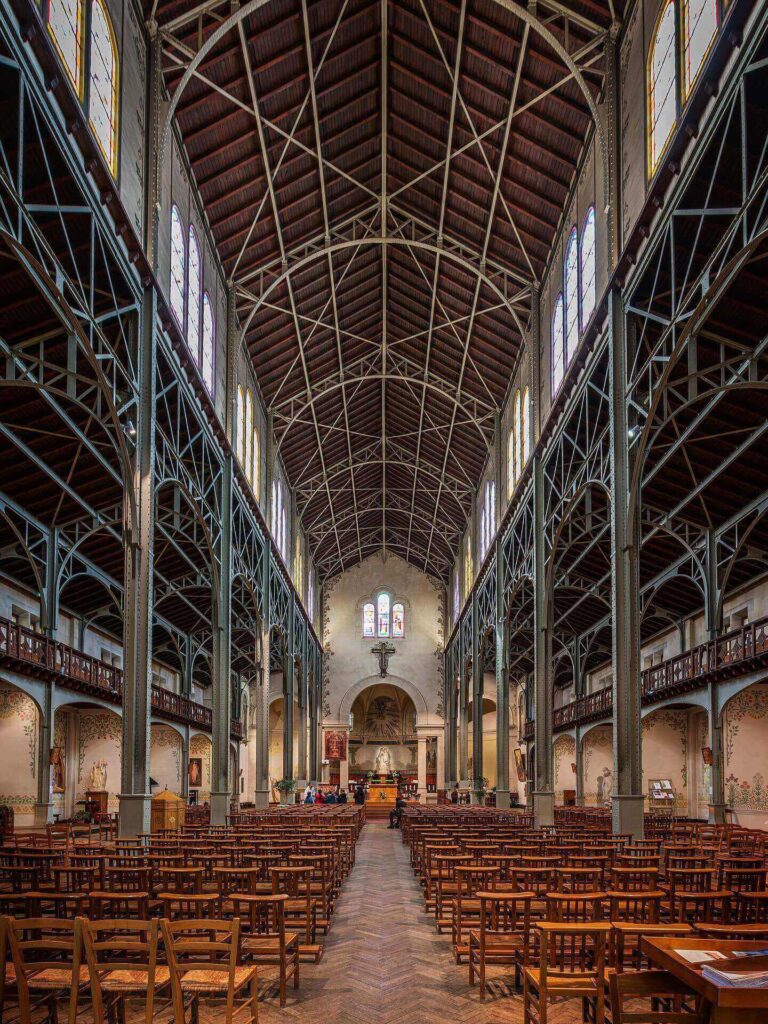
Inside the cathedral, there’s a lot of detailed work happening as well. Smoke and debris affected parts of the interior, so cleaning and restoring those areas is a slow and careful process. It’s not something you notice from the outside, but it’s a big part of bringing the space back to how it was.
What It Feels Like Visiting Now
Visiting now has a slightly different atmosphere than you might expect if you’ve seen older photos. There’s still that sense of admiration when you see it up close, but there’s also a quiet awareness of everything it’s been through.
You’ll notice construction elements around the site, like barriers or sections that are blocked off. At first, I thought that might take away from the experience, but it didn’t really. If anything, it made me look at the building more closely. You start to notice details you might have missed otherwise.
There’s also something about seeing it during this phase that makes the visit feel more real. It’s not just a finished monument. It’s a place that’s still being cared for and rebuilt. Even without full access, it still feels worth the time, especially if you take a moment to walk around it instead of just stopping briefly at the front.
What to See at Notre Dame
The Western Facade
The front of Notre Dame de Paris is where most people naturally stop first, and it’s worth slowing down here a bit. At first glance, you’ll notice the two towers and the overall symmetry, but the more time you spend looking, the more details start to stand out.
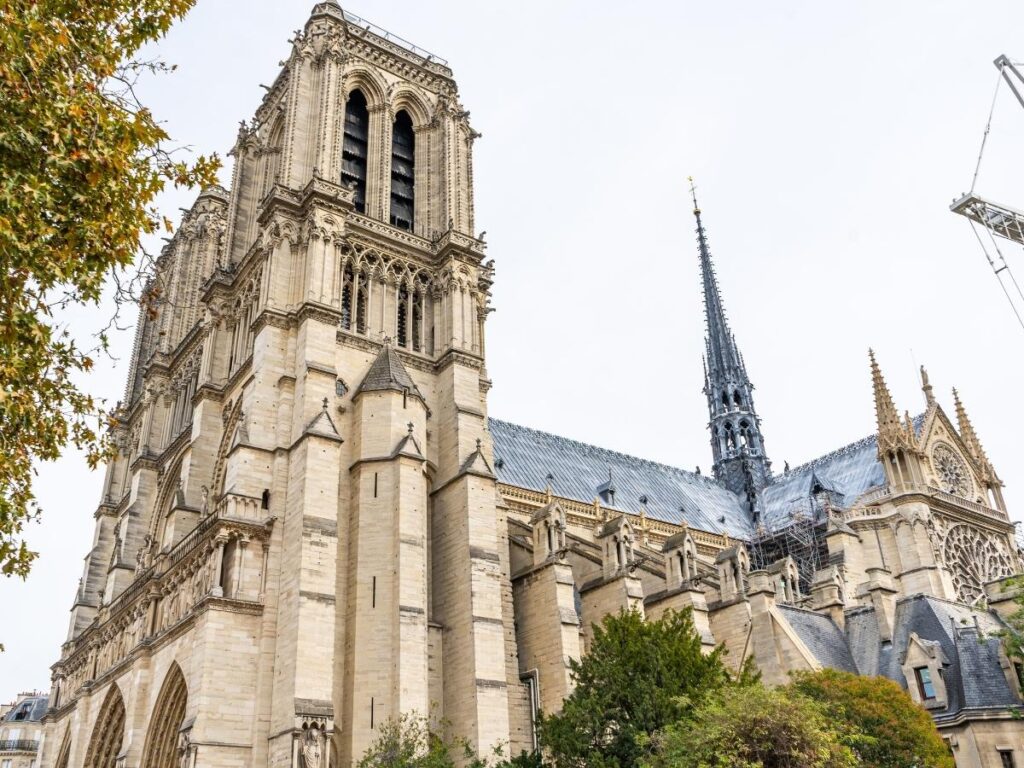
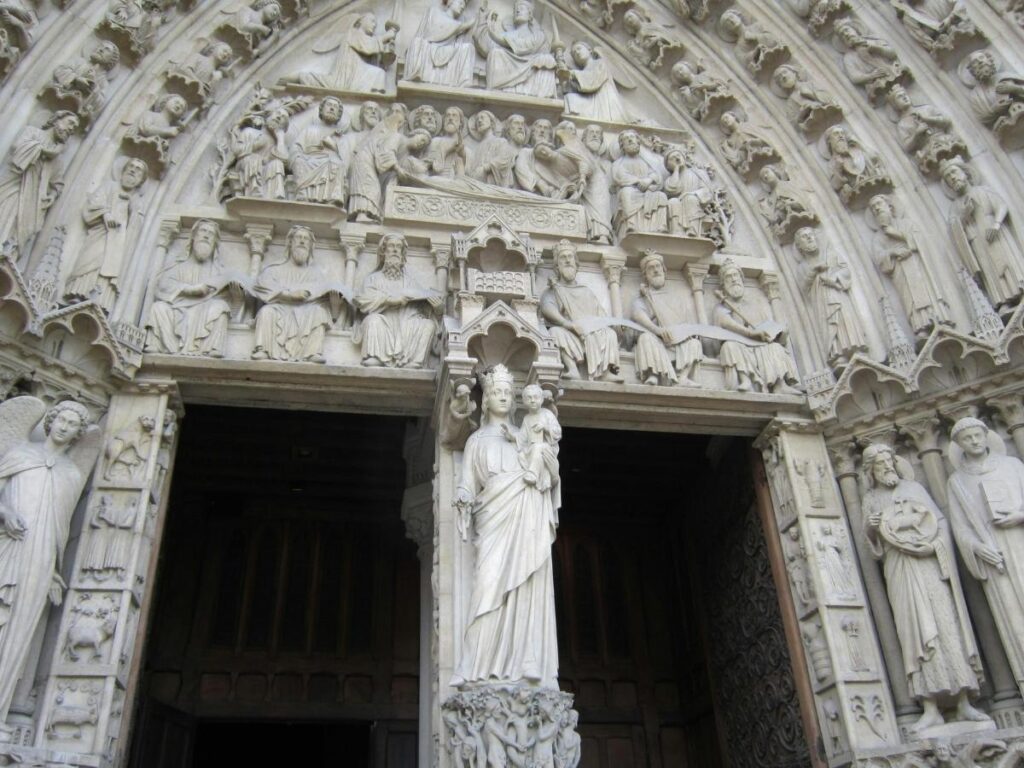
There are rows of statues across the facade, each with its own meaning, and the carvings around the дверways are especially detailed. If you look closely, you’ll see scenes and figures that tell stories, even if you don’t fully understand them.
I found it helpful to take a few steps back, then move closer again. From a distance, you see the structure as a whole. Up close, you start noticing the smaller details that are easy to miss otherwise.
Gargoyles and Chimeras
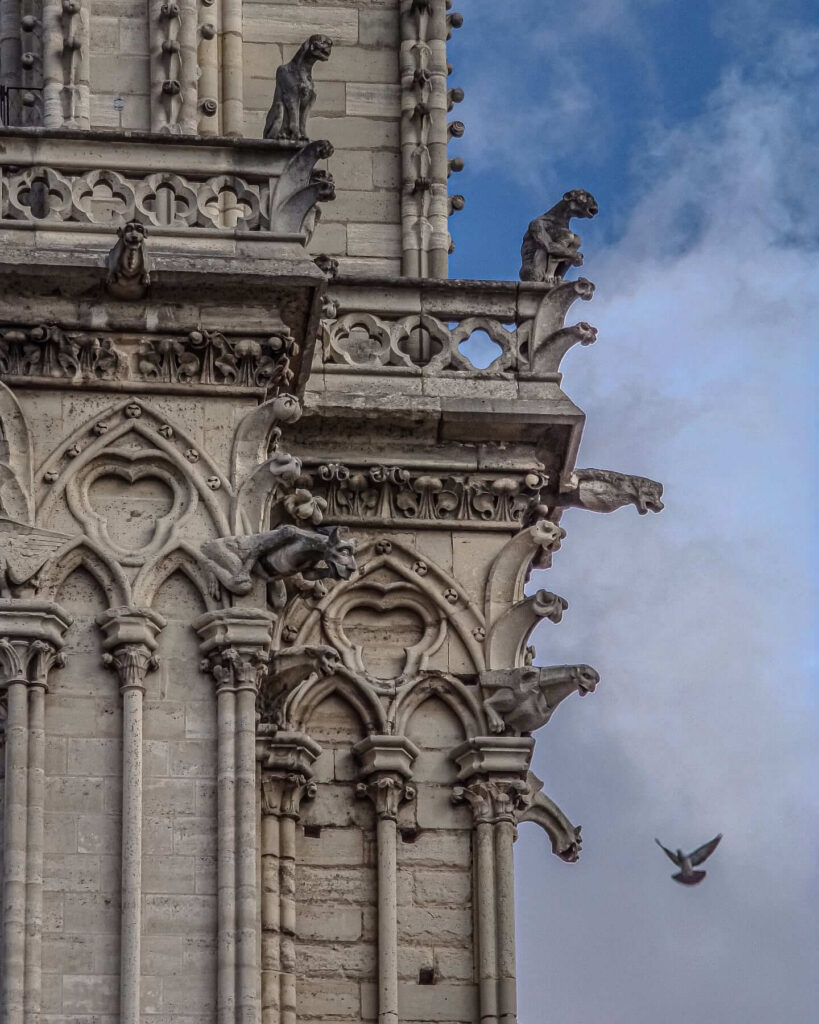
The gargoyles are one of those things people often recognize, but don’t always take the time to really look at. They were designed to carry rainwater away from the building, which is why they extend outward like that.
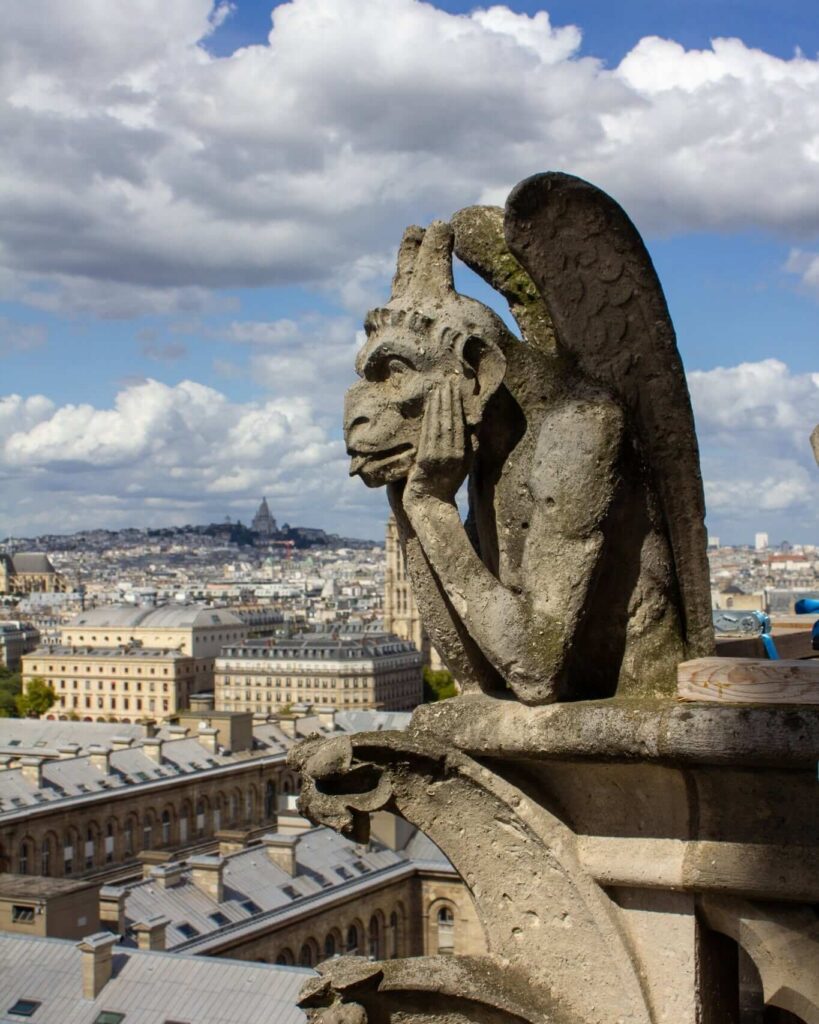
The chimeras are a bit different. They’re more imaginative and not tied to a practical function in the same way. You won’t always spot them right away from the ground, but knowing they’re there adds another layer to how you see the cathedral.
It’s a mix of function and creativity, which you start to appreciate more as you walk around.
Rose Windows
Even from the outside, the rose windows are hard to miss. Their circular design and symmetry stand out, especially on the front and sides of the cathedral. You won’t see the full effect until you’re inside, but it’s still worth paying attention to them from the outside.
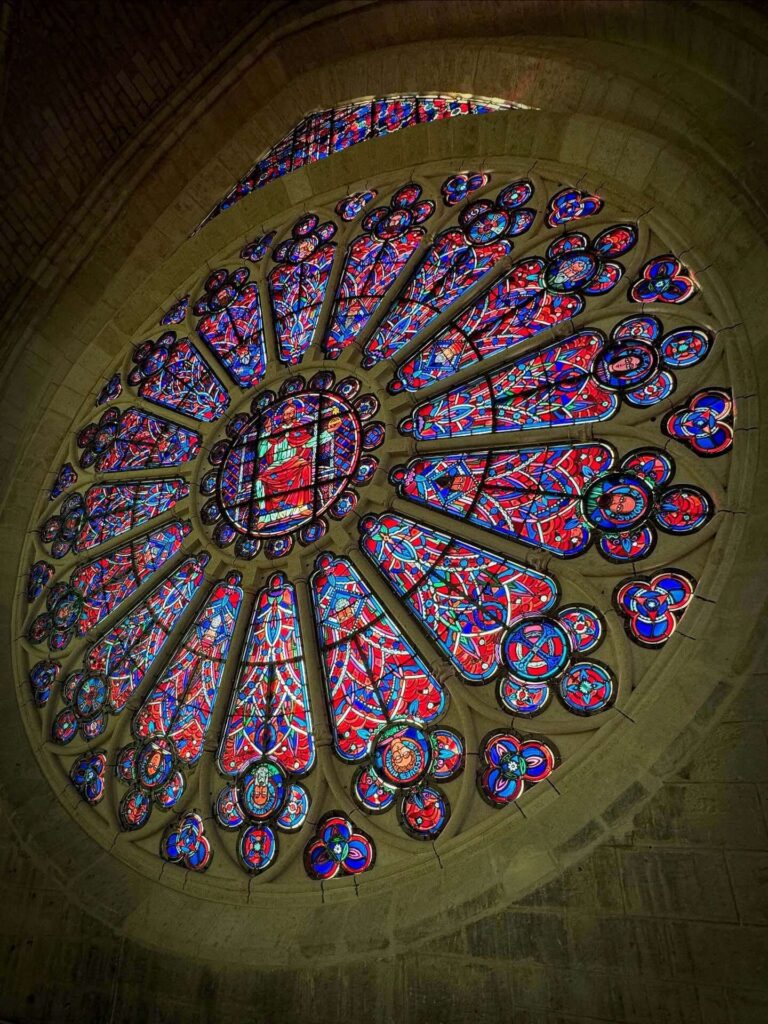
What stood out to me was how balanced they feel within the overall structure. They don’t feel like separate elements. They’re part of the design in a way that ties everything together.
Flying Buttresses
If you only stay at the front, you’ll miss one of the most interesting parts of the cathedral. Walking around to the back gives you a completely different view, and this is where the flying buttresses really stand out.
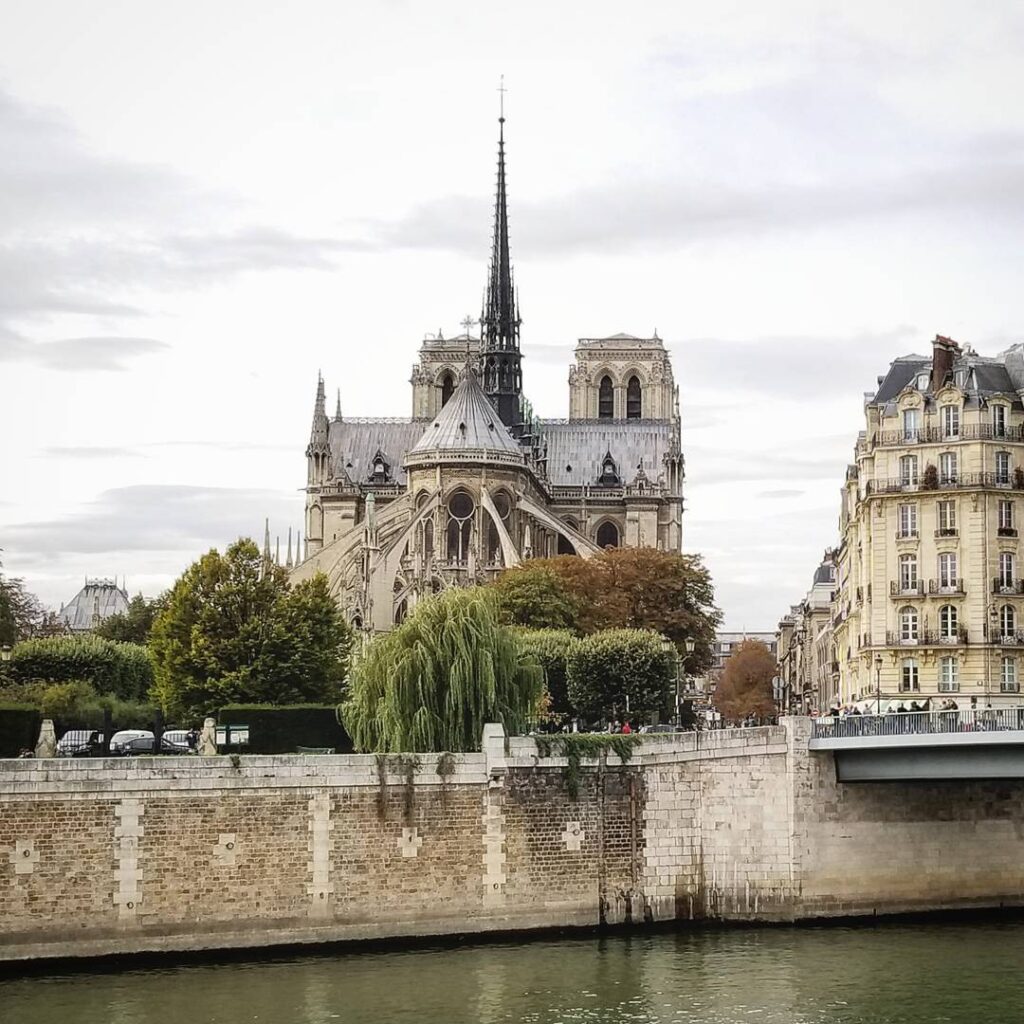
They look almost like arms reaching out from the building, supporting it from the outside. Without them, the cathedral wouldn’t be able to reach the same height or have such large windows. It’s one of those features that makes more sense when you see it in person.
This area also tends to be a bit quieter than the front, which makes it easier to take your time. For me, this ended up being one of the most memorable parts, simply because it felt less rushed and gave a different perspective of the cathedral.
Can You Go Inside Notre Dame?
Right now, access to the interior of Notre Dame de Paris depends on how far along the restoration is when you visit. When I was there, most of the experience was focused on the outside, and that’s still the case for many visitors.
You can get quite close, walk around it, and see a lot, but going inside isn’t always guaranteed yet.
Once it fully reopens, entry is expected to be free like it used to be. That said, it likely won’t be as simple as just walking in. Before the fire, there were already security checks and lines, and with the added interest now, it will probably feel more structured.
If seeing the interior is important to you, it’s worth checking official updates a few days before your visit so you know what to expect.
Best Things to Do Around Notre Dame
One thing I didn’t expect was how much there is to do just around the cathedral. Even if you spend a short time at Notre Dame itself, the surrounding area can easily turn into a relaxed few hours.
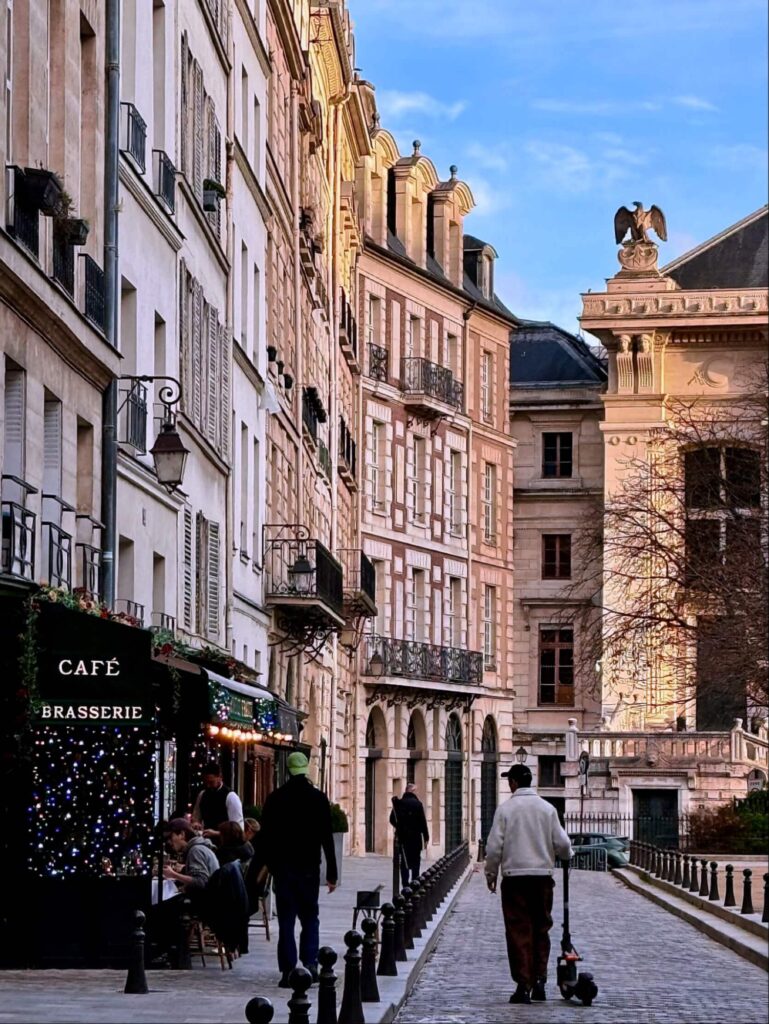
Walking around Île de la Cité is probably the simplest place to start. The streets feel a bit older and quieter compared to other parts of Paris, and you don’t really need a plan. Just wandering works well here. You’ll come across small details, views of the river, and corners that feel slightly removed from the busier parts of the city.
A short walk away is Sainte Chapelle. If you’re already nearby, it’s worth stepping inside. The stained glass is the main highlight, and it feels very different from Notre Dame. Smaller, but more intimate, and surprisingly detailed.
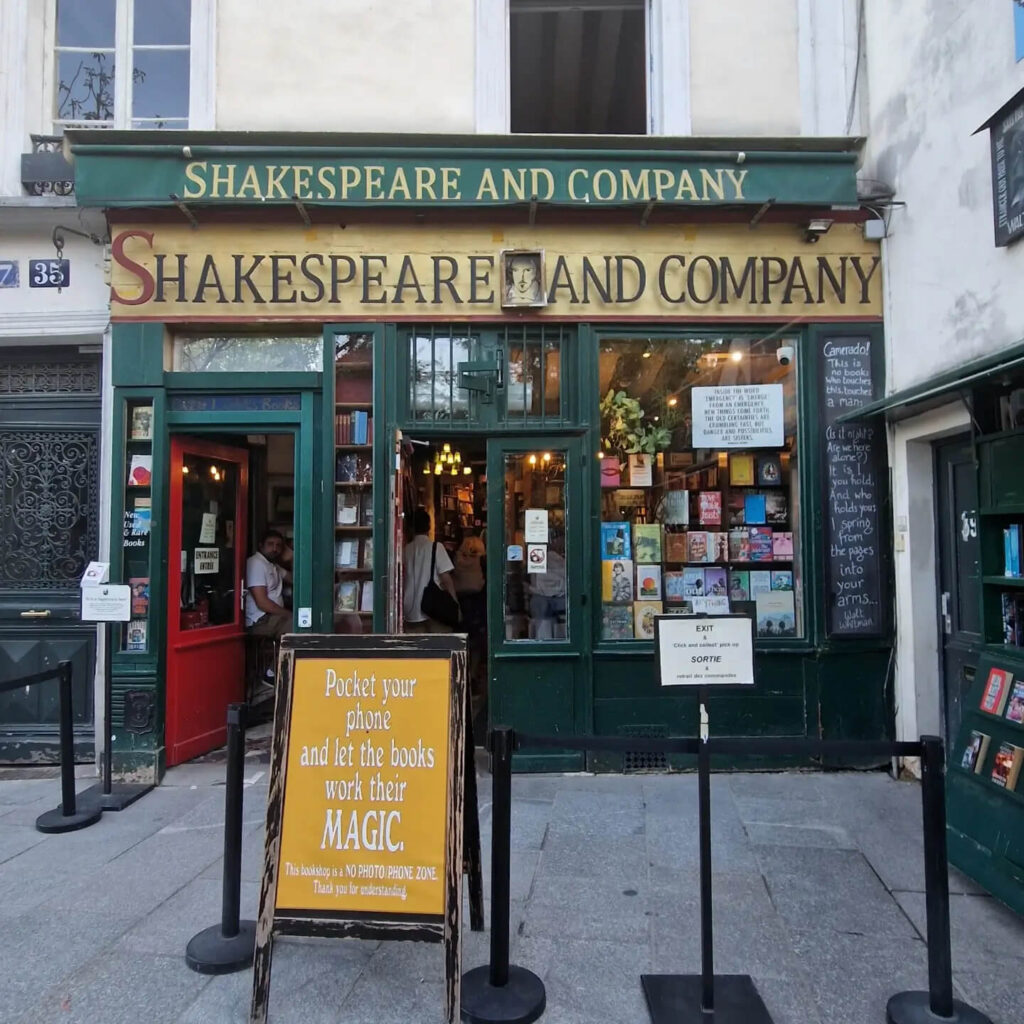
Just across the river, you’ll find Shakespeare and Company. Even if you’re not planning to buy anything, it’s an interesting stop. The inside feels a bit like a mix between a bookstore and a space, with narrow paths and shelves stacked in every direction.
And then there’s the Seine. Walking along the river here is one of those simple things that ends up being more memorable than expected. Early in the morning, it feels quiet and slow. Later in the evening, the light changes and the whole area takes on a different atmosphere.
Best Time to Visit Notre Dame
Timing made more of a difference than I expected. When I passed by in the middle of the day, the area felt busy and a bit rushed. People were moving quickly, taking photos, and moving on.
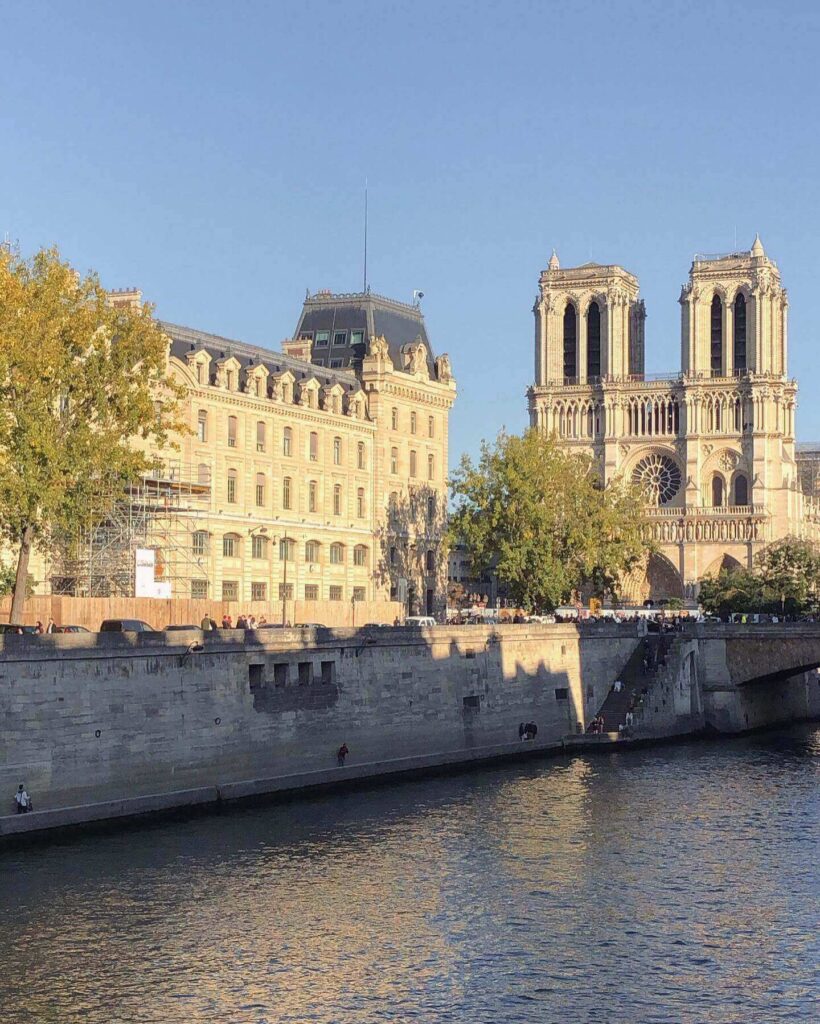
Coming back earlier in the morning felt completely different. There were fewer people, and it was easier to just stand there and take it in without distractions. The same goes for late evening, when the light softens and the pace of everything slows down.
If you can, try to avoid the middle of the day, especially during peak travel months. The cathedral itself doesn’t change, but the way it feels definitely does depending on when you visit.
How to Visit Notre Dame (Practical Tips)
Getting to Notre Dame is fairly straightforward. The closest metro stops are Cité and Saint Michel, and from there it’s just a short walk. That said, if you’re already in central Paris, walking is often the easiest option. You naturally approach it through the streets or along the river, which makes the experience feel more gradual.
In terms of time, you don’t need hours here unless you plan to explore everything nearby. Around 30 to 60 minutes is usually enough to walk around the cathedral itself at a relaxed pace.
What made a bigger difference for me wasn’t how long I stayed, but how I moved around it. Walking to the back, crossing the river for a different view, and not rushing through it made it feel more complete.
Common Mistakes to Avoid
One of the easiest things to do is stop at the front, take a few photos, and leave. It’s the most obvious view, but it’s only one part of the experience. Walking around the sides and the back gives you a completely different perspective, and in some ways, those views feel more interesting.
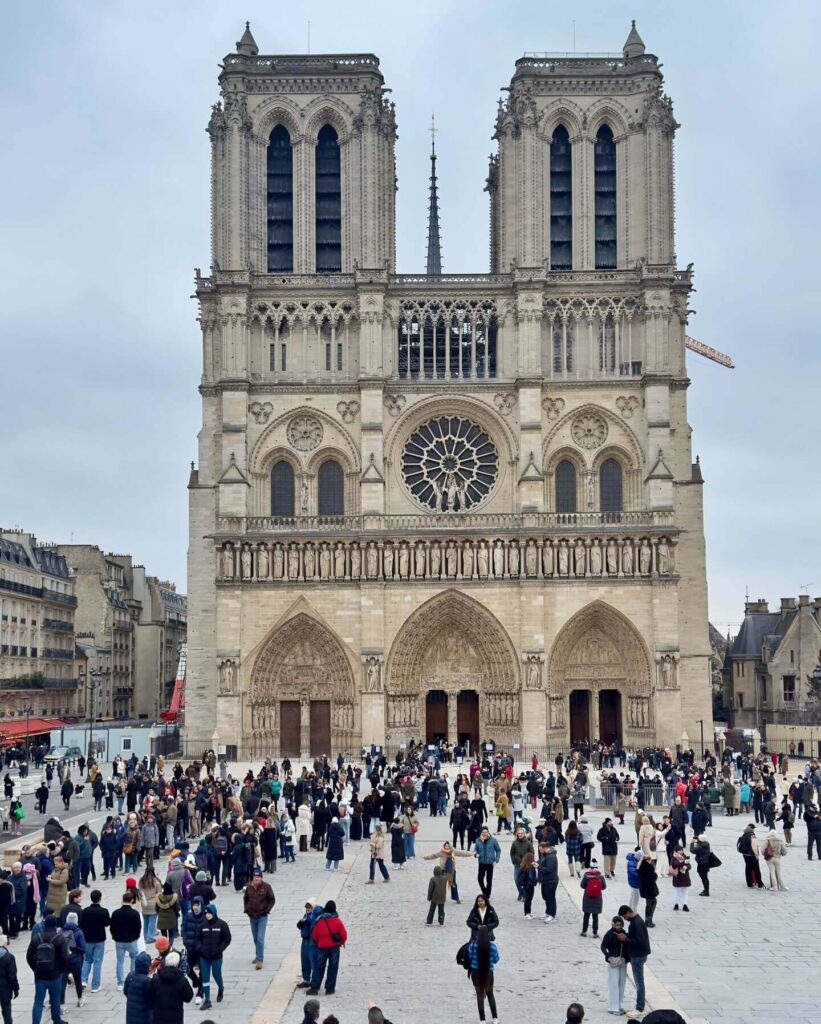
Another thing that can affect your visit is timing. Arriving in the middle of the day, especially in peak season, can make the area feel crowded and a bit hectic. It doesn’t ruin the experience, but it does change the pace.
It’s also easy to overlook everything around Notre Dame. The cathedral is the main focus, but the surrounding area adds a lot to the overall experience. Skipping that part can make the visit feel shorter and less memorable than it could be.
Is Notre Dame Worth Visiting Right Now?
I think it is, but it depends on what you’re expecting when you go.
If your main goal is to see the interior exactly as it was before the fire, then it might make sense to wait until everything is fully restored. That experience will likely feel more complete once all areas are open again.
But if you’re curious about the place itself, its history, and what it feels like now, it’s still very much worth visiting. Seeing it during this phase adds a different perspective. It’s not just about how it looks, but about understanding what it’s been through and how it’s being brought back.
Interesting Facts About Notre Dame
There are small details about Notre Dame that are easy to miss if you don’t already know them. The cathedral has ten bells, with the largest one, Emmanuel, located in the south tower. It has been part of major moments in French history and is still used on important occasions.
The cathedral also became widely known beyond France through The Hunchback of Notre Dame. The story helped bring attention to its condition at the time and played a role in its 19th century restoration.
And then there’s the time it took to build. Nearly two centuries. It’s hard to fully grasp that, but it does explain why the cathedral feels like it belongs to more than just one period.
Quick Travel Tips for First Time Visitors
If it’s your first time visiting, it helps to think of Notre Dame as part of a wider area rather than a single stop. Pairing it with Sainte Chapelle or a walk along the Seine makes the experience feel more complete.
Arriving a bit earlier or later in the day can also make things feel calmer and less rushed. And instead of just stopping briefly, give yourself time to walk around and see it from different sides. That small shift makes a noticeable difference.
Final Thoughts
Even after everything that’s happened, Notre Dame de Paris still feels like one of those places you naturally find your way to when you’re in Paris.
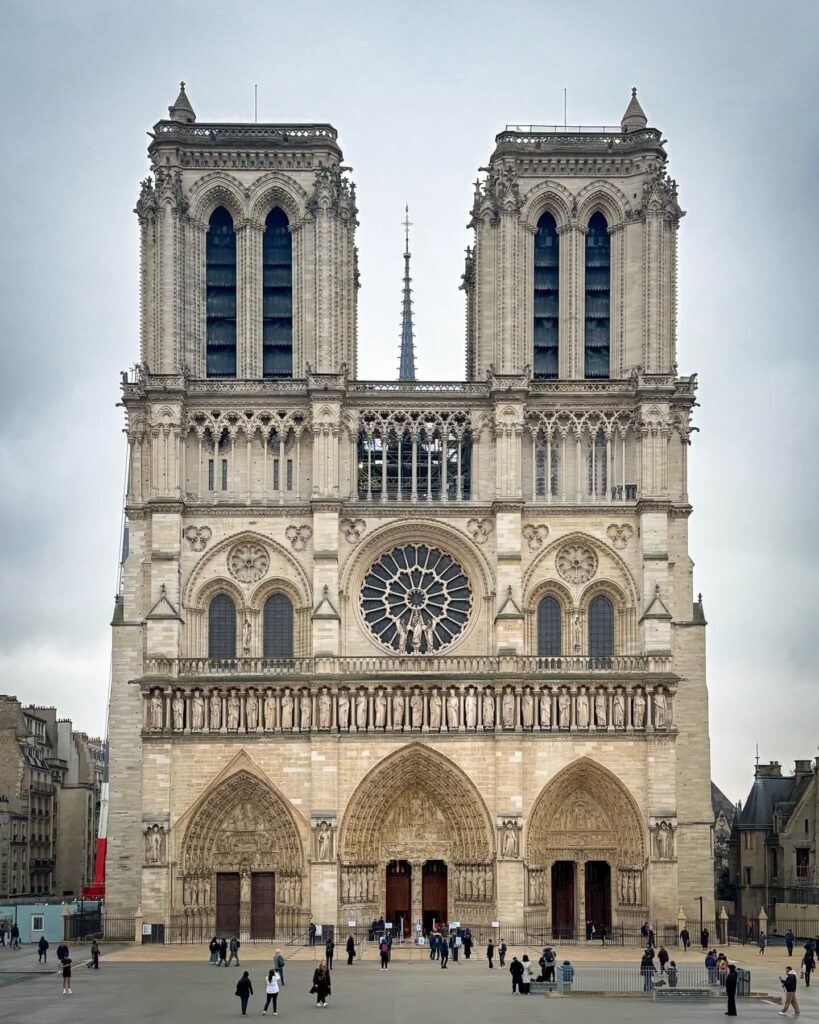
It’s not just about seeing it once and moving on. It’s the kind of place that makes you pause, look a little longer, and notice more than you expected. In a city where it’s easy to keep moving from one spot to another, this is one place where slowing down actually feels right.
If you’re planning a trip, I’d still include it. Just don’t rush through it. Give it a bit of time, and let the experience unfold at its own pace.