
Place de la Concorde is one of those Paris landmarks that can seem almost too familiar at first. You see the Luxor Obelisk, take a few photos, look toward the Champs Élysées and continue on your way. But spend a little more time here and you’ll notice the fountains, statues, historic buildings and some fascinating details about the square.

The history is what makes it especially interesting. This was once Place de la Révolution, where Louis XVI and Marie Antoinette were guillotined during the French Revolution. Today, a more than 3,000 year old Egyptian obelisk stands in the same square, surrounded by 18th and 19th century Parisian architecture.
I think Place de la Concorde is best visited as part of a walking day. You can combine it with the Tuileries Garden, Louvre, Champs Élysées or Madeleine. In this guide, I’ll cover its history, what to see, the best views, how to get there, how much time you need and the nearby sights worth adding to your day.
Where Is the Place de la Concorde in Paris?
Place de la Concorde is in Paris’s 8th arrondissement, between the Tuileries Garden and the Champs Élysées. Its location makes it an easy stop during a day of sightseeing, rather than somewhere I’d plan a separate trip just to visit.
From the square, you can walk east through the Tuileries Garden toward the Louvre and Musée de l’Orangerie. Head west and you’re on the Champs Élysées, with the Arc de Triomphe farther ahead.
Walk north along Rue Royale to reach the Madeleine, or cross Pont de la Concorde to the south and you’ll find the Palais Bourbon and French National Assembly.
What Surrounds Place de la Concorde?
The easiest way to get your bearings is to look in each direction.

To the east are the Tuileries Garden and Louvre, while the west leads to the Champs Élysées and Arc de Triomphe. To the north, you’ll find Rue Royale, Madeleine, Hôtel de la Marine and Hôtel de Crillon. South takes you toward the Seine, Pont de la Concorde and Palais Bourbon.
I find this layout useful when planning a walking route because you can visit Place de la Concorde without having to backtrack. For example, you could walk from the Louvre through the Tuileries, stop at the square, then continue along the Champs Élysées.
A Short History of Place de la Concorde
It’s hard to imagine today, but Place de la Concorde has had a very different past from the open Parisian square you see now.
The square was created in the 18th century under Ange Jacques Gabriel, the King’s First Architect. It was originally planned to honor Louis XV after he recovered from an illness, and a statue of the king was placed in the center. The square was known as Place Louis XV.
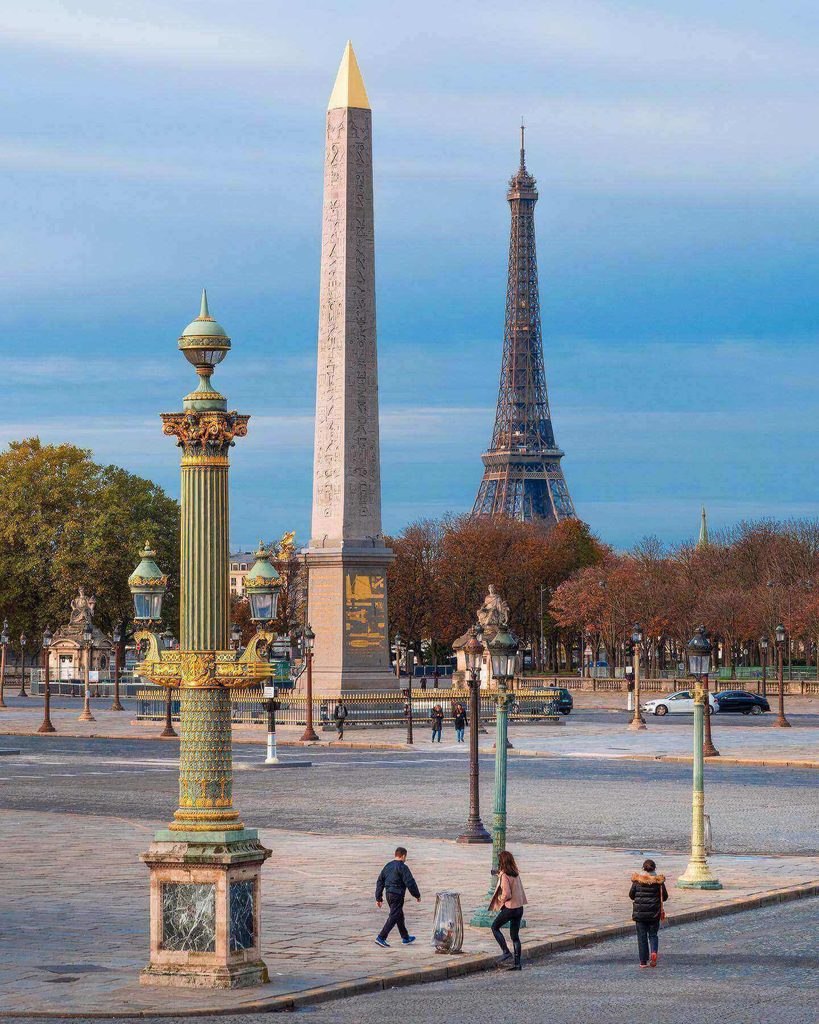
The buildings along the northern side, including what are now Hôtel de la Marine and Hôtel de Crillon, were also part of Gabriel’s original plan. The square took several years to complete, and its appearance gradually developed into the large formal space we recognize today.
Then the French Revolution completely changed its purpose.
Place de la Révolution During the French Revolution
In 1792, the square was renamed Place de la Révolution, and the statue of Louis XV was removed. Not long afterward, the guillotine was installed here, turning the square into one of the most infamous places in revolutionary Paris.

Louis XVI was executed here on January 21, 1793, followed by Marie Antoinette later that year. Other major figures, including Georges Danton and Maximilien Robespierre, were also guillotined here.
Standing in the square today, it’s strange to think about how different the atmosphere must have been then. There is no large monument marking the exact spot of the executions, and modern traffic and sightseeing make it difficult to picture what happened here. I think that’s part of what makes history easy to overlook unless you know it beforehand.
How Place de la Révolution Became Place de la Concorde
After the most violent period of the Revolution, the square was renamed Place de la Concorde in 1795. The new name reflected the idea of reconciliation after years of political conflict and bloodshed.
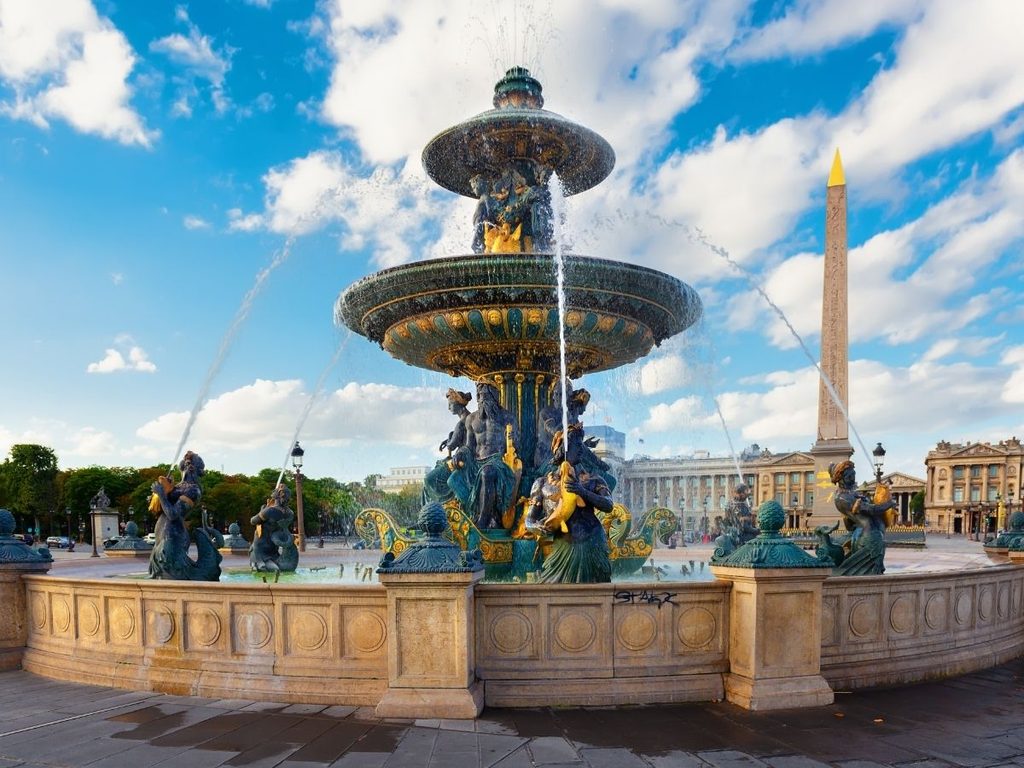
The square changed again during the 19th century when architect Jacques Ignace Hittorff redesigned much of the space. The fountains, statues representing French cities and several of the decorative features you can see today date from this period.
So when you walk around Place de la Concorde, you’re really seeing several different periods of Paris in one place: the royal square of Louis XV, the revolutionary site of the 1790s and the grand 19th century redesign that gave the square much of its present appearance.
The Luxor Obelisk at Place de la Concorde
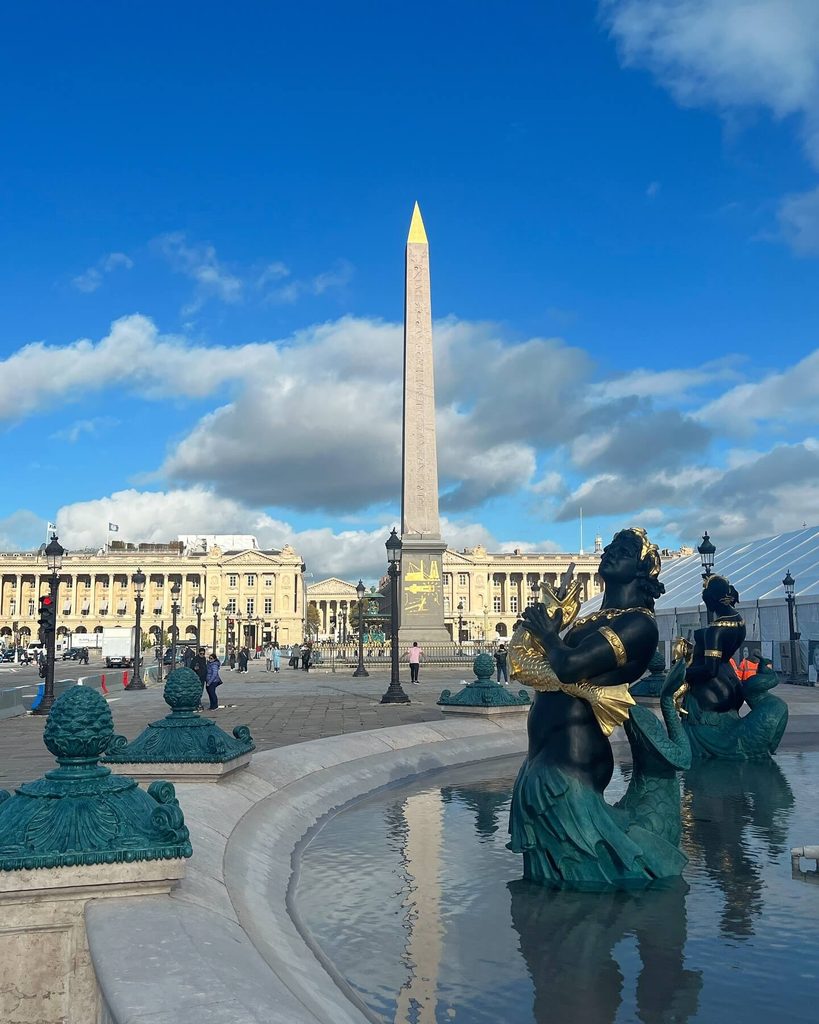
The Luxor Obelisk is the first thing most people notice when they arrive at Place de la Concorde. It’s difficult to miss because it rises high above the center of the square, with one of the two large fountains on either side.
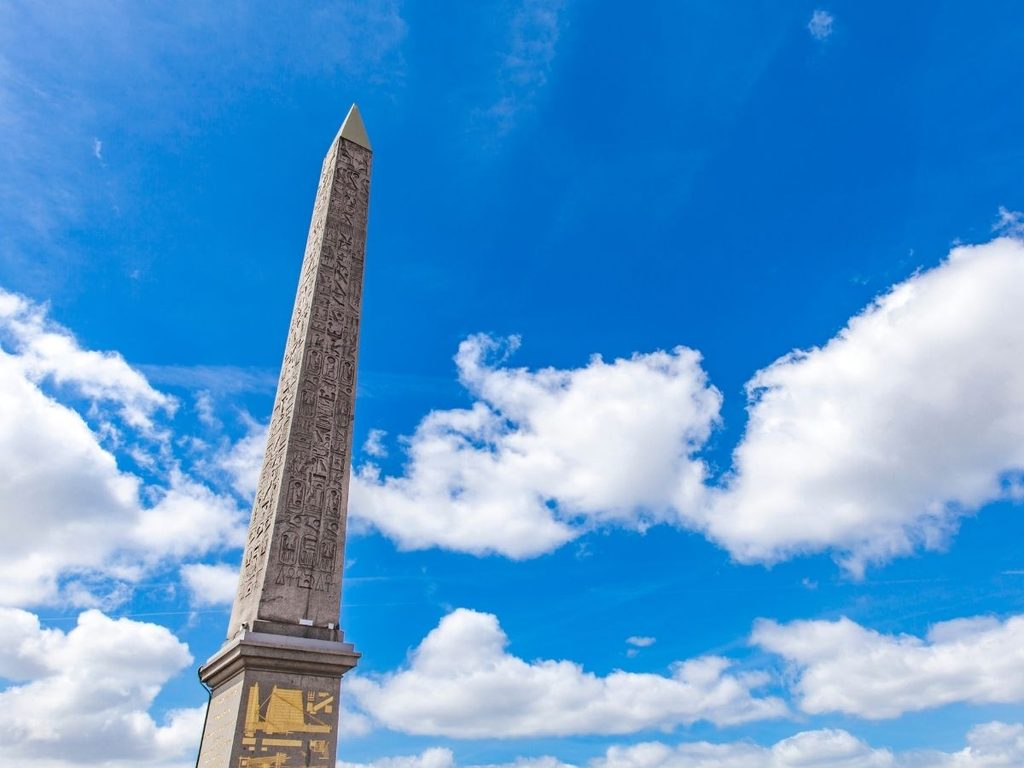
What makes it so interesting is that it doesn’t really belong to the Paris of the buildings around it. This is an ancient Egyptian monument that had already stood for thousands of years before Place de la Concorde was even created.
The obelisk is about 22 metres tall and was placed here in 1836. Today, it has become one of those Paris landmarks that you can easily photograph without realizing just how old the stone in front of you actually is.
How Old Is the Luxor Obelisk?
The Luxor Obelisk dates from the reign of Ramses II, around the 13th century BC. That puts it more than 3,000 years old.

It originally stood at the entrance to the Temple of Luxor in Egypt, where it was one of a pair of obelisks. The other remains in Egypt, while this one eventually made its way to Paris as a gift from Egypt to France.
I think age is easier to appreciate when you’re standing right beside it. The square around you is mostly associated with 18th and 19th century Paris, but the stone in the middle of it comes from a completely different period of history.
How Did an Egyptian Obelisk End Up in Paris?
Getting the obelisk from Egypt to Paris was a serious undertaking.
French interest in ancient Egypt had grown considerably after Jean François Champollion deciphered the Rosetta Stone’s hieroglyphs in the 1820s. Egypt became a major subject of fascination in France, and Muhammad Ali, the ruler of Egypt, eventually offered the Luxor Obelisk to France.

The monument was taken down and transported by ship to France, arriving in 1833. From there, it still had to be moved to Paris and prepared for the most difficult part of the job: putting it upright again.
That final operation took place on October 25, 1836. Engineer Apollinaire Lebas directed the work, using a complicated system of ropes, pulleys and machinery to slowly raise the enormous stone.
It was a major public event. Around 200,000 people reportedly gathered to watch the obelisk being raised in the square. Contemporary images show just how much attention the operation attracted.
Look at the Top of the Obelisk
When you’re standing underneath the obelisk, it’s easy to focus on the hieroglyphs and forget to look all the way up.
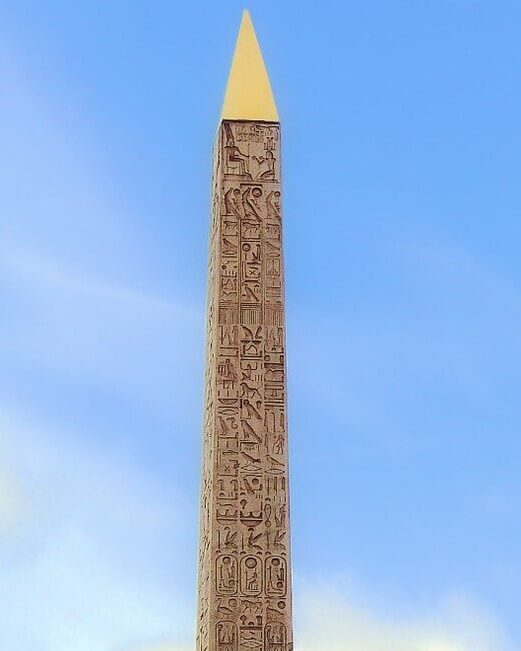
The top has a gold colored pyramidion, which gives the monument a small flash of color against the Paris sky. The pyramidion was restored during conservation work carried out on the obelisk in 2022 and 2023.
If you’re taking photos, look for a position where the pyramidion catches the sunlight. Early morning or later in the afternoon can give you softer light than the middle of the day.
What Do the Hieroglyphs Mean?
The four sides of the obelisk are covered with hieroglyphic inscriptions connected with Ramses II and the gods associated with his reign.
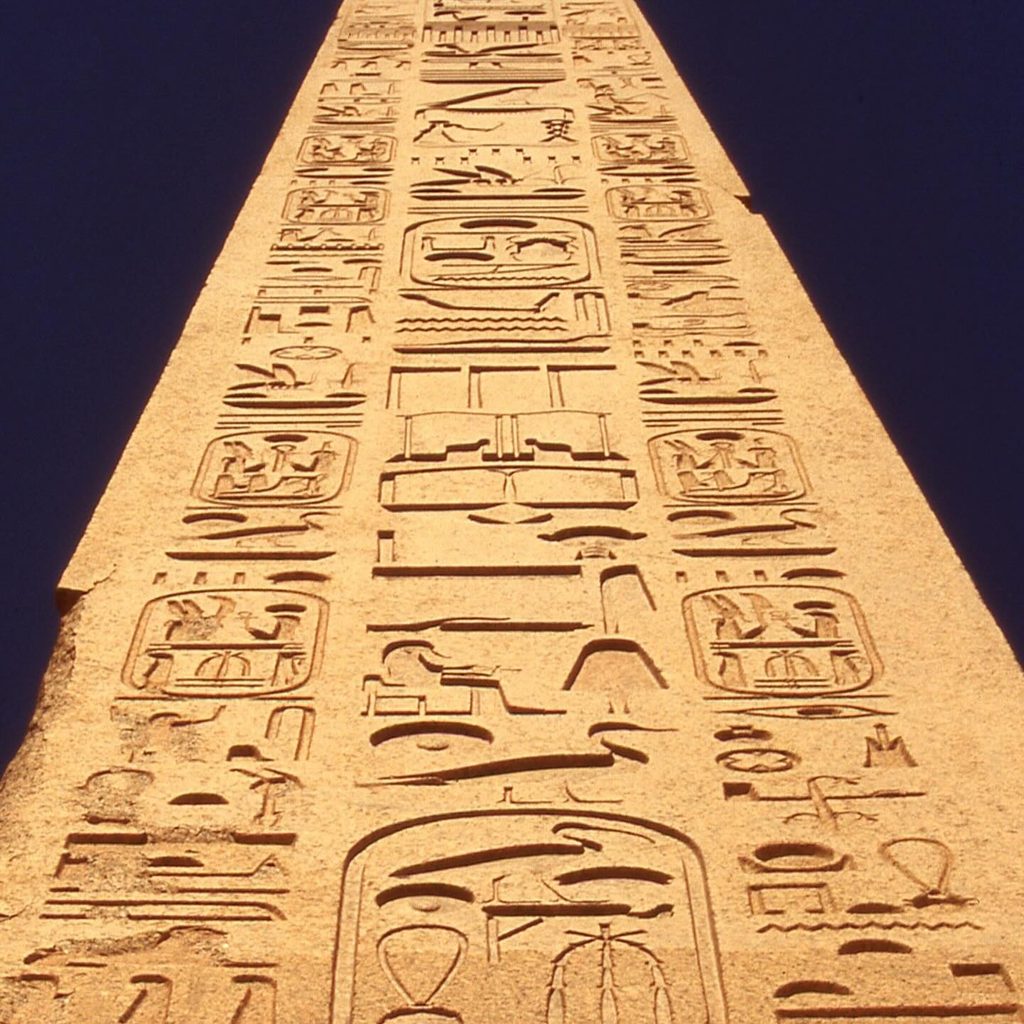
You don’t need to know how to read hieroglyphs to appreciate them. Walk around the base and look closely at the carvings. From across the square, the obelisk can look like a fairly simple column, but the details become much easier to see when you’re standing close to the stone.
I’d also take a moment to look at the base itself. The monument’s journey from Egypt to Paris is part of what makes this particular obelisk so interesting, and the information around it helps explain how an ancient Egyptian monument ended up in the middle of Paris.
The Two Fountains of Place de la Concorde
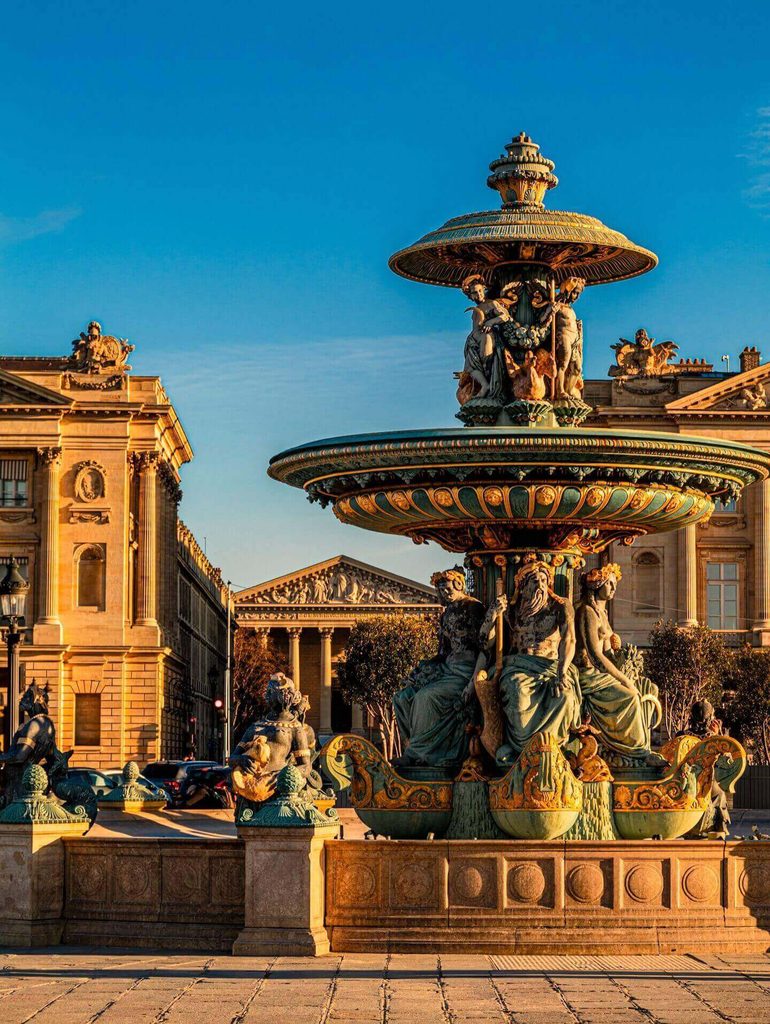
Once you’ve looked at the Luxor Obelisk, take a moment to look at the two fountains on either side of it. They don’t get nearly as much attention as the obelisk, but they are an important part of the square’s design.
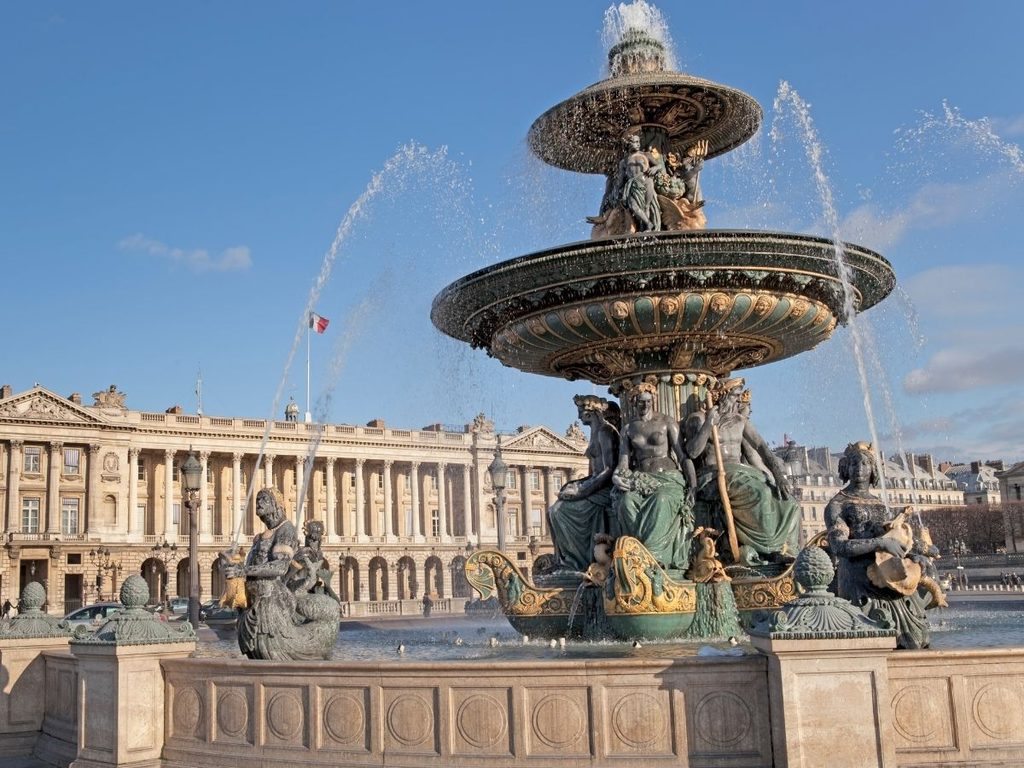
The fountains were created by architect Jacques Ignace Hittorff during his 19th century redesign of Place de la Concorde. They were built between 1836 and 1846 and were designed around a maritime theme, which fits the square’s position beside the Seine.
The two fountains aren’t identical, and it’s worth walking over to both rather than assuming you’ve seen everything from the center of the square.
Fontaine des Mers
The southern fountain is called the Fontaine des Mers, or Fountain of the Seas. It is the fountain closest to the Seine, so you’ll pass it if you walk toward Pont de la Concorde.
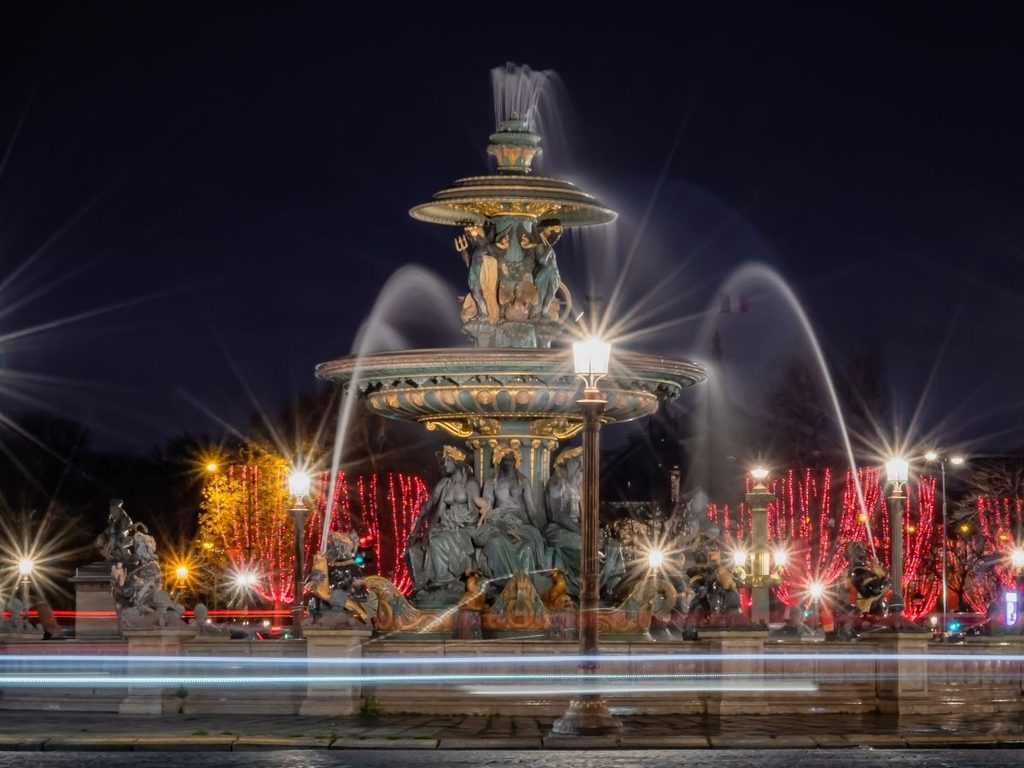
Look closely at the decoration and you’ll find plenty of references to the sea. There are figures representing the ocean and Mediterranean, along with tritons, nereids and sea creatures. Other figures relate to activities connected with the sea, including commerce and astronomy.
I think the fountain is much easier to appreciate when you’re standing close to it. From across the square, it can look like part of the general decoration. Walk up to it and the number of figures and small details becomes much more obvious.
Fontaine des Fleuves
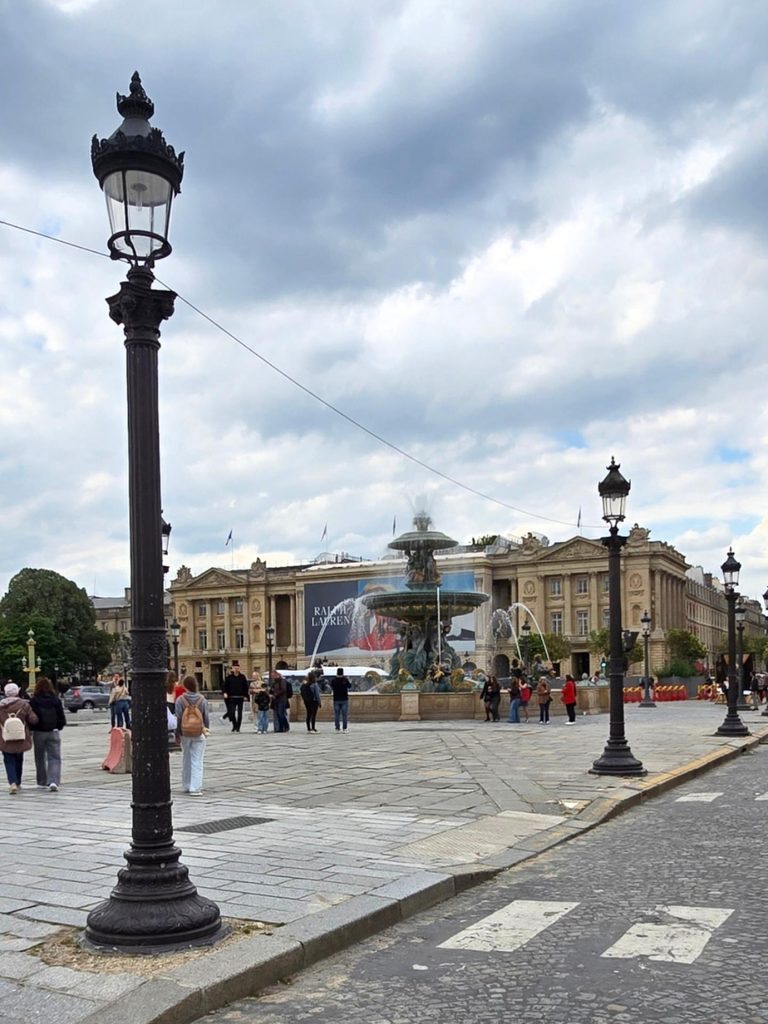
On the northern side of the obelisk is the Fontaine des Fleuves, or Fountain of the Rivers.
Its decoration focuses on French rivers, particularly the Rhône and Rhine. Like the Fontaine des Mers, it is filled with sculptures and details, so it rewards a closer look.
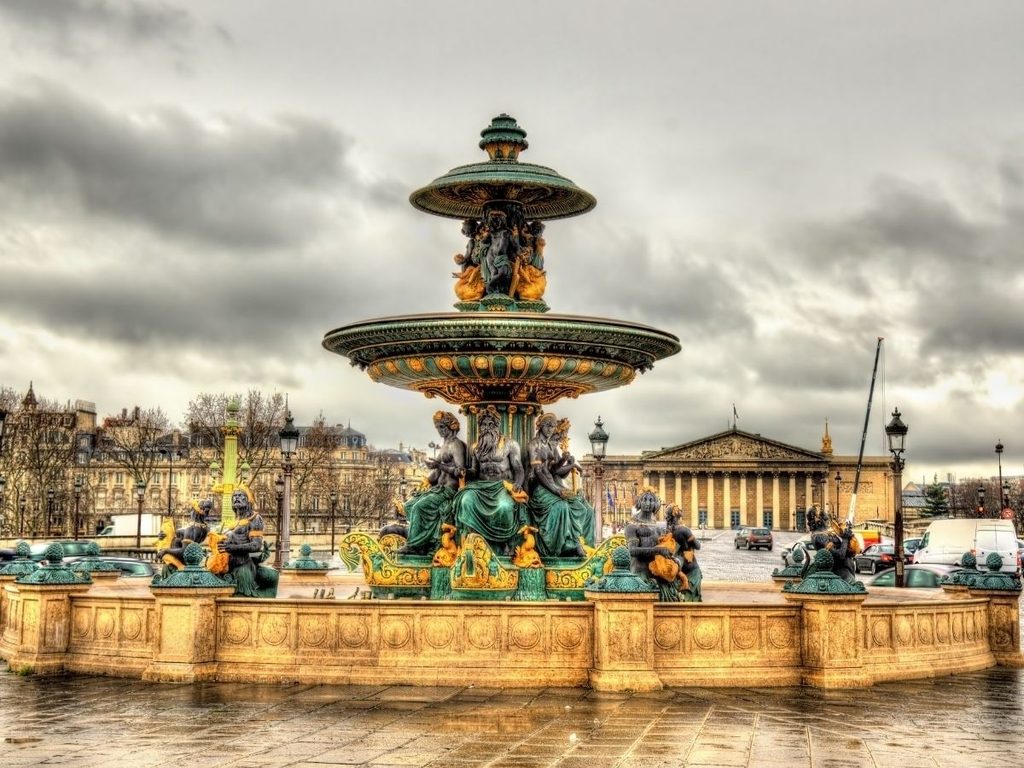
Together, the two fountains frame the Luxor Obelisk and help explain why the square looks the way it does. They aren’t simply two decorative water features placed beside the monument. They were part of Hittorff’s wider plan for transforming Place de la Concorde in the 19th century.
The fountains also underwent restoration work in 2023, so if you’ve seen older photographs of the square, some of the details may look a little different.
The Eight Statues Representing French Cities
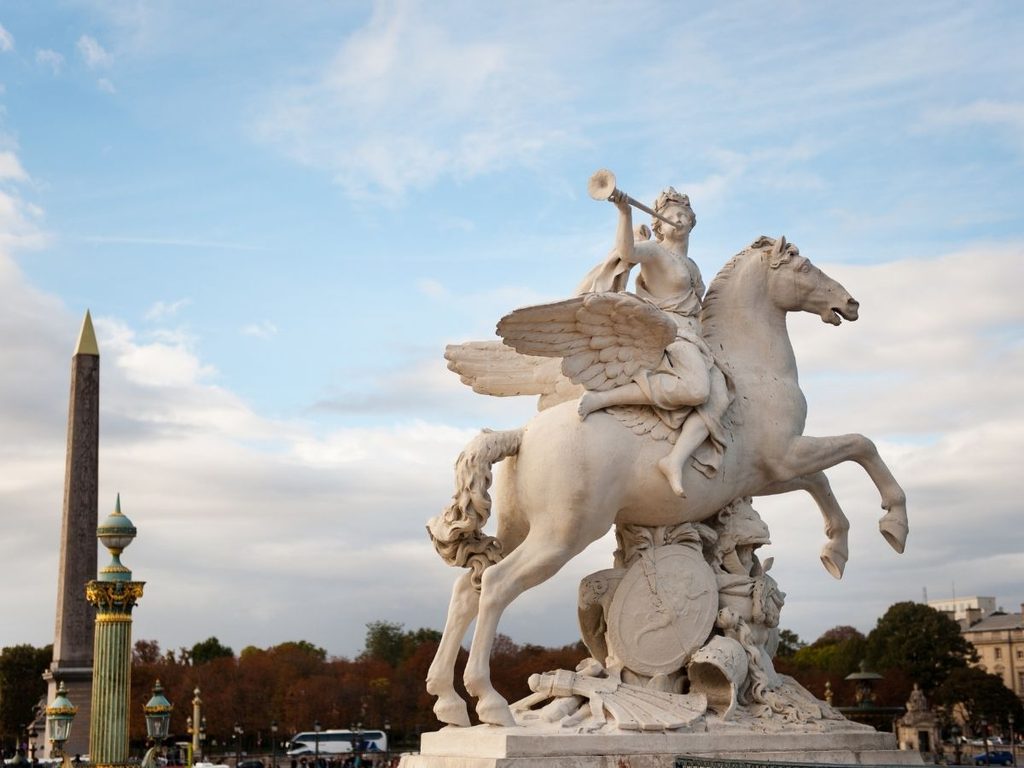
Another detail that’s easy to miss is the group of eight statues around the edges of Place de la Concorde.
The statues represent Lille, Strasbourg, Lyon, Marseille, Bordeaux, Nantes, Brest and Rouen. They were added as part of Hittorff’s redesign and sit above the small structures at the corners of the square’s octagonal layout.
Most visitors naturally focus on the obelisk, so I wouldn’t be surprised if you walked past several of these without noticing them. Once you know they’re there, though, they’re quite fun to look for as you walk around the square.
The Strasbourg statue has a particularly interesting story.
After France lost Alsace and Lorraine following the Franco Prussian War of 1870, Strasbourg became a symbol of the territories that France had lost.
The statue was draped in black and became a place where people left flowers and messages. Following the 1918 armistice, it was decorated with flowers and French flags during the celebrations.
So, while the eight statues might look like architectural decoration at first, they also reflect different moments in French history. If you have a little extra time at Place de la Concorde, I’d walk around the edges of the square and see how many you can spot rather than spending your entire visit around the obelisk.
The Historical Axis of Paris
Place de la Concorde makes much more sense once you understand where it sits within Paris’s famous Historical Axis. The square is part of a long line of landmarks that stretches across the city, connecting the Louvre, Tuileries Garden, Champs Élysées, Arc de Triomphe and, farther west, La Défense.
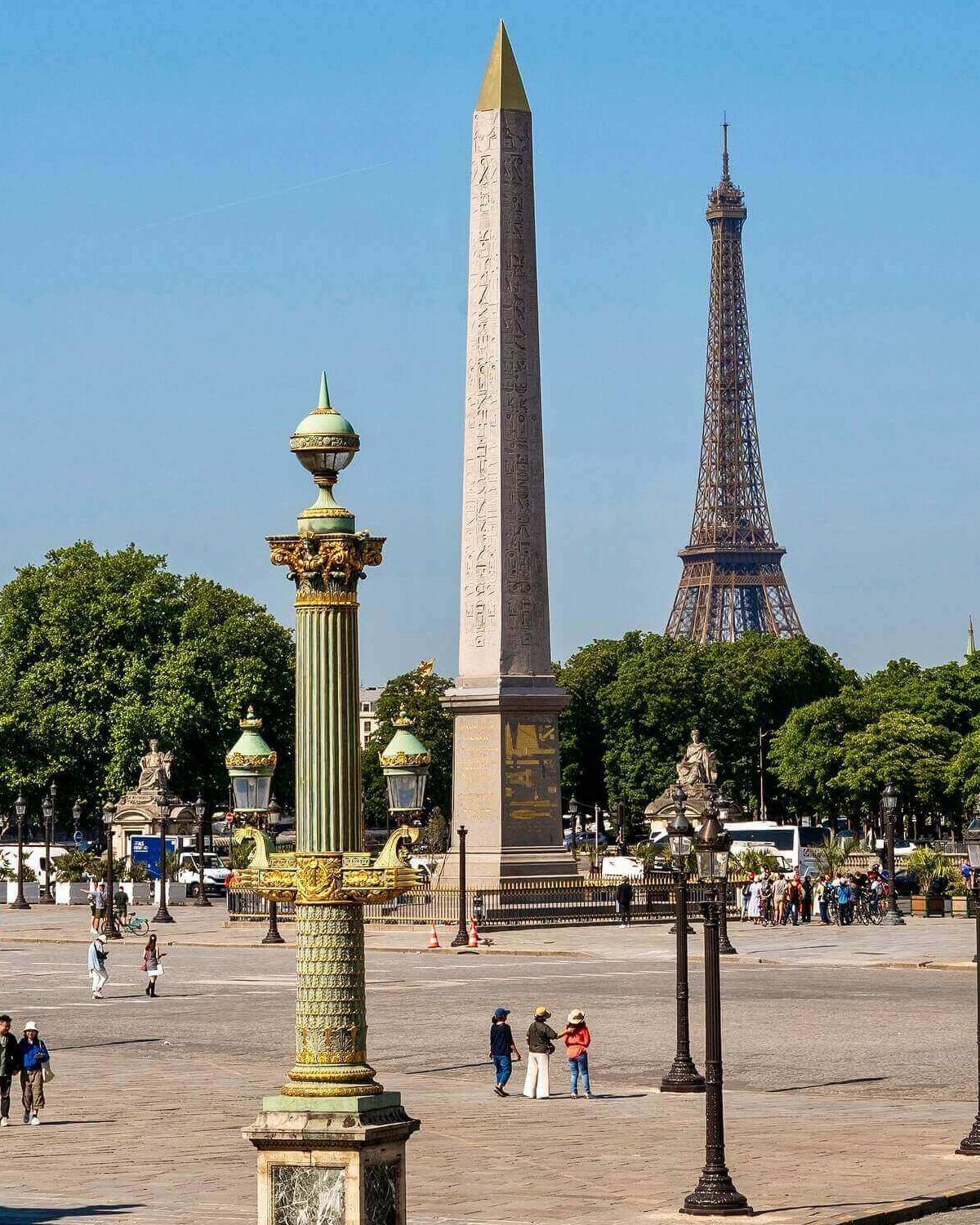
From the center of Place de la Concorde, look west and you’ll see the Champs Élysées stretching away in a remarkably straight line. Turn around and look east, and the scene changes to the formal paths and gardens of the Tuileries leading toward the Louvre.
I actually think this is one of the best reasons to walk through this part of Paris. You get a much better sense of how the different landmarks connect when you see them on foot. Instead of taking the Metro between each sight, you can walk from the Louvre through the Tuileries, stop at Place de la Concorde, and then continue along the Champs Élysées.
What Can You See From Place de la Concorde?
You don’t need to climb a tower or pay for a viewpoint to get some good views from Place de la Concorde. The square is open, and each direction gives you something different to look at.
Looking Toward the Champs Élysées
Walk toward the western side of the square and look along the Champs Élysées. The avenue stretches toward the Arc de Triomphe, and on a clear day you can get a good view of the monument in the distance.
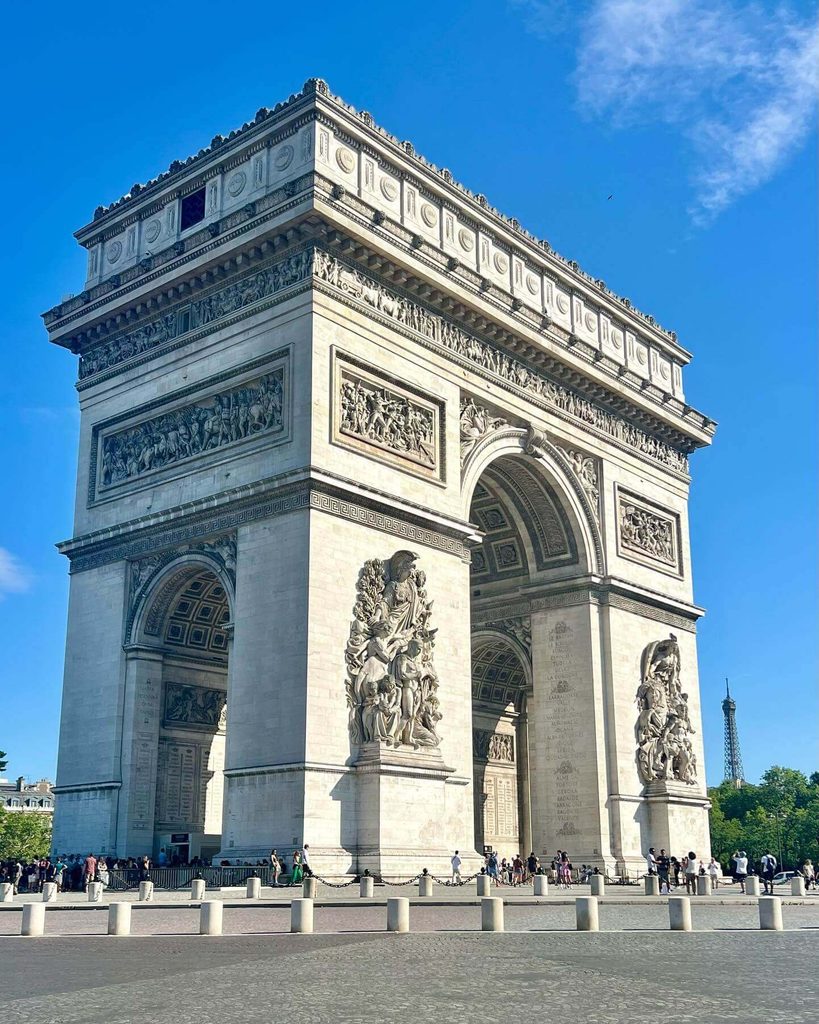
This is also a nice spot to appreciate just how wide the avenue is. From here, you can see why Place de la Concorde became such an important part of Paris’s city plan.
Looking Toward the Tuileries and Louvre
The eastern view feels completely different. Instead of a busy avenue, you have the Tuileries Garden opening up in front of you.
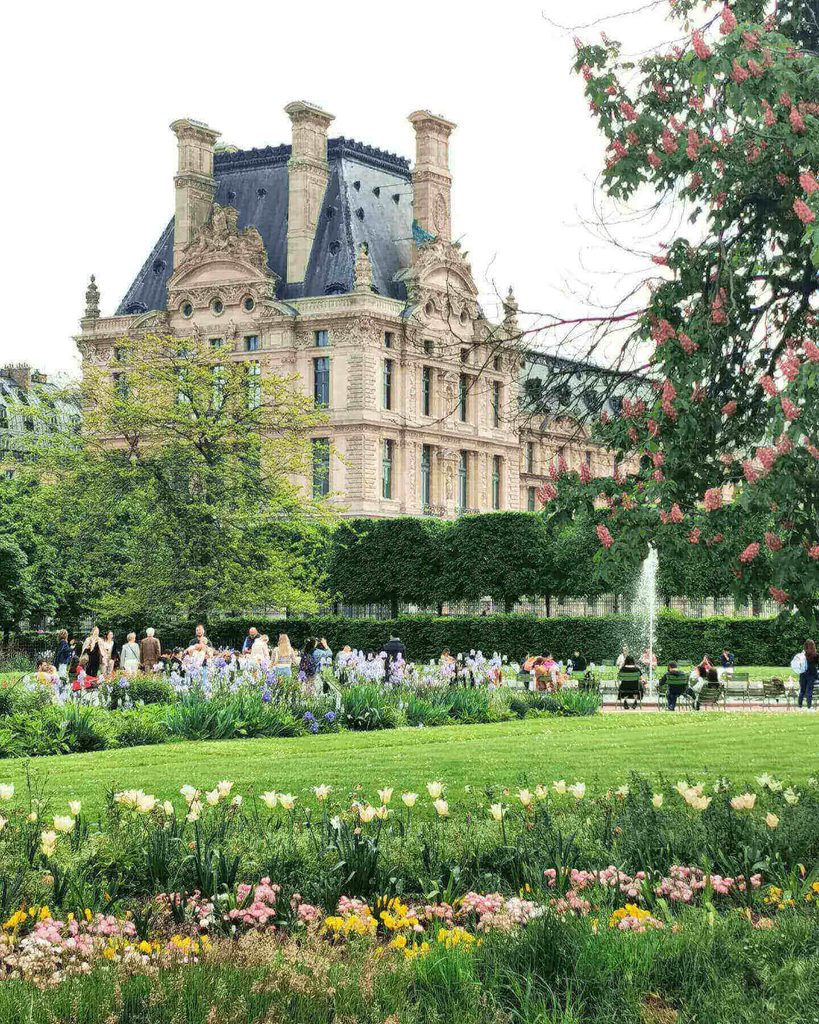
This is probably the easiest route to combine with a museum visit. You can walk from Place de la Concorde through the gardens, stop at the Musée de l’Orangerie, and continue toward the Louvre without needing to take another train or bus.
Looking South Across the Seine
On the southern side of the square, look toward the Seine and Pont de la Concorde.
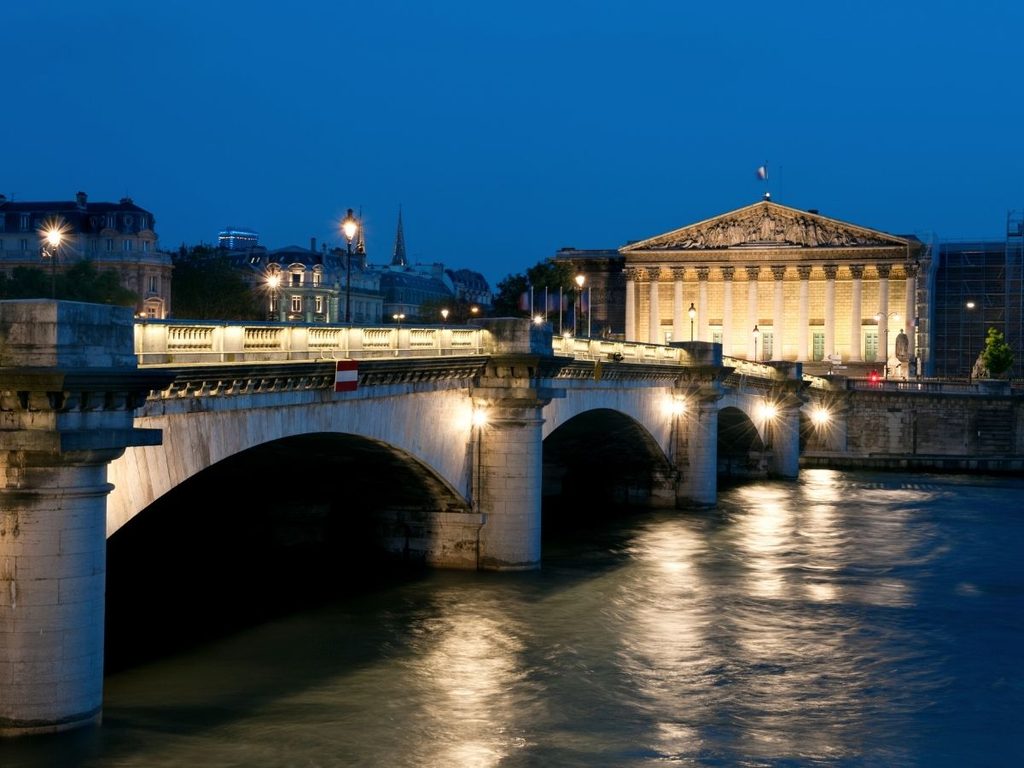
The bridge connects Place de la Concorde with the area around the Palais Bourbon and the French National Assembly. If you have time, I recommend crossing the bridge. Looking back from the other side gives you a different perspective of the square and its grand northern buildings.
Looking North Toward Madeleine
Turn north and you’ll see Rue Royale leading toward the Église de la Madeleine.

The view is particularly easy to appreciate from near the Luxor Obelisk, where Rue Royale creates a straight line between the square and Madeleine. It’s also a good route if you want to continue exploring this part of the 8th arrondissement.
What to Do at Place de la Concorde
You don’t really need a long list of activities at Place de la Concorde. Most of the fun comes from walking around, looking at the details and understanding what you’re seeing. I would give yourself at least 30 minutes if you want to see more than just the obelisk.
Walk Around the Square
Start by walking around the square rather than heading straight for the Luxor Obelisk and leaving again.
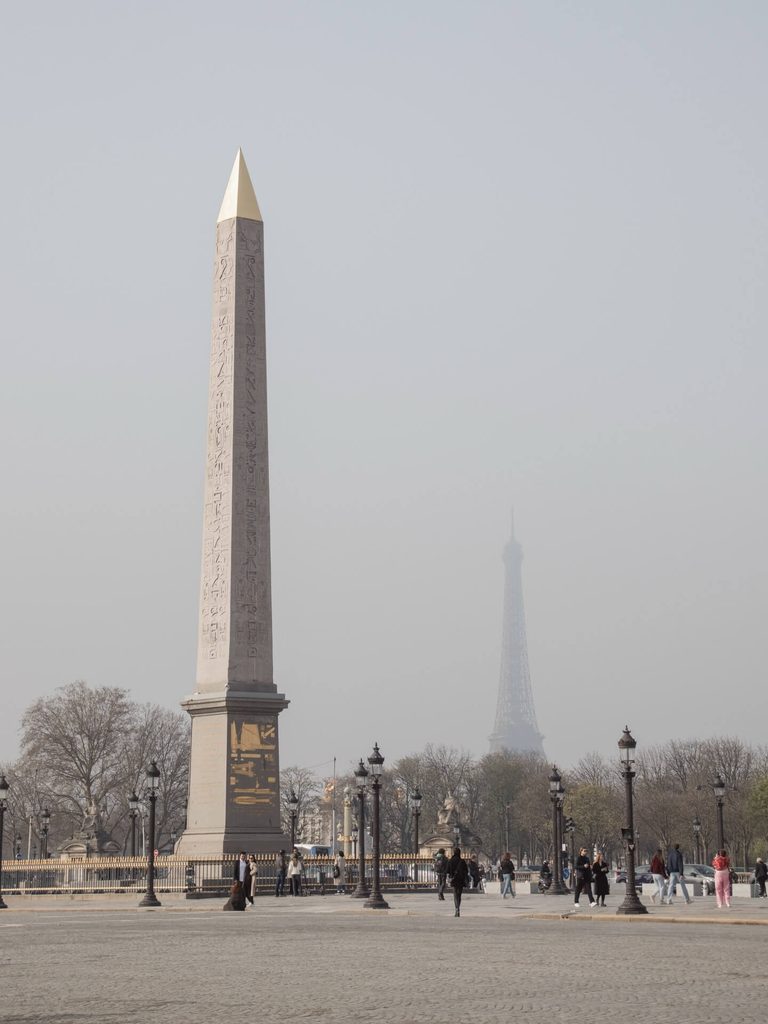
Place de la Concorde has an octagonal layout, and you get a much better sense of its size and design when you see it from different sides. As you walk, you’ll notice the fountains, city statues and grand buildings around the edges.
It’s also worth looking back toward the center as you move around. The obelisk looks quite different depending on where you are standing, especially with the fountains or surrounding buildings in the background.
See the Luxor Obelisk Up Close
Once you’ve walked around a little, head toward the obelisk.
Most people take their photo from a distance, but I think it’s worth getting closer. Walk around the base and look at the hieroglyphs carved into the stone. Then look up at the gold colored pyramidion at the top.

The obelisk is more than 3,000 years old, so taking a few minutes to actually look at the carvings makes the visit feel very different from simply checking another Paris landmark off your list.
Find the Eight City Statues
Take a few minutes to walk around the outer edges of the square and look for the eight statues representing French cities.

They’re easy to miss because the Luxor Obelisk naturally gets most of the attention. Once you know what the statues represent, though, they become a fun part of your walk around the square.
You don’t need to study every statue in detail. Just spotting them and taking a closer look at a few is enough to make you notice the planning behind the square.
Walk Into the Tuileries Garden
If you only have time for one combination with Place de la Concorde, I’d choose the Tuileries Garden.
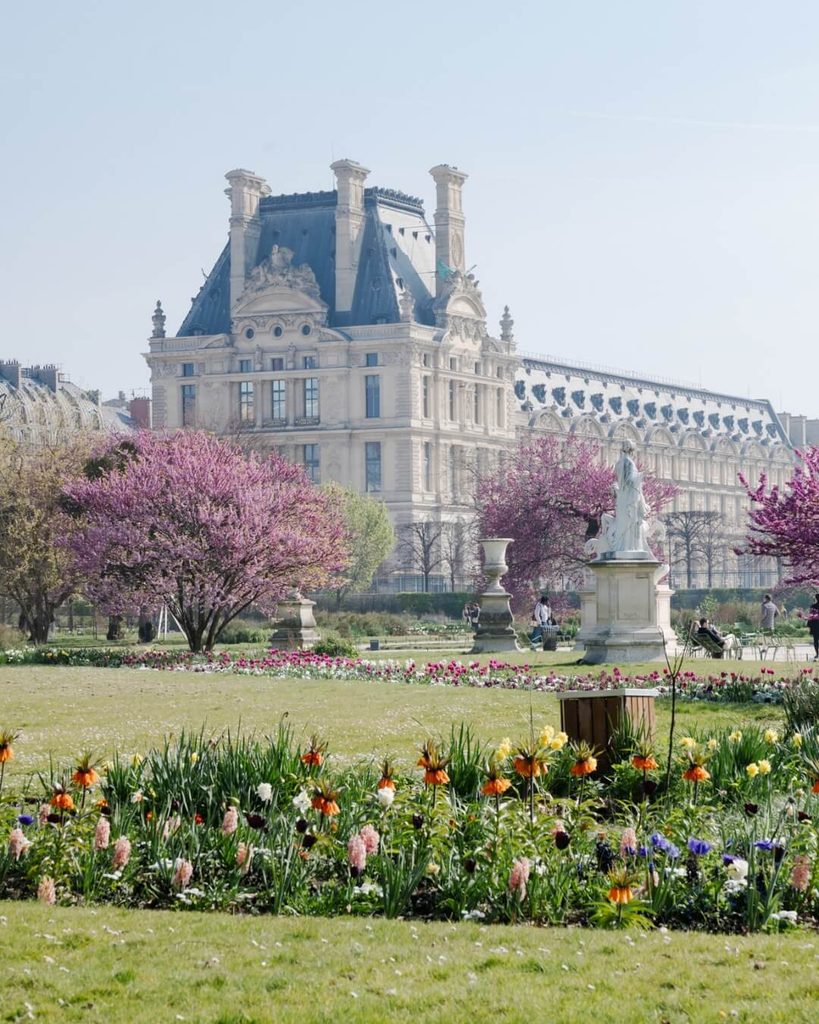
The entrance is right beside the square, so there’s almost no extra effort involved. From there, you can walk through the gardens toward the Musée de l’Orangerie and continue on to the Louvre.
A simple route is:
Place de la Concorde → Tuileries Garden → Musée de l’Orangerie → Louvre.
You can shorten the walk if you’re tired or spend longer in the gardens if you have plenty of time.
Walk Toward the Champs Élysées
The Champs Élysées begins directly west of Place de la Concorde, so it’s another easy continuation.

Walk along the avenue toward the Arc de Triomphe if you’re up for a longer walk. It does take some time, but it lets you experience the scale of this famous Paris avenue rather than simply seeing it from a Metro station.
If you’re visiting in the afternoon, this can also be a good way to continue your sightseeing without having to plan another transport connection.
Cross Pont de la Concorde
For a slightly different view, head toward the southern side of the square and cross Pont de la Concorde over the Seine.
Once you’re on the other side, turn around and look back. You’ll get a wider view of Place de la Concorde, including the obelisk and the historic buildings along the northern side.
You can also continue toward the Palais Bourbon and the National Assembly if you’re interested in seeing another part of central Paris.
How Long Do You Need at Place de la Concorde?
I wouldn’t set aside half a day just for Place de la Concorde. The square is large, but you can see the main features without spending hours here.

For most visitors, 30 to 60 minutes is a comfortable amount of time. In around 20 minutes, you can walk around the obelisk, see the two fountains and take a few photos. If you enjoy history or architecture, I’d stay closer to an hour so you don’t feel like you’re rushing from one feature to the next.
The nice thing is that you can easily add more time by visiting somewhere nearby. The Tuileries Garden is right next to the square, while the Musée de l’Orangerie and Hôtel de la Marine can turn a short stop into a much longer part of your day.
The Best Time to Visit Place de la Concorde
The best time really depends on what you want from your visit. There isn’t one hour that works for everyone.
Morning
I’d choose the morning if you want a calmer experience and better chances of getting photographs without as many people around.
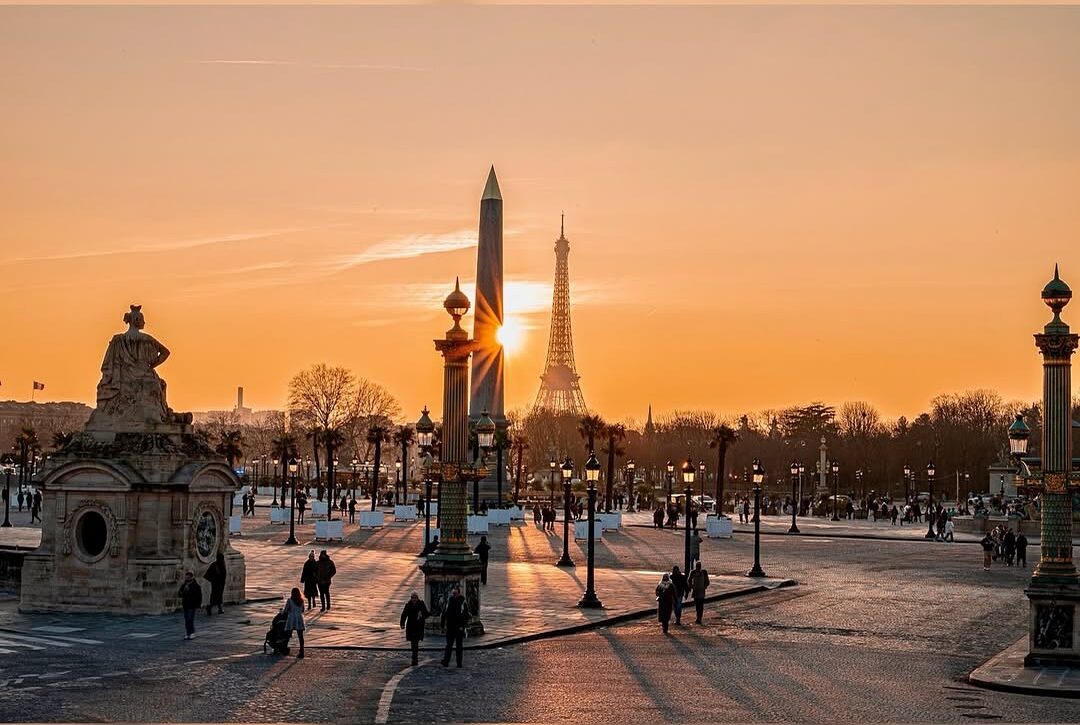
The square is open and exposed, so it can also be more comfortable before the busiest part of the day, especially during the warmer months. The softer morning light can work well on the obelisk and surrounding buildings too.
Afternoon
Afternoon is probably the easiest choice if you’re already sightseeing nearby.
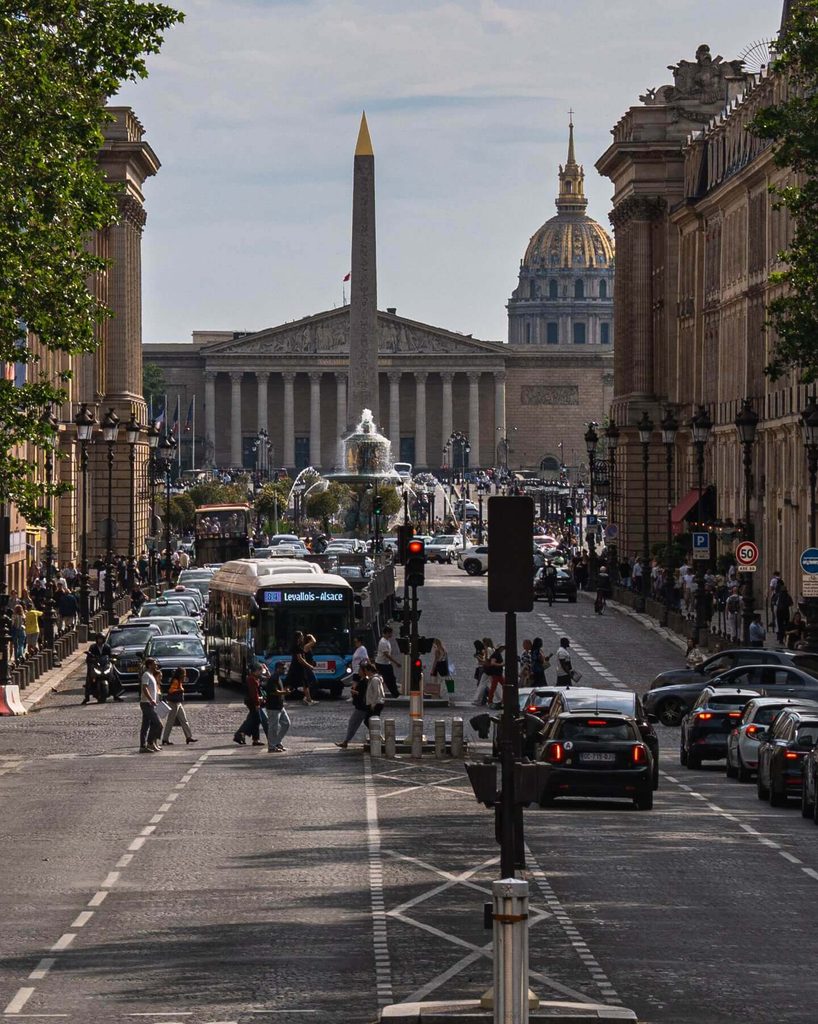
For example, you can visit the Louvre in the morning, walk through the Tuileries Garden and arrive at Place de la Concorde afterward. You don’t have to make a separate journey just to see the square.
It can be busier at this time, but that’s less of a problem if you’re mainly interested in seeing the sights rather than taking quiet photographs.
Evening
Late afternoon and early evening are a good option if you want to see the square in changing light.

As the sun gets lower, the stone buildings and Luxor Obelisk can look quite different from earlier in the day. You can then continue toward the Champs Élysées and see the avenue after dark.
If you’re taking photographs, I’d stay for a little while rather than leaving immediately after sunset. The square has a different atmosphere once the daytime sightseeing crowds start thinning out.
How to Get to Place de la Concorde
Getting to Place de la Concorde is fairly easy because the square has its own Metro station and sits along several major walking routes through central Paris.
By Metro
The Concorde station is served by Metro lines 1, 8 and 12. There are several exits around the area, so it’s worth checking the exit location rather than simply following the first sign you see.
Line 1 is particularly useful if you’re coming from the Louvre area or heading toward the Champs Élysées. Line 12 can be convenient if you’re traveling from other parts of Paris.
If you’re visiting in August 2026, check the latest RATP information before traveling because planned works can affect services. In particular, Line 8 has a scheduled interruption between Balard and Concorde from August 20 through August 27, 2026.
By Bus
Several bus routes run through the area, and buses can be a good option if you’d rather see Paris as you travel.

The main advantage is that you arrive above ground and can often combine the journey with some sightseeing. Just remember that traffic around Place de la Concorde can be heavy, particularly during busy parts of the day.
Walking from the Louvre
Walking from the Louvre through the Tuileries is probably my favorite way to arrive.
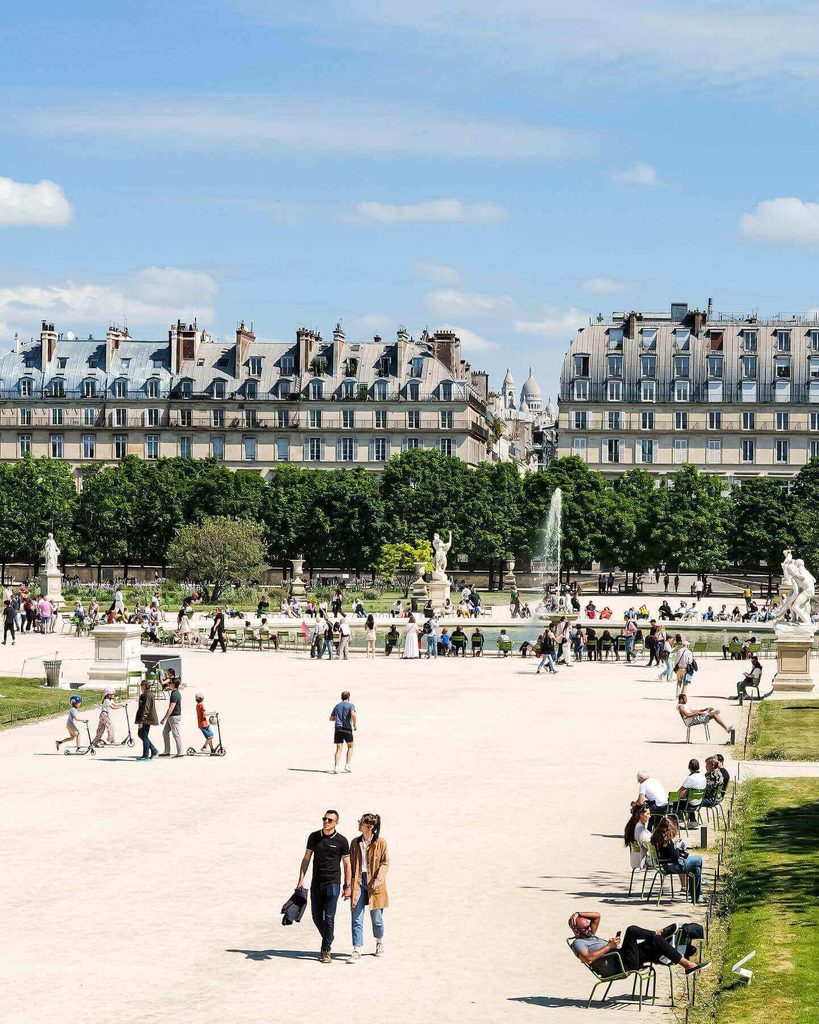
You can take your time in the gardens, stop at the Musée de l’Orangerie if you’re interested in the collection, and then continue toward Place de la Concorde.
It feels much more like a sightseeing route than simply stepping off the Metro and arriving at the square.
Is Place de la Concorde Free to Visit?
Yes. You don’t need a ticket to visit Place de la Concorde.
The square is a public space, so you can walk around the Luxor Obelisk, see the fountains and statues, and take photographs without paying an entrance fee.
Where you’ll need to budget is for the attractions around it. Hôtel de la Marine and the Musée de l’Orangerie, for example, have their own admission arrangements.
That’s one reason I like using Place de la Concorde as a stop between other attractions. You can spend 30 minutes here without adding another ticket to your Paris budget.
Is Place de la Concorde Worth Visiting?
For me, yes, especially if you’re already visiting the Tuileries, Louvre or Champs Élysées.

I wouldn’t cross Paris just to spend 20 minutes here, but it’s an easy and worthwhile stop when you’re exploring central Paris. I particularly like the mix of history and architecture. Once you know what happened here, the square feels quite different from how it first appears.
It’s also a good spot for photography, although it can feel busy because of the traffic and large number of visitors.
Final Thoughts on Place de la Concorde
Place de la Concorde is easy to underestimate. The first time you see it, it can feel like a large open square with a famous obelisk in the middle. You can walk across it in a few minutes, take your photos and continue toward the Champs Élysées.
But I think it’s worth slowing down a little.
Once you know the history, you start seeing the square differently. The Luxor Obelisk is more than 3,000 years old, the fountains and city statues come from the 19th century redesign, and this was once the site where Louis XVI and Marie Antoinette were executed during the French Revolution.

The location also makes it a useful part of a Paris walking day. You can arrive through the Tuileries Garden, explore the square, then continue toward the Champs Élysées. If you have more time, you can visit Hôtel de la Marine, walk toward Madeleine or cross the Seine via Pont de la Concorde.
I wouldn’t plan an entire day around Place de la Concorde itself. Give it around 30 to 60 minutes, look beyond the obelisk and take a proper walk around the square. Then carry on to whichever part of Paris you’re exploring next.
For me, that’s what makes the visit worthwhile. You don’t need much extra time, but knowing the story behind the place makes you notice far more than you would on a quick photo stop.