
Père Lachaise Cemetery looks manageable on a Paris map, but once you walk through the gates, you quickly realize how big it really is. The cemetery covers about 43 hectares, with roughly 15 km of paths, thousands of graves, old family tombs, monuments and plenty of famous names spread across different sections.
That size is part of the appeal, but it can also make a first visit a little confusing. If you’re hoping to find Jim Morrison, Oscar Wilde, Édith Piaf or Chopin, having a rough plan will save you from spending half your visit wandering around looking for the right division.
In this guide, I’ll cover the practical details that make a visit easier, including which entrance to use, how long to allow, where to find the famous graves, what to bring and a few things worth knowing before you go. I’ll also share some simple tips to help you enjoy Père Lachaise without rushing from one famous grave to the next.
What is Père Lachaise Cemetery?
Père Lachaise is the largest cemetery in Paris, covering around 43 hectares in the 20th arrondissement. It’s famous for the people buried here, but I think the cemetery itself is just as interesting. You’ll find winding paths, old family tombs, sculptures and trees alongside the graves of writers, musicians and artists.
The cemetery opened in 1804 as the Cimetière de l’Est, or Cemetery of the East. Paris was running out of suitable burial space, so new cemeteries were created outside the crowded center. Architect Alexandre Théodore Brongniart designed the site, which was originally on the eastern edge of Paris.

It took a little time for Père Lachaise to become popular. The city eventually moved the remains of famous figures such as Molière and Jean de La Fontaine here, which helped attract more attention and made the cemetery a fashionable place to be buried.
Today, Père Lachaise is still an active cemetery. Around 10,000 funeral ceremonies take place here each year, so you’ll sometimes see families visiting graves or attending funerals while you’re exploring.
I think that’s worth keeping in mind, especially when you’re looking for famous graves. It’s a place to explore, but it’s also a place where people come to remember loved ones.
Who Was Père François de La Chaise?
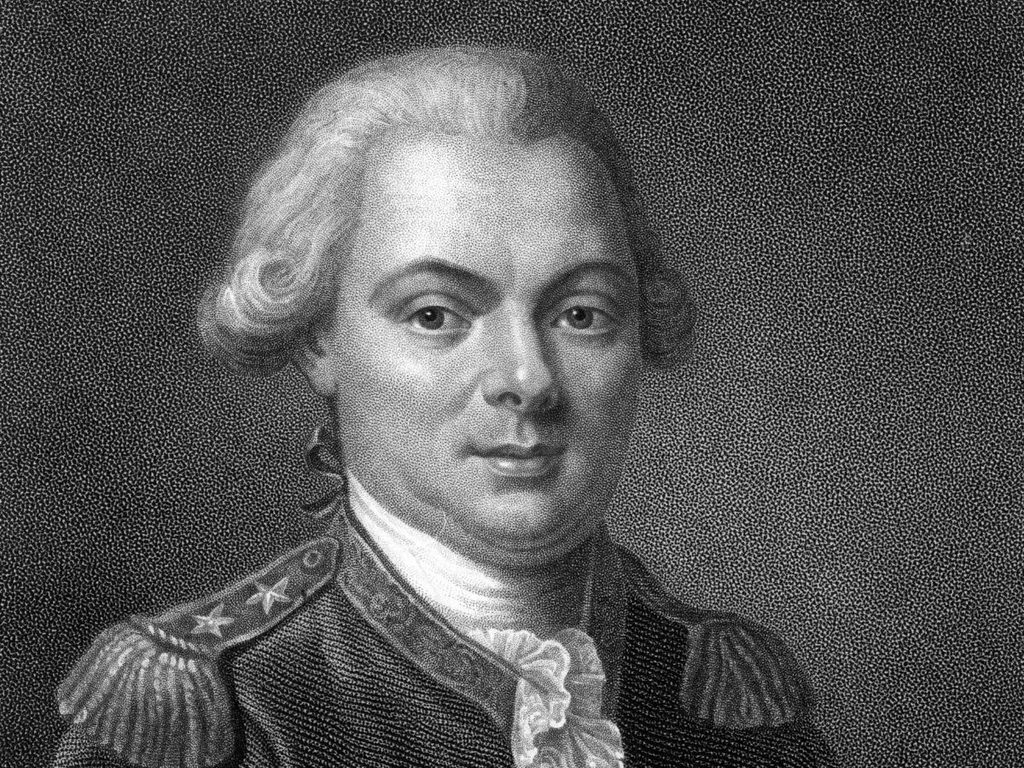
The cemetery takes its name from François de La Chaise, a French Jesuit priest who served as the confessor of King Louis XIV.
He was associated with the property before the cemetery was created, and the land became known as the Père Lachaise estate. When the city later established the cemetery here, the name gradually became attached to it.
So Père Lachaise isn’t the name of a person buried in the cemetery. It comes from the history of the land itself.
You’ll also come across a few different versions of the name when researching your visit, including Père Lachaise, Cimetière du Père Lachaise and Père Lachaise. They’re all referring to the same cemetery.
If you’re planning your visit online, I’d search for “Père Lachaise Cemetery” rather than relying only on the French name. That tends to bring up the visitor information, maps and directions you’ll need before heading there.
How Père Lachaise Became Famous
Père Lachaise wasn’t an instant success when it opened in 1804. At the time, it sat outside the more built up parts of Paris, so it wasn’t the most convenient place for families to choose for a burial.
The city eventually found a clever way to change that. In 1817, the remains associated with famous figures including Molière, Jean de La Fontaine, and Héloïse and Abélard were transferred to the cemetery. Once people had a reason to visit, interest in Père Lachaise grew quickly.

By the 1820s and 1830s, having a burial plot at Père Lachaise had become fashionable among Parisian families. More people wanted to be buried alongside writers, artists and other well known figures, and the cemetery continued to expand.
You can still see the result of that history today. Walking through Père Lachaise takes you past everything from simple graves to elaborate family mausoleums, along with monuments connected to different periods of French history. That’s part of what makes the cemetery interesting. The famous names are easy to focus on, but there’s plenty to see between them.
Is Père Lachaise Cemetery Worth Visiting?
For me, yes, especially if you enjoy history, literature, music or simply like exploring places that feel different from the usual Paris attractions.
I wouldn’t make it a priority if you only have one day in Paris. With limited time, I’d rather see some of the city’s major sights, such as the Eiffel Tower, the Louvre, Notre Dame and the Seine. Père Lachaise takes time because the cemetery is so large, and rushing through it isn’t particularly enjoyable.
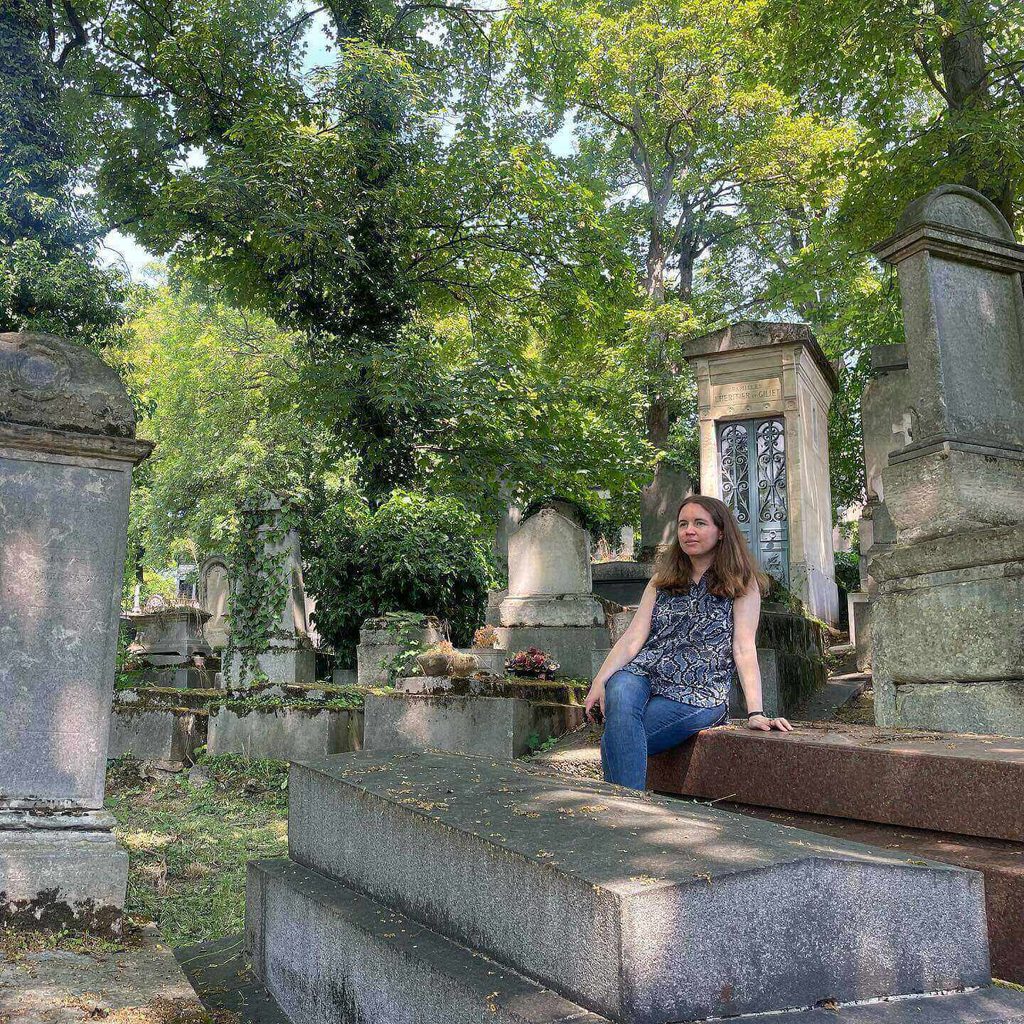
If you’re staying for three or more days, though, I’d definitely consider adding it. Allowing around two hours gives you enough time to find a few famous graves and still wander through some of the quieter sections.
What I like most is that you don’t have to arrive with a long list of people you want to see. You might come looking for Jim Morrison and end up spending more time admiring an old tomb or reading the names on nearby graves. The tree lined paths and stone monuments also make it feel very different from the busier parts of central Paris.
Is Père Lachaise Cemetery Free?
Yes, Père Lachaise Cemetery is free to enter. You don’t need a ticket or reservation to walk through the cemetery, visit the graves or spend time exploring the different sections.

That makes it an easy stop to add to a Paris itinerary, especially if you’re already in the eastern part of the city. You can simply arrive during opening hours and go in. There isn’t a separate entrance fee for seeing famous graves such as Jim Morrison or Oscar Wilde.
The main thing to remember is that free entry doesn’t mean you can visit at any time. The cemetery has seasonal opening hours, and the gates close in the evening.
Do You Need Tickets?
No, not if you’re visiting on your own.
You can walk in, use the cemetery map and find the graves you’re interested in without buying anything. If you decide to join a guided walking tour, you’ll pay the tour company for the experience, but that’s separate from entering Père Lachaise itself.
For a first visit, I’d probably go independently if you already know which graves you want to see. A tour makes more sense if you’re interested in the stories behind the people buried here and don’t want to spend your time figuring out the map.
Père Lachaise Cemetery Opening Hours
Père Lachaise is open throughout the year, but the hours change with the seasons. I would check the official Paris website shortly before your visit rather than relying on an old travel guide, especially if you’re visiting during winter.

For the current summer schedule, from March 16 to November 5, 2026, the cemetery is open from 8:00 am to 6:00 pm Monday to Friday, 8:30 am to 6:00 pm on Saturday, and 9:00 am to 6:00 pm on Sunday.
The cemetery also starts clearing visitors before closing, so don’t plan to arrive right at the end of the day. The City of Paris says visitors are no longer admitted during the final 15 minutes before closing.
I’d give yourself at least two hours if you’re visiting for the first time. Père Lachaise is much larger than it looks, and finding several graves can take longer than you expect.
If you’re planning to visit in winter, check the current schedule carefully because the closing time is earlier.
How to Get to Père Lachaise Cemetery
Père Lachaise is in Paris’s 20th arrondissement and is easy to reach by metro. The tricky part is choosing the right entrance because the cemetery is so large.
The three most useful metro stations are Père Lachaise, Philippe Auguste and Gambetta. Which one you use depends on where you want to start. I’d check the location of your first few graves before leaving, rather than simply heading to the closest station.
Which Père Lachaise Entrance Should You Use?
Père Lachaise has several entrances, and choosing the right one can make a noticeable difference to how much walking you do.
Gambetta Entrance
The Porte Gambetta, at 55 Rue des Rondeaux, is a good choice if you want to start from the higher part of the cemetery.

This is the entrance I’d consider for a longer first visit, particularly if you like the idea of walking gradually downhill rather than starting lower down and having to climb. It also gives you access to the area around the crematorium and columbarium.
If you’re planning to spend two or three hours exploring, starting here can make the route feel a little easier.
Main Entrance
The main entrance is on Boulevard de Ménilmontant and is convenient if you’re approaching from the Père Lachaise or Philippe Auguste side.

It’s a useful option if the graves you want to visit are closer to the lower sections of the cemetery. Just remember that entering through the main gate doesn’t automatically mean you’re close to the famous grave you’re looking for. Père Lachaise is much bigger than it appears from the street.
Porte des Amandiers
The Porte des Amandiers est au 28 quater Boulevard de Ménilmontant, oppose le Père Lachaise metro station.

This can be a convenient entrance if you’re arriving by metro, but there are several steps. The City of Paris notes that this entrance isn’t accessible for people with reduced mobility.
If accessibility is important for your visit, I’d check the current access information before choosing this entrance rather than assuming all of the cemetery’s gates are the same.
Porte du Repos
The Porte du Repos is at 16 Rue du Repos, close to Philippe Auguste metro station.

This is another practical entrance for visitors approaching from the southern side of the cemetery. It’s also close to the cemetery’s administrative conservation office.
I would consider this entrance if your route begins around the lower and central divisions, as it can save you from crossing a large part of the cemetery before reaching your first stop.
Porte de la Réunion
The Porte de la Réunion is at 131 Rue de la Réunion and provides another pedestrian entrance.
Like the Porte des Amandiers, it has steps and isn’t suitable for visitors with reduced mobility. For most travelers, the best reason to use this entrance is simply that it lines up better with the part of the cemetery they’re planning to explore.
The easiest way to choose is to look at your map before leaving. Pick your first two or three graves, see which side of Père Lachaise they’re on, and then choose the entrance that gets you closest. That small bit of planning can save you a surprising amount of walking once you’re inside.
How Long Do You Need at Père Lachaise?
The City of Paris recommends allowing at least two hours, and I think that’s a good amount of time for most first time visitors. Père Lachaise is much larger than it looks, and you’ll spend some of your visit simply walking between different sections.
One Hour
An hour can work if you already know exactly what you want to see. I’d choose three or four graves beforehand, check where they’re located and follow a simple route between them.
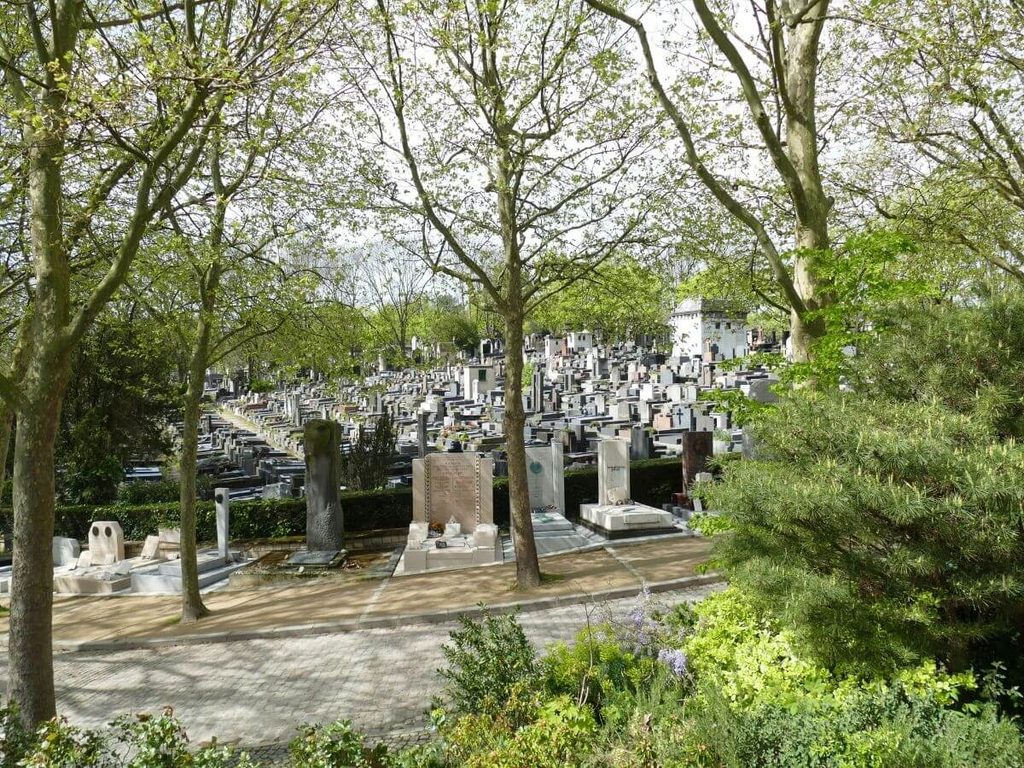
This is a good option if you’re fitting Père Lachaise into a busy day in Paris. You won’t have much time for wandering, though, so I’d keep your list short.
Two Hours
For most people, two hours is the sweet spot. You’ll have enough time to find several famous graves, stop at a few interesting monuments and still wander a little without feeling rushed.
I’d recommend this if it’s your first visit and you’re mainly coming to see the well known names. Just don’t try to squeeze in every famous person buried here. You’ll spend more time looking at your map than enjoying the cemetery.
Three to Four Hours
Give yourself three or four hours if you enjoy history, architecture or photography and want to explore beyond the famous graves.
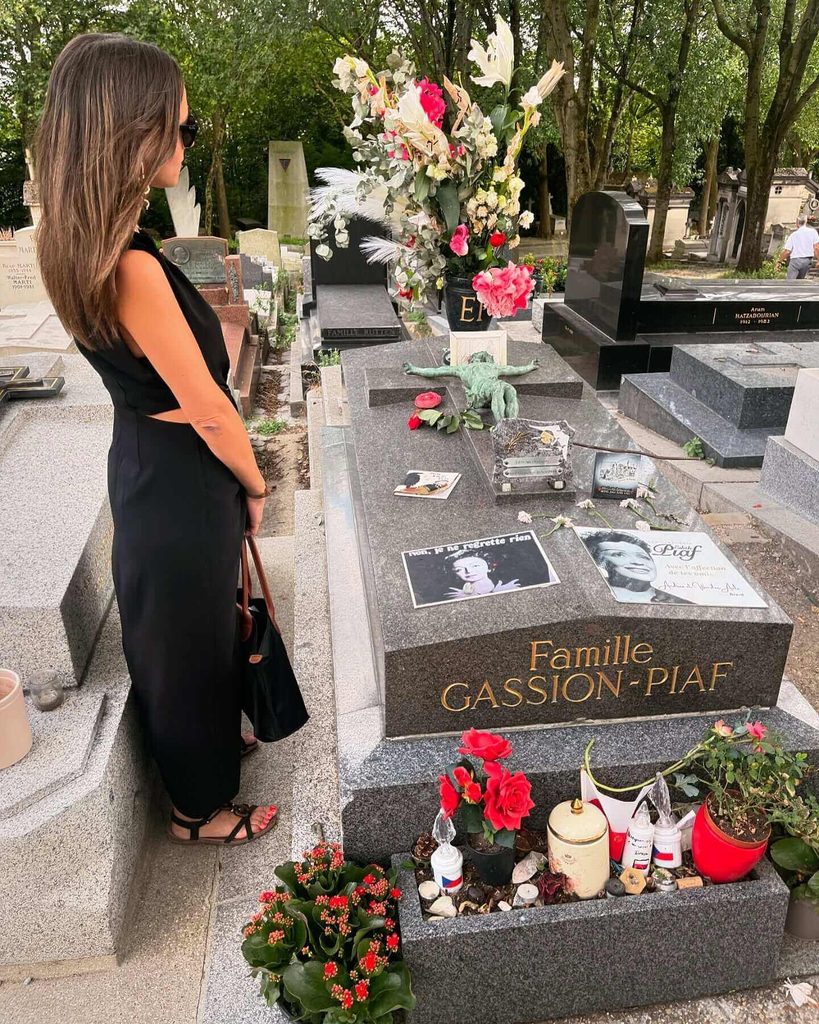
With extra time, you can take quieter paths, look at family mausoleums and stop at monuments you didn’t originally plan to see. This is when Père Lachaise starts to feel less like a list of famous graves and more like a place to explore.
Half a Day
I’d only spend half a day here if you’re genuinely interested in cemeteries, French history, architecture or genealogy.
For most visitors, that’s probably longer than necessary. If you do have that much time, though, there’s no need to rush. Put the map away for a while and explore some of the sections between the famous graves. That’s often when you notice the details you would otherwise walk straight past.
The Most Famous Graves at Père Lachaise
There are thousands of graves at Père Lachaise, but a small number attract most first time visitors. If you’re visiting because you want to see a particular person, I’d make a short list before you arrive and check the divisions on the map.
I wouldn’t try to see every famous name in one visit. The cemetery is too large for that, and you’ll probably enjoy it more if you leave some time to stop at interesting monuments or graves you weren’t expecting to find.
Jim Morrison
Division 6
Jim Morrison’s grave is probably the name most international visitors associate with Père Lachaise. The Doors singer died in Paris in 1971, and his grave continues to attract large numbers of visitors.

One thing that surprised me is how modest the grave looks compared with some of the elaborate monuments elsewhere in the cemetery. You won’t find a huge mausoleum marking Morrison’s resting place. Instead, you’ll likely notice other visitors gathered around the area, which makes it easier to spot.
If Morrison is your main reason for visiting, look up the location before you enter. Division 6 is easy enough to find with a map, but I wouldn’t rely on simply following other visitors.
Édith Piaf
Division 97
French singer Édith Piaf is another popular grave, particularly if you’re interested in French music.

Her grave is relatively simple compared with some of the larger monuments around Père Lachaise. That actually makes it a nice stop because it shows that a famous person’s resting place doesn’t necessarily need an elaborate sculpture or enormous mausoleum.
If you’re already visiting the cemetery for music related graves, I’d include Piaf along with Morrison and Chopin.
Frédéric Chopin
Division 11
Chopin is one of the most important musical figures buried at Père Lachaise.

His grave is marked by a sculpture of Euterpe, the Greek muse of music, leaning over a broken lyre. It’s a particularly nice monument to stop and look at if you’re interested in sculpture as well as music.
There’s also an interesting detail about Chopin’s burial history. His body remained in Paris, but his heart was taken to Warsaw after his death and is buried there at the Church of the Holy Cross.
Molière
Division 25
Molière is one of the names that connects directly to the early history of Père Lachaise.
The French playwright and actor died in 1673, long before the cemetery existed. His remains were later transferred to Père Lachaise in the 19th century, along with those of Jean de La Fontaine. The transfers helped attract attention to the new cemetery and played a part in making it fashionable.
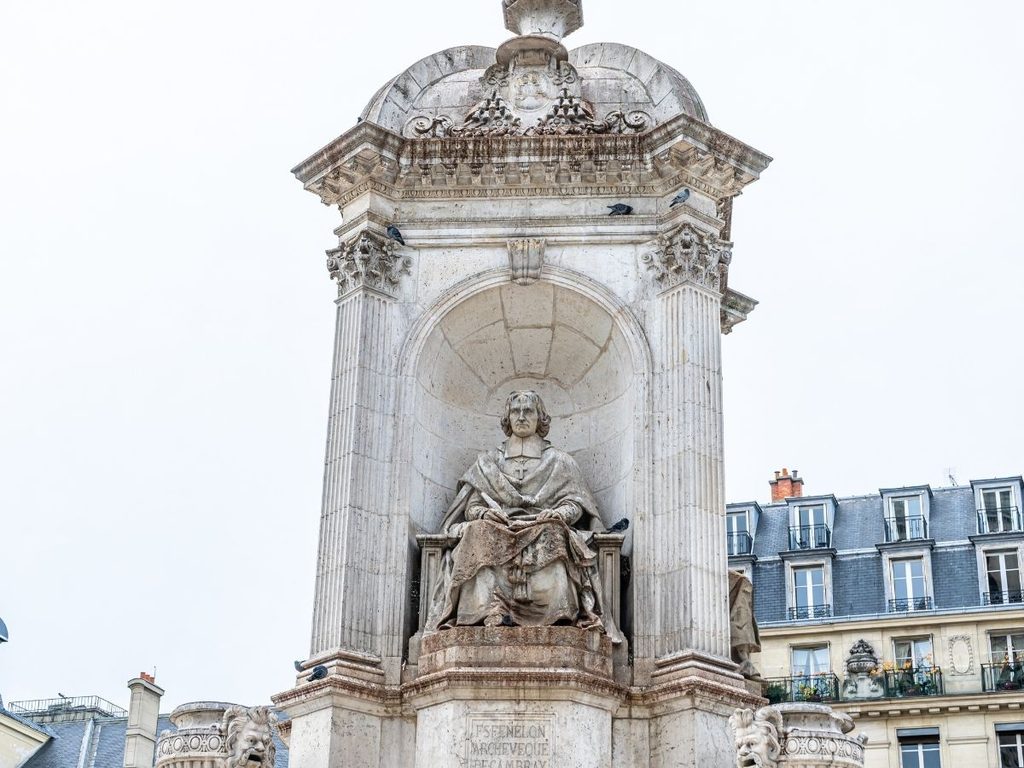
There is also some uncertainty surrounding the remains traditionally identified as Molière’s. The City of Paris notes that the exact identity of the remains from his original burial is not certain. So the tomb is recognized as Molière’s, but the history behind it is a little more complicated than it first appears.
Jean de La Fontaine
Division 25
Jean de La Fontaine, best known for his fables, is buried close to Molière.
If you’re already looking for Molière, it’s worth finding La Fontaine as well. Their connection to Père Lachaise goes beyond simply being famous people buried here. Both were among the remains transferred to the cemetery in the early 19th century, helping establish Père Lachaise as a place where notable figures could be buried.
It’s an easy pair of graves to add to the same part of your route.
Marcel Proust
Division 85
Marcel Proust is a good stop for anyone interested in French literature.

His grave is much quieter than Jim Morrison’s or Oscar Wilde’s, so you can usually take a little more time looking around without the same crowd of visitors.
If you’re putting together a literature focused route through Père Lachaise, Proust works well alongside Balzac, Molière and other writers buried here.
Honoré de Balzac
Division 48
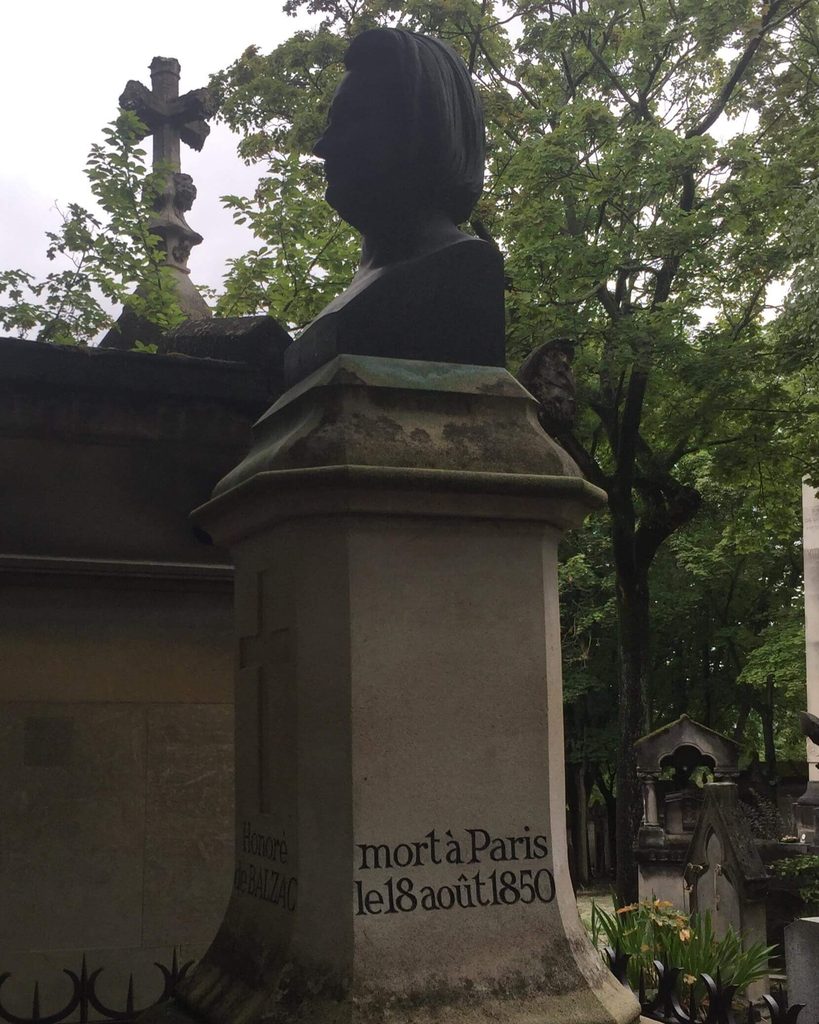
Honoré de Balzac, one of France’s major 19th century writers, is another name worth adding to your map.
His grave is marked by a bronze portrait bust, which makes it fairly easy to recognize once you’re in the correct division.
Balzac is particularly interesting if you’re already visiting Père Lachaise for its literary history. His grave is also a good example of why I’d recommend looking beyond the biggest tourist stops. You can see quite a few important French writers without having to spend your entire visit following the busiest route.
Eugène Delacroix
Division 49
Art lovers should add Eugène Delacroix to their list.
Delacroix was one of the leading French Romantic painters, best known for works including Liberty Leading the People. His grave is in Division 49 and is included among the notable monuments highlighted by the City of Paris.
If you’re interested in art, I’d give yourself some extra time around this section. Père Lachaise is worth exploring for its sculptures and funerary architecture as much as for the names carved into the graves.
Gertrude Stein
Gertrude Stein is an interesting addition if you’ve already seen the better known graves and want to explore Père Lachaise’s international literary history.
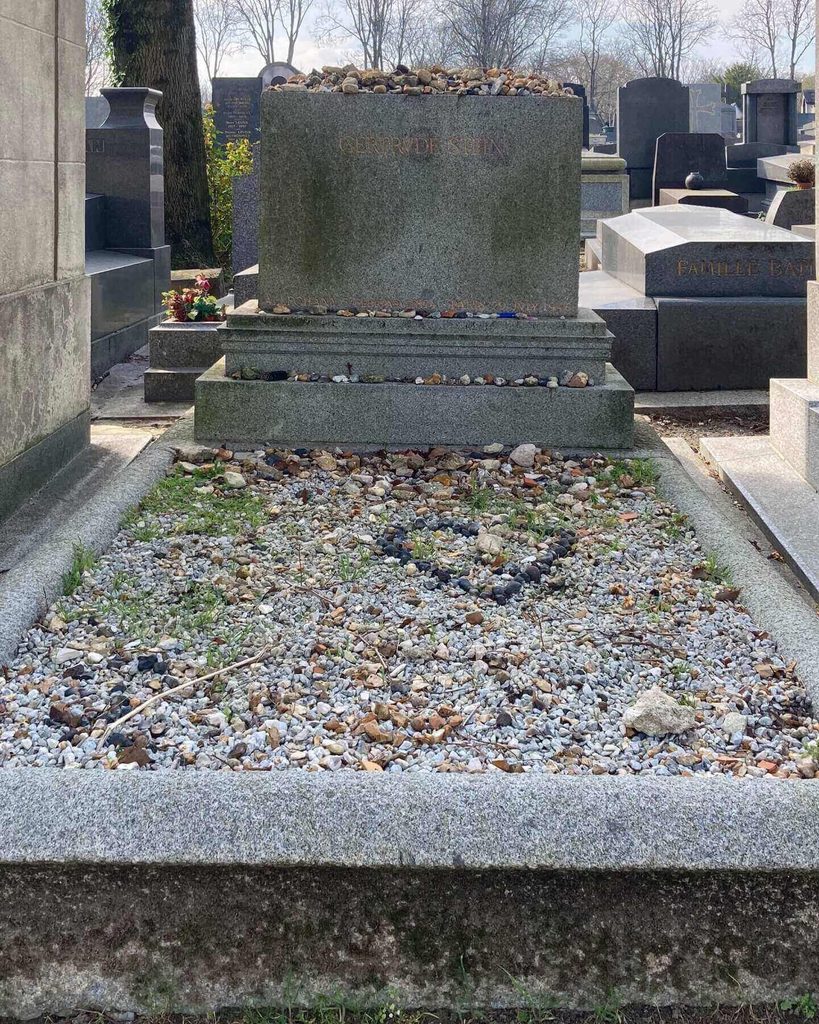
The American writer and art collector spent much of her life in Paris and was closely connected with the city’s literary and artistic circles. Her grave gives the cemetery a slightly different angle from the predominantly French names you’ll encounter.
I’d particularly recommend adding her if you’re interested in the expatriate writers and artists who made Paris their home in the early 20th century.
Père Lachaise Graves Beyond the Famous Names
Once you’ve found the famous graves on your list, I’d slow down and look around. Some of the most interesting parts of Père Lachaise have nothing to do with celebrities. You’ll find old family chapels, mausoleums, sculptures and weathered inscriptions that are easy to miss if you’re focused on finding the next famous name.
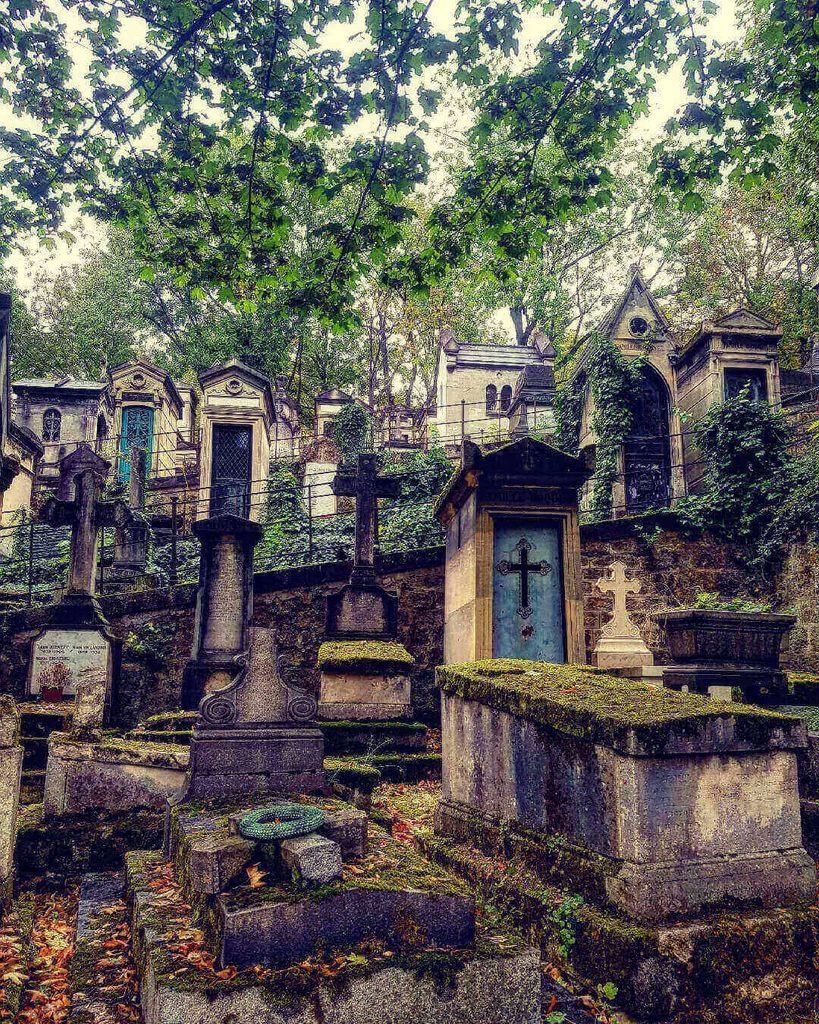
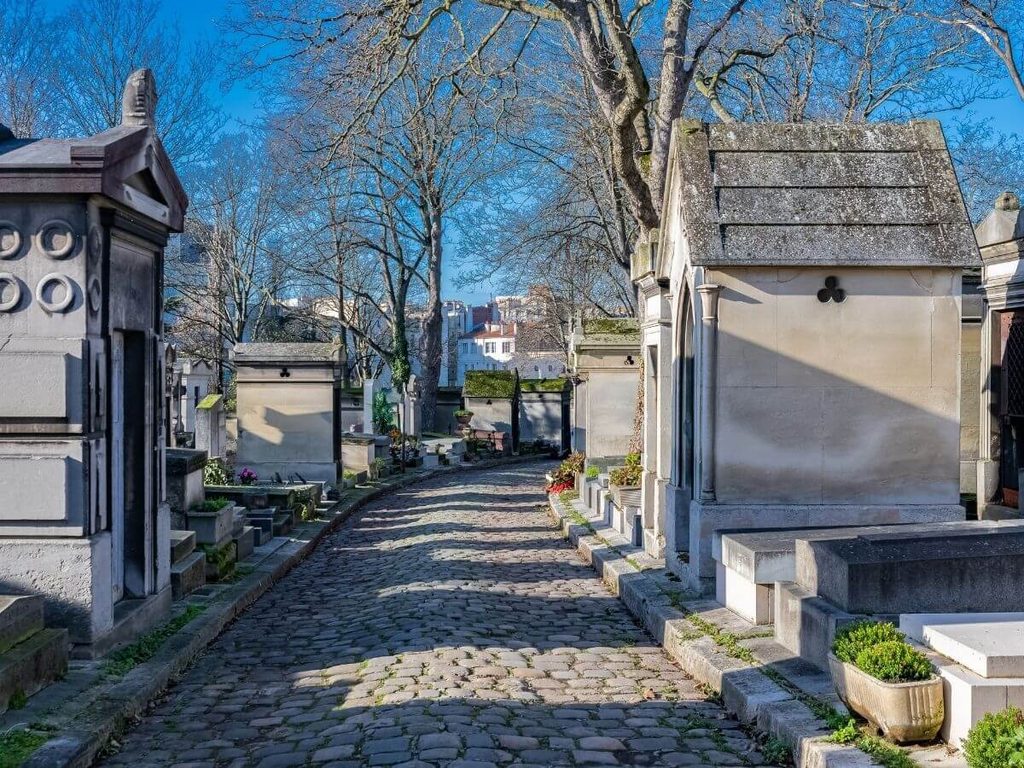
The cemetery also changes as you walk through it. Some of the older sections have winding paths, mature trees and a more garden like feel, while later areas are more organized with straighter paths. The City of Paris describes this contrast between the older cemetery garden and the later sections.
I wouldn’t try to see everything. After visiting the graves you came for, take a quieter path and see where it leads. You might find an unusual monument or beautifully carved tomb that wasn’t on your original list.
For me, that’s part of the appeal of Père Lachaise. The famous names bring you here, but the quieter corners are often what make the visit memorable.
Père Lachaise Cemetery Architecture
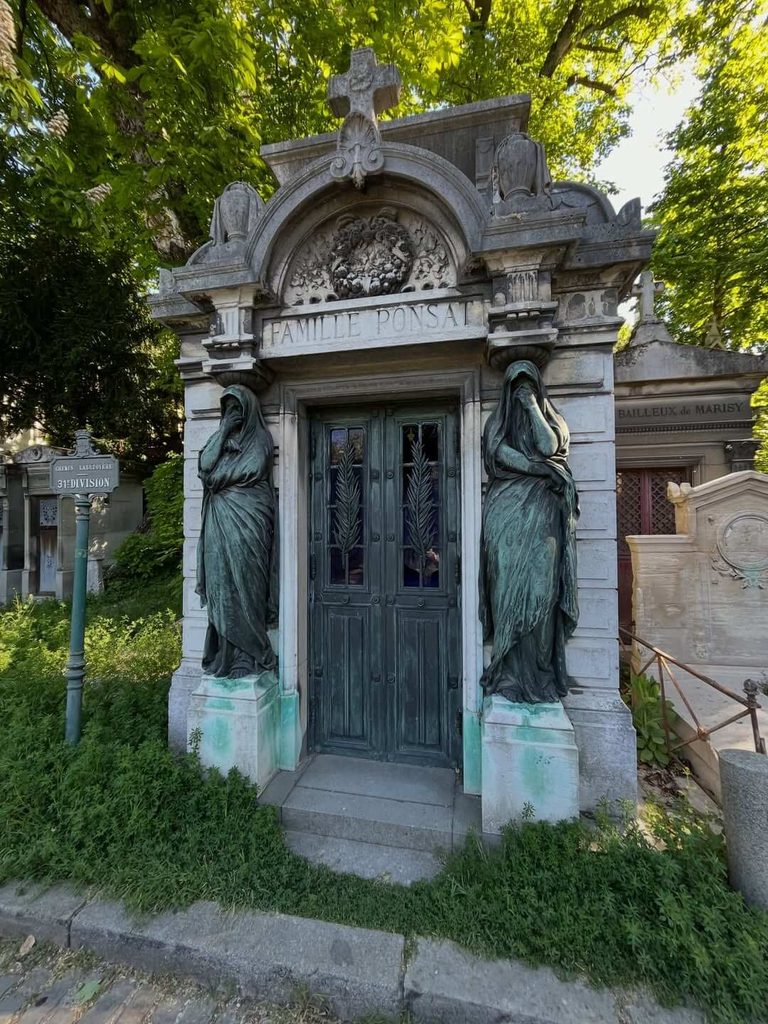
You don’t have to know the people buried at Père Lachaise to enjoy walking around it. The cemetery is full of family mausoleums, small chapels, sculptures, carved doors, columns and old monuments, and the styles change quite a bit from one section to another.

Some tombs are large and carefully decorated, while others are much simpler. I particularly like looking at the smaller details, such as the inscriptions, stonework and sculptures. They often give you a little idea of how families wanted to remember the people buried there.
The cemetery was designed as a landscaped burial ground, with paths, trees and planted areas worked into the layout. Architect Alexandre Théodore Brongniart used the existing landscape rather than creating a completely formal grid, which helped give Père Lachaise its garden like character.
You can still see that today. Some paths feel almost like you’re walking through a quiet park, even though you’re surrounded by graves and monuments.
What Is It Like to Walk Around Père Lachaise?
Walking around Père Lachaise feels quite different from exploring most of Paris. Once you’re inside, the busy streets and traffic can feel surprisingly far away. You’ll find tree lined paths, old stone tombs and quieter corners where you may barely see anyone for a few minutes.
Then you turn a corner and suddenly find a group of visitors gathered around a famous grave. That contrast is part of what makes the cemetery interesting.

Be prepared for plenty of walking, too. Some paths are paved, others are cobbled, and parts of the cemetery are sloped. I’d definitely wear comfortable shoes, even if you’re only planning a short visit.
It’s also important to remember that Père Lachaise is still an active cemetery. You may come across a funeral, a family visiting a grave or someone quietly paying their respects. The City of Paris asks visitors to remain discreet around ceremonies and people who are mourning.
I think the best way to visit is to take your time, keep your voice down and treat the cemetery as a place of remembrance rather than simply another Paris attraction.
The Best Time to Visit Père Lachaise
Père Lachaise is open throughout the year, but the experience changes quite a bit with the seasons. Your choice really comes down to weather, daylight and how much walking you want to do.
Spring
Spring is one of my favorite times for a visit. The trees and plants start adding more color to the cemetery, while the weather is usually comfortable enough for a couple of hours of walking.
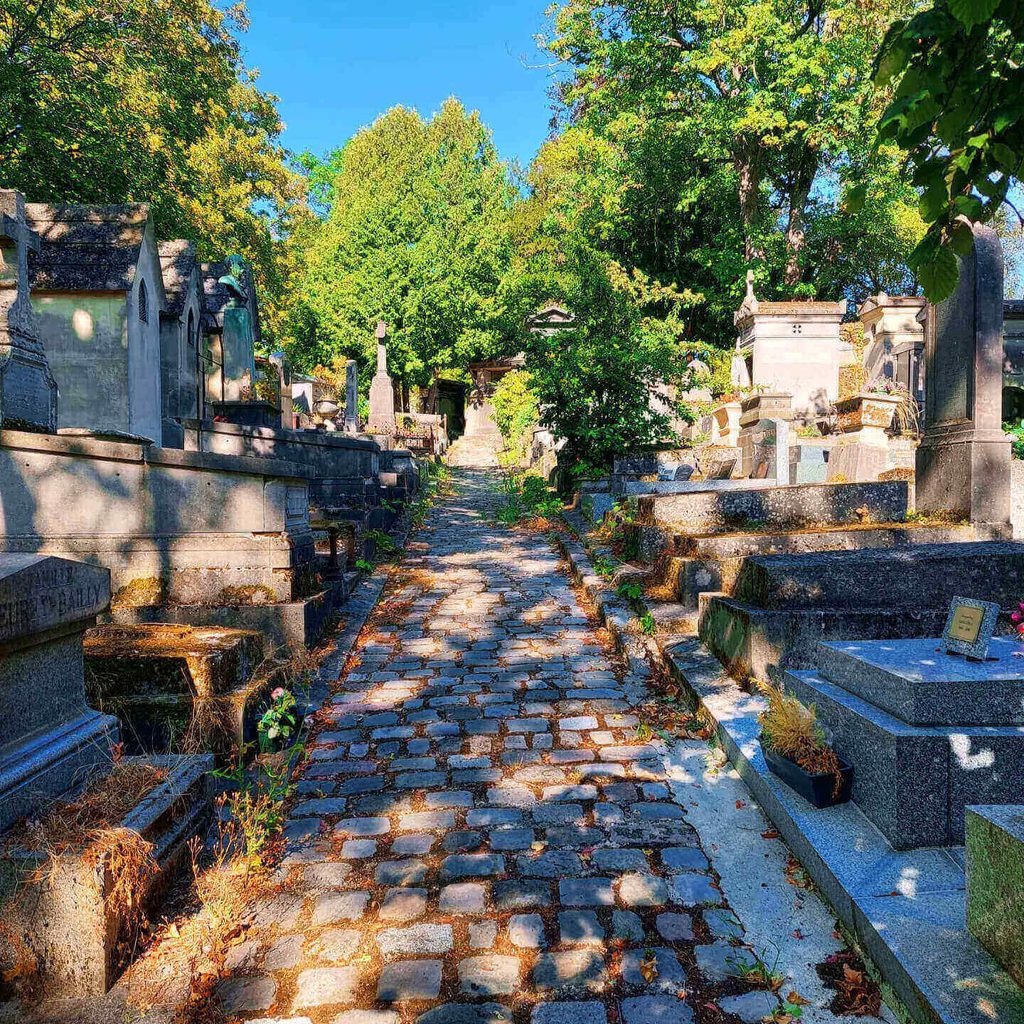
It’s also a good time if you want to explore slowly without dealing with the heat you can get later in summer.
Summer
If you’re visiting in summer, I’d go in the morning if possible. Some parts of the cemetery have plenty of shade from the trees, but you’ll still spend time walking in more exposed areas.

Going earlier also gives you more time before the evening closing time. I wouldn’t leave Père Lachaise until late in the day if you’re hoping to find several famous graves.
Autumn
Autumn is particularly nice if you enjoy photography. The changing leaves add color to the paths and work well against the old stone monuments and mausoleums.
The cooler weather is another advantage. If you’re planning to spend two or three hours walking around, autumn can be much more comfortable than a hot summer afternoon.
Winter
Winter is quieter and gives Père Lachaise a different feel. With fewer leaves on the trees, some of the monuments can be easier to see, and the cemetery can feel much more peaceful.
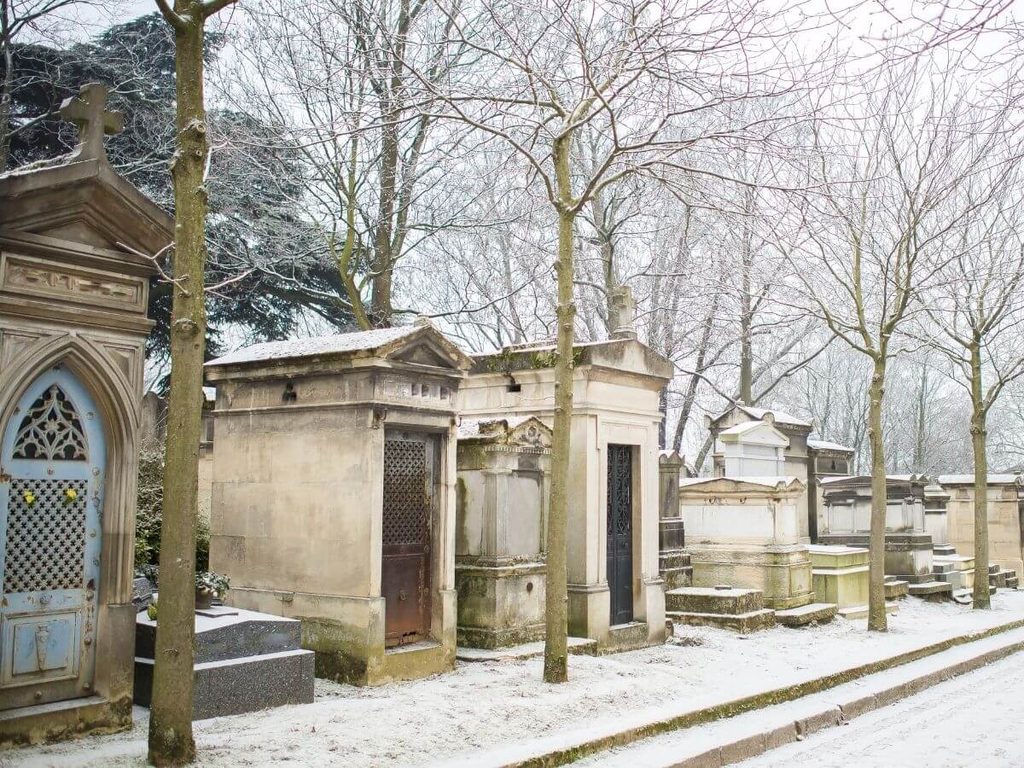
The downside is the colder weather and shorter opening hours. I’d check the current schedule before heading out and give yourself plenty of daylight for the walk.
For a first visit, I’d choose a morning in spring or autumn if you have the flexibility. You’ll get comfortable walking conditions, enough daylight and plenty of time to explore without feeling rushed.
A Simple 2 Hour Père Lachaise Walking Route
If you don’t want to spend your entire visit staring at a map, I’d keep your route fairly simple. Père Lachaise is large enough that crossing back and forth between different sections can eat up a lot of your time.
For a first visit, I like the idea of starting at Gambetta and gradually making your way toward the lower sections. You don’t have to follow this route exactly, especially if there’s a particular grave you really want to see, but grouping nearby stops will make the walk much easier.
Start at Gambetta
Give yourself a few minutes at the entrance to get your bearings. Open your map, check where your first few graves are and decide on a rough direction before you start walking

Starting here also means you’re beginning from the higher part of the cemetery, so you can work your way downhill rather than spending the whole visit climbing.
Head Toward the Upper Divisions
Start by making your way toward the sections where you’ll find Édith Piaf and Marcel Proust.
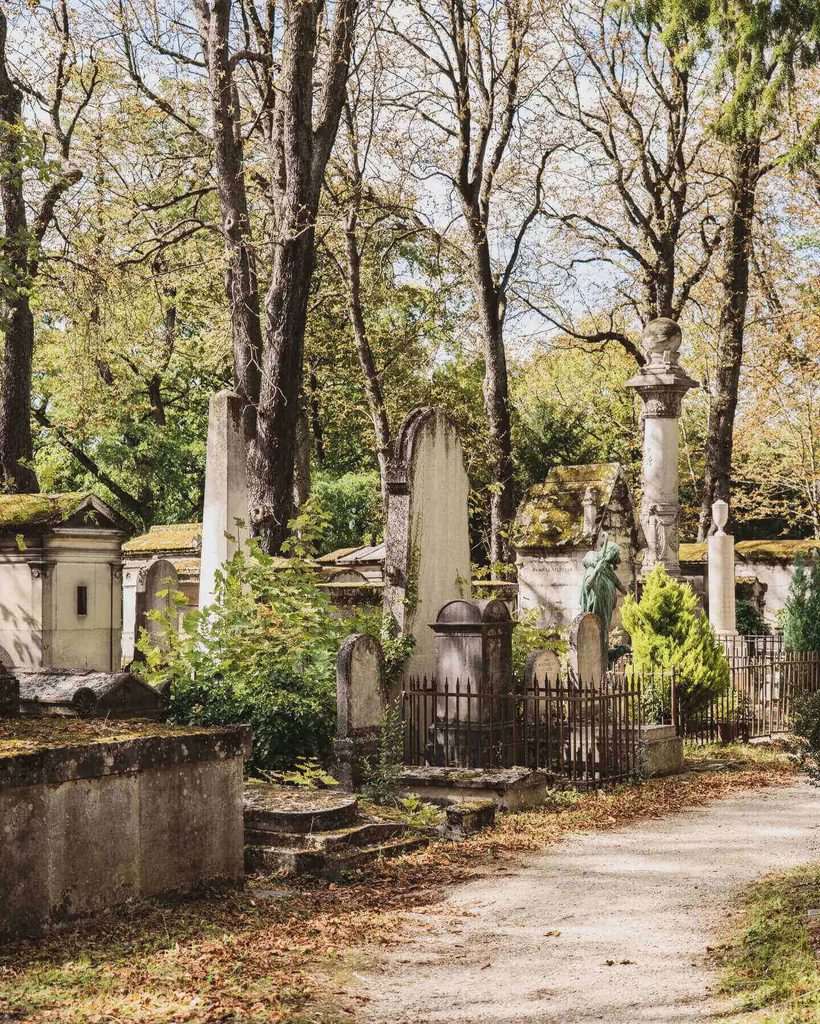
Don’t worry about rushing between them. Take a little time to look at the surrounding graves and monuments because this part of the cemetery has plenty to see beyond the names on your list.
Work Through the Central Sections
From there, continue toward the divisions containing Honoré de Balzac, Eugène Delacroix and Oscar Wilde.
Oscar Wilde’s tomb is likely to be one of the busier stops, so don’t be surprised if you see other visitors gathered around it. Once you’ve seen the famous graves, I’d spend a few minutes looking at the surrounding mausoleums and sculptures rather than immediately moving on.
Continue Toward the Lower Sections
Next, make your way toward Héloïse and Abélard, Molière, Jean de La Fontaine and Chopin.
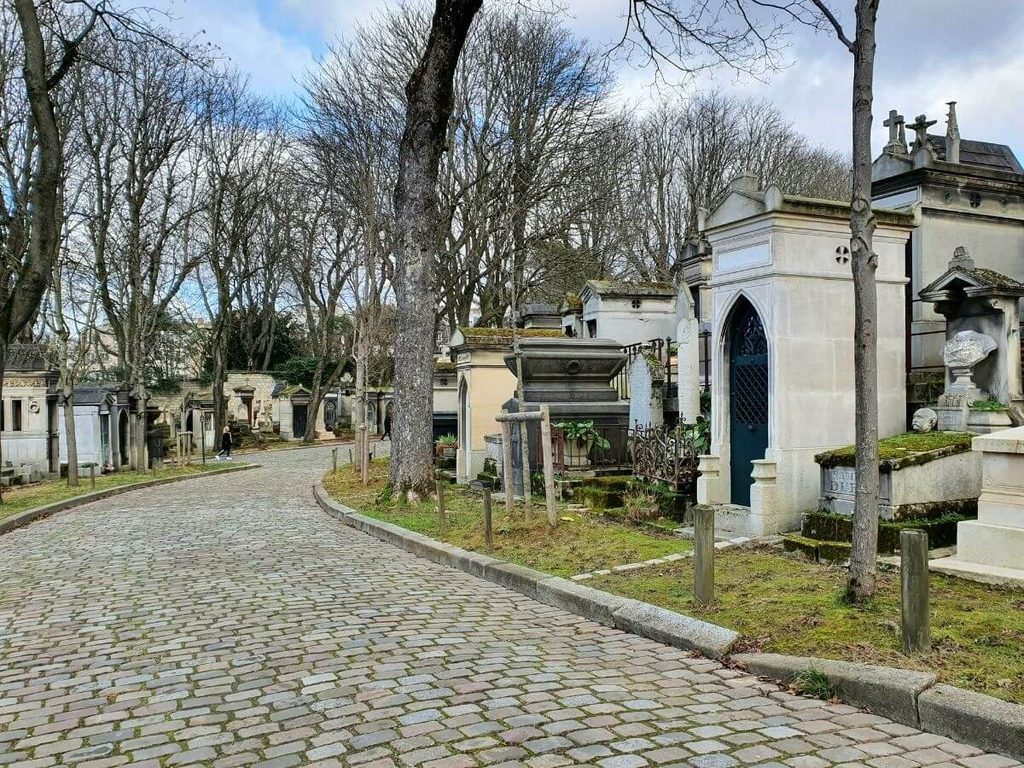
This part of the walk gives you a nice mix of literary history, music and older monuments. Since several of these names are connected with the early history of Père Lachaise, it’s worth slowing down here rather than treating them as quick photo stops.
Finish With Jim Morrison
If Jim Morrison is on your list, you can finish around Division 6, depending on the route you’re following.
The area around his grave is usually busier than many other parts of the cemetery, so I wouldn’t be surprised if it takes a little longer to find the exact spot or get a clear view.

Once you’ve finished, check the map and choose the nearest practical exit. There’s no reason to walk all the way back to Gambetta just because that’s where you started.
The route above is meant as a starting point rather than a strict itinerary. I’d adjust it based on the graves you personally want to see and the current cemetery map. That way, you spend more time exploring and less time walking back and forth.
Places to Eat Near Père Lachaise
I wouldn’t plan to eat inside Père Lachaise because picnicking isn’t allowed, and honestly, it’s much nicer to save lunch for after your walk.
The easiest option is to choose somewhere near the entrance where you expect to finish. If you start at Gambetta and walk downhill, for example, you can look for a café once you’re back on the surrounding streets rather than walking all the way across the cemetery because you’re hungry.

There are plenty of cafés and casual places around Gambetta, Père Lachaise and Philippe Auguste, so you don’t need to plan a complicated food stop. If you still have time and energy, you could also continue toward Belleville or Bastille for a longer lunch or an evening drink.
I’d keep the food part of the day flexible. After two hours of walking around Père Lachaise, sitting down somewhere nearby with a coffee or a proper meal can be a nice way to finish the visit.
Final Thoughts on Visiting Père Lachaise Cemetery
I think Père Lachaise is one of those Paris places that’s better when you don’t try to rush through it.
If you only have an hour, choose a few graves you’re genuinely interested in and follow a simple route. With two hours, which is what I’d recommend for most first time visitors, you’ll have enough time to find the famous names while still stopping to look around.

The famous graves may be what gets you through the gates, but they’re not the only reason to visit. Jim Morrison, Oscar Wilde, Édith Piaf and Chopin are interesting stops, but I often think the quieter paths, old mausoleums, sculptures and smaller family tombs are just as enjoyable to discover.
My biggest tip is to download the map before you go. Choose your entrance based on the route you want to take, wear comfortable shoes and don’t fill every minute with a list of graves.
Leave yourself some room to wander. You may take a wrong turn and find something you would have completely missed otherwise, and that’s part of what makes Père Lachaise worth visiting.