
There are plenty of famous buildings in Paris that look impressive from the outside but become much more interesting once you step inside.
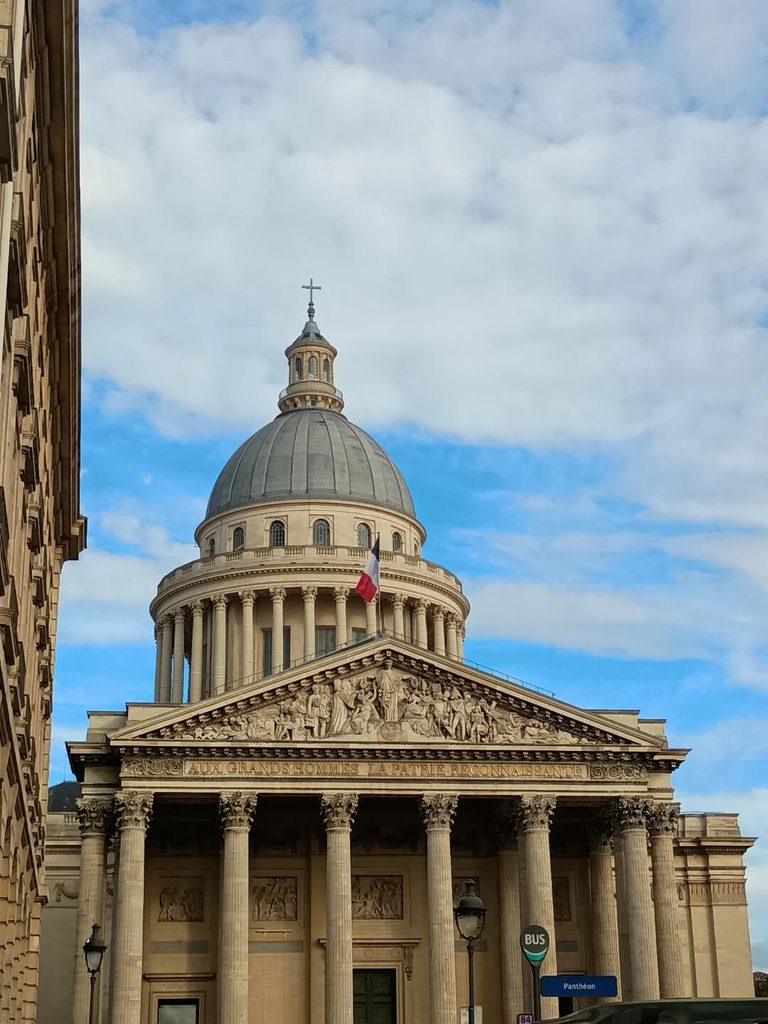
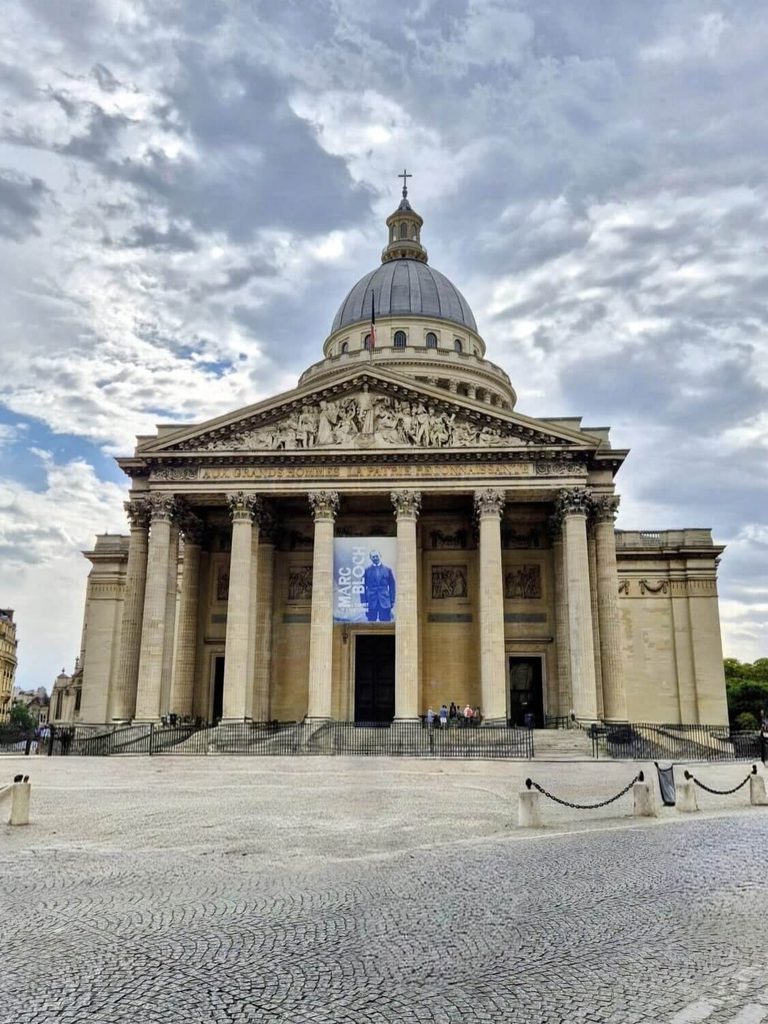
The Panthéon is one of them. Standing on Place du Panthéon in the Latin Quarter, its huge columns and enormous dome make it hard to miss. At first, it looks like a grand church, which makes sense because it was originally built as one.
The story changed during the French Revolution when the building became a national monument. Today, you can see its huge paintings, sculptures, the famous Foucault’s Pendulum and a crypt containing the tombs of people such as Victor Hugo, Voltaire, Rousseau, Marie Curie and Alexandre Dumas.
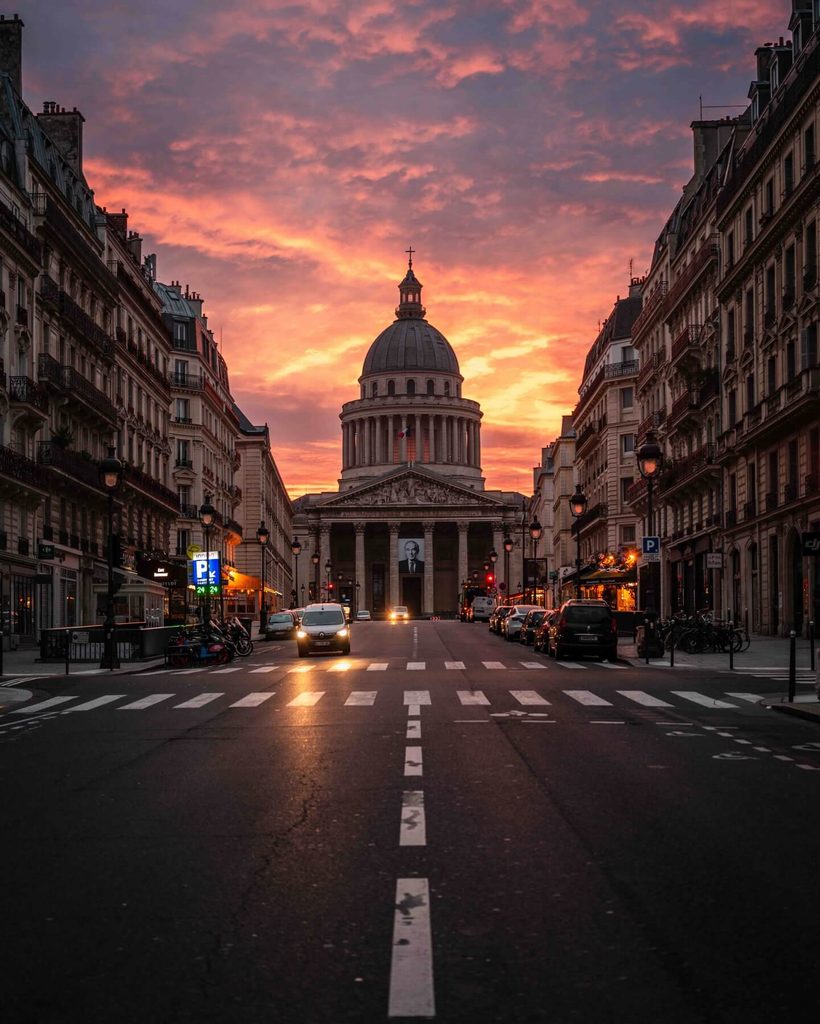
I like the Panthéon because there’s more to the visit than simply looking at the building. You can come for the architecture, history or famous names in the crypt, and its location makes it easy to combine with a walk through the Latin Quarter.
In this guide, I’ll cover what to see inside, who is buried here, ticket prices, opening hours, the dome, how long to spend and how I’d fit it into a day in this part of Paris.
What Is the Panthéon in Paris?
The Panthéon is one of the best known monuments in Paris’s Latin Quarter. Today, it serves as a national mausoleum where France honors people who made important contributions to the country. The crypt contains the tombs of famous writers, scientists, politicians and other figures, including Victor Hugo, Voltaire, Rousseau and Marie Curie.
It wasn’t always a national monument. The building was originally designed as the Church of Sainte Geneviève, commissioned by Louis XV and designed by architect Jacques Germain Soufflot. Construction began in 1764, and Soufflot’s design combined classical columns and a huge dome with elements inspired by Gothic architecture.

During the French Revolution, the building was changed from a church into a secular monument in 1791 and renamed the Panthéon. Its purpose changed several times during the 19th century as France moved between different political systems, including periods when it returned to religious use.
Victor Hugo’s burial here in 1885 helped establish the Panthéon as the national mausoleum we know today.
When you visit, you’ll see both sides of its history. The paintings and architecture still reflect its religious beginnings, while the crypt tells the story of the people France has chosen to remember. That mix is what makes the Panthéon such an interesting stop in the Latin Quarter.
A Brief History of the Panthéon
The Panthéon has had several lives over the past few centuries. It started as a church, became a revolutionary monument, returned to religious use for a time, and eventually became France’s national mausoleum.
Why Did Louis XV Build the Panthéon?
The building was originally planned as the Church of Sainte Geneviève, dedicated to the patron saint of Paris. Louis XV commissioned architect Jacques Germain Soufflot to create a grand church that combined classical columns and proportions with the open feeling of Gothic architecture.
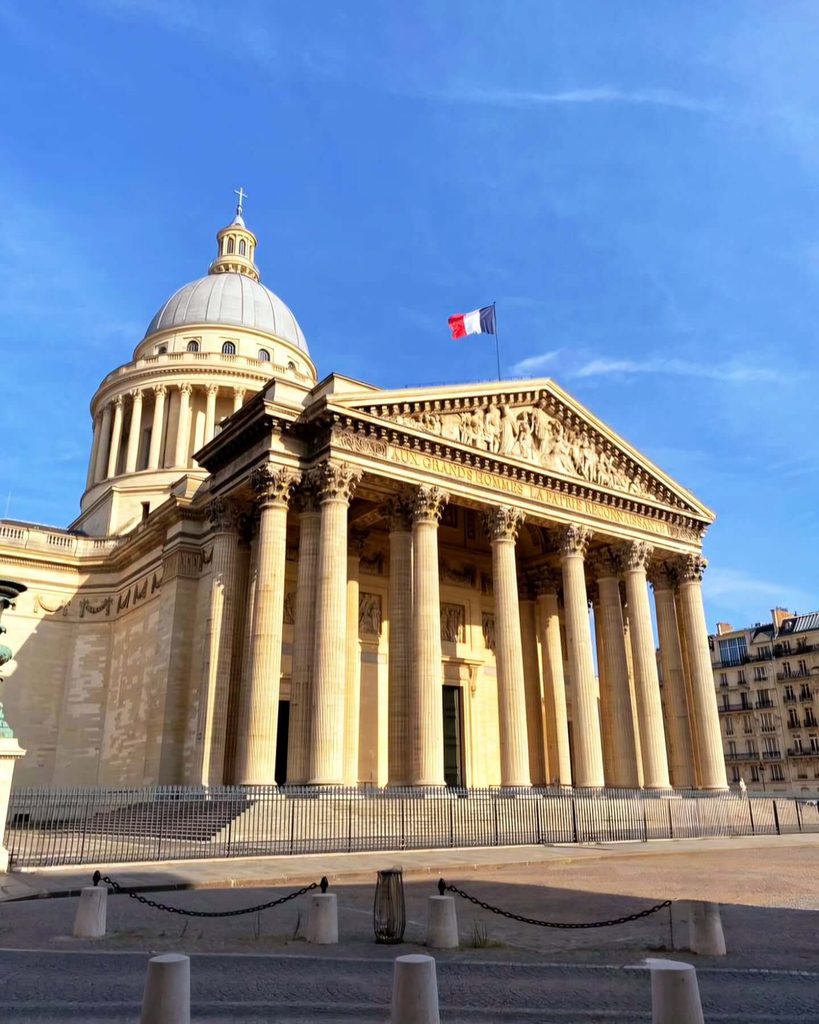
Construction began in 1764, but Soufflot died before it was finished. Other architects continued the work, and the building was completed around 1790.
How Did It Become the Panthéon?
The French Revolution changed its purpose. In 1791, the former church became a secular monument called the Panthéon, intended to honor important figures of the nation.

Voltaire was transferred here in 1791, followed by Jean Jacques Rousseau in 1794. During the 19th century, the building switched between religious and civic use several times as France’s political situation changed.
Why Is 1885 Important?
The burial of Victor Hugo in 1885 helped establish the Panthéon as France’s national mausoleum. Since then, writers, scientists, politicians and Resistance figures have been honored here.

When you visit the crypt, you’ll see names from very different periods of French history, including Victor Hugo, Alexandre Dumas, Marie Curie and Jean Moulin.
The Panthéon in 2026
The story continues today. In June 2026, historian and Resistance member Marc Bloch was honored at the Panthéon alongside his wife, Simonne Bloch.
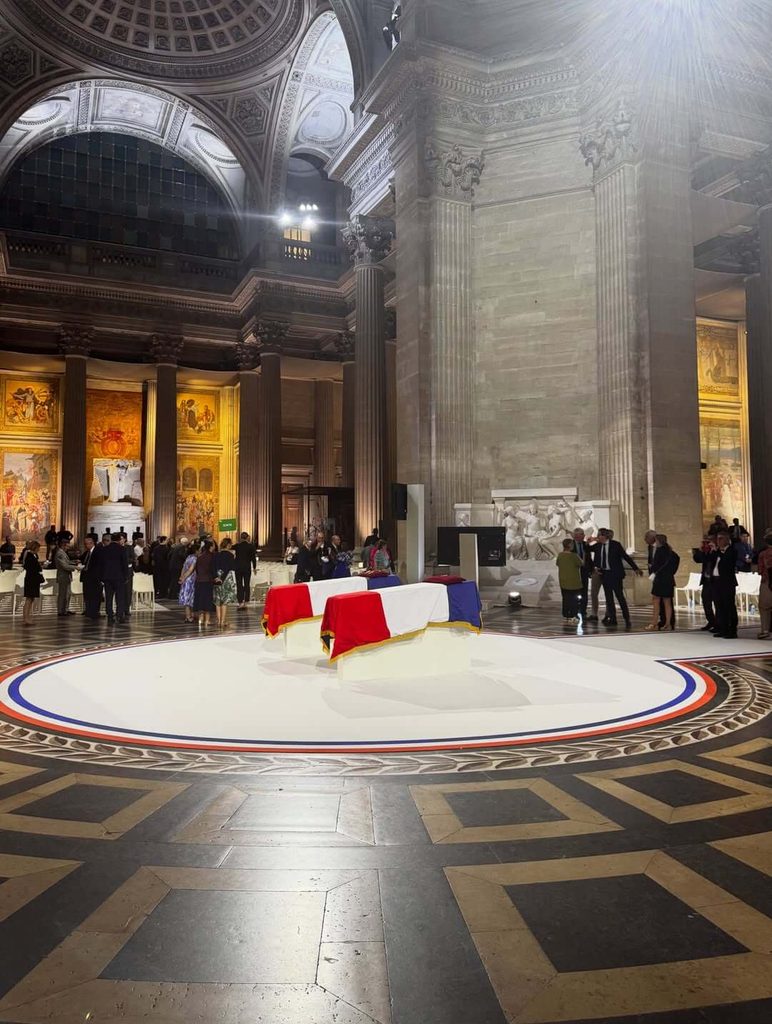
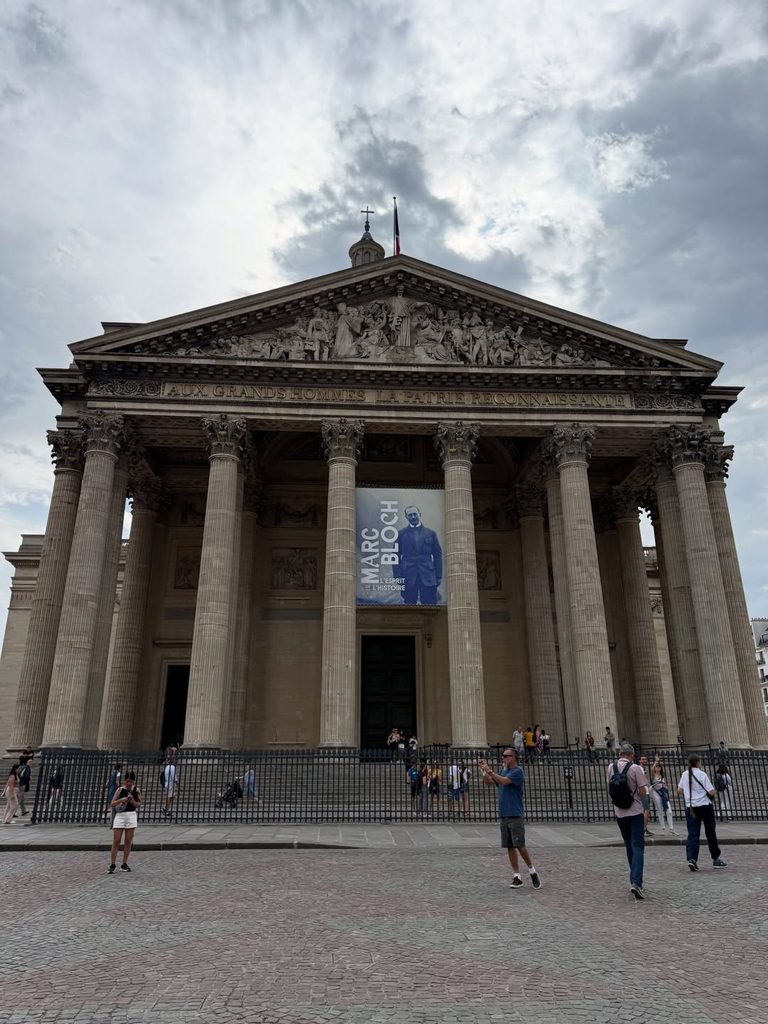
A temporary exhibition, Marc Bloch, l’esprit de l’Histoire, is also being presented at the monument through December 31, 2026. If you’re visiting Paris this year, it’s worth checking whether the exhibition is still running when you go.
Panthéon Paris Architecture: What to Look For
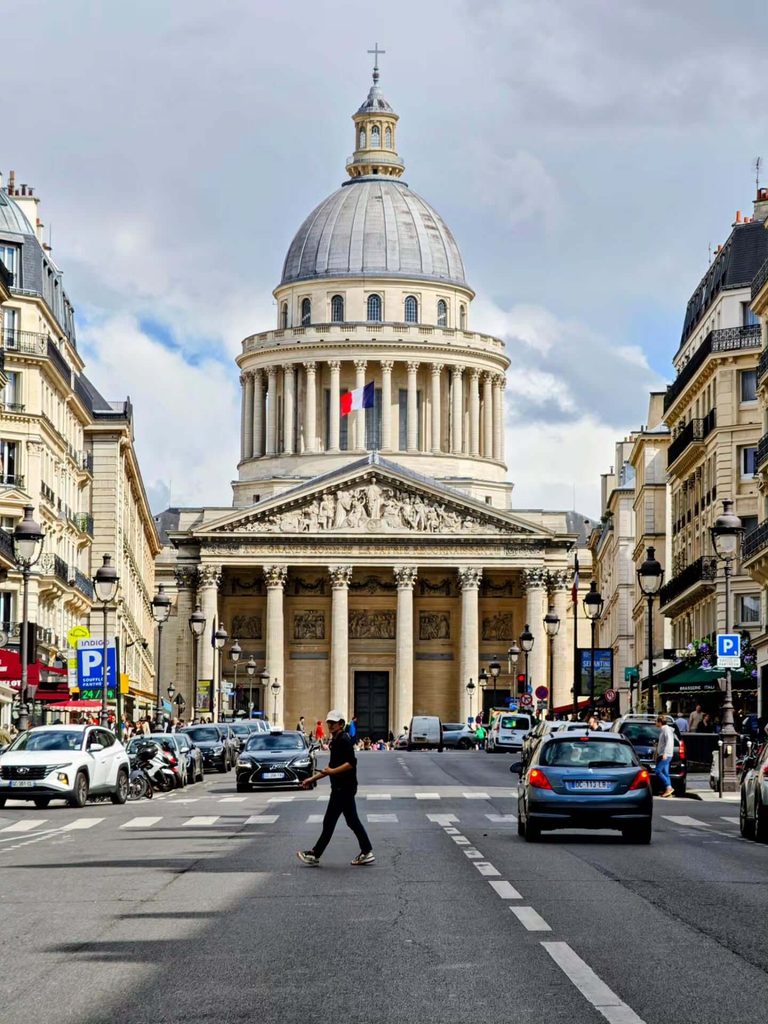
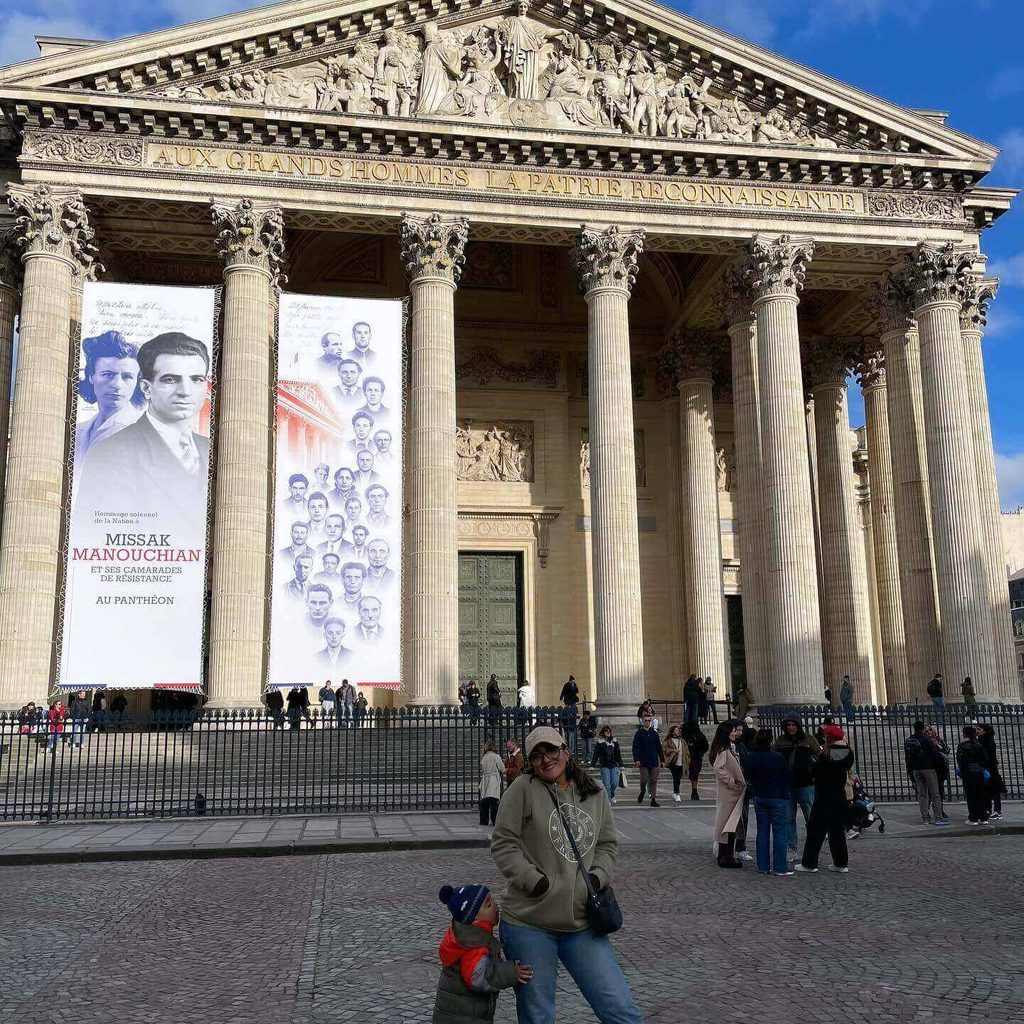
Even if architecture isn’t your main interest, I’d spend a few minutes looking at the Panthéon before going inside. Its huge columns, wide steps and massive dome are easier to appreciate from Place du Panthéon than from inside.
The Neoclassical Exterior
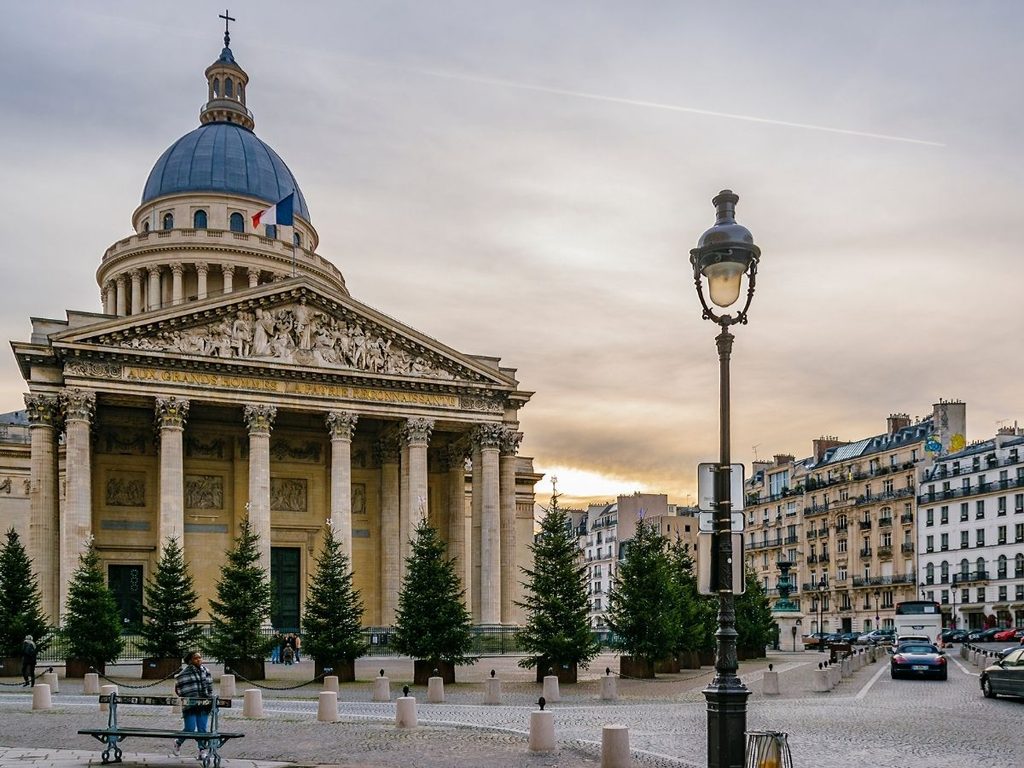
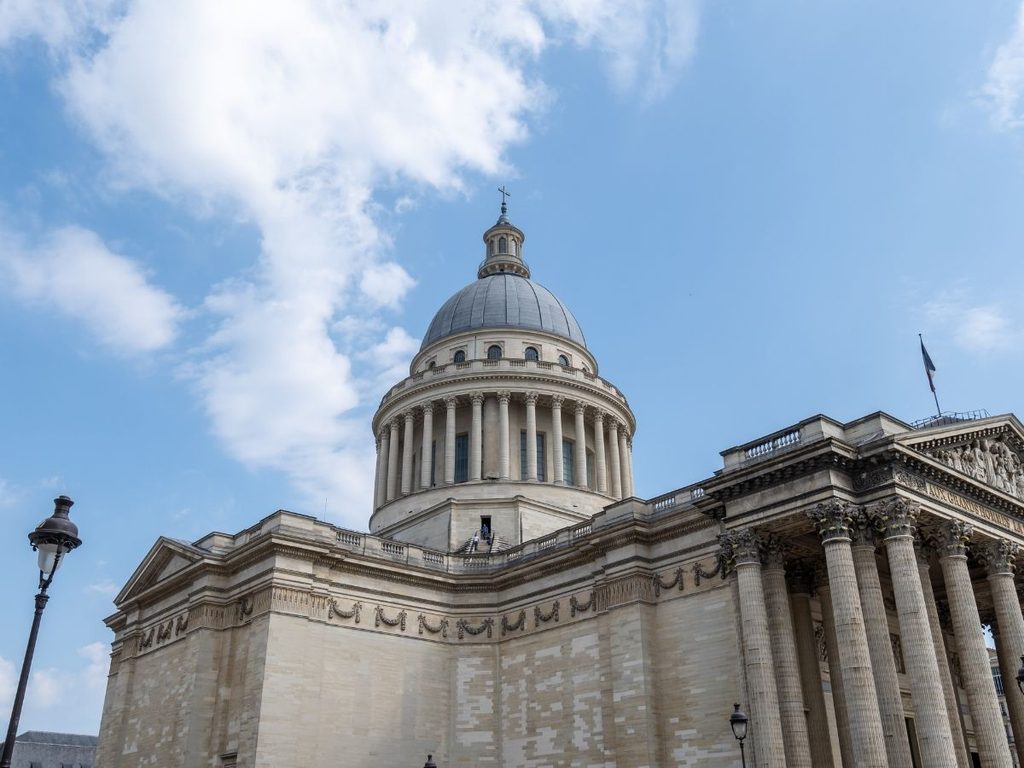
The entrance has a large portico with Corinthian columns and a triangular pediment, giving it the appearance of an ancient Greek or Roman temple. Above it sits the enormous dome, which makes the building easy to spot from around the Latin Quarter.
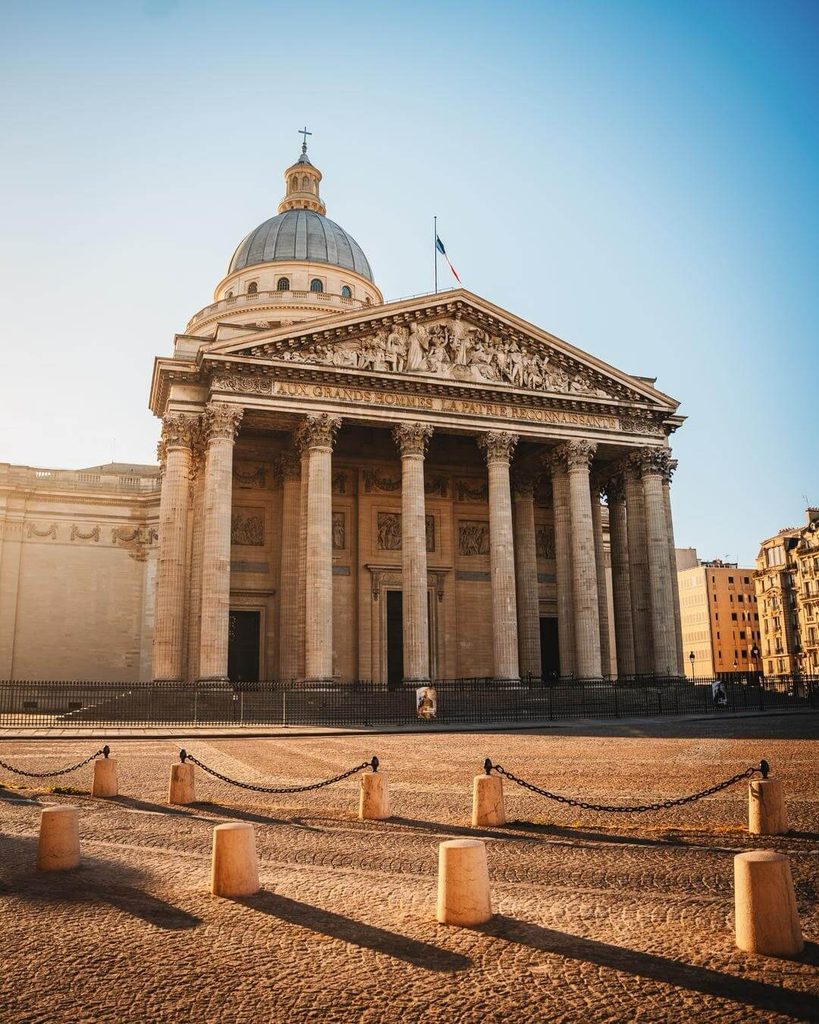
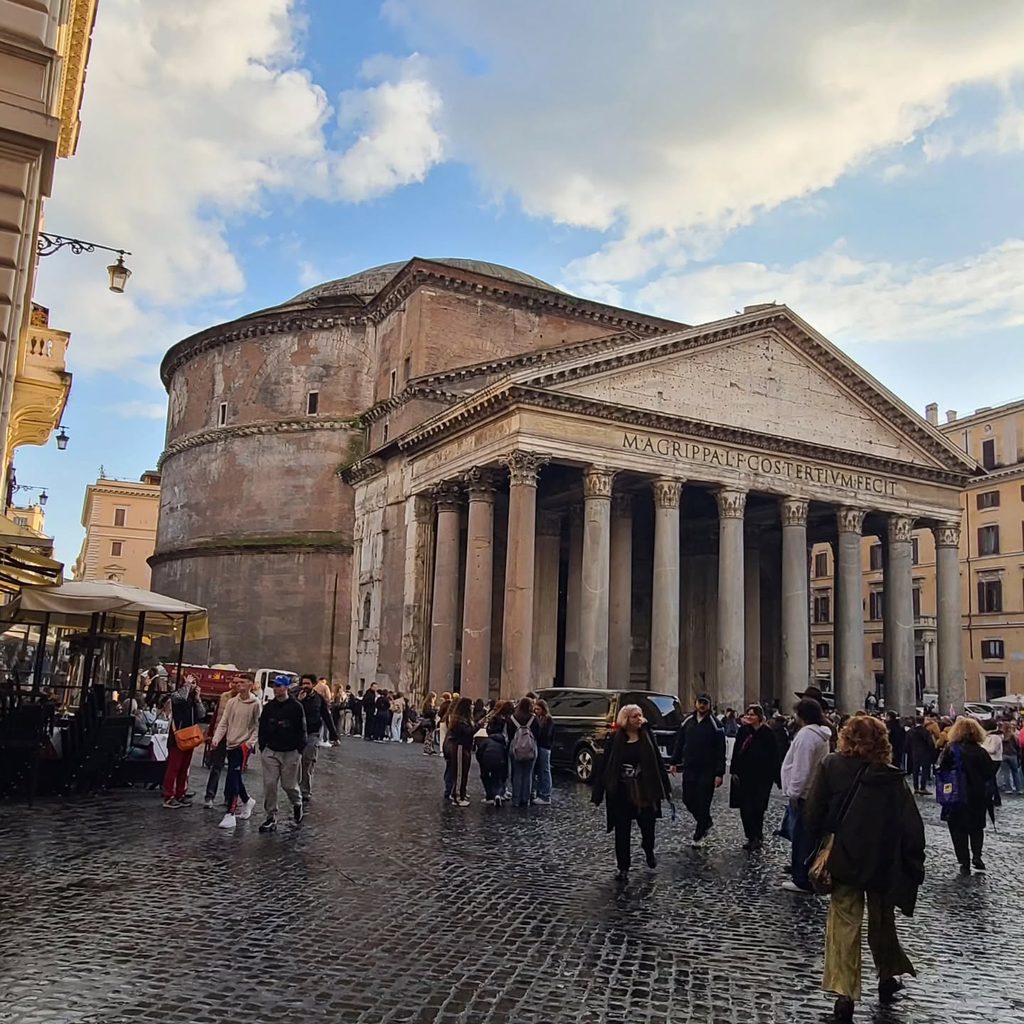
Soufflot designed the Panthéon by combining classical architecture with ideas from Gothic buildings. Before going inside, stand across the square for a moment. You’ll get a much better sense of its size from there.
The Panthéon’s Dome
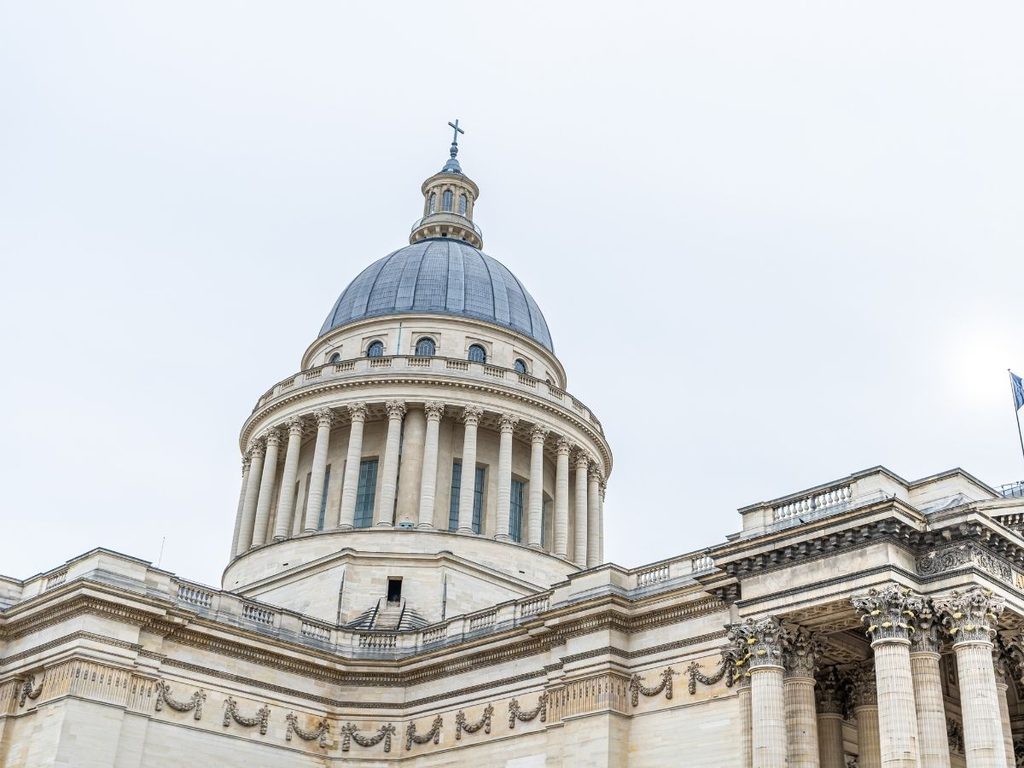
The dome is one of the building’s defining features and is made up of several structural layers. It has also undergone major restoration, including work carried out between 2013 and 2015 on the dome, metalwork and upper structures.
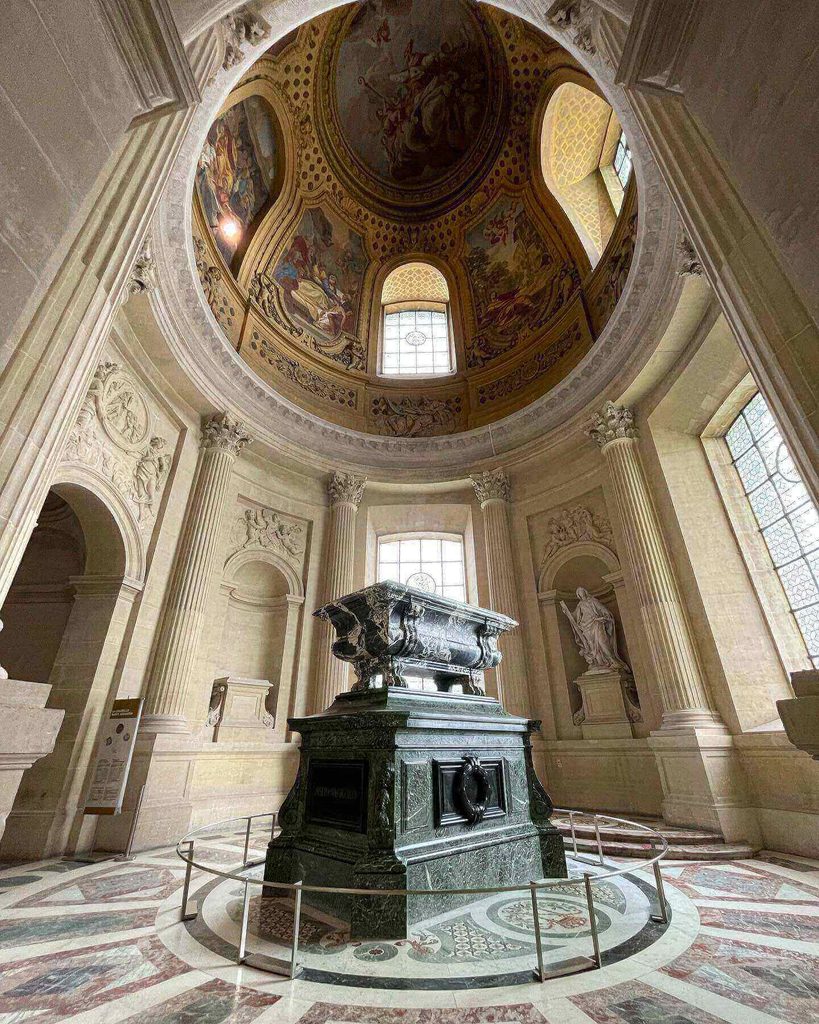
Inside, look up from different parts of the building. The changing angles make it easier to appreciate how large and carefully designed the dome is.
The Interior
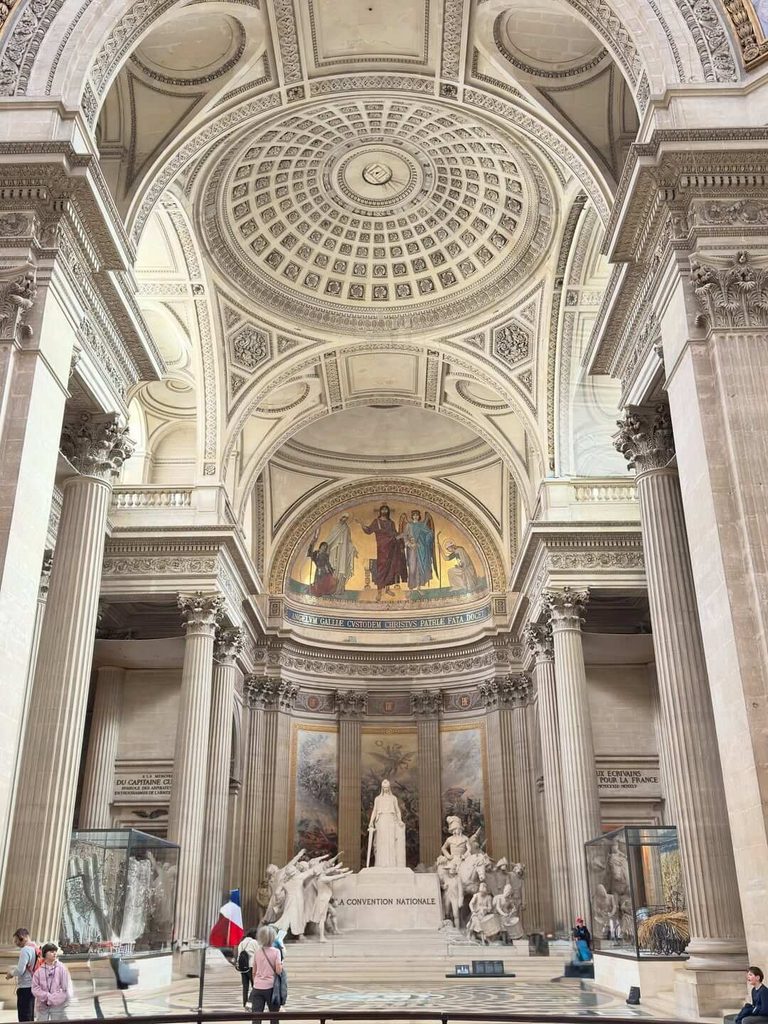
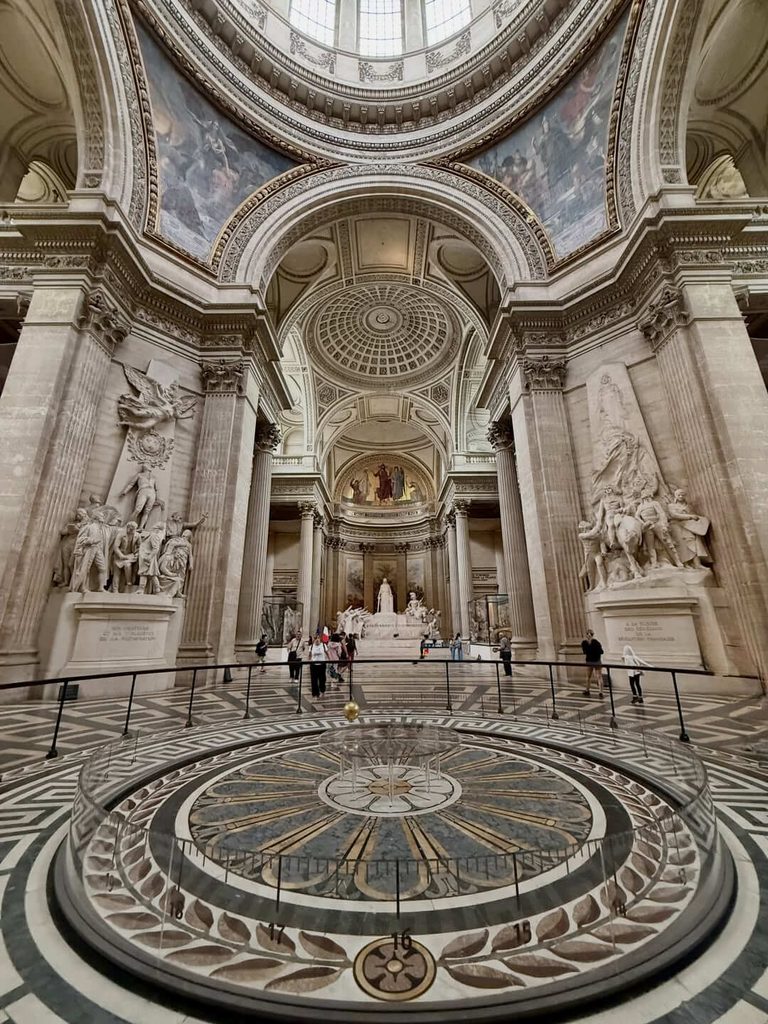
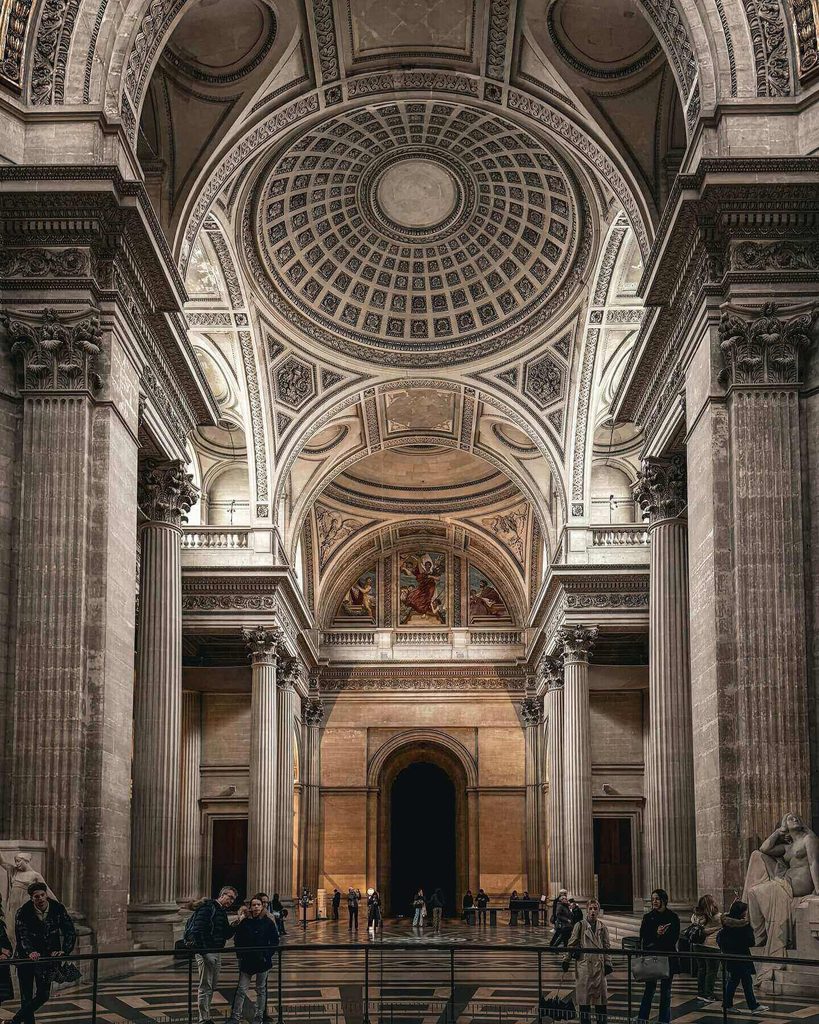
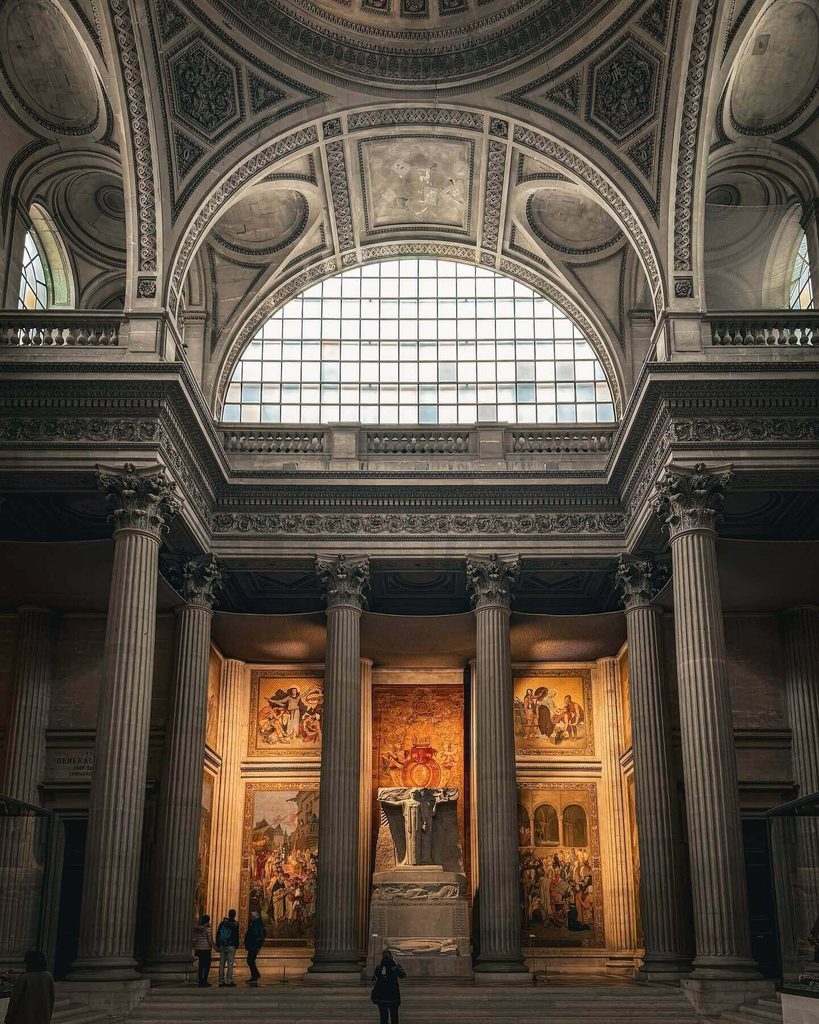
The interior feels much larger than you might expect. The nave, columns, arches, paintings and dome all compete for your attention, so I’d take a few minutes before heading down to the crypt.
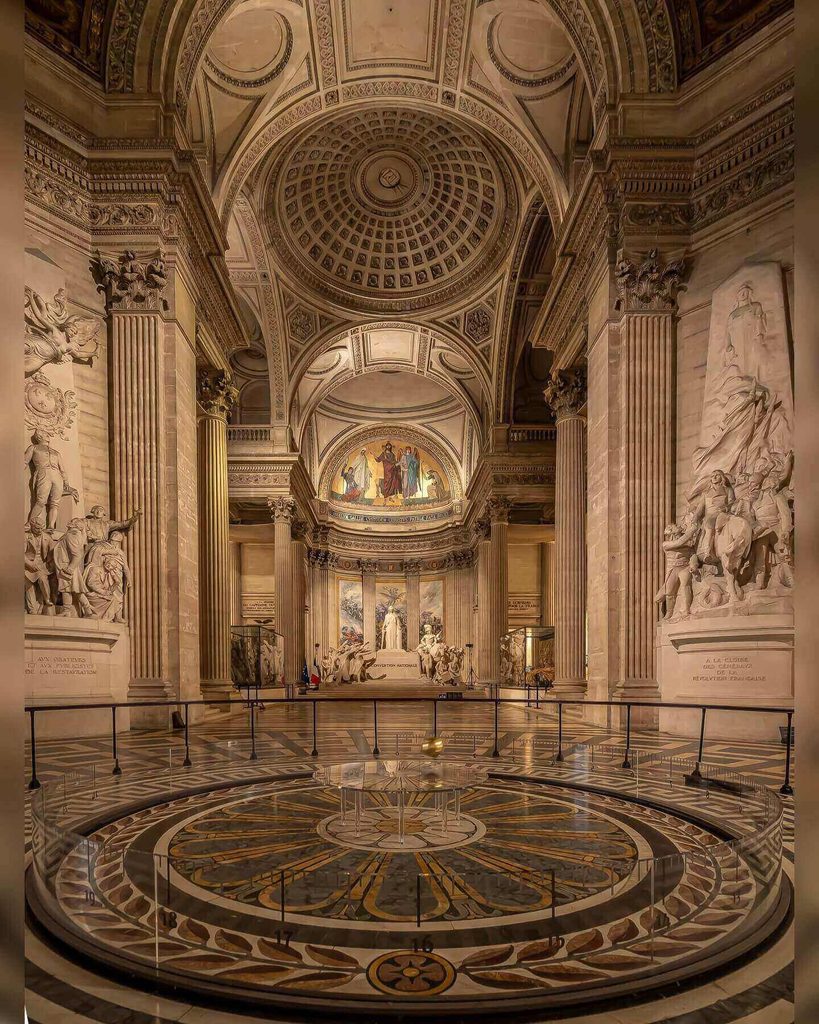
The paintings and sculptures also tell parts of the building’s religious and French history. You don’t need to understand every detail to enjoy them, but they are worth slowing down for.
The Best Things to See Inside the Panthéon
1. The Nave
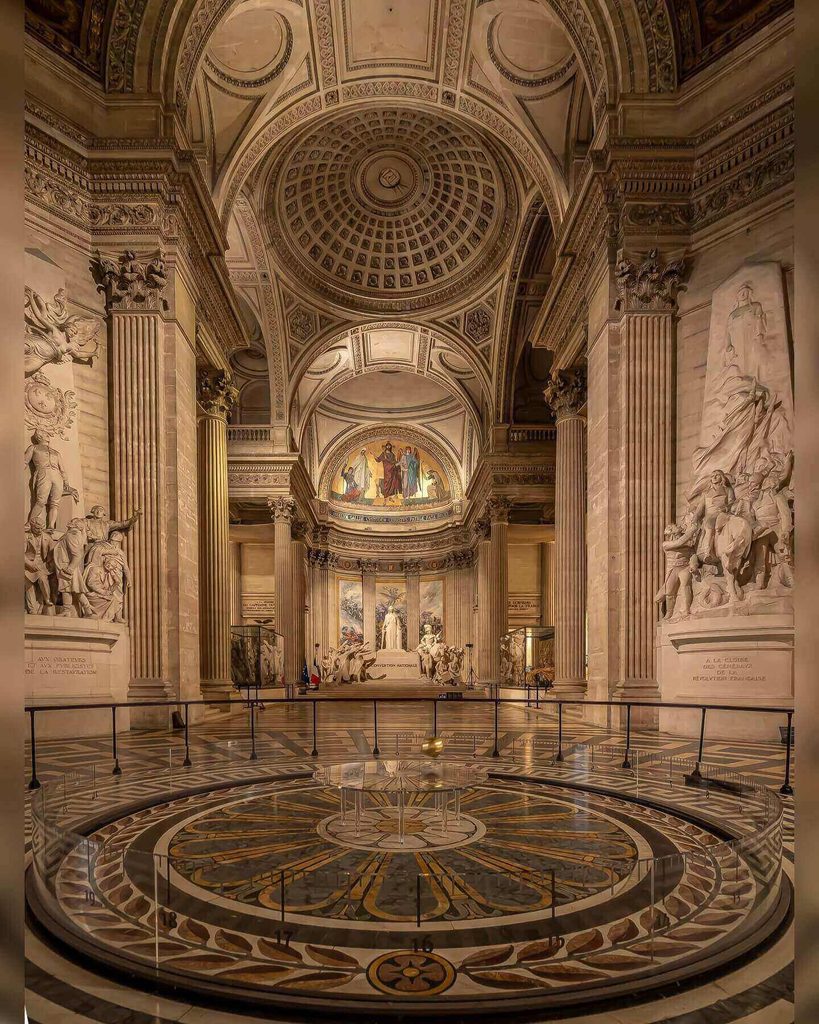
Start by looking around the main space before heading elsewhere. The columns, arches and enormous dome give you the best sense of Soufflot’s design and the building’s original purpose as a church.
2. Foucault’s Pendulum
The Foucault’s Pendulum is one of the most unusual things you’ll see here. In 1851, Léon Foucault used a pendulum beneath the dome to demonstrate the rotation of the Earth.
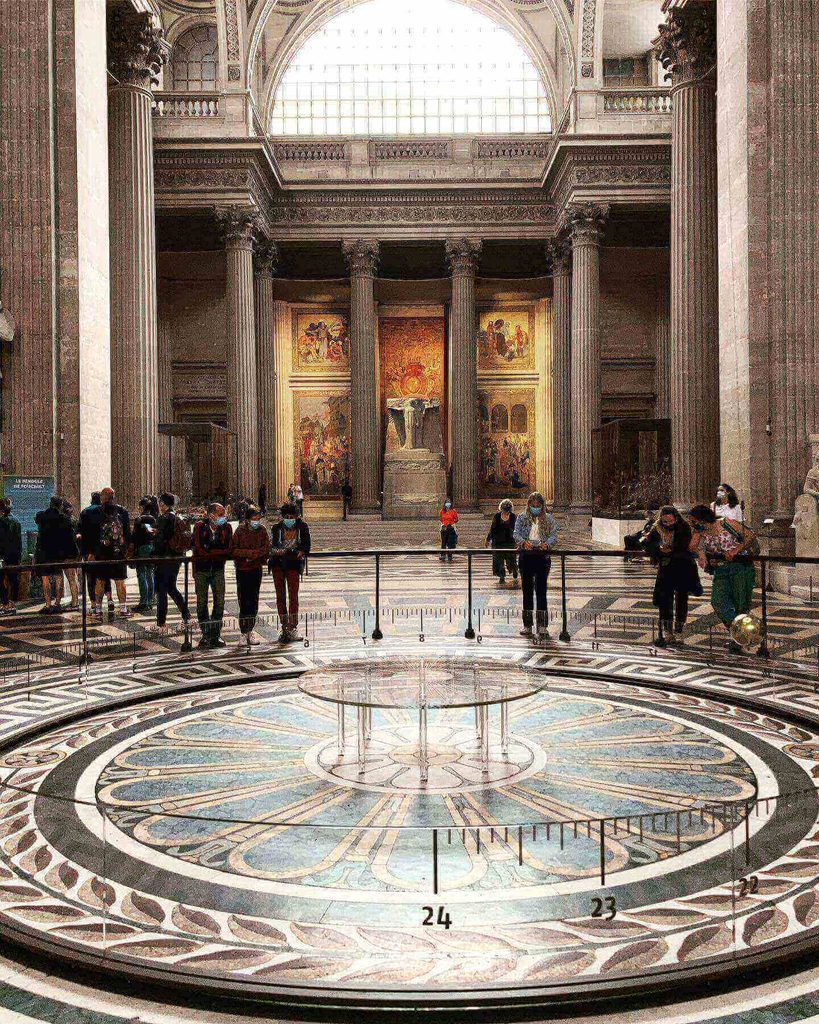
The original setup used a 67 meter wire and a 28 kilogram brass and lead sphere. A permanent pendulum was installed at the Panthéon in 1995. You don’t need to know much physics to appreciate it. Once you understand what it is showing, watching it move becomes surprisingly interesting.
3. The Crypt
Don’t rush through the crypt. This is where you’ll find the tombs and memorials of famous French figures, including Victor Hugo, Voltaire, Rousseau, Marie Curie and Alexandre Dumas.
The official monument currently lists 81 burials across 26 cemetery areas. For me, this is what makes the visit feel more personal because you’re seeing the names and resting places of people you’ve probably encountered in French history before.
4. The Paintings and Murals
The paintings around the Panthéon depict scenes from French and religious history. They’re easy to overlook when you’re focused on the dome or crypt, so take a few extra minutes to look around.

You don’t have to study every painting. Pick a few that catch your attention and move on.
5. The Dome and Upper Levels
If the upper levels are open during your visit, they are worth considering, especially on a clear day. You can see Paris from a different perspective and get a better understanding of the Panthéon’s position in the Latin Quarter.
Access can depend on the season, weather and current visitor arrangements, so check the official information before planning around the dome. If you’re mainly interested in the crypt and history, though, the standard visit is still worthwhile.
Who Is Buried in the Panthéon?
One of the most interesting parts of visiting the Panthéon is seeing the names in the crypt. They come from very different parts of French history, so you aren’t just walking past a collection of writers or politicians.
You’ll find philosophers, scientists, military and Resistance figures, writers and people who played important roles in French public life.
Writers and Philosophers
Some of the best known names in the Panthéon are writers and thinkers.
Voltaire, Jean Jacques Rousseau, Victor Hugo, Émile Zola and Alexandre Dumas are all remembered here. Voltaire and Rousseau were among the first major figures transferred to the Panthéon during the French Revolution, when the building was being turned into a national monument.
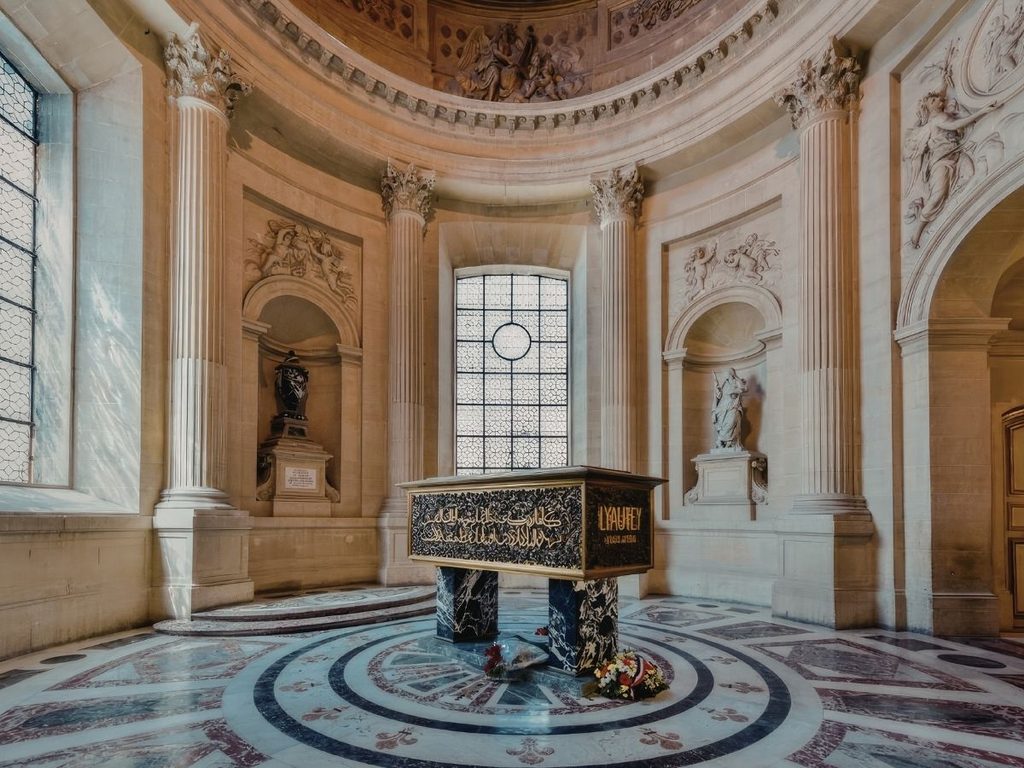
Victor Hugo was added much later, in 1885. His burial was a major national event and helped establish the Panthéon’s modern role as a place where France honors its most celebrated figures.
If you enjoy French literature, this is one of the sections of the crypt where I’d slow down. Seeing the names of writers you’ve probably encountered in books or history makes the visit feel much more personal.
Scientists
The Panthéon also has a strong connection with French science.
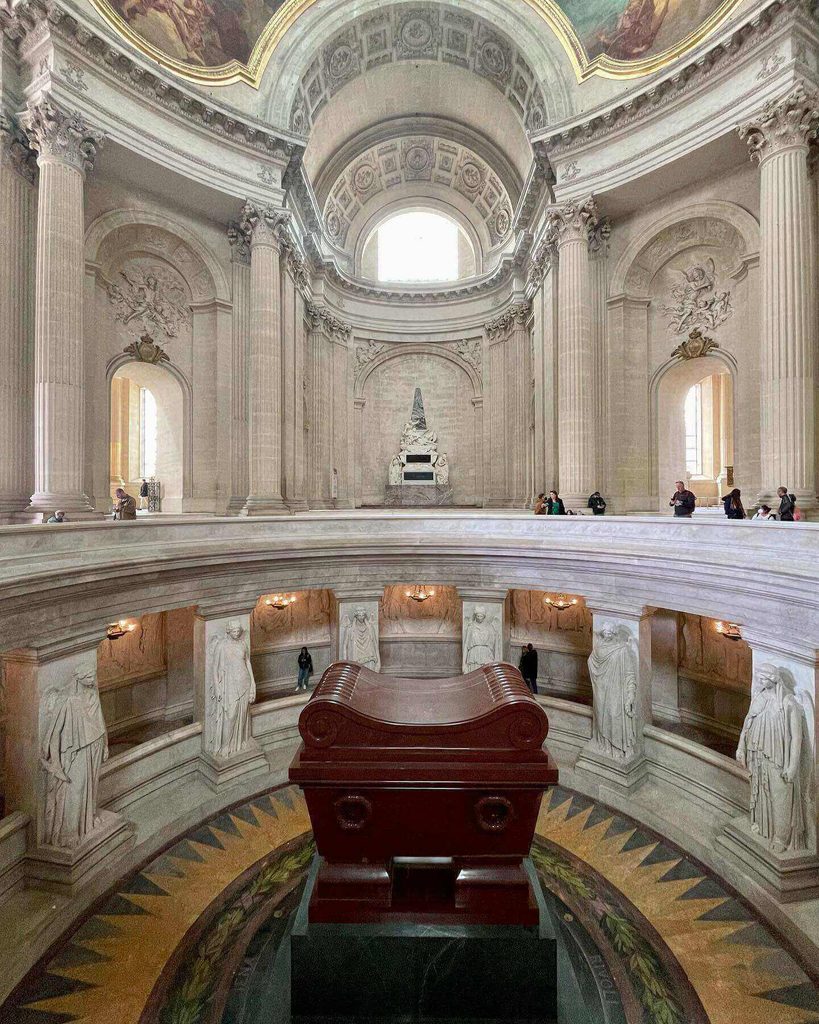
Pierre and Marie Curie are probably the most recognizable names here. Other scientists honored in the Panthéon include Joseph Louis Lagrange, Gaspard Monge, Marcelin Berthelot and Paul Langevin.
Marie Curie’s story is particularly interesting. She entered the Panthéon in 1995 and was the first woman to be honored there for her own achievements. Her place in the crypt is a reminder that the people remembered here aren’t limited to political leaders or famous writers.
Resistance Figures
The crypt also tells part of the story of France during the Second World War.
Figures connected with the French Resistance include Jean Moulin, René Cassin, André Malraux, Jean Monnet, Pierre Brossolette and Jean Zay. Their presence gives the crypt a very different atmosphere from the sections dedicated to writers and scientists.

Joséphine Baker was added in 2021. She is remembered not only for her career as a performer but also for her work with the French Resistance and her activism.
In 2026, historian and Resistance member Marc Bloch was also honored at the Panthéon. His addition is a good reminder that the story of the monument is still being written.
How Does Someone Get Into the Panthéon?
There isn’t a standard application or lifetime award that automatically leads to the Panthéon.
The process is known as panthéonisation, and the decision is made at the national level. It is a way for France to recognize someone whose work or actions are considered important to the country.
That’s also why the list of people inside isn’t fixed forever. New figures can be honored as France’s idea of who deserves national recognition changes over time.
When you walk through the crypt, it’s worth paying attention to the different names rather than only looking for the few people you already know. The mix of writers, scientists, politicians and Resistance figures is what gives the Panthéon much of its character.
Where Is the Panthéon in Paris?
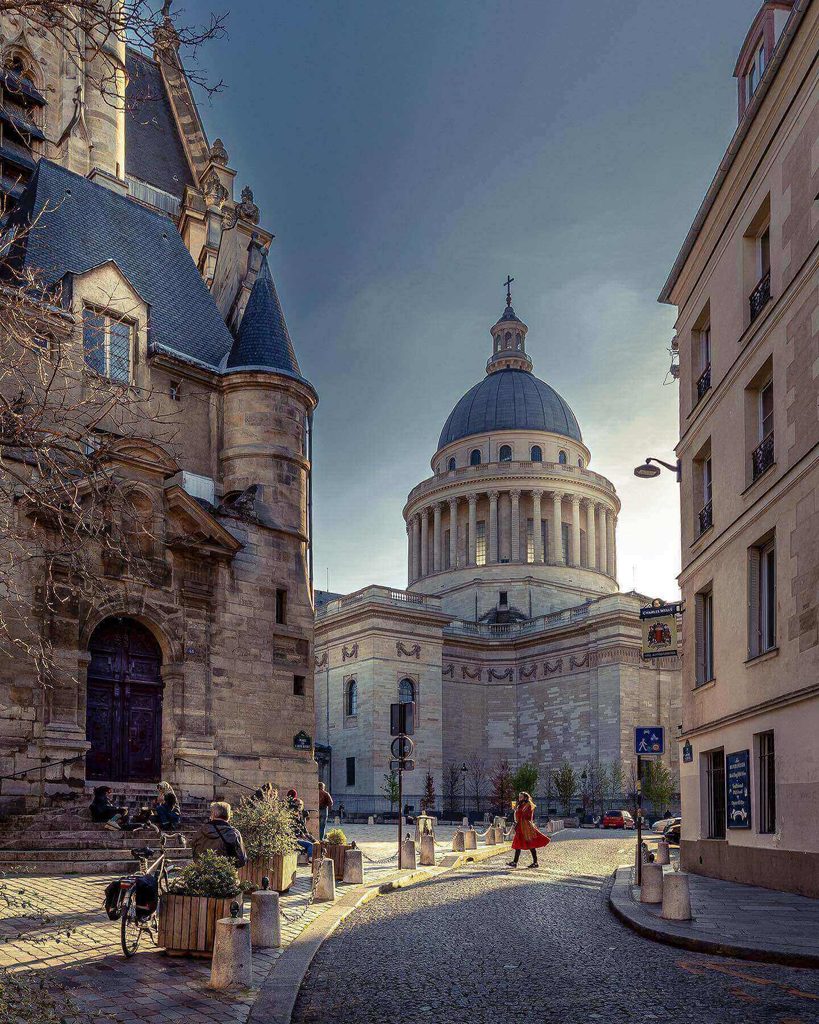
The Panthéon is at Place du Panthéon in the 5th arrondissement, right in the heart of the Latin Quarter. It’s surrounded by the Sorbonne, small cafés, historic streets and several other places that are easy to visit on foot.
That location is one of the reasons I like adding the Panthéon to a Paris itinerary. You don’t really need to make a special trip just for it. You can visit the monument in the morning, walk through the Latin Quarter afterward, and continue toward Luxembourg Gardens or the Seine.
The Sorbonne, Luxembourg Gardens, Musée de Cluny and Saint Étienne du Mont are all nearby. You can also simply wander through the surrounding streets, which is often more enjoyable than rushing from one attraction to another.
If you’re planning a day in this part of Paris, I’d treat the Panthéon as one stop in a larger walking route rather than the only thing on your list.
How to Get to the Panthéon
By Metro
The easiest metro options include Jussieu on Line 7 and Cardinal Lemoine on Line 10. From either station, you’ll need to walk through the Latin Quarter to reach Place du Panthéon.
I actually like this because the walk is part of the experience. Instead of arriving directly at the monument, you get a chance to see some of the neighborhood first.
By RER
If you’re using the RER B, Luxembourg station is a useful option. This can work particularly well if you’re already visiting Luxembourg Gardens.
From the gardens, you can simply walk uphill toward the Panthéon. It’s a pleasant way to combine the two rather than taking another train for a very short distance.
By Bus
Several bus routes serve the streets around the Panthéon. Buses can be a good choice if you don’t want to deal with stairs or simply want to see more of Paris during the journey.
I also find buses useful when moving around the Left Bank because you get to see the streets and buildings along the way instead of spending the entire trip underground.
Panthéon Paris Tickets and Prices
Ticket prices are something I’d check before your visit because they can change, especially with seasonal pricing.
For 2026, standard self guided admission is €16 from April 1 through September 30 and €13 from October 1 through March 31. From April through September, Wednesday admission is also €13 under the current pricing.
The standard self guided ticket includes access to the main monument, including the nave, crypt and temporary exhibitions. Some visitors can enter for free, including children under 18 and certain visitors aged 18 to 25, depending on the official eligibility rules.
If you’re visiting during a busy period, I’d check the official ticketing page before you go rather than relying on prices you find on older travel blogs. It’s also worth checking whether any special exhibitions or access arrangements are running on your chosen date.
Panthéon Paris Opening Hours
The Panthéon currently follows seasonal opening hours:
April 1 to October 31: 10 AM to 6:30 PM
November 1 to March 31: 10 AM to 6 PM
The last admission is 45 minutes before closing, so don’t plan to arrive right at the end of the day.
The monument opens at noon on the first Monday of each month and is closed on January 1, May 1 and December 25.
Opening hours can also be affected by special events, extreme heat or bad weather, particularly if you’re planning to visit areas such as the upper levels. I’d check the official Panthéon website on the day or shortly before your visit, especially if the dome is an important part of your plan.
Is the Panthéon Dome Worth Visiting?
If the upper levels are open during your trip, I think the dome is worth considering, especially if you enjoy architecture or want to see Paris from a different angle. From above, you get a better idea of the building’s size and how the different parts of the dome fit together.
The main thing to remember is that access isn’t always the same throughout the year. Weather and visitor arrangements can affect the upper levels, so I wouldn’t plan your entire visit around the dome without checking ahead.
For me, the dome is a nice addition rather than something you have to do. If you love views and architecture, I’d make the effort. If you’re mainly interested in the crypt, famous names and history, the standard visit is plenty.
How Long Do You Need at the Panthéon?
I’d allow about one hour for a normal visit. That’s enough time to look around the main interior, see Foucault’s Pendulum and spend some time in the crypt without rushing.
If you’re mainly interested in the famous highlights, you could get through it in around 45 minutes. I’d personally give yourself 1 to 1.5 hours, especially if it’s your first visit.
If you want to study the paintings, visit a temporary exhibition or join a guided tour, allow closer to two hours. Official guided visits generally take around 1.5 hours.
Best Time to Visit the Panthéon
Visit in the Morning
Morning is a good choice if you’re planning to spend the rest of the day around the Latin Quarter. You can visit the Panthéon first and then walk toward the Sorbonne, Luxembourg Gardens or Rue Mouffetard.
It’s also nice to get the monument out of the way early so you have more flexibility later in the day.
Visit in the Afternoon
An afternoon visit works well if you’re already exploring the Latin Quarter. Just don’t leave it until the last minute. Since admission ends 45 minutes before closing, arriving late can leave you with very little time inside.
I’d rather arrive with enough time to see the crypt and interior properly than rush through just to fit it into the schedule.
Visit the Dome in Good Weather
If you’re planning to visit the upper levels, choose a day when the weather is reasonably clear. A cloudy day won’t affect the main interior, but it can make the Paris views much less rewarding.
Always check current access conditions before you go, particularly if the dome is one of the main reasons you’re visiting.
Accessibility at the Panthéon
The Panthéon has a ramp providing access to the exterior and the nave, according to the official 2026 visitor information.
The upper levels are a different matter because they involve separate access arrangements. If you have mobility concerns, I’d check the current accessibility information before booking, particularly if you want to visit the dome.
For specific requirements, contacting the monument directly is the safest option. Access arrangements can change, and it’s better to know what to expect before arriving than to find out at the entrance.
What to Know Before Visiting the Panthéon
A little planning can make the visit much easier, especially if you’re going during a busy period.
I’d book your ticket ahead of time if your dates are popular. The official ticketing site lets you buy tickets online, and it’s worth checking the current visitor information before you leave.
Try not to arrive with a large bag. The Panthéon doesn’t have a luggage storage service or cloakroom, and bags larger than 20 × 40 × 40 cm aren’t allowed inside. If you’re carrying luggage around Paris that day, I’d leave it at your hotel or find a separate luggage storage option before coming here.
If you’re using a mobile ticket, download it before you arrive rather than relying on a good phone signal at the entrance. It saves a little hassle when you’re standing in the queue.
Also, don’t assume that every part of the Panthéon is included with the standard ticket. The regular visit covers the main monument, nave, crypt and temporary exhibitions, while access to upper areas can have different arrangements. If the dome is important to you, check the current conditions before booking.
Weather is worth keeping in mind too. Bad weather or extreme heat can affect access to some parts of the monument, particularly the upper levels.
Finally, don’t try to squeeze the Panthéon into a 20 minute stop. You can see the main space quickly, but I’d give yourself at least an hour if you want time for the crypt, paintings and Foucault’s Pendulum.
Is the Panthéon Worth Visiting?
For me, yes, especially if you’re already spending time in the Latin Quarter. You can see the main parts in about an hour, making it easy to fit into a wider day of sightseeing.
I’d recommend it if you enjoy architecture, French history, literature or science. The crypt is especially interesting if you want to see the resting places of people like Victor Hugo, Marie Curie, Voltaire and Alexandre Dumas. Foucault’s Pendulum also gives the visit something different from the usual Paris monument.
If this is your first trip and you only have one day, though, I’d probably prioritize places such as the Eiffel Tower, Louvre, Notre Dame or Sainte Chapelle. Paris has too many attractions to fit everything into a short itinerary.
With three or more days, I’d definitely consider adding the Panthéon. You can visit it, then continue exploring the Latin Quarter and Luxembourg Gardens without spending your whole day indoors.
Final Thoughts
The Panthéon isn’t a place I’d recommend to everyone, but I think it’s a worthwhile stop if you have time. I like that the visit combines architecture, French history, art, science and the stories of people remembered in the crypt.
 Source: @gfinazdevillaine
I’d make it part of a wider Left Bank day rather than visiting it on its own. See the Panthéon, wander through the Latin Quarter, stop at Luxembourg Gardens and continue toward the Seine.
Before visiting, check the official website for current ticket prices, opening hours and access information, especially if you want to visit the dome.