
There is something slightly strange about planning a visit to Lascaux. You travel to the Dordogne to see one of France’s best known prehistoric sites, but you can’t actually enter the original cave.
The original Lascaux Cave was closed to visitors in 1963 after large numbers of tourists began affecting its fragile environment and paintings. Today, visitors go to Lascaux IV, a full scale replica of the original cave in Montignac.
I’ll admit, knowing you’re visiting a replica might sound a little disappointing at first. But once you understand why the original had to be protected, the experience makes much more sense. You can see the paintings up close without putting the real cave at further risk.

There’s also plenty of history behind Lascaux, from its discovery by four teenagers in 1940 to the conservation problems that followed. Inside Lascaux IV, you’ll see prehistoric paintings of horses, aurochs, deer and other animals, along with symbols that researchers still can’t fully explain.
In this guide, I’ll cover the history of Lascaux, what you’ll see at Lascaux IV, how old the paintings are, the difference between Lascaux II, III and IV, tickets, opening hours, getting there, and whether I think it’s worth adding to a Dordogne trip.
Where Is Lascaux?
Lascaux is in the Dordogne department of southwestern France, just outside Montignac Lascaux. It sits in the Vézère Valley, an area known for prehistoric caves, archaeological sites and small Dordogne towns.

If you’re driving, put 42 Avenue de Lascaux, 24290 Montignac Lascaux into your GPS rather than simply searching for Lascaux. There is another place called Lascaux in the Corrèze department, so it’s an easy mistake to make. Lascaux IV also has free parking.
I’d plan Lascaux as part of a wider day in the Vézère Valley rather than visiting only the cave. There are several other prehistoric sites nearby, so you can easily make a full day of it.
What Is Lascaux Famous For?
Lascaux is famous for its prehistoric cave paintings, especially the large animals covering its walls. You’ll see horses, aurochs, deer and other animals, along with engravings and mysterious geometric signs.

What makes the paintings interesting is how the artists worked with the cave itself. They followed the natural curves of the rock, overlapped figures and used the shape of the walls to give some animals a sense of movement.
UNESCO describes the paintings as notable for their detail, colour and lifelike treatment of the animals. We still don’t know exactly what every animal or symbol meant, which I think makes seeing them even more interesting.
The Story of Lascaux’s Discovery
Lascaux was discovered on September 12, 1940, by four teenagers from Montignac: Marcel Ravidat, Georges Agniel, Simon Coencas and Jacques Marsal. Marcel had noticed an opening while walking with his dog, Robot, and the group returned to investigate.
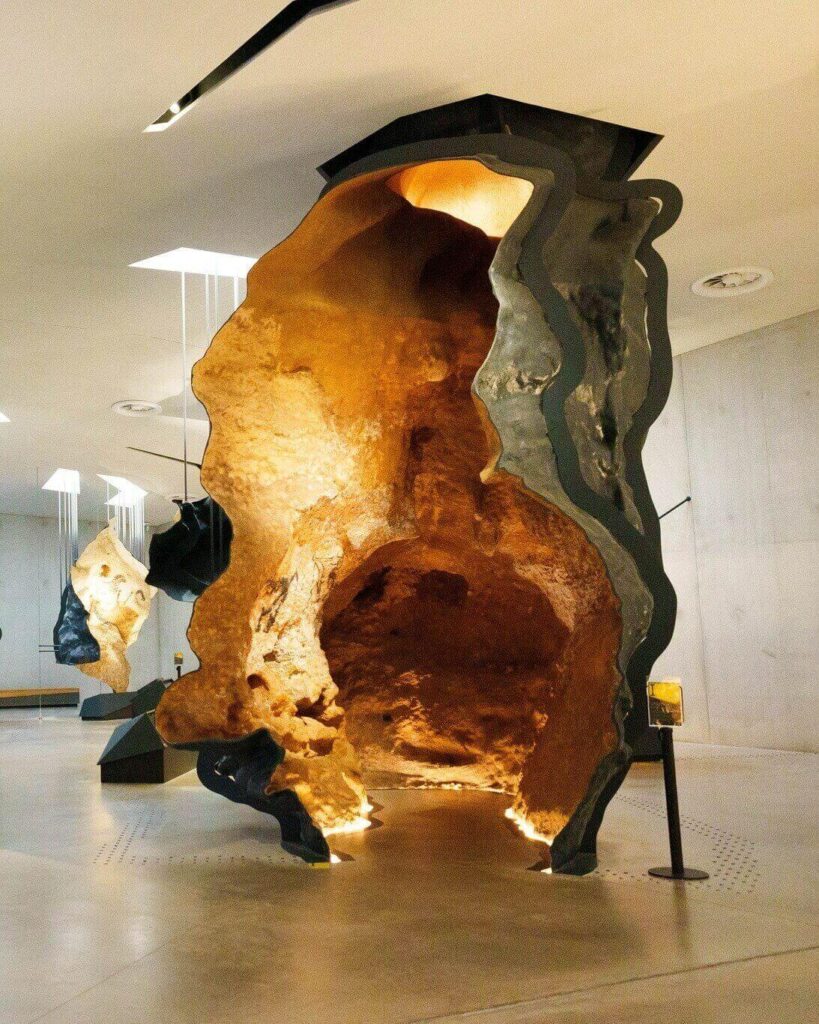
They soon realised they had found something extraordinary. The cave attracted researchers and visitors, and it eventually opened to the public in 1948.
When Lascaux Became a Tourist Attraction
The cave quickly became a popular attraction, but thousands of visitors created an unexpected problem. Heat, moisture and carbon dioxide from visitors changed the cave environment, and algae and fungi began affecting the walls and paintings.
After attempts to control the damage, the original cave was finally closed to visitors in 1963.
That’s why Lascaux IV exists today. The replica allows visitors to experience the paintings without exposing the original cave to the same conditions that caused problems in the first place.
Why Can’t You Visit the Original Lascaux Cave?
You can’t visit the original Lascaux Cave as a normal tourist. It has been closed to the public since 1963, after the large number of visitors began affecting the cave environment and putting the paintings at risk.
That can be a little confusing when you’re planning your trip. You travel to Lascaux expecting to enter the famous cave discovered in 1940, but the visit actually takes place at Lascaux IV, a carefully made replica nearby.
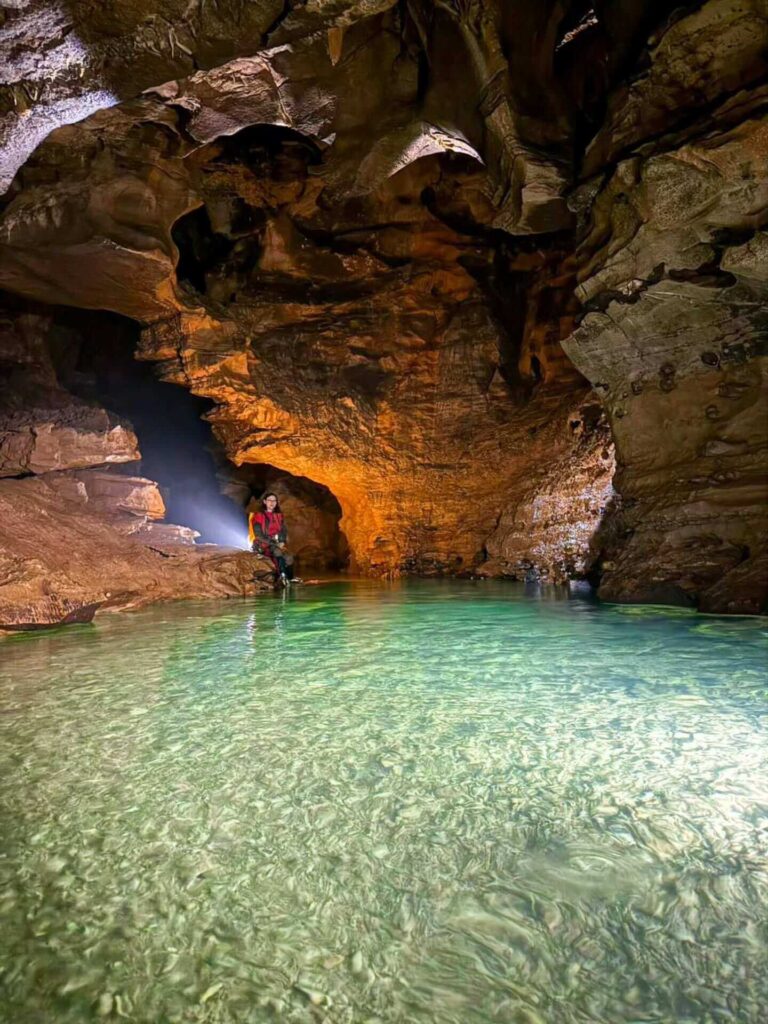
Once you know why, it makes much more sense. The original cave needs to stay protected, while the replica gives visitors a chance to see the paintings without adding thousands of people to the fragile environment.
The original cave is still on the same hill, close to Lascaux IV, but you won’t be able to walk inside it. Access is restricted to specialists working on conservation and research.
Lascaux II, III and IV
If you’re researching Lascaux before your trip, you’ll probably come across the names Lascaux II, Lascaux III and Lascaux IV. They’re different versions of the visitor experience, so it helps to know what each one means.
What Is Lascaux II?
Lascaux II was the first major replica of the cave. It opened in 1983 and reproduced the main areas containing some of Lascaux’s best known paintings.
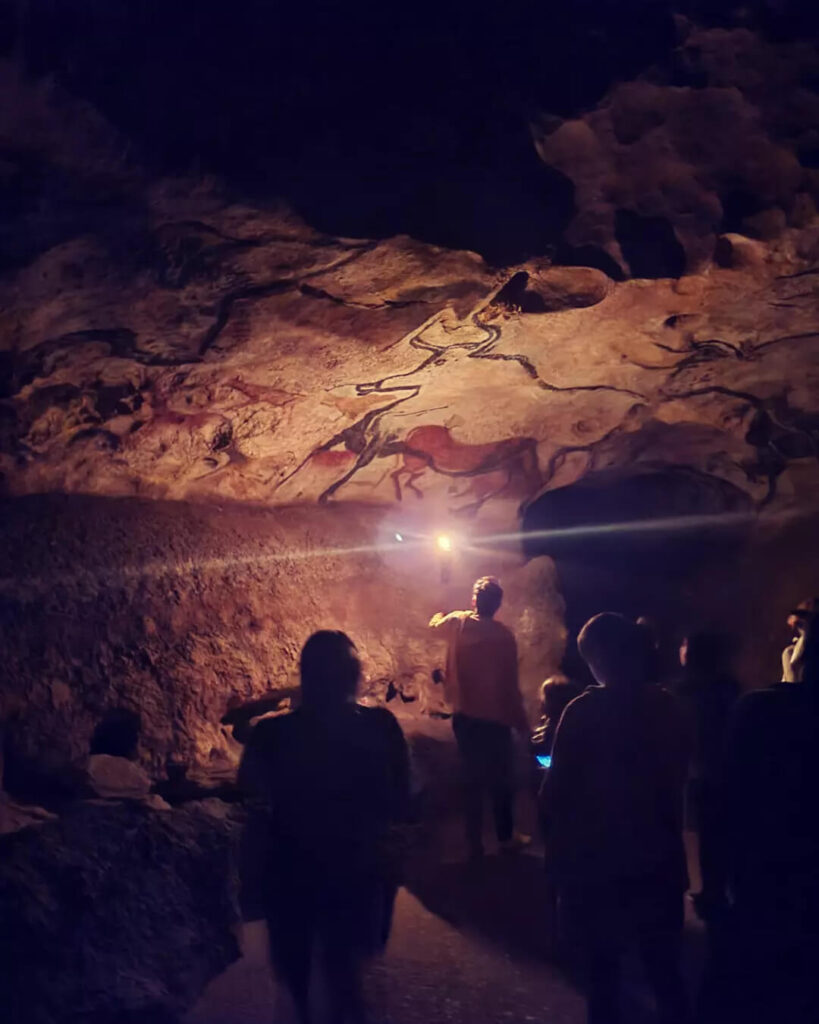
It covers around 80% of the original paintings and is located close to the actual cave. The experience is smaller and more intimate than Lascaux IV, but Lascaux IV is now the main visitor centre for most travellers.
What Was Lascaux III?
Lascaux III was created as a travelling exhibition rather than a permanent attraction at the cave.

The project began in 2010 and used large scale reproductions of the paintings so people could see Lascaux outside the Dordogne. If you come across Lascaux III while researching, think of it as the version designed to take the cave art to other locations.
What Is Lascaux IV?
Lascaux IV is where most visitors go today.

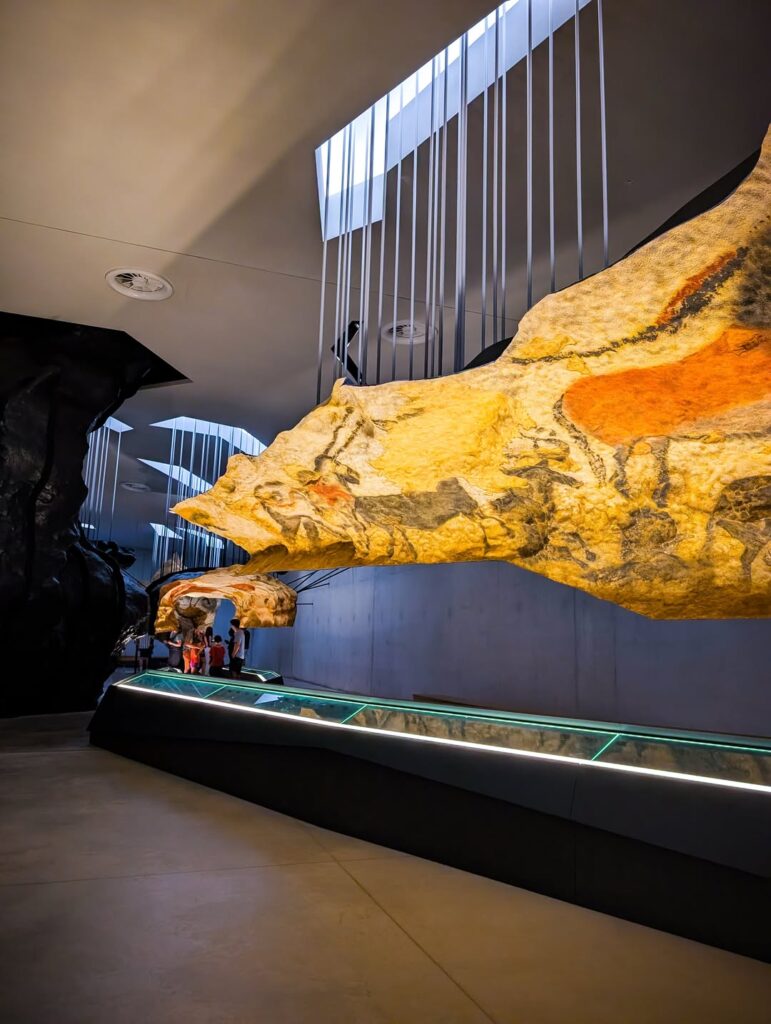
Opened in 2016, it houses a full scale replica of the original cave and the International Centre for Cave Art. The replica was created using detailed 3D scans of the original cave along with traditional techniques to reproduce the rock surfaces and paintings.
What I like about Lascaux IV is that the visit doesn’t end when you leave the replica cave. There are exhibition areas, films and interactive displays that explain the paintings, prehistoric artists and the story of Lascaux.
So, if you’re booking a visit today, Lascaux IV is the one to look for.
What You’ll See at Lascaux IV
Lascaux IV is much more than a quick walk through a recreated cave. I’d allow a couple of hours if you want to take your time and see the rest of the centre.
The cave replica is the obvious highlight, but the site also has spaces dedicated to prehistoric art and the history of Lascaux. The official visitor information includes areas such as the Lascaux Workshop, Theatre of Paleolithic Art, cinema, Gallery of the Imaginary and Immersion Room.
The Replica Cave
The replica is designed to give you a realistic idea of what the original cave looks and feels like.
The lighting is low, the passages are enclosed and the paintings appear on uneven rock surfaces rather than flat museum walls. The replica follows the shape and position of the original cave closely, so you get a much better sense of how the paintings fit together.
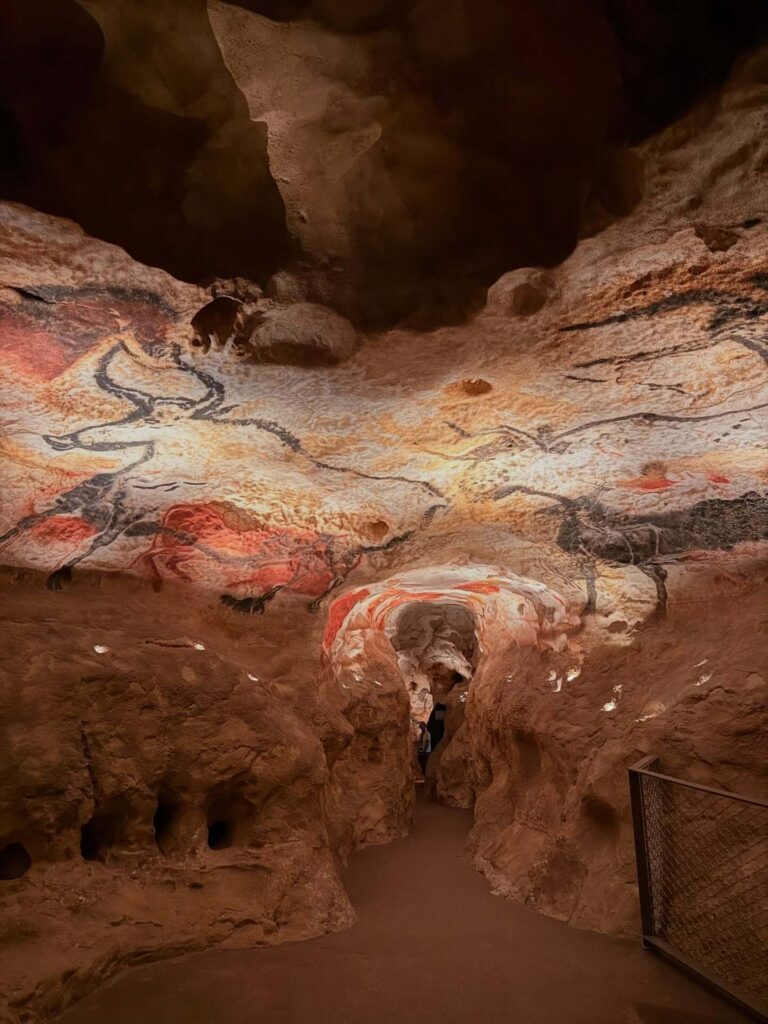
I found this more interesting than simply looking at photographs beforehand. When you see an animal painted around a curve in the rock, you start to understand that the cave itself was part of the artist’s working surface.
You also don’t need to rush through this section. Take a moment to look at the walls around the larger paintings because there are smaller figures and markings that are easy to miss.
The Hall of the Bulls
The Hall of the Bulls is probably the section most people associate with Lascaux.
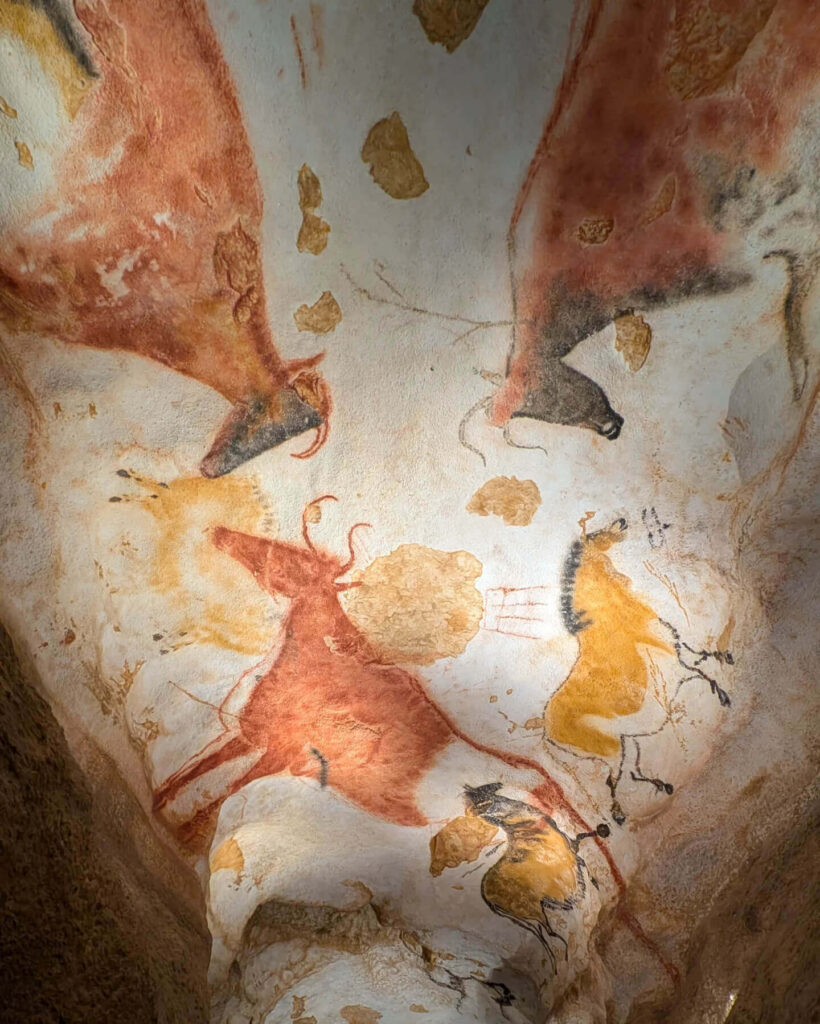
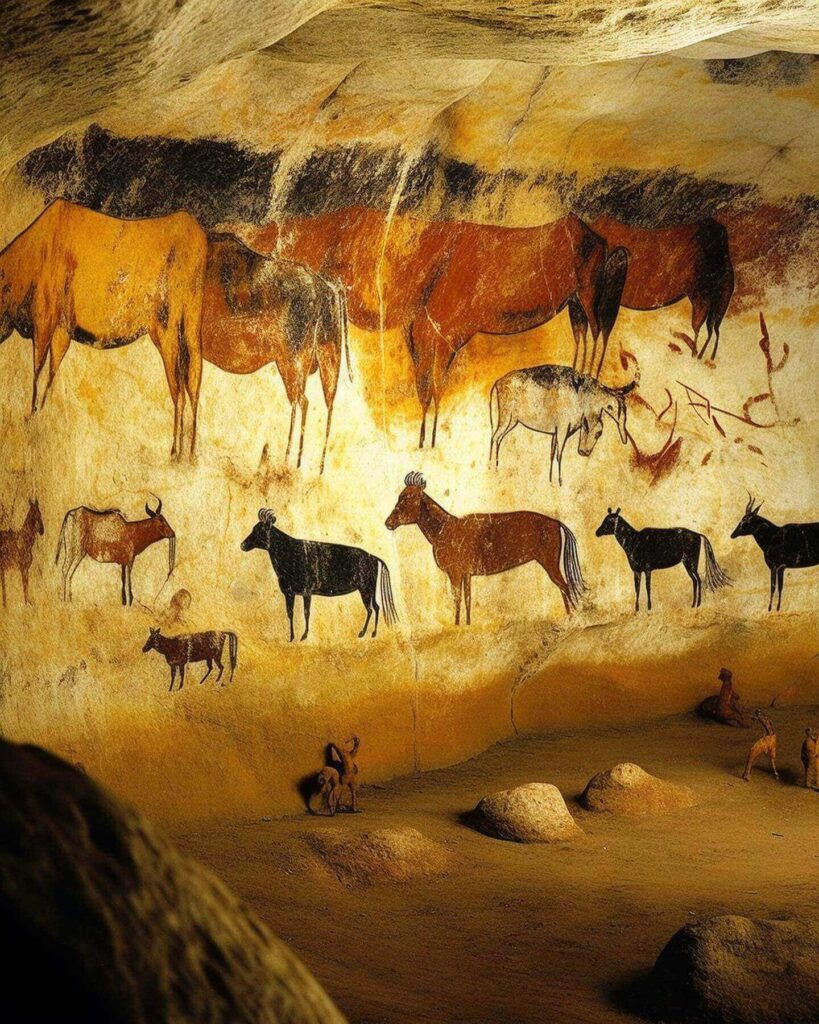
It’s a large space filled with animal figures, including horses and cattle, along with deer and other markings. Some of the animals are surprisingly large, so seeing them at their original scale gives you a very different impression from seeing them in a book or online.
I’d slow down here if you can. Look at how the animals are positioned across the wall rather than focusing on one painting at a time. The artists used the curves and natural features of the rock, which makes the whole surface feel connected.
The Axial Gallery and Great Black Bull
The Axial Gallery contains several of the paintings that have become closely associated with Lascaux.

One of the standout images is the Great Black Bull, which is around 3.71 metres long. There are also horses and other animals painted along the gallery, including the well known upside down horse that follows the shape of a rock formation.
What I find useful about seeing these paintings in the replica is the sense of scale. A photograph can show you the details, but it doesn’t really tell you how large the figures are or how they sit within the cave.
The Nave
The Nave contains more animals and engravings, including horses, bison, ibex and deer.
One of the better known scenes features a group of deer that appear to be moving together. The way the figures overlap and follow the wall has led researchers to think about movement and how prehistoric artists represented animals.
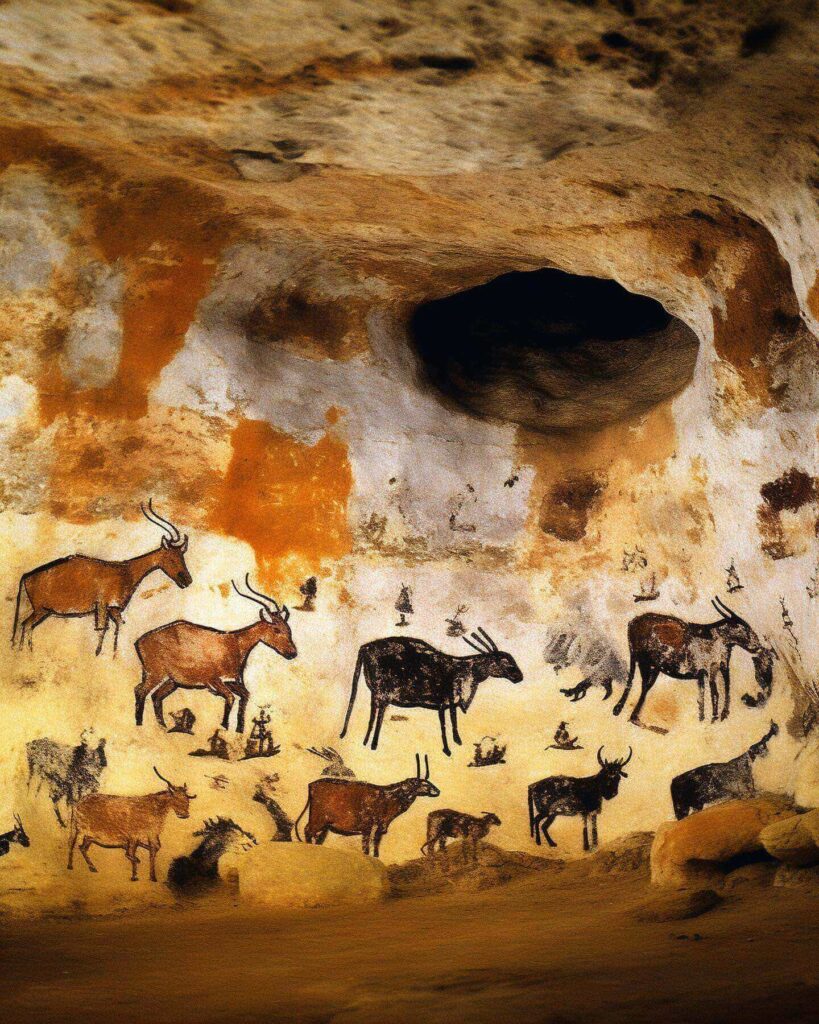
You’ll also notice plenty of geometric signs throughout this part of the cave. We can see the marks clearly, but their exact meaning remains uncertain.
That’s something I wouldn’t worry about trying to “solve” during your visit. There are plenty of explanations and theories, but after thousands of years, some questions simply don’t have definite answers.
The Well Scene
The Well Scene is one of the more unusual parts of Lascaux because it includes a human figure alongside animals.
The scene shows a man facing a wounded bison, with a bird and rhinoceros also represented. Researchers have suggested different interpretations of what might be happening, but there isn’t a confirmed explanation for the scene.
For me, that’s part of the appeal. You can stand there and look at the same figures that researchers have been studying for decades, but nobody can tell you with certainty what the person who painted them was thinking.
It’s a good reminder that Lascaux isn’t a history book with every answer already filled in. Some parts of the story are still open to interpretation, and that’s something you’ll notice throughout the visit.
How Old Are the Lascaux Paintings?
You’ll often see Lascaux described as being around 17,000 years old, but the dating is a little more complicated than that.
Older radiocarbon tests produced dates around 17,000 years before present. Later research showed that these conventional dates need to be calibrated, which gives older ages. Current research places the main human occupation of Lascaux at roughly 21,500 to 21,000 years ago.
The dating has changed over the years as researchers have tested different materials and used better methods. So if you come across both 17,000 and around 21,000 years in different articles, don’t assume one of them is automatically wrong. They’re usually referring to different dating methods.

The important thing to take away is that the people who painted and engraved Lascaux were working during the Upper Paleolithic, more than 20,000 years ago. The French Ministry of Culture currently places the main occupation around the transition between the Badegoulian and Magdalenian cultural traditions.
And that’s probably the number I’d keep in mind when visiting. You’re looking at artwork created so long ago that there is no written record telling us exactly who the artists were or what they were thinking.
How Were the Lascaux Paintings Made?
The artists had a surprisingly simple set of materials to work with. They used mineral pigments, charcoal, stone tools and basic painting tools such as brushes and swabs. Water could be used as a binder for the pigments.
The colours were fairly limited. Researchers have identified reds and yellows made from iron minerals, while black was commonly produced using manganese oxide. Charcoal was also used in some prehistoric cave art, although manganese was particularly important at Lascaux.

Painting wasn’t the only technique. The artists also drew and engraved into the rock, and in some areas they used spraying techniques. Which method they used depended partly on the surface they were working on. Some walls were harder and smoother, while others were softer and easier to engrave.
That’s one detail I find easy to overlook when looking at photographs of Lascaux. The artists weren’t working on a clean, flat canvas. They had to work with whatever the cave gave them.
How Did the Cave Walls Help the Artists?
The shape of the rock seems to have mattered quite a lot.
A natural curve or raised section of the wall could become part of an animal’s body. Researchers studying Lascaux have found that the physical shape and properties of the cave walls influenced how artists painted, drew and engraved different areas.

In some places, a natural bump in the rock helps suggest part of an animal’s shape. It’s a small detail, but once you know to look for it, the paintings become more interesting.
You’re not just looking at something painted onto a wall. The artists were working with the cave itself.
What Do the Lascaux Paintings Mean?
This is one part of Lascaux where there isn’t a simple answer. We know what many of the animals are, but the people who painted them left no written explanation of what the images meant.
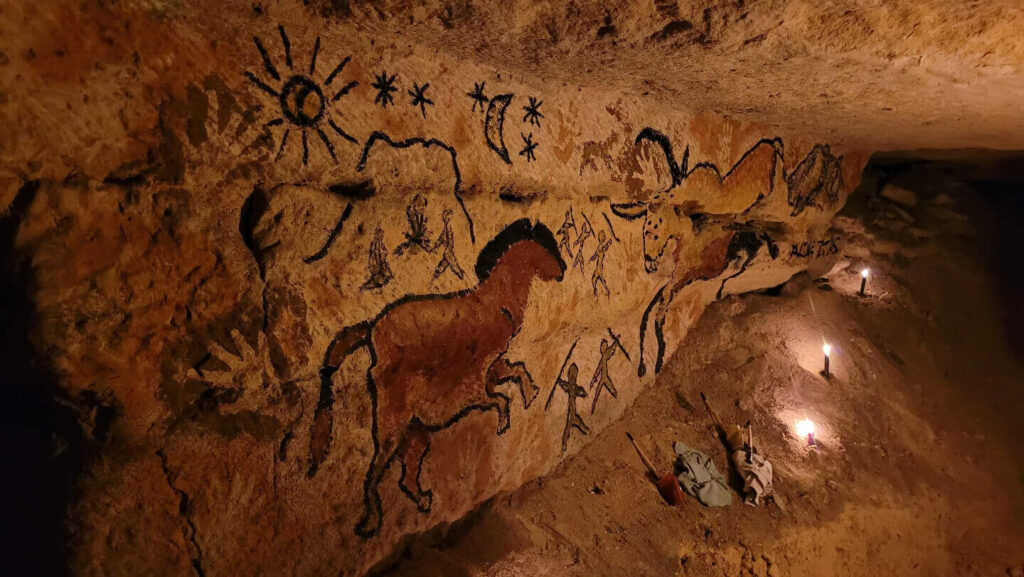
Researchers have suggested connections to hunting, rituals, beliefs and storytelling, but no single theory explains everything. The arrangement of animals and symbols seems deliberate, but we still can’t be certain what the artists intended.
Were the Paintings Used for Hunting?
The number of animals naturally led researchers to connect Lascaux with hunting. But the paintings don’t simply show the animals people ate. Horses are especially common, while some animals that were important as food appear much less often.
So I wouldn’t describe Lascaux as simply a prehistoric hunting record. The paintings probably had a more complicated purpose.
What Do the Symbols Mean?
Alongside the animals, you’ll see dots, lines and other geometric signs. Researchers have studied them for years, but we still don’t have a definite way to interpret them.
I think that’s worth remembering when you visit. Some of what you’re looking at still has no clear explanation.
Visiting Lascaux IV: Everything You Need to Know
Lascaux IV uses timed admission, so I’d book your visit ahead rather than simply turning up and hoping for a space.
You can choose between guided visits and self guided visits with an audio guide. There are also more specialised experiences if you want something beyond the standard tour.
I’d book Lascaux first if your travel dates are fixed, then plan the rest of your day around the time slot.
Lascaux Tickets
For 2026, standard admission costs €23 for adults aged 13 and over and €15 for children aged 5 to 12. Children under five enter free, while reduced rates are available for eligible visitors.
There are also combination tickets that pair Lascaux with nearby attractions such as Parc du Thot and Lascaux II.
Prices and tour options can change, so I’d check the official Lascaux website before booking.
How Long Does Lascaux Take?
The main visit takes around 1 to 1.5 hours, depending on the option you choose. I’d allow 2 to 3 hours in total if you want to see the other exhibition areas rather than leaving immediately after the cave replica.
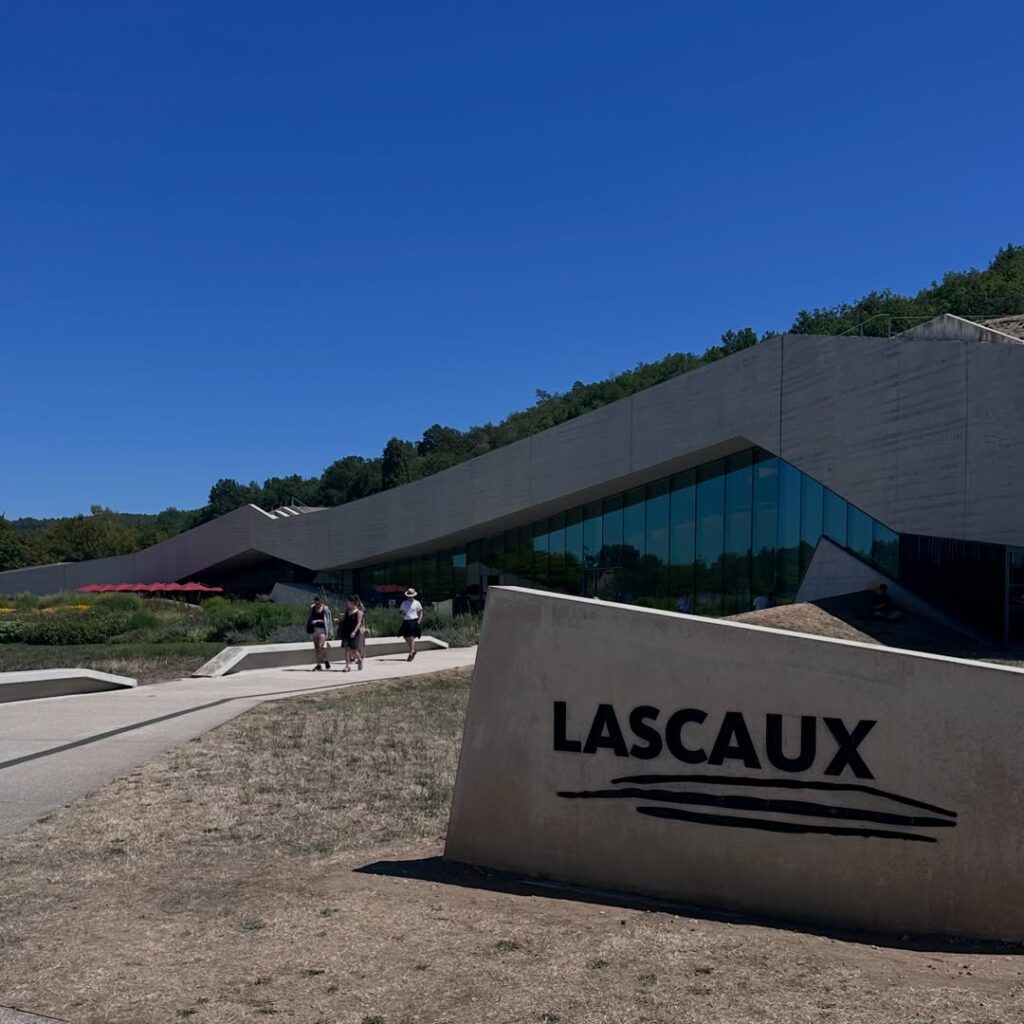
One thing I would keep in mind is that the visit starts with the cave. You then continue through the other exhibition and interpretation areas afterward.
Because of that, I wouldn’t book another major attraction immediately afterward. Give yourself a little extra time, especially if you’re travelling with children or want to stop at the café or shop.
What Time Should You Arrive?
The official Lascaux website recommends arriving 20 minutes before your scheduled visit.
I’d follow that advice rather than arriving at the last minute. Your ticket is time stamped, and the site asks visitors to respect the date and time printed on their ticket.
If you’re driving, I’d also allow a little extra time for parking and walking to the entrance, particularly during the busy summer months.
What Should You Wear?
You don’t need any special clothing for Lascaux IV, but I’d wear comfortable shoes since you’ll be walking through the cave replica and the wider visitor centre.
The cave environment can also feel cooler than the weather outside, so a light layer is useful if you’re visiting during summer. You don’t need to pack a heavy jacket just for the visit.
More importantly, dress for the rest of your Dordogne day too. If you’re planning to visit a village, castle or another archaeological site afterward, comfortable shoes will be much more useful than anything specifically designed for the cave.
What Can’t You Bring Inside?
There are a few restrictions worth knowing before you arrive. Backpacks, bags and suitcases, strollers, rigid baby carriers, dangerous objects and animals aren’t permitted during the visit, with an exception for guide dogs.
If you’re visiting with a baby, soft baby carriers are recommended because strollers and rigid carriers aren’t allowed.
I’d keep your belongings to a minimum. It makes the visit easier and means you don’t have to arrive wondering what you can take inside.
Lascaux Opening Hours
Lascaux’s hours change depending on the season, so it’s worth checking before your trip.
For 2026, the site is open from 10 am to 6 pm during some quieter periods, while summer hours extend considerably. From July 27 to August 21, for example, Lascaux IV is open from 8 am to 10 pm.

The last admission is two hours before closing, so don’t assume you can arrive right before the doors shut.
I’d check the official schedule when you book rather than relying on an old travel article. Lascaux changes its hours seasonally, and this is one of those details that can easily become outdated.
How to Get to Lascaux
Getting to Lascaux by Car
If you’re exploring the Dordogne, driving is by far the easiest option for me.
You can visit Lascaux and then continue to Montignac, Les Eyzies or another nearby attraction without having to work around limited public transport. It also makes it much easier to combine several places in the same day.
Lascaux IV has free parking, with P1 spaces for visitors with reduced mobility, P2 for motorhomes and P3 for buses. Electric vehicle charging is also available in P2.
Can You Visit Lascaux Without a Car?
Yes, but you’ll need to plan ahead.
You can reach the area using regional transport, but public transport isn’t as convenient as having your own car if you’re trying to visit several Dordogne attractions in one day. If you’re travelling without a car, I’d consider staying in Montignac or using Sarlat as a base and arranging a transfer or organised excursion.
For a simple Lascaux visit, going without a car is manageable. It’s when you start adding castles, villages and other prehistoric sites that having a car becomes much more useful.
Parking at Lascaux IV
Parking at Lascaux IV is free. P1 has spaces reserved for visitors with reduced mobility, P2 includes an area for campervans, and P3 is reserved for buses.
If you’re driving an electric car, P2 also has charging stations.

I’d still arrive with some time to spare. Your parking spot is only one part of the journey, and arriving early gives you enough time to get from the car park to the entrance without rushing.
Is Lascaux Accessible?
Lascaux IV is designed to be accessible for visitors with reduced mobility. The official site says the visitor route is adapted for wheelchair users and people who have difficulty walking, and wheelchairs are available free of charge. There are also adapted resources for visitors with visual or hearing impairments.
If you’re travelling with someone who has specific accessibility needs, I’d still contact Lascaux before your visit. That way you can check the current arrangements and make sure the visit will work comfortably for everyone.
Best Time to Visit Lascaux
Lascaux is open for much of the year, so I wouldn’t say there’s one perfect month to visit. I’d choose based on what else you want to do in the Dordogne.
Spring
Spring is a nice time for a Lascaux trip because you can combine the cave with outdoor sightseeing without dealing with the busiest summer period.
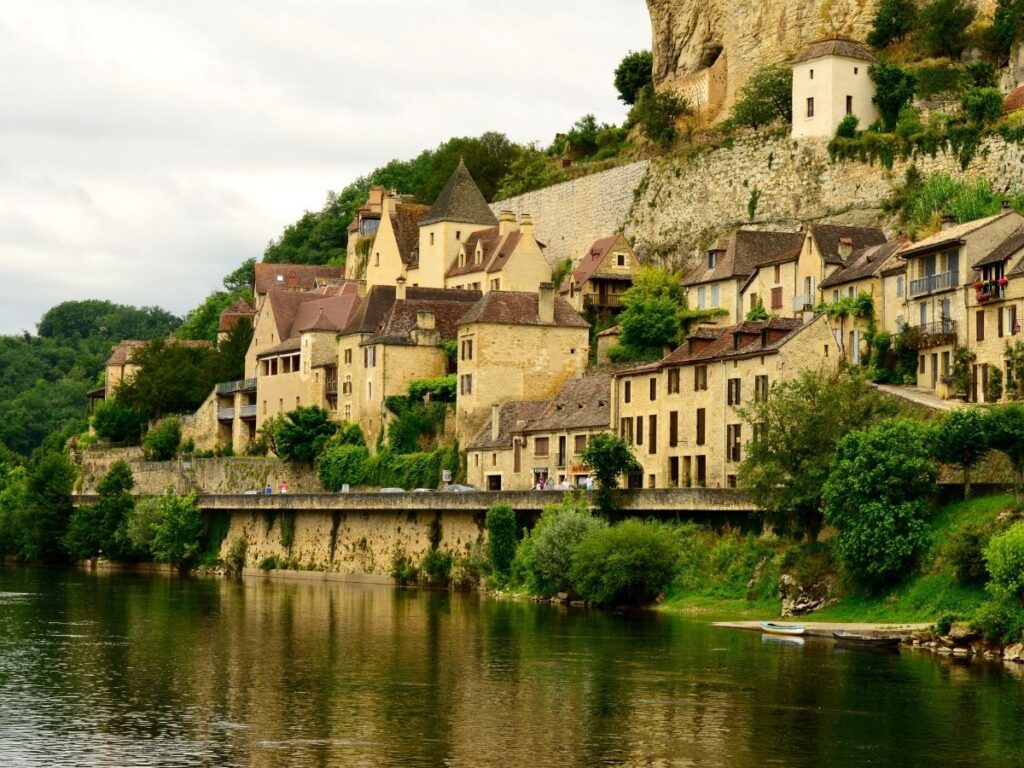
After your visit, you can spend the afternoon exploring Montignac, visiting another prehistoric site or driving through the Vézère Valley. The days are also long enough to fit more into your itinerary.
Summer
Summer is the busiest time, particularly July and August, but it also has the longest opening hours.

During parts of July and August, Lascaux stays open into the evening, which gives you more flexibility with your schedule.
The trade off is that more people are visiting the Dordogne at the same time. If you’re travelling in summer, I’d book your Lascaux time slot before planning the rest of the day.
Autumn
Autumn would be one of my choices for a Dordogne road trip.
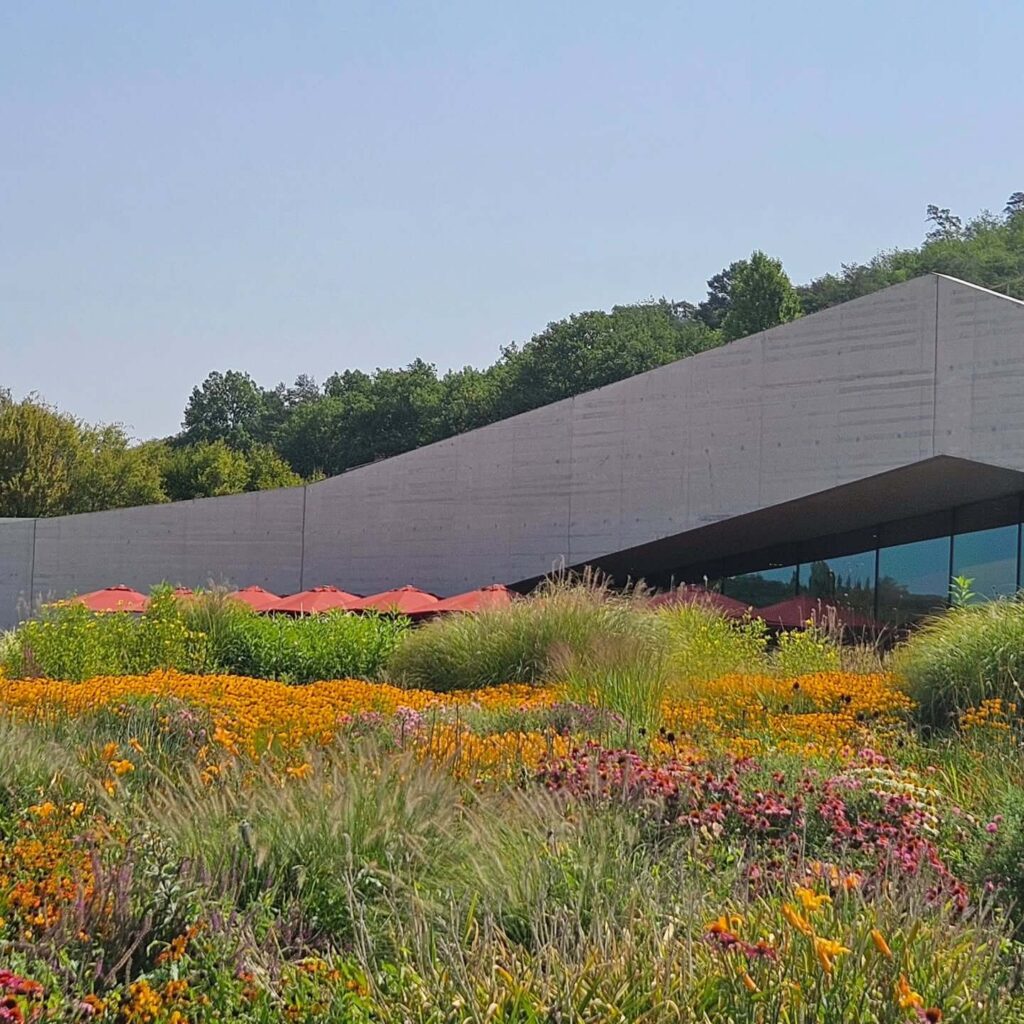
You can visit Lascaux without making the whole day about the attraction, then continue to nearby villages, castles or prehistoric sites. It’s also a good time to slow down and enjoy the region rather than trying to fit as much as possible into every day.
Just check the current opening schedule before travelling because Lascaux moves to different seasonal hours.
Winter
Winter can work if your main interest is history and culture, but I’d plan more carefully.
Lascaux has seasonal opening hours, and some other Dordogne attractions may have shorter schedules or close during the quieter months. Check the dates of everything you want to visit before booking accommodation.
If Lascaux is the main reason for your trip, make sure it’s open on your chosen date before committing to the journey.
Where to Stay Near Lascaux
Where I’d stay depends on whether Lascaux is the main reason for your trip or just one stop during a wider Dordogne holiday.
Stay in Montignac
Montignac is the easiest choice if you want to be close to Lascaux.
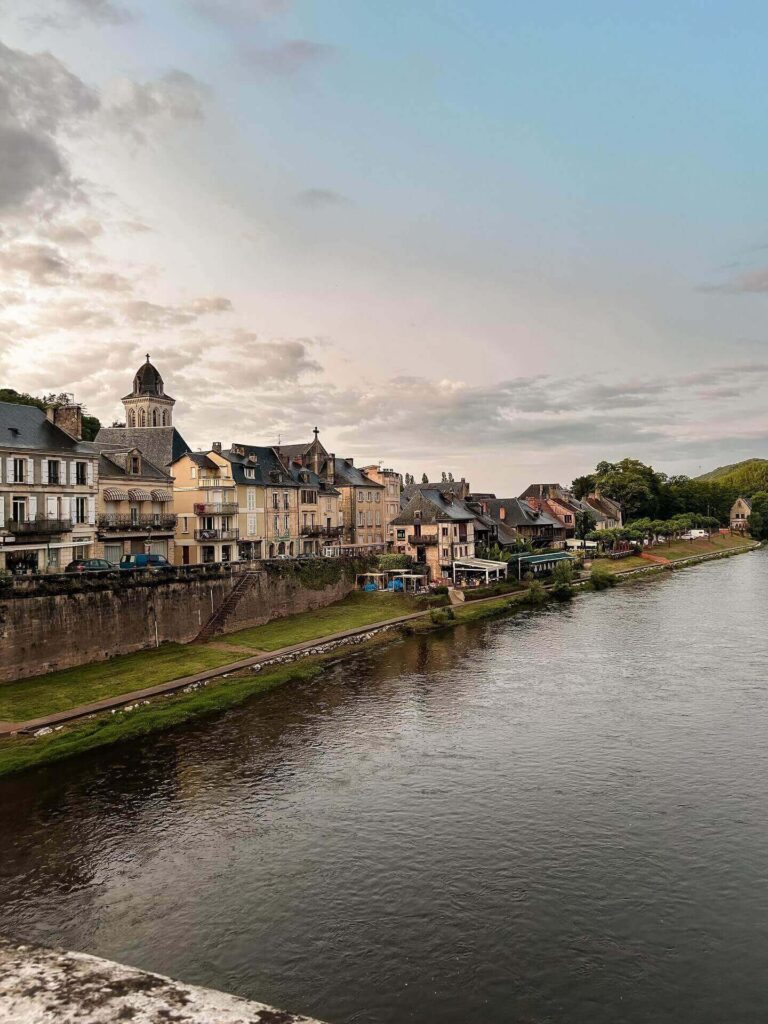
You won’t have a long drive before your timed visit, and you can spend some time exploring the town afterward. It’s also a useful base if you’re planning to visit several prehistoric sites around the Vézère Valley.
For a short two or three night trip focused on Lascaux and prehistoric France, this would probably be my choice.
Stay in Sarlat la Canéda
Sarlat makes more sense if you’re planning a wider Dordogne trip.
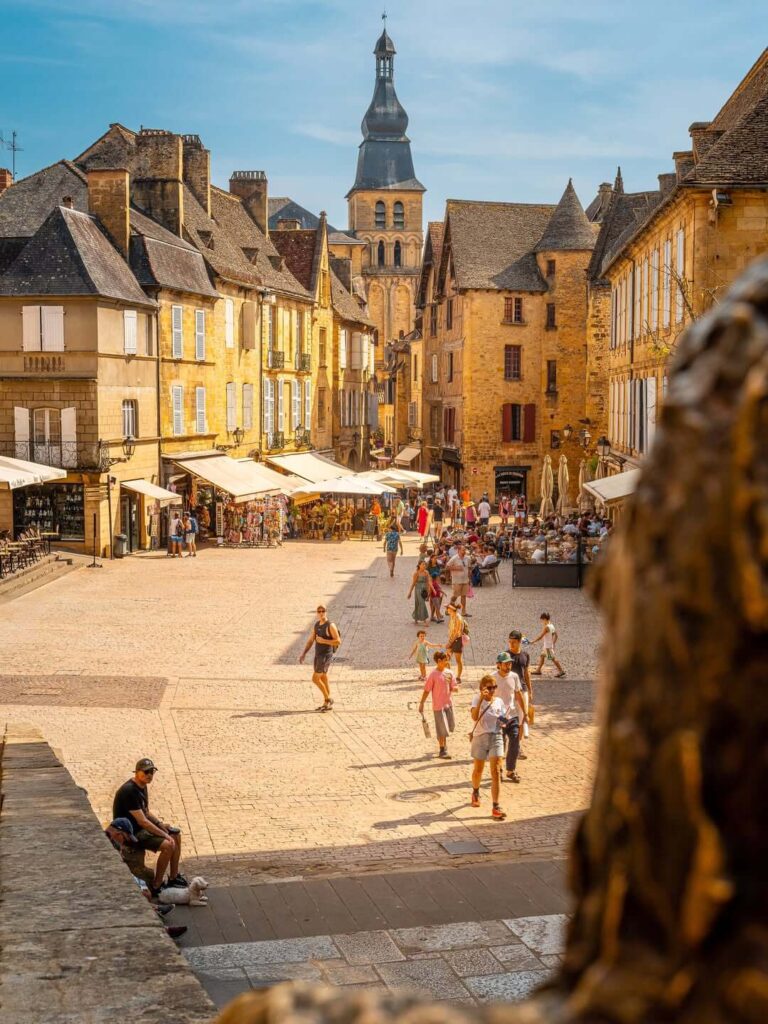
There are plenty of places to eat, the medieval centre is worth exploring, and the town works well as a base for day trips around the Périgord Noir. From Sarlat, you can drive to Lascaux in roughly 40 minutes, depending on traffic and your exact route.
I wouldn’t move to Montignac just for one Lascaux visit if you’re already staying in Sarlat.
Stay Around Les Eyzies
Les Eyzies is a good option if prehistoric history is one of the main reasons you’re visiting this part of France.
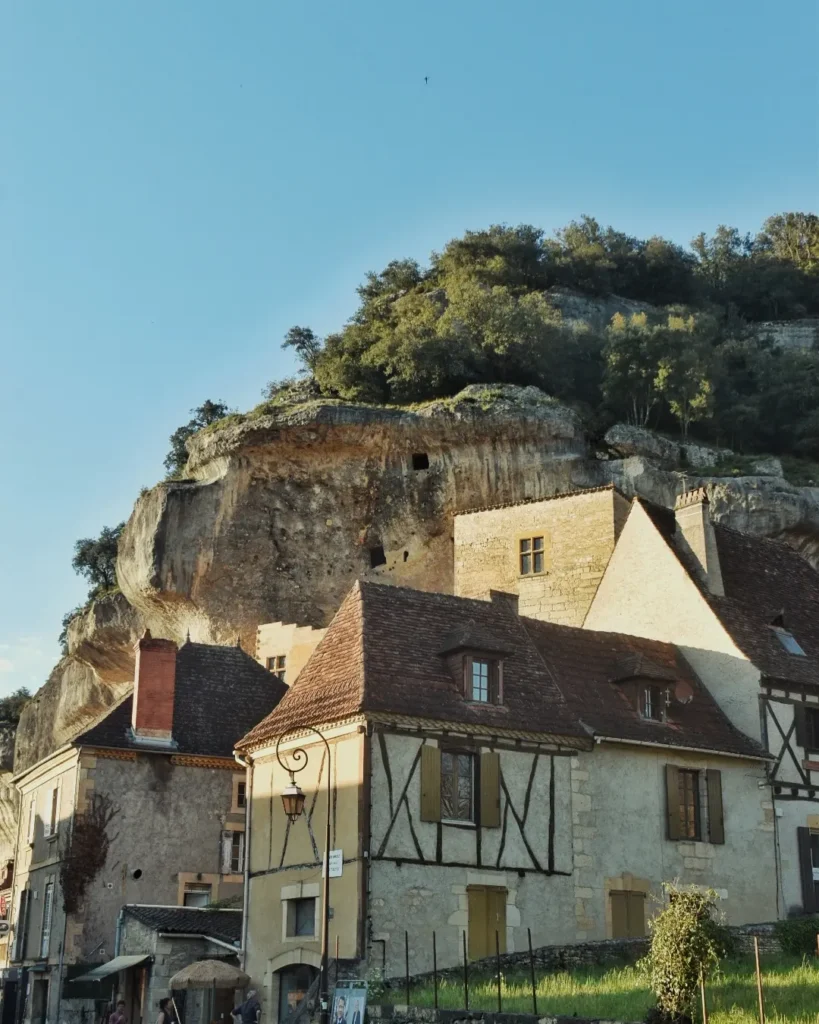
The area has several important prehistoric sites, so you can spend a couple of days exploring the Vézère Valley instead of constantly driving back and forth from Sarlat.
I’d choose Les Eyzies for a more archaeology focused trip, while Sarlat is better if you want a mix of history, food, villages and sightseeing.
Is Lascaux Worth Visiting?
For me, yes, especially if you’re already travelling through the Dordogne.
I wouldn’t visit just because Lascaux is famous. What makes it interesting is the whole story behind the site. You have prehistoric paintings that survived for thousands of years, a chance discovery by four teenagers, the rush of visitors that eventually damaged the cave environment, and the replicas that now allow people to experience the artwork.
I’ll admit that not being able to enter the original cave might sound disappointing at first. I had the same reaction when I first looked into visiting. But once you understand why the original has been closed since 1963, Lascaux IV feels like a sensible way to experience the site without putting the paintings at further risk.
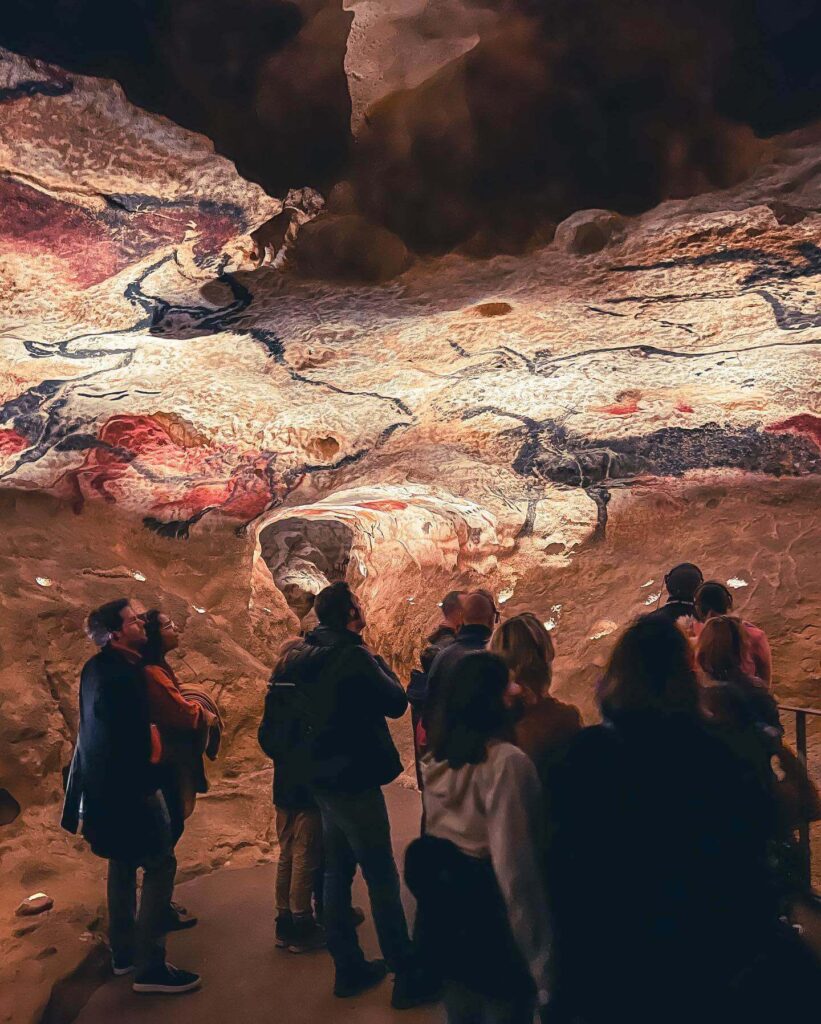
I’d recommend it if you enjoy archaeology, history, prehistoric art or museums where there is a good story behind what you’re seeing.
If you only have one day in the Dordogne and prehistoric history doesn’t interest you much, I’d probably spend that day somewhere else. The region has plenty of castles, villages and outdoor attractions.
For most other travellers, I’d give Lascaux a few hours and combine it with another nearby stop rather than making it your only activity for the day.
Final Thoughts on Visiting Lascaux
Lascaux makes more sense once you know what happened to the original cave.
You arrive expecting to see prehistoric paintings and quickly discover there’s a much bigger story behind them. Four teenagers found the cave in 1940, it became a major tourist attraction, visitors began affecting the delicate environment, and the original site eventually had to close.
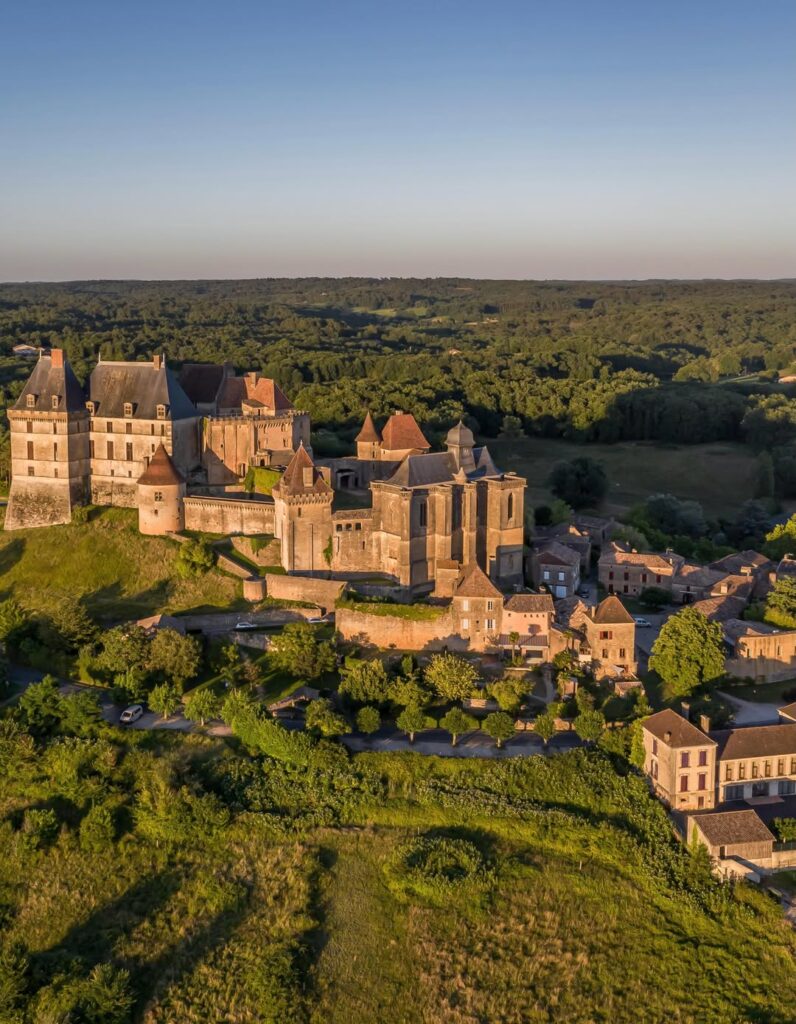
Today, Lascaux IV gives visitors a detailed reproduction of the cave while the original remains protected. Of course, a replica can never be exactly the same as standing inside the real cave where the paintings were created. But I think the experience is still worth having, particularly when you understand why the replica exists.
If you’re planning a Dordogne trip, I’d book your Lascaux time slot in advance and leave a few hours for the visit. Then pair it with Montignac, Les Eyzies or another nearby attraction instead of trying to rush through everything in one day.
For me, that’s the best way to visit Lascaux: take your time, look beyond the famous animals, and remember that you’re seeing artwork created more than 20,000 years ago.