
The first time I arrived in Chamonix, I couldn’t stop looking up. Surrounded by some of the highest peaks in the Alps, the town feels small beneath the mountains.
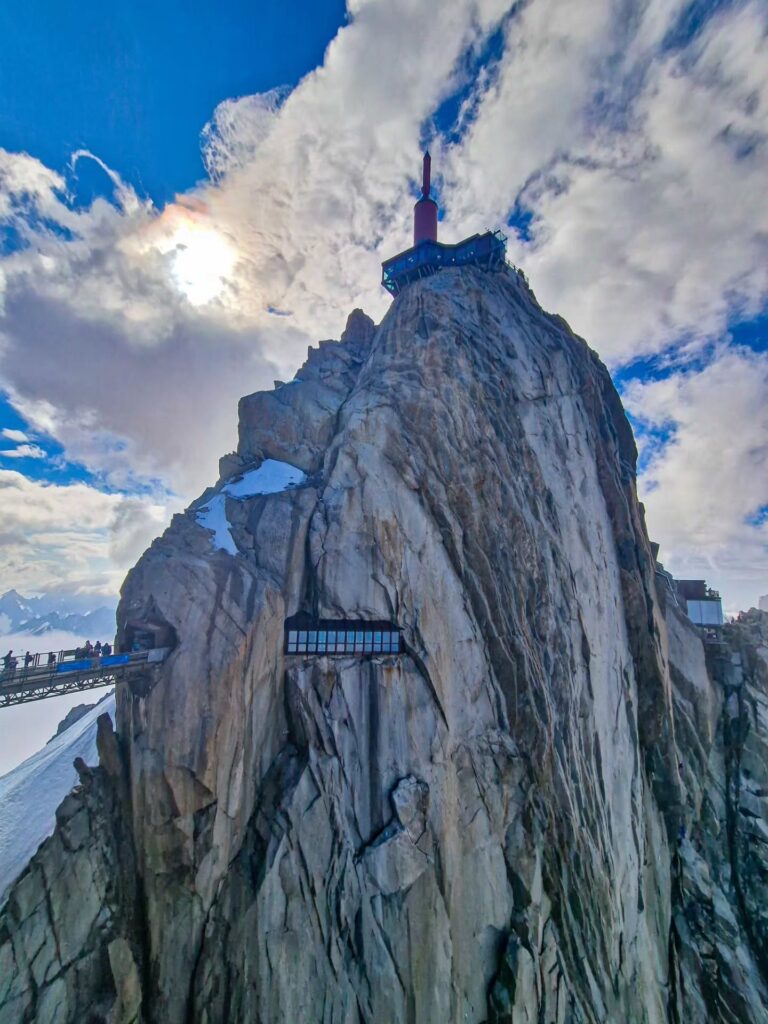
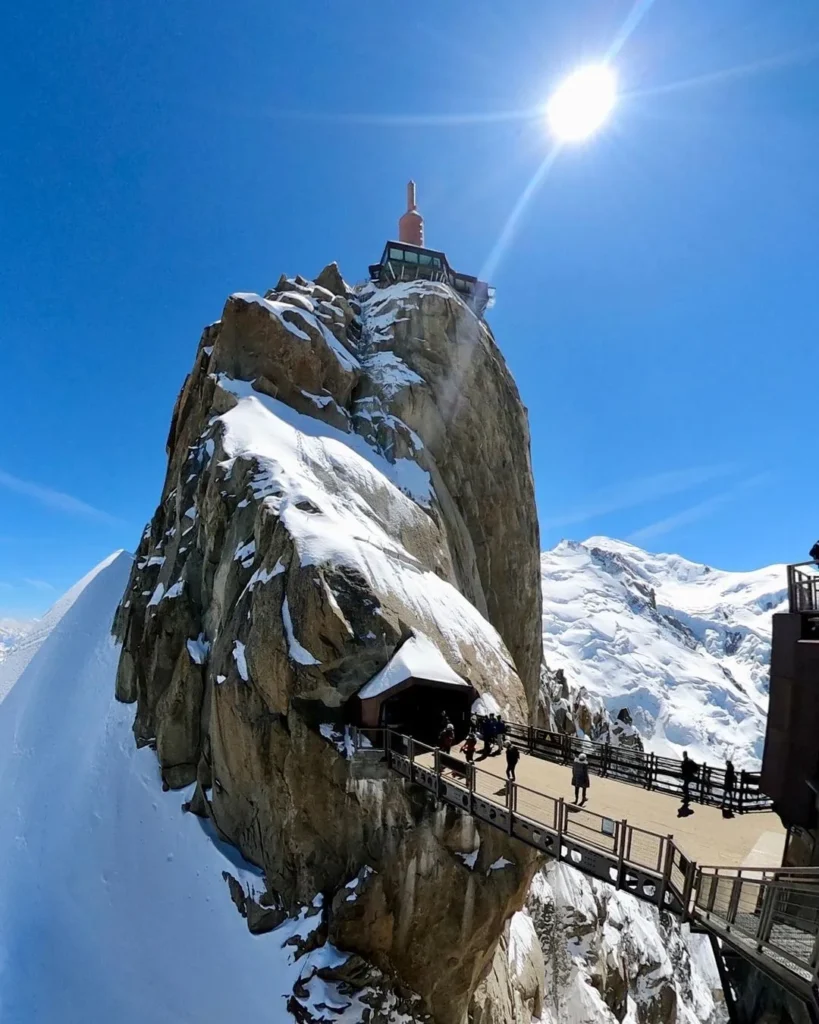
One summit immediately caught my attention: Aiguille du Midi, a sharp granite peak rising high above the valley floor.
What amazed me most was learning that I could stand there without any climbing experience. A cable car carries visitors from the center of Chamonix to an altitude of 3,842 meters (12,605 feet) in about 20 minutes, taking you from busy streets to a world of glaciers, snow covered ridges, and dramatic alpine scenery.
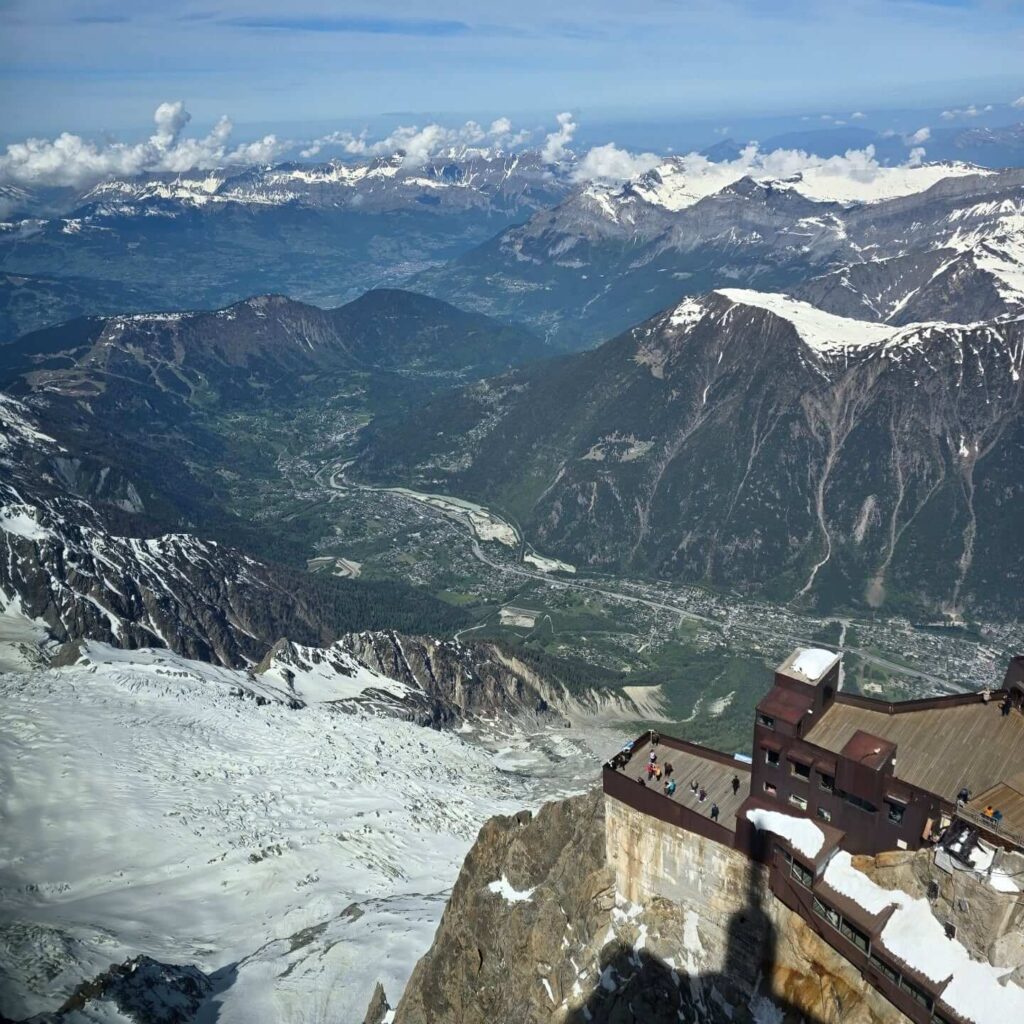
For many travelers, Aiguille du Midi becomes the highlight of a trip to Chamonix. The views are spectacular, but it’s the overall experience that makes it special. Few places in Europe allow you to access such a high mountain environment so easily.
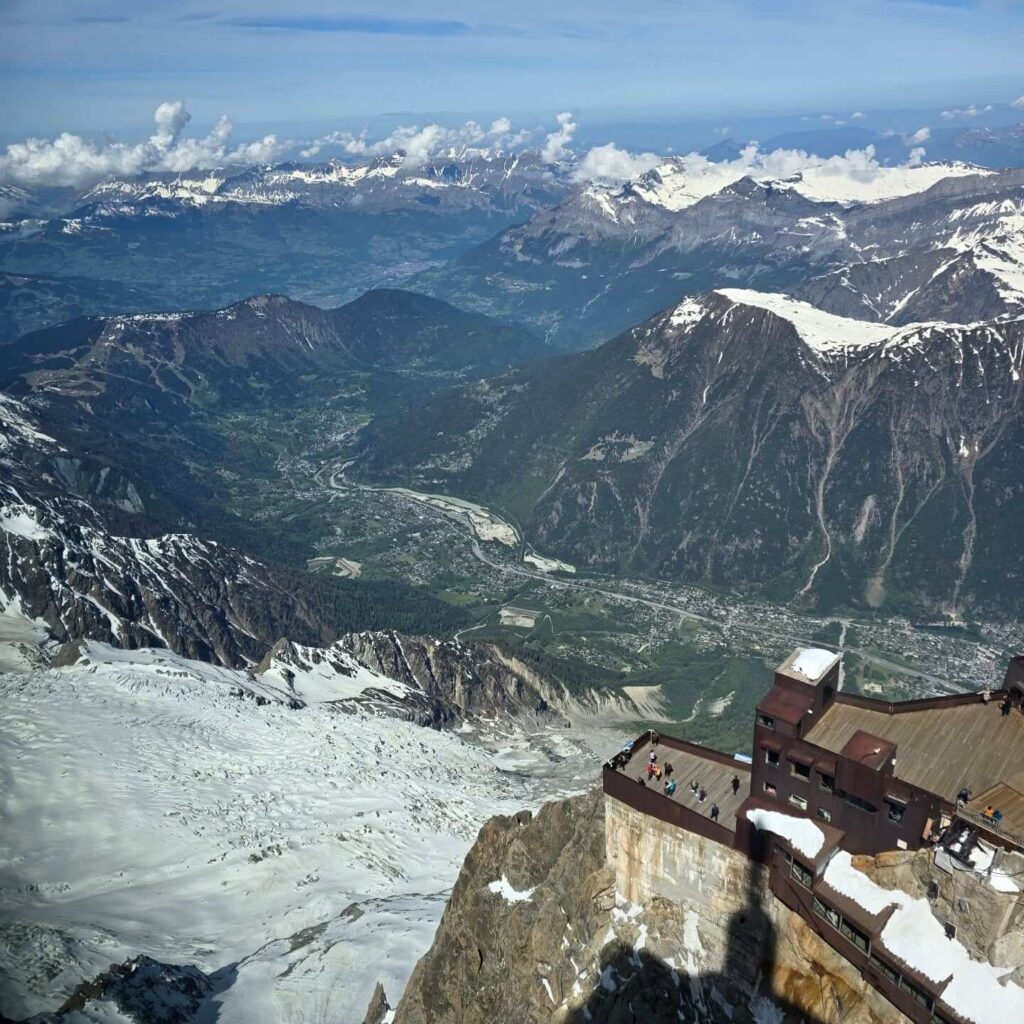
If you’re planning a visit, this guide covers everything you need to know, from tickets and the best time to go to altitude tips, summit attractions, and whether Aiguille du Midi is worth adding to your itinerary.
What exactly is Aiguille du Midi?
If you’re visiting Chamonix for the first time, it’s easy to think of Aiguille du Midi as just another mountain peak. In reality, it’s one of the most famous viewpoints in the Alps and one of the easiest ways to experience the high-mountain world surrounding Mont Blanc.
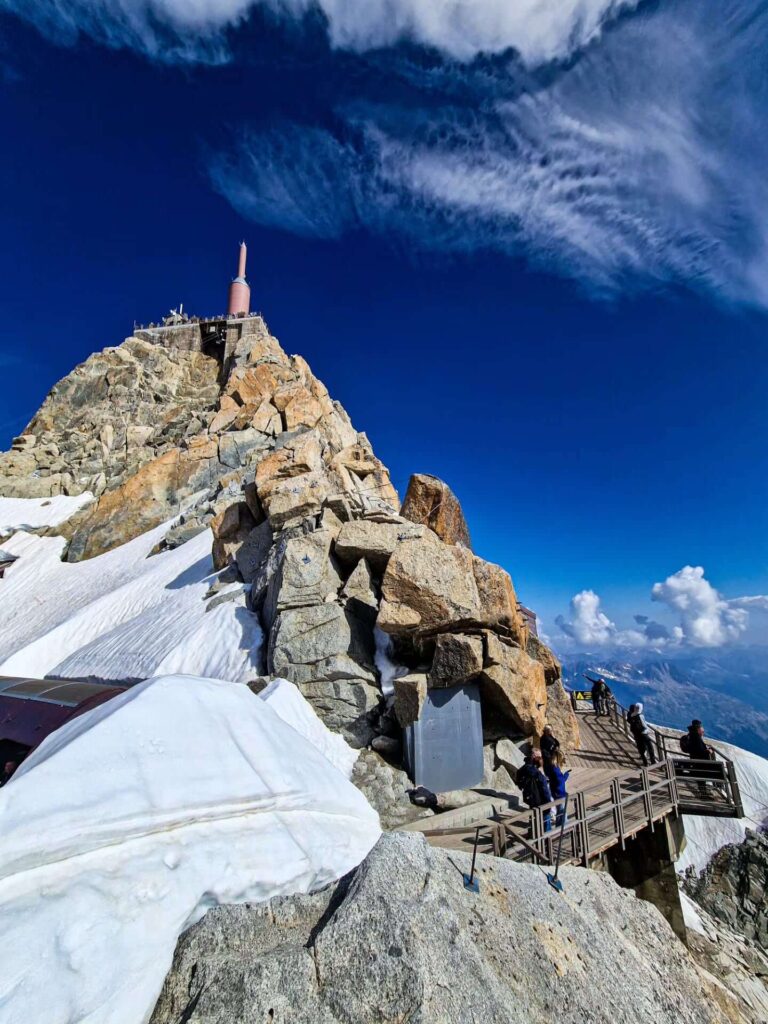
The name translates to Needle of the Midday referring to its sharp, rocky summit. Rising to 3,842 meters (12,605 feet), Aiguille du Midi offers spectacular views across the Mont Blanc Massif, with glaciers, snow-covered peaks, and alpine valleys stretching in every direction.
What makes it so unique is its accessibility. While reaching this altitude would normally require serious climbing experience, a cable car takes visitors from the center of Chamonix to the summit in about 20 minutes.
One moment you’re walking through town, and shortly afterward you’re standing among some of the highest peaks in Western Europe.
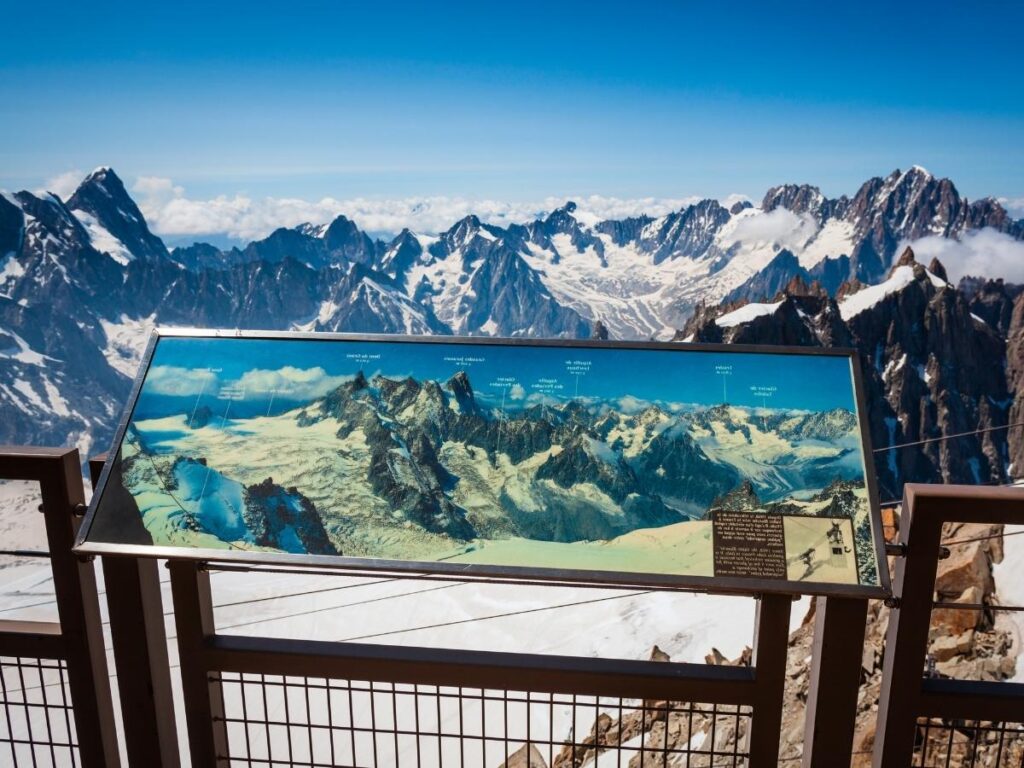
Aiguille du Midi has long been an important gateway for mountaineers heading toward Mont Blanc and other challenging alpine routes. Today, it allows ordinary visitors to experience the same dramatic mountain environment without needing technical skills or days of hiking.
That’s what makes Aiguille du Midi special. It doesn’t simply offer mountain views, it makes you feel like you’re part of the landscape itself.
A Brief History of Aiguille du Midi
Reaching Aiguille du Midi feels effortless today, but building a cable car to nearly 4,000 meters was a remarkable achievement for its time.
The idea was first proposed in the early 1900s, and construction proved challenging from the start. Workers had to transport materials into a harsh mountain environment where snow, ice, strong winds, and steep terrain made every stage of the project difficult.
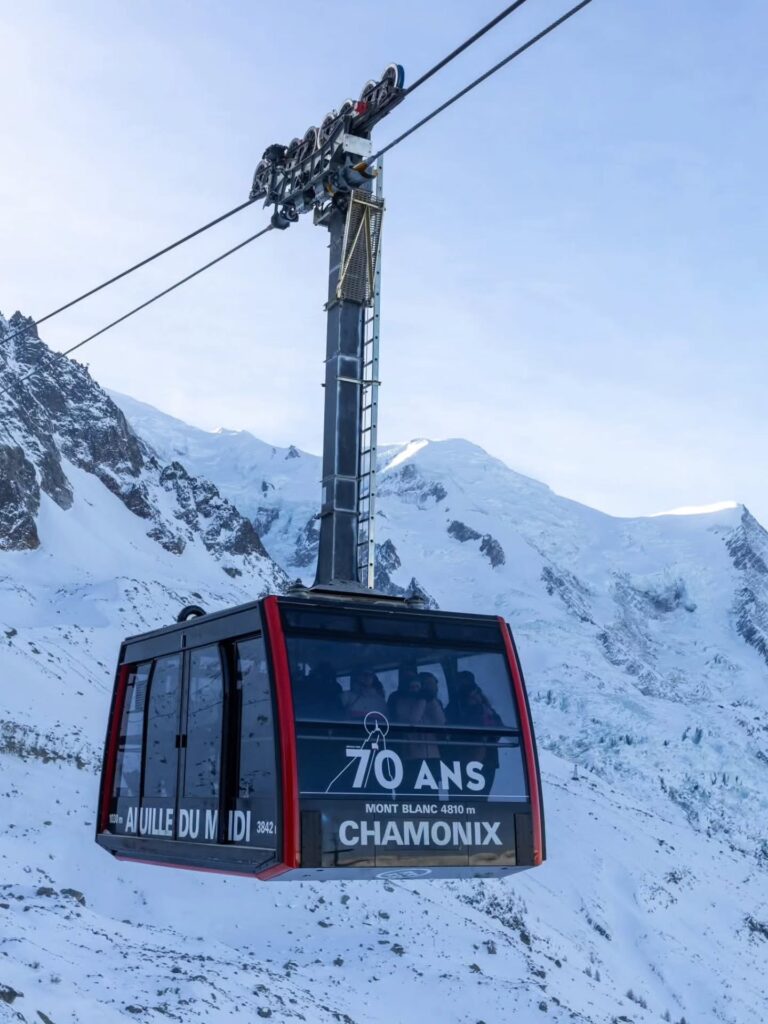
When the modern cable car opened in 1955, it was considered one of the world’s most impressive engineering feats and ranked among the highest cable cars anywhere.
Over the years, the system has been upgraded and modernized, but the experience still feels extraordinary. As you climb above cliffs, glaciers, and rugged peaks, it’s hard not to appreciate the scale of what engineers accomplished.
Why Is Aiguille du Midi So Famous?
The Alps are full of beautiful viewpoints, but Aiguille du Midi offers something few places can match.
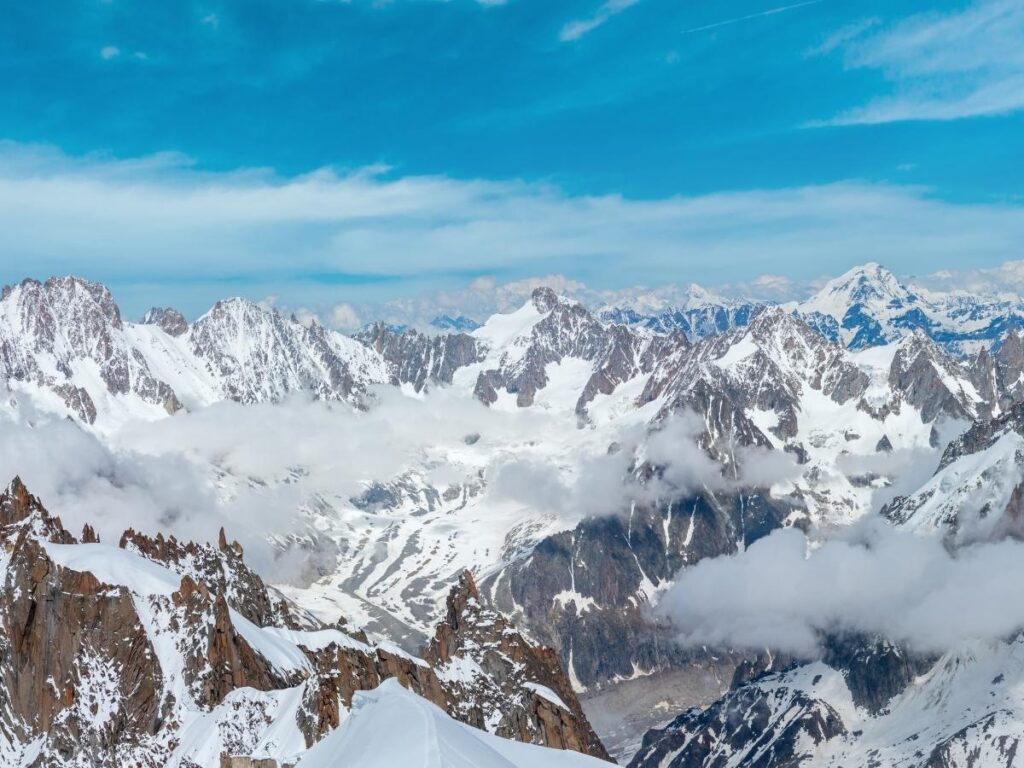
Instead of looking at the mountains from a distance, you’re placed right among them. At 3,842 meters, the summit provides close up views of Mont Blanc, the Mer de Glace, the Bossons Glacier, and countless peaks stretching across France, Italy, and Switzerland.
What makes the experience even more special is how accessible it is. Without any hiking or climbing experience, visitors can reach a true high alpine environment that would otherwise be reserved for mountaineers.
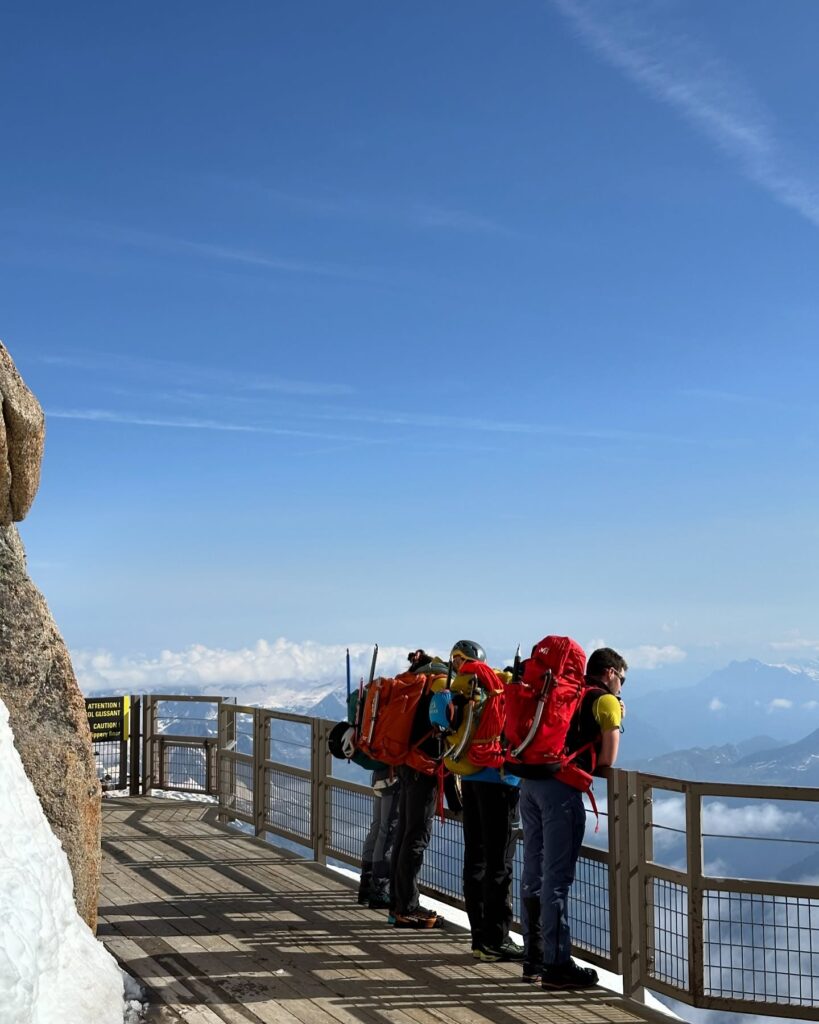
One moment you’re walking through the streets of Chamonix, and less than half an hour later you’re surrounded by glaciers and some of the highest mountains in Western Europe.
That’s why Aiguille du Midi remains one of the most popular attractions in Chamonix and a highlight of many trips to the French Alps.
Is Aiguille du Midi Worth Visiting?
If you’re visiting Chamonix for the first time, I think Aiguille du Midi is absolutely worth considering.
The tickets aren’t cheap, and there’s always a chance that clouds or poor weather could limit the views. Even so, very few places in the Alps offer an experience quite like this. Within minutes, you’re transported from the valley floor into a landscape of glaciers, rocky peaks, and snow covered mountains that feels a world away from the town below.
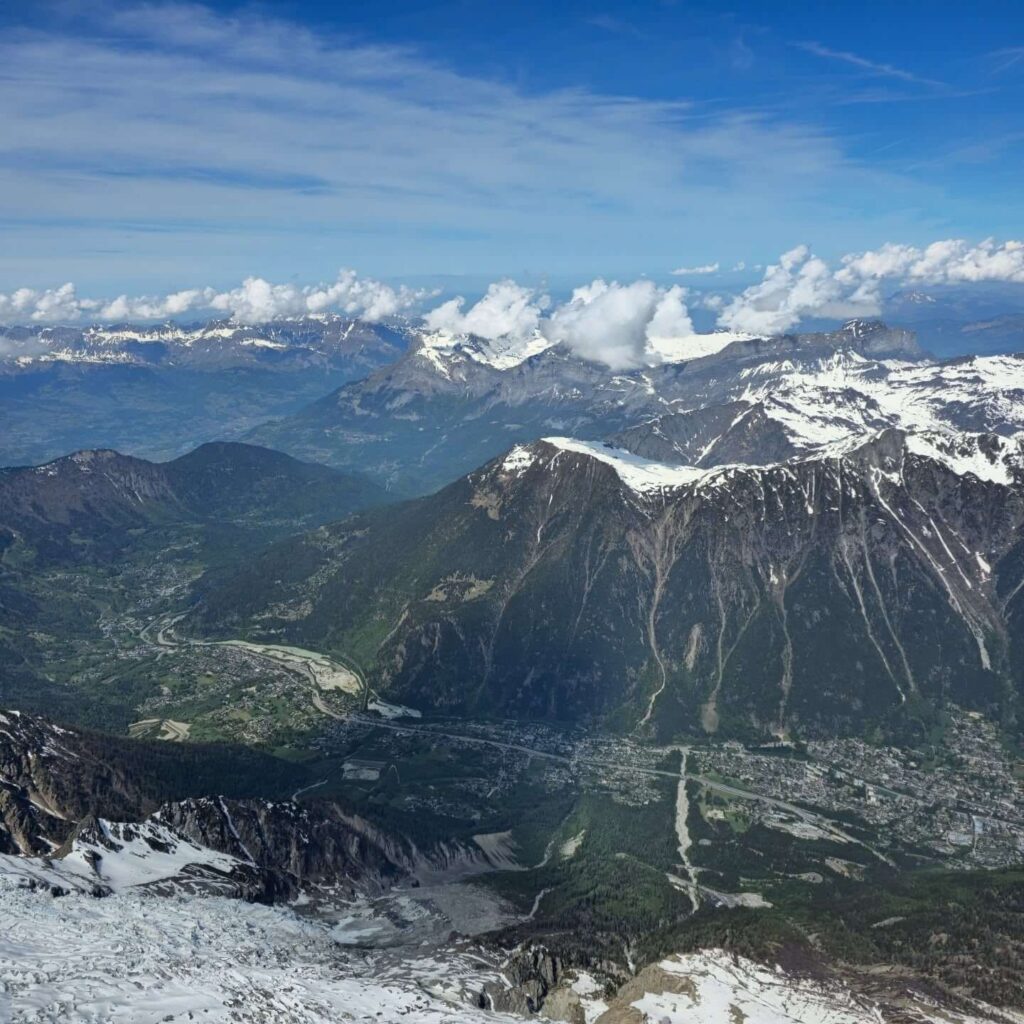
For many visitors, Aiguille du Midi ends up being the highlight of their trip. It’s one thing to admire Mont Blanc from Chamonix, but it’s another to stand almost face to face with the highest mountain in Western Europe and see the surrounding massif from such a unique perspective.
I think it’s especially worthwhile if you’re visiting Chamonix for a short stay. If you only have a day or two in the area, Aiguille du Midi gives you access to scenery that would otherwise require long hikes or mountaineering experience.
It’s also a fantastic choice for photographers, particularly on clear mornings when the light is soft and visibility is often at its best.
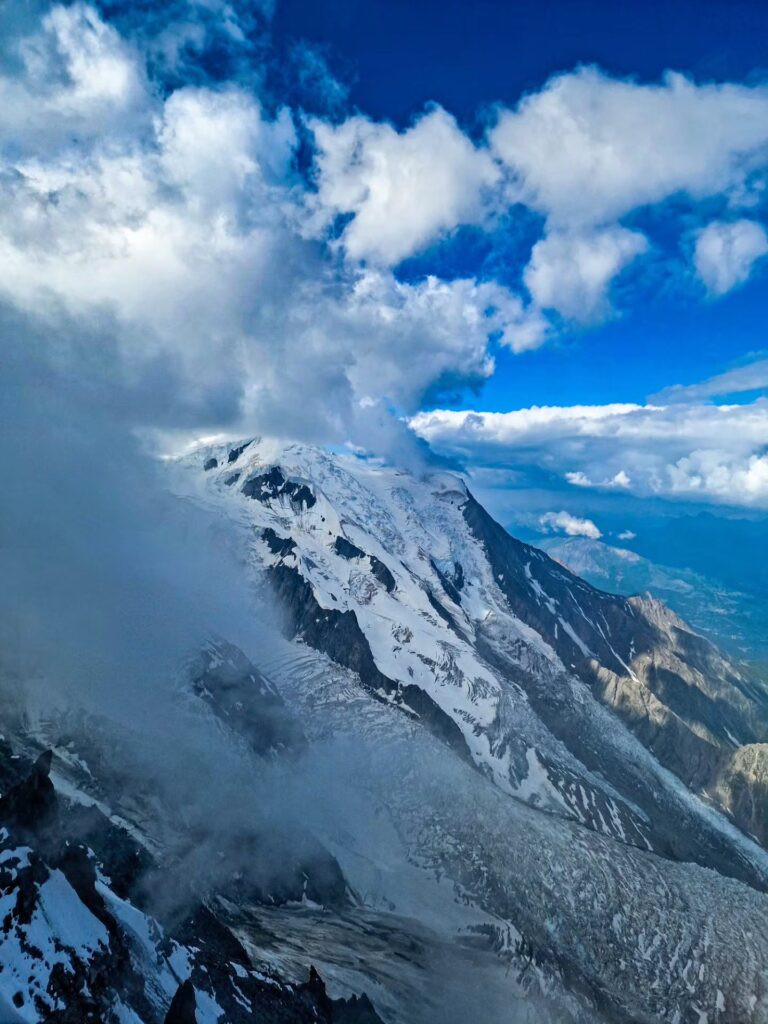
Mountain lovers will likely appreciate it most. The views of glaciers, ridgelines, and towering peaks are spectacular, and you get a real sense of the scale of the Alps. At the same time, it’s an excellent option for travelers who don’t hike. Unlike viewpoints that require hours on a trail, Aiguille du Midi makes the high mountain environment accessible to almost everyone.
That said, it may not be the right fit for every traveler. If you have a strong fear of heights, the experience can feel intimidating, especially during the cable car ride or when visiting Step Into the Void.
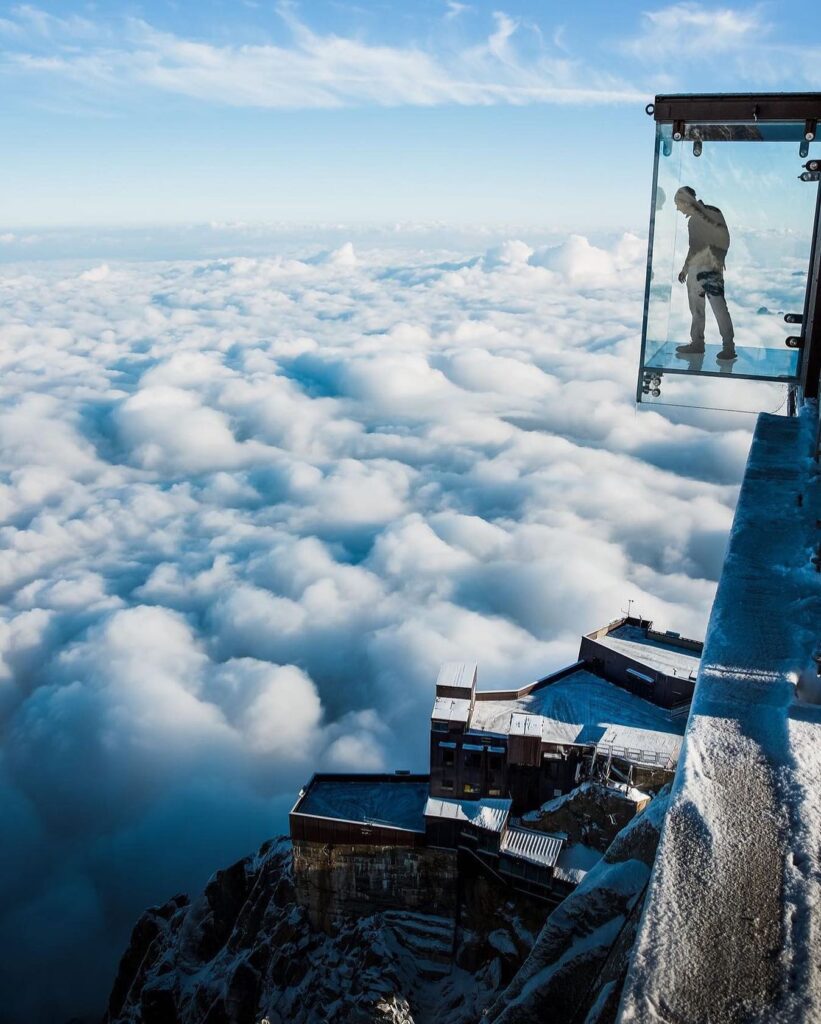
Some people are also more sensitive to altitude and may experience mild discomfort at nearly 4,000 meters. And if the forecast predicts thick cloud cover, you may not get the sweeping views that make the visit so memorable.
Still, even travelers who are nervous about heights often tell me they were glad they went. On a clear day, standing above the Chamonix Valley and looking out across the Mont Blanc Massif is one of those travel experiences that’s difficult to compare to anything else.
How to Get to Aiguille du Midi
One of the things I like most about visiting Aiguille du Midi is how easy it is to reach. Unlike some mountain attractions that require long drives or complicated transfers, the cable car station is located right in Chamonix, just a short walk from the town center.
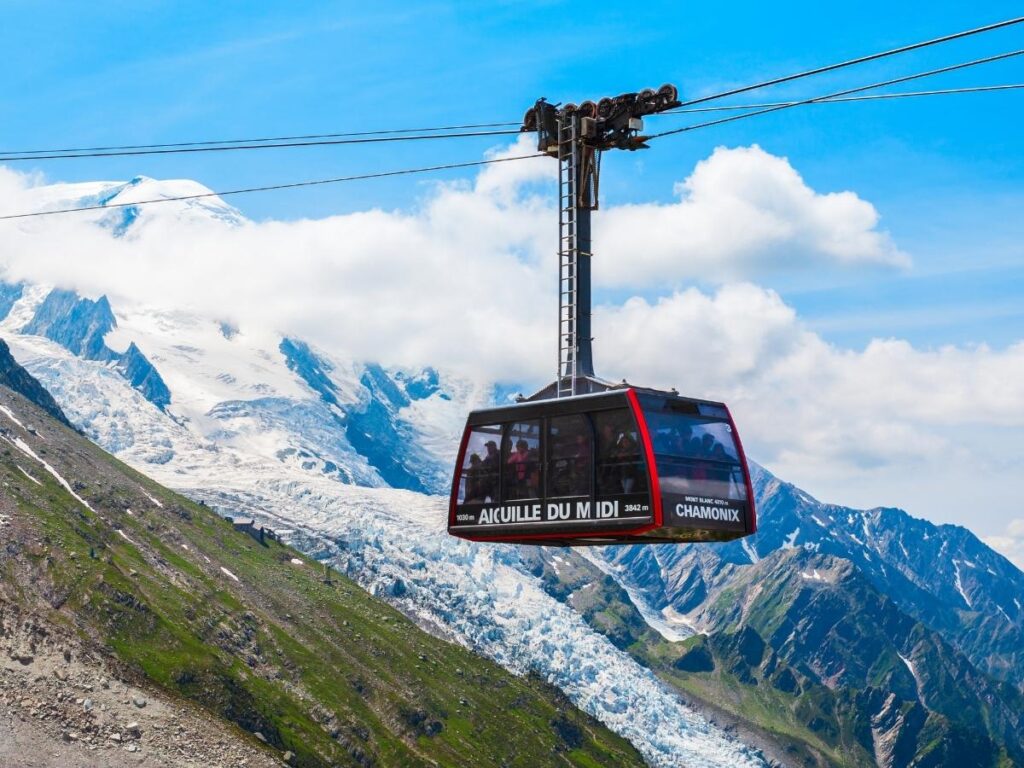
If you’re staying in central Chamonix, you can usually reach the station on foot in 10 to 15 minutes. The walk is straightforward, and you’ll see signs directing visitors toward the cable car. During the busy summer season, you can often just follow the crowds heading in the same direction.
For travelers staying elsewhere in the valley, local buses provide a convenient alternative. Chamonix has a reliable public transportation network, and many routes stop near the Aiguille du Midi station. If you have a guest card from your accommodation, some local transport services may even be included.
Driving is also an option, especially if you’re staying outside Chamonix. There are parking areas near the cable car station, although spaces can fill quickly during peak summer months and school holidays. If you’re visiting in July or August, arriving early in the morning can save you both time and frustration.
Another option is the Mont Blanc Express train, which connects several villages throughout the Chamonix Valley. Depending on where you’re staying, taking the train and then walking to the station may be easier than dealing with parking.
Understanding the Aiguille du Midi Cable Car
The cable car ride isn’t just transportation to the summit. It’s a major part of the experience.
As soon as the cabins leave Chamonix, the views begin to open up. The town quickly shrinks below, and the surrounding mountains start to dominate the landscape.
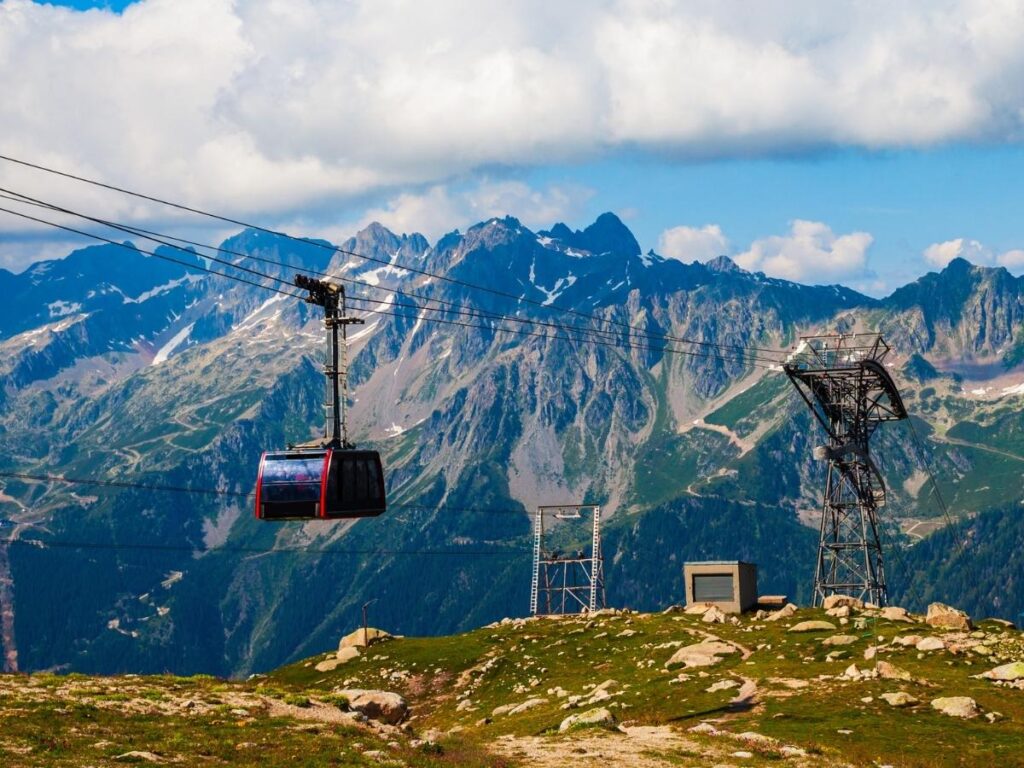
Even before reaching the summit, you’ll get some fantastic views of the valley and the peaks that surround it.
First Section: Chamonix to Plan de l’Aiguille
The first stage of the journey takes visitors from Chamonix to Plan de l’Aiguille, a mountain station located roughly halfway up the route.
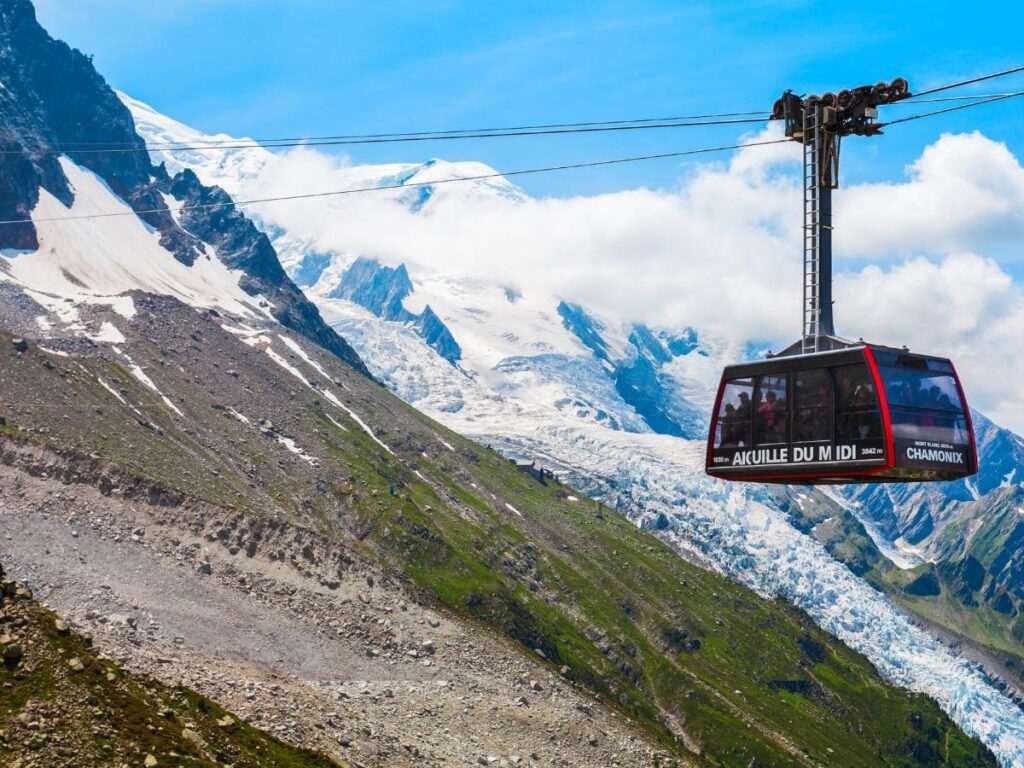
As the cable car climbs higher, you’ll notice the scenery changing from forests and mountain meadows to a much more rugged alpine environment. During summer, Plan de l’Aiguille is popular with hikers who use it as a starting point for several trails.
Plan de l’Aiguille
Many visitors continue directly to the summit without giving Plan de l’Aiguille much thought, but it’s worth remembering if you have extra time in Chamonix.
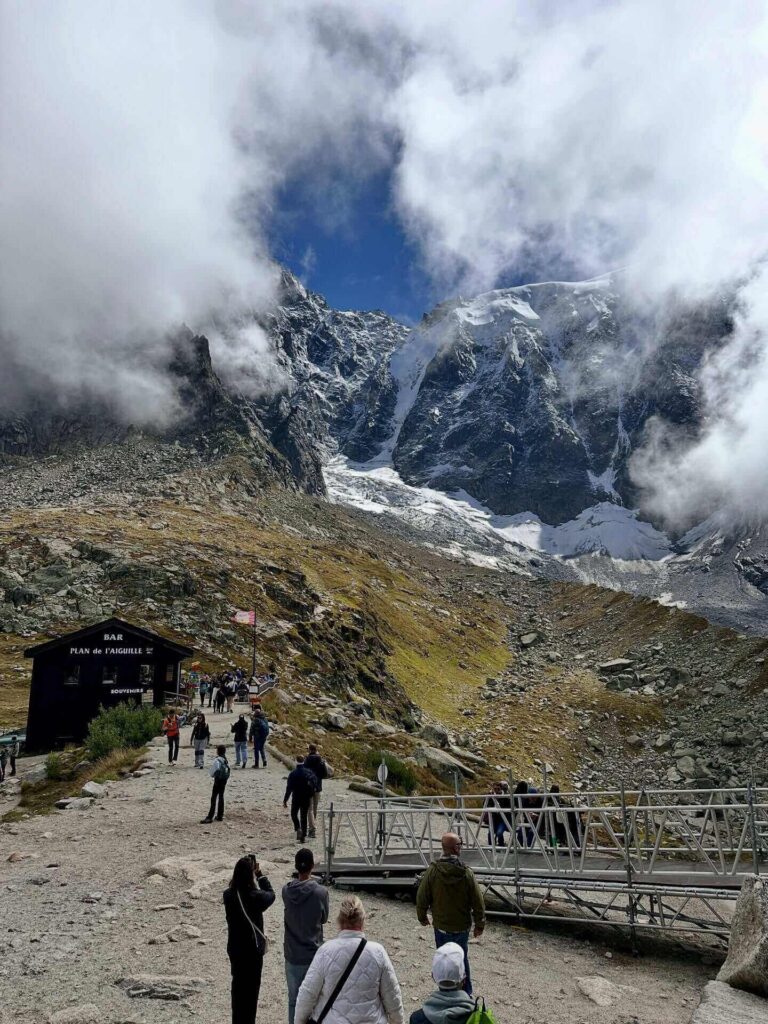
Several scenic hiking routes begin here, including trails toward Lac Bleu and the famous Grand Balcon Nord. If you’re looking to combine sightseeing with a bit of hiking, this area deserves a closer look.
Second Section: Plan de l’Aiguille to the Summit
The second stage is where the journey becomes truly memorable.
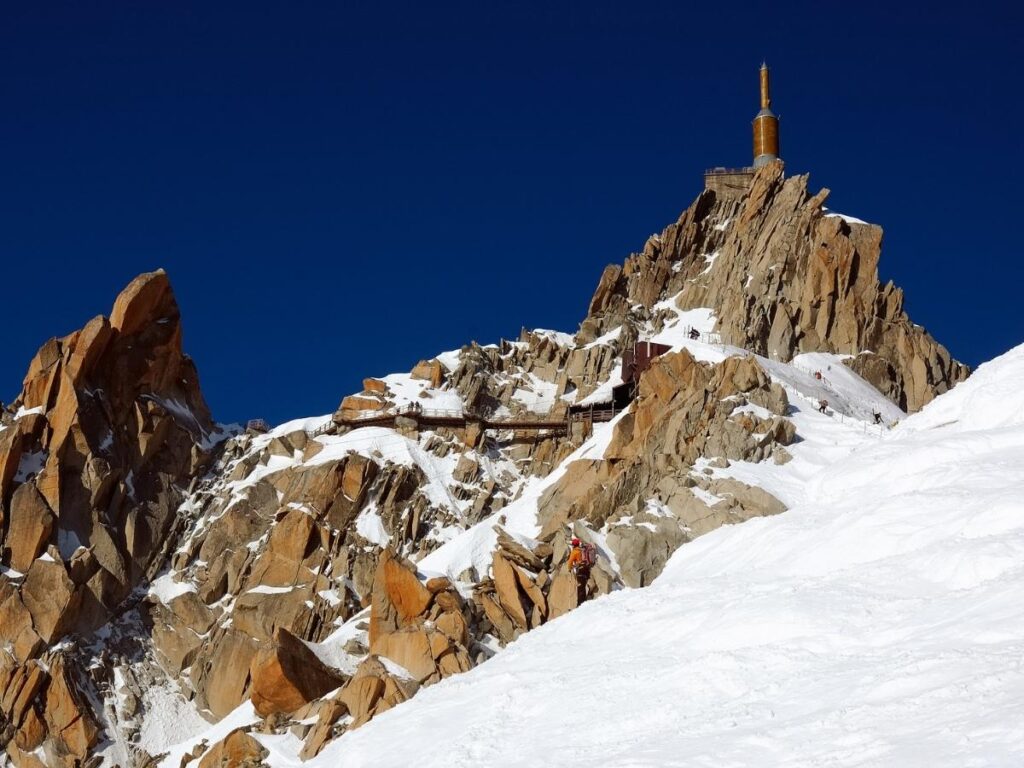
As the cable car leaves Plan de l’Aiguille, the terrain becomes steeper and more dramatic. Rocky cliffs, glaciers, and snow covered slopes begin to dominate the landscape. Looking down, it’s hard not to wonder how the cable car system was built in such challenging terrain.
For many visitors, this section is just as exciting as the summit itself.
Arriving at the Summit
Stepping out at 3,842 meters feels very different from stepping out at a typical viewpoint.
The air is noticeably thinner, temperatures are usually much cooler than in Chamonix, and the surrounding peaks seem incredibly close. Many first time visitors immediately rush toward the viewing terraces, but I recommend slowing down for a few minutes.
Take a moment to adjust to the altitude, enjoy the first views, and let the experience sink in. You’ve just traveled from the center of town into one of the highest and most dramatic mountain environments that can be reached without climbing gear.
Aiguille du Midi Tickets Explained
Before visiting Aiguille du Midi, it’s worth spending a few minutes understanding the different ticket options. Most visitors only need a standard summit ticket, but depending on how long you’re staying in Chamonix, another pass may offer better value.
The most popular choice is the round trip ticket, which includes the cable car ride from Chamonix to the summit and back again. If your main goal is to experience the viewpoints, visit Step Into the Void, and spend a few hours at the top, this is usually all you need.
If you’re planning to spend several days exploring Chamonix, the Mont Blanc Multipass is worth considering. It includes access to multiple lifts and attractions throughout the valley, making it a good option for travelers who also want to visit places like Mer de Glace, Brévent, or other mountain areas during their stay.
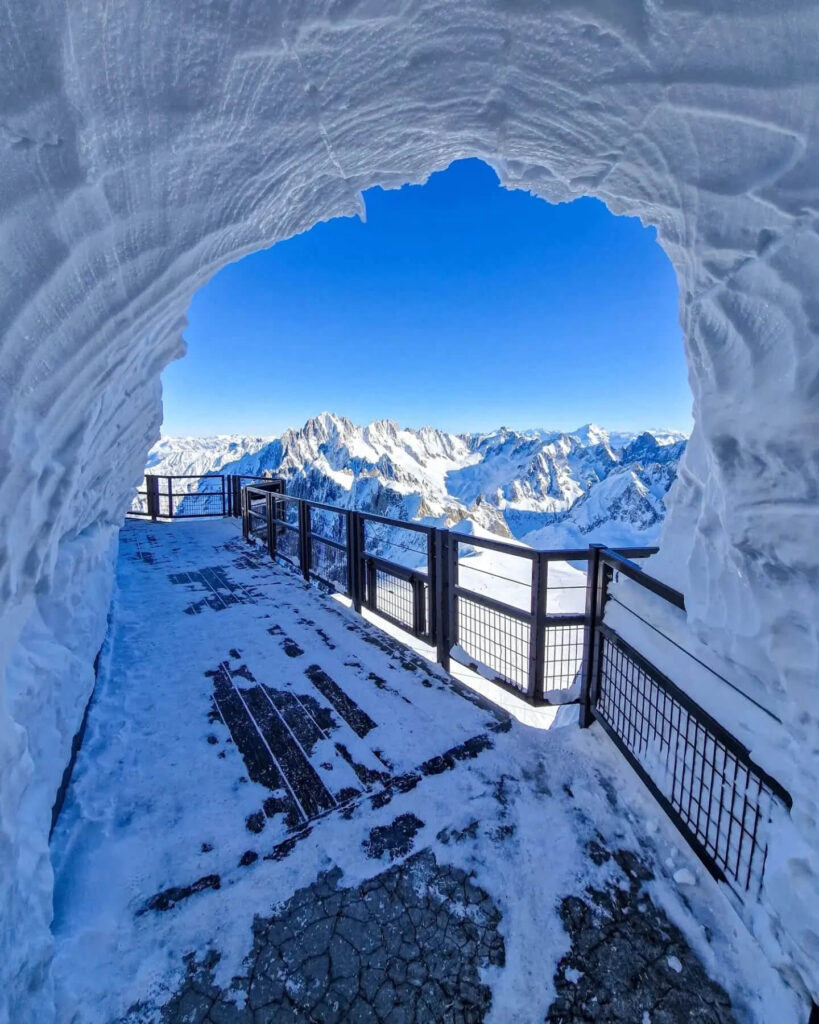
There are also combined excursion tickets that include additional experiences such as the Panoramic Mont Blanc gondola connecting France and Italy. These tickets are more expensive, but they can be worthwhile if you want to turn your visit into a full day mountain adventure rather than simply visiting the summit and returning to town.
Ticket prices change periodically, so I always recommend checking the official website before your trip for the latest information and availability.
Should You Book Tickets in Advance?
In my opinion, yes, especially if you’re visiting during the busiest times of the year.
July and August are the most popular months in Chamonix, and morning time slots can sell out quickly when the forecast looks promising. The same applies during the Christmas holiday period and throughout February when ski season is in full swing.
The challenge is that everyone wants to visit on clear days. If the weather forecast predicts sunshine and good visibility, tickets often disappear much faster than people expect.
During quieter periods such as spring or autumn, same day tickets are often available. Even then, I still like booking ahead whenever possible. It removes the uncertainty and allows you to focus on enjoying the day rather than worrying about availability.
If your itinerary is flexible, try to reserve your visit for the clearest day of your stay. Good weather can make the difference between seeing one of the best mountain panoramas in Europe and spending much of your visit surrounded by clouds.
How Much Time Should You Allow?
One of the most common mistakes visitors make is assuming Aiguille du Midi is a quick attraction.
Technically, you could visit in about two hours, but most people end up staying longer than expected. Between the cable car ride, multiple viewing terraces, Step Into the Void, exhibits, and photography opportunities, it’s easy to lose track of time.
If you’re short on time, two hours is usually enough to ride the cable car, enjoy the main viewpoints, and take in the highlights. However, you’ll probably feel somewhat rushed.
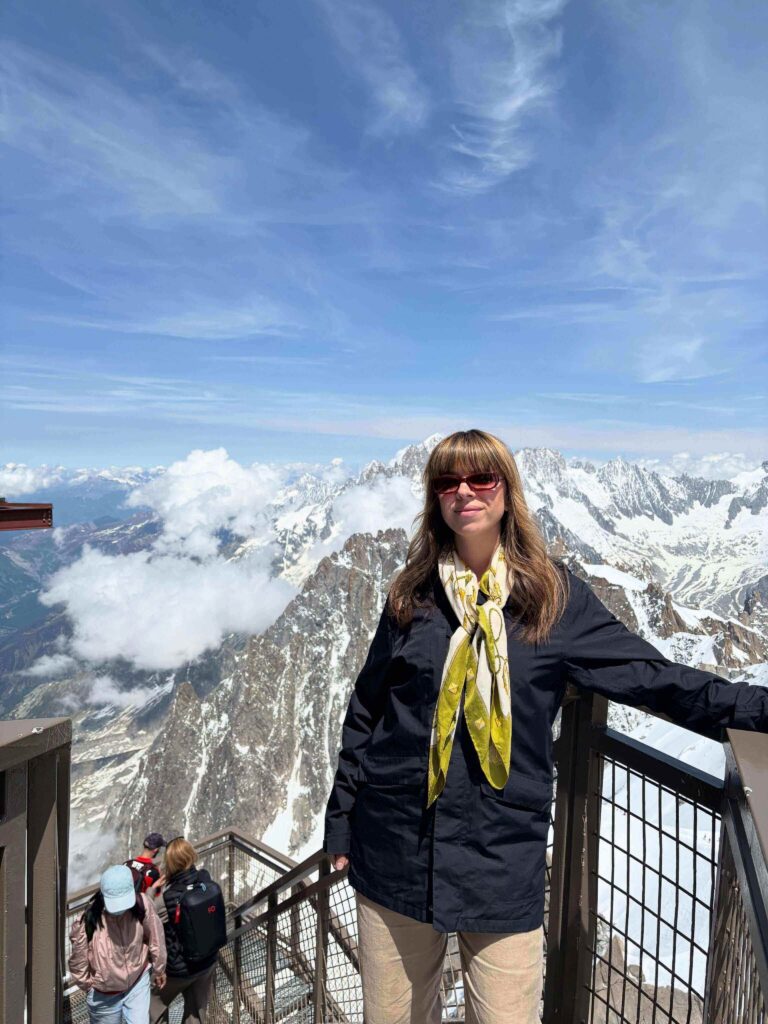
I think three to four hours is the sweet spot for most visitors. This gives you enough time to explore the summit complex, enjoy the views from different terraces, take photos, and simply appreciate being surrounded by the Mont Blanc Massif without constantly checking your watch.
If you’re planning to include the Panoramic Mont Blanc gondola, Punta Helbronner, hiking from Plan de l’Aiguille, or other attractions in the area, set aside most of the day. Many travelers easily spend six to eight hours in the mountains, especially when the weather is clear and the views keep drawing them back for one more look.
Best Time to Visit Aiguille du Midi
If there’s one piece of advice I’d give anyone planning a visit to Aiguille du Midi, it’s this: prioritize the weather over the season.
A clear day can completely transform the experience. I’ve seen photos taken in October with crystal clear views of Mont Blanc and the surrounding peaks that looked far better than photos taken on cloudy summer days.
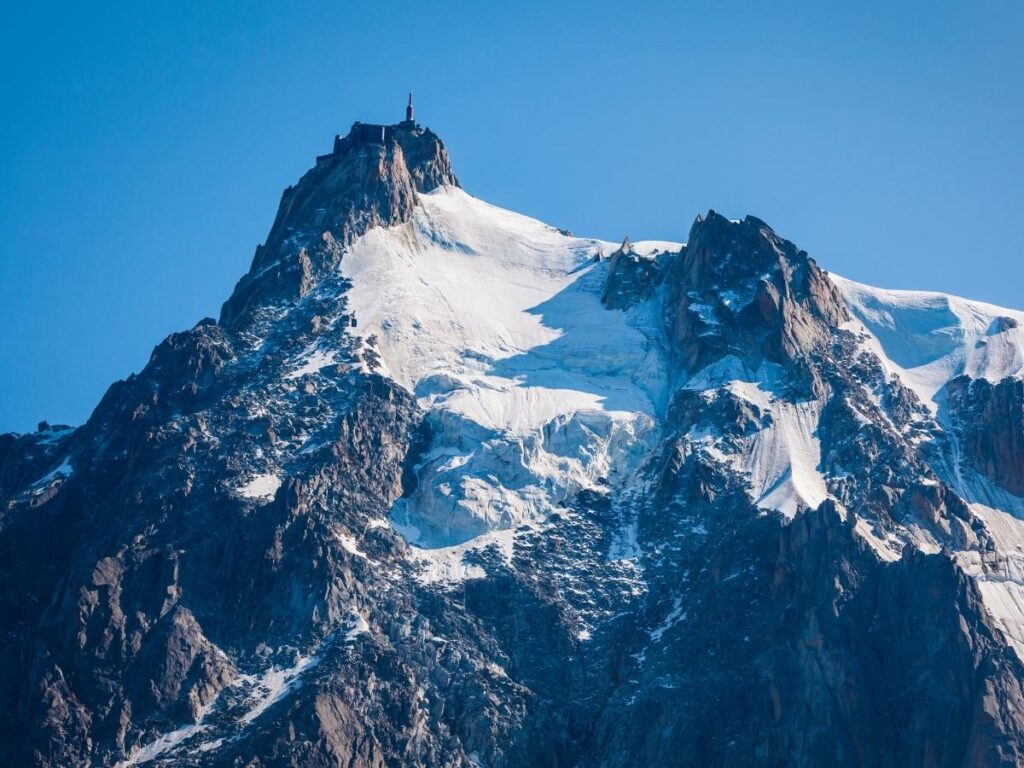
The mountain scenery is the main reason most people visit, so visibility matters more than whether you’re traveling in July, September, or February.
If your itinerary allows, try to keep your plans flexible and choose the clearest day during your stay in Chamonix. Checking the forecast a few days ahead can make a huge difference.
Visiting in Summer
Summer is the most popular time to visit Aiguille du Midi, and it’s easy to see why. From June through September, the weather is generally more stable, hiking trails are accessible, and the long daylight hours make it easy to fit the visit into your itinerary.
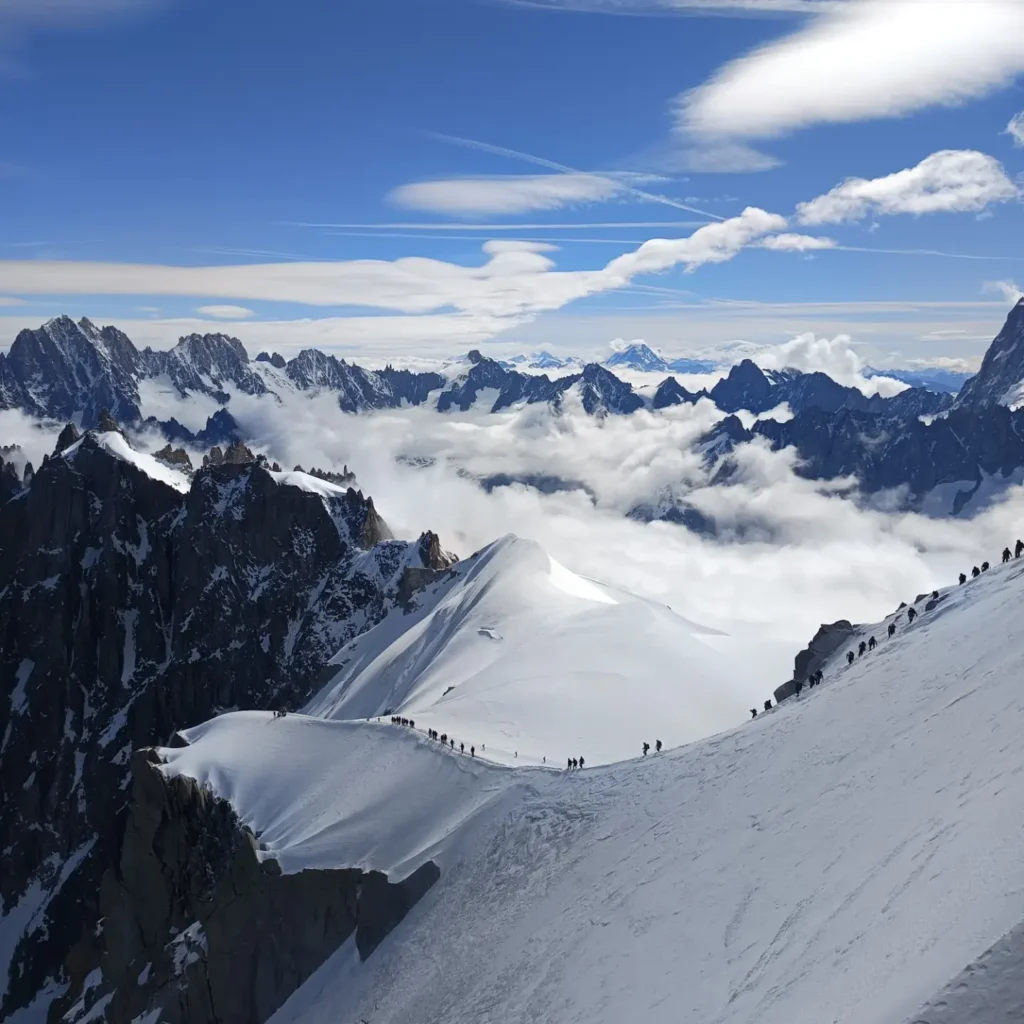
It’s also the best season if you want to combine Aiguille du Midi with hiking around Plan de l’Aiguille or other attractions in the Chamonix Valley.
The downside is the number of visitors. July and August are particularly busy, and queues can become quite long during the middle of the day. If you’re visiting during peak summer, booking an early morning time slot is usually the best strategy.
Visiting in Winter
Winter offers a completely different experience.
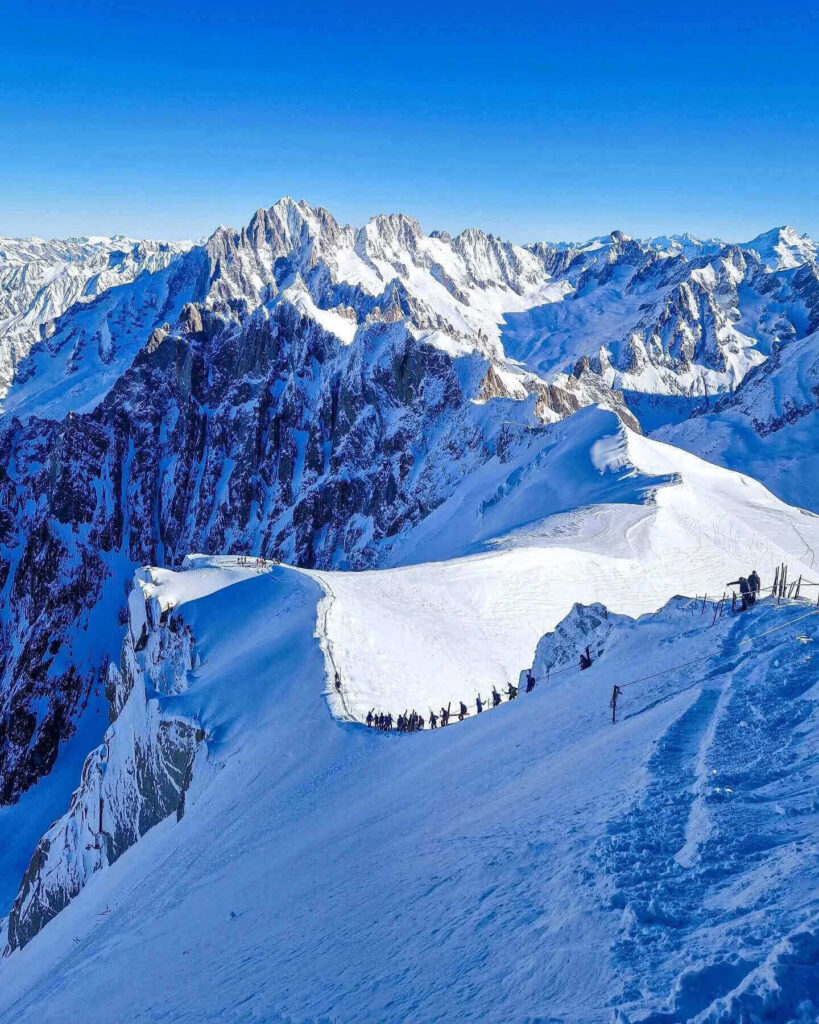
The mountains are covered in snow, glaciers blend into the surrounding landscape, and the scenery often feels even more dramatic than in summer. It’s also the season when you’ll see experienced skiers setting off on the famous Vallée Blanche route from the summit area.
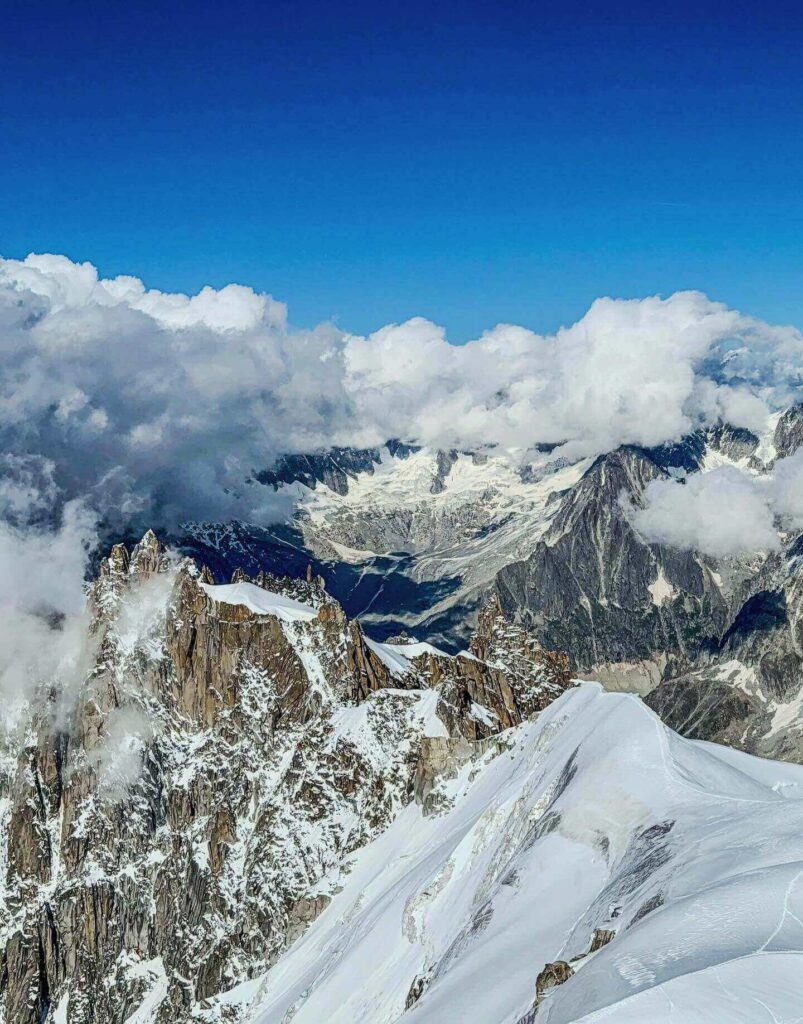
The main thing to remember is that conditions can be much colder than many visitors expect. Even if Chamonix feels comfortable, temperatures at nearly 4,000 meters can be well below freezing, especially when wind is involved.
Visiting in Spring
Spring is something of a transition season.
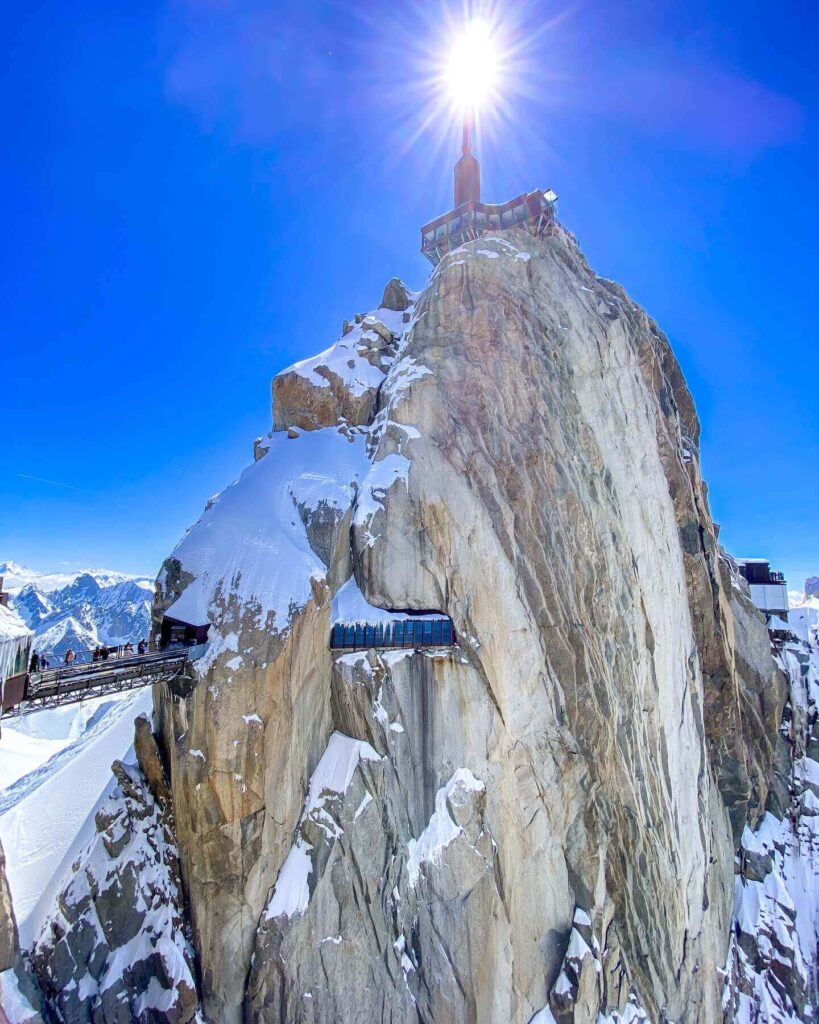
Snow often remains at higher elevations while the valley below begins to warm up. Depending on the year, you may experience winter like scenery at the summit while seeing green fields and blooming flowers in Chamonix.
Visitor numbers are usually lower than summer, which makes for a more relaxed experience, although weather conditions can be less predictable.
Visiting in Autumn
Autumn is one of my favorite times to visit Chamonix.
By September, the summer crowds begin to fade, temperatures are still comfortable, and the mountains often enjoy some beautifully clear days. Hotel prices can also be lower than during peak season, making it an attractive time for travelers looking for a quieter experience.
Late September and early October often strike a nice balance between good weather and manageable crowds.
What to Expect at the Summit
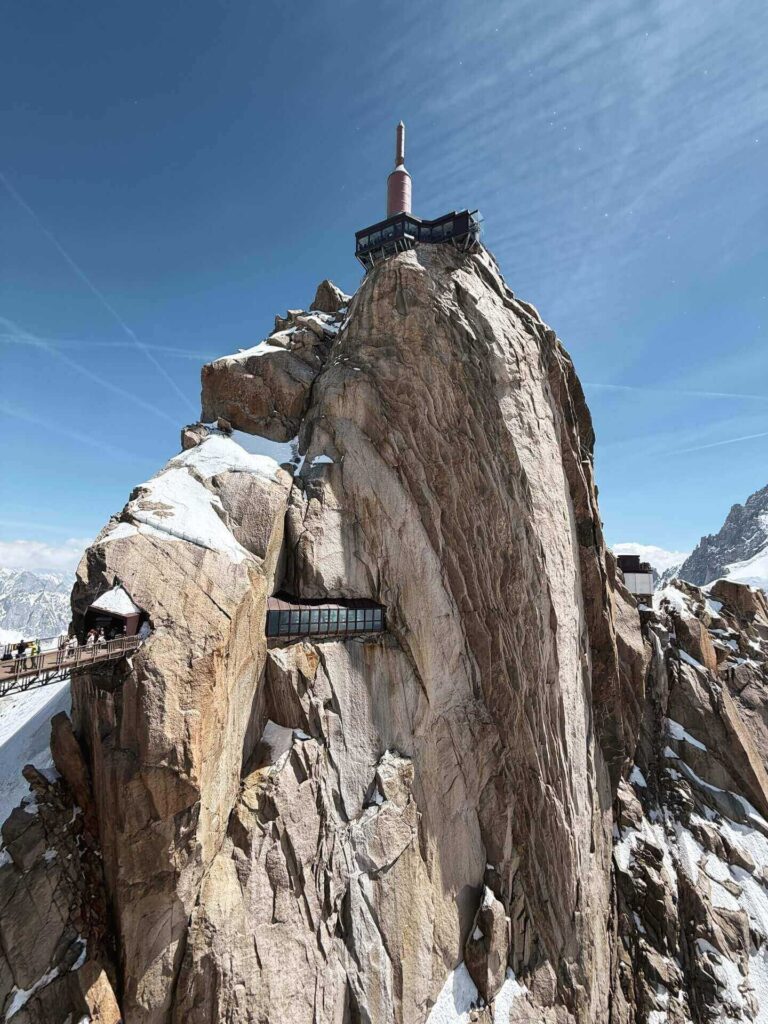
Arriving at the summit of Aiguille du Midi feels very different from arriving at a typical viewpoint. The moment you step out of the cable car, you’ll notice the cooler temperatures, thinner air, and the incredible proximity of the surrounding peaks.
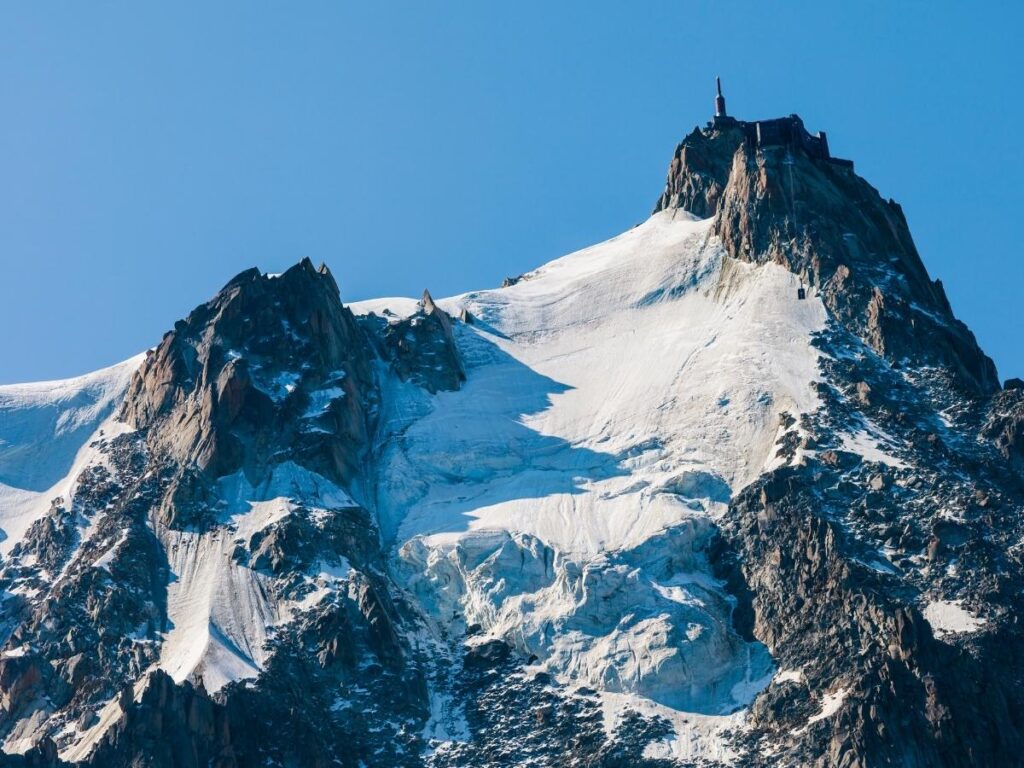
What struck me most was the sense of scale. The Chamonix Valley looks tiny below, while glaciers and rugged mountains fill the horizon in every direction. It’s one of those places where photos never quite capture what it feels like to be there in person.
Most visitors spend a few hours exploring the summit complex, which includes several viewing terraces, exhibits, and photo spots.
The Viewing Platforms
The summit features several viewing terraces, each offering a slightly different perspective of the surrounding mountains.
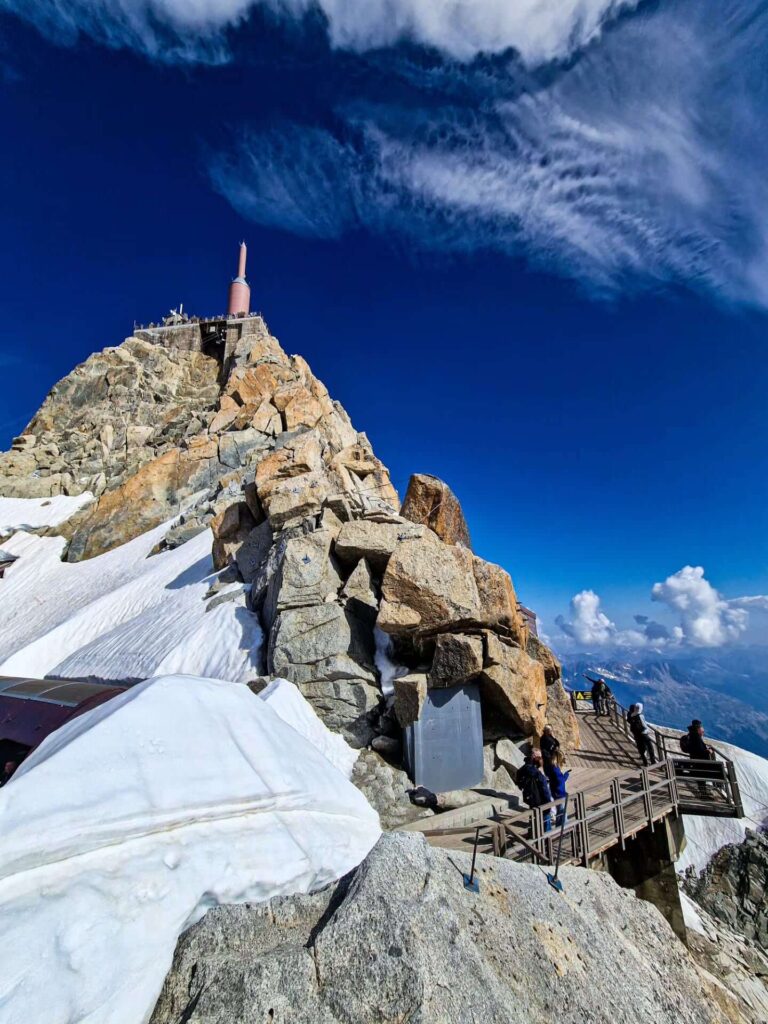
Some overlook glaciers flowing down into the valley, while others provide closer views of the highest peaks in the Mont Blanc Massif.
I found myself returning to the same viewpoints more than once because the scenery constantly changes as clouds move across the mountains and the light shifts throughout the day.
Views of Mont Blanc
For most visitors, Mont Blanc is the main attraction.
Standing at 4,808 meters (15,774 feet), it’s the highest mountain in Western Europe and dominates the skyline from many parts of the summit. What makes the view special is how close the mountain appears. From Chamonix, Mont Blanc looks impressive.
From Aiguille du Midi, you gain a much better appreciation for its size and the rugged terrain surrounding it.
If climbing Mont Blanc isn’t on your bucket list, this is about as close as most people will ever get to experiencing the mountain.
Views Into Italy and Switzerland
While Mont Blanc attracts most of the attention, don’t forget to look beyond it.
The panorama stretches far into Italy and Switzerland, revealing countless glaciers, ridges, and alpine valleys.
On exceptionally clear days, visibility can extend for miles, making it easy to understand why photographers and mountain enthusiasts love this place so much.
Can You Hike at Aiguille du Midi?
While most people visit for the cable car and summit views, Aiguille du Midi can also be part of a great hiking day.
The best hiking opportunities are around Plan de l’Aiguille, the mid station on the cable car route. From here, several scenic trails branch out across the mountainside.
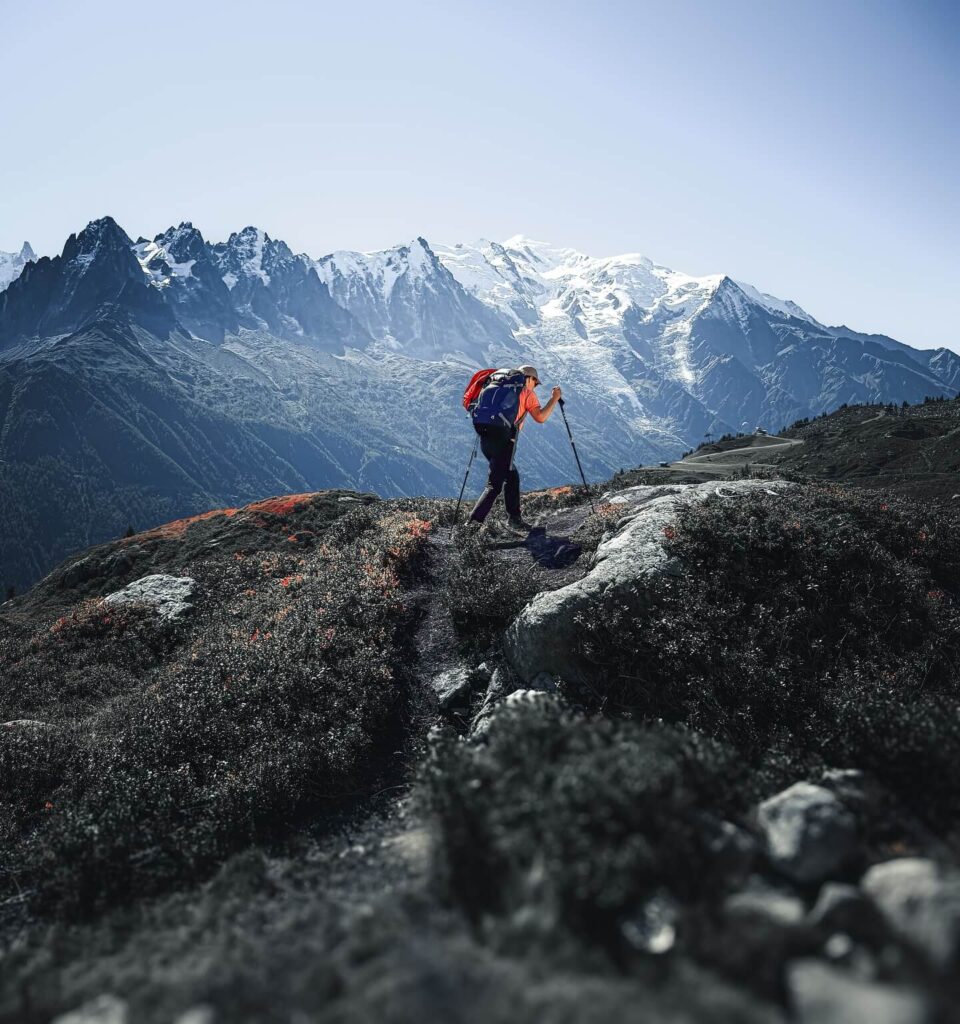
One of the most popular is the Grand Balcon Nord, a trail that offers fantastic views of the Mont Blanc Massif as it connects Plan de l’Aiguille with the Montenvers area. For something shorter, the walk to Lac Bleu is a beautiful option, especially on calm days when the lake reflects the surrounding peaks.
More experienced hikers sometimes continue toward Mer de Glace, creating a full day route through some of the most scenic parts of the Chamonix Valley.
The summit itself is also a starting point for famous mountaineering routes such as the Vallée Blanche and Mont Blanc ascents. However, these routes require specialized equipment, experience, and often a mountain guide.
Altitude and Safety Tips
At 3,842 meters, Aiguille du Midi is high enough that some visitors notice the effects of altitude.
Most people feel fine, but mild headaches, shortness of breath, or light dizziness can occasionally occur. The best thing you can do is take it easy when you first arrive. Spend a few minutes adjusting, drink plenty of water, and avoid rushing between viewpoints.
I also recommend eating before your visit and staying hydrated throughout the day. These simple steps can make a noticeable difference.
Families with children visit Aiguille du Midi regularly without any issues, but it’s always worth paying attention to how everyone feels. If you have a serious heart or respiratory condition, it’s a good idea to speak with your doctor before visiting.
For most travelers, any minor symptoms disappear quickly once they return to Chamonix, and the incredible views more than make up for the altitude.
Suggested Aiguille du Midi Itineraries
One of the nice things about Aiguille du Midi is that it can fit into almost any Chamonix itinerary. Whether you have just a few hours or an entire day, there are several ways to experience it.
Half Day Visit
If your time in Chamonix is limited, a half day visit works surprisingly well.
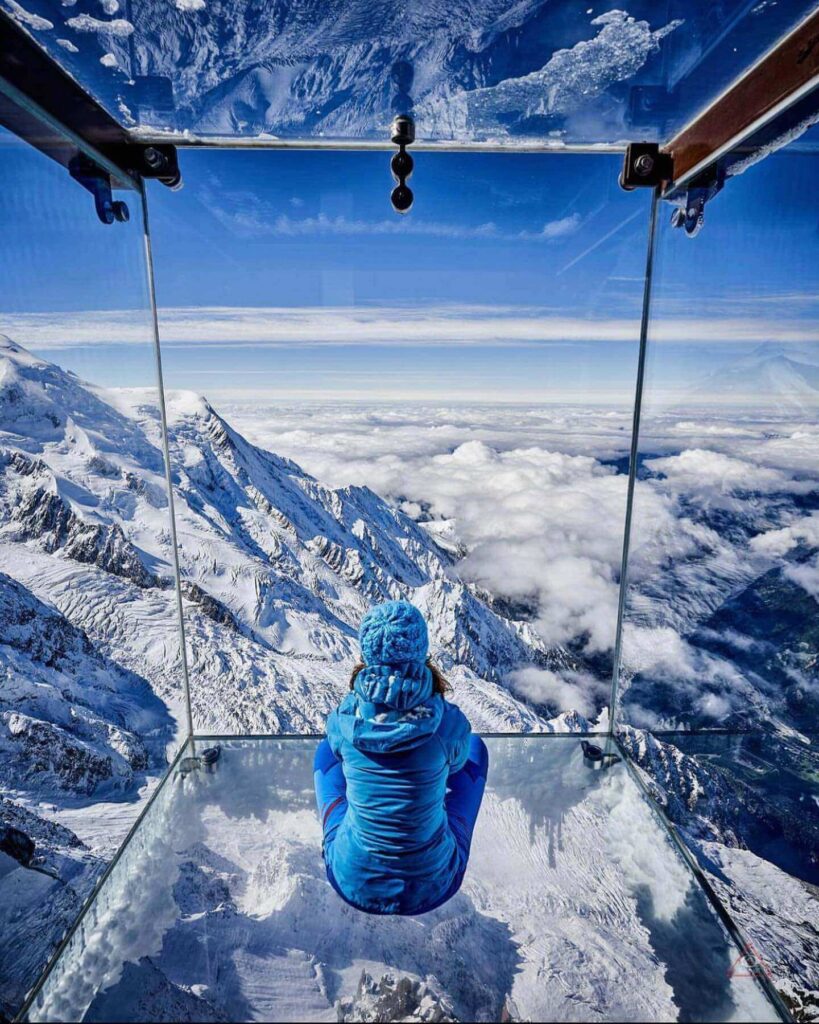
Take an early cable car to the summit, spend a few hours exploring the viewing terraces, visit Step Into the Void, and enjoy the incredible views of Mont Blanc and the surrounding peaks.
You’ll still have plenty of time afterward to explore Chamonix, have lunch in town, or visit another attraction.
Full Day Chamonix Experience
If you’re staying in Chamonix for a few days, I think this is one of the best ways to structure your day.
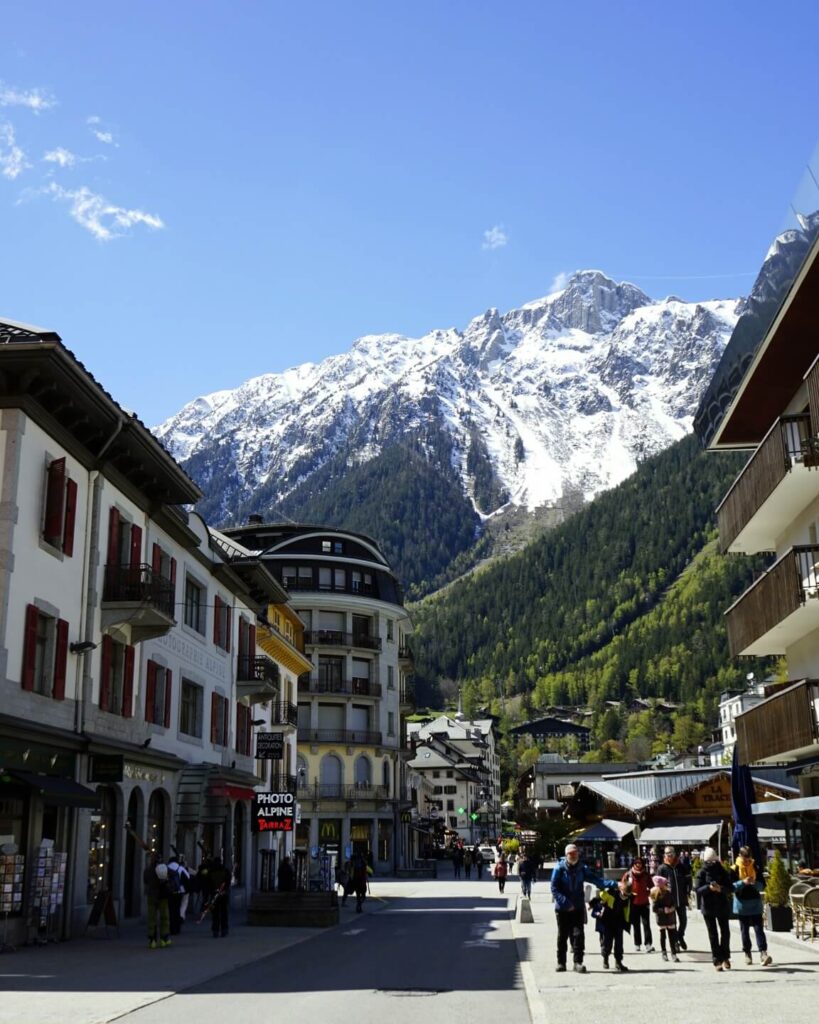
Spend the morning at Aiguille du Midi when visibility is often at its best, then return to town for lunch. In the afternoon, wander through Chamonix’s charming streets, browse local shops, relax at a café, or simply enjoy the mountain views from the valley floor.
The contrast between the busy alpine environment at the summit and the relaxed atmosphere of Chamonix makes for a very enjoyable day.
Aiguille du Midi and Mer de Glace
For first time visitors, combining Aiguille du Midi with Mer de Glace is hard to beat.
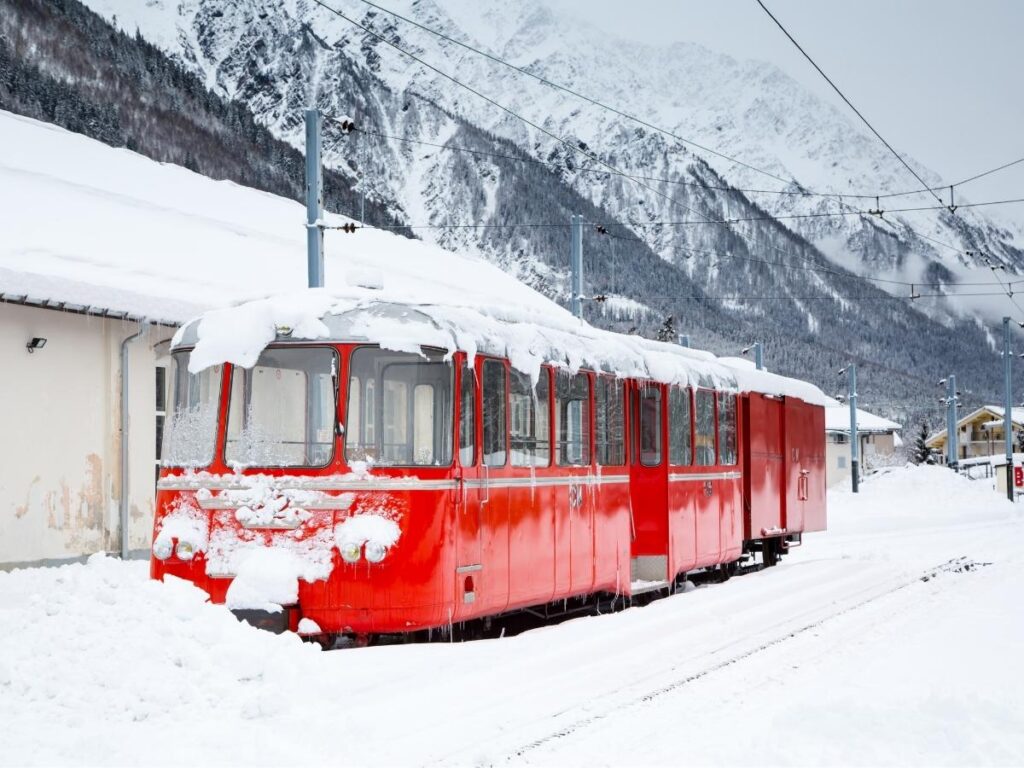
Start your day with the cable car ride to the summit, then spend the afternoon taking the historic Montenvers Railway to Mer de Glace. Depending on the season, you may also be able to visit the Ice Cave.
Together, these two attractions provide a great introduction to the glaciers, mountains, and landscapes that make the Chamonix Valley so famous.
Aiguille du Midi and Punta Helbronner
If the weather is clear and you have a full day available, this is probably the most memorable option.
After exploring Aiguille du Midi, continue across the mountains on the Panoramic Mont Blanc gondola to Punta Helbronner in Italy. The journey offers incredible glacier views and a completely different perspective of the Mont Blanc Massif.
It requires more time and a larger budget, but for many travelers it becomes one of the highlights of their entire trip to the Alps.
Nearby Attractions Worth Adding to Your Trip
If you’re spending more than a day in Chamonix, there are several attractions worth combining with Aiguille du Midi.
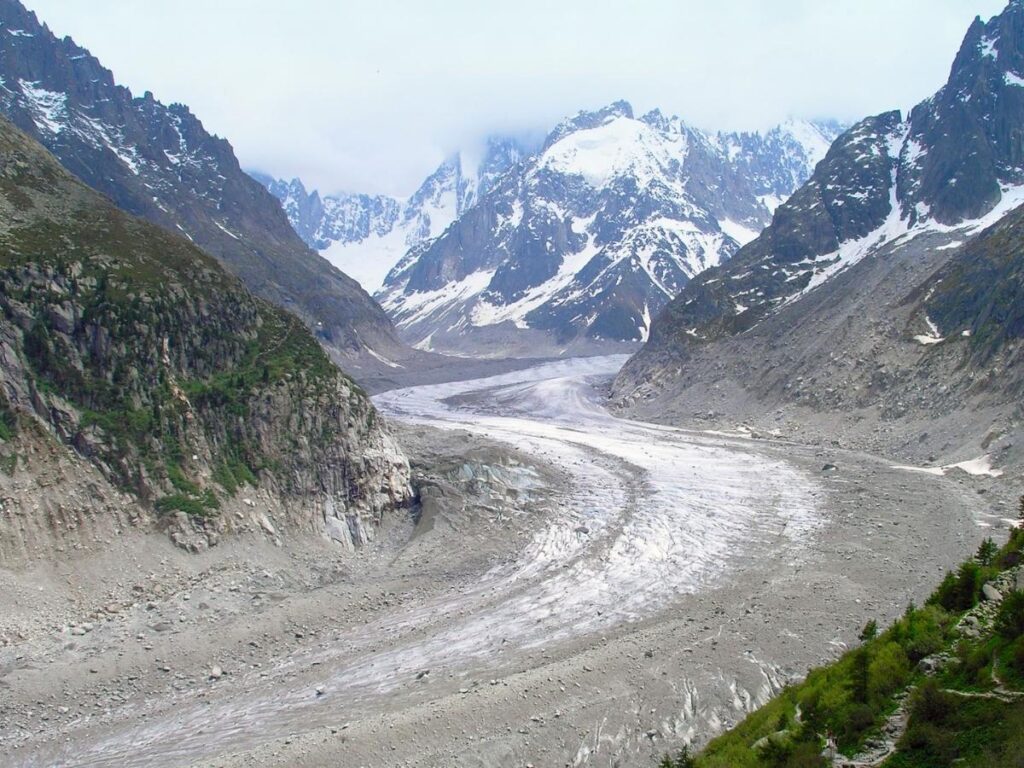
One of the most popular is Mer de Glace, France’s largest glacier, reached via the historic Montenvers Railway. It offers a completely different perspective of the Mont Blanc region and pairs perfectly with a summit visit.
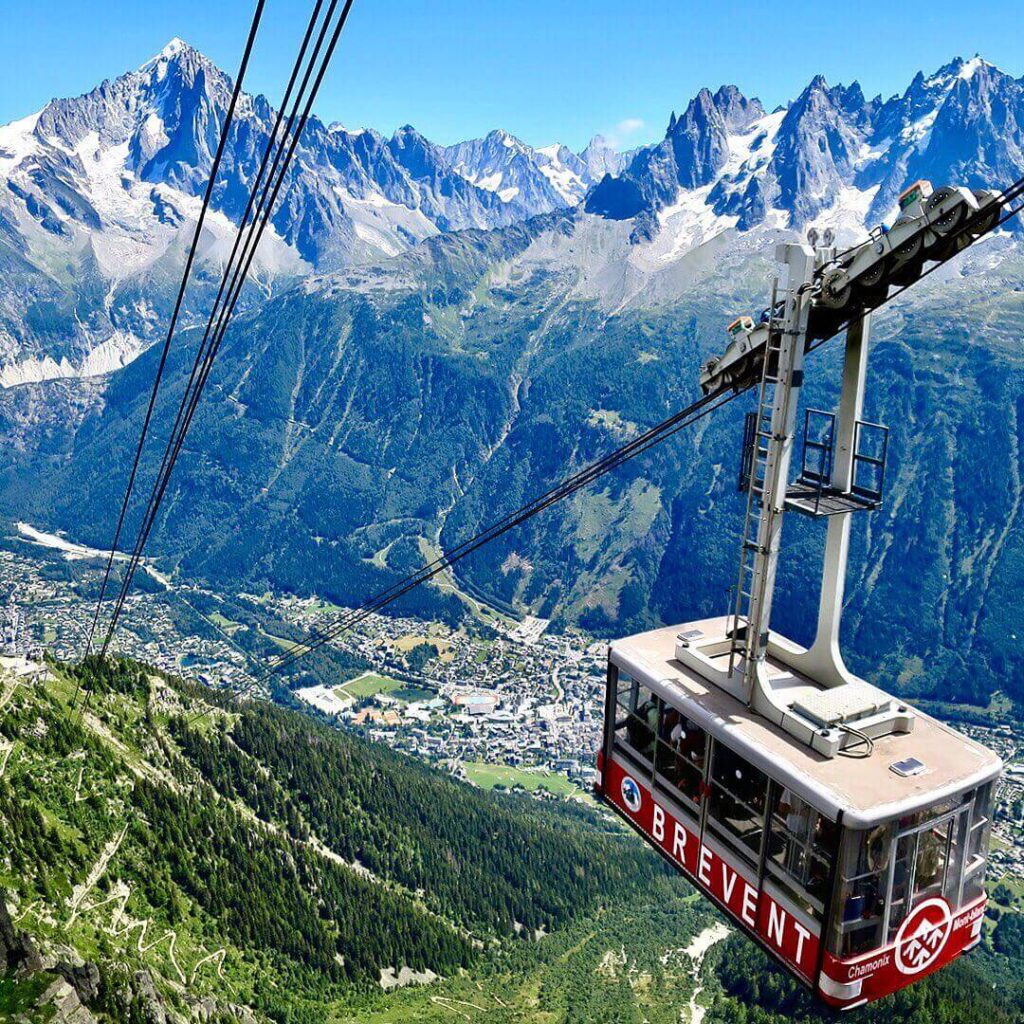
Brévent is another excellent option. Located on the opposite side of the valley, it provides some of the best panoramic views of Mont Blanc and the surrounding peaks. Hikers should also consider Lac Blanc, a beautiful alpine lake known for its mountain reflections and stunning scenery.
Don’t forget to spend some time exploring Chamonix itself. The town’s cafés, restaurants, and mountain views make it a great place to relax after a day in the high Alps.
Practical Tips for Visiting Aiguille du Midi
If I could give just a few tips, the most important would be to prioritize good weather and start early.
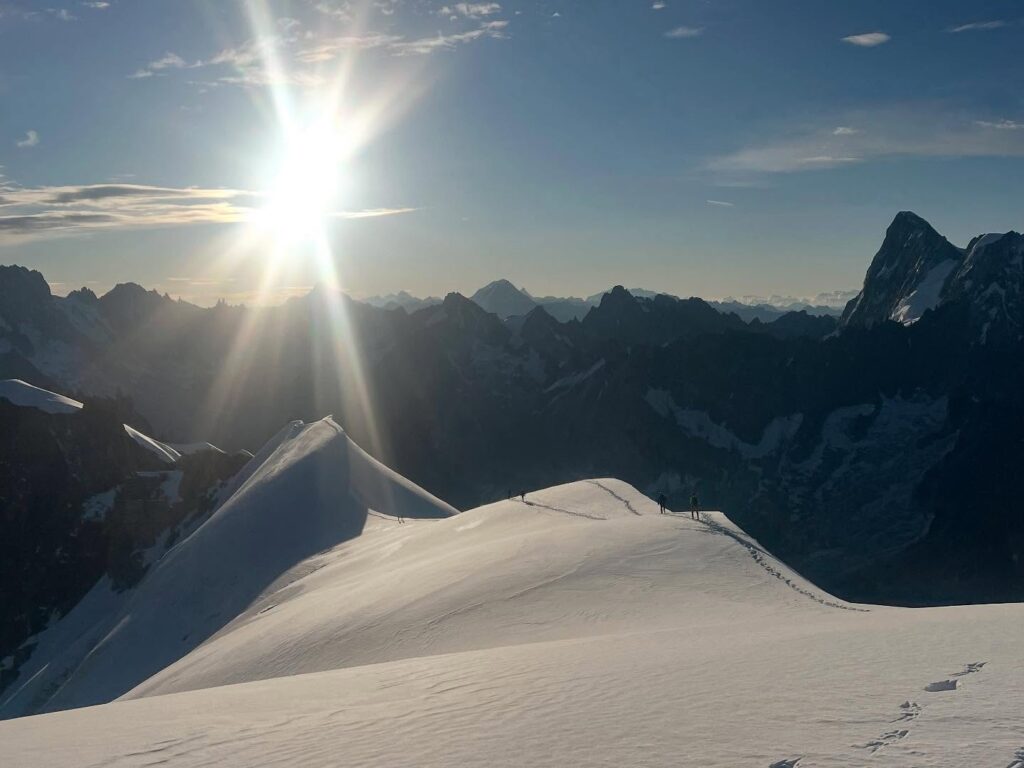
A clear day makes a huge difference, so try to remain flexible and choose the best forecast during your stay. Morning visits are usually quieter and often offer the best visibility before clouds begin forming around the peaks.
Even during summer, bring an extra layer. Temperatures at the summit can be much cooler than in Chamonix. I also recommend carrying water, wearing comfortable shoes, and allowing plenty of time to explore rather than rushing from one viewpoint to the next.
Final Thoughts on Aiguille du Midi
Aiguille du Midi is one of those places that stays with you long after your trip ends.
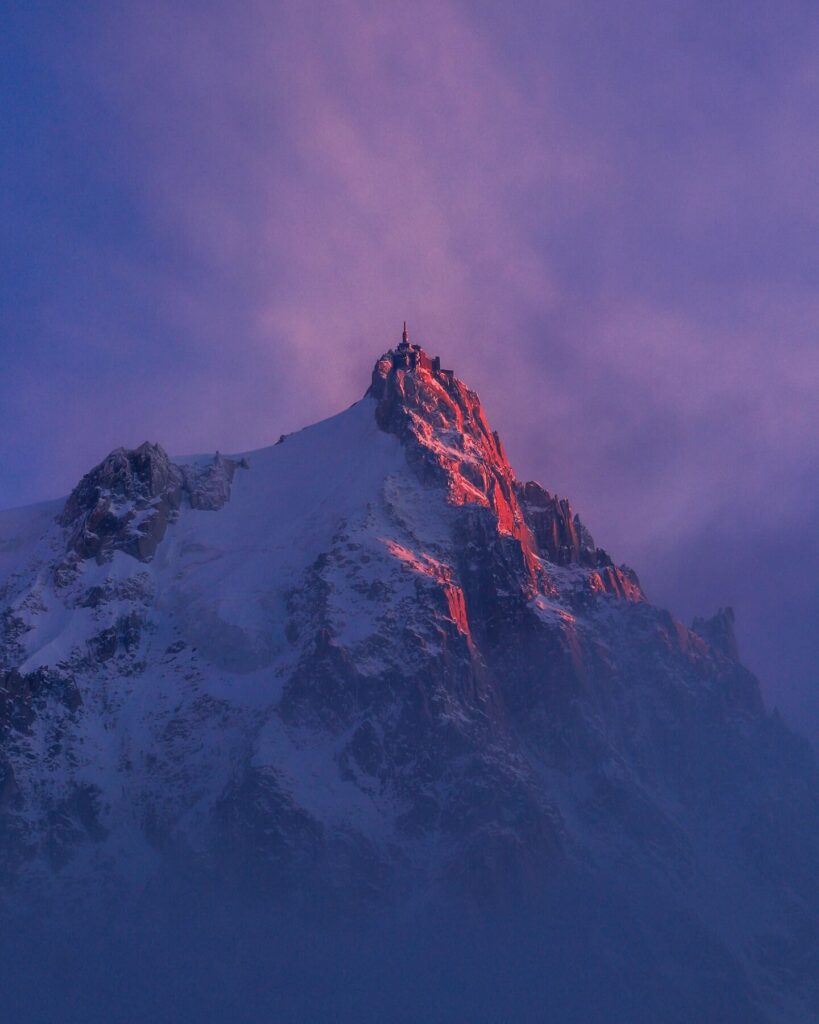
The views are spectacular, but what makes the experience special is the feeling of being surrounded by glaciers, towering peaks, and the immense scale of the Mont Blanc Massif. Few places allow you to access such a dramatic high mountain environment so easily.
Whether you’re visiting Chamonix for a day or a week, I think Aiguille du Midi deserves a place near the top of your itinerary. On a clear day, it’s easily one of the most memorable experiences in the French Alps.