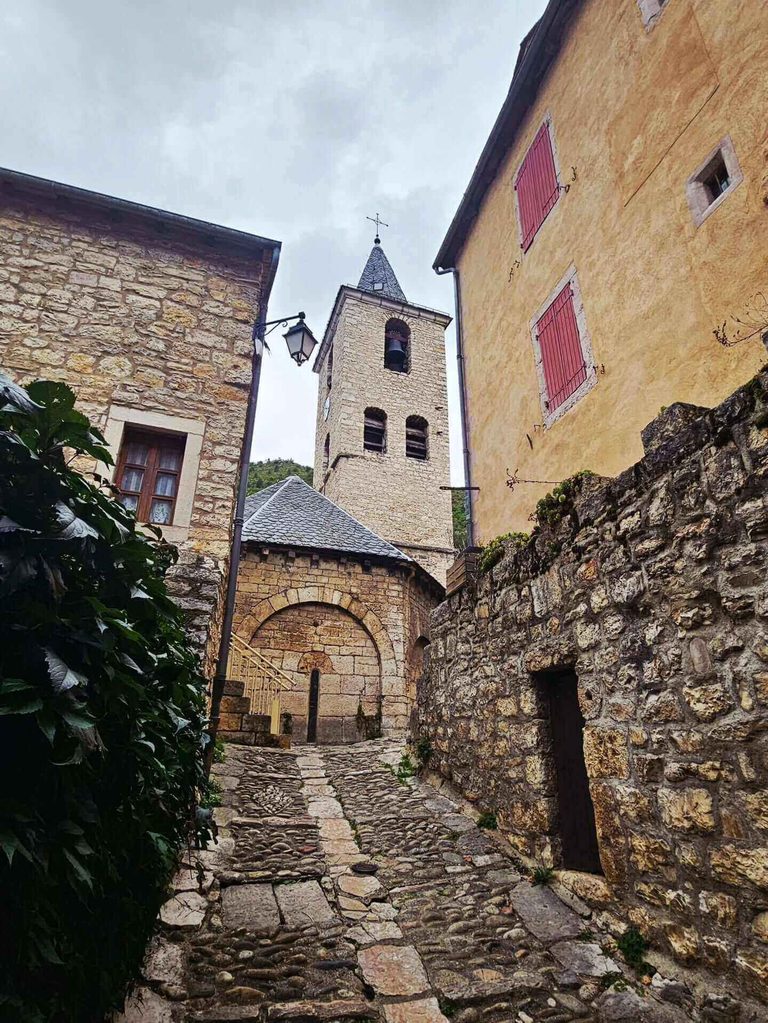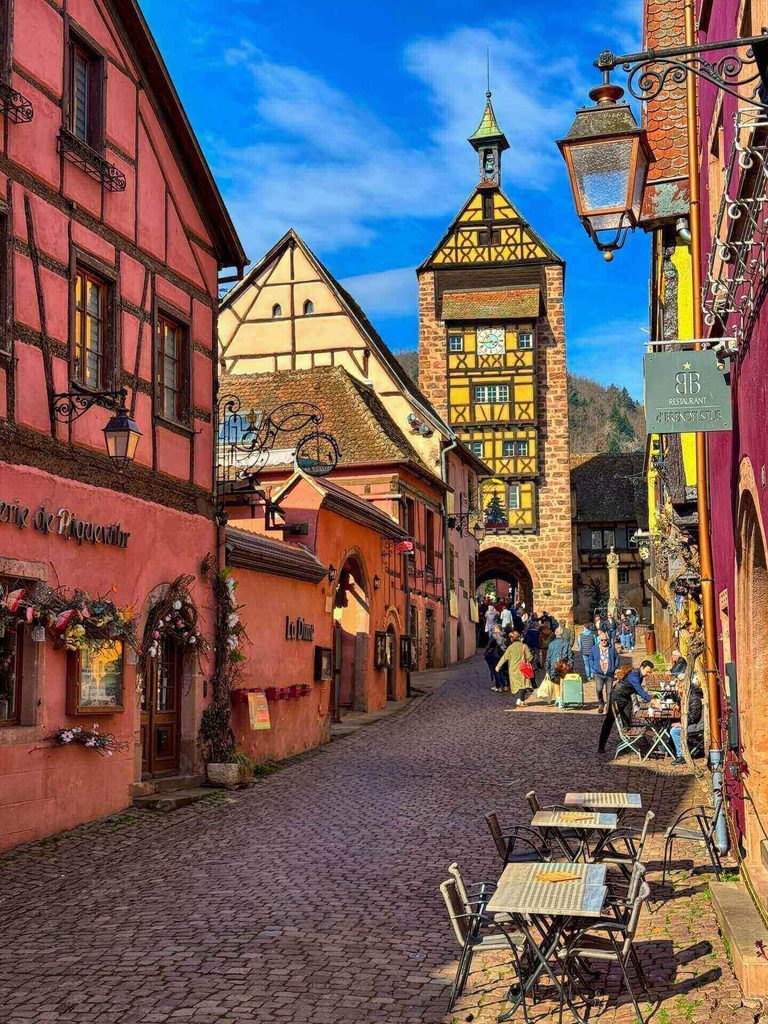

When most people think of Arles, they think of Van Gogh. That was certainly the case for me. Before visiting, I pictured a charming Provençal town filled with colorful cafés, sunny squares, and reminders of the artist who spent some of his most productive years here.
What I didn’t expect was to find one of the most impressive collections of Roman monuments in France. As I wandered through the historic center, Roman history seemed to appear around every corner.
One moment I was walking through narrow medieval streets, and the next I was standing in front of a massive amphitheater that has dominated the city for nearly 2,000 years. Later, I found myself exploring underground Roman galleries and strolling through an ancient necropolis lined with centuries of history.
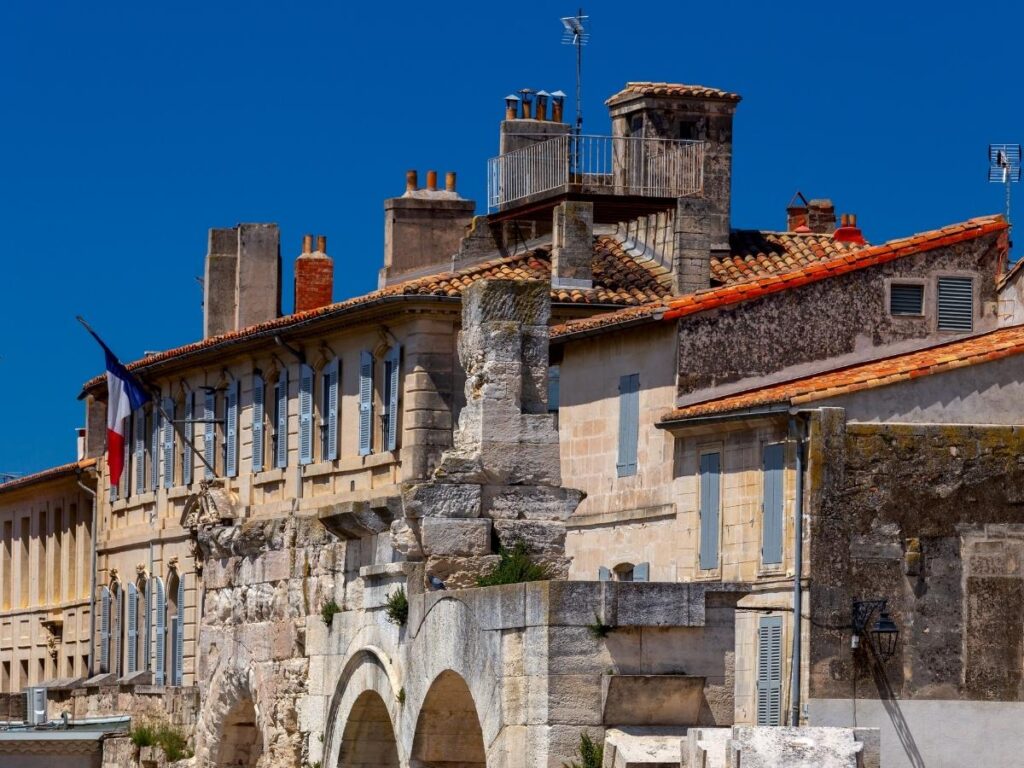
What makes Arles so special is that these monuments aren’t tucked away in a separate archaeological park. They’re woven into the city itself, making it easy to imagine what life here might have looked like during the Roman Empire.
The Roman Monuments of Arles are among the most significant Roman remains in France, which is why UNESCO added them to its World Heritage List in 1981. From the amphitheater and theater to the baths and Cryptoporticus, these sites offer a fascinating glimpse into one of the most important Roman cities in Gaul.
If you’re planning a trip to Provence and enjoy history, architecture, or simply exploring places with incredible stories, this guide covers everything you need to know before visiting the Roman Monuments of Arles.
Why Arles Was Important in Roman Times
Before exploring the monuments themselves, I think it’s worth understanding why Arles became such an important Roman city. Once you know a bit of the history, the ruins feel much more meaningful rather than just a collection of old stones scattered around the city.
From Celtic Settlement to Roman City
Long before the Romans arrived, Arles was already a settlement thanks to its location along the Rhône River. The river provided trade opportunities and easy access to other parts of the region, making it an attractive place to live and do business.
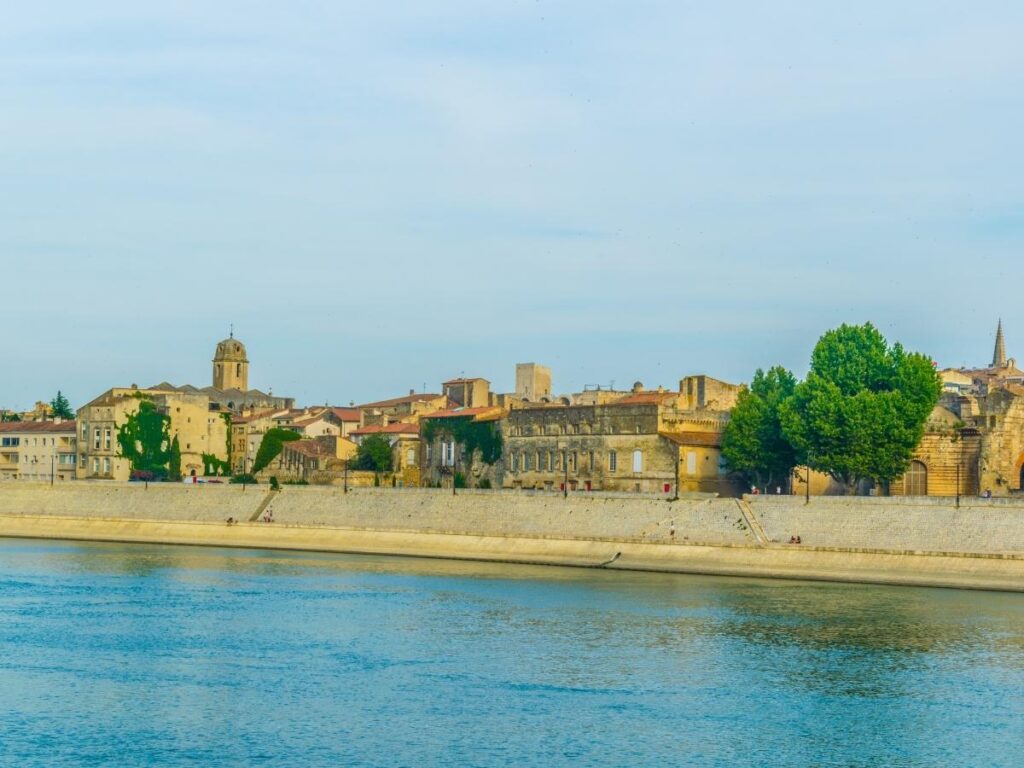
The city’s fortunes changed dramatically in the first century BC when Julius Caesar conquered Gaul. After supporting Caesar during his civil war against Pompey, Arles was rewarded with special status and quickly developed into an important Roman colony.
New roads, public buildings, baths, and entertainment venues transformed the city into one of the leading urban centers in Roman Gaul.
Arles During the Roman Empire
Arles prospered because of its strategic location between the Mediterranean Sea and inland Europe. Goods, travelers, and merchants regularly passed through the city, bringing wealth and influence.
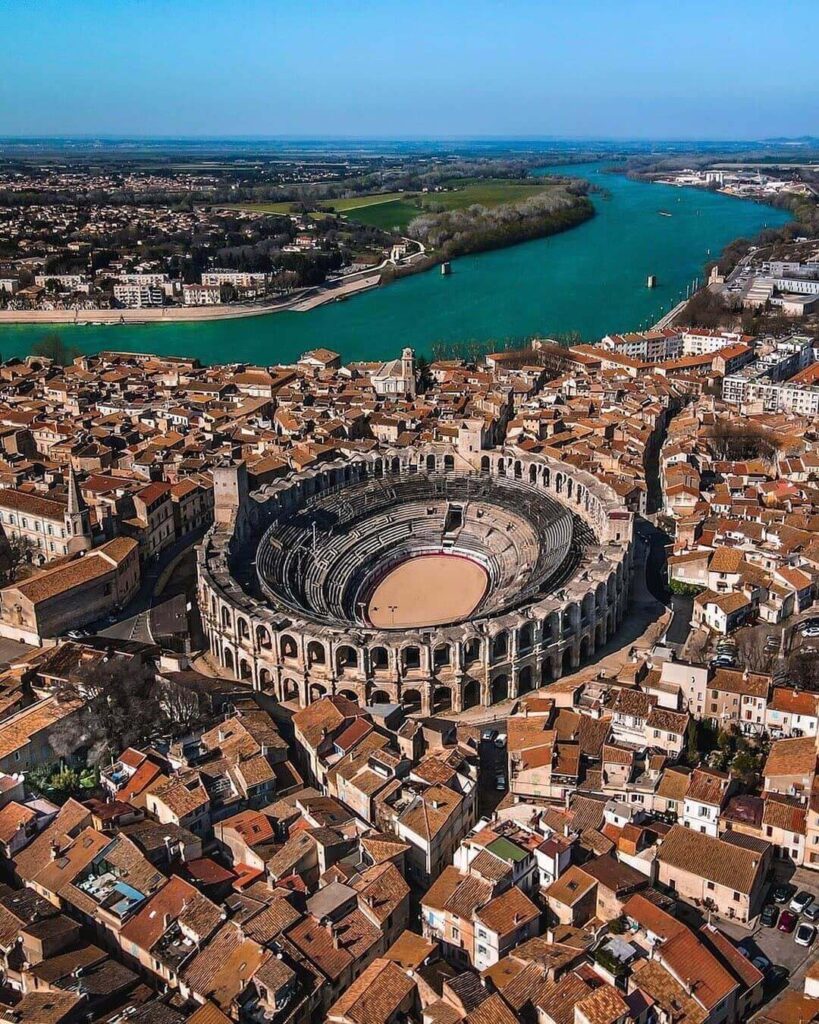
As the city grew, impressive public monuments began appearing across Arles. The amphitheater, theater, baths, forum, and cemeteries that visitors see today were all part of a thriving Roman city. By the fourth century, Arles had become so important that Emperor Constantine spent time here and supported its continued development.
Why So Much Roman Heritage Survived
One thing that surprised me about Arles is how much Roman history remains visible today. Part of the reason is that many of these structures continued to be used long after the Roman Empire declined.
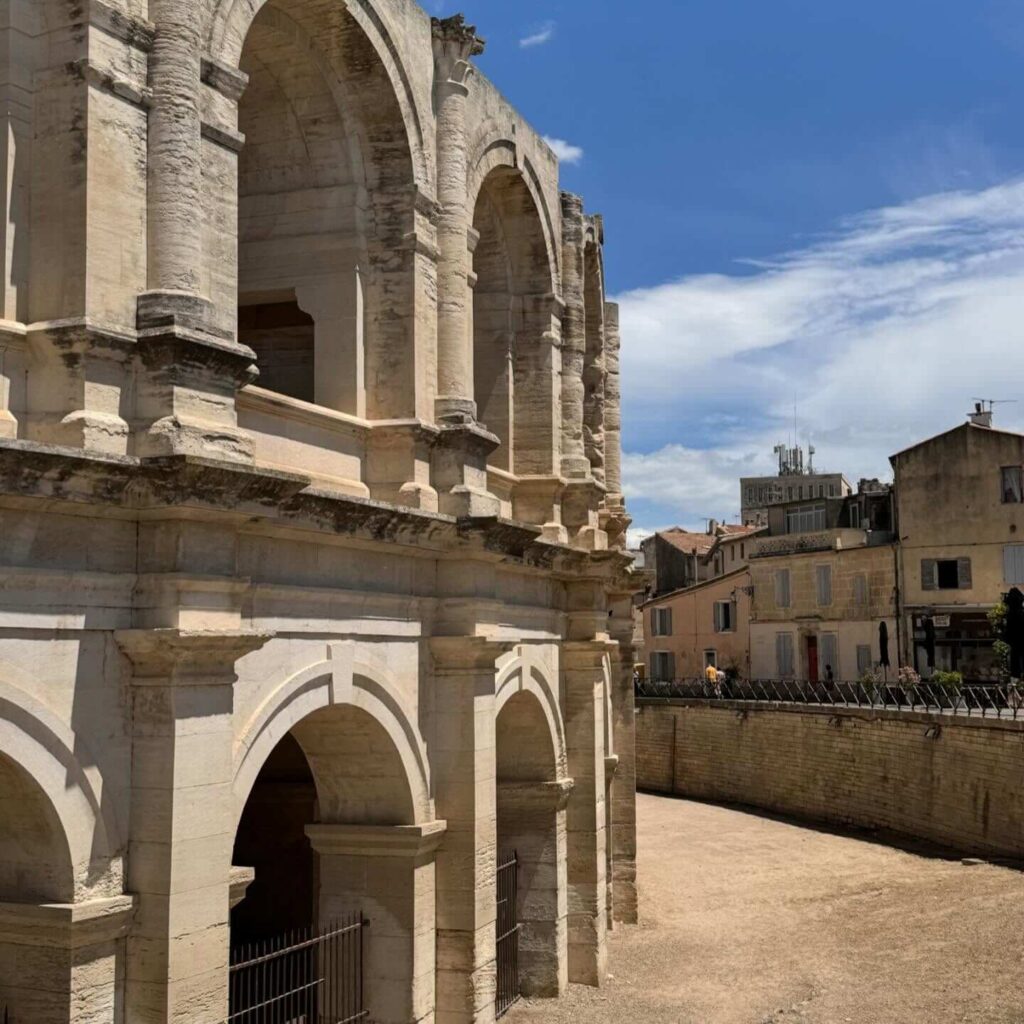
The amphitheater, for example, was converted into a fortified settlement during the Middle Ages, with houses and defensive towers built inside its walls. Other monuments were incorporated into newer buildings or remained buried until archaeologists uncovered them centuries later.
Today, these preserved sites give visitors a rare opportunity to experience one of the most complete collections of Roman monuments in France and to better understand what life in a major Roman city once looked like.
What Are the Roman Monuments of Arles?
The Roman Monuments of Arles aren’t a single attraction but a collection of important Roman sites spread throughout the historic center of the city. Together, they tell the story of how Arles grew into one of the most important Roman settlements in Gaul.
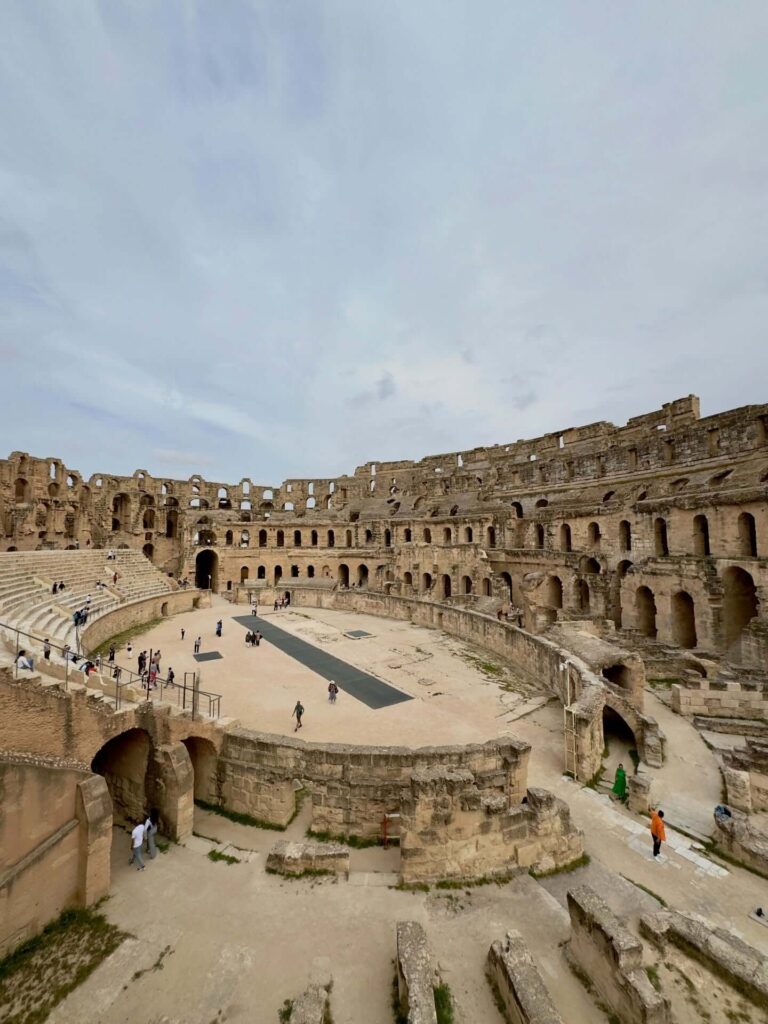
What I enjoyed most about visiting Arles is that these monuments don’t feel isolated from the rest of the city. As you walk through the historic streets, you’ll encounter ancient theaters, baths, underground galleries, and even a Roman necropolis, all within a relatively compact area.
Quick Overview of the Main Roman Sites
Before diving into each monument in detail, here’s a quick look at the major Roman sites you’ll encounter in Arles.
Arles Amphitheater (1st Century AD)
The amphitheater is the city’s most iconic Roman monument and usually the highlight of any visit. Built to host gladiator contests and public spectacles, it could accommodate around 20,000 spectators.
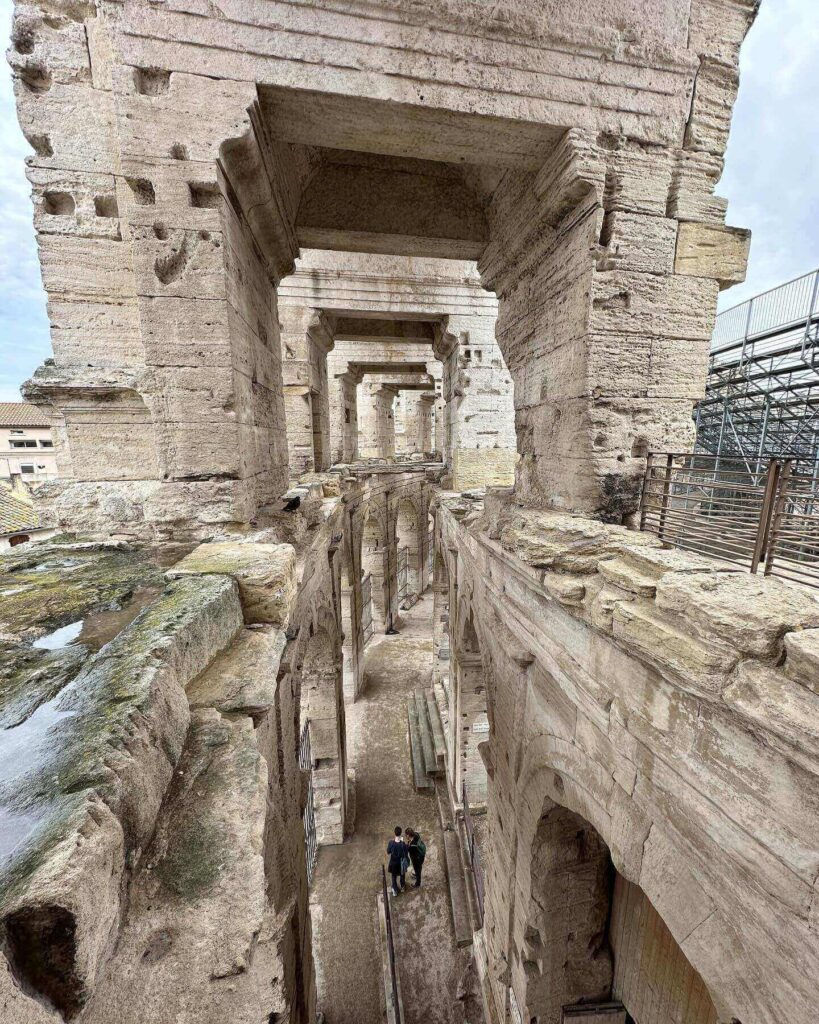
Its impressive state of preservation makes it one of the best places to appreciate the scale and ambition of Roman architecture in southern France.
Roman Theater (1st Century BC)
Older than the amphitheater, the Roman Theater was once a grand venue for plays, music, and public performances.
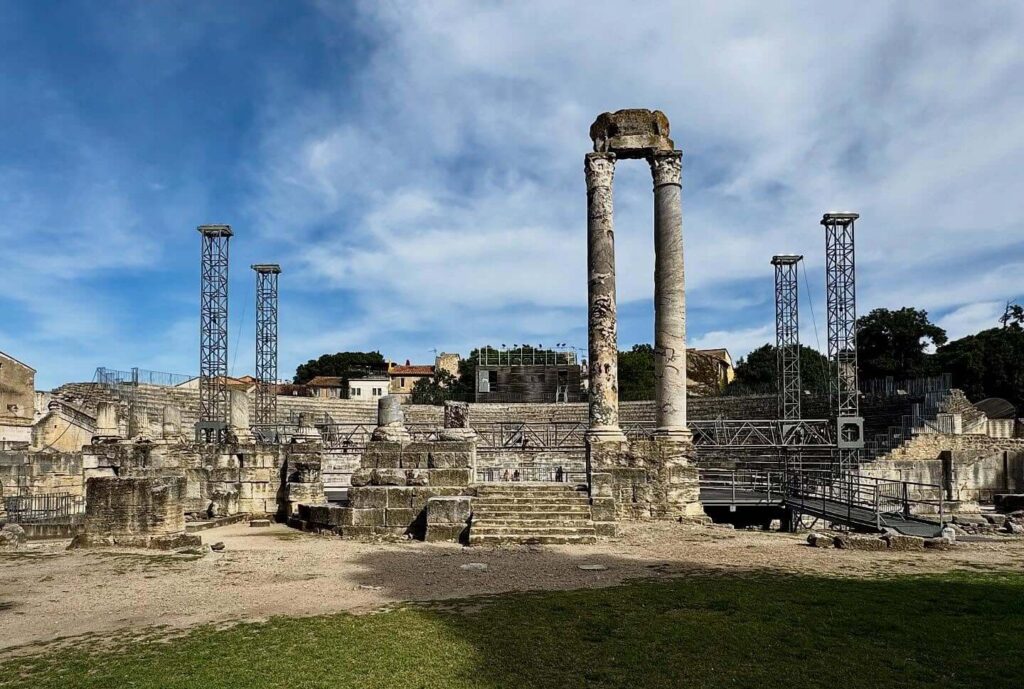
Although much of the original structure has disappeared, the remaining columns and ruins provide a fascinating glimpse into the cultural life of Roman Arles.
Cryptoporticus (1st Century BC)
Located beneath the former Roman Forum, the Cryptoporticus consists of underground galleries that once supported the city’s civic center.
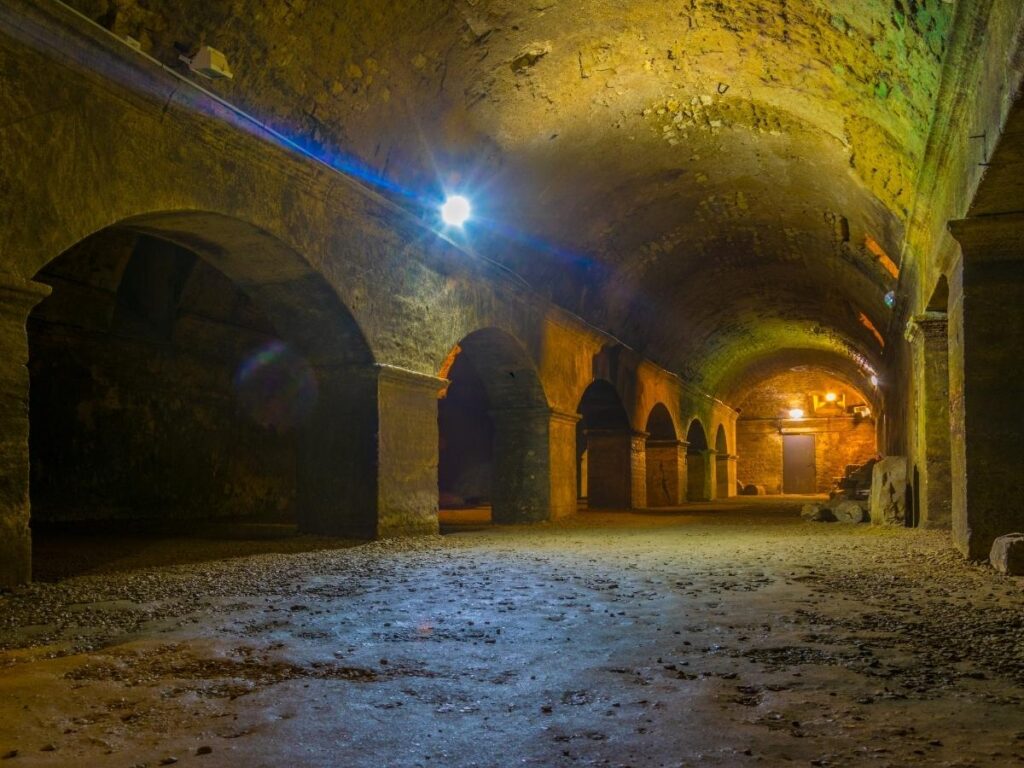
Walking through these stone passageways feels very different from visiting the other monuments and offers a unique look at Roman engineering.
Constantine Baths (4th Century AD)
These baths are among the most important surviving Roman bath complexes in France. While only part of the original structure remains, the ruins help illustrate how advanced Roman public facilities were and offer insight into an important part of everyday life in the empire.
Alyscamps (Roman Era)
Alyscamps was one of the most famous cemeteries in Roman Gaul and later became an important Christian pilgrimage site.
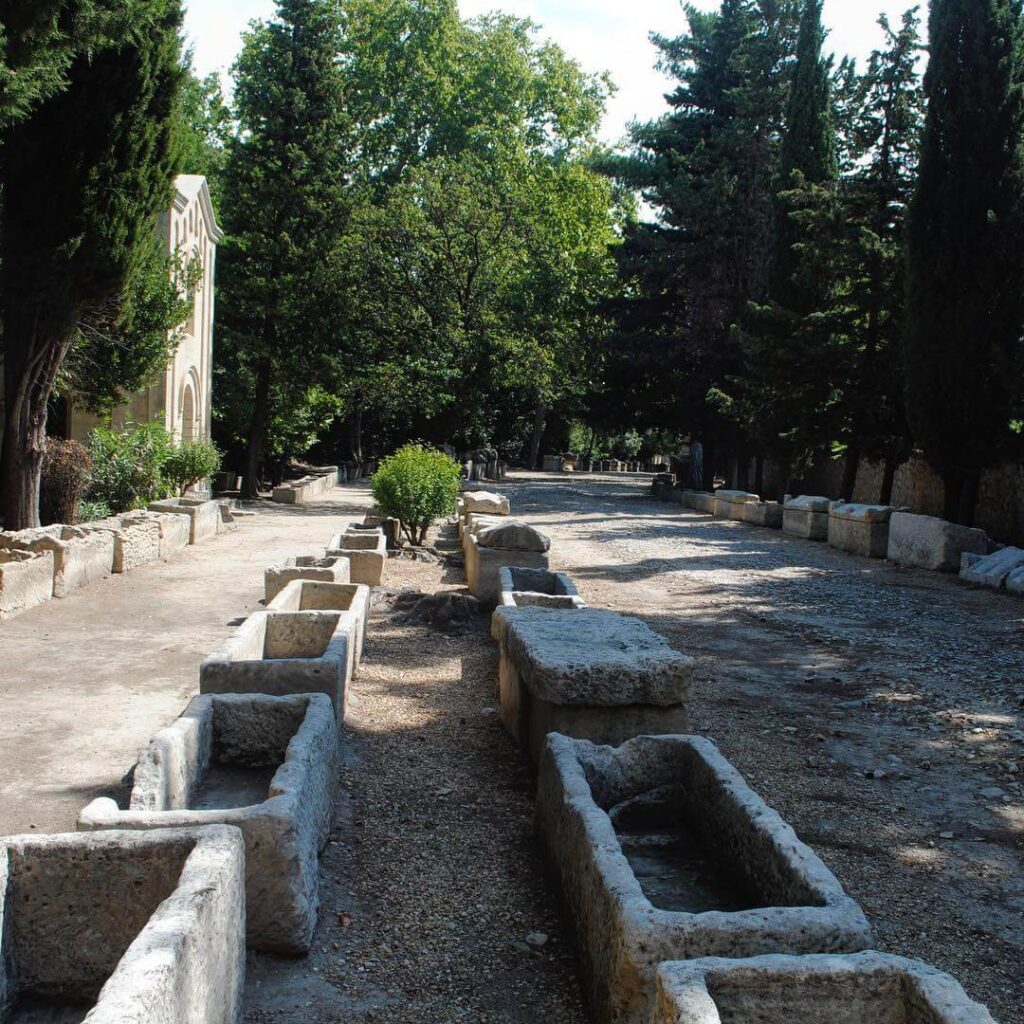
Today, its tree lined pathway and ancient sarcophagi create one of the most atmospheric historic sites in Arles.
Roman Forum Remains (1st Century BC)
The Roman Forum was once the political and commercial heart of the city. Although much of it no longer survives above ground, the area helps visitors understand how Arles functioned as a thriving Roman settlement and provides context for many of the other monuments you’ll see throughout the city.
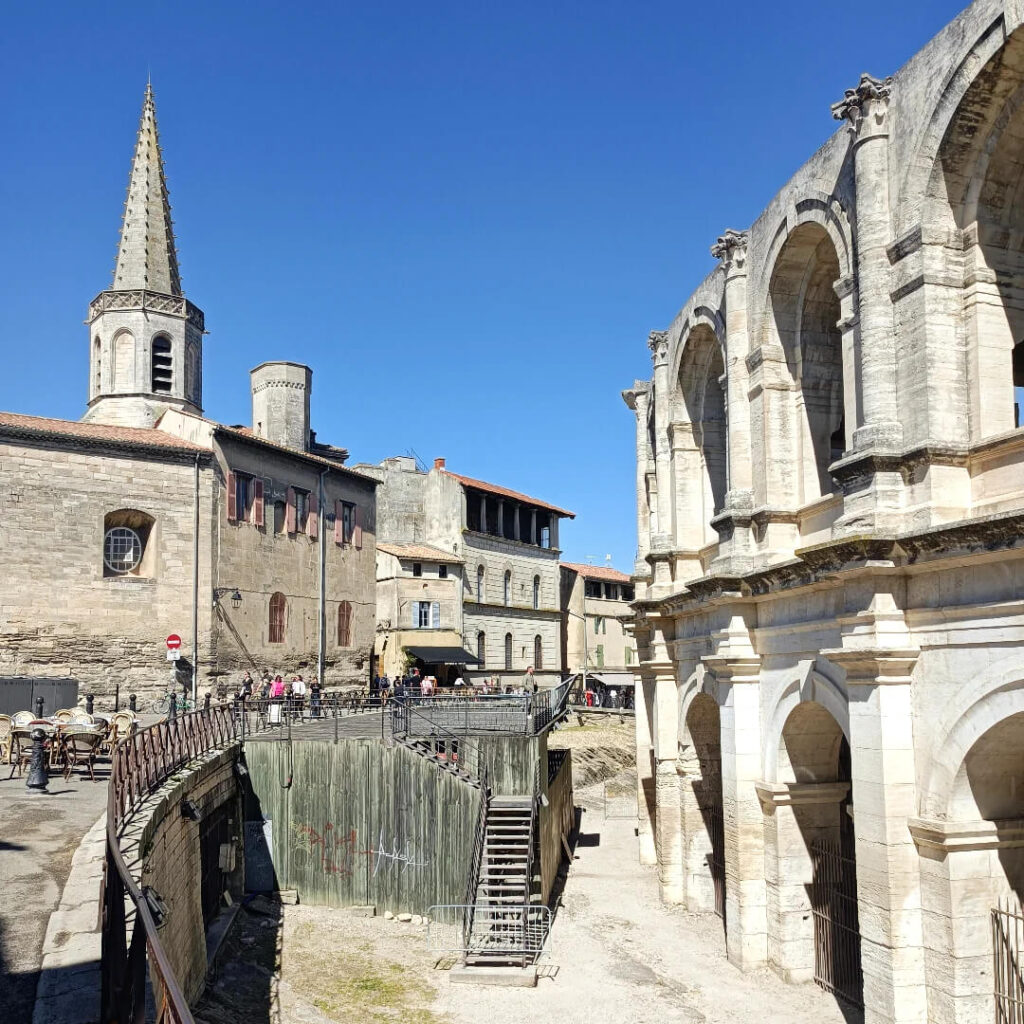
While the amphitheater is the city’s most famous landmark, I wouldn’t stop there. Some of the lesser known sites, particularly the Cryptoporticus and Alyscamps, offer a deeper understanding of what daily life in Roman Arles may have looked like.
Together, these monuments create one of the most complete collections of Roman heritage in France and make Arles a fascinating destination for anyone interested in history, archaeology, or architecture.
Arles Amphithéâtre (Les Arènes d’Arles)
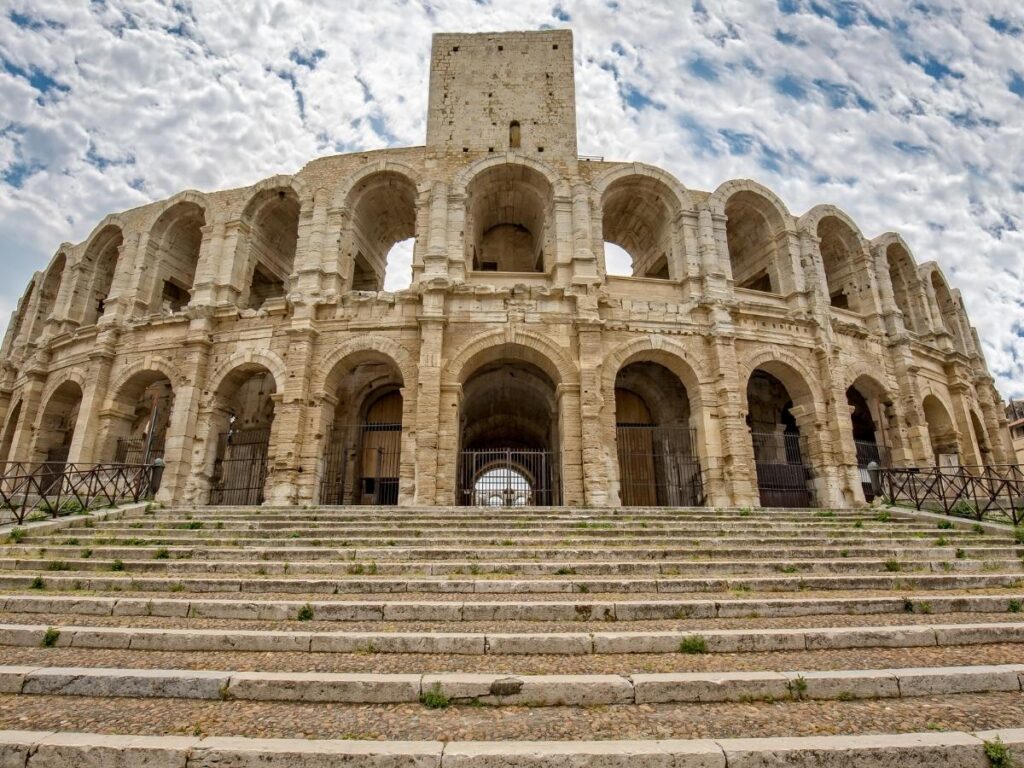
If there’s one monument that defines Arles, it’s the Arles Amphitheater. Rising above the surrounding streets with its rows of arches, it’s impossible to miss and often the first Roman site visitors notice when exploring the city.
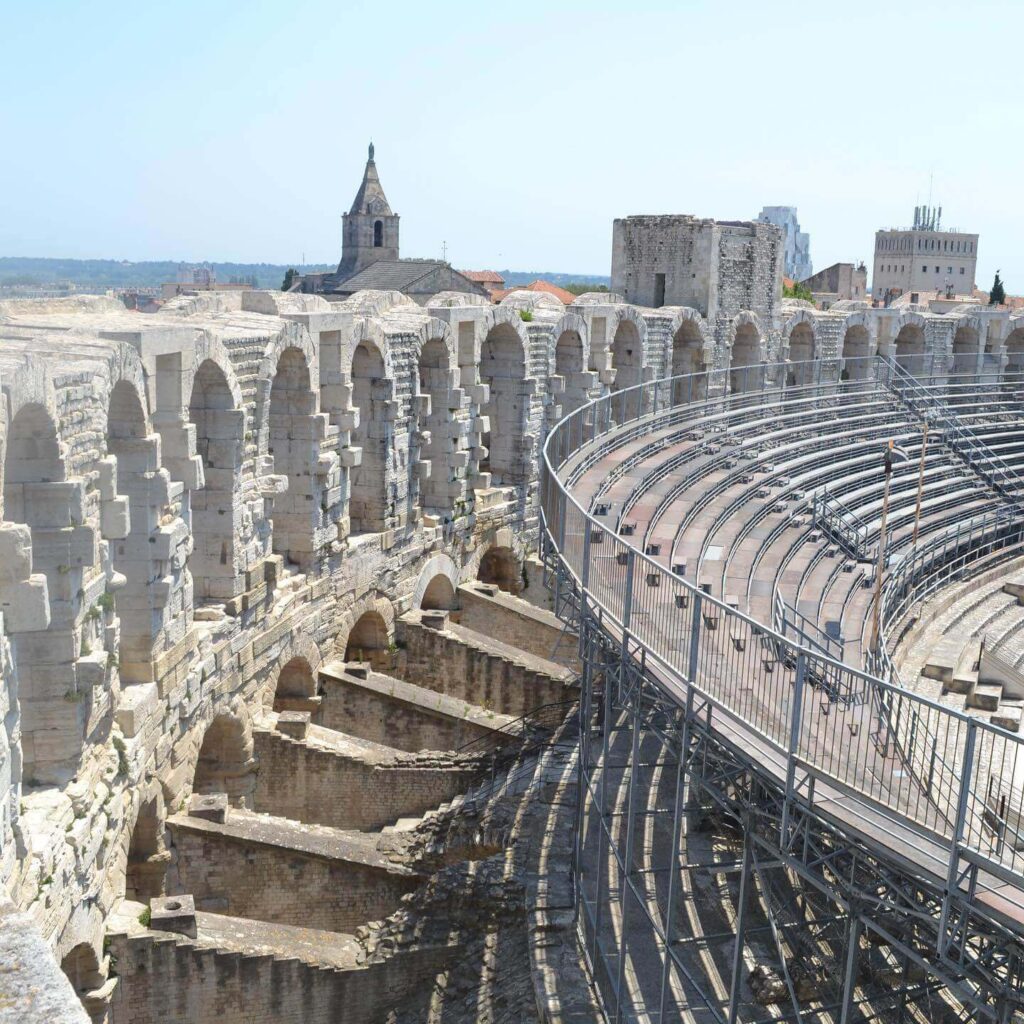
What impressed me most wasn’t just its size, but how seamlessly it fits into modern Arles. Nearly 2,000 years after it was built, the amphitheater remains one of the city’s most recognizable landmarks and one of the best preserved Roman monuments in France.
History of the Amphitheater
The amphitheater was built around AD 90 during the reign of the Flavian emperors, the same dynasty that constructed the Colosseum in Rome. At the time, Arles was one of the most important cities in Roman Gaul, and a monument of this scale reflected the city’s growing wealth and influence.
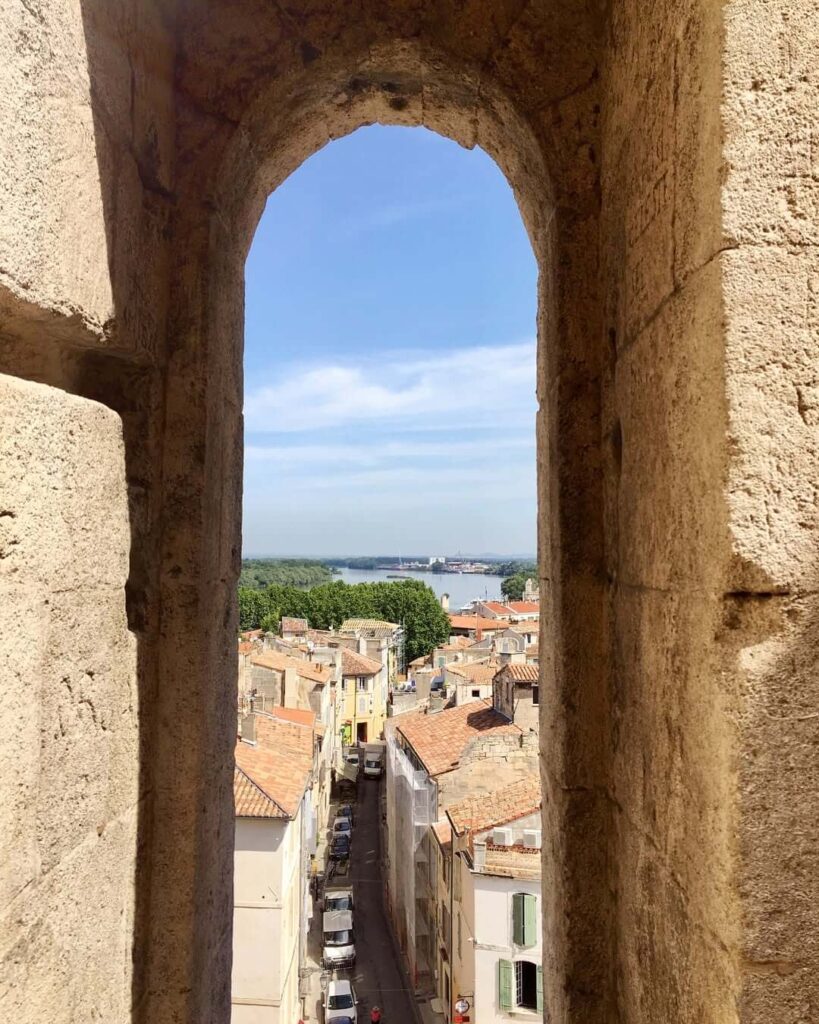
Measuring approximately 136 meters long and 107 meters wide, the arena could hold around 20,000 spectators. It wasn’t simply a place for entertainment. It was a symbol of Roman power and an important gathering place for the local community.
What Happened Here During Roman Times?
Like other Roman amphitheaters, the arena hosted public spectacles that attracted large crowds. Gladiator contests were among the most popular events, alongside animal hunts, athletic competitions, and public celebrations.
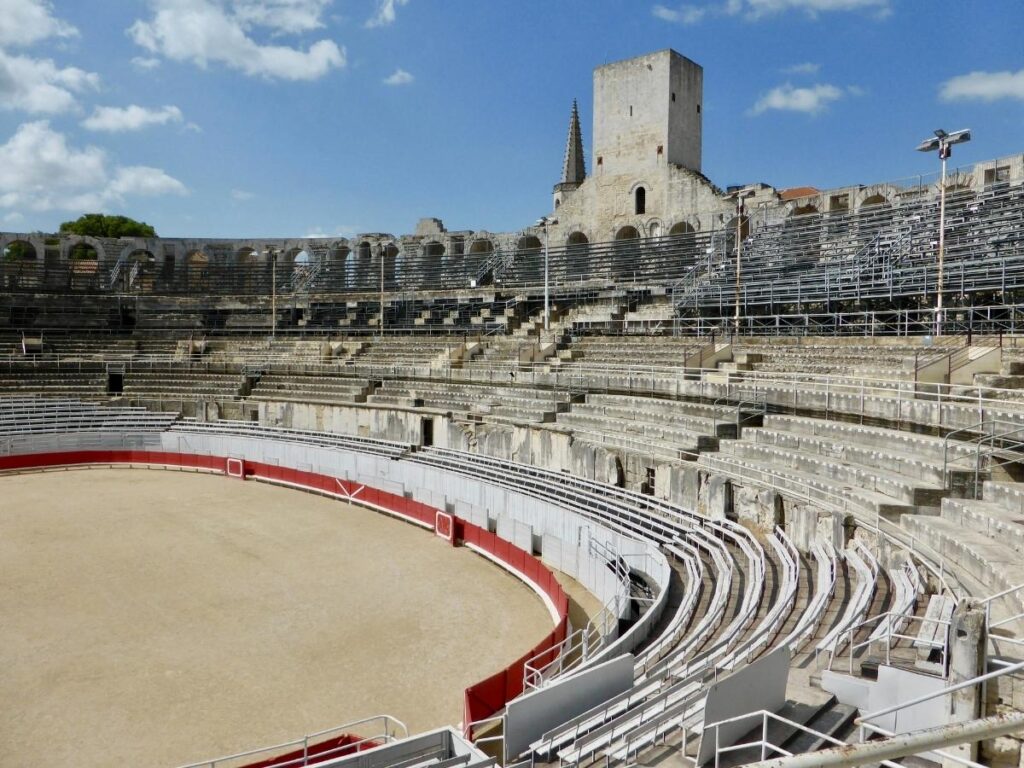
Standing inside the amphitheater today, it’s surprisingly easy to imagine the atmosphere. The seating rises steeply around the arena floor, giving visitors a sense of how thousands of spectators once gathered here to watch these events unfold.
The Amphitheater’s Medieval Transformation
One reason the amphitheater survives so well today is that it continued to be used long after the Roman Empire declined.
During the Middle Ages, houses were built inside the arena and defensive towers were added, transforming the structure into a fortified settlement. At one point, hundreds of people lived within its walls. While these changes altered the monument, they also helped preserve much of it for future generations.
What You’ll See Today
Visitors can explore the arena floor, seating areas, passageways, and upper levels of the monument. I especially enjoyed walking through the upper sections, where you can look out across the rooftops of Arles and appreciate just how massive the structure really is.
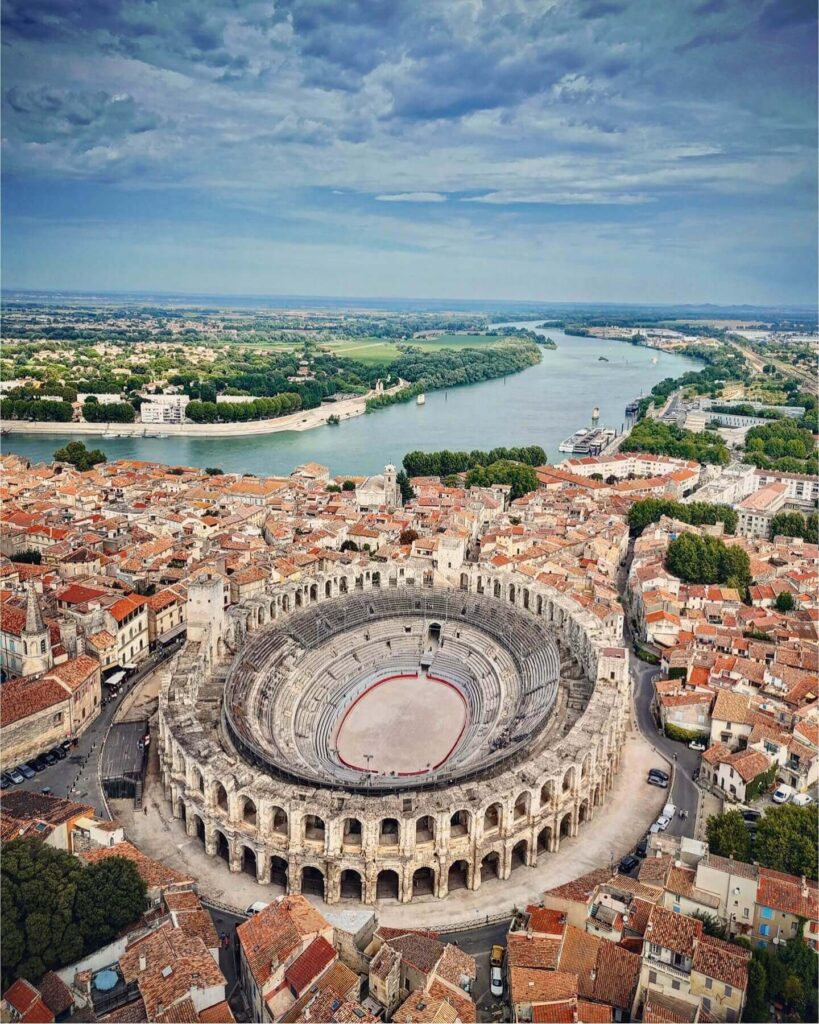
Even if you only have a limited amount of time in the city, this is the one Roman monument I would prioritize. It’s the perfect introduction to Arles’ Roman history and helps put many of the city’s other archaeological sites into context.
Is the Arles Amphitheater Worth Visiting?
Absolutely. Even if you’ve visited famous Roman sites elsewhere in Europe, the amphitheater in Arles is worth seeing. What makes it unique is not just its Roman history but the fact that it continued evolving long after the Roman Empire ended.
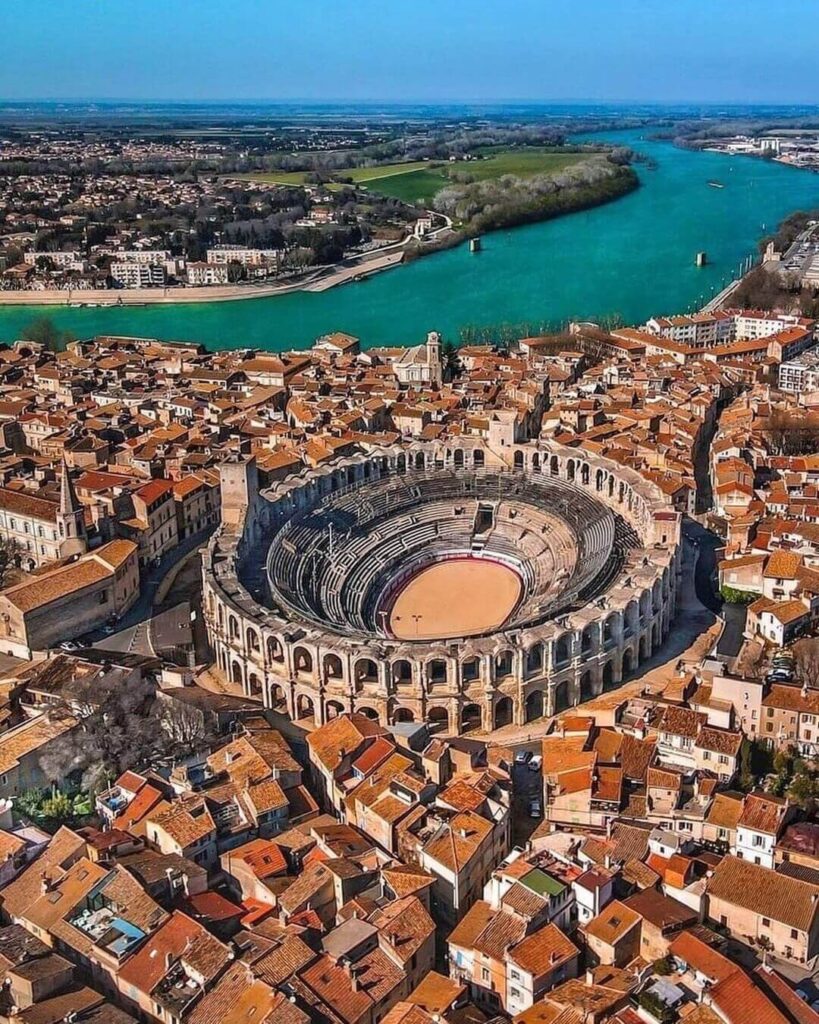
Few amphitheaters allow you to see Roman engineering, medieval additions, and modern restoration efforts all in one place.
For me, it’s the monument that best captures the scale and importance of ancient Arles. If you’re short on time and can only visit one Roman site in the city, this should be at the top of your list.
Roman Theater of Arles
Just a few minutes’ walk from the amphitheater sits another important reminder of Arles’ Roman past: the Roman Theater.
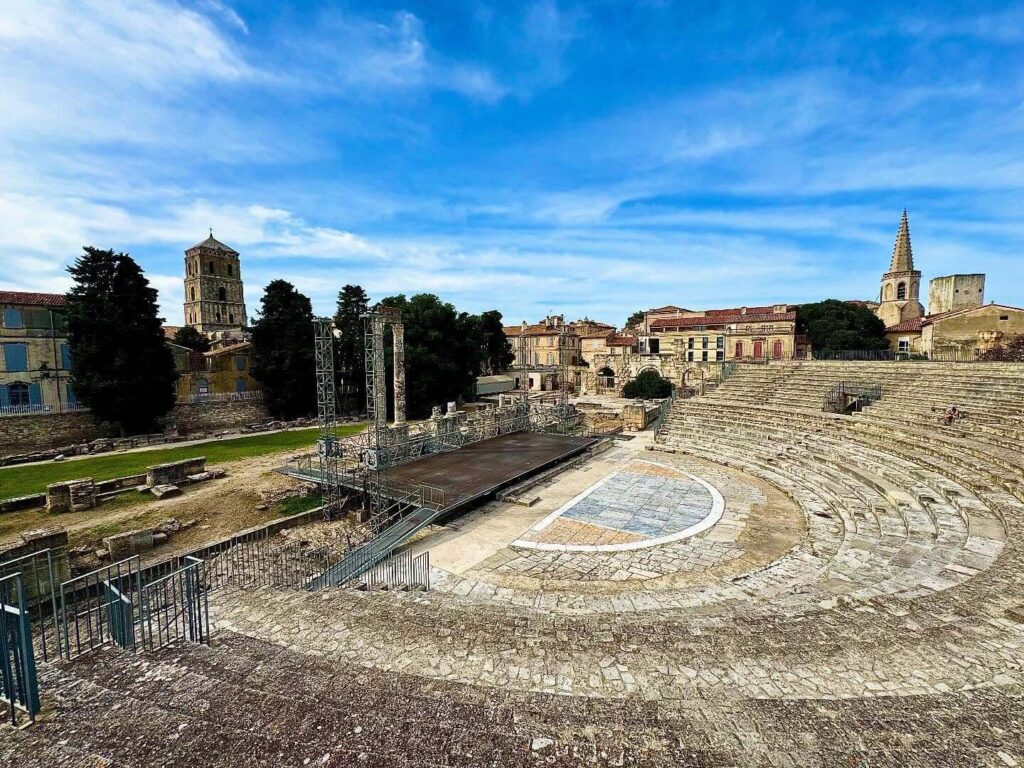
While the amphitheater was built for spectacles and large public events, the theater served a very different purpose. This was where residents came to watch plays, listen to music, attend performances, and participate in cultural life. Together, the two monuments provide a fascinating glimpse into how Romans spent their leisure time.
Although the theater is not as well preserved as the amphitheater, it’s still one of the most important Roman theaters in France and well worth including in your visit.
One of the Earliest Roman Theaters in Gaul
Construction of the theater began during the reign of Emperor Augustus in the late first century BC, making it older than the amphitheater and one of the earliest Roman theaters built in Gaul.
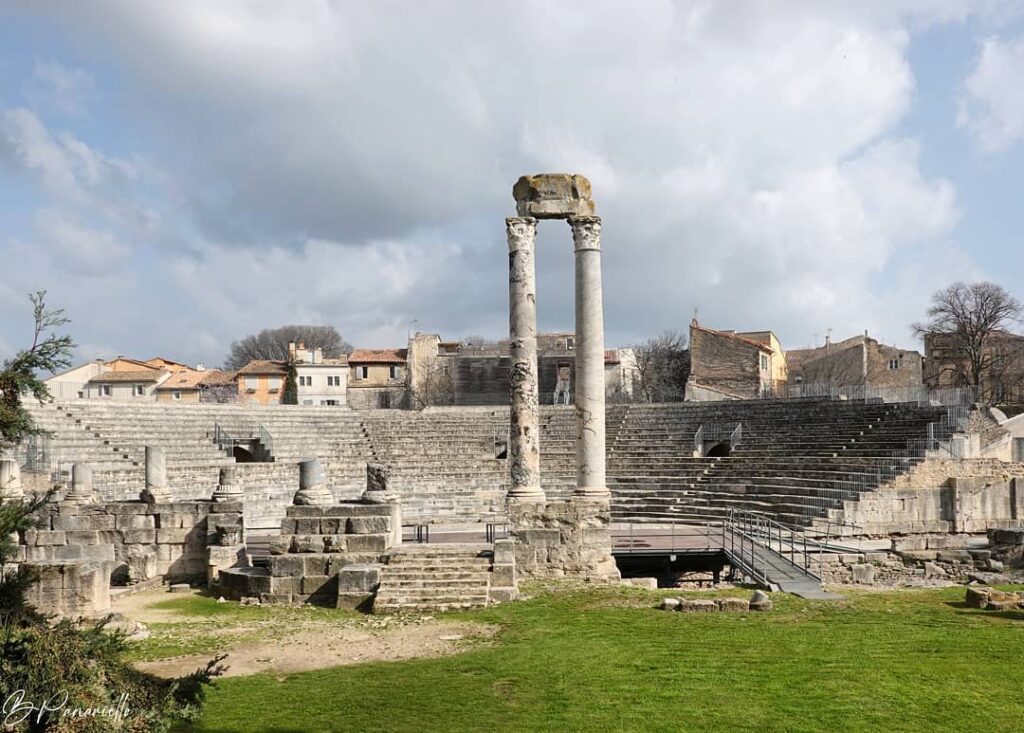
Its construction reflected the growing importance of Arles within the Roman Empire. As the city prospered, Roman authorities invested heavily in public buildings that would showcase Roman culture and reinforce the city’s status.
The theater quickly became one of the city’s most prestigious landmarks and could accommodate thousands of spectators.
What the Theater Originally Looked Like
Looking at the ruins today requires a little imagination, but the theater would have been an impressive sight during its heyday.
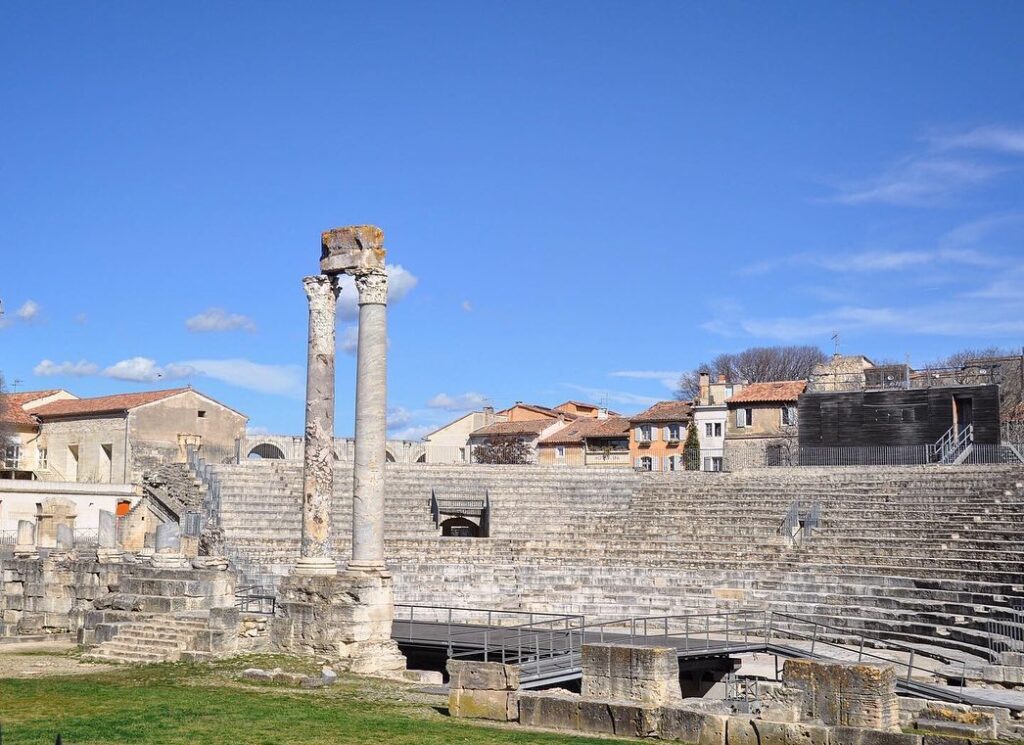
A massive stage wall decorated with marble stood behind the performance area, while elaborate columns, statues, and ornamental features helped create a grand setting for performances. Visitors would have gathered on tiered seating overlooking the stage, much like audiences in modern theaters.
Although much of the structure disappeared over the centuries, archaeologists have been able to piece together how magnificent the theater once was. It’s not difficult to picture crowds gathering here on warm Mediterranean evenings to enjoy performances beneath the open sky.
The Discovery of the Venus of Arles
One of the theater’s most significant discoveries took place in 1651 when excavations uncovered a statue known as the Venus of Arles.
The sculpture is considered one of the finest Roman artworks ever discovered in France and is now displayed at the Louvre Museum in Paris. Its discovery helped draw attention to the archaeological importance of Arles and encouraged further efforts to preserve the city’s Roman heritage.
Visiting the Theater Today
While only part of the original theater survives, there’s still plenty to appreciate during a visit. The remaining columns are among the most recognizable features of the site, and the surviving seating areas help visitors understand the scale of the original structure.
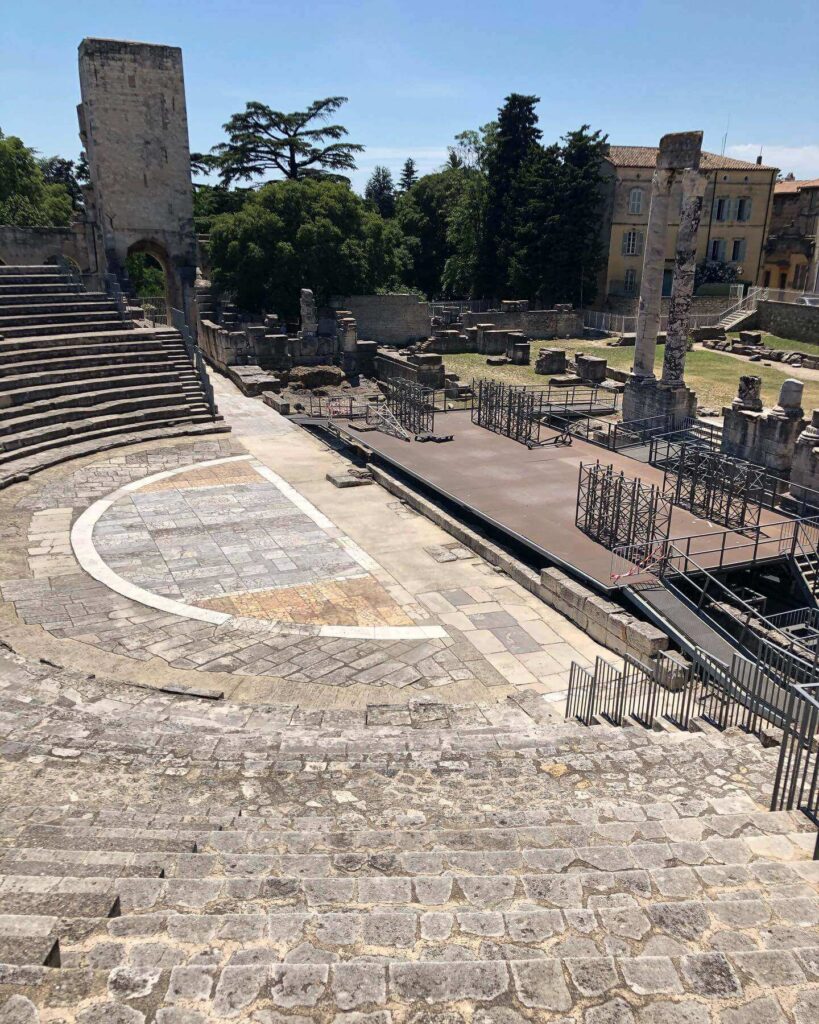
I found the theater particularly interesting because it complements the amphitheater so well. The amphitheater showcases the grandeur and spectacle of Roman entertainment, while the theater offers insight into the city’s cultural and artistic life.
The site occasionally hosts concerts and performances even today, which feels like a fitting continuation of a tradition that began more than 2,000 years ago.
Why I Think the Theater Is Worth Visiting
The Roman Theater may not have the same wow factor as the amphitheater at first glance, but I think it’s an important part of understanding Roman Arles.
While the amphitheater showcases the city’s love of entertainment and large public spectacles, the theater offers a glimpse into its cultural life. This is where residents would have gathered to watch performances, listen to music, and participate in community events.
Visiting both sites helps create a more complete picture of what everyday life in Roman Arles may have looked like.
The Cryptoporticus of Arles
Among all the Roman monuments in Arles, the Cryptoporticus was probably the biggest surprise for me.
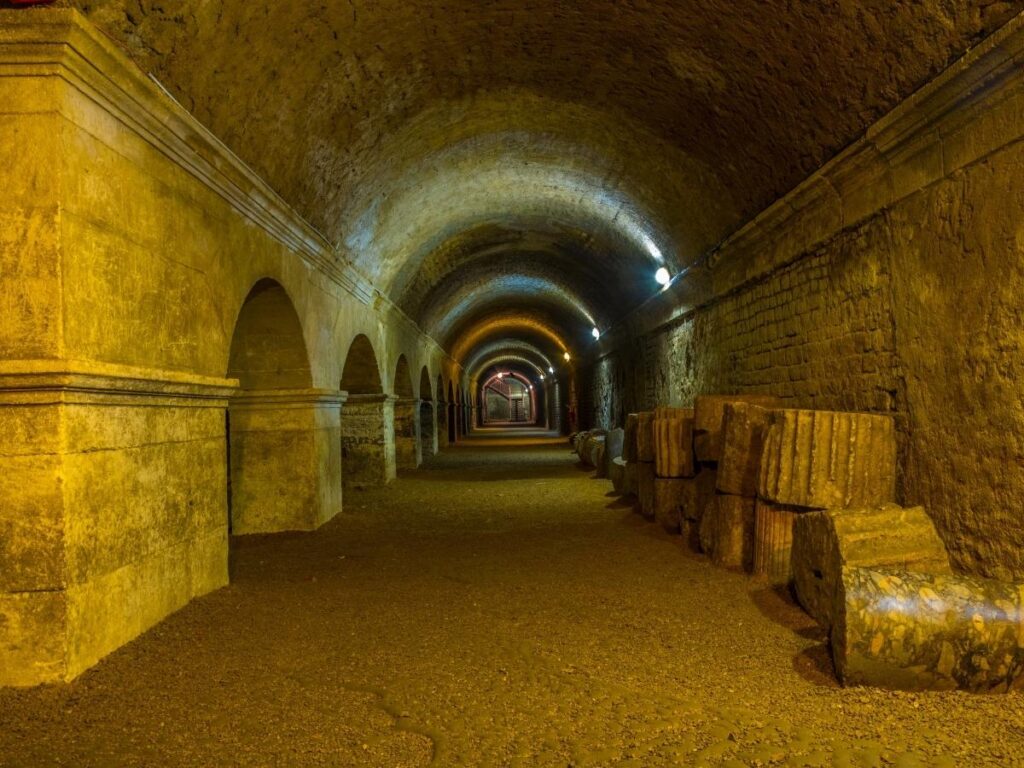
Most visitors come to see the amphitheater and theater, and rightly so, but the Cryptoporticus offers a completely different experience. Instead of standing in front of grand ruins, you’re heading underground into a hidden part of the ancient city that many travelers overlook.
It’s not the most visually impressive monument in Arles, but it ended up being one of the most memorable.
What Is a Cryptoporticus?
A cryptoporticus is a covered underground gallery that was commonly used in Roman architecture. In Arles, it formed part of the foundation supporting the Roman Forum, which was once the political and commercial heart of the city.
The structure consists of three interconnected corridors arranged in a horseshoe shape beneath what would have been one of the busiest areas of Roman Arles. More than 2,000 years later, these passageways still survive beneath the modern city.
Why the Cryptoporticus Is So Fascinating
What makes the Cryptoporticus so interesting is how different it feels from the other Roman sites in Arles.
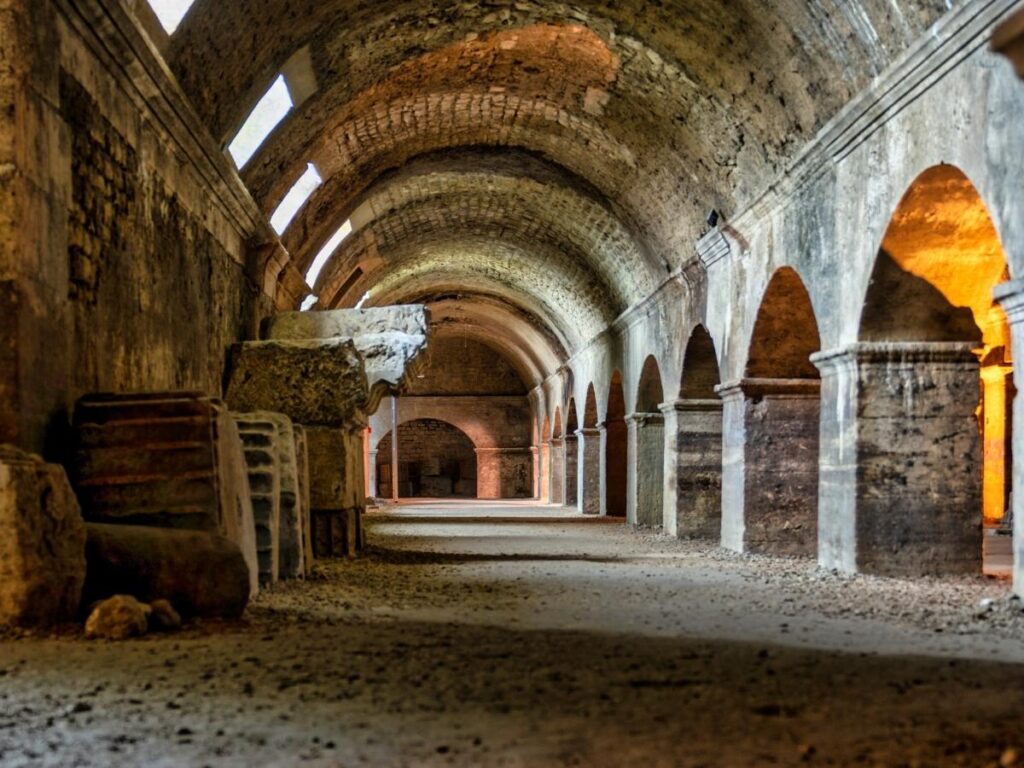
As soon as you descend underground, the atmosphere changes completely. The temperature becomes cooler, the lighting grows dimmer, and thick stone walls surround you on every side. It’s quiet, slightly mysterious, and feels much more immersive than many archaeological sites.
While the amphitheater and theater show the public face of Roman Arles, the Cryptoporticus reveals the engineering that helped support the city behind the scenes. Walking through these corridors gave me a much stronger appreciation for the scale of Roman construction and how advanced their urban planning really was.
What You’ll Experience During a Visit
A visit to the Cryptoporticus isn’t particularly long, but it’s incredibly interesting if you enjoy history or archaeology.
As you walk through the galleries, you’ll see the massive stone vaults and original masonry that have survived for centuries. Information panels help explain how the structure supported the forum above and why it was such an important part of the city’s design.
What I found most interesting was how tangible the experience feels. Unlike some archaeological sites where you spend most of your time looking at ruins from a distance, here you’re actually walking through spaces that existed during the Roman Empire.
Why You Shouldn’t Skip It
It’s easy to focus on the amphitheater and theater because they’re Arles’ most famous landmarks, but I think the Cryptoporticus deserves a place on every itinerary.
The larger monuments show how Romans entertained themselves, while the Cryptoporticus helps explain how the city functioned on a practical level. Together, these sites tell a much richer story about life in ancient Arles.
If you’re interested in archaeology, Roman engineering, or simply seeing something a little different from the usual Roman ruins, the Cryptoporticus is one of the most rewarding places to visit in the city.
Constantine Baths
While the amphitheater and theater tend to get most of the attention, the Constantine Baths offer a fascinating glimpse into another side of Roman life.
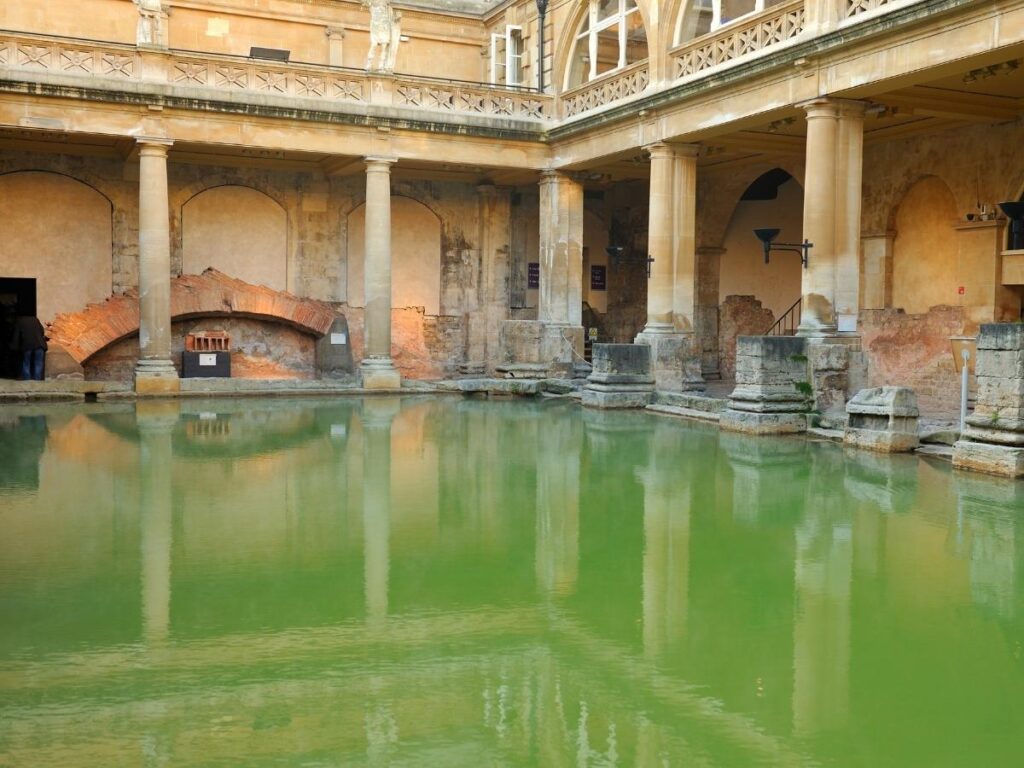
Public baths weren’t simply places to wash. They were important social spaces where people gathered to relax, exercise, meet friends, and even discuss business. In many ways, they served a similar role to community centers today.
The remains in Arles are among the best preserved Roman baths in France and help visitors understand just how sophisticated Roman cities had become.
Arles During the Time of Constantine
By the fourth century AD, Arles was enjoying another period of prosperity. Its strategic location and growing influence made it an important city within the Western Roman Empire.
Emperor Constantine recognized this importance and spent time in Arles during his reign. Several major construction projects were undertaken during this period, including the bath complex that now bears his name.
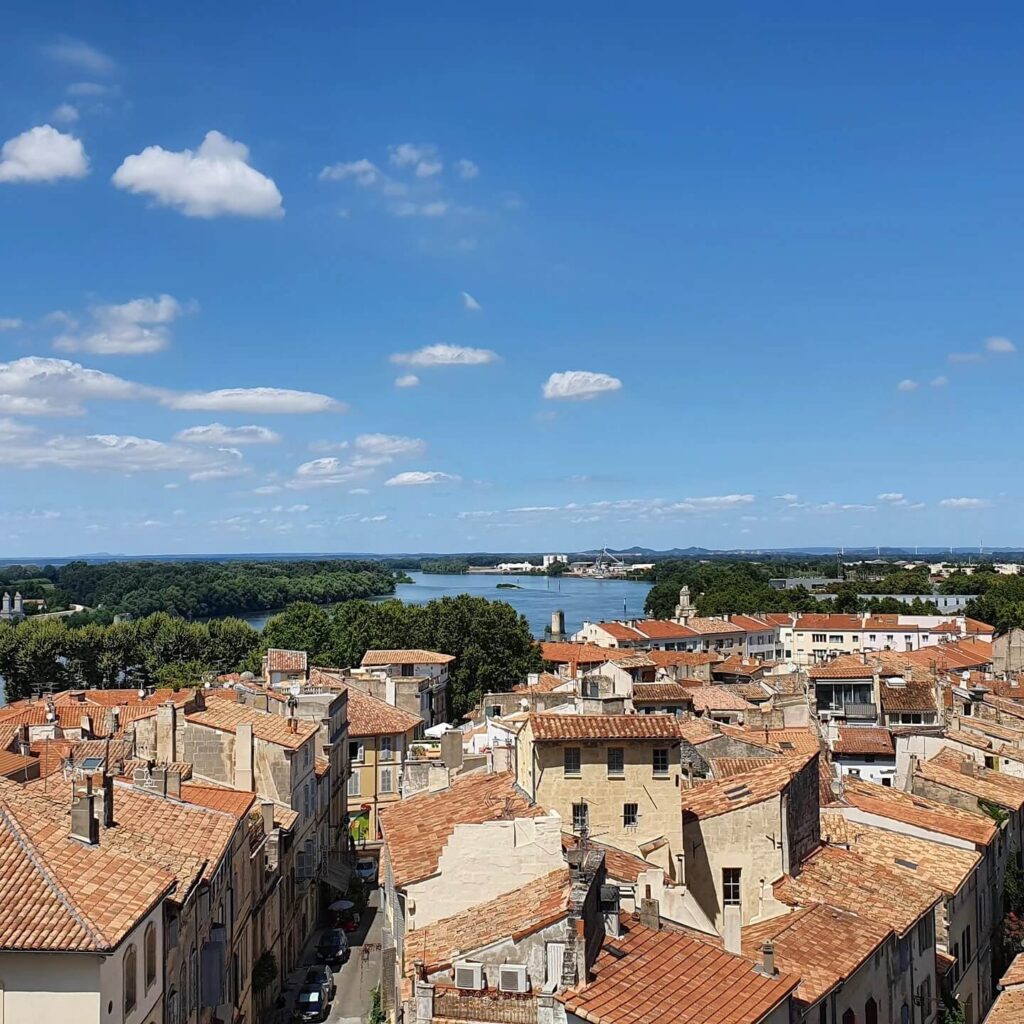
The baths were built near the Rhône River and would have been an impressive public facility for residents and visitors alike.
How Roman Baths Worked
One thing that surprised me when learning about Roman baths is how advanced they were. Visitors typically moved through a series of rooms with different temperatures, gradually progressing from warm areas to hot baths before cooling down again.
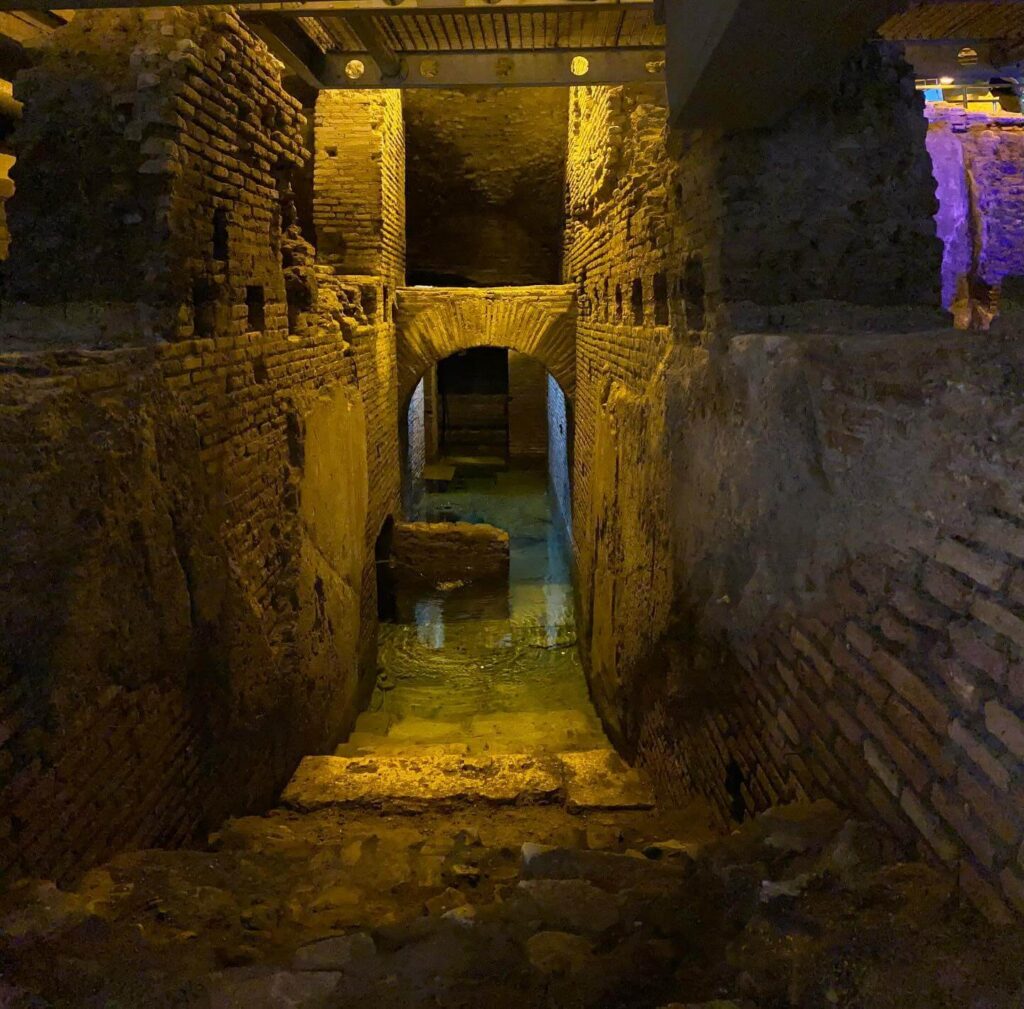
What’s even more impressive is the engineering behind it all. Roman builders developed heating systems that circulated hot air beneath floors and inside walls, creating comfortable temperatures throughout the complex. Considering these baths were built more than 1,600 years ago, the technology is remarkable.
What You’ll See Today
Although only part of the original bath complex survives, there is still enough to appreciate its scale and design. Visitors can see large vaulted rooms, sections of thick stone walls, and architectural details that have endured for centuries.
The site isn’t as visually dramatic as the amphitheater, but I found it interesting because it reveals how Romans lived beyond the grand spectacles and public entertainment. It offers a glimpse into their daily routines and the infrastructure that supported life in a thriving Roman city.
What Makes These Baths Special
The Constantine Baths are a reminder that Roman cities were incredibly advanced for their time. They combined architecture, engineering, and public life in ways that still feel impressive today.
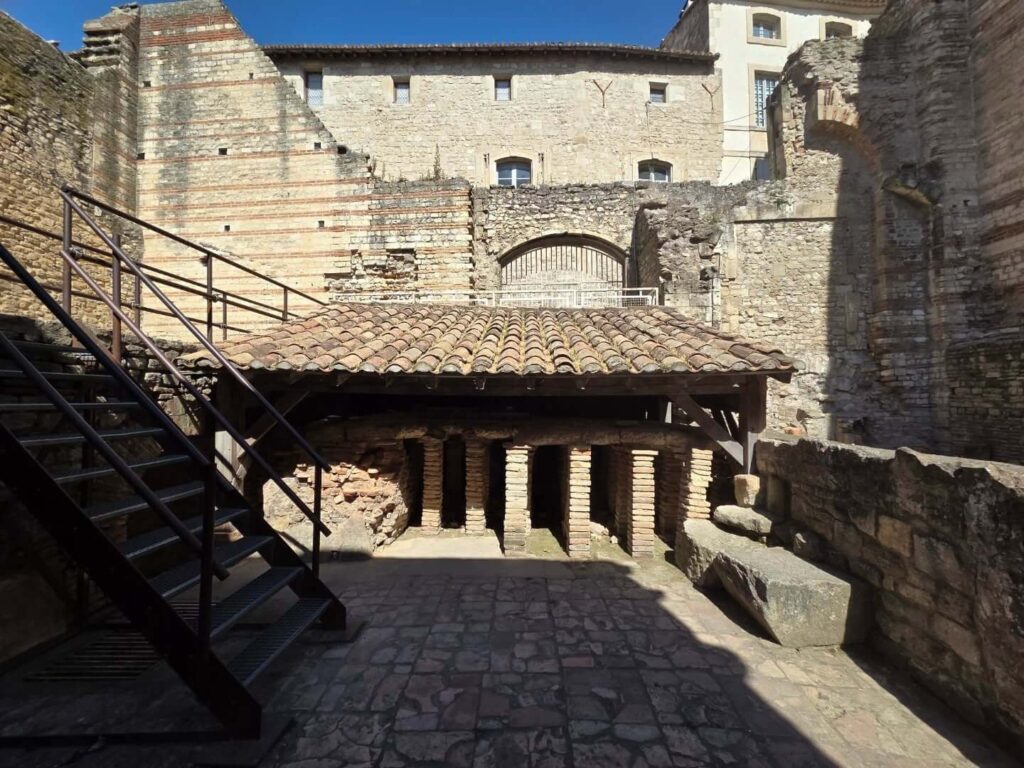
When viewed alongside the amphitheater, theater, and Cryptoporticus, the baths help complete the story of Roman Arles and show how residents worked, socialized, and relaxed nearly two thousand years ago.
Alyscamps Necropolis
Of all the Roman sites in Arles, Alyscamps is probably the one that feels the most atmospheric.
Unlike the amphitheater or theater, which were built for entertainment and public gatherings, Alyscamps was a place of remembrance.
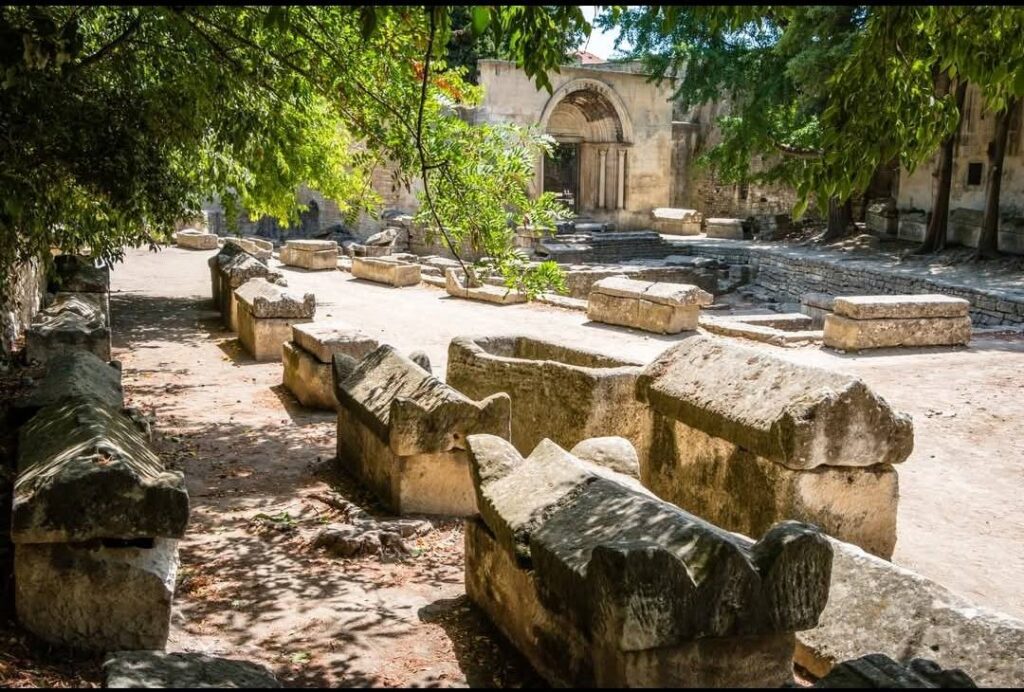
For centuries, it served as one of the most important burial grounds in Roman Gaul, and even today it has a peaceful, reflective atmosphere that feels very different from the city’s other historic sites.
A long avenue lined with ancient sarcophagi stretches beneath rows of trees, creating one of the most distinctive landscapes in Arles.
One of the Most Important Roman Cemeteries in Europe
The name Alyscamps comes from the Latin phrase Elisii Campi, meaning “Elysian Fields,” the resting place of heroes in Roman mythology.
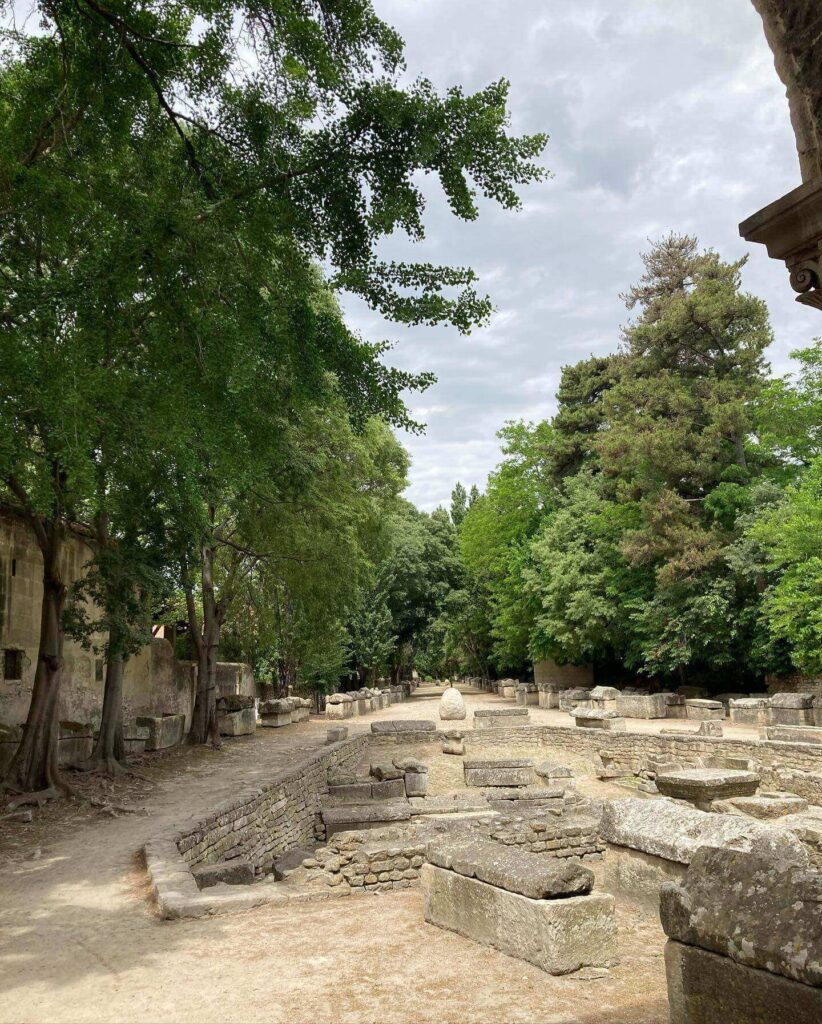
Like many Roman cemeteries, Alyscamps was located outside the city walls along an important road leading into Arles. Over time, it grew into one of the most prestigious burial grounds in the region.
Thousands of people were buried here over several centuries, and the cemetery became widely known throughout Roman Gaul.
Why People Wanted to Be Buried Here
As Christianity spread through the Roman Empire, Alyscamps became associated with saints and martyrs. Many people believed that being buried near these holy figures would bring spiritual benefits, which increased the cemetery’s importance even further.
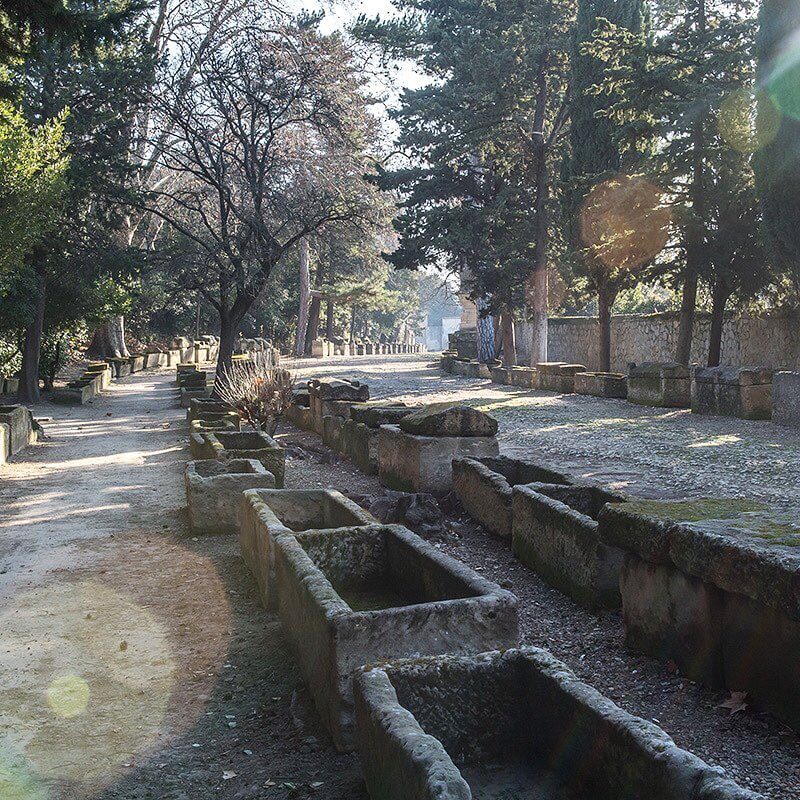
By the Middle Ages, Alyscamps had become a major pilgrimage destination. The demand for burial plots became so great that sarcophagi were brought from other regions to accommodate those who wished to be laid to rest here.
Van Gogh and Alyscamps
History isn’t the only reason people visit Alyscamps.
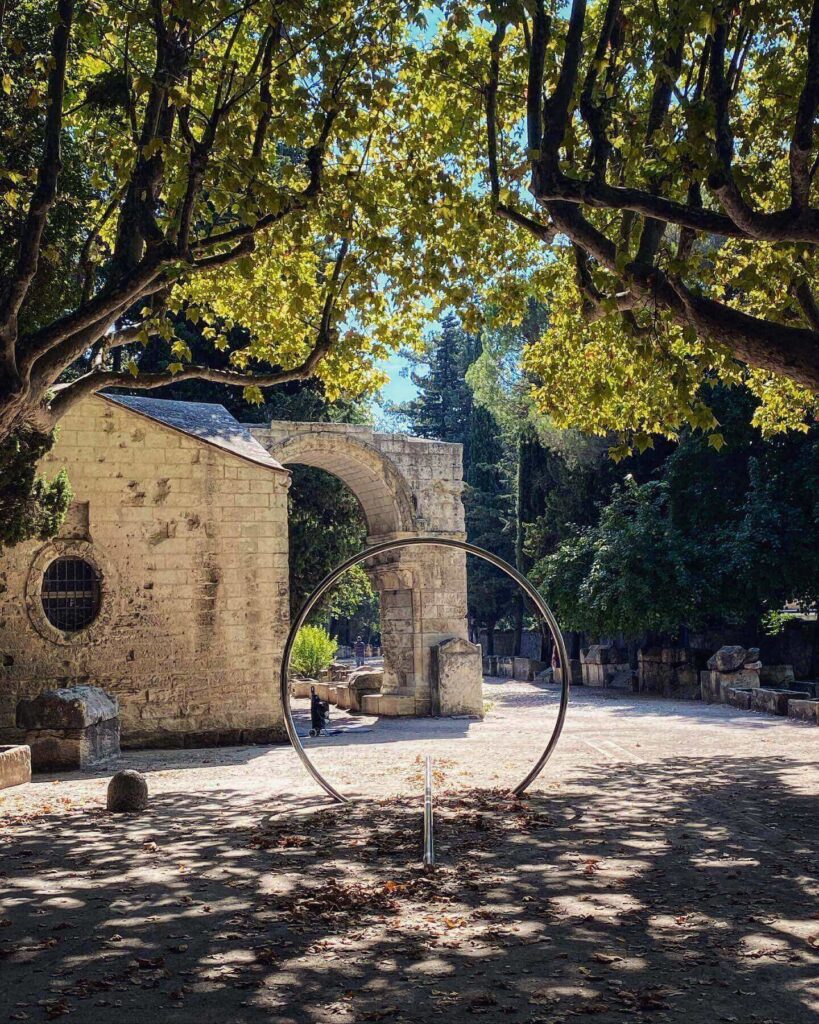
The site also inspired several famous artists, including Vincent van Gogh and Paul Gauguin, who painted scenes here during their time in Arles.
Walking through Alyscamps today, it’s easy to understand why. The combination of ancient stone tombs, tall trees, and soft Provençal light creates a setting that feels almost unchanged by time.
Is Alyscamps Worth Visiting?
Absolutely.
While the amphitheater is usually the headline attraction, Alyscamps ended up being one of the most memorable places I visited in Arles. It offers a quieter experience and provides a completely different perspective on the city’s Roman history.
If you enjoy historic sites with fewer crowds and a more contemplative atmosphere, Alyscamps is well worth adding to your itinerary.
UNESCO World Heritage Status Explained
One of the reasons the Roman monuments in Arles are so well preserved today is because of their international significance.
In 1981, UNESCO added the city’s Roman and Romanesque monuments to its World Heritage List, recognizing their cultural and historical importance.
This designation helped strengthen preservation efforts and highlighted Arles as one of the most important historic cities in France.
Which Monuments Are Included?
The UNESCO listing covers several of the city’s most significant monuments, including the Arles Amphitheater, Roman Theater, Cryptoporticus, Constantine Baths, Alyscamps, and the Church of Saint Trophime, along with other Roman and Romanesque sites throughout the city.
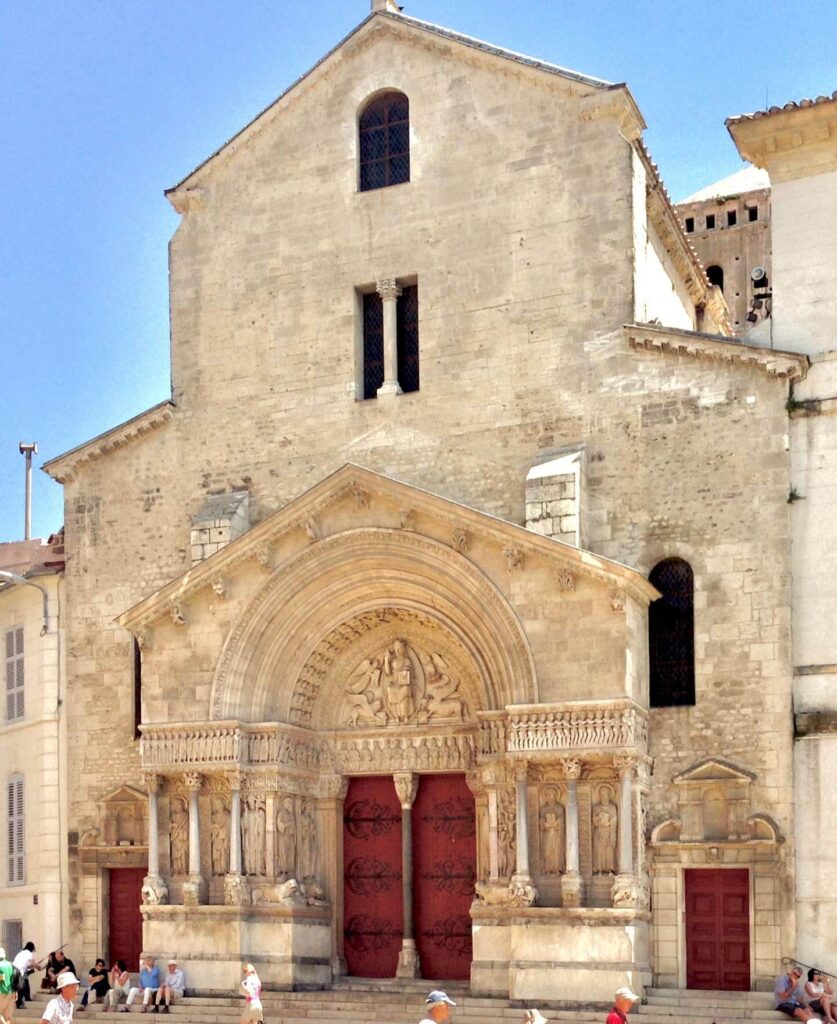
Together, these monuments tell the story of Arles’ evolution from a thriving Roman city into an important medieval center.
Why UNESCO Considered Arles Important
What makes Arles special is not just the quality of its monuments but the variety of them. Few cities outside Italy preserve such a complete collection of Roman sites within a historic urban setting.
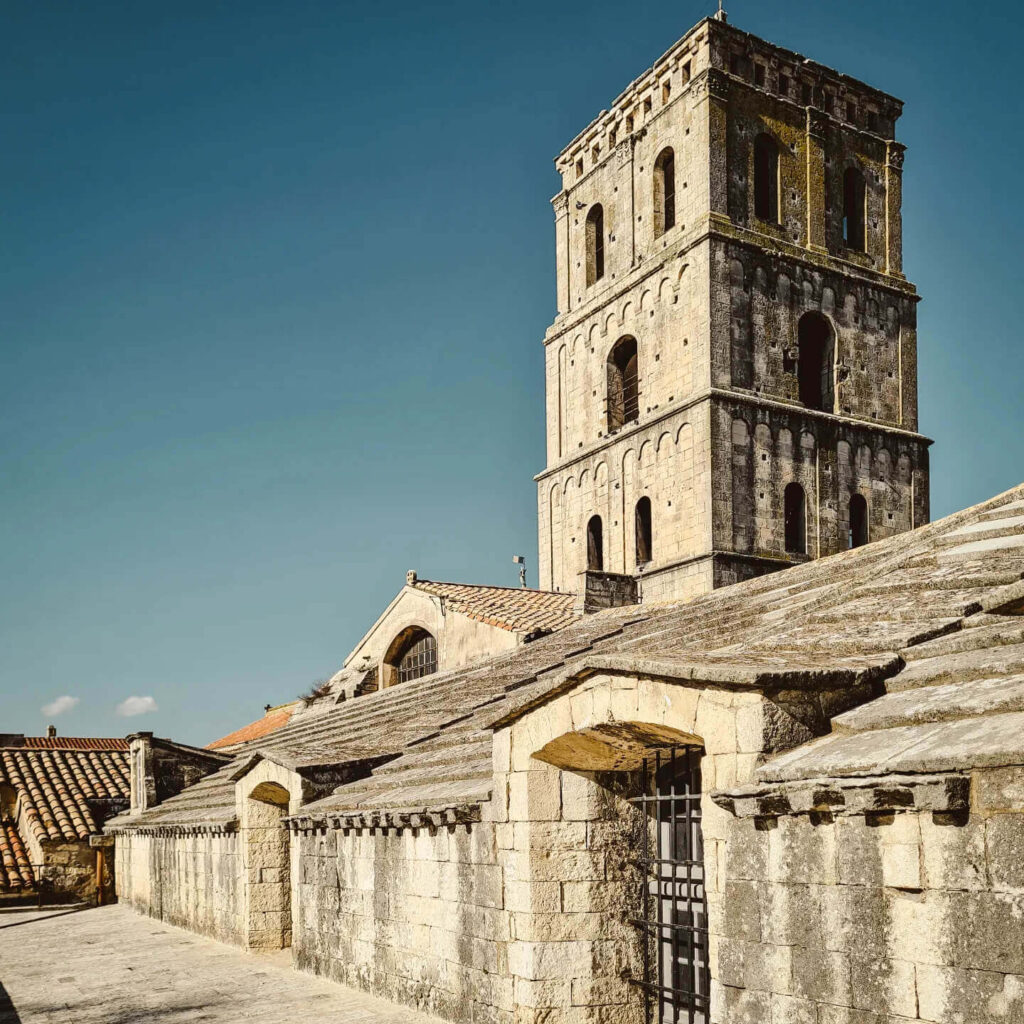
As you explore Arles, you’re not simply visiting individual ruins. You’re experiencing the remains of an entire Roman city, from its entertainment venues and public baths to its civic center and burial grounds.
That combination is what makes Arles stand out and why it remains one of the best places in France to experience Roman history firsthand.
Tickets for the Roman Monuments of Arles
Before visiting the Roman monuments in Arles, it’s worth spending a few minutes looking at the available ticket options. Prices and pass inclusions can change from time to time, but choosing the right ticket can save both money and hassle during your visit.
If you’re only planning to see one monument, such as the amphitheater, an individual ticket may be all you need. However, most visitors quickly discover that several of the major sites are located within walking distance of each other, making it tempting to explore more than initially planned.
Individual Tickets vs Combination Passes
Most of the main Roman monuments charge admission, including the amphitheater, Roman Theater, Cryptoporticus, and Alyscamps.
While buying individual tickets is certainly an option, the costs can add up surprisingly quickly if you’re visiting multiple sites in a single day. That’s why many travelers choose a combination pass, which bundles several attractions together at a reduced price.
If you’re interested in Roman history, there’s a good chance you’ll want to visit more than just the amphitheater. The pass makes it easier to explore sites you might otherwise skip and helps you get a more complete understanding of ancient Arles.
Is the Monuments Pass Worth It?
For most first time visitors, I’d say yes.
The pass typically includes access to several of the city’s major Roman attractions, allowing you to move between sites without worrying about purchasing separate tickets at each location.
Beyond the savings, I think the biggest advantage is that it encourages you to visit places like the Cryptoporticus or Alyscamps, which often end up being some of the most memorable stops in Arles.
If you’re planning to spend a full day exploring the city’s Roman heritage, the pass is usually the most practical option.
Where to Buy Tickets
Tickets can generally be purchased at the monument entrances, through the Arles Tourist Office, or online before your visit. I usually prefer buying tickets online when possible, especially during the busier spring and summer months.
Booking ahead won’t necessarily save a huge amount of time, but it can make your day run more smoothly and gives you one less thing to think about once you’re in the city.
Before traveling, it’s always a good idea to check the official monument or tourism websites for the latest prices, opening hours, and pass options, as these can occasionally change throughout the year.
How Much Time Do You Need in Arles?
One of the things I like about Arles is that you don’t need multiple days to appreciate its Roman heritage. The city is relatively compact, and most of the major monuments are within walking distance of each other. That said, how much you see will depend on how much time you have available.
If You Have Two Hours
If you’re visiting Arles as a day trip or simply passing through Provence, focus on the two headline attractions: the Arles Amphitheater and the Roman Theater.
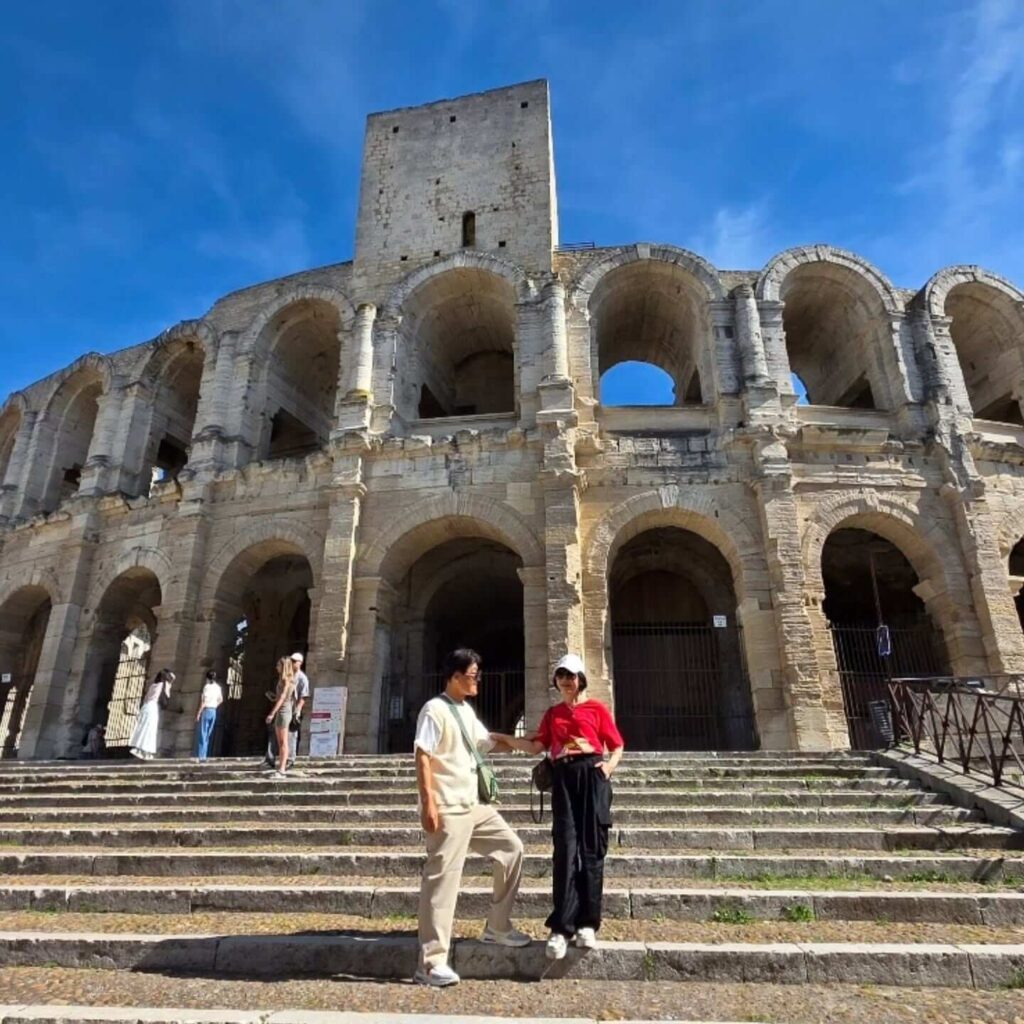
These monuments are located close to each other and provide an excellent introduction to the city’s Roman history. You’ll get a sense of both the scale of Roman engineering and the importance Arles once held within the empire.
While you’ll miss some of the lesser known sites, two hours is enough to experience the monuments that define the city.
If You Have Half a Day
With three to four hours, you can explore Arles at a much more relaxed pace.
In addition to the amphitheater and theater, I’d recommend visiting the Cryptoporticus and the Constantine Baths. These sites help tell a broader story about how the city functioned beyond entertainment and public spectacles.
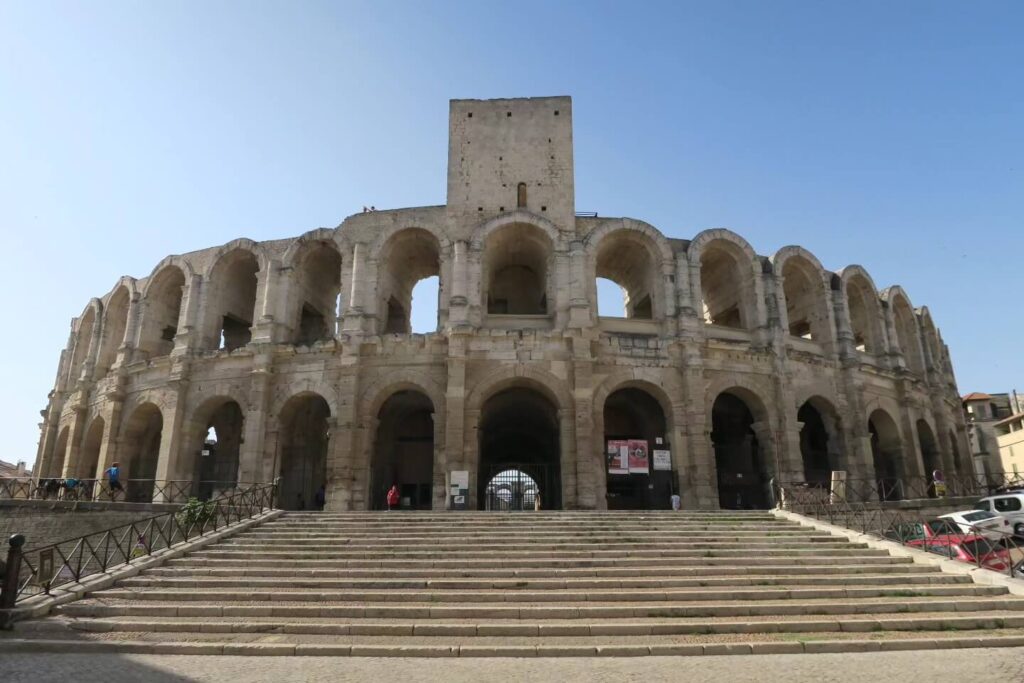
The Cryptoporticus was one of the biggest surprises for me and offers a completely different experience from the larger monuments above ground. Together, these four sites provide a well rounded introduction to Roman Arles.
If You Have a Full Day
A full day is ideal if you want to experience the Roman monuments without feeling rushed.
You’ll have enough time to visit all the major sites, enjoy lunch in the historic center, wander through the charming streets, and spend some time at Alyscamps. This slower pace allows you to appreciate the details that make Arles special rather than simply checking monuments off a list.
If your schedule allows it, this is the option I’d recommend. Arles is the kind of city that’s best enjoyed with time to explore between the major attractions.
Best Time to Visit the Roman Monuments of Arles
The Roman monuments can be visited year round, but the overall experience varies quite a bit depending on the season.
Spring
Spring is one of my favorite times to visit Arles. Temperatures are usually comfortable for walking, the city feels lively without being overcrowded, and the surrounding Provence countryside begins to come alive with color.
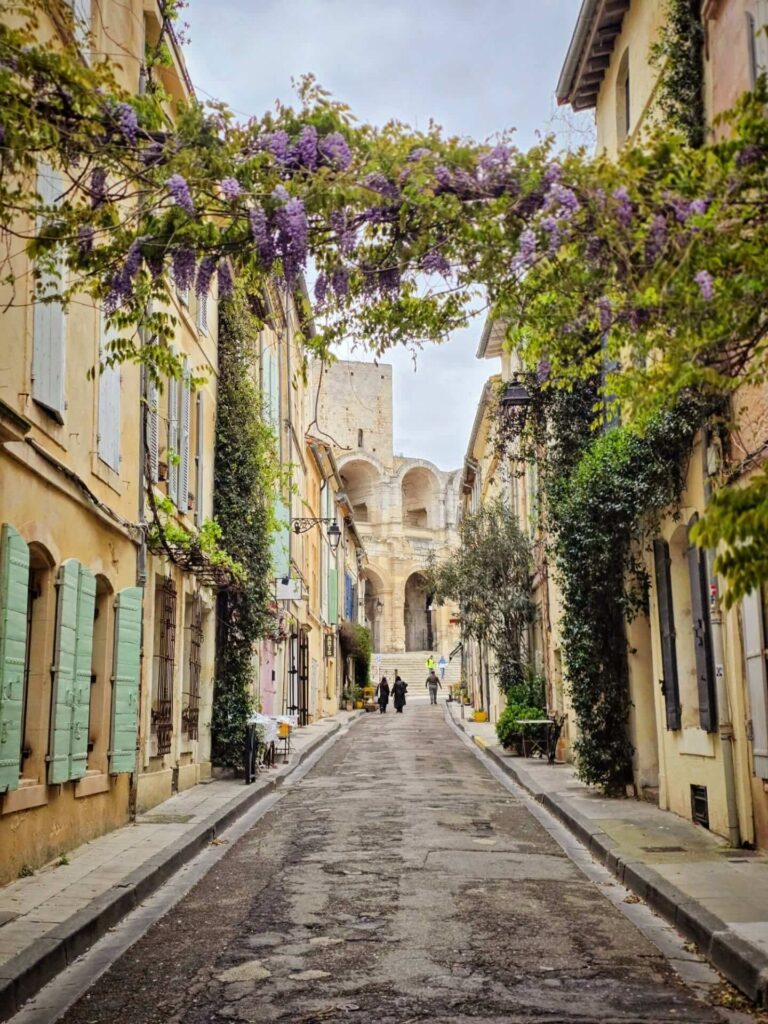
It’s also an excellent time for photography since the softer light and mild weather make exploring the monuments much more enjoyable.
Summer
Summer is the busiest season in Arles, and for good reason. Long days, outdoor events, and vibrant street life create a wonderful atmosphere throughout the city.
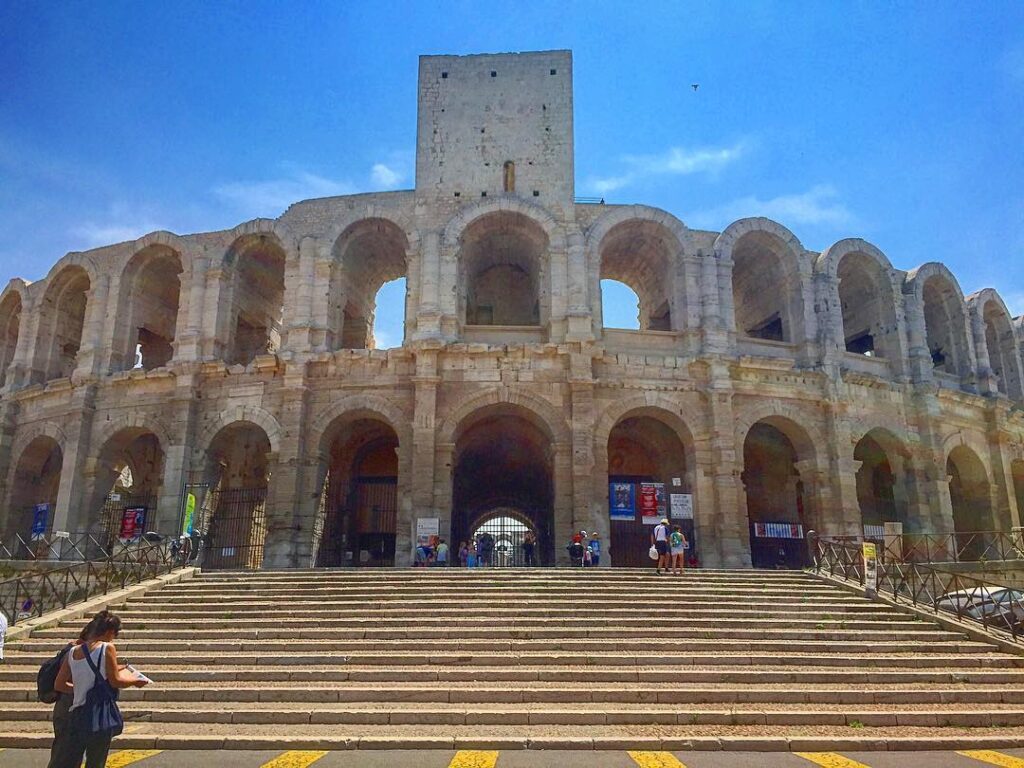
The downside is the heat. Temperatures can become quite high, especially in July and August, and many of the Roman sites offer limited shade. If you’re visiting during summer, I recommend starting your sightseeing early in the morning and taking a break during the hottest part of the day.
Winter
Winter is the quietest season in Arles, which can actually be a big advantage if you prefer fewer crowds.
While temperatures are cooler and some days can feel gray, you’ll often have much more space to explore the monuments at your own pace. The city’s Roman sites take on a different atmosphere during winter, and it’s a surprisingly enjoyable time to visit if you don’t mind cooler weather.
Practical Tips Before Visiting
A little planning can make your visit to the Roman monuments of Arles much smoother.
If you’re planning to visit several sites, I recommend purchasing a monument pass rather than individual tickets. It usually offers better value and makes it easier to move between attractions throughout the day.
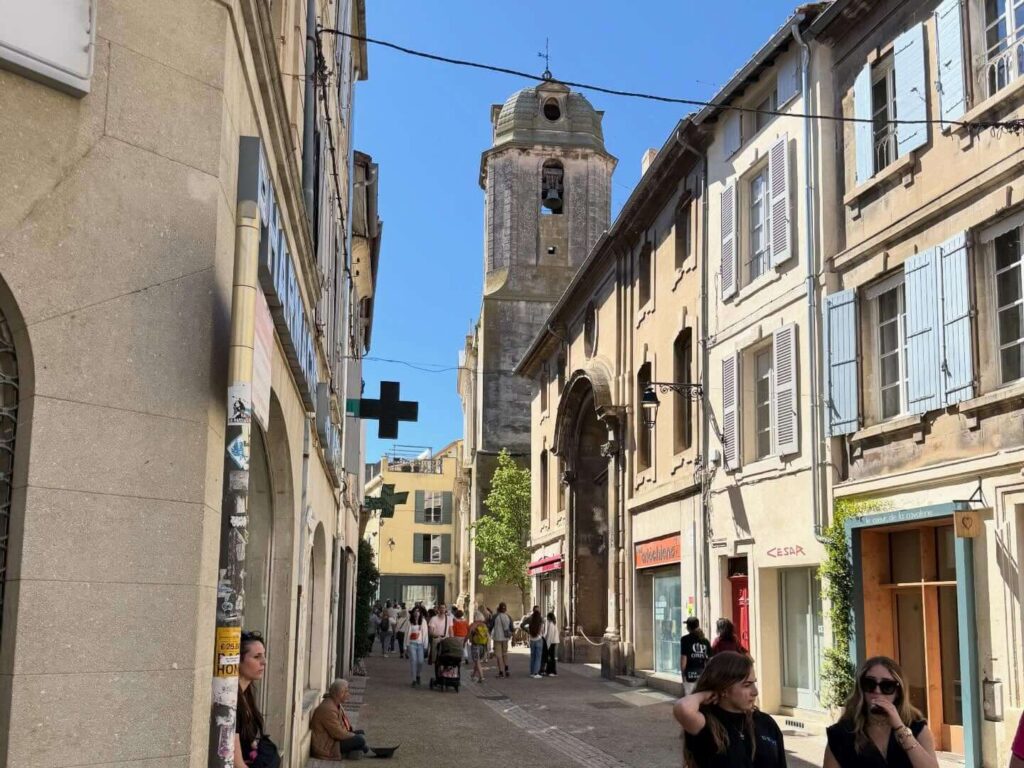
Try to start at the amphitheater early in the morning, especially during summer when temperatures can rise quickly. Comfortable walking shoes are also essential since most of the monuments are explored on foot and the historic center is filled with cobblestone streets.
One tip I wish I’d known beforehand is not to focus only on the amphitheater and theater. The Cryptoporticus and Alyscamps ended up being some of the most memorable parts of my visit and provided a deeper understanding of Roman Arles.
If you have the time, combine the Roman monuments with a few Van Gogh sites around the city. Together, they tell the story of two very different periods that helped shape Arles into the fascinating destination it is today.
Are the Roman Monuments of Arles Worth Visiting?
Absolutely.
What makes Arles special isn’t just the quality of its monuments but the variety of experiences they offer. Within a relatively small area, you can explore an amphitheater, a theater, public baths, underground galleries, and an ancient necropolis.
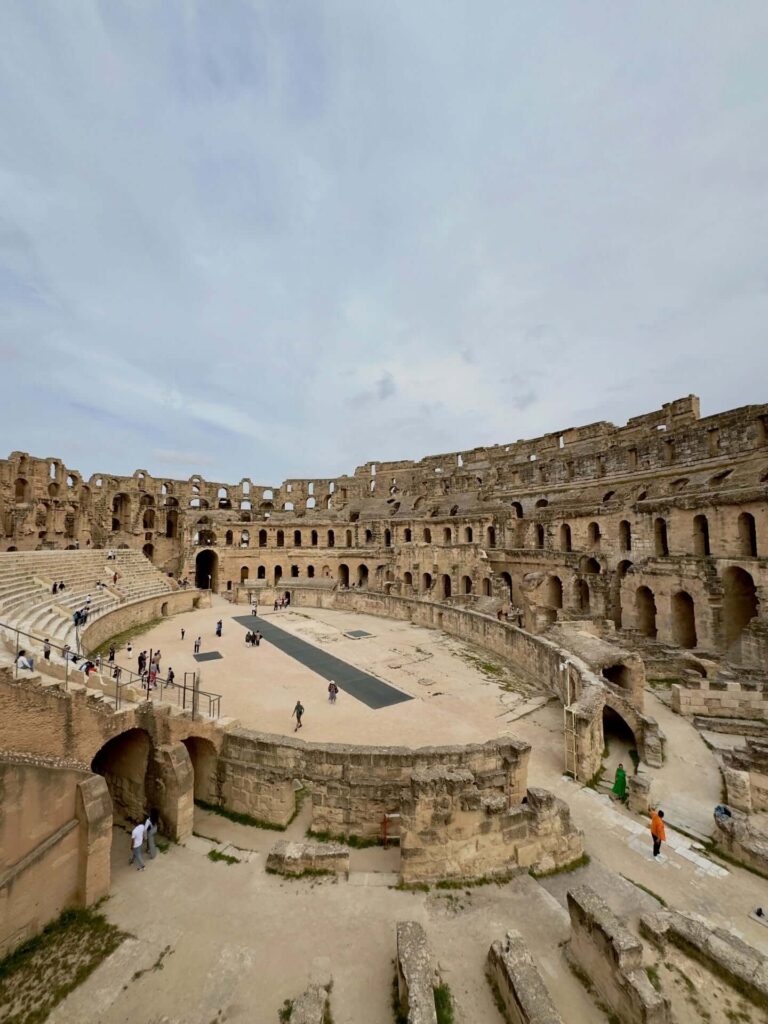
Together, these sites tell the story of an entire Roman city rather than a single archaeological attraction. Each monument reveals a different aspect of daily life, helping visitors understand how Arles functioned during its time as one of the most important cities in Roman Gaul.
If you’re interested in history, archaeology, or simply discovering one of the most fascinating destinations in Provence, I think the Roman Monuments of Arles are well worth adding to your itinerary.