
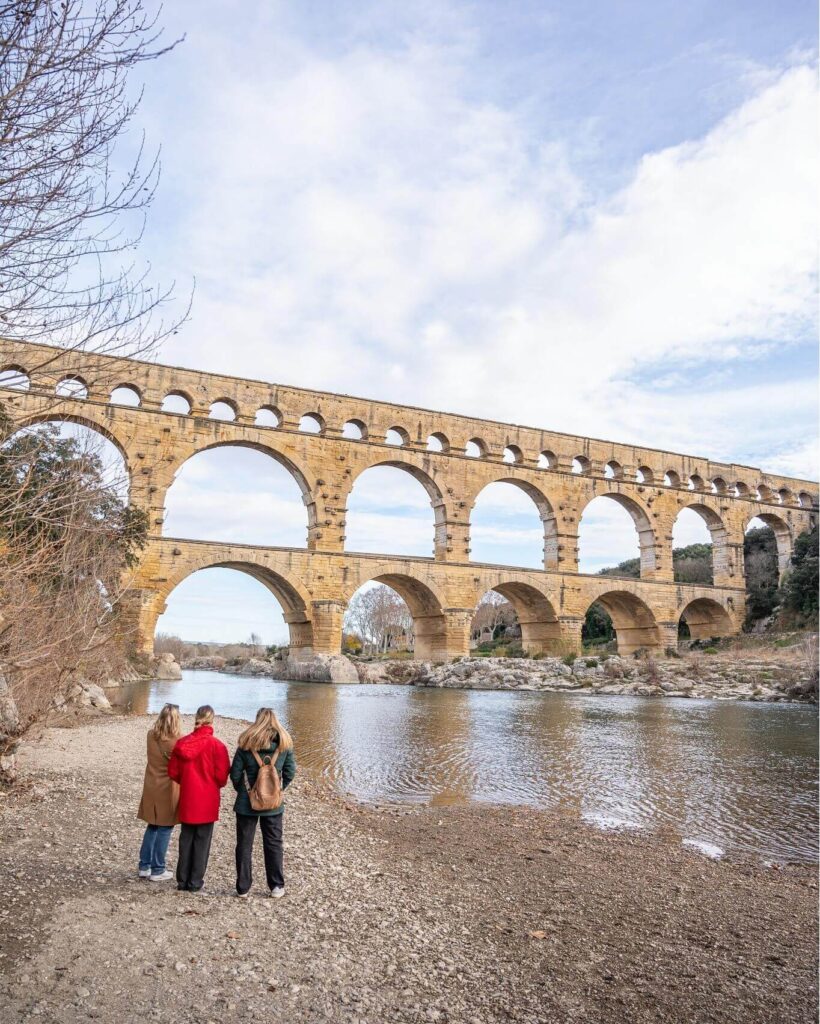
Standing beneath Pont du Gard for the first time, I immediately understood why it’s one of the most visited historical sites in southern France. I’d seen plenty of photos beforehand, but none of them captured just how enormous the aqueduct feels in person.
The towering stone arches stretch across the Gardon River in a way that seems almost unbelievable when you remember they were built nearly 2,000 years ago.
What surprised me most wasn’t the monument itself, but everything around it. Before visiting, I expected Pont du Gard to be a quick stop for a few photos before moving on. Instead, I found families picnicking by the river, people swimming beneath the arches, hikers exploring nearby trails, and kayakers paddling through the valley.
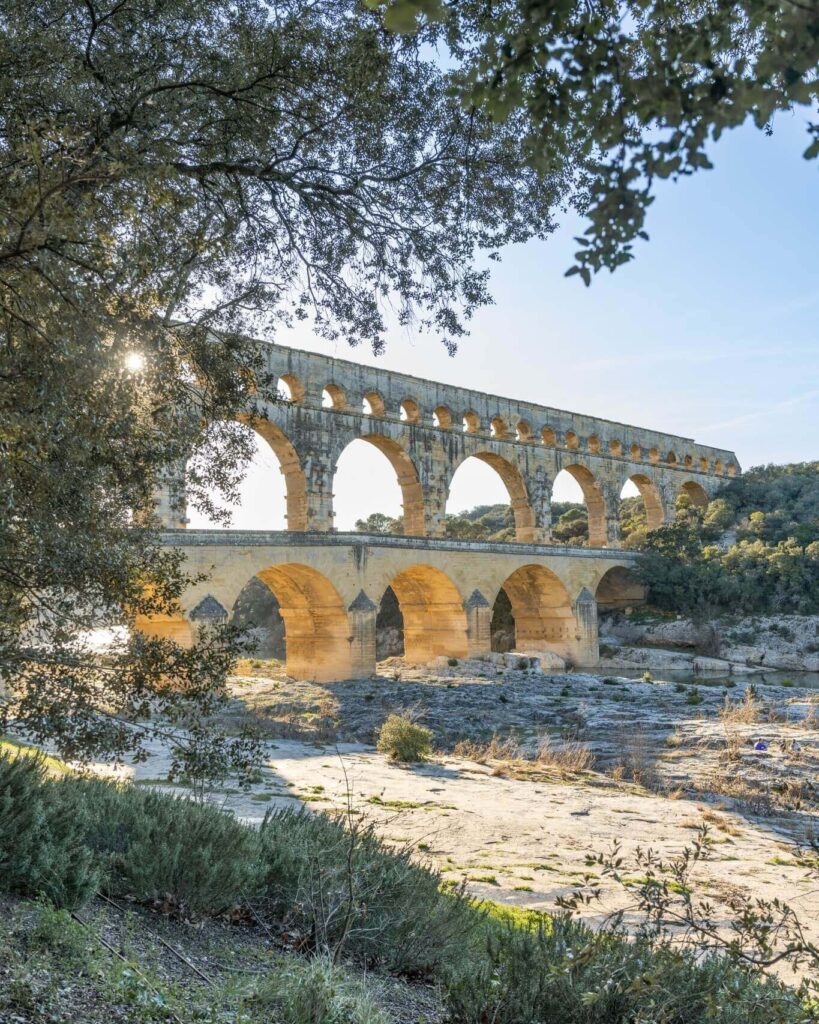
The setting feels very different from many famous historical landmarks. Rather than being surrounded by busy streets, Pont du Gard sits within a beautiful natural landscape. You can spend part of your visit learning about Roman engineering and another part simply relaxing by the river and enjoying the views.
The longer I stayed, the more I appreciated the monument. Up close, the massive limestone blocks and precise construction make the achievement of the Roman builders even more impressive.
If you’re planning a visit, this guide covers everything you need to know, from the history of Pont du Gard and how to get there to the best viewpoints, swimming and kayaking opportunities, ticket information, opening hours, and practical tips for making the most of your day.
Whether you’re interested in history, photography, or simply looking for a memorable day trip in southern France, Pont du Gard offers much more than a quick photo opportunity.
What Is Pont du Gard?
Pont du Gard is an ancient Roman aqueduct bridge located in southern France, near the cities of Nîmes and Avignon. While it looks like a grand stone bridge crossing the Gardon River, it was originally built to carry fresh water from springs near Uzès to the Roman city of Nîmes.
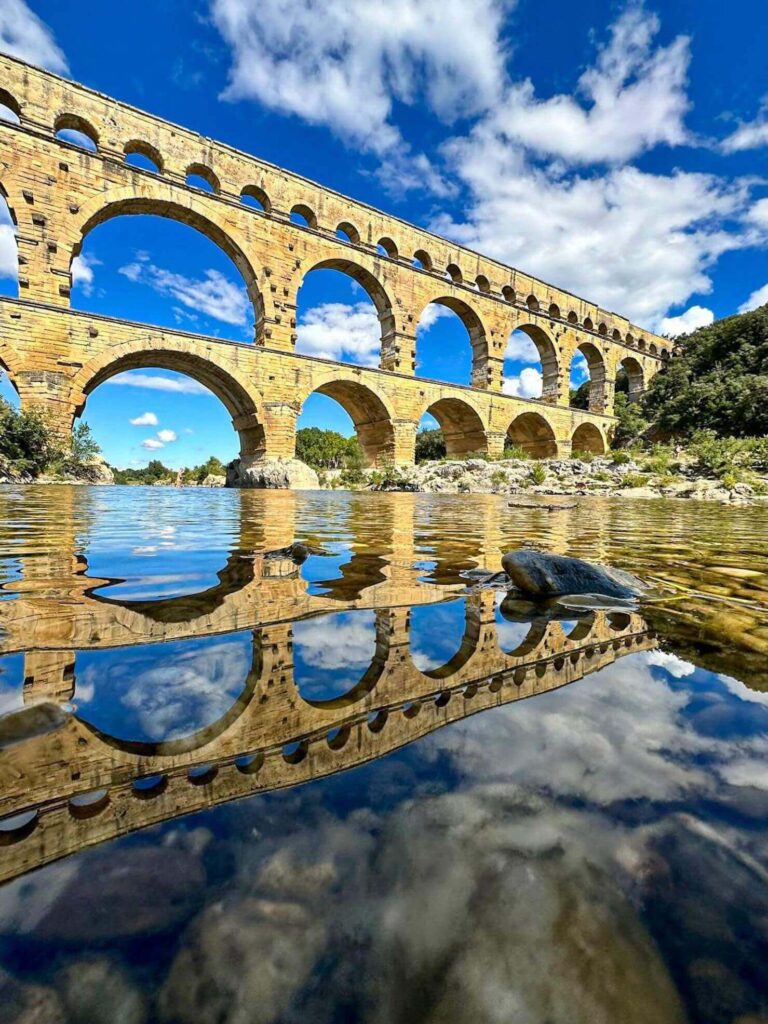
Constructed during the first century AD, the bridge formed part of a much larger aqueduct system stretching nearly 50 kilometers (31 miles). What makes it so impressive is that Roman engineers built it with incredible precision, allowing water to flow naturally using gravity alone.
Today, Pont du Gard is the best-preserved section of the original aqueduct and one of France’s most important Roman monuments. Recognized as a UNESCO World Heritage Site, it continues to attract visitors from around the world.
Even if you’re not particularly interested in Roman history, it’s difficult not to be impressed by the scale of the structure and the fact that it has stood here for nearly 2,000 years.
Why Is Pont du Gard So Famous?
France has no shortage of famous landmarks, but Pont du Gard stands out because it combines history, engineering, and natural beauty in a way that very few sites can.
One reason it’s so well known is its size. At nearly 50 meters (160 feet) tall, Pont du Gard is the tallest Roman aqueduct bridge ever built. Even now, surrounded by modern buildings, cranes, and engineering technology, it would be considered an impressive structure. The fact that it was completed almost two thousand years ago makes it even more extraordinary.
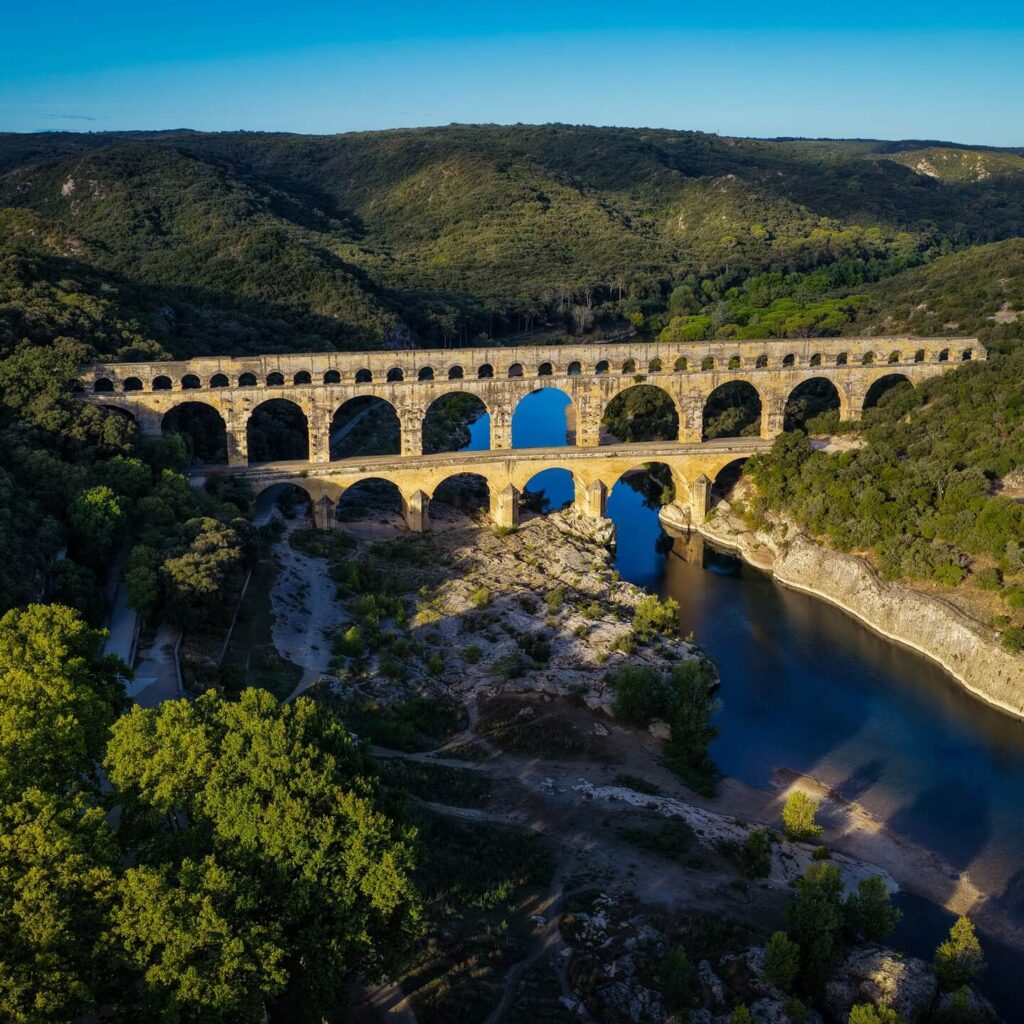
What really sets Pont du Gard apart, though, is the precision behind its construction. The entire aqueduct system carried water for around 50 kilometers, yet the average drop in elevation was incredibly small. Roman engineers had to calculate the route with remarkable accuracy to ensure water flowed consistently all the way to Nîmes.
It’s the kind of achievement that’s difficult to fully appreciate until you learn how much planning was involved.
Another reason visitors continue to flock here is how well preserved the monument is. Many Roman aqueducts survive only as ruins or scattered fragments, but Pont du Gard still looks remarkably complete. Walking around the site, it’s easy to visualize how the structure functioned during Roman times, which isn’t always possible at ancient landmarks.
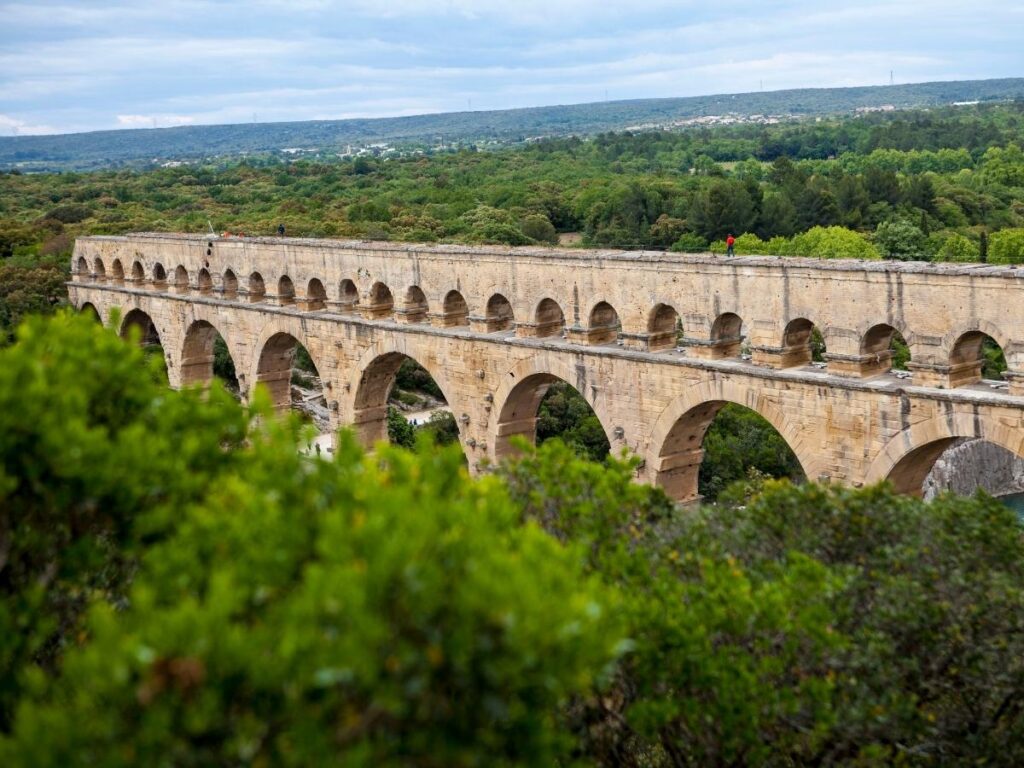
The setting also adds to its appeal. Unlike some historical monuments that sit in busy city centers, Pont du Gard rises above a river surrounded by trees, walking paths, and open countryside. The combination of ancient architecture and natural scenery makes it feel less like a museum piece and more like a living part of the landscape.
For many visitors, myself included, Pont du Gard becomes memorable because it tells a story that goes beyond Roman history. It’s a reminder of what people were capable of building long before modern technology existed. Nearly every traveler arrives expecting to see an old aqueduct. Most leave impressed by just how ambitious the project really was.
The History of Pont du Gard
Standing beneath Pont du Gard today, it’s easy to admire its size and beauty, but the story behind it is just as impressive. This wasn’t built as a monument or landmark. It was created to solve a practical problem: bringing fresh water to one of the most important Roman cities in southern France.
Why the Romans Built It
During the first century AD, Nîmes was a prosperous Roman city with a growing population. Like many Roman settlements, it relied heavily on public baths, fountains, gardens, and private homes that all needed a steady supply of clean water.
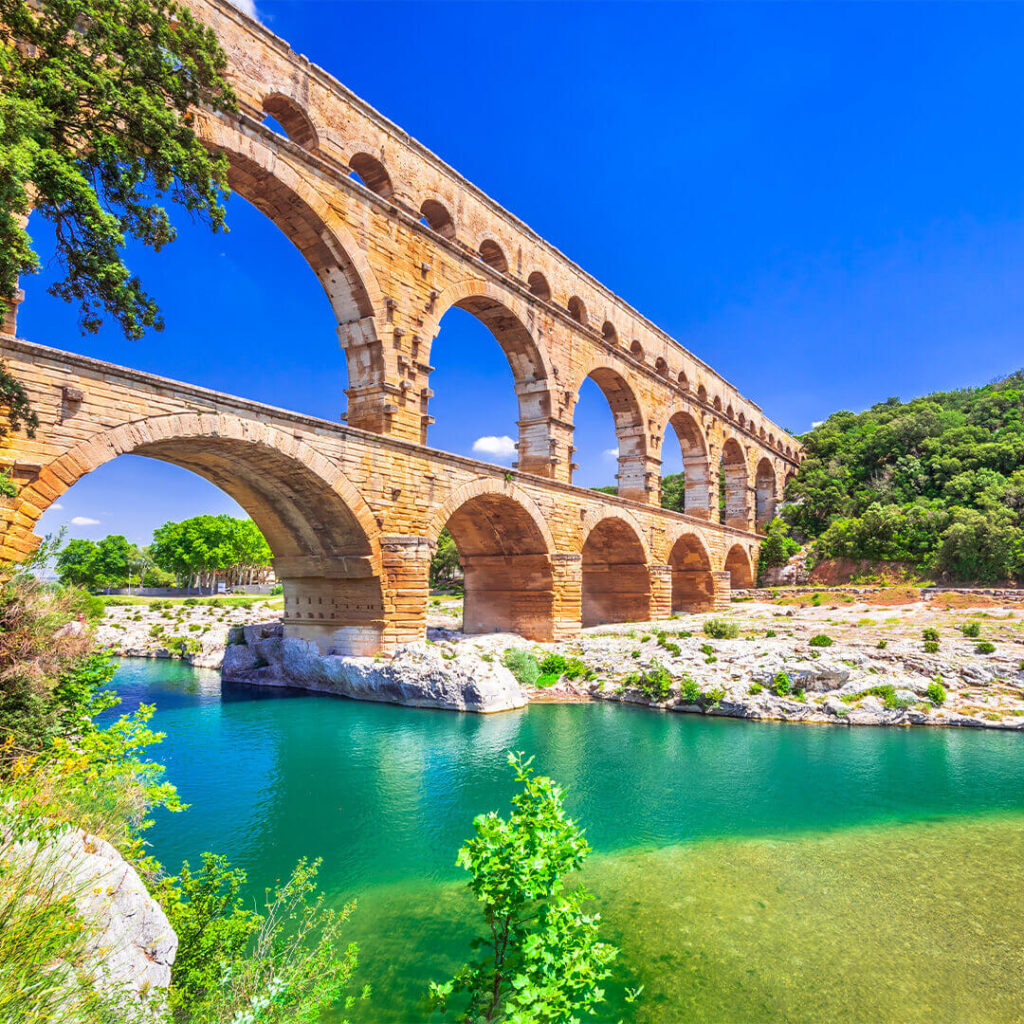
The nearest reliable water source was located near Uzès, about 50 kilometers (31 miles) away. To transport that water to Nîmes, Roman engineers designed an extensive aqueduct system that crossed valleys, hills, and uneven terrain.
Pont du Gard became the most ambitious section of the project. Engineers needed a way to carry water across the Gardon River valley while maintaining a consistent slope. The solution was a massive three tiered bridge that would allow water to continue flowing naturally toward the city.
How the Aqueduct Worked
What I found most fascinating is how simple the concept was and how difficult it must have been to execute. The aqueduct didn’t rely on pumps or machinery. Instead, it used gravity alone.
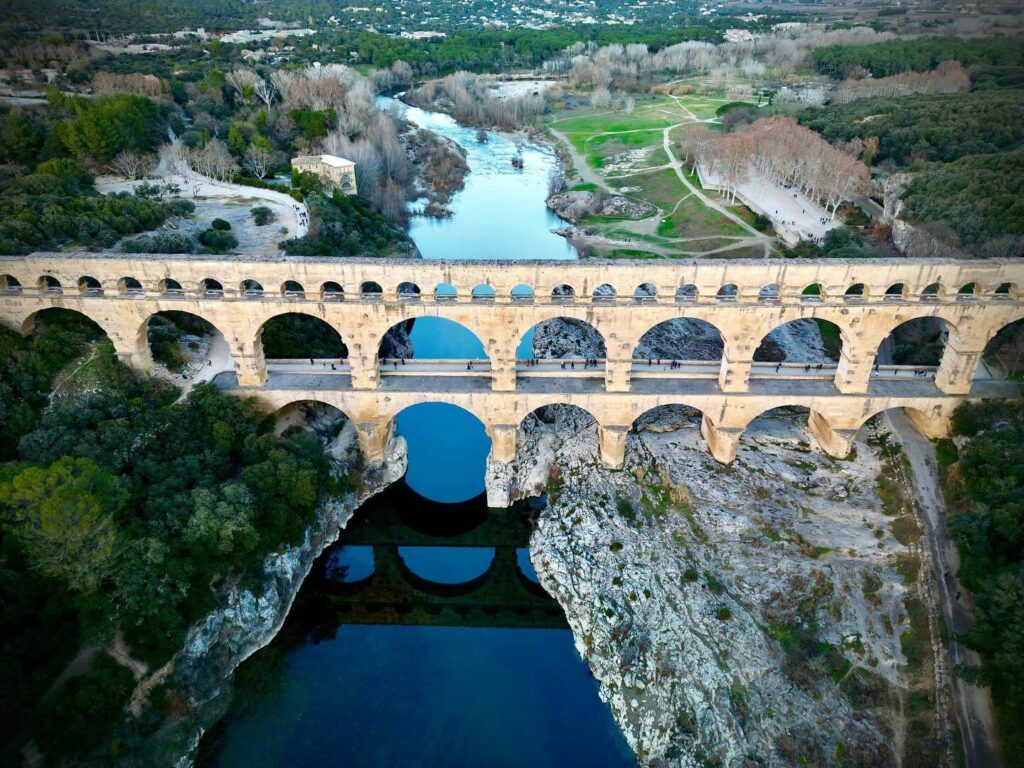
Water traveled through a covered channel at the top of the bridge and flowed continuously toward Nîmes. To make this work, Roman engineers had to calculate the gradient with incredible precision. Across the entire aqueduct, the water dropped only a small amount, just enough to keep it moving without damaging the system.
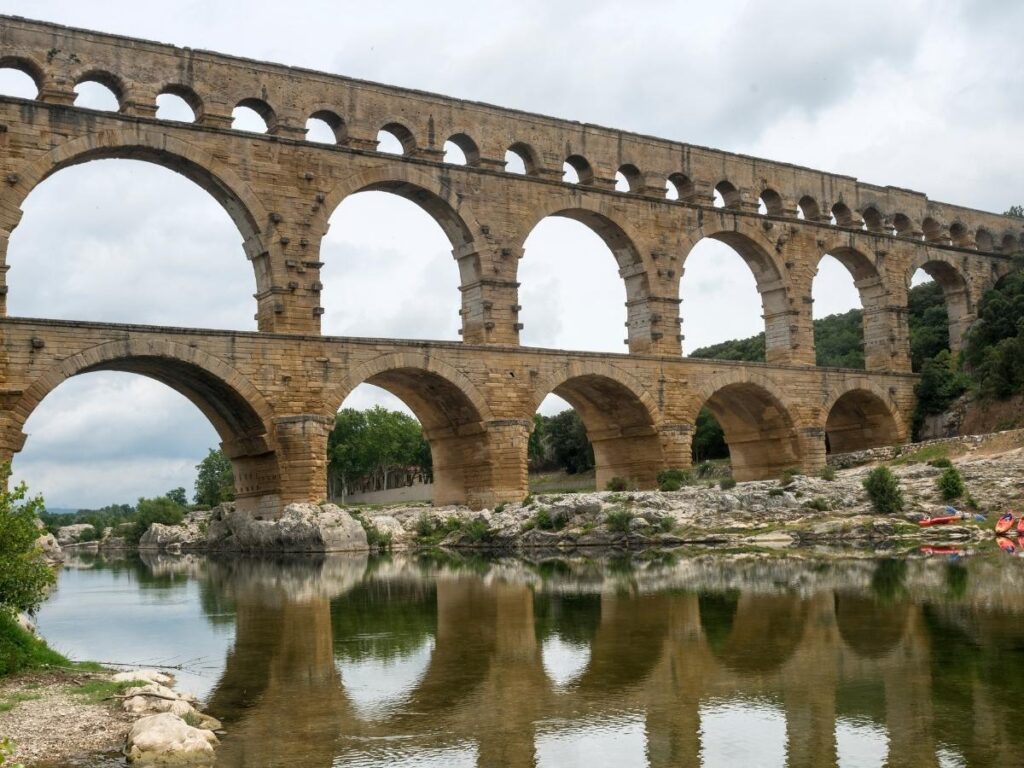
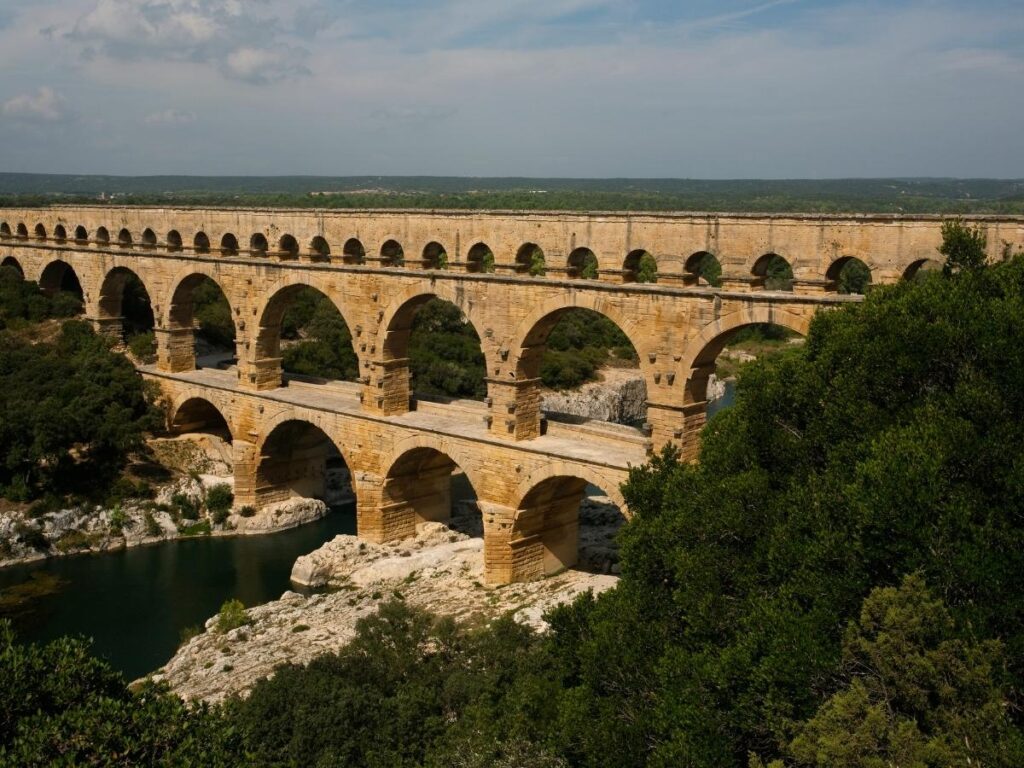
The bridge itself was built on three levels of arches. The larger arches at the bottom provided strength and stability, while the smaller arches above helped reduce weight while maintaining the height needed to cross the valley. Even today, the design feels surprisingly elegant for a structure built nearly two thousand years ago.
How Pont du Gard Survived for Nearly 2,000 Years
One reason Pont du Gard is so special is that so much of it still survives. Many Roman aqueducts have been reduced to ruins, but this one remains remarkably intact.
After the aqueduct stopped supplying water, the bridge continued to serve an important purpose as a crossing point over the river. Because local communities still used it, the structure was maintained rather than abandoned.
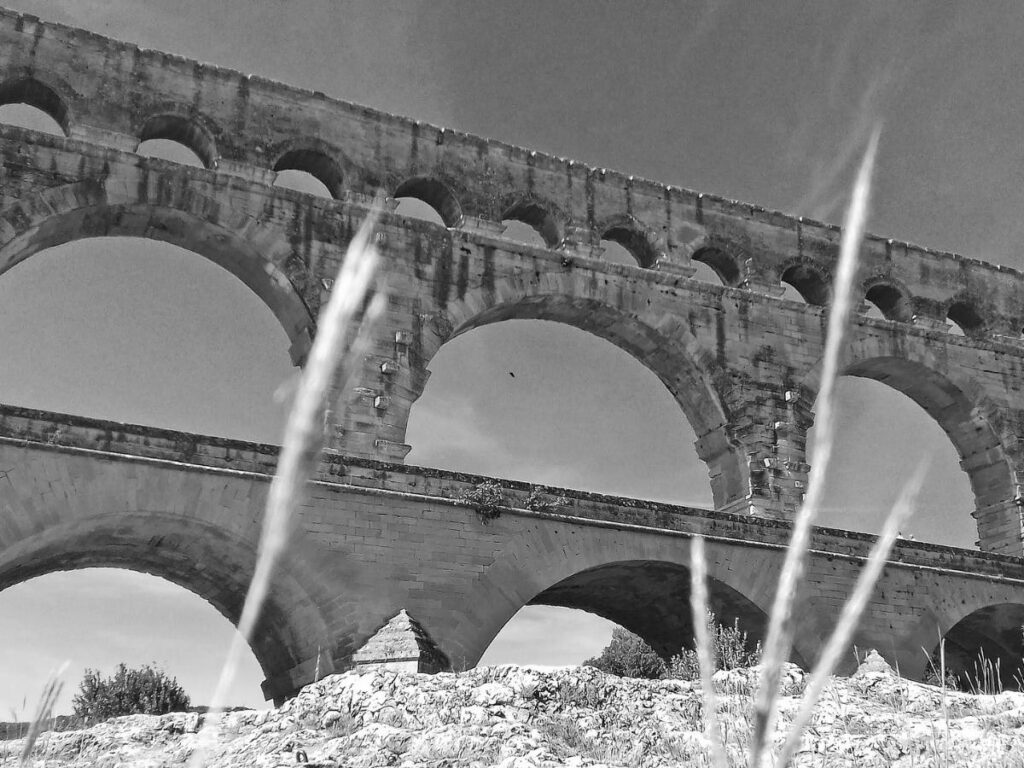
Over the centuries, several restoration projects helped preserve the monument, particularly during the nineteenth century when concerns grew about protecting France’s historical landmarks.
Today, Pont du Gard is recognized as one of the best preserved Roman monuments in the world. UNESCO added it to its World Heritage List in 1985, ensuring that future generations can continue to admire this extraordinary piece of Roman engineering.
Where Is Pont du Gard?
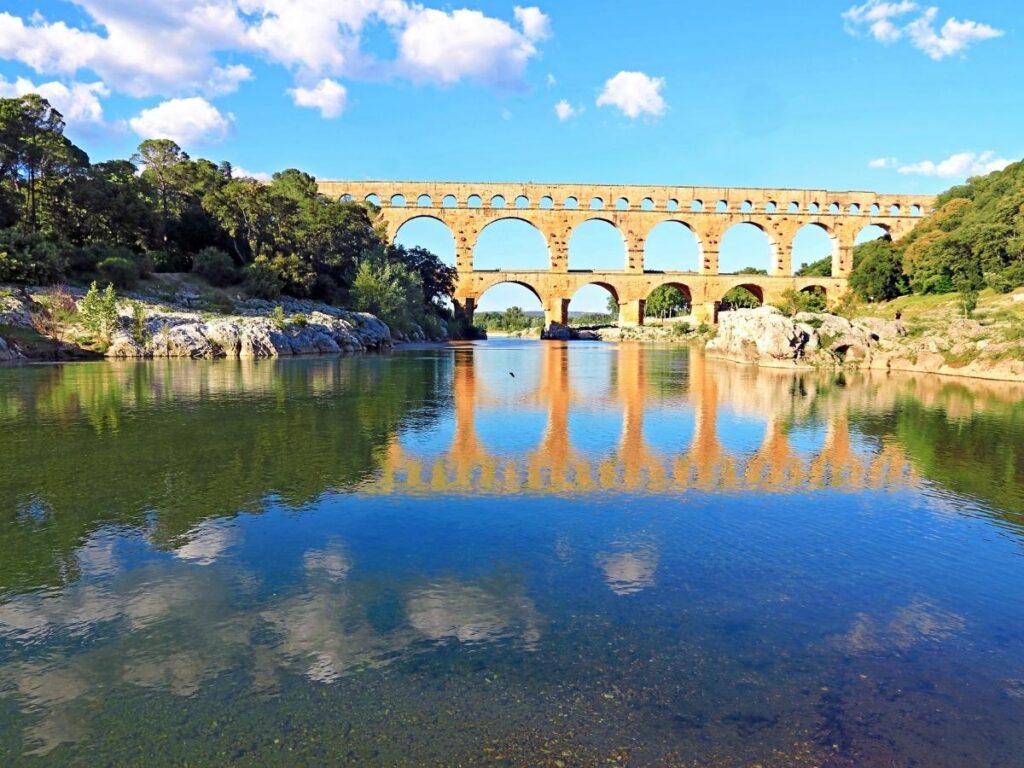
Pont du Gard is located in the Occitanie region of southern France, near the small village of Vers Pont du Gard. One of the reasons it’s such a popular attraction is how easy it is to reach from several of the region’s most visited cities.
The monument sits about 25 kilometers (15 miles) from Nîmes, 30 kilometers (19 miles) from Avignon, 40 kilometers (25 miles) from Arles, and around 90 kilometers (56 miles) from Montpellier. If you’re already exploring Provence or southern France, chances are you’re never too far away from it.
Because of its location, many travelers visit Pont du Gard as a half day or full day excursion rather than staying nearby. It’s an easy addition to a Provence road trip and works particularly well if you’re already planning to visit Avignon, Nîmes, or Arles.
Is Pont du Gard Worth Visiting?
In my opinion, absolutely, especially if you’re already exploring Provence or southern France.
Before visiting, I expected Pont du Gard to be a quick stop for a few photos before moving on. Instead, I found myself spending much longer there than planned. The scale of the aqueduct is difficult to appreciate until you’re standing beneath its towering arches and looking up at stone blocks that have been in place for nearly 2,000 years.
What makes Pont du Gard even more special is its setting. Rather than sitting in the middle of a city, the monument is surrounded by riverside paths, walking trails, and beautiful natural scenery. You can explore the museum, relax by the Gardon River, or simply enjoy the views from different angles throughout the site.
I think history lovers, photographers, families, and outdoor enthusiasts will all find something to enjoy here. Even if Roman history isn’t usually your main interest, the combination of impressive architecture and scenic surroundings makes Pont du Gard a memorable place to visit.
If you’re looking for a rewarding day trip in southern France, Pont du Gard is well worth adding to your itinerary.
What to See at Pont du Gard
One thing that surprised me about Pont du Gard was how much there is to do beyond simply admiring the aqueduct. Before visiting, I assumed it would be a quick stop on a road trip through southern France. Instead, I found enough to easily fill several hours.
If you’re planning a visit, I’d recommend giving yourself at least half a day. Between the monument itself, the museum, riverside walks, and scenic viewpoints, there’s plenty to explore at a relaxed pace.
Walk Across the Aqueduct
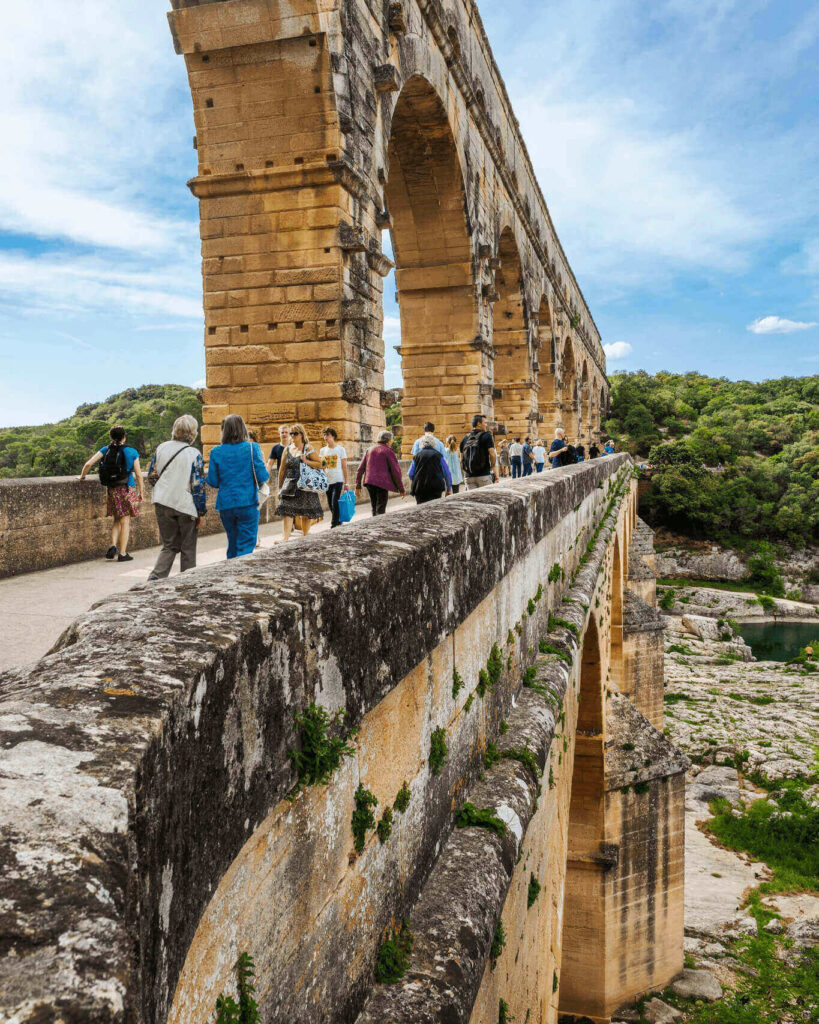
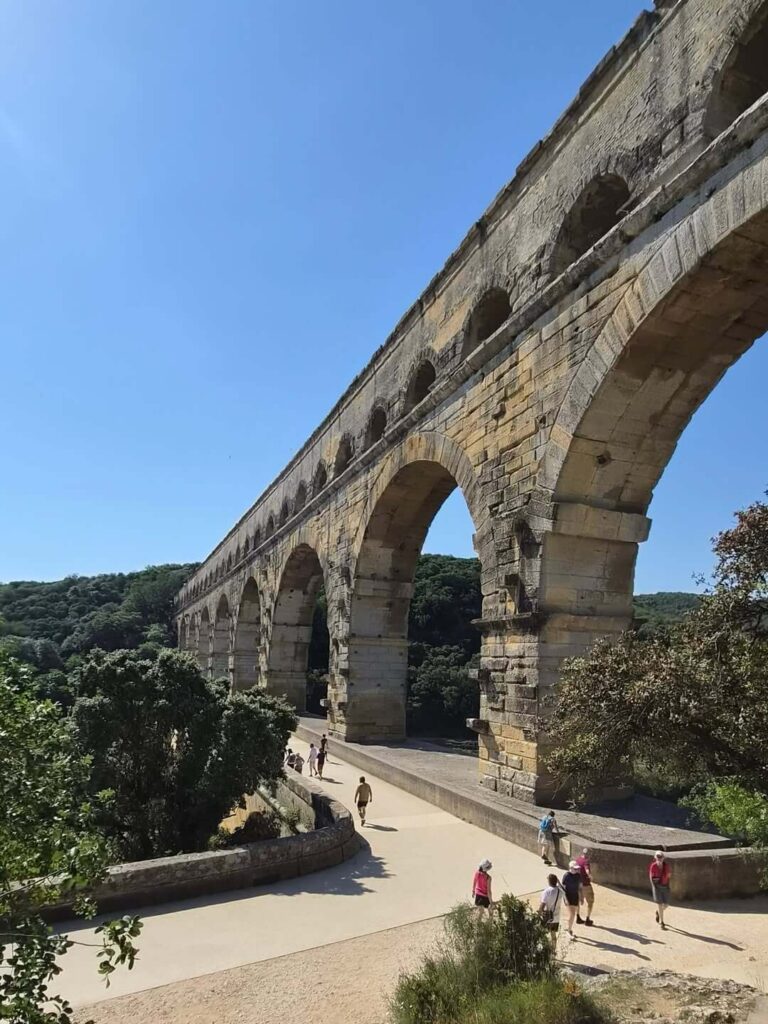
The highlight for most visitors is, of course, the aqueduct itself. Walking alongside Pont du Gard gives you the chance to appreciate just how enormous the structure really is.
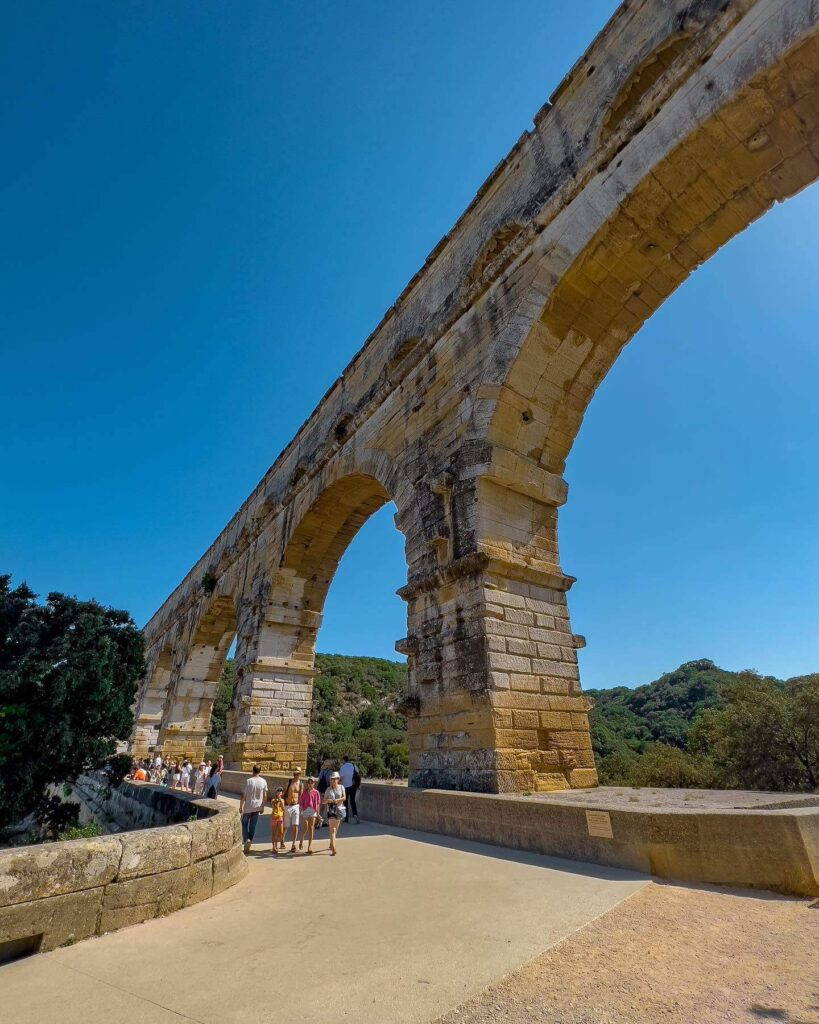
From a distance, it looks impressive. Up close, the scale becomes much harder to ignore. The massive stone blocks, towering arches, and sheer height of the monument are far more striking in person than in photographs.
As you move around the site, you’ll notice that the bridge looks different from every angle. Some of my favorite views were actually from the riverbanks below, where you can fully appreciate how the structure rises above the landscape.
Explore the Visitor Center
Before heading straight to the monument, it’s worth spending a little time in the visitor center.
The exhibits provide useful background information about the aqueduct, its construction, and the role it played in supplying water to Nîmes during Roman times.
I found it helpful to learn some of this history first because it made the monument itself much more meaningful once I was standing in front of it.
Even a short visit here helps put the scale of the engineering achievement into perspective.
Visit the Museum
The museum is one of the most overlooked parts of the site, but I think it’s worth including in your visit.

The exhibits focus on Roman engineering, construction techniques, and daily life during the Roman period. Models and interactive displays help explain how water traveled through the aqueduct and why Pont du Gard was such an important part of the system.
Normally, I’m not someone who spends hours in museums, but I genuinely enjoyed learning how much planning and precision went into building something of this size nearly two thousand years ago.
Explore the Walking Trails
One of the best ways to experience Pont du Gard is by exploring some of the trails around the site.
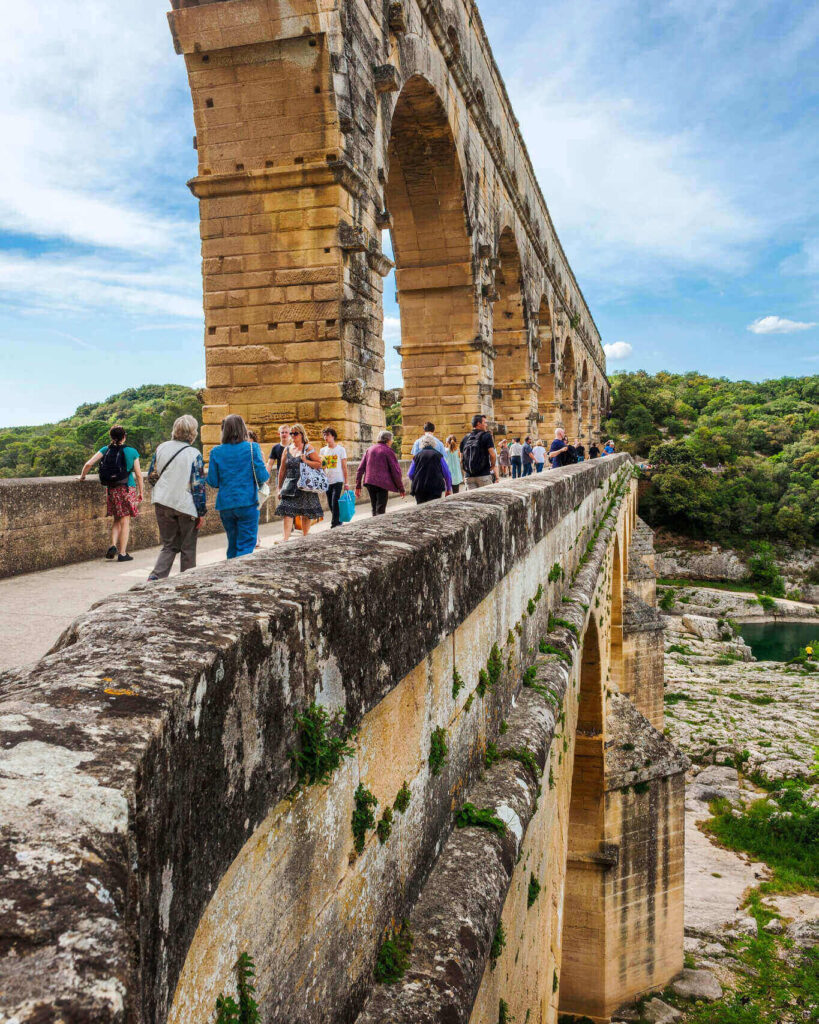
Several walking paths wind through the surrounding countryside and along the Gardon River, offering views that many visitors miss. These trails provide a quieter experience away from the busiest areas and often lead to excellent photo spots.
You don’t need to be an experienced hiker to enjoy them. Most routes are relatively easy and can be explored at your own pace.
Discover the Cultural Spaces
Depending on when you visit, you may also find temporary exhibitions, cultural displays, or educational programs taking place around the site.
These spaces add extra context to the history of Pont du Gard and often showcase local heritage, archaeology, and conservation efforts. While they may not be the main reason to visit, they’re worth checking out if you have the time.
Together, these attractions turn Pont du Gard into much more than a quick photo stop. The combination of history, nature, and outdoor activities is what makes spending a few hours here feel so rewarding.
The Best Viewpoints at Pont du Gard
One of the things I loved most about visiting Pont du Gard was how different it looked depending on where I was standing. Most people naturally head to the main viewing area near the bridge, but some of the best views require a little extra exploring.
Riverside Viewpoint
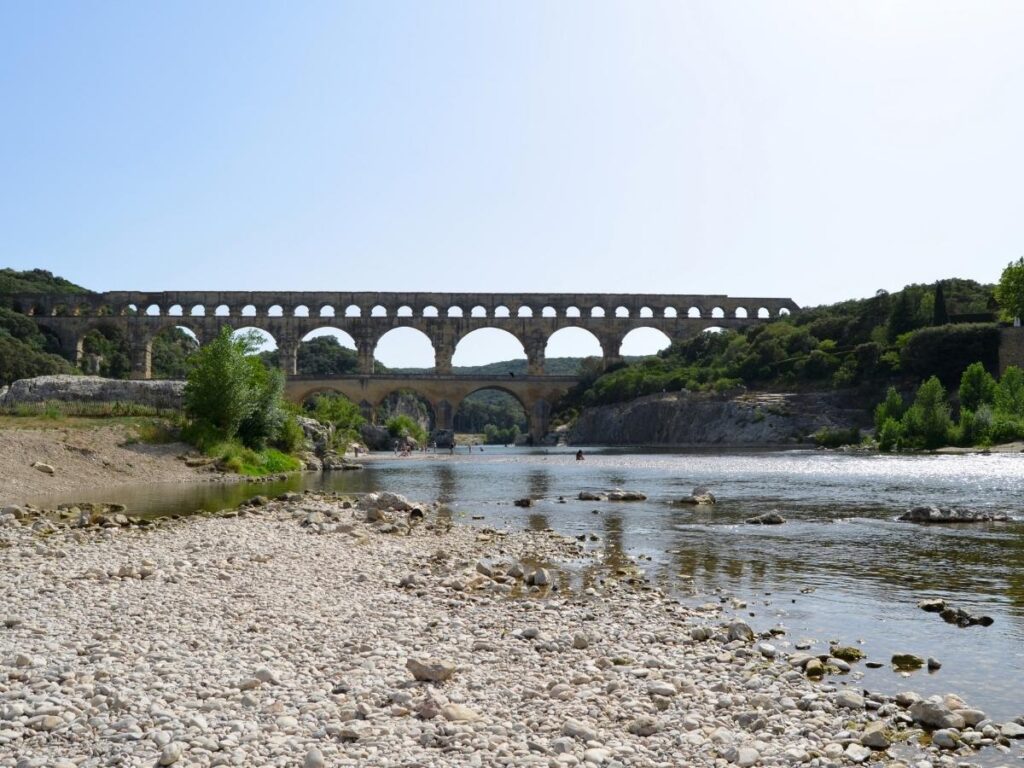
If it’s your first visit, I’d start at the riverbank. This is where you’ll get the classic view that appears in most postcards and travel photos.
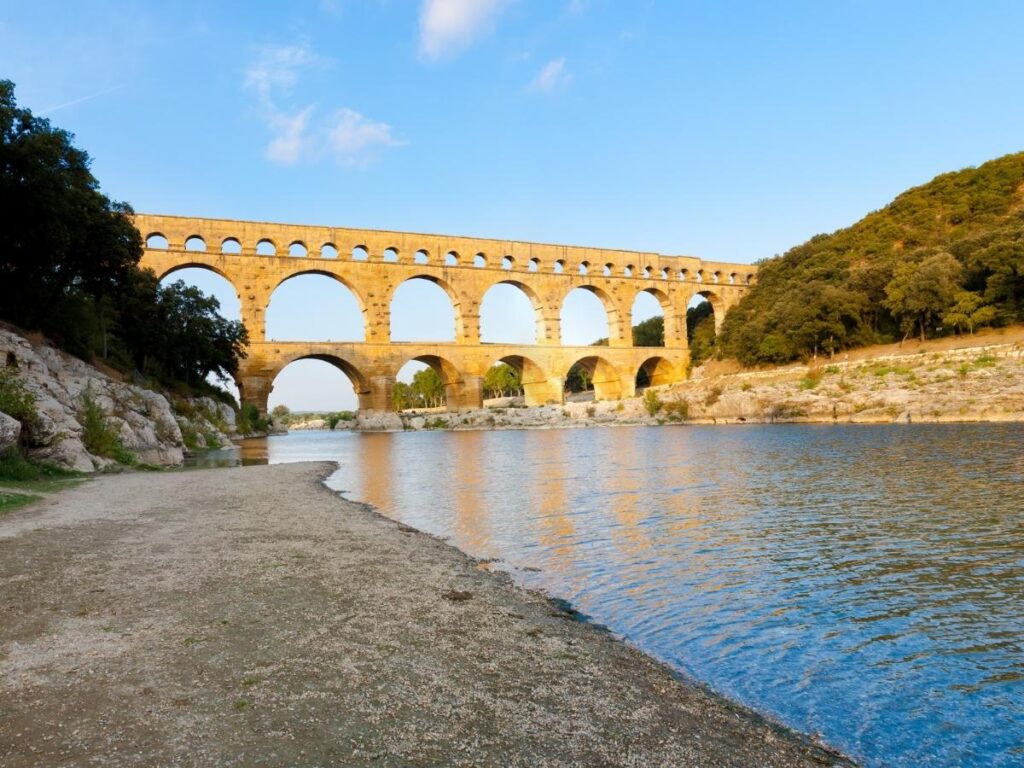
Standing beside the Gardon River allows you to take in the full height of the aqueduct while also appreciating its beautiful natural setting. On a calm day, you can sometimes see reflections of the arches in the water, which makes for some fantastic photographs.
It’s also one of the best places to simply sit for a while and admire the monument without feeling rushed.
Opposite Bank View
Crossing to the opposite side of the river gives you a completely different perspective.
From here, the bridge feels even larger because you can see more of the surrounding landscape and understand how dramatically it rises above the valley.
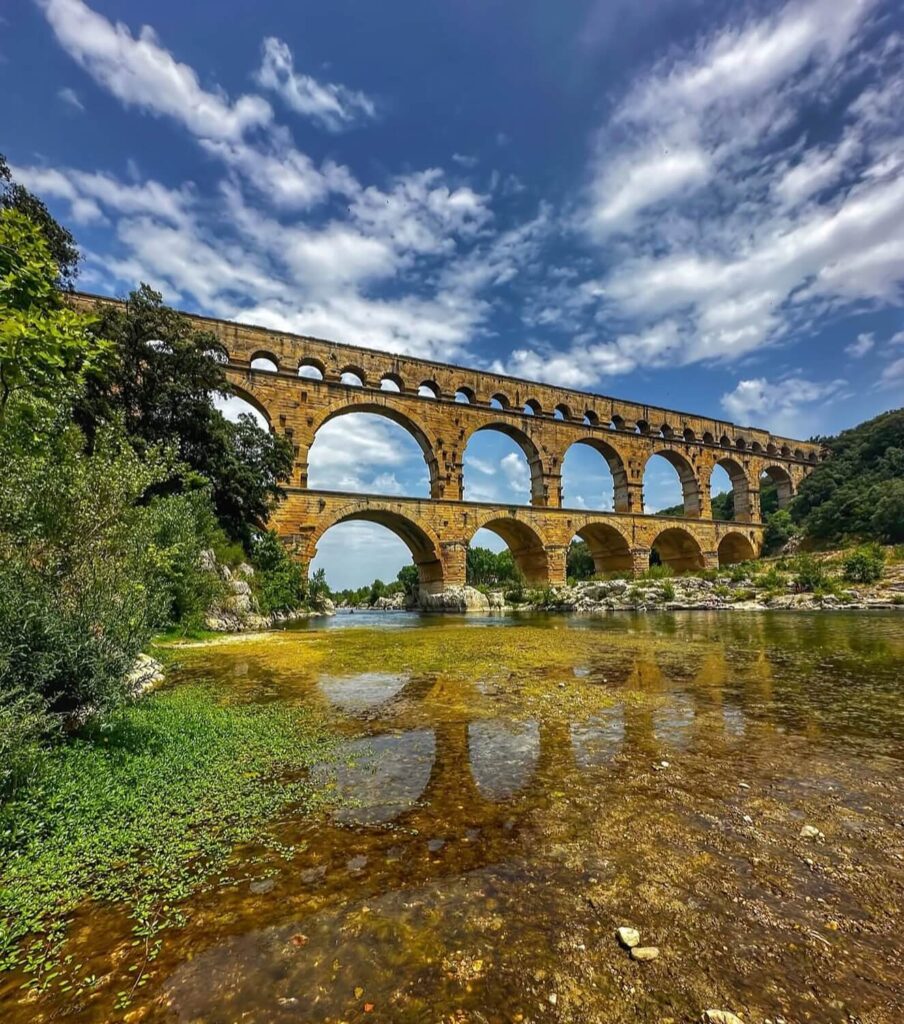
I actually preferred some of these viewpoints because there were fewer people around and the setting felt more peaceful.
If you’re interested in photography, it’s worth taking the time to explore both sides of the river rather than settling for the first viewpoint you find.
Elevated Trail Viewpoints
Several walking trails around the site lead to slightly higher ground overlooking the valley.
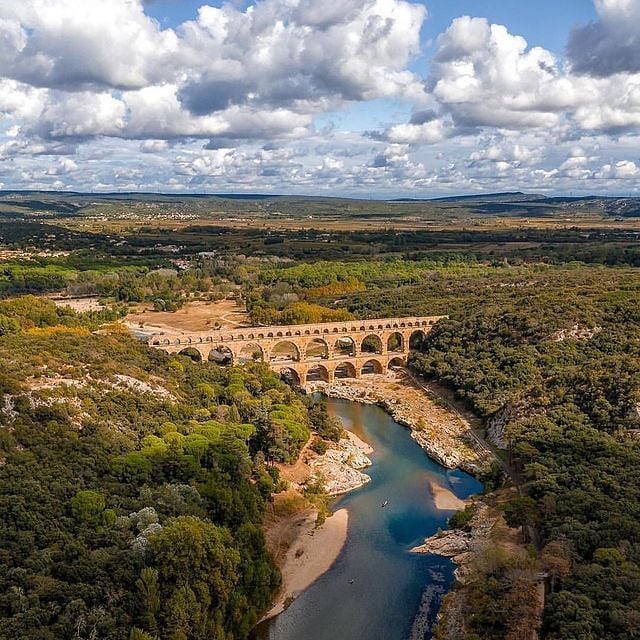
These viewpoints provide some of the most impressive panoramic views of Pont du Gard. Seeing the aqueduct from above helps you appreciate how it fits into the wider landscape and gives you a better sense of the scale of the project.
They’re also ideal if you want photos that look a little different from the typical images most visitors take.
Sunset Viewpoints
If your schedule allows, I highly recommend staying until late afternoon or sunset.
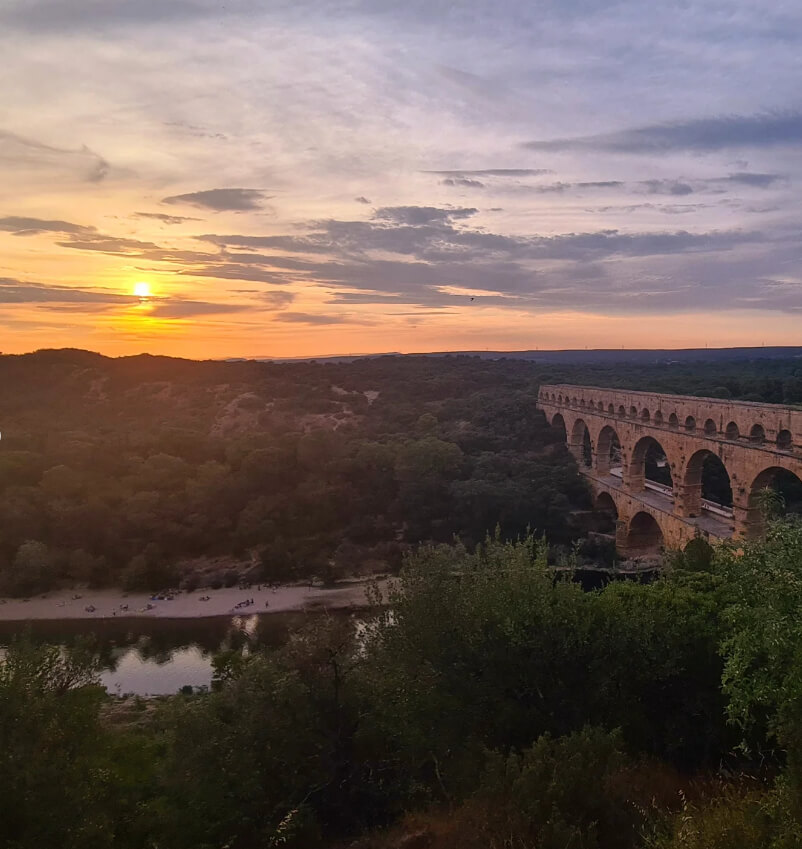
As the sun begins to drop, the warm limestone takes on beautiful golden tones and the crowds often start to thin out. The softer light creates a completely different atmosphere compared to the middle of the day.
Even if you’re not interested in photography, it’s one of the most enjoyable times to experience the site.
Can You Walk on Pont du Gard?
Yes, and it’s one of the highlights of visiting.
Many first time visitors assume they’ll only be able to admire the monument from a distance, but parts of Pont du Gard are accessible on foot. Walking across the structure gives you a chance to appreciate the craftsmanship up close and see details that are easy to miss from below.
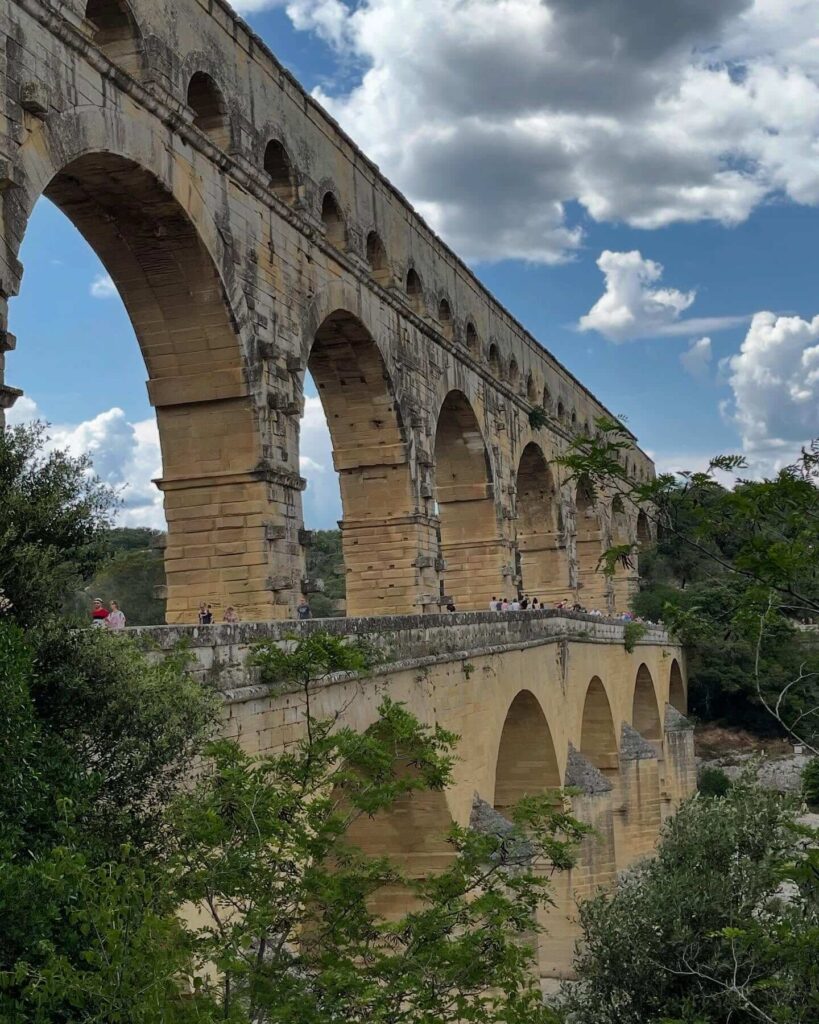
Access rules can change depending on restoration work and conservation projects, so it’s always worth checking current visitor information before your trip.
The upper water channel, where the aqueduct originally carried water, is generally only accessible through guided tours. These tours offer a fascinating opportunity to see sections of the monument that most visitors never experience.
For many travelers, simply walking alongside the bridge and viewing it from multiple angles is enough to appreciate its scale and history.
Can You Swim at Pont du Gard?
One thing many visitors don’t realize is that Pont du Gard isn’t just a historical site. During warmer months, it also becomes a popular place for swimming and relaxing by the river.
The Gardon River flows directly beneath the monument, and on sunny days you’ll often see locals and visitors cooling off in the water. It’s a unique experience to swim with one of the world’s most famous Roman structures towering above you.
Best Time for Swimming
Summer is naturally the most popular season for swimming because water temperatures are at their warmest. The riverbanks can become quite lively during July and August, especially on weekends.
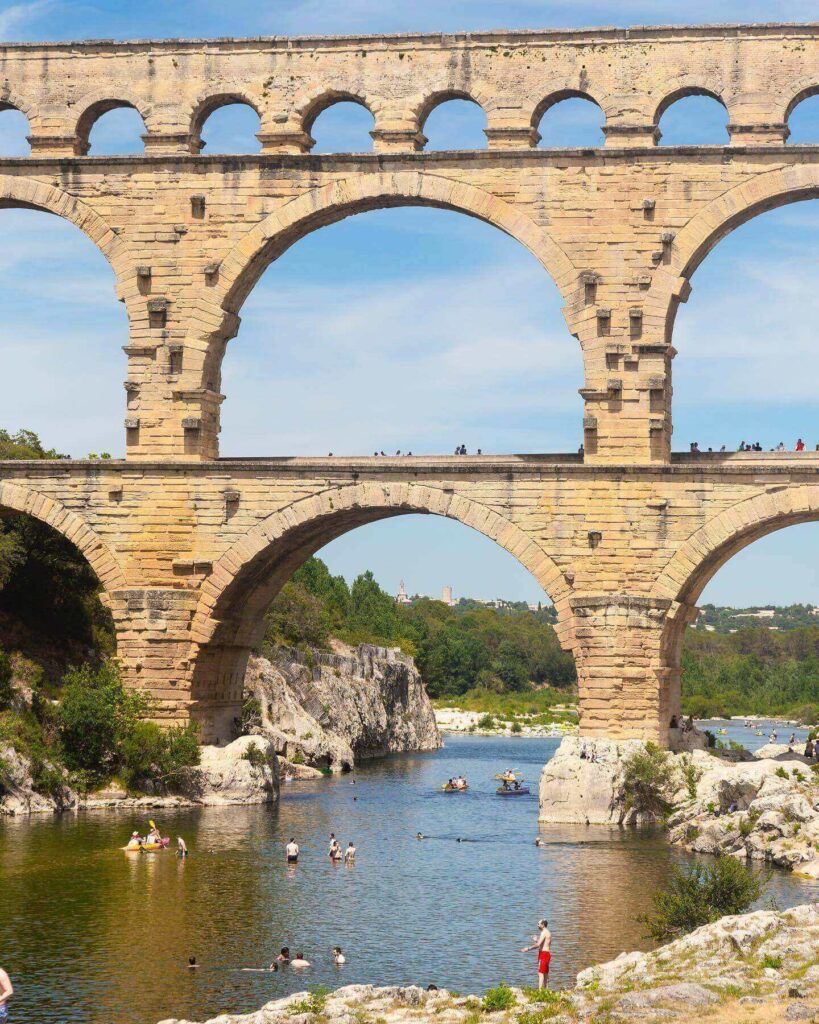
If you prefer a quieter experience, late spring and early autumn are often excellent alternatives. The weather is usually still pleasant, but visitor numbers tend to be lower.
Important Safety Considerations
Although the river often appears calm, conditions can change depending on rainfall and water levels.
Before entering the water, pay attention to local signs and any safety warnings. Some areas may have stronger currents than they appear, particularly after periods of heavy rain.
It’s also worth bringing water shoes if you plan to swim, as parts of the riverbed can be rocky.
Kayaking Under Pont du Gard
If you’re looking for a more active way to experience the monument, kayaking is one of the most popular activities in the area.
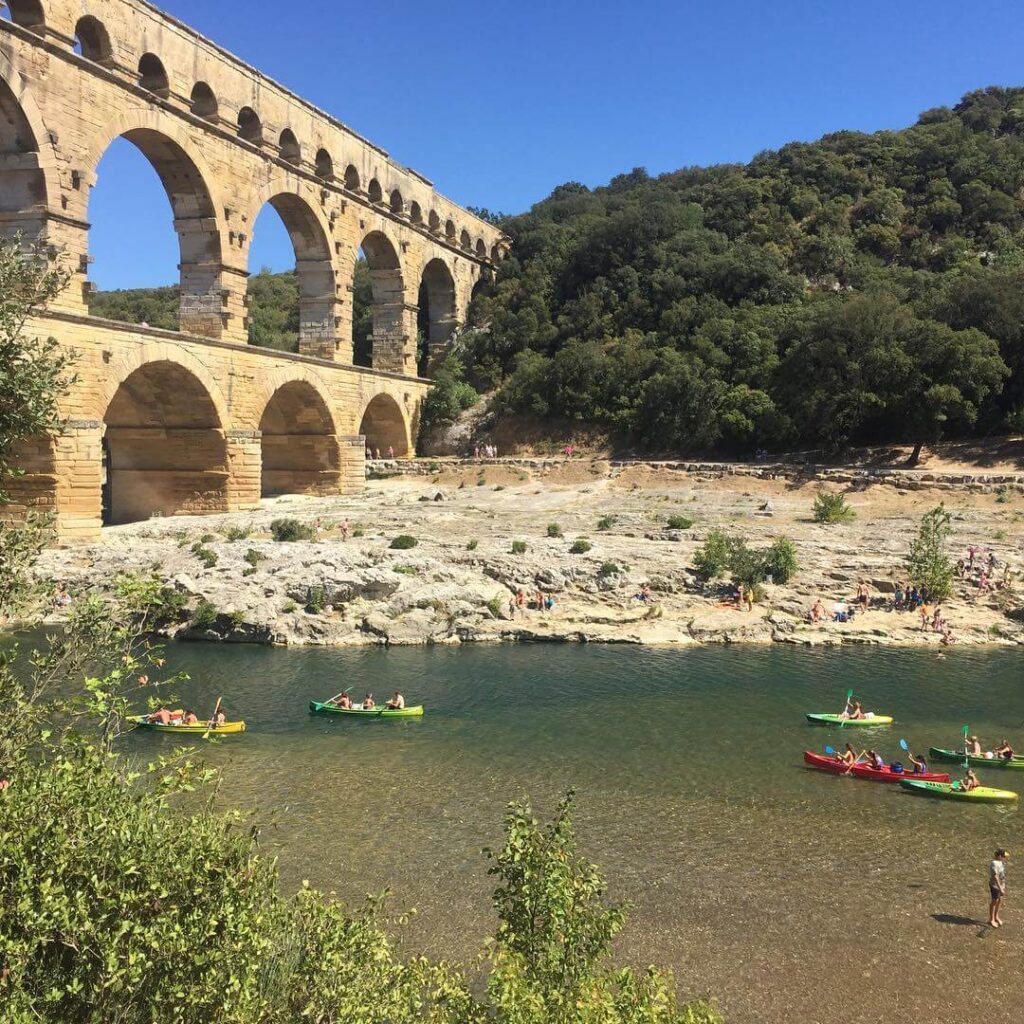
Seeing Pont du Gard from the water offers a perspective that’s completely different from standing on the riverbank. As you paddle toward the arches, the monument gradually grows larger until you’re passing directly beneath it.
It’s one of those experiences that makes you appreciate just how enormous the structure really is.
Why Kayaking Is So Popular
Kayaking combines sightseeing with a little adventure, making it a favorite activity for both families and couples.
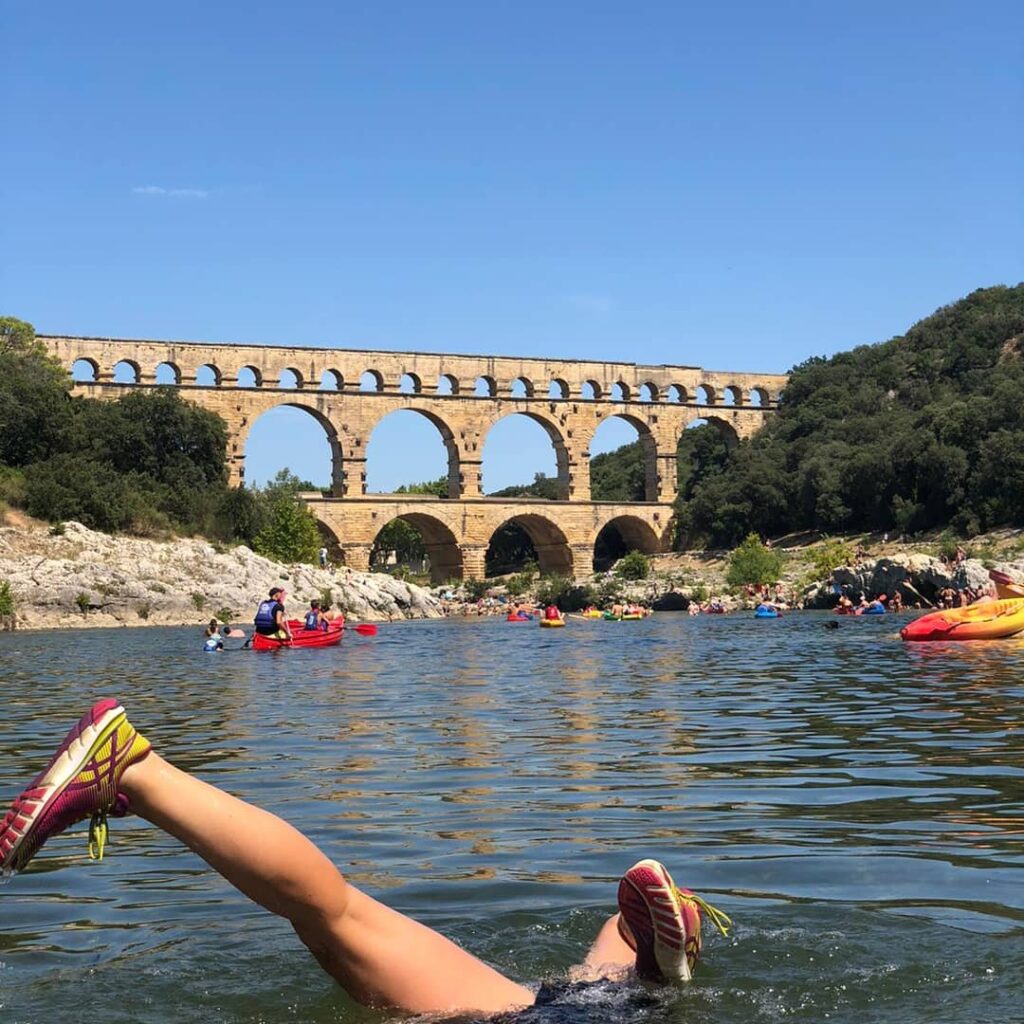
The river is generally calm and suitable for beginners, so you don’t need extensive kayaking experience to enjoy it. Many rental companies offer routes that include Pont du Gard as the main highlight, allowing visitors to enjoy both the scenery and the history at the same time.
What to Expect
Most kayak trips follow gentle sections of the Gardon River and typically last between two and four hours, depending on the route you choose.
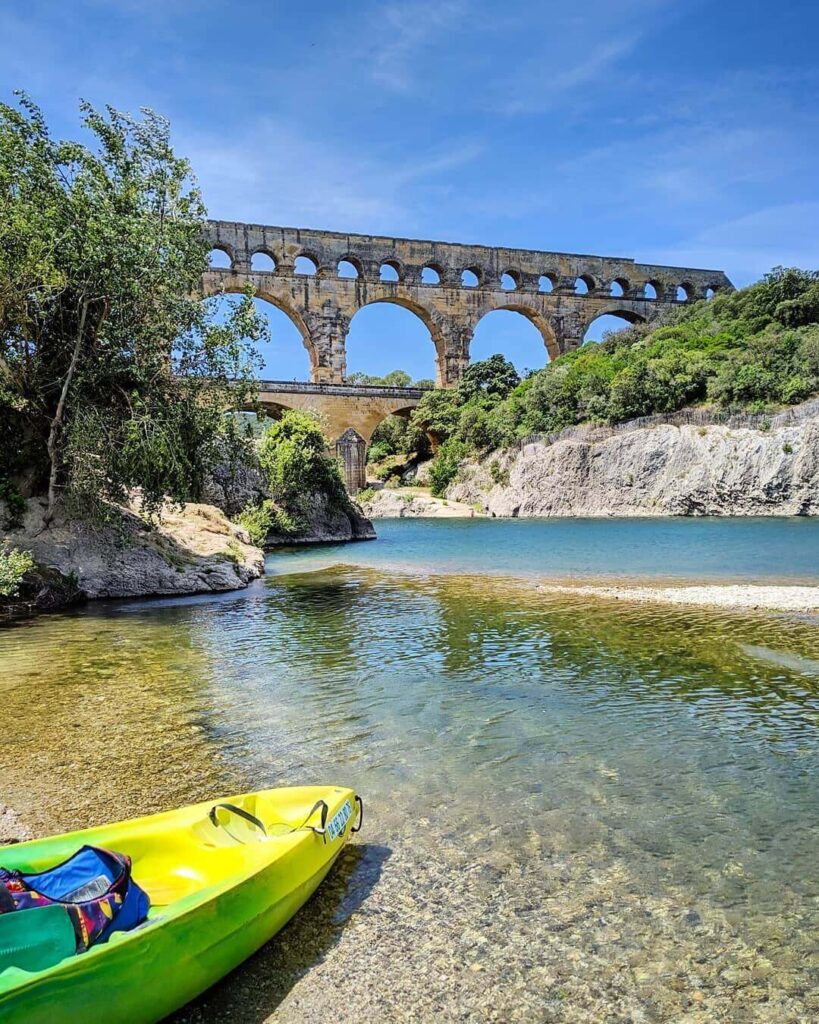
Along the way, you’ll pass through beautiful countryside, small beaches, and quiet stretches of river before reaching the aqueduct itself.
For many visitors, kayaking ends up being one of the most memorable parts of the day.
What to Bring
If you’re planning to kayak, I’d recommend bringing plenty of water, sunscreen, and a hat, especially during summer. A waterproof phone case is also useful if you want photos without worrying about splashes.
Quick drying clothing will make the experience much more comfortable, particularly if you plan to continue exploring the site afterward.
Pont du Gard Tickets and Prices
One thing that often confuses first time visitors is the ticket system at Pont du Gard.
Unlike many major attractions, entry isn’t always based on a standard admission ticket. Instead, visitors typically pay a parking fee, which provides access to much of the site and its facilities.

This usually includes access to the monument grounds, walking trails, visitor areas, and museum spaces. Considering everything that’s available on site, I found it to be good value, especially if you’re planning to spend several hours exploring.
Guided tours, special exhibitions, and access to certain restricted areas may require additional fees.
Because pricing occasionally changes, I always recommend checking the official Pont du Gard website before your visit. It’s the best way to confirm current rates, opening hours, and any special activities taking place during your trip.
Pont du Gard Opening Hours
Pont du Gard is open throughout the year, but opening hours vary depending on the season. During the summer months, the site generally stays open later in the evening, giving visitors more flexibility and the chance to experience the monument in the softer light of late afternoon or sunset.
In winter, opening hours are usually shorter, and some exhibitions or guided experiences may operate on a reduced schedule. This is one reason I always recommend checking the official website before your visit, especially if you’re planning your day around a specific tour or museum exhibit.
It’s also worth remembering that Pont du Gard is much more than just the aqueduct itself. The visitor center, museum, cultural spaces, and guided tours may all have slightly different operating hours. Taking a few minutes to confirm timings beforehand can help you avoid disappointment and make the most of your visit.
Best Time to Visit Pont du Gard
Pont du Gard can be visited year round, but the experience changes quite a bit depending on the season.
Spring
Spring is one of my favorite times to visit. Temperatures are usually comfortable, the surrounding landscape is green, and visitor numbers are generally lower than in peak summer.
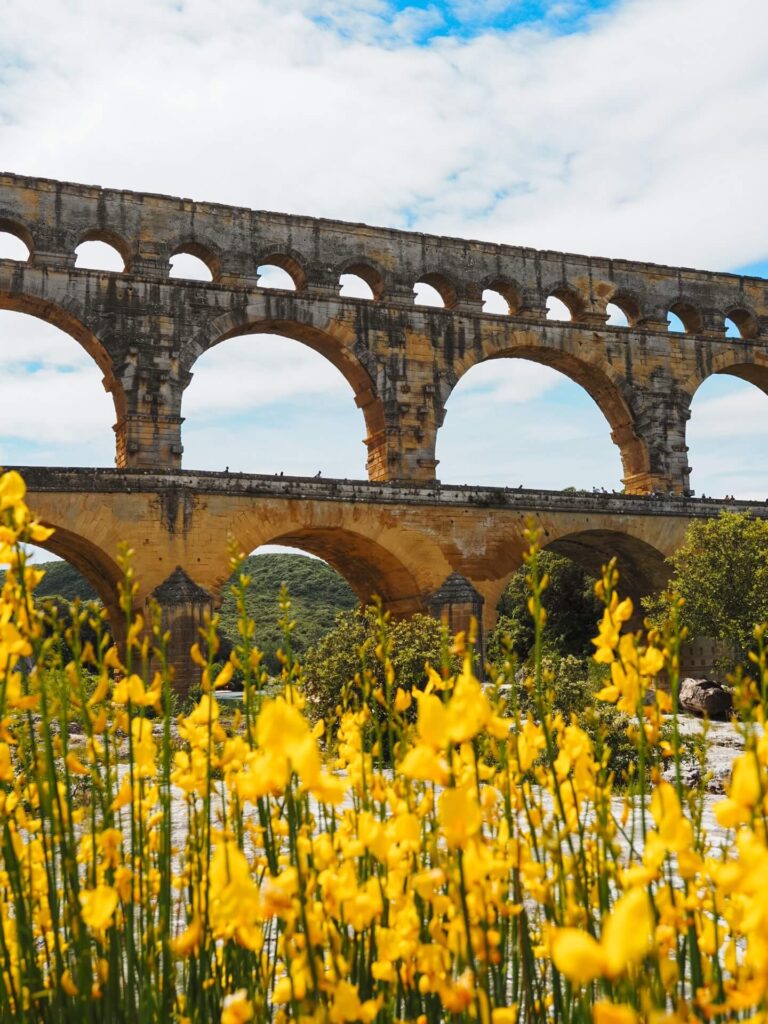
The weather is ideal for walking trails and exploring the site without worrying about intense heat.
Summer
Summer is the busiest season, but it’s also when Pont du Gard feels most lively.
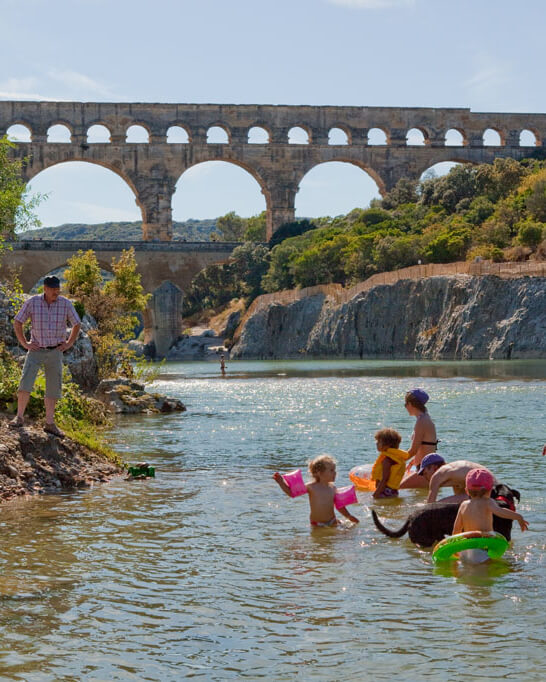
The warm weather makes swimming and kayaking particularly appealing, and you’ll often see visitors relaxing along the riverbanks throughout the day. The downside is that crowds can be significantly larger, especially during July and August.
If you’re visiting in summer, arriving early in the morning can make a huge difference.
Autumn
Autumn offers many of the advantages of spring. Temperatures remain pleasant, the crowds begin to thin out, and the changing colors around the river create beautiful scenery.
For travelers who prefer a quieter experience, this can be one of the best times of year to visit.
Winter
Winter brings a completely different atmosphere to Pont du Gard.
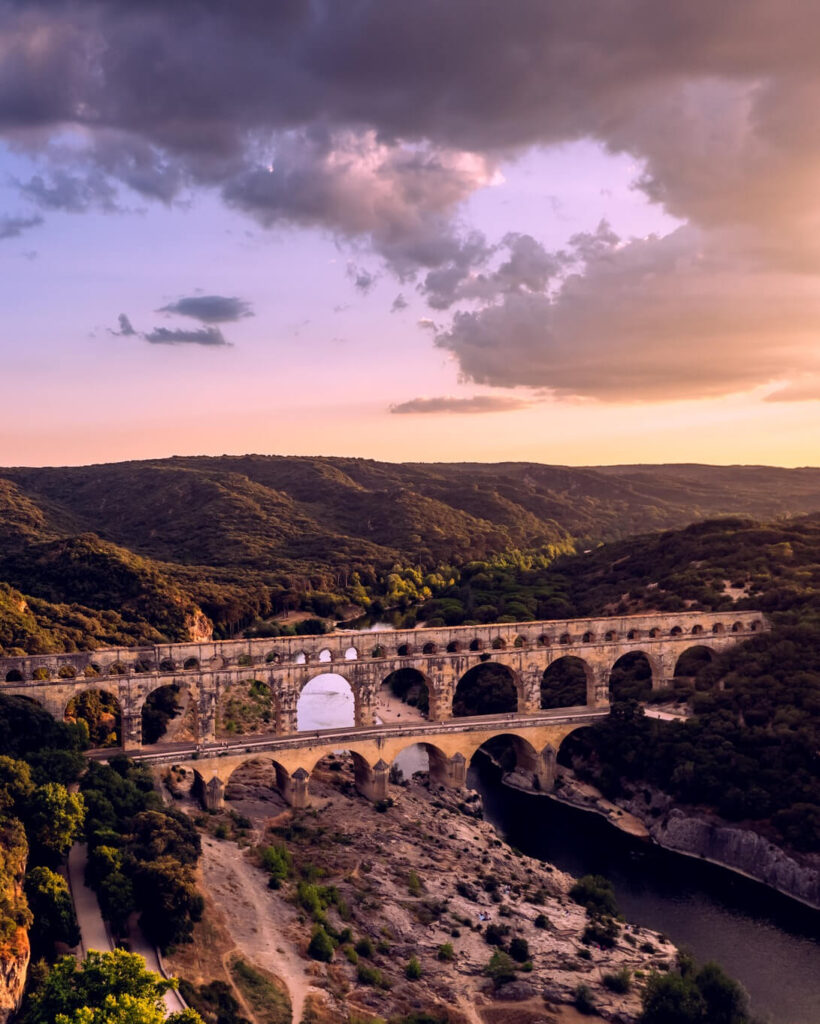
While swimming and kayaking are no longer major attractions, the site feels much calmer and more peaceful. Photographers often appreciate the quieter conditions and the opportunity to capture the monument without large crowds in the background.
Best Time of Day
Regardless of the season, I would avoid the middle of the day if possible, particularly during summer.
Early mornings are wonderful because the site is quieter and temperatures are cooler. The light is also softer, which is great for photography.
Late afternoon is another excellent option. As the sun begins to set, the warm limestone takes on beautiful golden tones, creating some of the most memorable views of the day.
How to Get to Pont du Gard
Despite its location in a relatively rural area, Pont du Gard is surprisingly easy to reach from many popular destinations in southern France.
By Car
Driving is by far the easiest and most convenient way to visit.
If you’re already exploring Provence or Occitanie by car, reaching Pont du Gard is straightforward. The site has large parking areas and clear signage, making it an easy stop on a regional road trip.
Having your own vehicle also gives you the flexibility to combine Pont du Gard with nearby destinations such as Nîmes, Avignon, Arles, or Uzès.
By Bus
Public transportation options are available, although they tend to be more limited than traveling by car.
Seasonal bus services connect Pont du Gard with nearby cities, particularly during the tourist season. Schedules can vary depending on the time of year, so it’s important to check current routes and timetables before planning your journey.
While buses are certainly possible, they usually require a bit more planning and flexibility.
From Avignon
Pont du Gard is located about 30 minutes from Avignon by car, making it one of the easiest and most popular day trips from the city.
Many visitors combine a morning at Pont du Gard with an afternoon exploring Avignon’s historic center and famous landmarks.
Practical Tips Before Visiting Pont du Gard
Pont du Gard is a fairly easy place to visit, but there were a few things I learned that would have made my day smoother had I known them in advance.
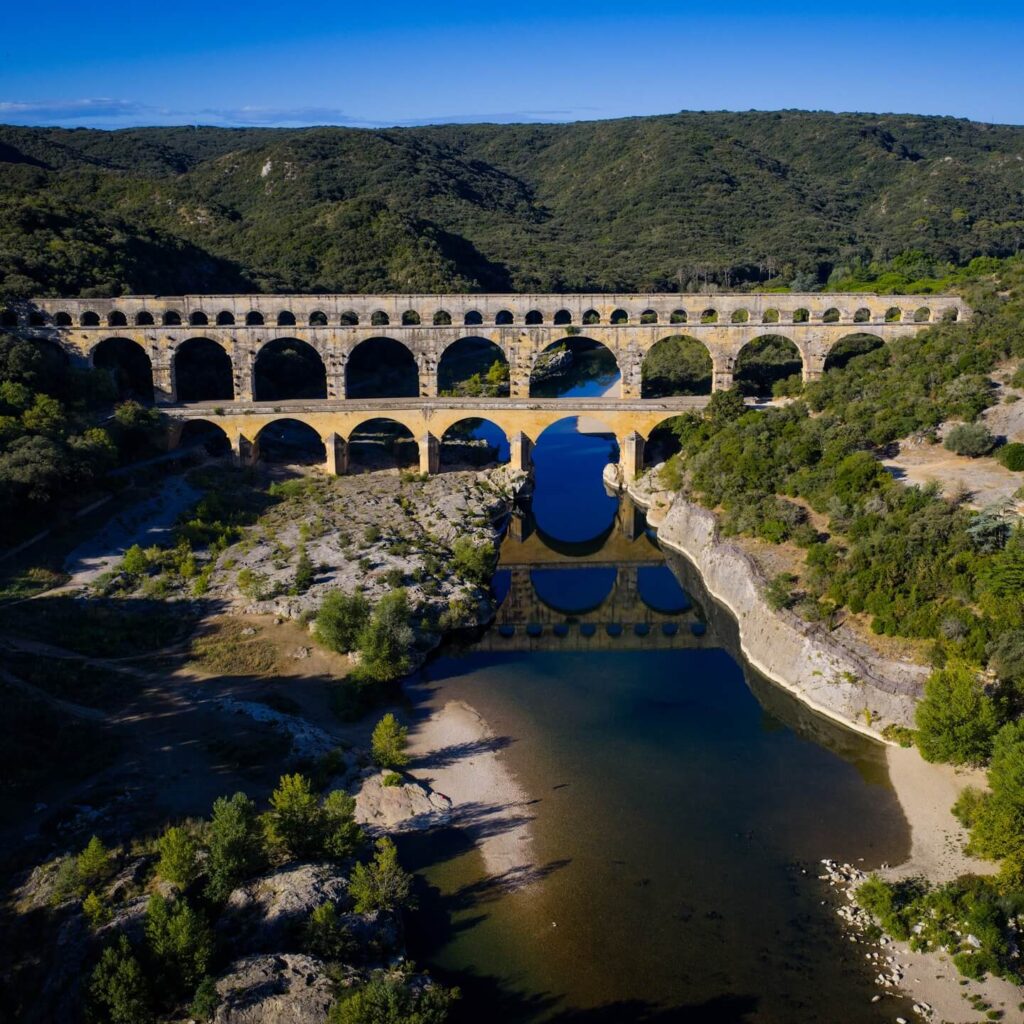
One of the biggest tips I can give is to arrive early, especially during summer. By late morning, tour groups begin arriving and the most popular viewpoints become noticeably busier. Visiting earlier not only helps you avoid some of the crowds but also gives you cooler temperatures and better lighting for photos.
Comfortable shoes are another must. Before visiting, I underestimated how much walking I’d end up doing. Between exploring different viewpoints, visiting the museum, strolling along the riverbanks, and following some of the trails, it’s easy to cover more ground than you might expect.
If you’re visiting between late spring and early autumn, make sure you bring water. While there are facilities on site, parts of the monument and surrounding trails offer very little shade. Southern France can become surprisingly hot during the middle of the day, particularly in July and August.
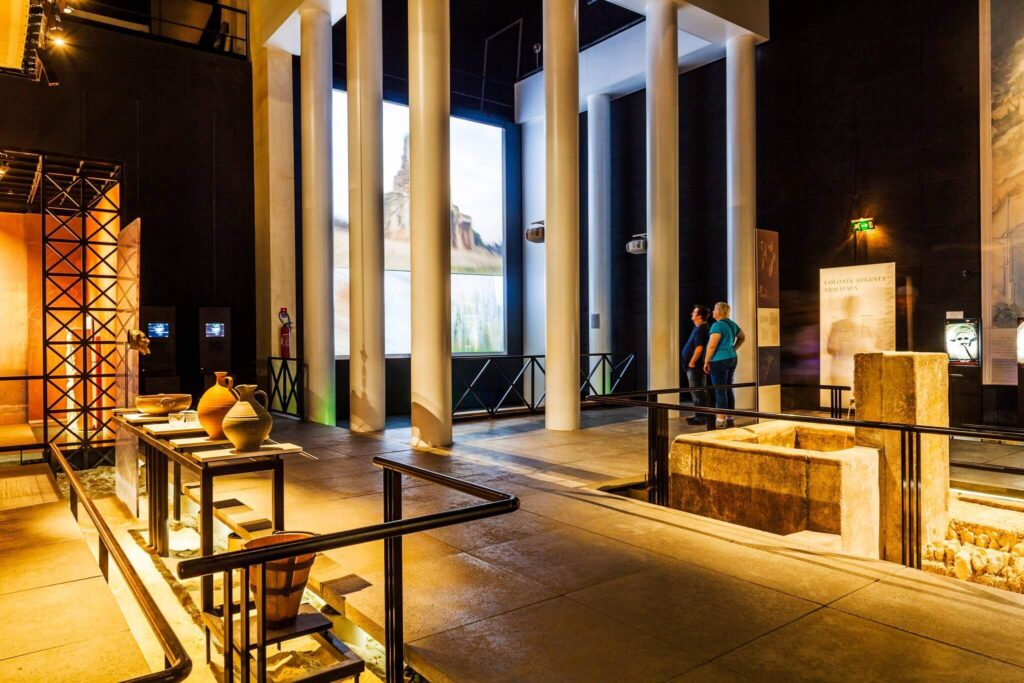
I’d also recommend making time for the museum, even if museums aren’t normally a priority for you. Learning how the aqueduct worked and understanding the scale of the project made me appreciate the monument much more once I was standing beneath it.
If you’re visiting during warmer months, consider bringing swimwear as well. Even if swimming isn’t part of your original plan, there’s a good chance you’ll be tempted after seeing people relaxing in the Gardon River beneath the aqueduct.
Finally, if your schedule allows, stay until late afternoon or sunset. The crowds usually begin to thin out, temperatures become more comfortable, and the warm light on the stone arches creates some of the most beautiful views of the entire day.
Where to Stay Near Pont du Gard
Most visitors don’t stay directly at Pont du Gard itself, but there are several excellent places nearby depending on the type of trip you’re planning.
Avignon
Avignon is probably the most popular base for visiting Pont du Gard. The city offers a wide range of hotels, restaurants, and attractions, making it ideal if you want more to do beyond visiting the aqueduct.
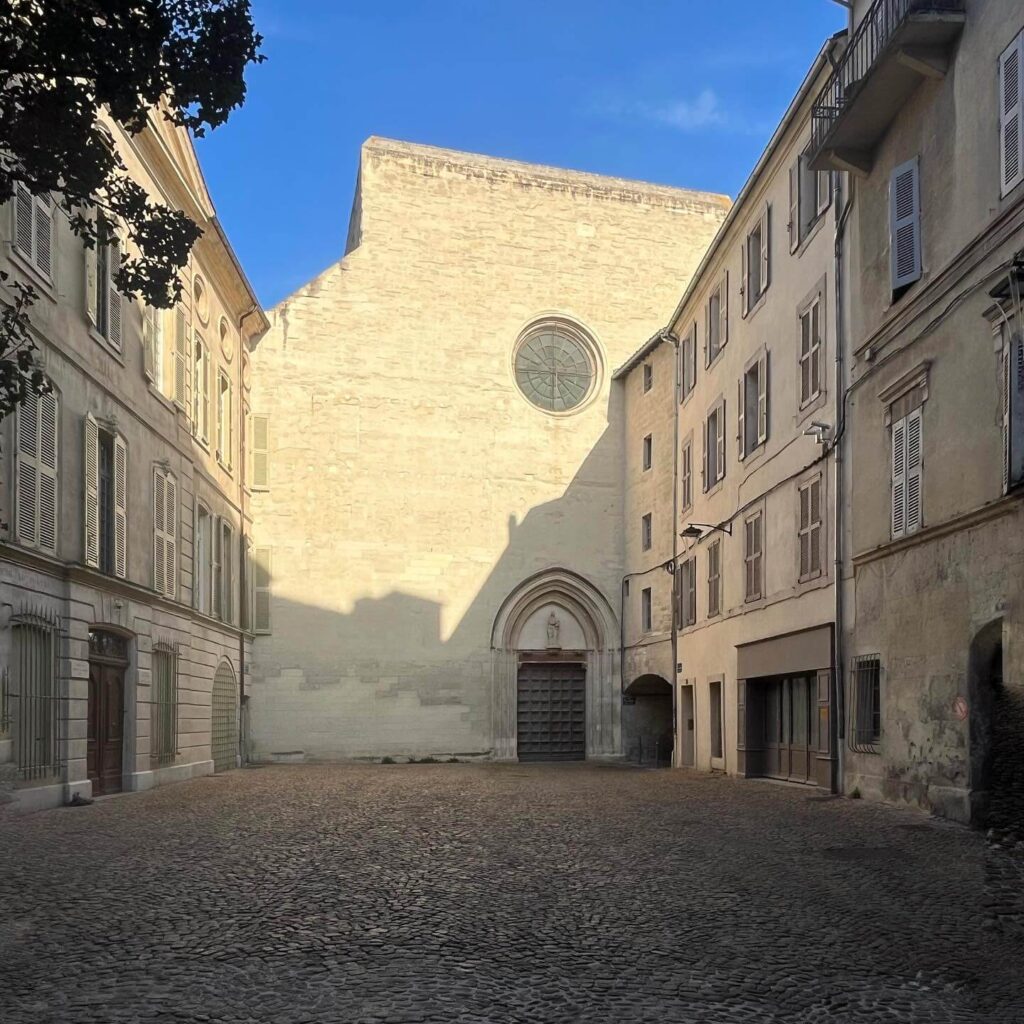
Its historic center is beautiful to explore, and the short drive to Pont du Gard makes it easy to fit both destinations into your itinerary.
Nîmes
If Roman history is one of the main reasons you’re visiting the region, Nîmes is hard to beat.
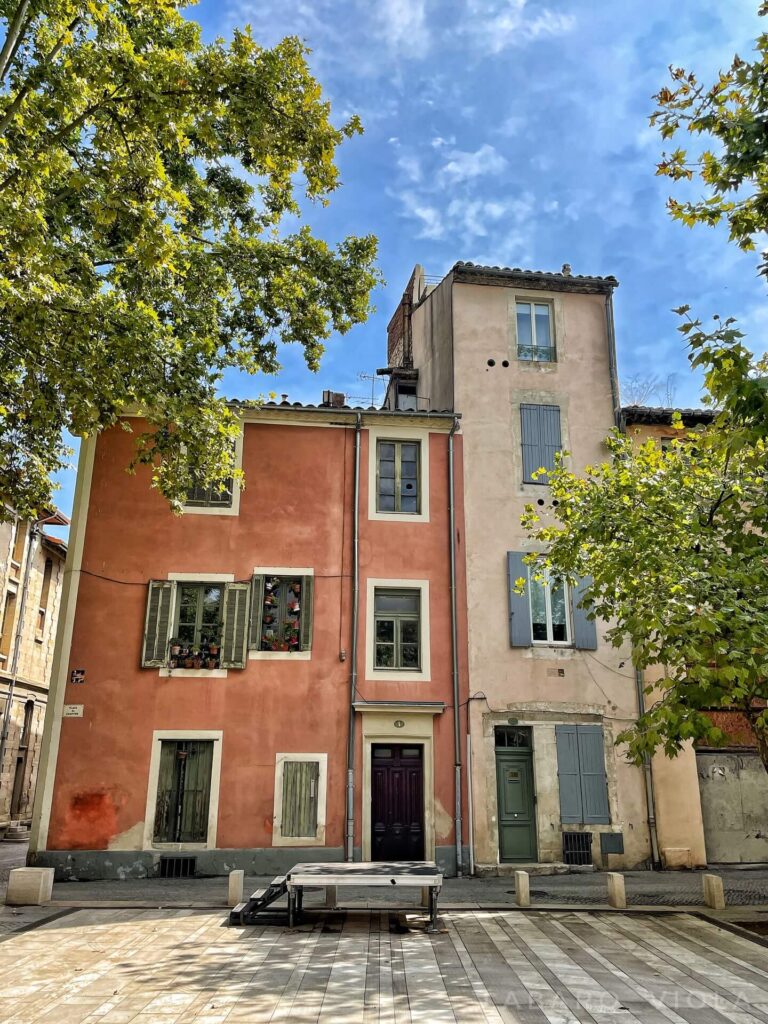
The city is home to some of the best preserved Roman monuments in France, including an impressive amphitheater and the Maison Carrée. Staying here allows you to connect the story of Pont du Gard with the city it was originally built to serve.
Uzès
For travelers looking for something a little quieter, Uzès is a wonderful option.
This charming town is filled with attractive streets, markets, cafés, and historic buildings. It feels more relaxed than larger cities like Avignon and Nîmes while still offering easy access to Pont du Gard.
In many ways, Uzès provide the classic southern France atmosphere that many travelers hope to find.
Suggested Pont du Gard Day Trip Itinerary
If you’re wondering how to structure your visit, I think a relaxed half day or full day itinerary works best.
Start your morning by arriving early and heading straight to the monument. This is usually when the site is at its quietest, making it easier to enjoy the views and take photographs before larger crowds arrive. Spend some time walking around the aqueduct and exploring a few of the viewpoints along the river.
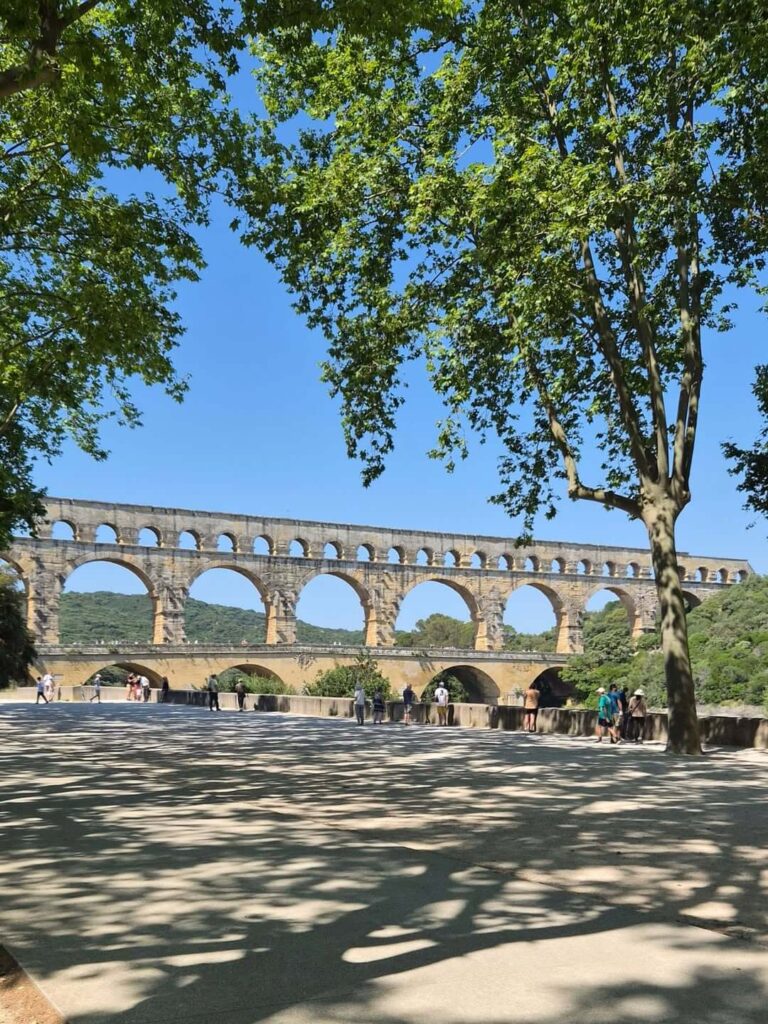
Later in the morning, visit the museum and visitor center. Understanding how the aqueduct functioned adds a lot of context to the experience and helps bring the history of the site to life.
Around lunchtime, take a break and enjoy a meal nearby or find a scenic spot to relax by the river.
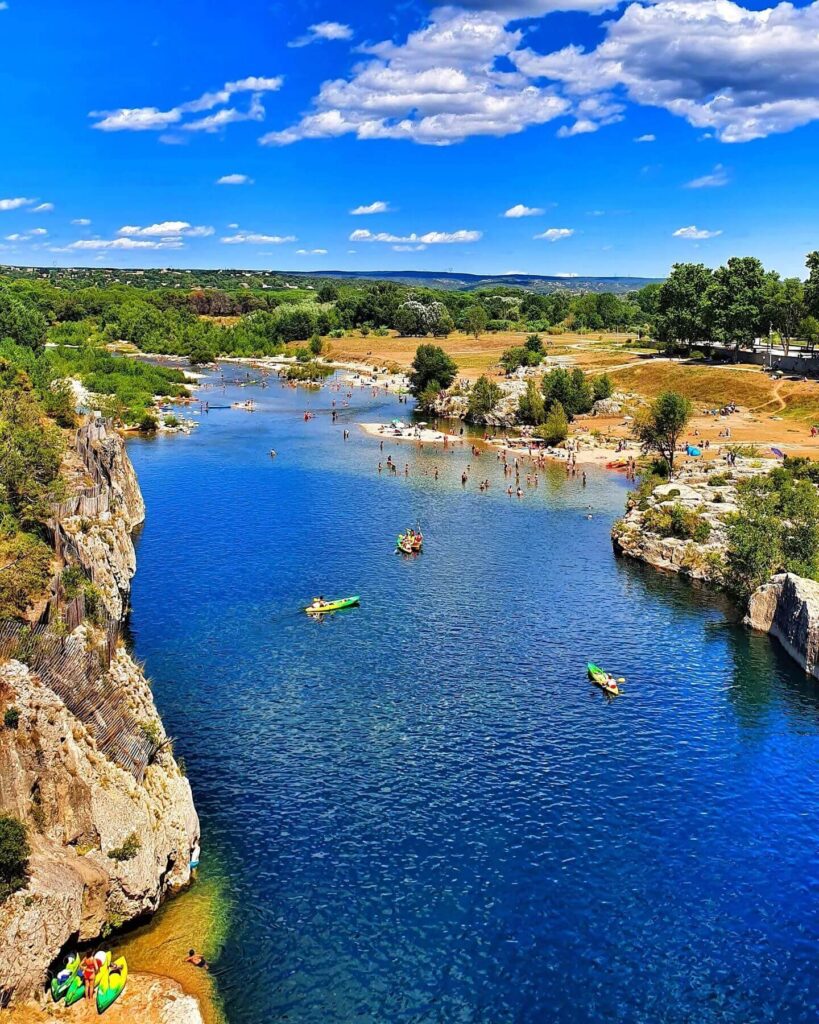
During the afternoon, you can choose how active you want your visit to be. Some people spend time swimming in the Gardon River, while others rent kayaks and experience the monument from the water. If neither appeals to you, the walking trails around the site offer excellent scenery and some of the best viewpoints.
If possible, finish your day back at the riverbank. Watching the sunlight illuminate the arches during late afternoon is one of the most memorable moments of a visit to Pont du Gard and a perfect way to end your time there.
Common Mistakes to Avoid at Pont du Gard
A little planning can make your visit to Pont du Gard much more enjoyable.
One of the most common mistakes is arriving in the middle of the day during summer. Temperatures can be quite high, and the site tends to be busiest between late morning and early afternoon. If possible, visit early in the morning or later in the day when it’s cooler and less crowded.
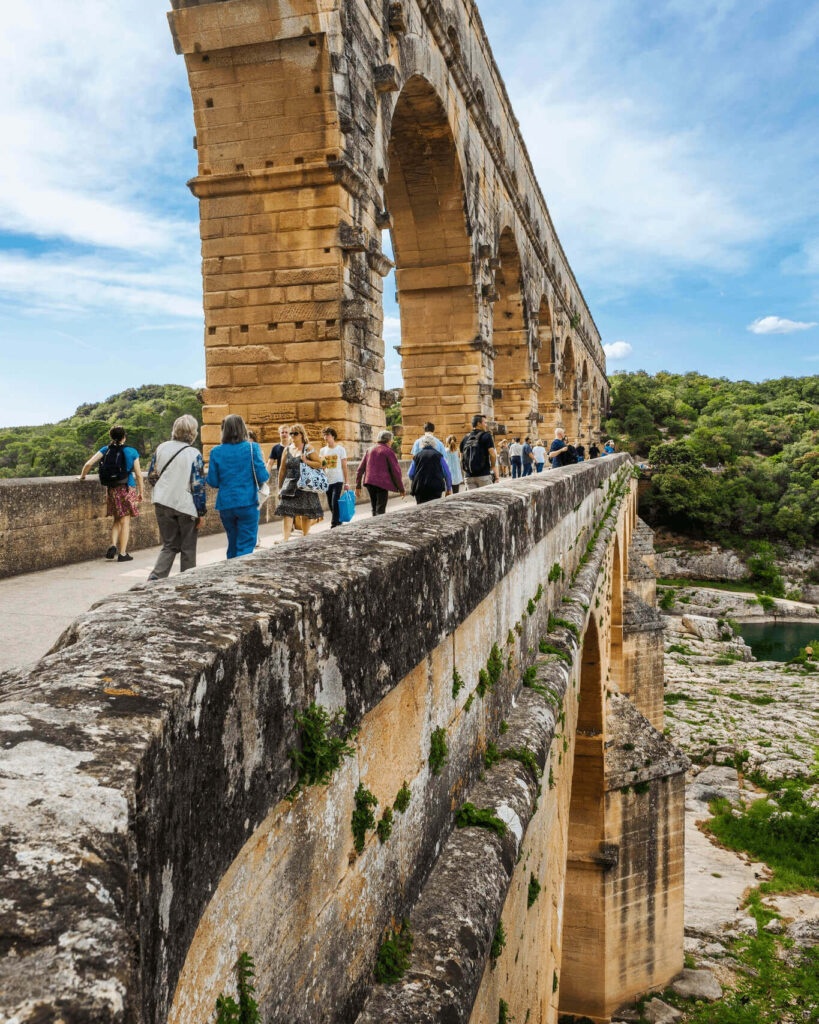
Another mistake is underestimating how much walking is involved. Pont du Gard is more than just the aqueduct itself. Between the viewpoints, riverside paths, museum, and trails, you’ll likely cover more ground than expected, so comfortable shoes are a good idea.
Many visitors also skip the walking trails and head straight back to their car after seeing the bridge. That’s a shame because some of the best views are found away from the main viewing areas. Even a short walk can reward you with a completely different perspective of the monument.
Finally, don’t rush your visit. Pont du Gard is often treated as a quick photo stop, but spending a few extra hours exploring the site, riverbanks, and surrounding trails makes the experience much more rewarding.
Final Thoughts on Visiting Pont du Gard
Pont du Gard ended up being one of my favorite historical sites in southern France. The aqueduct itself is impressive, but what makes the visit memorable is everything around it. Between the riverside setting, scenic walking trails, museum exhibits, and opportunities for swimming or kayaking, there’s much more to experience than I expected.
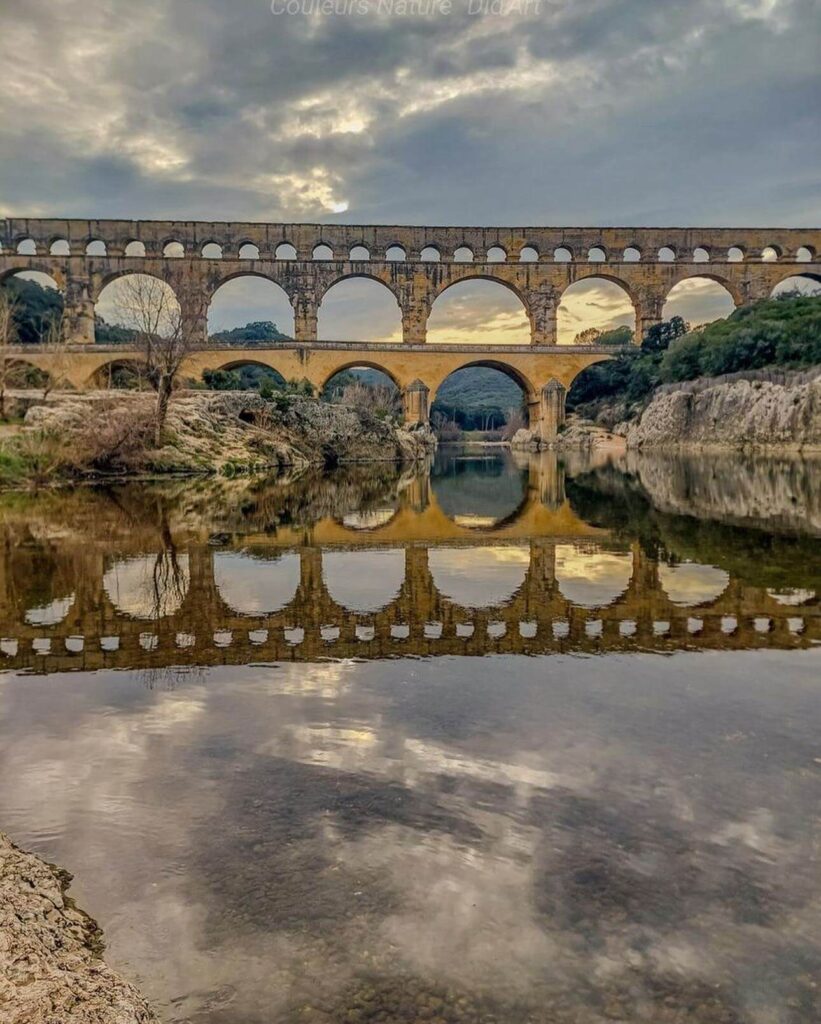
If you’re exploring Provence or Occitanie, I think Pont du Gard is well worth adding to your itinerary. Whether you’re interested in history, photography, or simply spending a relaxing day outdoors, it offers a great mix of culture and nature.
My biggest recommendation is to slow down and give yourself at least a few hours here. The monument may be the main attraction, but taking time to explore the wider site is what makes a visit to Pont du Gard truly special.