


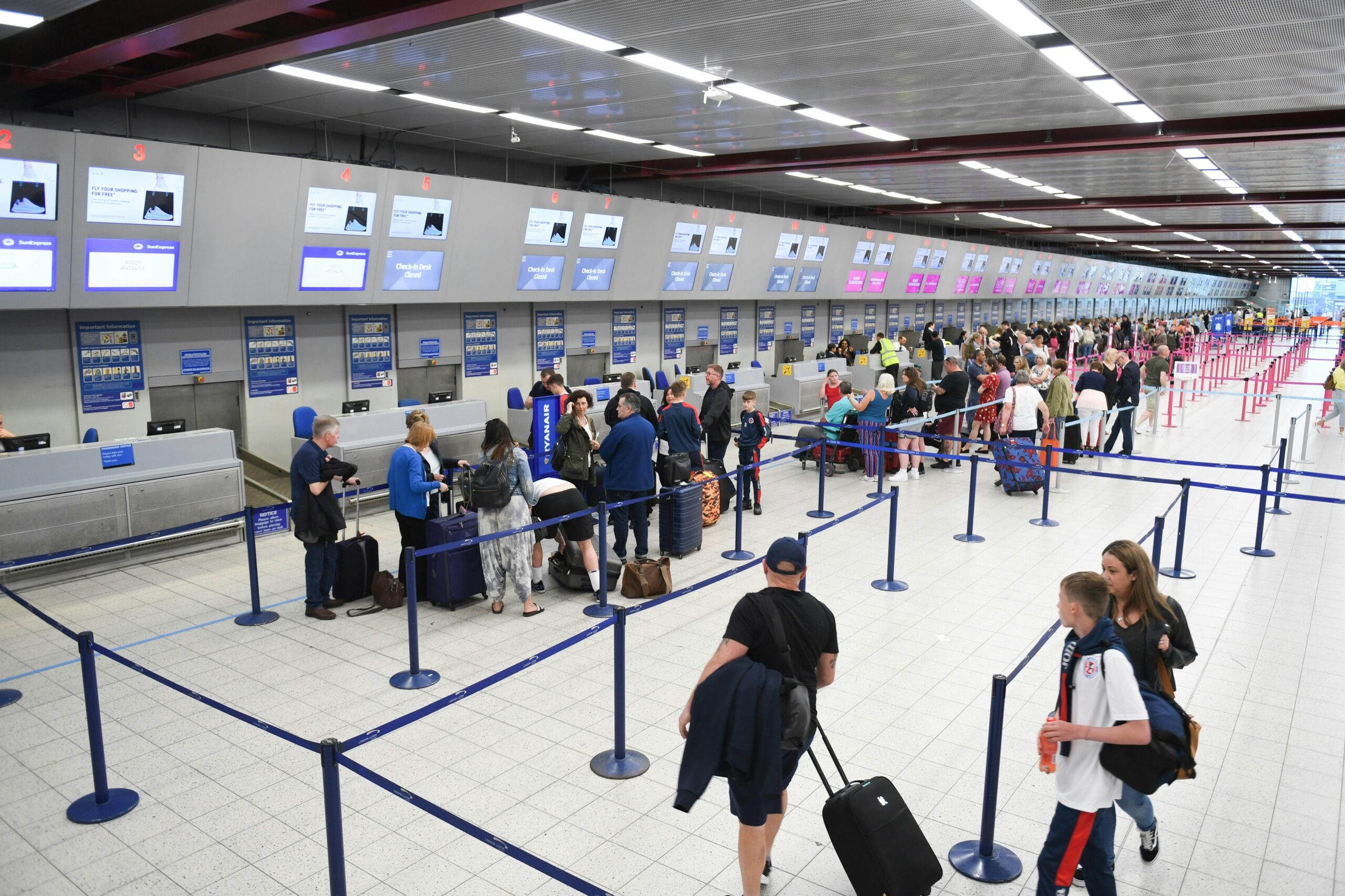
Landing in Paris this month with a tight connection is a gamble. So is landing in Milan, Geneva, or Vienna. The reason isn’t weather or strikes. It’s a new EU computer system called the Entry/Exit System, or EES, and it’s turning routine passport checks into waits that stretch past three hours at some of Europe’s busiest airports.
EES went fully live on April 10, 2026, after a rollout that started back in October 2025. It replaces the old passport stamp with fingerprints and a facial scan for most non-EU travelers entering or leaving the Schengen Area, including anyone flying in on a U.S., UK, or Canadian passport. Simple in theory. In practice, it’s created the kind of chaos that’s now landing on the front pages of NPR and Euronews.
Why a Passport Scan Is Taking Three Hours
Before EES, a border officer glanced at your passport and stamped it in 20 to 25 seconds, according to IATA. Now, every first-time entry into the system requires capturing fingerprints, a facial image, and travel document data all at once. IATA says that step alone can take 90 seconds when the kiosks and staffing are working exactly as planned. They rarely are.
Multiply that by hundreds of passengers landing within the same 20-minute window, and a two-minute delay per traveler becomes a line that snakes past baggage claim. Euronews called it a “systemic failure” back in April, and the numbers since then haven’t improved much.
Paris Charles de Gaulle has been the most consistently disrupted major hub, with two-to-four-hour peaks. Geneva has clocked the longest single waits, up to four hours. Vienna, Brussels, Madrid, Barcelona, and Palma have all hit the three-hour mark at various points this summer.
The Milan Flight That Left Without Its Passengers
One incident sums up the stakes better than any statistic. At Milan’s Linate airport, an EasyJet flight to Manchester was supposed to carry 156 passengers. After hours stuck in EES queues, only 34 made it to the gate in time. The other 122 watched their own plane push back without them.
That’s not a hypothetical risk. That’s what’s happening on a regular Sunday in July 2026.
Airport and airline trade groups aren’t staying quiet about it either. On July 1, ACI Europe, Airlines for Europe, and IATA sent a joint letter to European Commission President Ursula von der Leyen, warning that the rollout had hit a “critical point” and asking Brussels to allow border posts to pause EES checks whenever volume overwhelms their capacity. The EU has so far said no, though it has admitted to “20 difficult spots” where lines have piled up.
The timing makes it worse. European airports are bracing for roughly 40 million more passengers in July and August than they handled over the prior two months. A tourism council cited by industry outlet ETIAS has warned that EES bottlenecks put as many as 41 million arrivals at risk of delay before the system stabilizes.
What This Means If You’re Flying to Europe This Summer
None of this means cancel your trip. It means budget your time differently.
Forbes and Thrifty Traveler both recommend adding 90 minutes to two hours on top of your normal airport arrival window if you’re a non-EU passport holder crossing into the Schengen Area. If you’re flying long-haul from the Gulf, Asia, or the Americas into a major hub like CDG or Frankfurt, push that to three or four hours of buffer, especially for a connecting flight.
A few things worth knowing before you go:
There’s no automatic compensation for a missed connection caused by a border-control line. Passport control is a government function, not something your airline is on the hook for. If your entire itinerary is booked as a single ticket, though, you’re generally protected and the airline will rebook you.
If you’re staring down a line that threatens your flight, ask an airport employee if expedited help is available. Some travelers have reported getting escorted to the front in genuine emergencies, though it’s not guaranteed and depends entirely on the airport and the mood of the staff that day.
Registering your fingerprints and photo happens only once. If you’ve already gone through EES on a prior trip this year, your subsequent crossings should be faster, since the system just verifies rather than enrolls you from scratch.
Is Relief Coming, or Just More Rollout?
The EU isn’t backing off EES. Officials are, however, weighing whether to delay the related ETIAS pre-travel authorization system, which was due to launch later this year and would add yet another layer of screening on top of EES. Pushing ETIAS back wouldn’t fix today’s lines, but it would stop the EU from stacking a second new system on top of one that’s already struggling.
[INTERNAL LINK: What is ETIAS and when does it launch]
For now, the fix is mostly on the airport side: more kiosks, more staff, and software patches to speed up first-time enrollments. Wego’s travel blog has been tracking live queue estimates by airport this summer, which is worth a check the morning of your flight if you’re routing through one of the usual trouble spots.
The Bottom Line for Travelers
If your itinerary this summer runs through Paris, Geneva, Vienna, Madrid, Barcelona, or Milan, build in extra time on both ends of the trip, not just departure. Check your specific airport’s current queue reports the day before you fly, keep your connection window generous if you’re booking separate tickets, and don’t assume the stamp-and-go passport check you remember from your last European trip still applies. It doesn’t, not anymore.
Photos by Phil Mosley and Nejc Soklič on Unsplash.