
Discovering San Francisco’s Most Photogenic Locations
San Francisco stands as one of America’s most visually stunning cities, a place where every corner offers a potential frame-worthy shot. From the iconic Golden Gate Bridge shrouded in mysterious fog to the vibrant street art murals painted across the Mission District, the city has earned its reputation as a photographer’s paradise.
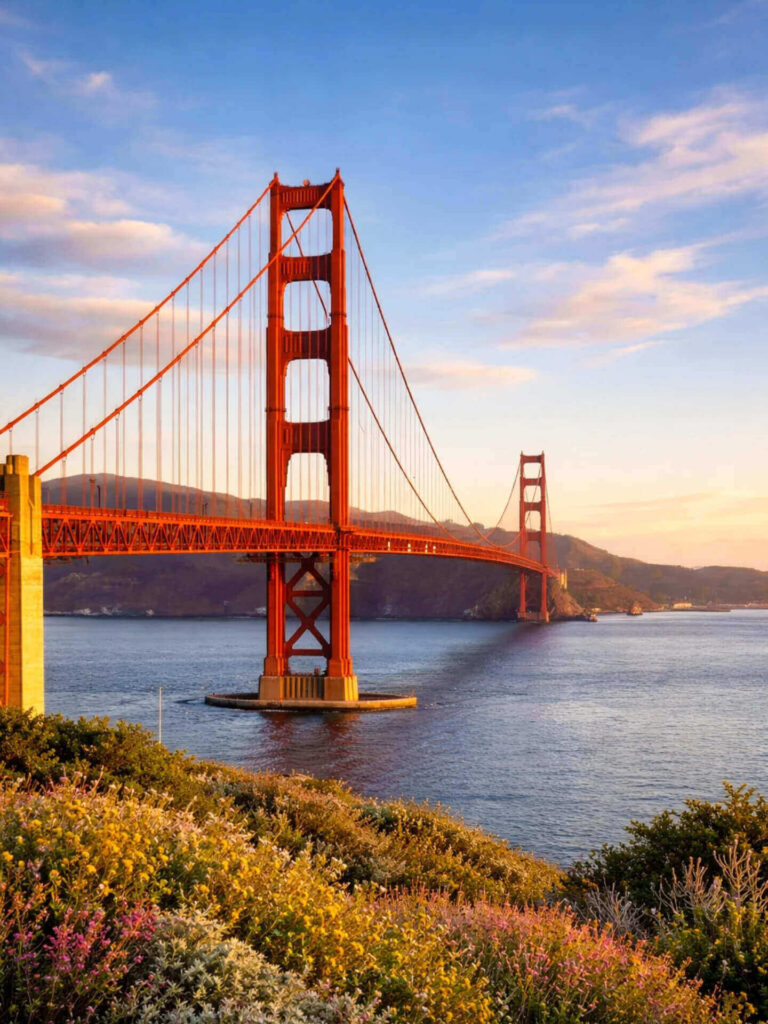
The dramatic hills, Victorian architecture, moody atmosphere, and diverse neighborhoods create an endless array of backdrops for both professional photographers and casual Instagram users looking to capture the essence of the Bay Area.
What makes San Francisco particularly special for photography is the unique interplay of natural and urban elements. The Pacific Ocean’s rolling waves meet urban development, creating tension and beauty in equal measure. Fog rolls through the streets like a character in its own right, dramatically transforming the cityscape throughout the day. The Golden Gate Bridge, one of the world’s most recognizable structures, looms large in the consciousness of visitors and locals alike, but there’s so much more to discover beyond this famous landmark.
This comprehensive guide takes you through 30 of the most instagrammable places in San Francisco, organized by neighborhood to help you plan your photography adventures.
Whether you’re seeking hidden gems known only to locals or ready to tackle the city’s most famous viewpoints, we’ve compiled the ultimate photo guide that covers everything from secret photography spots in San Francisco to the best places for street photography. You’ll discover not just where to go, but when to go, what to bring, and exactly how to capture that perfect shot that’ll make your followers stop scrolling.
Table of Contents
Photography Tips for San Francisco
Before diving into specific locations, let’s talk about how to maximize your photography in San Francisco. The city’s famous fog is both a blessing and a curse. Summer mornings, particularly July and August, bring the thickest fog. If you’re chasing clear Golden Gate Bridge shots, head out early in the morning the fog typically burns off by midday. Conversely, if you want moody, atmospheric shots with dramatic fog, the early morning hours are your golden window.
Weather in San Francisco is notoriously unpredictable, so layering is essential. You might start your morning needing a jacket and end your afternoon in just a t-shirt. Bring a light fleece, windbreaker, and comfortable walking shoes because you’ll be doing plenty of hiking to reach the best viewpoints. Don’t plan on driving between every location San Francisco’s public transit system, BART and Muni buses, can get you most places, and parking in popular tourist areas is nightmarish and expensive. A Visitor Passport gets you unlimited transit access and discounts at attractions.
The best time to photograph San Francisco varies by what you’re shooting. Golden hour that magical window of warm, diffused light just after sunrise or before sunset is crucial for capturing the Golden Gate Bridge in the best light. Sunrise at Battery Spencer or Hawk Hill offers soft, glowing light that makes the bridge look ethereal. Sunset from Twin Peaks or Marshall’s Beach provides warm orange and pink tones that make the city glow. Plan to arrive 30-45 minutes before sunset to claim a good spot and prepare your camera settings.
30 Most Instagrammable Places in San Francisco
Golden Gate & The Presidio
1. Golden Gate Bridge – Battery Spencer Viewpoint
Battery Spencer is unequivocally the most iconic viewpoint for the Golden Gate Bridge, offering the front-facing perspective that appears on countless postcards and Instagram feeds. Located on the Marin side of the bridge, this vantage point positions you looking directly at the bridge’s towering towers and suspension cables, with San Francisco’s skyline framed perfectly in the background. The vista is particularly dramatic on clear days when the city’s buildings rise sharply against blue skies, but equally mesmerizing when fog weaves through the bridge’s orange cables.
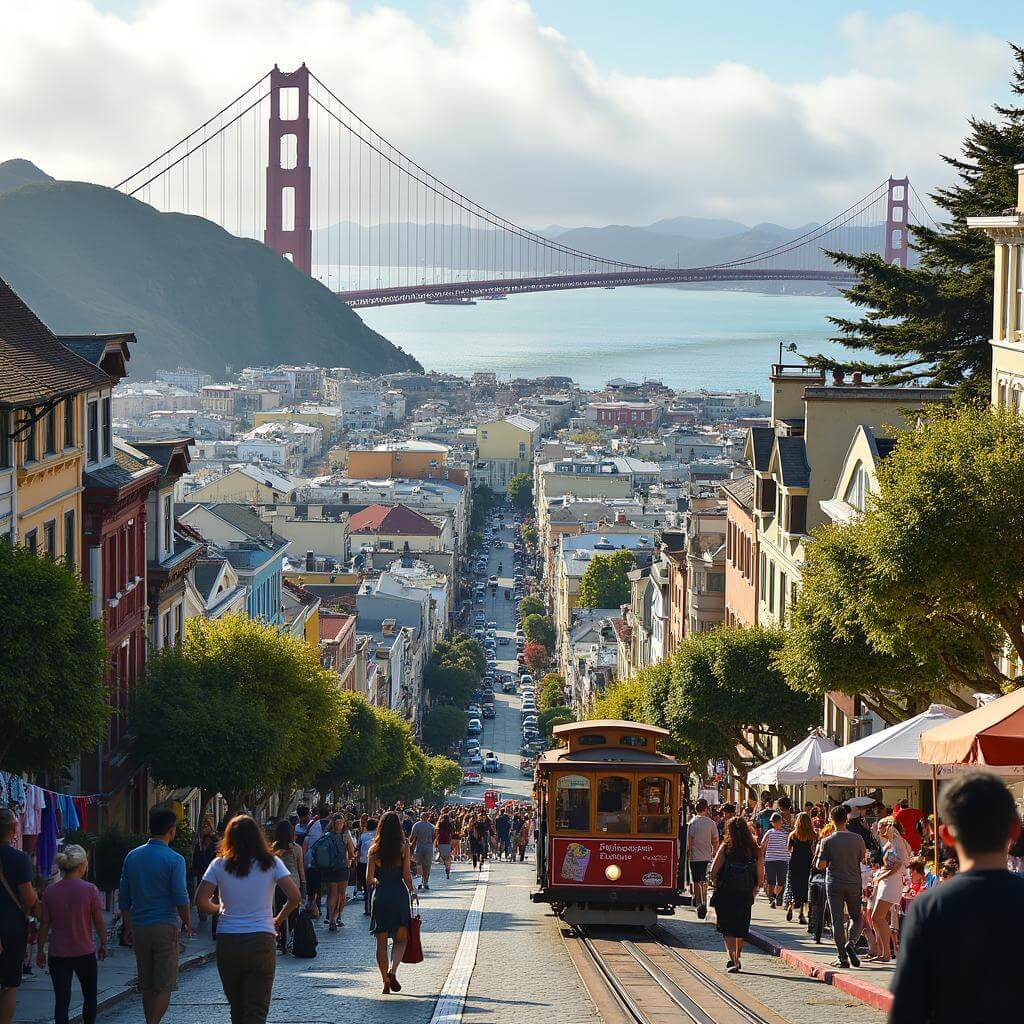
Best time to visit: Early morning offers the clearest skies and best light, while sunset provides warm orange tones that complement the bridge’s International Orange color perfectly.
Pro tip: Arrive at least 45 minutes before sunrise or sunset. Bring a polarizing filter to reduce glare and enhance the blue sky. For the Instagram-worthy shots, shoot from the far left of the viewpoint where you can frame some foreground elements along with the bridge and city.
Free or paid: Free. Located at Battery Spencer, accessed via Conzelman Road on the Marin Headlands side.
Location on Google Maps: Conzelman Road, Sausalito, CA 94965 (Marin Headlands)
2. Golden Gate Overlook – Presidio Side
While Battery Spencer dominates the visitor traffic, the Golden Gate Overlook on the Presidio side offers a less crowded alternative with equally stunning views. Positioned on the San Francisco side of the bridge, this overlook provides a slightly different angle one that showcases the bridge spanning across the Golden Gate strait with the Marin Headlands rising dramatically in the background. The perspective captures the bridge’s scale and engineering more impressively than many other viewpoints, and you’ll photograph the bridge with fewer tourists photobombing your shots.
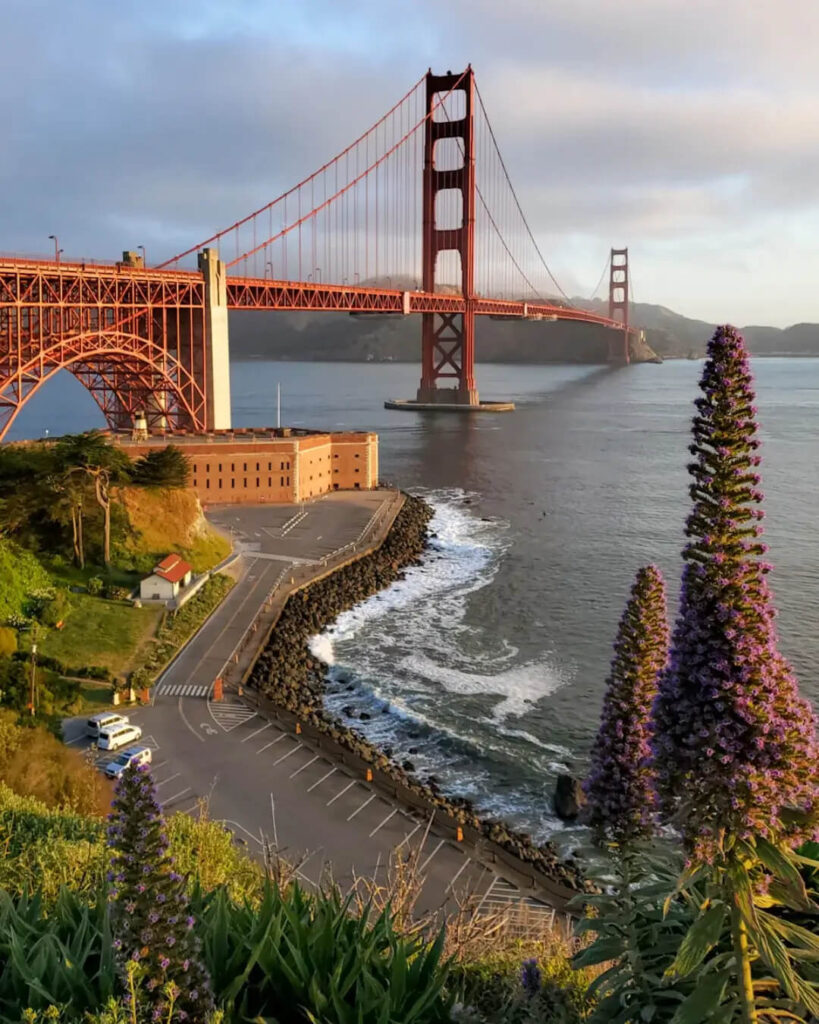
Best time to visit: Late afternoon provides warm light across the bridge, while overcast mornings create moody, atmospheric shots perfect for conveying the bridge’s commanding presence.
Pro tip: Hike to nearby Battery Chamberlin for even more unique angles. Bring a wide-angle lens to capture the bridge’s full span. The overlook is less crowded than Battery Spencer, making it ideal if you want to linger and experiment with different compositions.
Free or paid: Free. Located within the Presidio, accessed via scenic walking paths.
Location on Google Maps: Presidio of San Francisco, The Presidio, San Francisco, CA 94129
3. Marshall’s Beach
Marshall’s Beach offers a refreshingly different perspective on the Golden Gate Bridge one that incorporates dramatic rocky foreground elements into your composition. This secluded beach sits directly beneath the bridge’s south tower, allowing photographers to capture the massive orange structure rising majestically above weathered rocks and turbulent water. The rugged, moody aesthetic here differs dramatically from the postcard-perfect Battery Spencer shots, making it a favorite among photographers seeking more artistic, atmospheric images of this world-famous landmark.
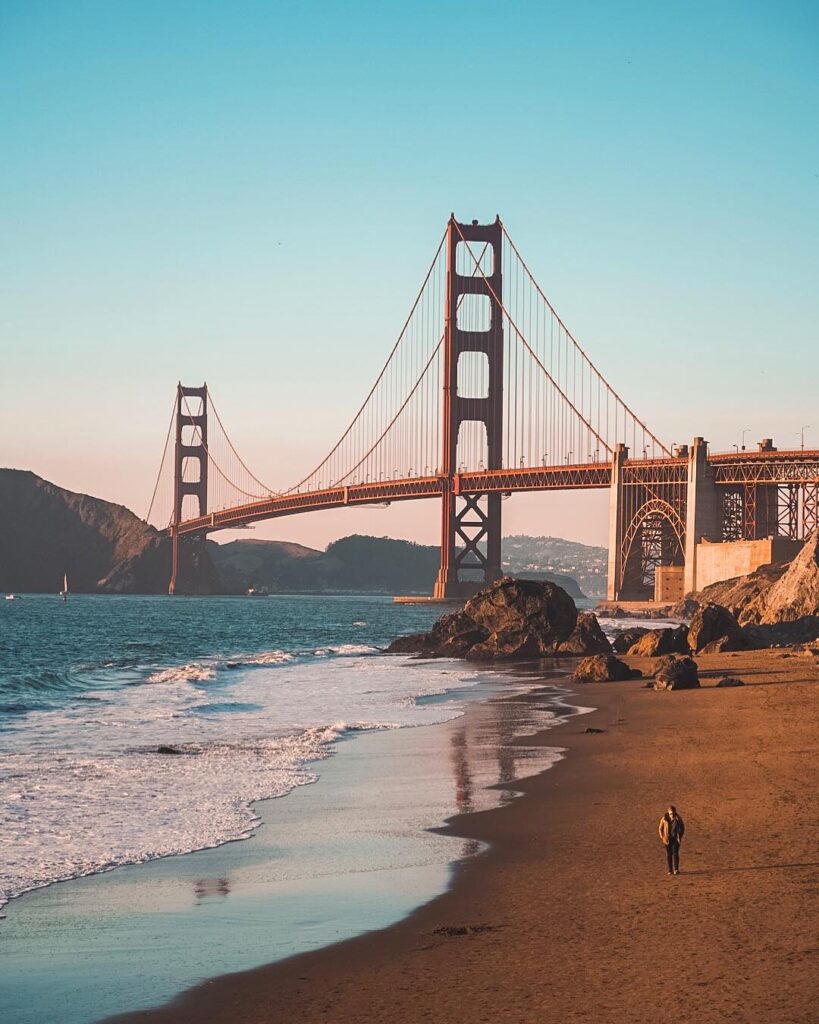
Best time to visit: Golden hour (sunrise or sunset) illuminates the rocks with warm light while the bridge’s shadows create dramatic contrast. Overcast days with moody skies work beautifully here.
Pro tip: The hike down is somewhat steep and rocky; wear sturdy hiking boots. Bring a tripod for long exposure shots that smooth out the water. Time your visit for low tide to access more beach area and find interesting rock formations to frame your shots.
Free or paid: Free. Accessed via the Presidio’s Lincoln Boulevard; limited parking available.
Location on Google Maps: Lincoln Boulevard, The Presidio, San Francisco, CA 94129
4. Baker Beach
Baker Beach presents the Golden Gate Bridge from yet another compelling angle this time with the sandy beach creating a softer, more inviting foreground than Marshall’s rocky shores. The expansive sandy beach curves gracefully before the bridge, and on sunny days, you can capture the bridge’s reflection shimmering in wet sand. The beach attracts locals and tourists alike, so there’s often interesting activity surfers catching waves, couples walking hand-in-hand, families building sandcastles all providing dynamic foreground elements for compelling compositions.
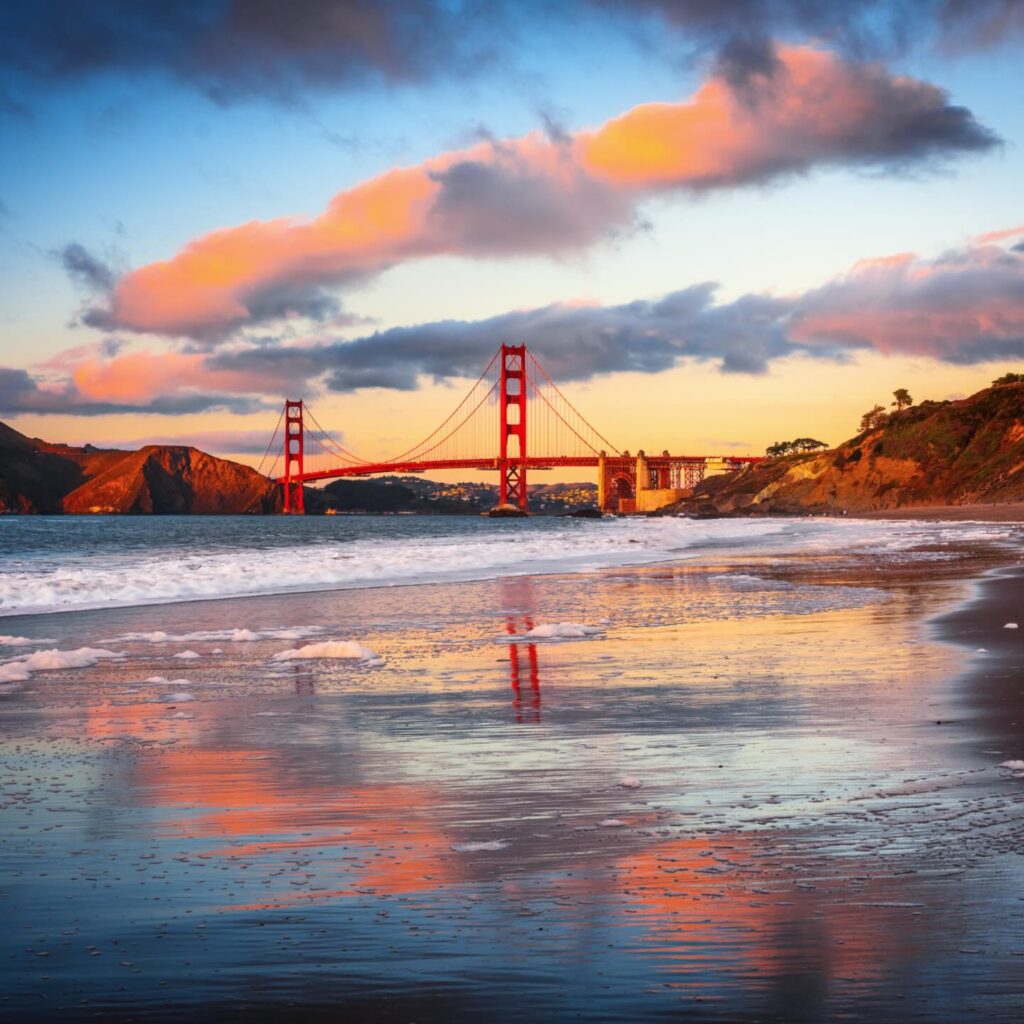
Best time to visit: Midday offers bright, clear light that makes the sand sparkle and the bridge stand out crisply. Overcast days create softer light ideal for capturing people enjoying the beach.
Pro tip: Shoot from the southern end of the beach where you get the best angle on the bridge. Use a telephoto lens to compress the distance between foreground and bridge, making the structure appear more prominent. Capture the interplay between beach-goers and the iconic landmark for more engaging photographs.
Free or paid: Free. Ample parking available; can get crowded on weekends.
Location on Google Maps: Gibson Road, The Presidio, San Francisco, CA 94129
5. Fort Point – Dramatic Under-the-Bridge Perspective
Fort Point offers photography opportunities unlike any other location a perspective shot directly up at the Golden Gate Bridge’s massive understructure. This Civil War-era fortress sits directly beneath the bridge’s south tower, allowing photographers to capture the iconic structure from an unusual, dramatic angle that emphasizes its sheer scale and engineering magnificence. The red-brick fort’s historic architecture combined with the bridge’s towering orange steel creates a compelling juxtaposition of historical and modern engineering.
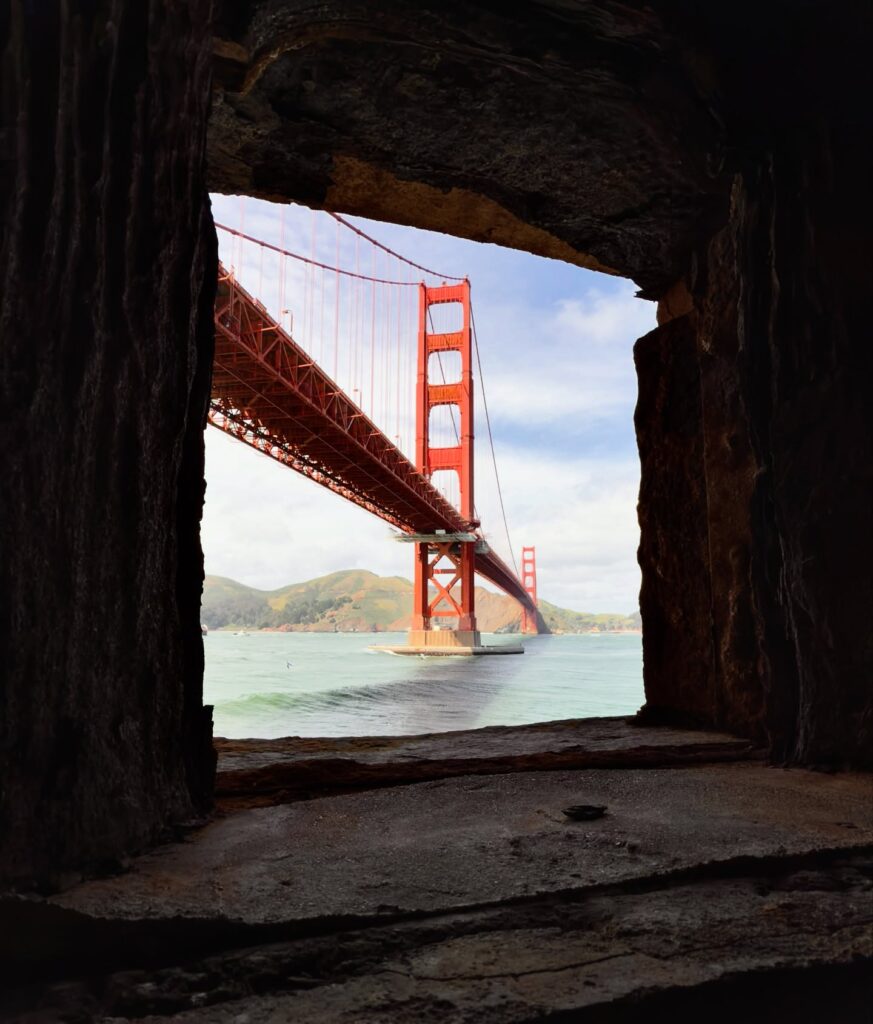
Best time to visit: Midday provides clear, bright light that highlights the bridge’s structural details. Afternoon light creates interesting shadows across the fort’s walls.
Pro tip: Use an ultra-wide-angle lens to capture the bridge’s full height. The gun ports of the fort create interesting framing opportunities. Shoot from different spots around the fort’s perimeter to discover varied compositions each position offers different angles on the bridge’s supporting cables.
Free or paid: Free to visit; museum access requires admission (approximately $7). Open Friday-Sunday, 10am-5pm.
Location on Google Maps: Fort Point, 1519 Henry Street, San Francisco, CA 94129 (The Presidio)
Lands End & Ocean Beach
6. Sutro Baths Ruins – Haunting Ocean Ruins
The Sutro Baths ruins stand as one of San Francisco’s most hauntingly beautiful locations, offering photographic opportunities that feel almost post-apocalyptic in their desolate beauty. Once a grand swimming complex built in the 1890s, these magnificent concrete pools were destroyed by fire in 1966. Today, the weathered concrete structures sit dramatically against the crashing Pacific Ocean, creating a moody, atmospheric scene that draws photographers seeking more artistic, melancholic imagery. The ruins practically beg for black-and-white photography, though color shots capturing the blues and greens of the water against grey concrete are equally striking.
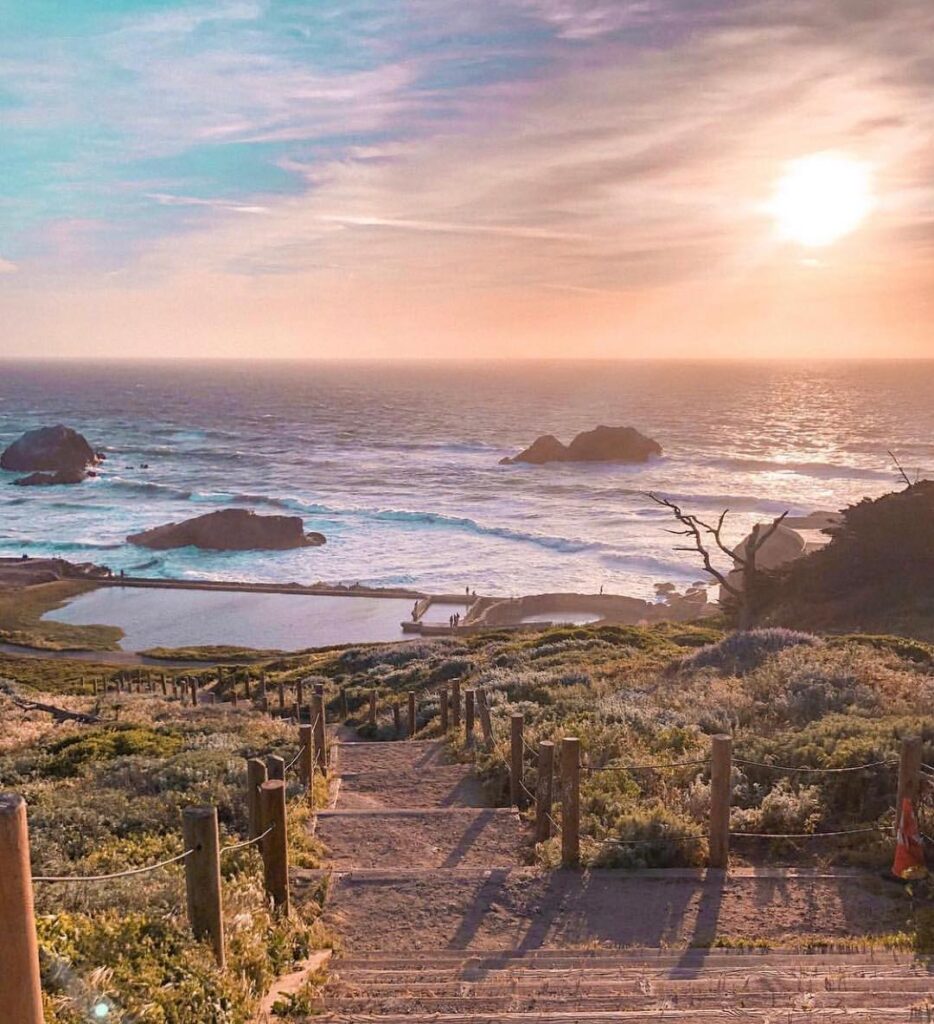
Best time to visit: Overcast days heighten the atmospheric, melancholic mood. Sunrise creates dramatic lighting across the concrete pools. Rough ocean days with crashing waves add dramatic energy to compositions.
Pro tip: Arrive early to beat crowds and capture light hitting the ruins at optimal angles. Use a telephoto lens to compress the background ocean and make waves appear closer and more dramatic. Experiment with black-and-white processing to emphasize the ruins’ architectural decay and textural elements.
Free or paid: Free. Located at the northwestern edge of San Francisco’s peninsula.
Location on Google Maps: Lands End Trail, 680 Point Lobos Avenue, San Francisco, CA 94121 (Sunset District)
7. Lands End Labyrinth – Rock Spiral on the Cliff
Hidden along the Lands End trail sits a stunningly artistic rock labyrinth, a spiraling arrangement of stones that creates a perfect geometric pattern against the dramatic cliff backdrop. This unique art installation sits perched on rocky cliffs overlooking the Pacific Ocean, making it an ideal location for creative photography. The geometric precision of the spiral, combined with the wild, untamed ocean landscape, creates a compelling visual contrast that makes for uniquely instagrammable compositions. The labyrinth’s location offers sweeping ocean vistas as bonus elements for your shots.
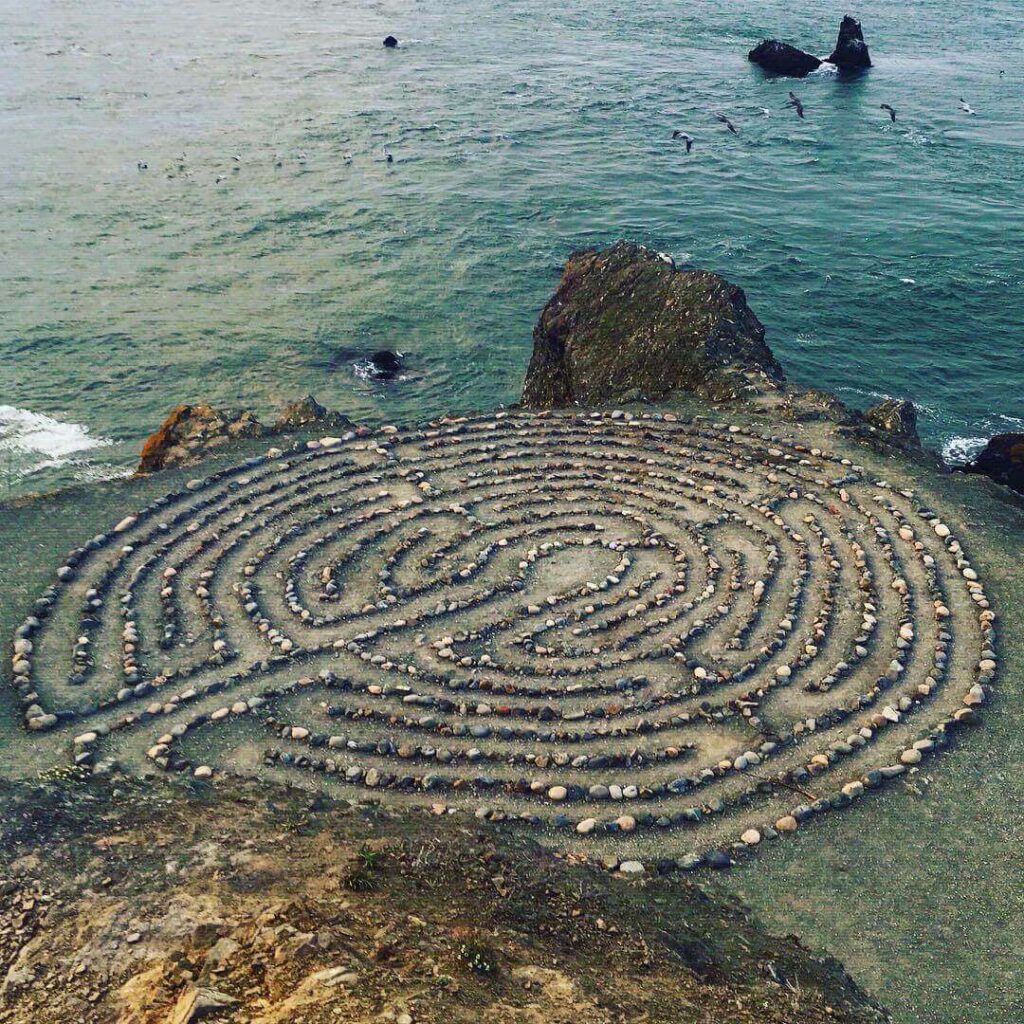
Best time to visit: Afternoon light provides warm tones across the rocks and water. Overcast conditions create moody backdrops. Clear days maximize visibility of the ocean vista.
Pro tip: Shoot from above the labyrinth to show its geometric spiral pattern most clearly. Use a wide-angle lens to capture the labyrinth in context with the dramatic cliffs and ocean behind it. The drone photography potential here is extraordinary, though check local regulations.
Free or paid: Free. Located along the Lands End Trail, accessible via the parking area at Point Lobos.
Location on Google Maps: Lands End Trail, San Francisco, CA 94121 (Sunset District)
8. Ocean Beach – Vast Pacific Coastline
Ocean Beach stretches for nearly two miles along San Francisco’s western edge, offering endless opportunities for compelling seascape and landscape photography. The vast sandy beach, backed by low cliffs and the Great Highway, presents multiple compositional possibilities. Depending on the season, you might capture serious surfers riding substantial waves, families enjoying summer sunshine, or dramatic storm conditions with wild waves churning. The beach has a raw, authentic San Francisco quality less polished than tourist-focused locations but infinitely more dynamic and genuine.
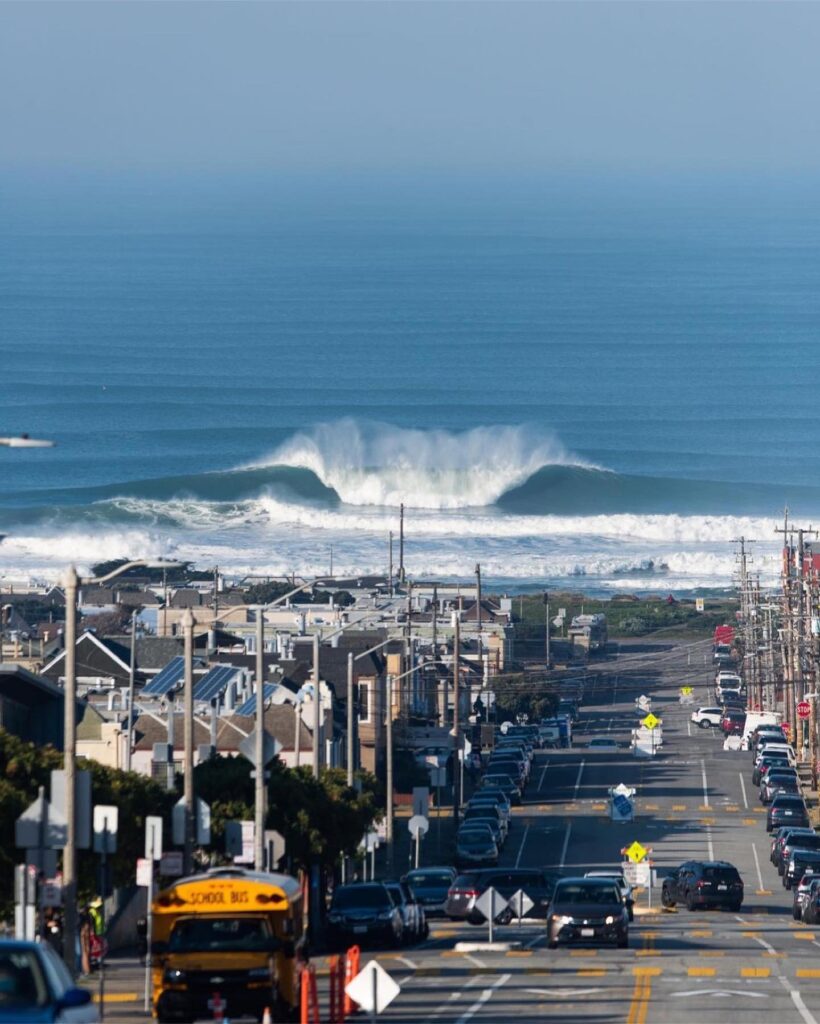
Best time to visit: Winter brings the biggest, most dramatic waves for dynamic action photography. Summer offers calmer conditions and more beach activity. Golden hour transforms the beach into a golden paradise with warm light across sand and water.
Pro tip: Use a polarizing filter to enhance the sky and reduce water glare. Experiment with leading lines created by the shoreline and waves. Capture the intersection between land, sea, and sky for compelling compositions. The beach changes dramatically with tides visit at low tide to access more sand and interesting rock formations.
Free or paid: Free. Ample parking available via the Great Highway.
Location on Google Maps: 1200 The Great Highway, San Francisco, CA 94121 (Outer Sunset)
Golden Gate Park
9. Conservatory of Flowers – Victorian Greenhouse Marvel
The Conservatory of Flowers stands as one of San Francisco’s most architecturally stunning buildings a Victorian-era greenhouse that seems plucked directly from a fairy tale. This ornate white structure, with its distinctive glass dome and elegant proportions, serves as a focal point in Golden Gate Park and a photographer’s dream. The building’s classical architecture contrasts beautifully with the natural garden elements surrounding it, providing rich compositional opportunities. The interior tropical greenhouse offers equally compelling photography, though interior lighting can be challenging.
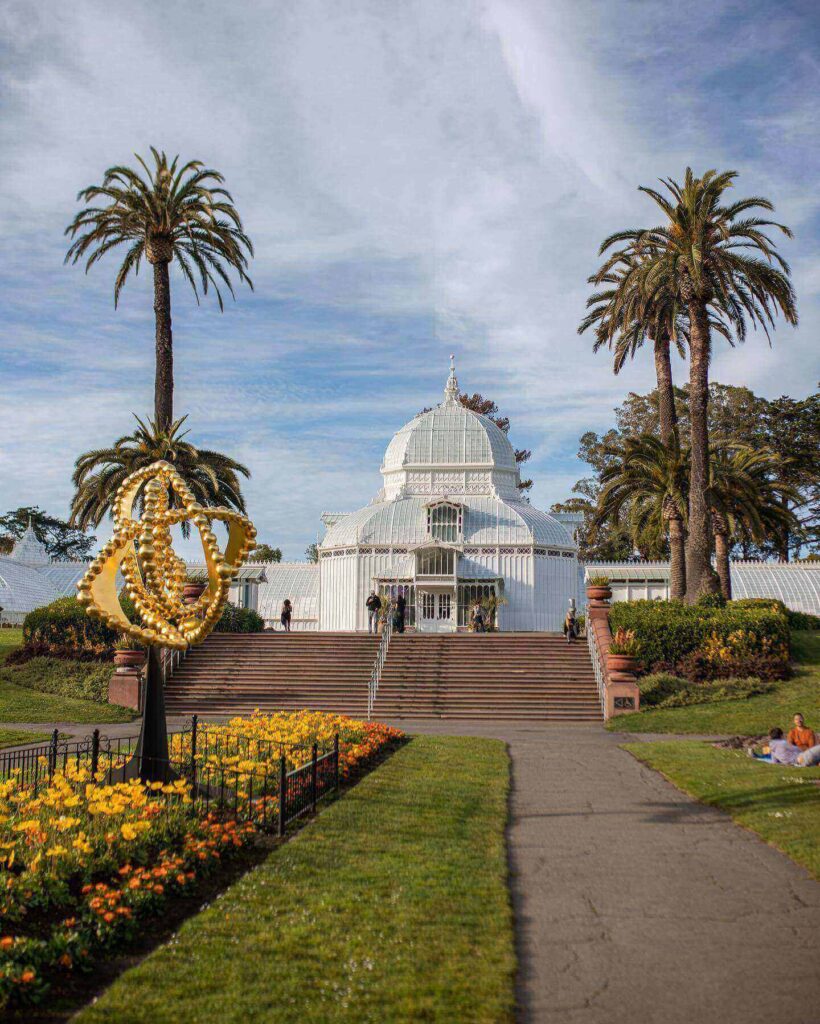
Best time to visit: Overcast days eliminate harsh shadows across the white exterior. Early morning provides softer light and fewer crowds. Spring and early summer bring the most vibrant flowers to the surrounding gardens.
Pro tip: Shoot from the adjacent lily pond for reflections of the building in the water. Use symmetry to emphasize the building’s classical proportions. Visit during the wildflower season for maximum color in surrounding gardens. The building’s white exterior reflects light beautifully watch for blown-out highlights on overcast bright days.
Free or paid: Paid. General admission $9-12; hours 10am-4:30pm Tuesday-Sunday.
Location on Google Maps: 100 John F. Kennedy Drive, San Francisco, CA 94118 (Golden Gate Park)
10. Japanese Tea Garden – Pagodas, Bridges & Cherry Blossoms
The Japanese Tea Garden transports visitors to a serene landscape inspired by classical Japanese design. Winding paths lead through carefully landscaped gardens featuring traditional pagodas, arched bridges, stone lanterns, and water features. The garden’s peaceful atmosphere and abundant photographic elements make it a favorite among photographers seeking to capture tranquil, contemplative imagery. Spring brings the spectacular cherry blossom season, when delicate pink blossoms frame the garden’s traditional structures, but the garden offers beautiful photography opportunities year-round.
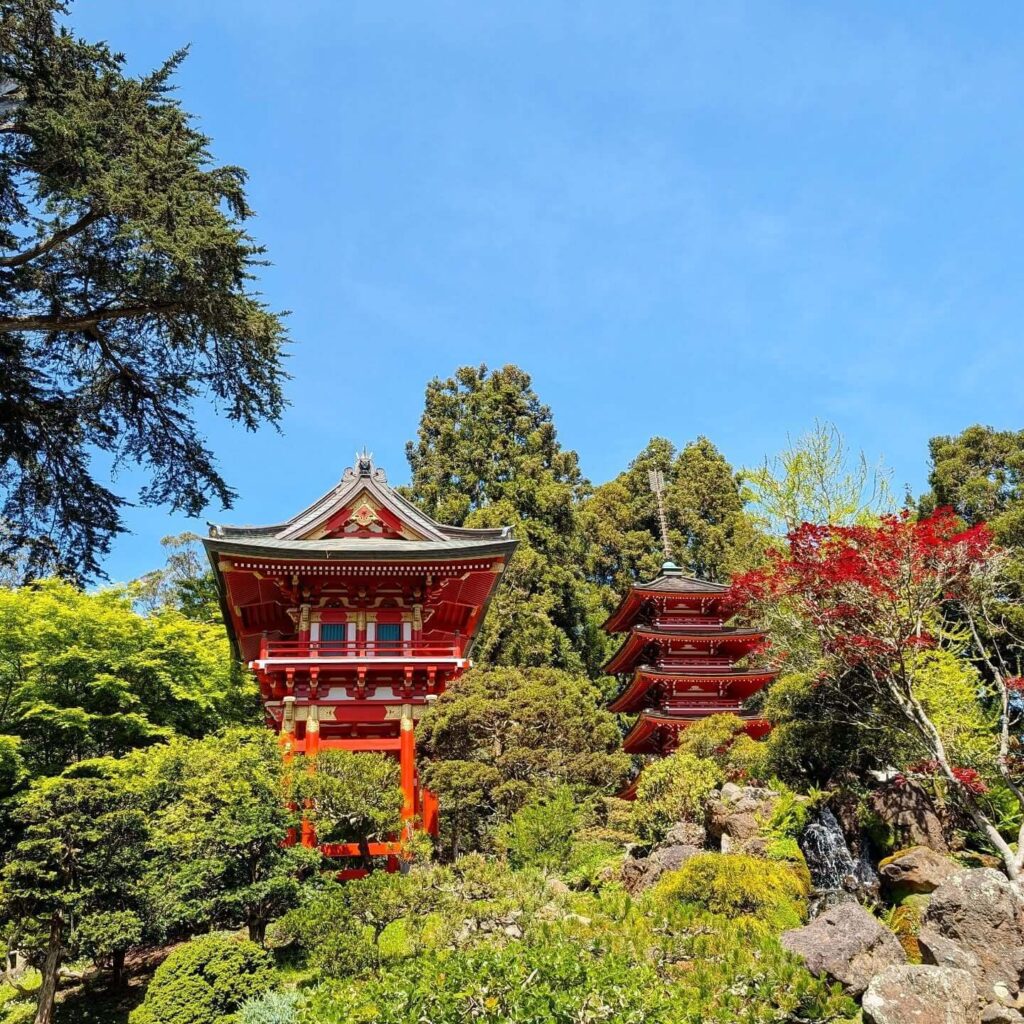
Best time to visit: Early morning (arrive when gates open) offers soft light and minimal crowds. Spring cherry blossom season brings stunning seasonal color. Autumn brings warm tones and red foliage.
Pro tip: Use the garden’s reflective water features to capture beautiful mirror images of trees and structures. Shoot through foliage to create layered, atmospheric compositions. The arched bridges offer perfect framing devices for background elements. Come very early to avoid crowds this is one of the park’s most popular locations.
Free or paid: Paid. Admission $13-16 depending on residency; hours 9am-6pm daily.
Location on Google Maps: 1881 Tea Garden Drive, San Francisco, CA 94118 (Golden Gate Park)
11. Queen Wilhelmina Tulip Garden & Dutch Windmill – Seasonal Tulip Paradise
This charming garden features a picture-perfect Dutch windmill surrounded by seasonal tulip displays, creating a scene that feels transported from the Netherlands. When the tulips bloom in spring typically March through May the garden transforms into an explosion of color, with hundreds of tulips in virtually every color imaginable. The classic wooden windmill, imported from the Netherlands, provides an iconic focal point for compositions, while the sweeping fields of tulips create dramatic, colorful foregrounds.
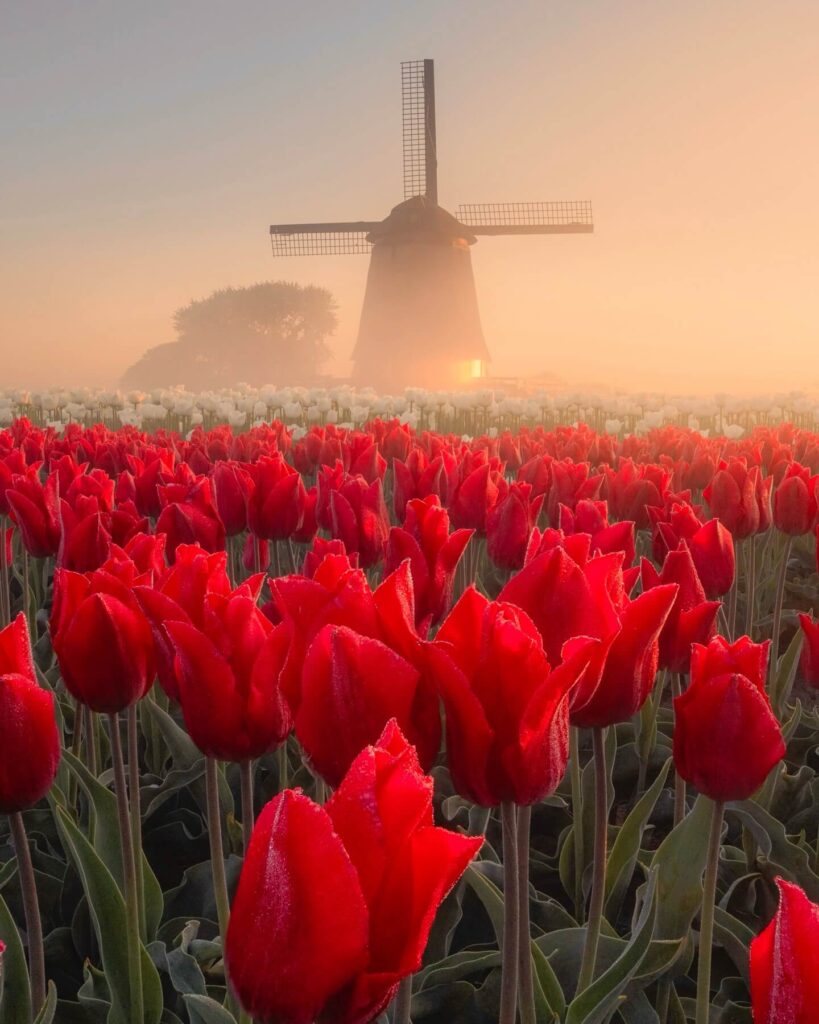
Best time to visit: Peak tulip bloom is late April through early May, when colors are most vibrant and varieties are most abundant. Morning light provides the clearest colors before afternoon glare washes them out.
Pro tip: Position yourself low to the ground to capture tulips as a prominent foreground element with the windmill in the background. Shoot during peak bloom to maximize color variety. Overcast days provide the most saturated flower colors without harsh shadows. Visit midweek to avoid weekend crowds.
Free or paid: Free. Accessible from the western end of Golden Gate Park.
Location on Google Maps: Golden Gate Park, San Francisco, CA 94118 (The Presidio area)
12. Stow Lake & Golden Gate Pavilion – Chinese Pavilion Reflections
Stow Lake, one of Golden Gate Park’s most scenic features, offers peaceful water views and picturesque landscapes. The highlight for photographers is the ornate Chinese pavilion, an elegant structure that creates stunning reflections in the calm lake water. The pavilion’s distinctive architecture, combined with its shoreline setting surrounded by lush vegetation, creates visually rich compositions. The lake also features a scenic bridge, island, and native plantings that provide multiple compositional options.
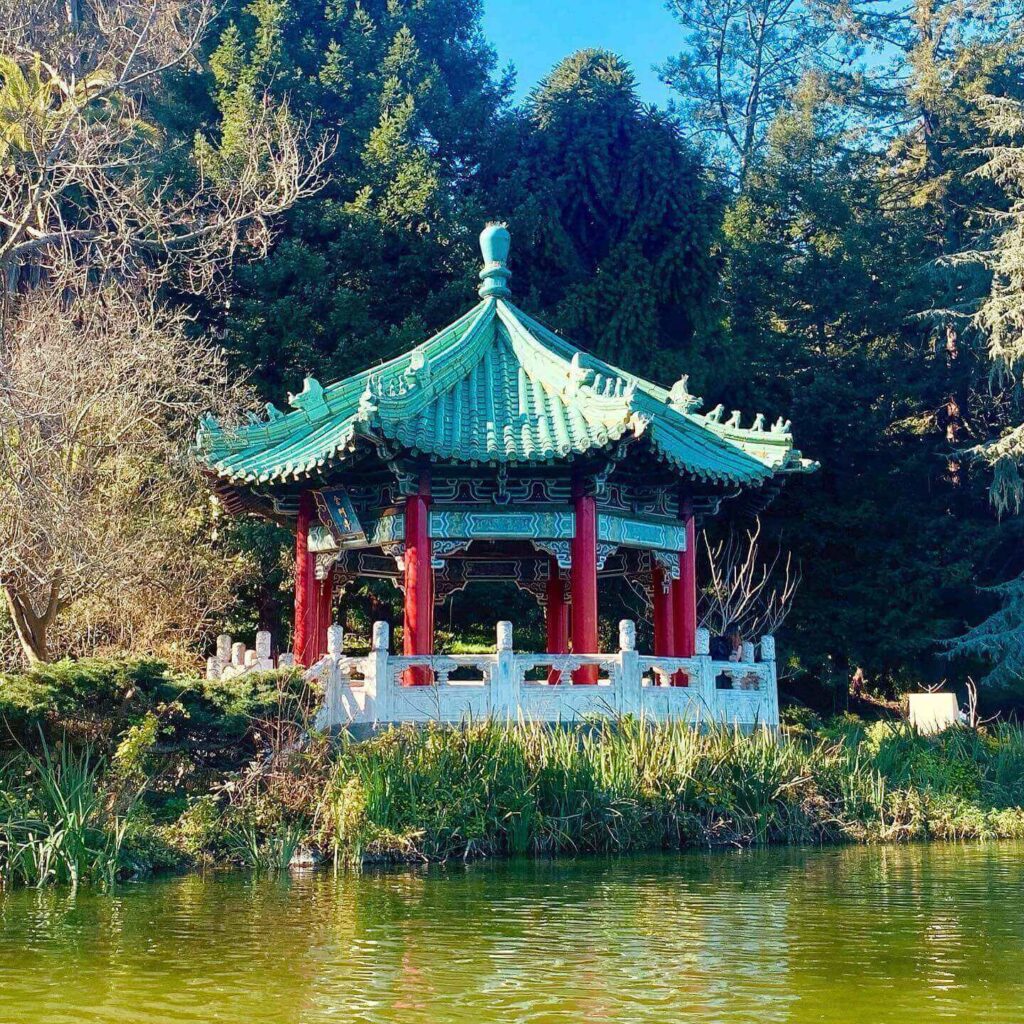
Best time to visit: Early morning when the lake is calmest, providing mirror-like reflections of the pavilion. Overcast days provide soft, even light ideal for capturing architectural details.
Pro tip: Position yourself so the pavilion’s reflection fills the lower half of your frame for symmetrical, balanced compositions. Use a polarizing filter to reduce glare on the water and enhance the pavilion’s colors. The lake’s perimeter walk reveals different angles constantly explore thoroughly to find your preferred viewpoint.
Free or paid: Free. Accessed from multiple points within Golden Gate Park.
Location on Google Maps: Stow Lake Drive, San Francisco, CA 94121 (Golden Gate Park)
Mission District & Castro
13. Clarion Alley Murals – Ever-Changing Street Art Gallery
Clarion Alley represents San Francisco’s thriving street art culture at its finest. This narrow alley in the Mission District serves as a constantly evolving gallery where local and international artists paint vibrant, socially conscious murals. Unlike static artworks, Clarion Alley’s pieces change frequently new artists paint over old work, ensuring the alley always offers fresh, current imagery. The variety of styles, colors, and messages creates infinitely compelling photography opportunities, with walls that literally shimmer with color and movement.
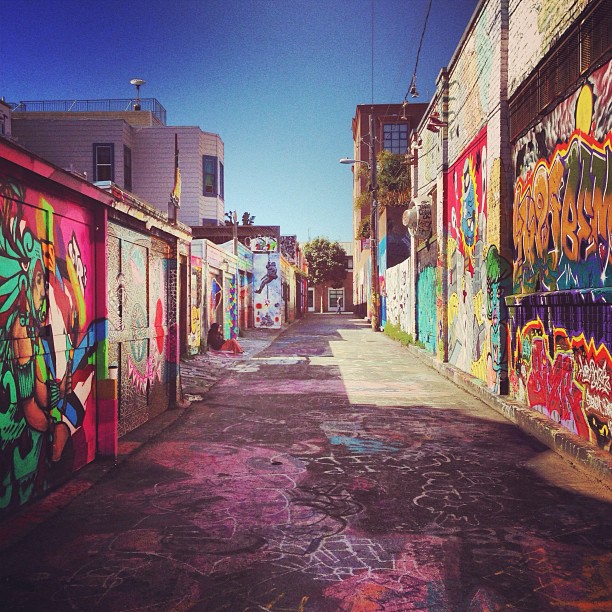
Best time to visit: Morning provides directional light that brings out mural colors beautifully. Overcast days offer even, shadow-free lighting ideal for photographing colorful artwork. Different times offer different wall illumination explore the alley from multiple times to find your preferred light.
Pro tip: Shoot straight-on to document entire murals; use perspective to show the alley’s scale and volume of art. Look for interesting layering where older art peeks through newer pieces these create compelling depth and storytelling. Capture street-level details and tags alongside major murals. Visit multiple times to document the alley’s evolution.
Free or paid: Free. Open to the public 24/7.
Location on Google Maps: Clarion Alley between 17th & 18th Streets, Mission District, San Francisco, CA 94103
14. Balmy Alley Murals – Vibrant Latino Heritage Murals
Balmy Alley stands as another essential street art location in the Mission District, distinguished by its focus on Latino cultural themes and heritage. Where Clarion Alley embraces constant change and artistic experimentation, Balmy Alley maintains more permanence, with many notable murals remaining in place for years. The alley celebrates Chicano and Latino culture, family, love, and community pride with vibrant colors and powerful imagery. The artistic quality and cultural significance make this one of San Francisco’s most instagrammable and meaningful street art locations.
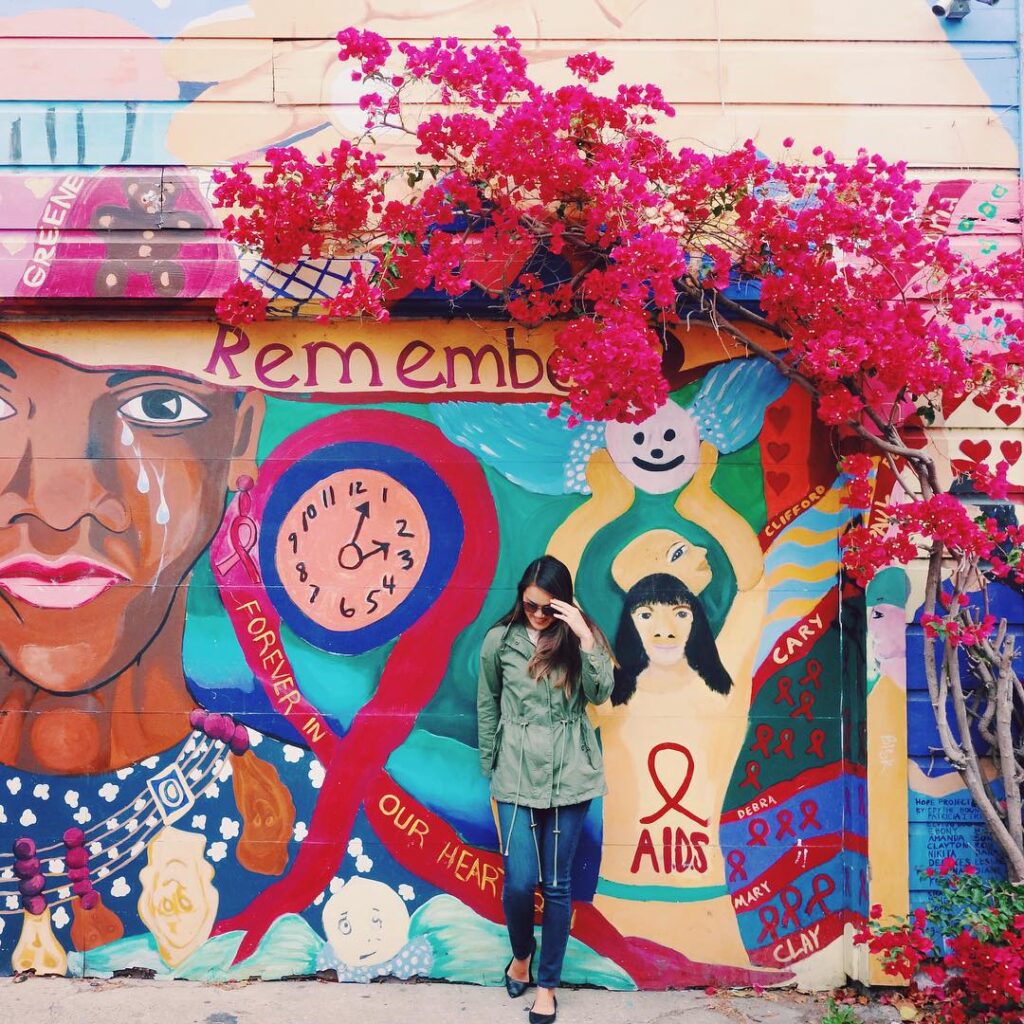
Best time to visit: Afternoon provides warm, directional light across the murals. Sunny days maximize color saturation and visual impact. Early morning light creates interesting shadows that add depth to compositions.
Pro tip: Shoot portrait-oriented frames to capture individual murals in their entirety. Look for human elements people interacting with the murals to create compelling context for your photographs. Capture multiple murals from different angles to show the alley’s full artistic scope. Research the murals’ cultural significance to inform your photography approach.
Free or paid: Free. Open to the public 24/7.
Location on Google Maps: Balmy Alley between 24th & 25th Streets, Mission District, San Francisco, CA 94103
15. Mission Dolores Park – Skyline Panorama from Hillside
Mission Dolores Park stands as one of San Francisco’s most beloved public spaces, offering lush green lawns, palm trees, and a prime hillside location with stunning views of the downtown skyline, Twin Peaks, and the surrounding neighborhoods. The park’s social atmosphere with locals picnicking, playing frisbee, and relaxing in the sun creates authentic San Francisco authenticity. Photographically, the park offers diverse options: scenic vistas of the skyline, intimate portraits with urban backdrops, and documentary-style imagery of the city’s vibrant culture.
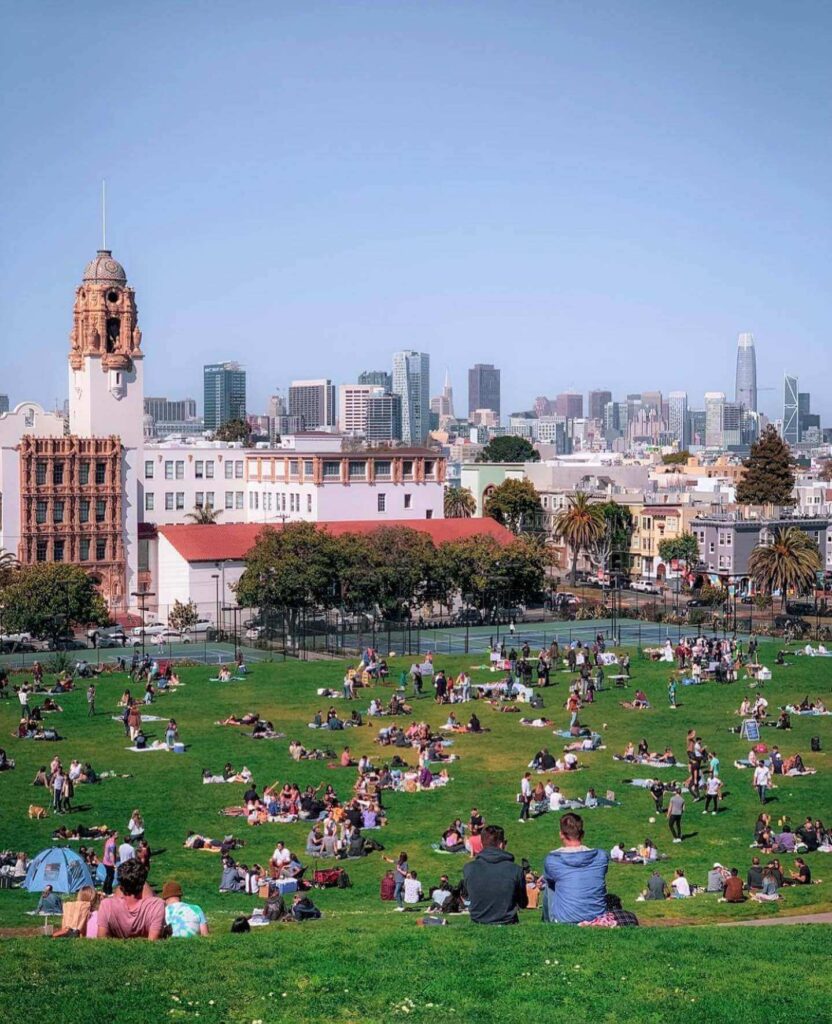
Best time to visit: Afternoon and early evening offer the best skyline views when the sun illuminates downtown buildings. Sunset provides warm, glowing light across the park and skyline. Weekends bring more activity and interesting human subjects.
Pro tip: Position yourself on the elevated areas to frame the skyline as a backdrop for park activity. The park’s palm trees create nice foreground framing elements. Use the mix of people, green space, and urban skyline to create layered, dynamic compositions. Visit on a clear day to maximize skyline visibility and detail.
Free or paid: Free. Central location in the Mission District, easily accessible via public transit.
Location on Google Maps: 3751 16th Street, San Francisco, CA 94114 (Mission District)
Haight-Ashbury & Cole Valley
16. Painted Ladies at Alamo Square – Iconic Victorian Homes & Skyline
The Painted Ladies a row of identical Victorian and Edwardian houses painted in three complementary colors stand as one of San Francisco’s most recognizable architectural landmarks. The pastel-colored row of homes at Alamo Square has graced countless postcards, magazine covers, and yes, Instagram feeds. What makes this location truly instagrammable is the combination of the charming architecture and the downtown skyline perfectly framed behind the houses. The location consistently appears on lists of America’s most beautiful residential blocks, and for good reason.
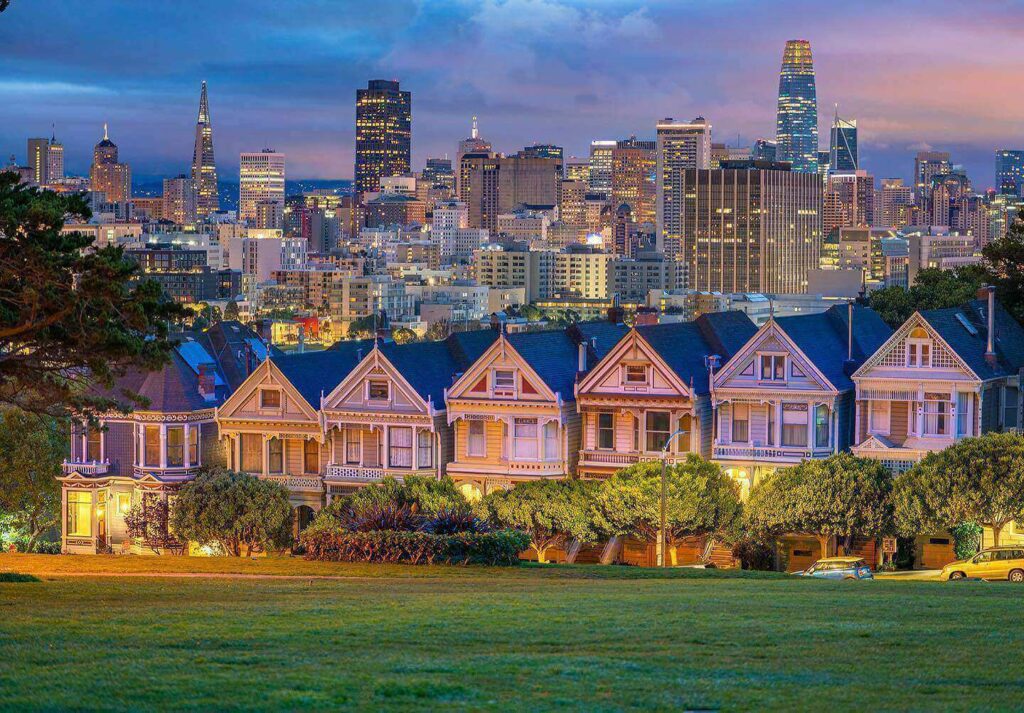
Best time to visit: Overcast mornings provide soft, even light that brings out the pastel colors beautifully without harsh shadows. Afternoon light can create interesting shadows but may wash out the soft colors. Clear days maximize skyline visibility.
Pro tip: The iconic shot frames the homes in the foreground with the skyline behind. Arrive early to secure the best positions before crowds overwhelm the park. Shoot from multiple angles within Alamo Square each position offers slightly different perspectives on the homes and skyline. Use the park’s landscaping to create foreground interest.
Free or paid: Free. Alamo Square park is open to the public.
Location on Google Maps: 700 Steiner Street, San Francisco, CA 94117 (Alamo Square)
17. Buena Vista Park – Hilltop with Downtown Views
Buena Vista Park offers elevated hilltop views of downtown San Francisco, the Bay, and surrounding neighborhoods from a less crowded vantage point than many other viewpoints. The park’s winding paths through native eucalyptus and oak trees create a more natural, less manicured atmosphere than many other City viewpoints. From the summit, you can capture panoramic city views, though the perspective differs from iconic locations like Twin Peaks. The park feels more like a hidden gem less touristy and more authentically connected to the neighborhood.
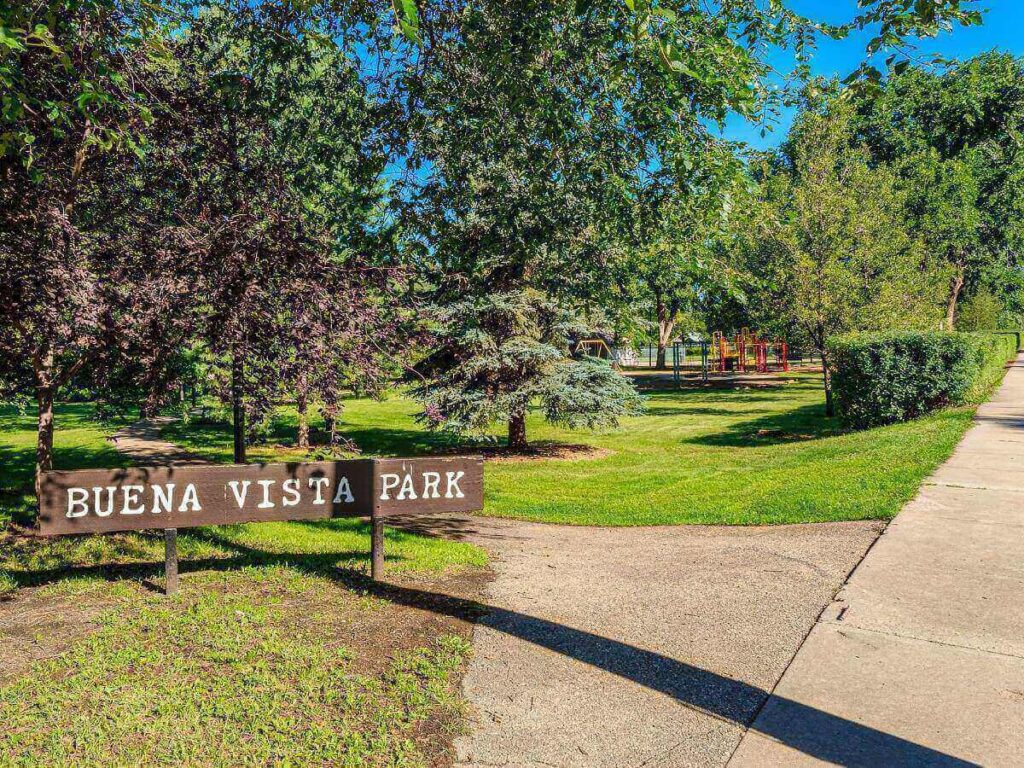
Best time to visit: Early evening provides warm light across downtown while still offering decent visibility. Clear days maximize view range and detail. Sunset offers dramatic skies and warm tones.
Pro tip: The varied topography and vegetation create interesting layering in your compositions. Include foreground elements from the park to add dimension to skyline shots. The less crowded nature means you have time to experiment with different compositions and settings. Explore multiple summit locations for varied angles.
Free or paid: Free. Multiple parking options available in the surrounding neighborhood.
Location on Google Maps: Buena Vista Avenue West at Central Avenue, San Francisco, CA 94117 (Haight-Ashbury area)
Nob Hill & Chinatown
18. California Street Cable Car – Classic San Francisco Transportation
San Francisco’s iconic cable cars represent quintessential San Francisco, and the California Street line offers particularly photogenic opportunities. The vintage wooden cars with their ornate brass fittings and red-painted exteriors create instantly recognizable imagery. Whether capturing the car climbing a steep hill with the skyline visible in the distance, or shot straight-on emphasizing its classical design details, the California Street cable car generates compelling photographs that immediately convey San Francisco character.
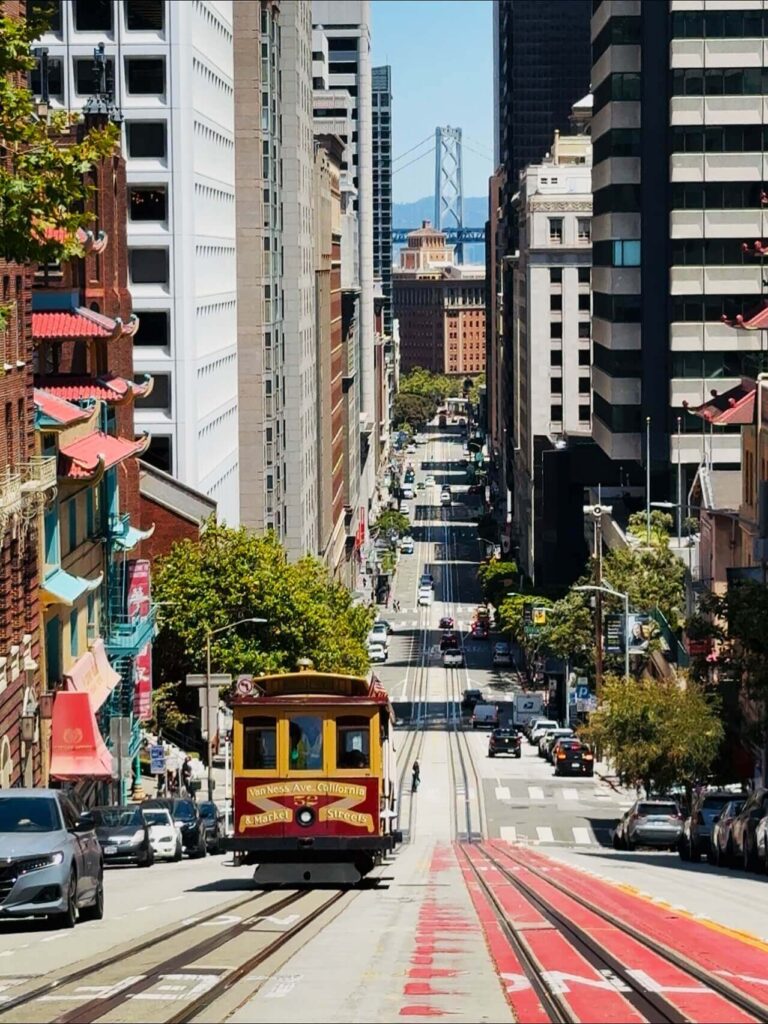
Best time to visit: Morning provides clearer skies and softer shadows. The car’s vintage aesthetic photographs beautifully under almost any lighting conditions. Afternoon backlighting can create dramatic silhouette effects.
Pro tip: Stand on the cross streets to capture the cable car approaching or departing head-on. Use the steep San Francisco hills as background elements to emphasize the incline. Capture the car with passengers for more authentic storytelling. Experiment with motion blur effects by panning with the moving car.
Free or paid: Free to photograph on public streets; riding costs $8 per ride.
Location on Google Maps: California Street line runs from Market Street to Nob Hill, San Francisco, CA 94102
19. Chinatown’s Grant Avenue – Dragon Gate & Lanterns
Grant Avenue in Chinatown pulses with cultural energy, architectural character, and visual richness. The famous Dragon’s Gate an ornate red arch topped with dragons and decorated with lanterns marks the neighborhood’s main entrance and serves as an instant visual anchor for photographs. Beyond the gate, narrow streets overflow with storefronts, red lanterns, traditional signs in Chinese characters, and vendors selling everything from vegetables to jade artifacts. The neighborhood offers an immersive visual experience that successfully captures San Francisco’s multicultural essence.
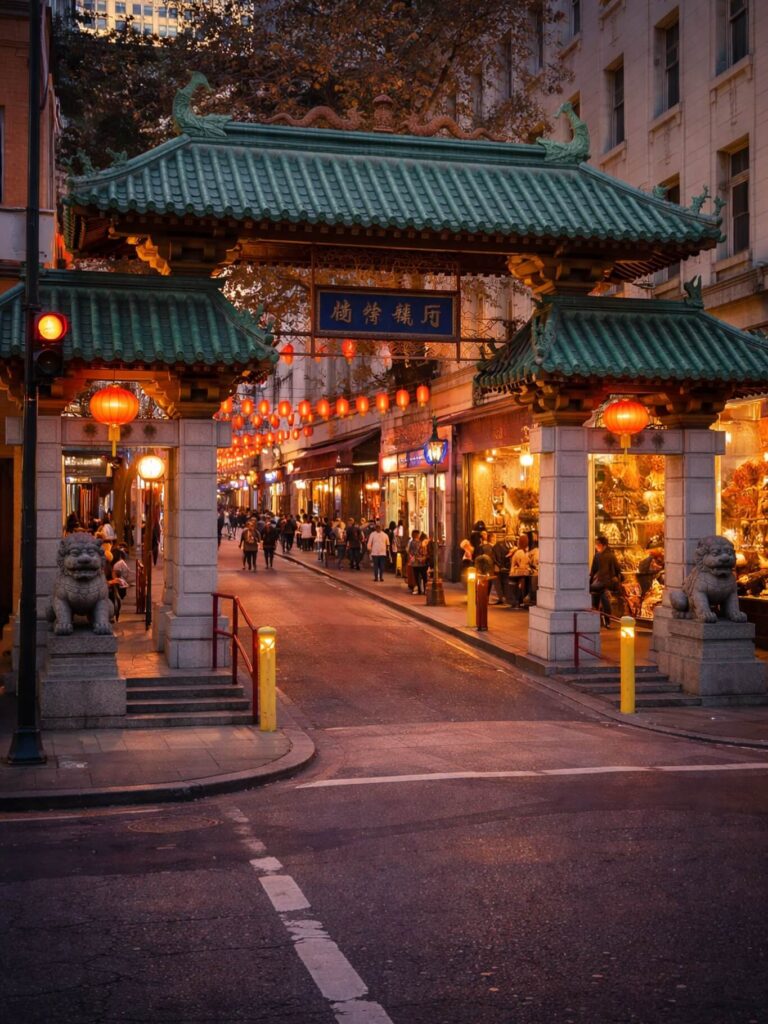
Best time to visit: Midday provides bright light that brings colors out vividly. Evening captures the ambiance of illuminated lanterns and neon signs. Overcast days reduce harsh shadows on narrow streets.
Pro tip: Capture the Dragon’s Gate as a framing device for background scenes. Look for overhead lantern perspectives and street-level details. Photograph shop windows and signage as documentary elements. The dense, narrow streets offer interesting compositional challenges use the tight spaces to your advantage for layered, complex shots.
Free or paid: Free. Parking can be challenging; public transit is recommended.
Location on Google Maps: Grant Avenue, Chinatown, San Francisco, CA 94108
20. Fairmont Hotel Lobby – Opulent Interior Architectural Photography
The Fairmont San Francisco’s legendary lobby represents one of the most opulent interior spaces in the city, with soaring columns, ornate moldings, crystal chandeliers, and marble surfaces that create an overwhelmingly luxurious atmosphere. Photography in such elegant interior spaces captures the grandeur and historical significance of San Francisco’s iconic hotels. The lobby’s scale, symmetry, and architectural details provide endless photographic possibilities for those interested in architectural and interior photography.
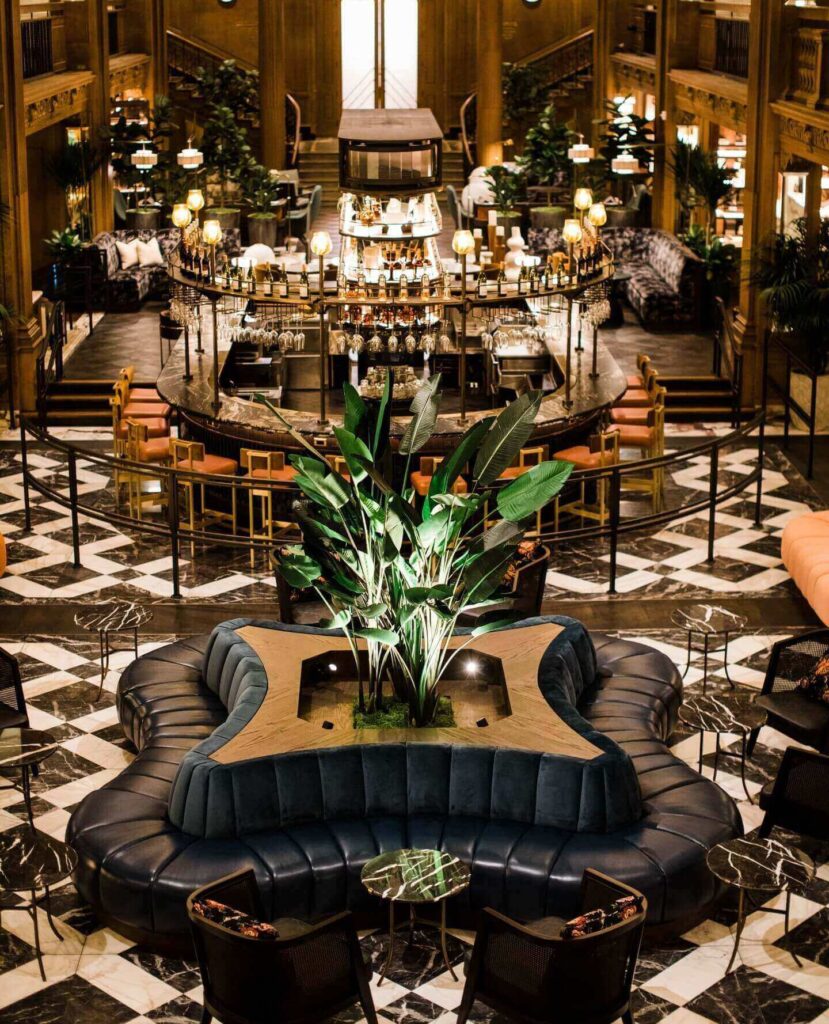
Best time to visit: Morning and afternoon provide natural light streaming through windows. Avoid peak tourist times to minimize crowds. Overcast days outside reduce harsh contrasts between interior and exterior light.
Pro tip: Ask hotel staff permission before photographing. Use the symmetry of columns and architectural elements to create balanced compositions. Wide-angle lenses capture the space’s impressive scale. Look for details ornamental elements, lighting fixtures, floor patterns as close-up subjects. Embrace the warm interior lighting for elegant, sophisticated photographs.
Free or paid: Free to enter; ask permission to photograph.
Location on Google Maps: 950 Mason Street, San Francisco, CA 94108 (Nob Hill)
North Beach & Fisherman’s Wharf
21. Coit Tower & Telegraph Hill – Murals Inside, Views Outside
Coit Tower, the distinctive white monument atop Telegraph Hill, offers both exterior architectural photography opportunities and interior mural documentation. The tower’s striking cylindrical form stands as a recognizable landmark visible throughout the city. Inside, the tower houses beautiful Depression-era WPA murals depicting California’s history and industries. From the observation deck, 360-degree views of San Francisco, the Bay, and surrounding areas provide panoramic photography opportunities. The tower’s unique position creates compelling silhouettes against the sky and sunset tones.
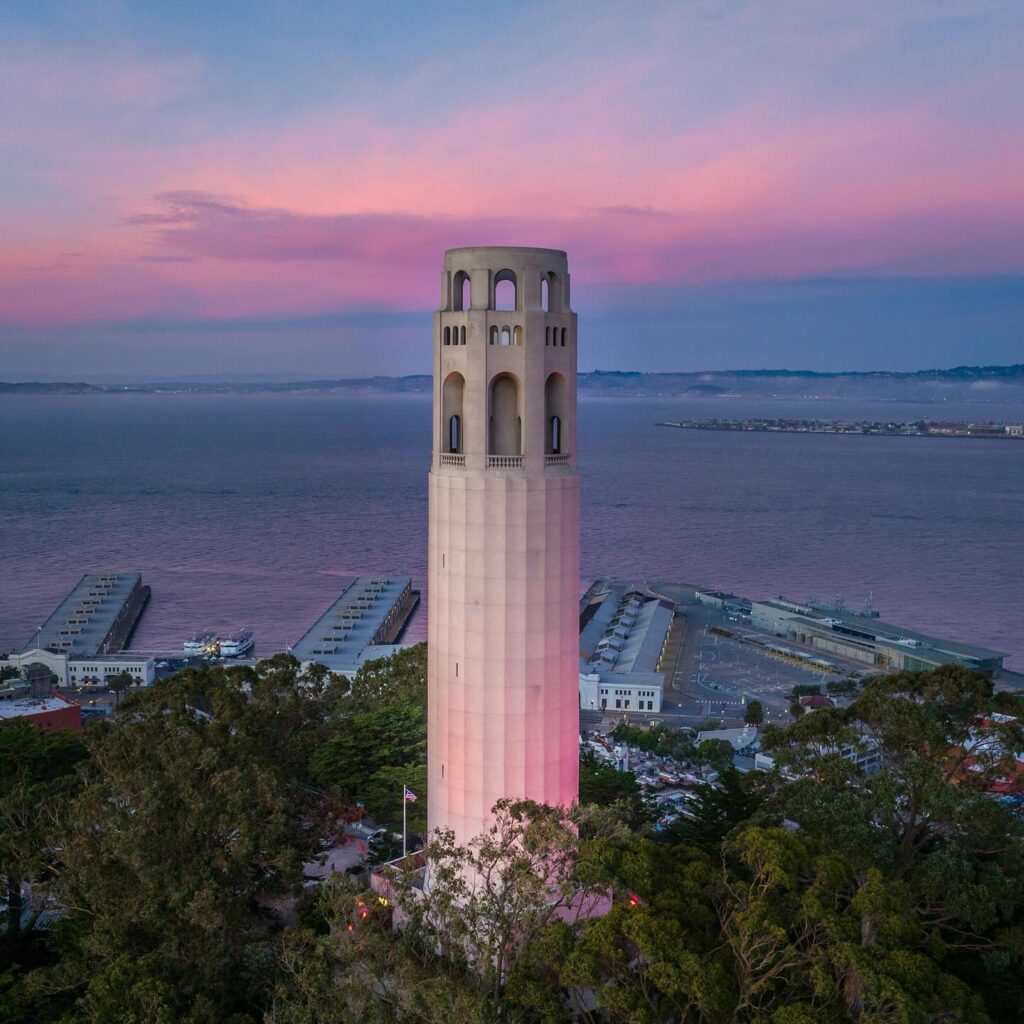
Best time to visit: Sunset provides dramatic skies and warm tones that complement the tower’s white surface. Clear days maximize visibility from the observation deck. Morning offers softer light for documenting the tower’s exterior.
Pro tip: The narrow streets and alleyways approaching the tower offer photographic opportunities document the journey to capture the neighborhood’s character. Inside, use a tripod for murals in dim light. The observation deck provides 360-degree photo opportunities visit multiple sides to capture the city from different perspectives. Arrive early or late to avoid midday crowds.
Free or paid: Admission to observation deck $8; murals free to view from outside.
Location on Google Maps: 1 Telegraph Hill Boulevard, San Francisco, CA 94133 (Telegraph Hill)
22. Lombard Street – The Crookedest Street
Lombard Street’s famous crookedness with eight sharp hairpin turns in just one block makes it one of San Francisco’s most distinctive and photographed streets. The red brick surface, bordered by manicured landscaping and Victorian homes, creates a visually striking subject. The street’s unique engineering and character have made it iconic, though it can feel somewhat gimmicky given the heavy tourist traffic. Still, the distinctive zigzag pattern and the challenge of photographing cars navigating the tight curves creates compelling imagery.
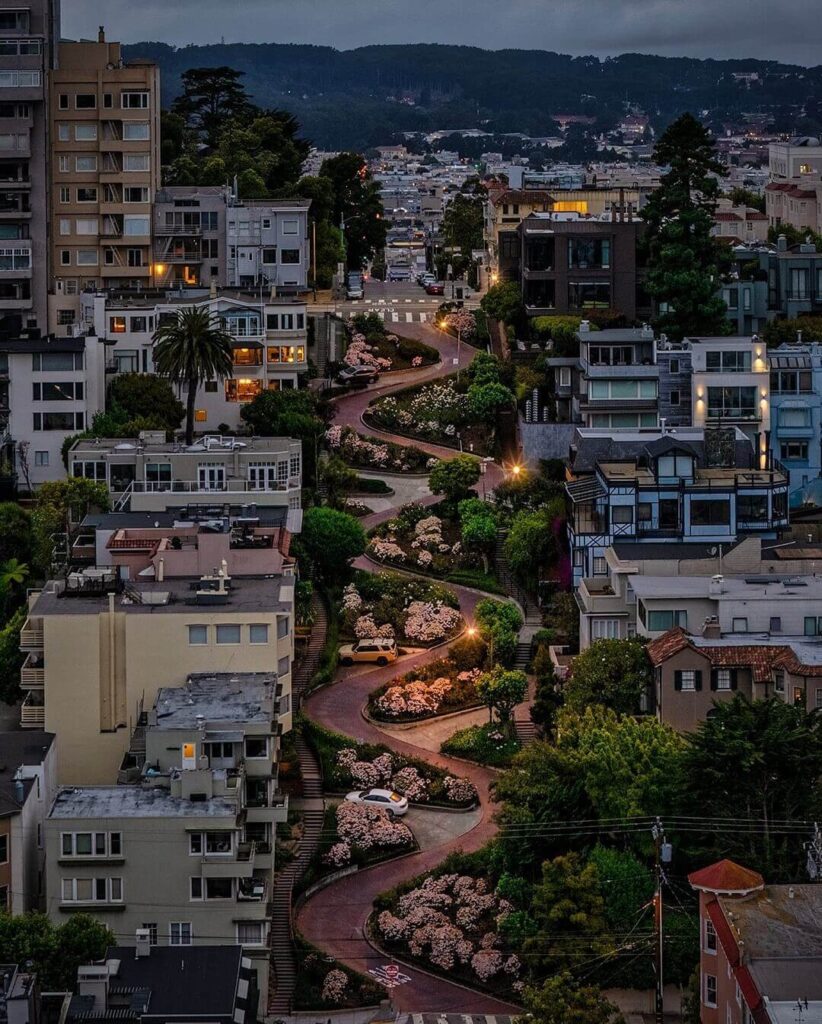
Best time to visit: Overcast days provide even, diffused light without harsh shadows. Early morning minimizes tourist crowds. Afternoon can offer interesting shadows across the red bricks.
Pro tip: Shoot from above to emphasize the street’s dramatic zigzag pattern. Capture a car navigating a curve for dynamic content. Use the Victorian homes flanking the street as compositional elements. The street works better as a graphic, geometric shot than as a conventional street photograph. Experiment with aerial perspectives from different vantage points.
Free or paid: Free. Parking is challenging; public transit or walking is recommended.
Location on Google Maps: Lombard Street between Hyde & Leavenworth Streets, San Francisco, CA 94109 (Russian Hill)
23. Pier 39 Sea Lions – Wildlife & Bay Views
Pier 39, one of San Francisco’s major tourist attractions, hosts hundreds of sea lions lounging on floating platforms, providing unusual wildlife photography opportunities right in the middle of the city. The sea lions’ playful, social behavior creates dynamic subjects, while their bulky forms create compelling sculptural compositions. Beyond the marine mammals, Pier 39’s location at the end of the waterfront offers bay views including Alcatraz Island, the Golden Gate Bridge, and the Marin Headlands.
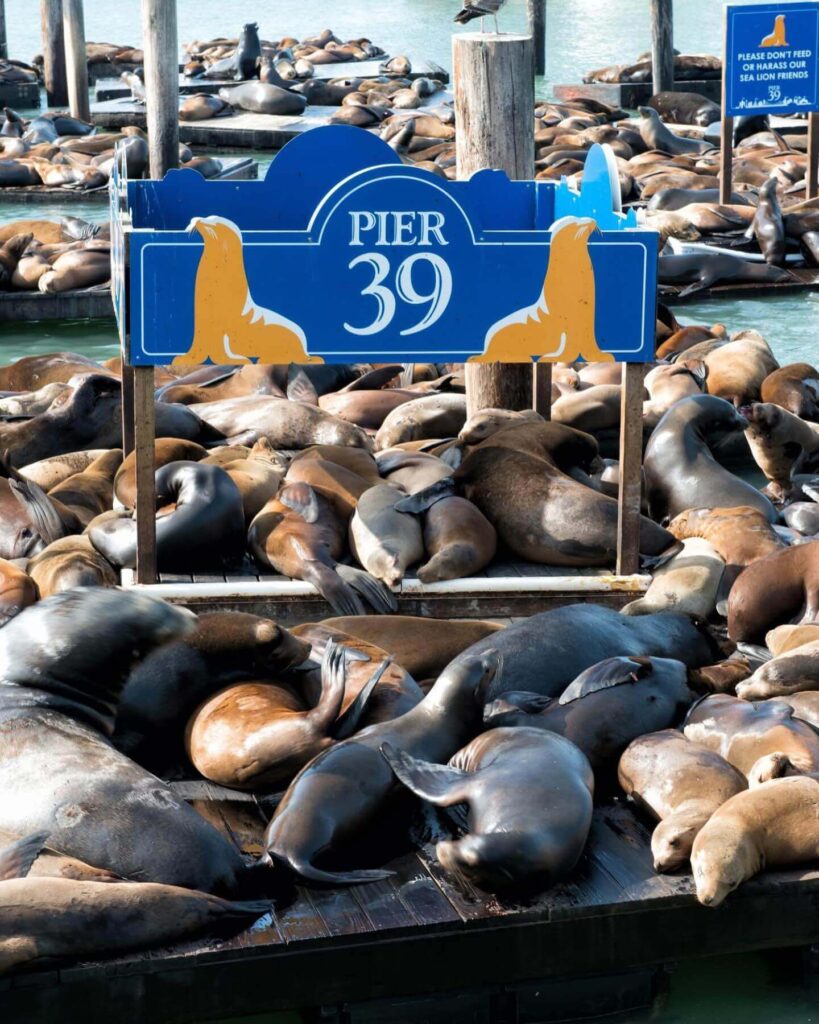
Best time to visit: Morning provides clearest light and most alert sea lions. Overcast days still offer good visibility. Lower tides provide better positioning for the sea lion platforms.
Pro tip: Bring a telephoto lens to capture sea lion detail and behavior without disturbing the animals. The platforms create layered compositions use them to add depth. Capture the animals in their natural behaviors playing, resting, interacting with each other. Include the bay background to establish context. Arrive at opening time for smaller crowds.
Free or paid: Free to view; Pier 39 shops and restaurants require purchases.
Location on Google Maps: Pier 39, The Embarcadero, San Francisco, CA 94133 (Fisherman’s Wharf)
Iconic Viewpoints
24. Twin Peaks – Panoramic City Views, Especially at Sunset
Twin Peaks stands at the geographic heart of San Francisco, offering the most comprehensive panoramic views of the entire city and surrounding areas. The twin peaks reach approximately 922 feet, providing elevation that captures the cityscape in its full glory. From this vantage point, you can see the Golden Gate Bridge, Bay Bridge, downtown skyline, neighborhoods radiating outward, and on clear days, the surrounding bay geography. The viewpoint attracts photographers from dawn through well into the evening, particularly at sunset when the city lights gradually replace daylight.
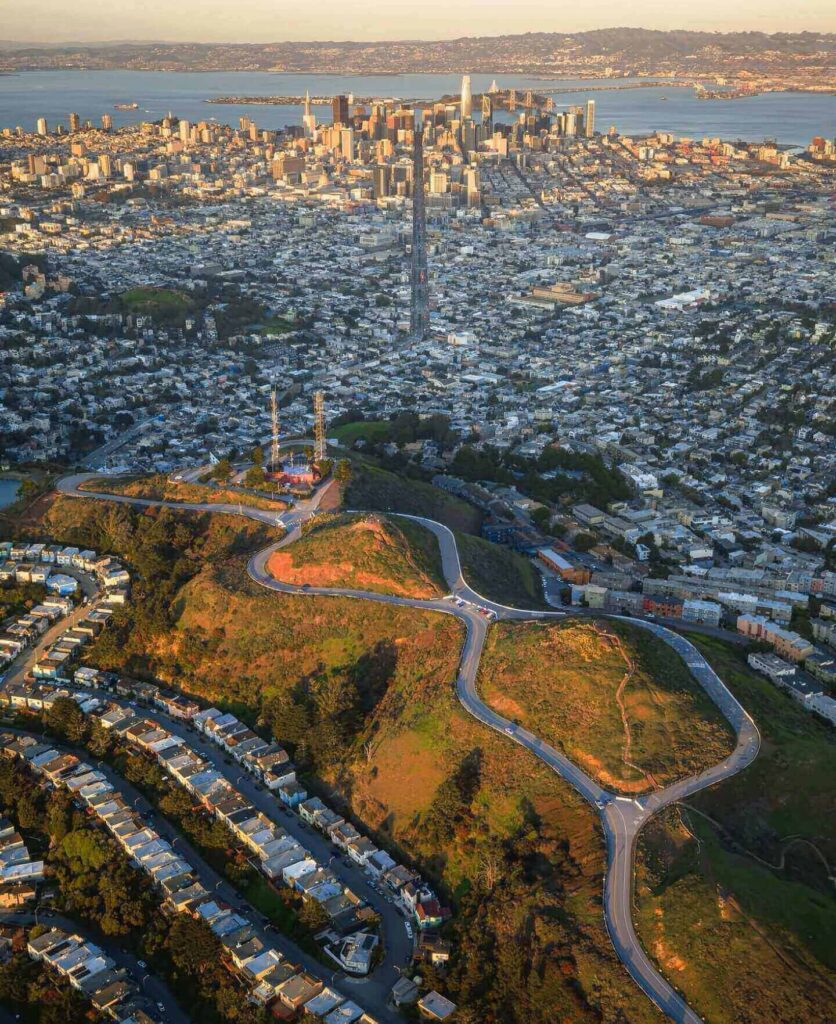
Best time to visit: Sunset is the prime time, offering warm light that makes the city glow with warm orange and pink tones. Clear days maximize visibility and detail. Arrive 45-60 minutes before sunset to claim good positions and prepare your camera.
Pro tip: Bring a tripod for sunset/night photography when light becomes limited. Scout locations during earlier hours so you know exactly where to position yourself at sunset. Use a polarizing filter to enhance the sky. The curved viewing platform offers 360-degree views explore all angles. Come midweek to avoid weekend crowds.
Free or paid: Free. Street parking available; can be crowded on weekends and at sunset.
Location on Google Maps: Twin Peaks Boulevard, San Francisco, CA 94114
25. Hawk Hill – Marin Side Bridge & City Panorama
Hawk Hill, located in the Marin Headlands just north of the Golden Gate Bridge, provides one of the finest comprehensive views of the bridge with San Francisco’s skyline in the background. This vantage point combines the bridge’s visual magnificence with the city beyond, creating layered, compositionally rich photographs. The position differs from Battery Spencer’s head-on view, instead offering the bridge spanning the frame from left to right with the city skyline rising behind it. The dramatic Marin hillsides in the foreground add additional visual interest.
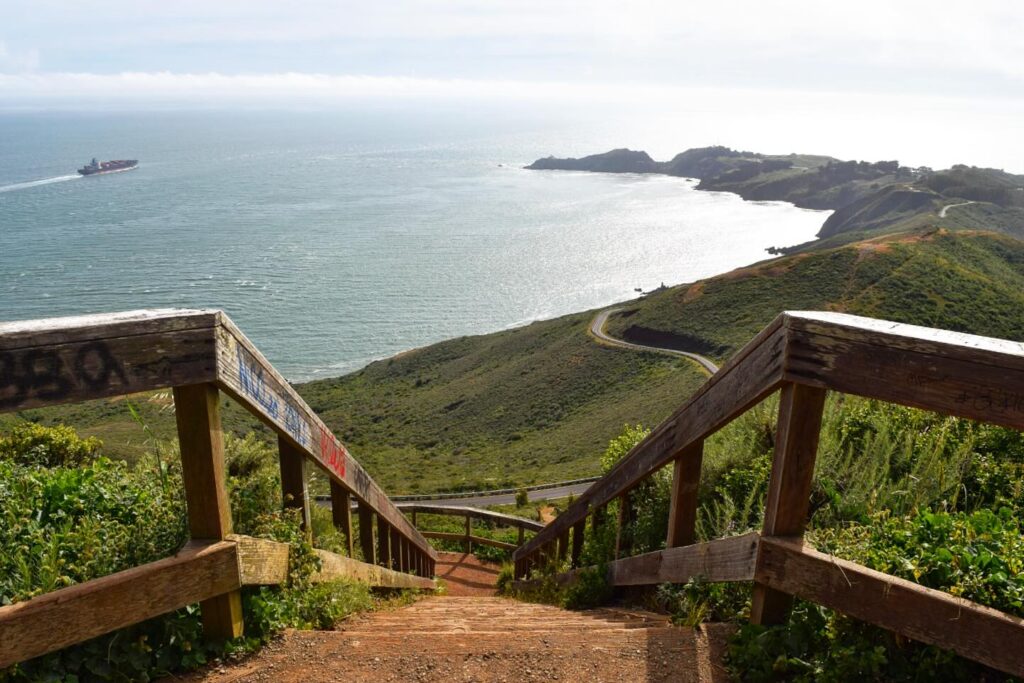
Best time to visit: Sunrise provides magical soft light and clear skies before the day’s heat creates haze. Golden hour at sunset offers warm tones that make the bridge’s orange cable-stay towers glow. Clear days maximize visibility.
Pro tip: Arrive early for sunrise to capture the bridge in soft, directional light with clear skies. Use a wide-angle lens to capture the bridge’s full span and city in a single frame. Expose for the bridge to avoid blown-out sky. The less-crowded status compared to Battery Spencer makes this ideal for photographers seeking more space and composition flexibility.
Free or paid: Free. Limited but available parking; accessible via US 101 northbound.
Location on Google Maps: Alexander Road, Sausalito, CA 94965 (Marin Headlands)
26. 16th Avenue Tiled Steps – Mosaic Staircase
The 16th Avenue Tiled Steps represent a hidden gem of San Francisco’s public art scene a community art project that transformed an ordinary flight of outdoor stairs into a stunning mosaic masterpiece. The 163-step staircase features intricate tile work depicting an ocean wave transitioning into a sunset sky, with colors ranging from deep blues to brilliant golds and oranges. The artistic execution is technically impressive, but what makes it truly instagrammable is the sheer visual impact of descending or ascending these spectacular artistic stairs framed against the San Francisco hillside and sky.
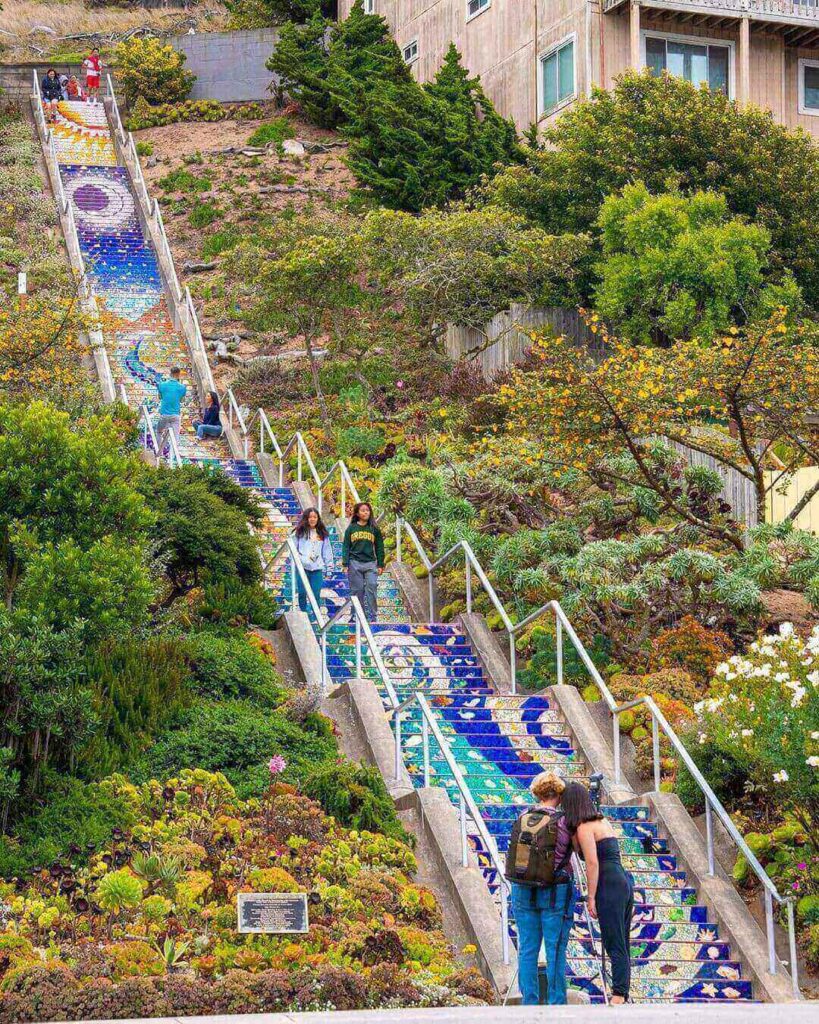
Best time to visit: Midday provides bright, even light that brings out the vibrant tile colors. Afternoon side-lighting creates interesting shadows that emphasize the mosaic texture. Overcast days still showcase the colors beautifully without glare.
Pro tip: Shoot from various angles and distances to capture both the overall composition and tile-level details. Use leading lines created by the steps to draw viewers into your frame. Capture people using the stairs for scale and human context. Explore the surrounding neighborhood for contextual shots. The light changes throughout the day significantly altering the mood visit multiple times.
Free or paid: Free. Located in a residential neighborhood; parking available on surrounding streets.
Location on Google Maps: 16th Avenue between Moraga & Noriega Streets, San Francisco, CA 94122 (Outer Sunset)
Hidden Gems
27. Salesforce Park – Rooftop Park Downtown
Salesforce Park represents a modern addition to San Francisco’s public spaces a 5.4-acre rooftop garden atop the Salesforce Transit Center. The park combines native plants, artistic installations, walking paths, and seating areas to create an unexpected green oasis amid downtown’s concrete and steel. The elevated position provides unique perspectives on downtown architecture and the surrounding neighborhoods, while the park’s artistic design creates distinctive compositional elements. It’s a secret that many tourists never discover, making it ideal for photographers seeking less-crowded locations.
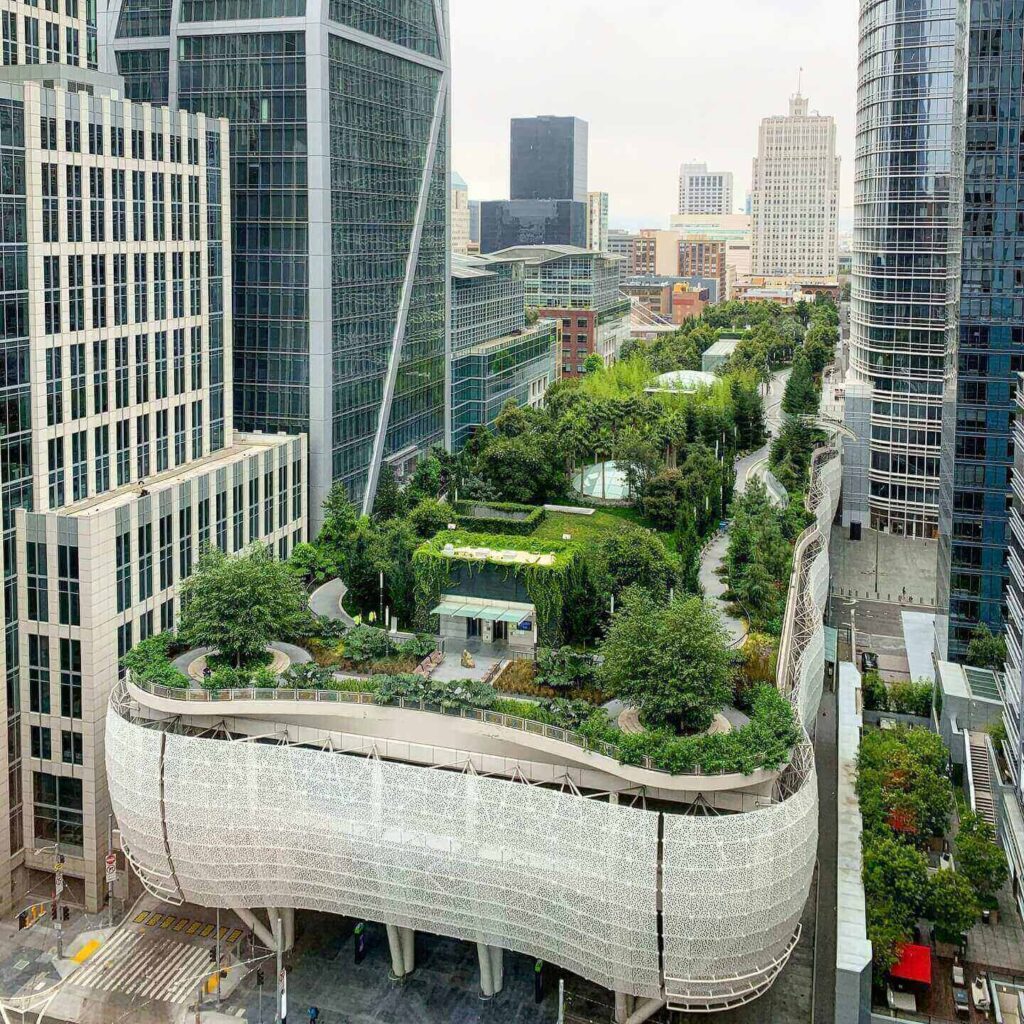
Best time to visit: Morning provides clear light and fewer crowds. Afternoon offers interesting shadows cast by downtown buildings. Sunset illuminates the downtown skyline in warm tones.
Pro tip: The park’s artistic installations and varied plantings create interesting foreground elements for skyline shots. Use the park’s green spaces to contrast with downtown’s urban hardscape. Explore the elevated walking paths for different angles on surrounding buildings. Capture the juxtaposition of nature and urban development.
Free or paid: Free. Open daily 6am-8pm.
Location on Google Maps: 425 Mission Street, San Francisco, CA 94105 (SOMA/Downtown)
28. Wave Organ – Sound Sculpture on the Marina
The Wave Organ stands as one of San Francisco’s most unusual and fascinating public artworks an acoustic sculpture that uses water pipes to create musical sounds as waves move through the structure. Located at the end of a jetty in the Marina District, the Wave Organ provides unique photographic opportunities with interesting sculptural forms rising from the water. The location offers bay views, interesting architectural details, and the constantly changing interaction between water and stone that creates dynamic photographic possibilities.
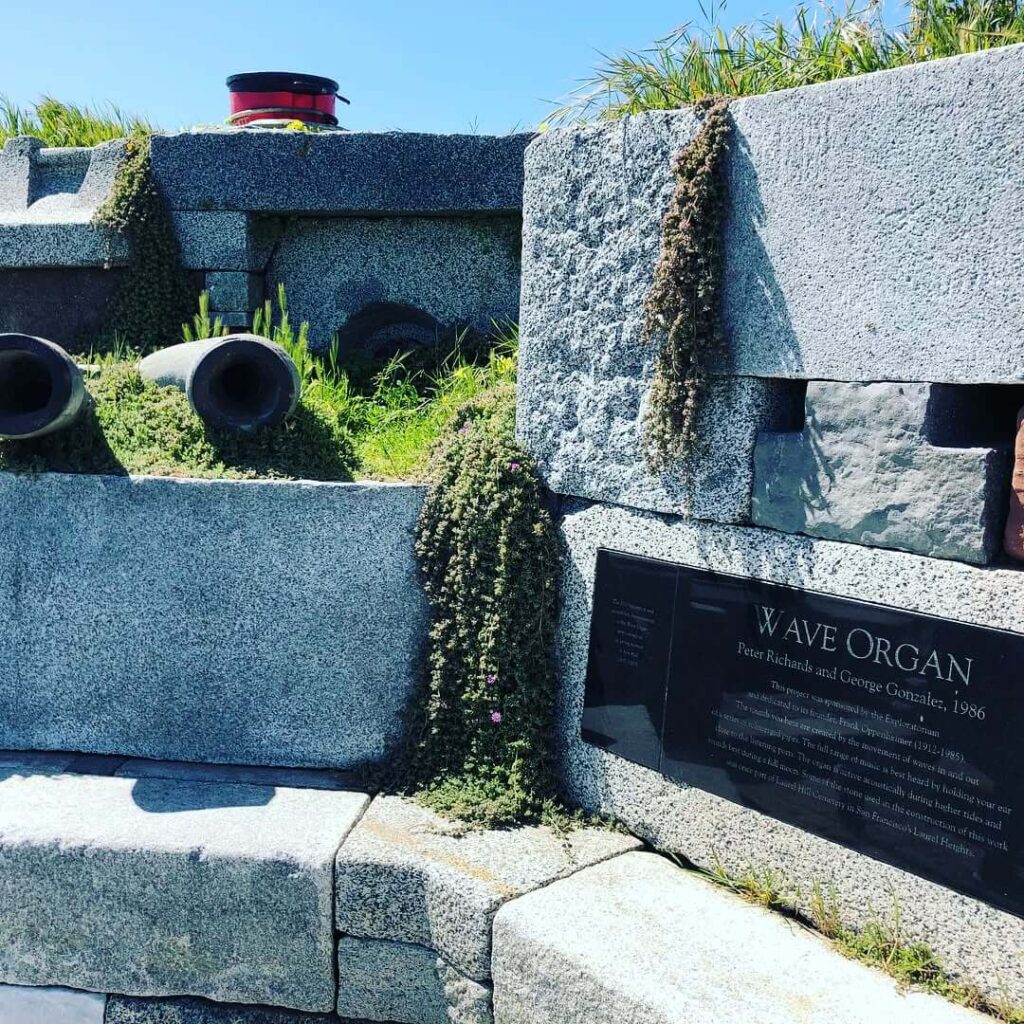
Best time to visit: Higher tides create more pronounced wave action and sound. Afternoon provides interesting shadows and warm light across the stone. Sunset illuminates the bay and surrounding areas beautifully.
Pro tip: Arrive during higher tides to capture the interaction between waves and the sculpture. Use a telephoto lens to compress the background water and skyline. Capture the sculpture’s artistic details and the interplay between stone and water. The location’s uniqueness and relative obscurity make it perfect for distinctive imagery.
Free or paid: Free. Accessible via the Marina District; note that the location is tide-dependent.
Location on Google Maps: Marina Green, San Francisco, CA 94123 (Marina District)
29. Cayuga Park Playground Murals – Lesser-Known Street Art
Cayuga Park’s playground murals represent vibrant street art in a neighborhood location, offering colorful, dynamic imagery without the heavy tourist traffic of Mission District locations. The murals feature bold colors, playful themes, and artistic diversity that showcase San Francisco’s thriving creative community. The park setting, with its green spaces and playground equipment, creates context that makes the murals feel integrated into community life rather than isolated artworks.
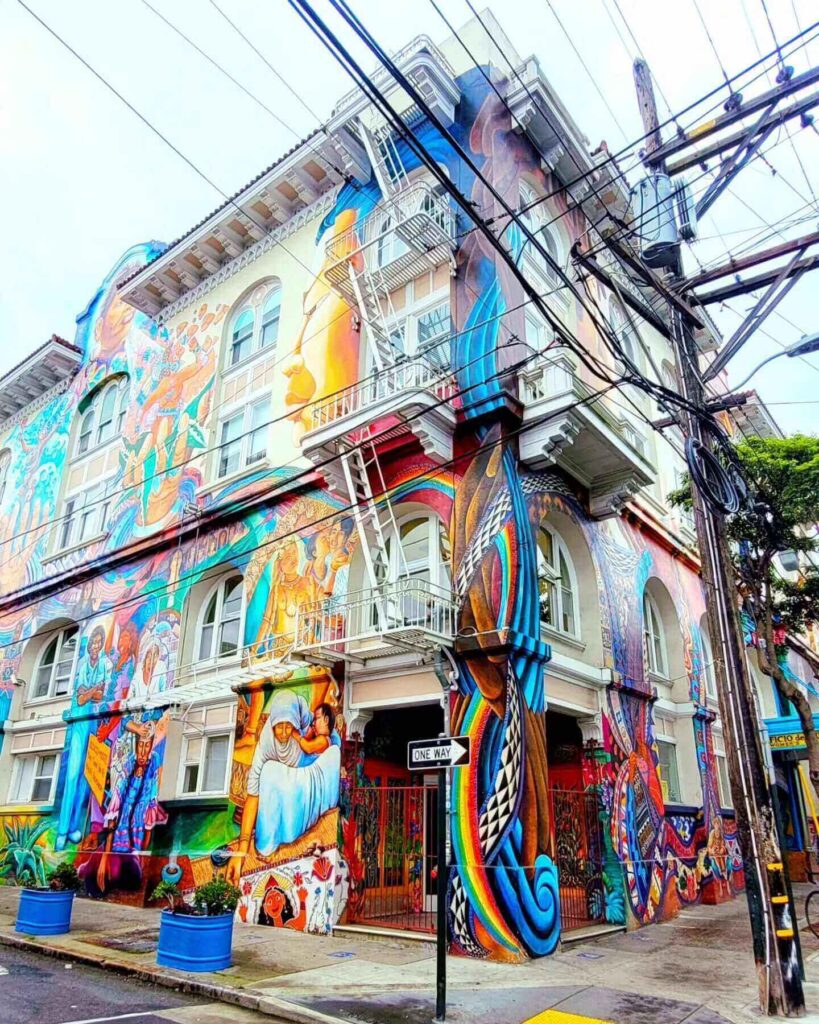
Best time to visit: Afternoon provides warm, directional light across the murals. Sunny days maximize color saturation. Overcast conditions still showcase colors beautifully without harsh glare.
Pro tip: Photograph the murals both in isolation and as elements of the park’s broader environment. Capture the murals from different angles and distances. Look for interesting compositional relationships between multiple murals. The less-crowded nature allows time for thoughtful composition.
Free or paid: Free. Parking available in the neighborhood.
Location on Google Maps: Cayuga Avenue at Plymouth Street, San Francisco, CA 94112 (Bayview)
30. The Interval at Long Now – Unique Cafe & Museum
The Interval at Long Now represents a one-of-a-kind venue in the Marina District part cafe, part museum, entirely fascinating. The space features dramatic architecture, interesting artistic installations, and intellectual discourse about technology and long-term thinking. The interior design, with its soaring ceilings, architectural details, and artistic elements, creates visually compelling photography opportunities. The combination of utilitarian industrial design with artistic installation creates unique visual moments.
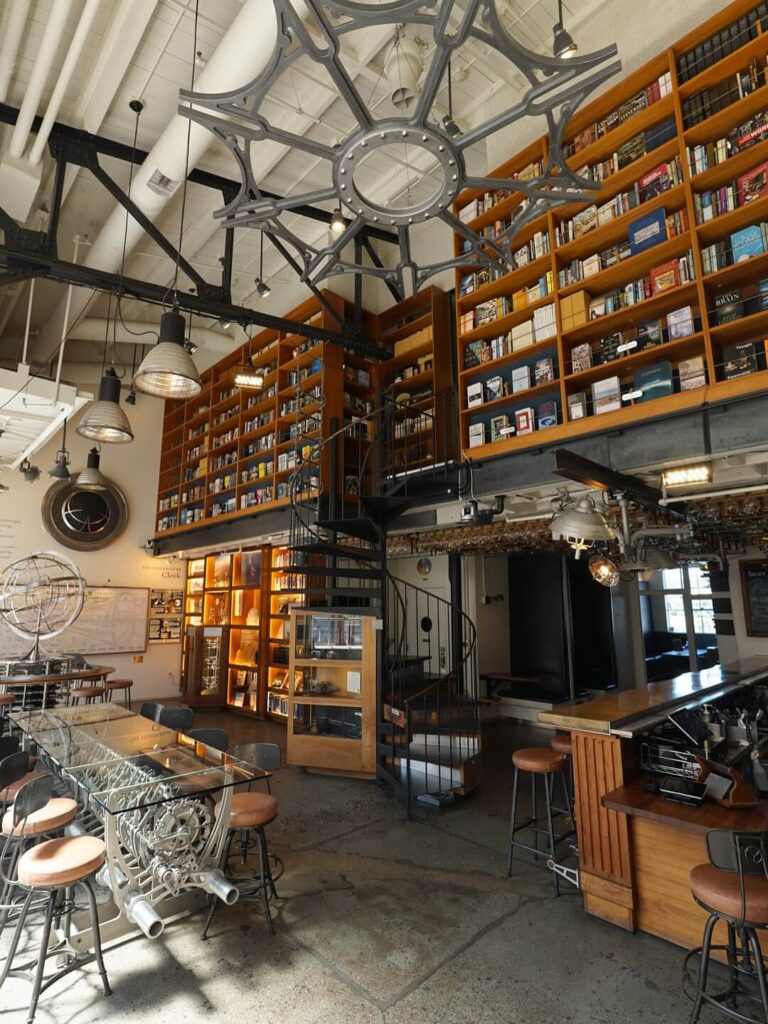
Best time to visit: Morning and early afternoon provide natural light through the space’s large windows. The light changes significantly throughout the day as the sun moves multiple visits reveal different aesthetic possibilities.
Pro tip: Ask permission before photographing, as it’s a working business. Use the space’s architectural details as compositional elements. Capture both wide architectural shots and intimate details. The combination of industrial design and artistic elements offers rich visual possibilities. Consider the human element people interacting within the space add narrative dimension.
Free or paid: Free to view; food and beverages available for purchase.
Location on Google Maps: 2 Marina Boulevard, San Francisco, CA 94123 (Marina District)
Instagrammable Restaurants & Cafes
Beyond landmarks and parks, San Francisco’s most instagrammable places in San Francisco also include exceptional dining venues that combine great food with visually striking environments. These establishments deserve consideration in your photography itinerary because they represent the city’s thriving food culture and offer unique interior design that photographs beautifully.
Mama’s on Washington Square in North Beach remains legendary for its breakfast offerings and cozy neighborhood ambiance. The restaurant’s intimate interior, worn wood details, and classic San Francisco character create authenticity that photographs exceptionally well. The window seats offer views of Washington Square and the surrounding neighborhood, while the interior captures that nostalgic quality that makes North Beach so charming.
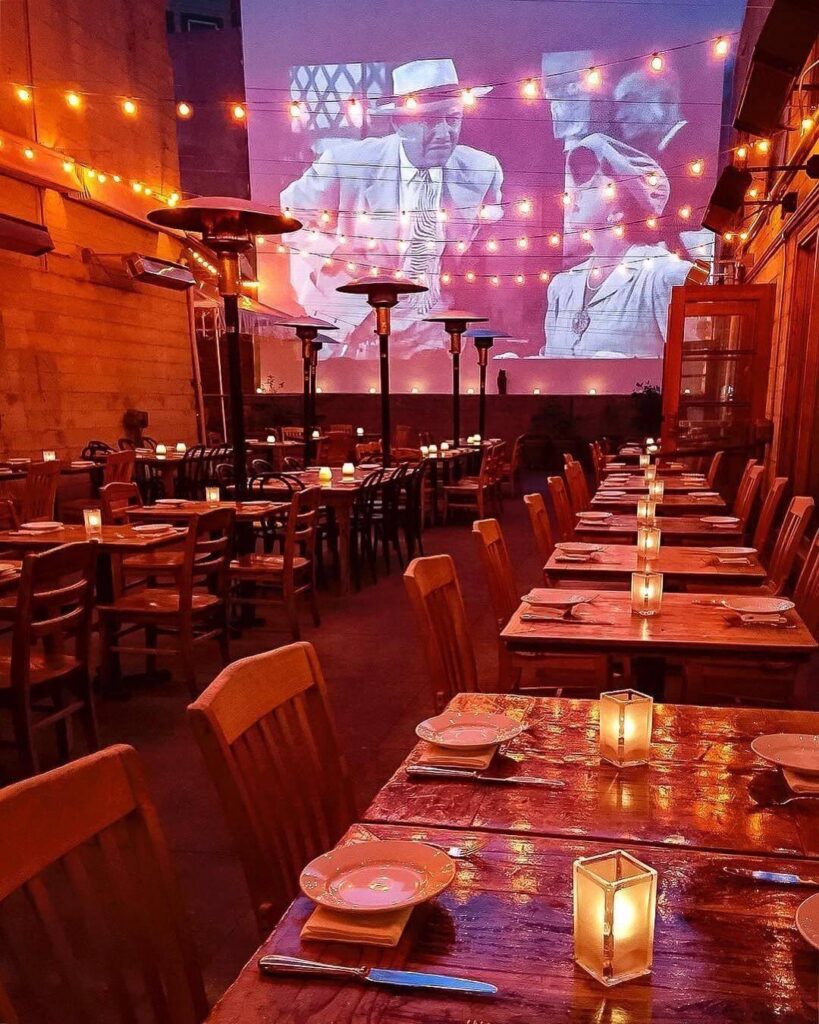
Foreign Cinema in the Mission District combines art, ambiance, and culinary excellence in a space that feels more gallery than restaurant. The restaurant’s dramatic industrial architecture, displayed artworks, and sophisticated plating create endlessly photogenic moments. The courtyard setting provides natural light and an artistic backdrop that elevates ordinary food photography into compelling visual art.
Dumpling Time in the Richmond District offers simple, authentic dumpling service in a minimalist space. The visual simplicity fresh dumplings, clean white plates, careful presentation creates elegant, minimalist photography that contrasts with heavier, more ornate dining environments elsewhere in the city.
Home Cafe in the inner Sunset District embraces casual neighborhood culture with a warm, welcoming aesthetic. The intimate size, vintage details, and genuine hospitality create photography that feels personal and authentic. The cafe’s breakfast offerings provide excellent food photography subjects.
The Clift Hotel’s Lavender Staircase represents an unusual photography location a stunning interior element that attracts photographers specifically for its visual drama. The staircase’s distinctive lavender-grey tone, sculptural design, and architectural grandeur create one of the city’s most dramatically photogenic interior spaces. The hotel welcomes visitors to photograph the staircase, making it an accessible location for architectural and interior design photography.
Best Sunrise & Sunset Spots
San Francisco’s famous golden hours sunrise and sunset transform the city with extraordinary light. The timing and quality of this light often determines whether your photographs feel merely adequate or genuinely exceptional. Understanding which locations offer optimal sunrise and sunset conditions helps you maximize your photography efforts.
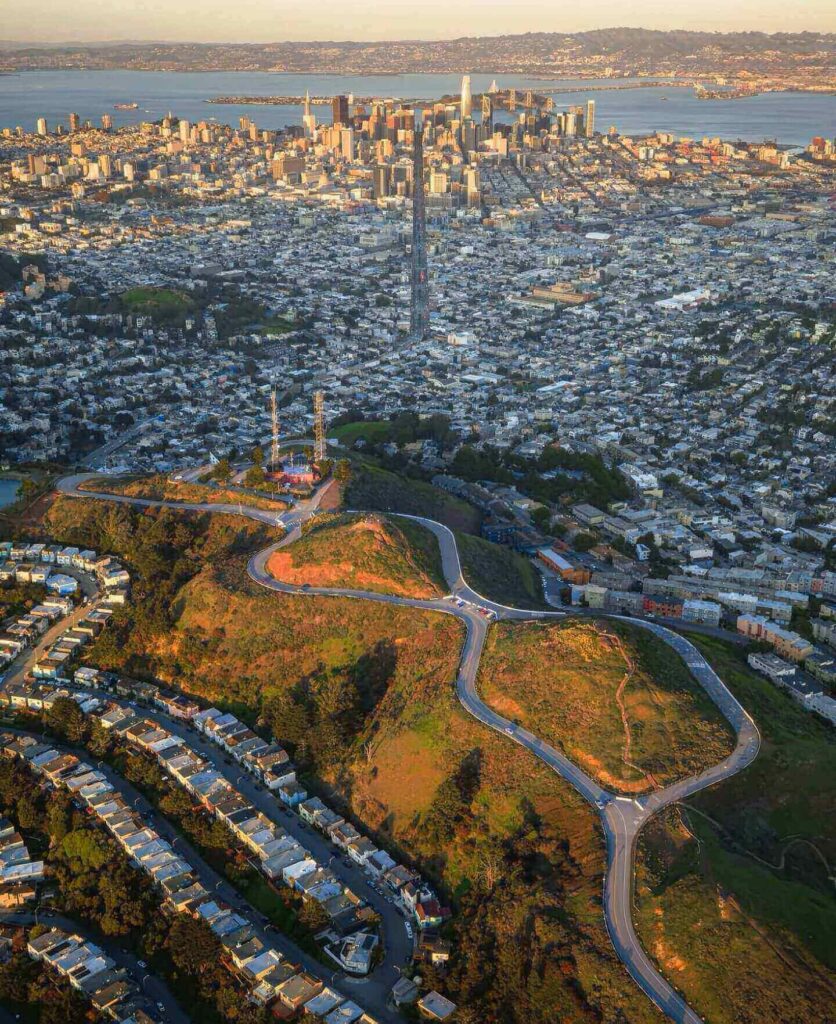
Twin Peaks at sunset stands unmatched for comprehensive cityscape photography. As the sun drops toward the horizon, the city lights gradually emerge below, while the sky transitions through an ever-changing palette of colors. Arrive 45-60 minutes before sunset to secure positioning and watch the light transformation unfold across the city. The 360-degree viewing platform means you can photograph the sunset in multiple directions west toward the Pacific, north toward the Golden Gate, south toward the peninsula, and east toward the bay.
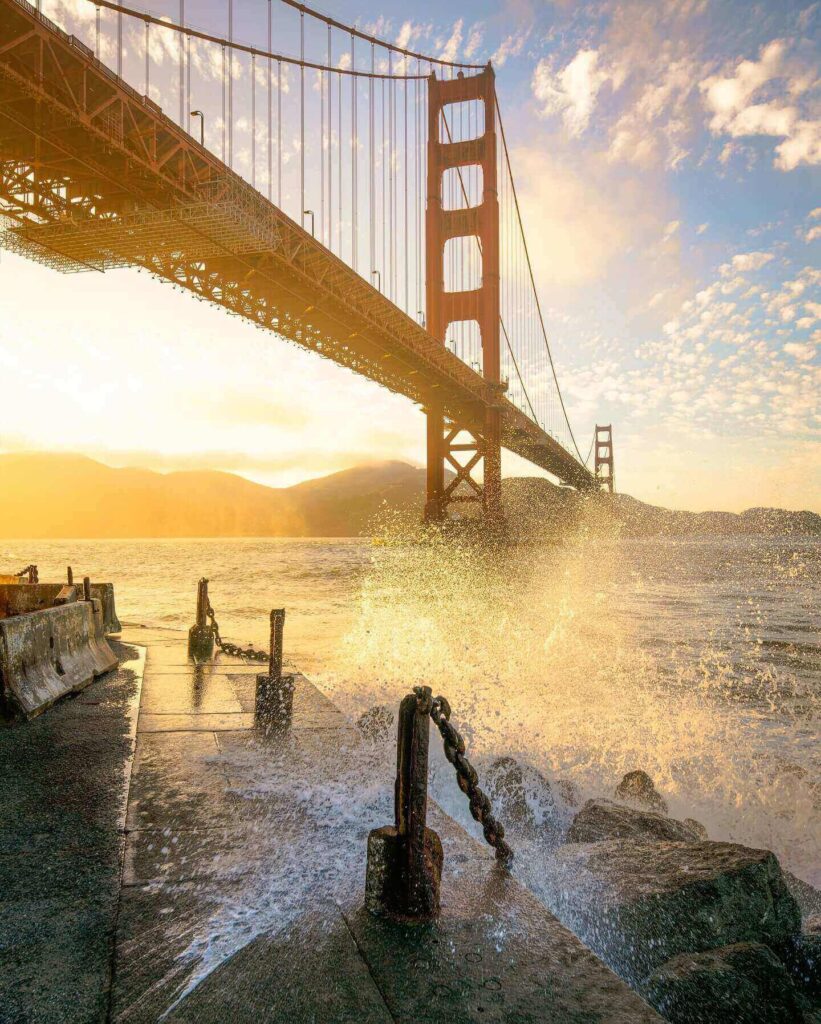
Marshall’s Beach at sunrise offers intimate, artistic perspectives on the Golden Gate Bridge. The early morning fog creates moody conditions, while the soft light illuminates the bridge’s massive cables with remarkable delicacy. The rugged rocky beach provides foreground elements that ground the composition, creating more dynamic imagery than distant bridge viewpoints.
Battery Spencer bathes in golden hour light like few other locations. The elevated position and east-facing orientation make this exceptional for sunrise, with the bridge gradually appearing as light increases. The front-facing perspective on the bridge’s towers creates iconic compositions as the light changes from cool predawn tones to warm sunrise hues.
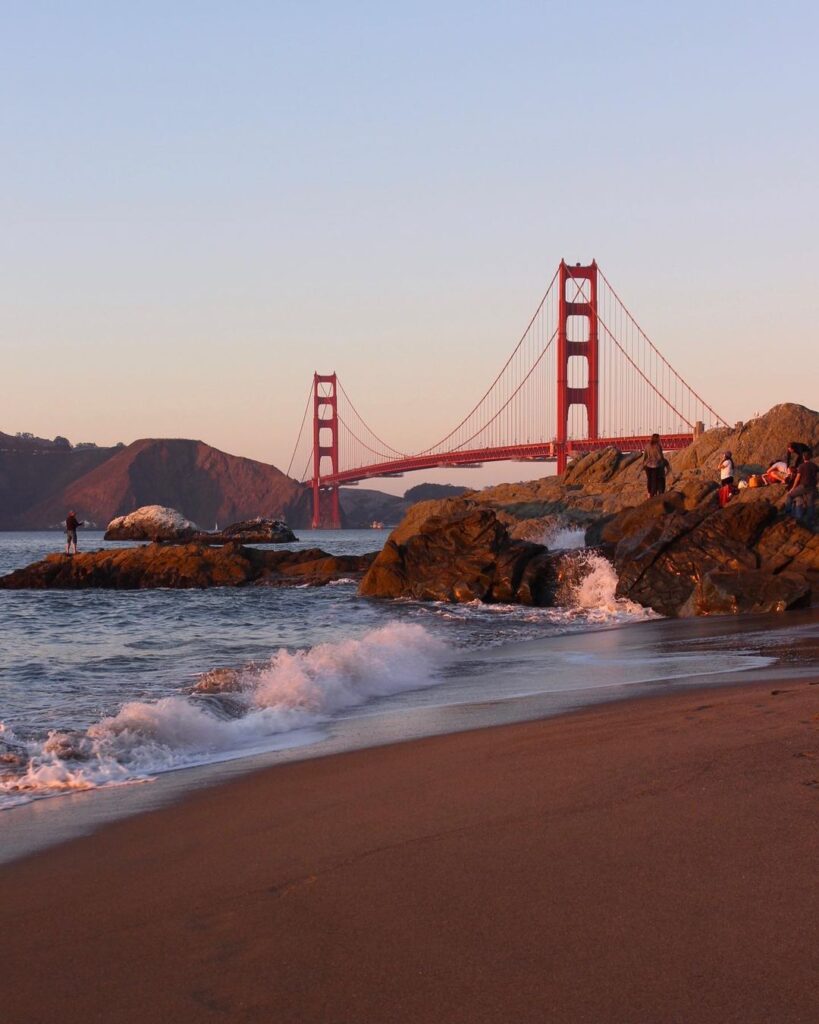
Baker Beach at sunset provides compelling compositions combining beach foreground with the bridge and Marin Headlands backdrop. The sandy beach often reflects the sunset colors beautifully, while beach-goers provide human scale and narrative context for your images. The horizontal orientation of the beach creates natural leading lines that draw viewers into your compositions.
FAQs
What is the most photographed place in San Francisco?
The Golden Gate Bridge, particularly from Battery Spencer viewpoint, stands as San Francisco’s most photographed location. The bridge’s iconic status, recognizable design, and consistent visual drama make it the default subject for millions of visitors annually. However, this popularity means you’ll compete with crowds for optimal positions and compositions. The Painted Ladies at Alamo Square, Twin Peaks, and Coit Tower also rank among the most-visited photography locations.
Where are the best secret photo spots in SF?
Secret photography spots in San Francisco include the 16th Avenue Tiled Steps, Wave Organ in the Marina, Hawk Hill for a less-crowded Golden Gate perspective, Salesforce Park’s elevated views, and Cayuga Park’s neighborhood murals. These locations offer compelling visuals with fraction of the crowds found at famous landmarks. Local photographers often discover additional gems through neighborhood exploration wandering residential hills, visiting smaller parks, and talking with locals reveals perspectives unknown to typical tourists.
What is the best time of year to photograph San Francisco?
The best time of year for San Francisco photography depends on your specific interests. Late September through October offers clear skies and comfortable temperatures ideal for general cityscape and landscape photography. Spring brings wildflower blooms, particularly at the Tulip Garden and throughout Golden Gate Park. Summer brings dense fog, which can be either limiting or dramatically photogenic depending on your aesthetic preferences. Fall provides the clearest, most stable weather patterns and the most comfortable temperatures for extended outdoor photography sessions.
Is the Golden Gate Bridge free to photograph?
Yes, the Golden Gate Bridge is absolutely free to photograph from public viewpoints. The bridge is a public structure, and numerous free viewing areas exist both on the San Francisco side (Battery Spencer, Golden Gate Overlook, Baker Beach, Marshall’s Beach, Fort Point) and Marin side (Hawk Hill, Battery Spencer). You can photograph from public roads and designated viewpoints without restriction or cost. The only expenses would be parking fees if you drive to a location rather than using public transit.
Final Photography Tips for San Francisco
San Francisco’s status as one of the world’s most photographed cities reflects its extraordinary natural and built environment. Whether you’re a professional photographer or casual Instagram user, the city offers countless opportunities to capture compelling images. Remember that the best locations often come with crowds, so visit early, stay late, or come during off-season months to maximize your creative freedom.
Invest in sturdy walking shoes because you’ll cover significant distances exploring neighborhoods and reaching viewpoints. Bring layers San Francisco’s microclimates and fog can change conditions rapidly. Use public transit and walking rather than driving, which allows you to stay alert to photographic opportunities you might miss from a car.
Finally, remember that the most instagrammable places in San Francisco aren’t ultimately about famous landmarks or crowded viewpoints. They’re about your unique perspective, the light at the moment you capture your images, and your ability to see beauty in both iconic locations and hidden neighborhoods alike. The best photographs come not from visiting the most famous locations, but from approaching any location with intention, creativity, and genuine curiosity about what makes San Francisco such an endlessly photogenic city.