
Chicago is a photographer’s paradise, and whether you’re a casual Instagram user or a serious content creator, you’ll find endless opportunities to capture stunning images throughout the city.
From the iconic metallic reflection of Cloud Gate (The Bean) to the hidden street art tucked away in Pilsen, Chicago offers a diverse range of visual experiences that appeal to every aesthetic. The city’s impressive architecture, vibrant neighborhoods, pristine lakefront, and dynamic street art scene create an Instagram goldmine where every corner tells a story worth sharing.
What makes Chicago particularly special for photographers is the incredible variety of backdrops available in a relatively compact area. You can capture sleek modern skyscrapers reflected in the Chicago River, historical landmarks that date back centuries, colorful murals that celebrate cultural heritage, and natural lakeside beauty all in the same day.
The city’s commitment to public art and outdoor spaces means you won’t need to pay expensive admission fees to get world-class shots.
This comprehensive guide covers 25 of the most instagrammable places in Chicago, complete with practical details like the best times to visit, pro photography tips, costs, and exact addresses.
We’ve organized these spots by neighborhood to make it easy to plan your photography adventure. Whether you’re visiting Chicago for the first time or you’ve lived here for years, this article will help you discover new angles and perfect your Chicago Instagram feed.
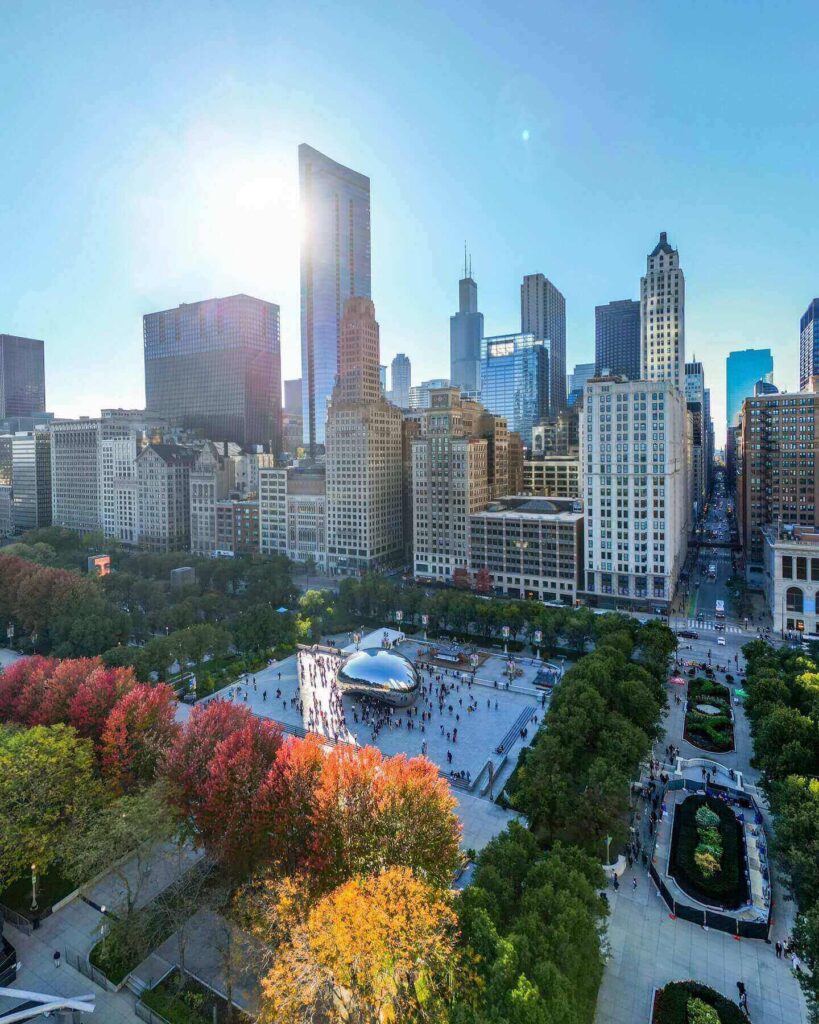
Table of Contents
Quick Tips for Photographing Chicago
Best Seasons and Weather
Summer (June through August) offers long daylight hours and vibrant greenery, while fall (September and early October) provides the stunning golden foliage that makes for incredibly warm-toned photographs.
Spring can be unpredictable, and winter, though beautiful with snow-covered architecture, can be challenging due to shorter daylight hours. For the most consistent, photogenic conditions, plan your Chicago photography trip between May and October.
Golden Hour and Lighting
Chicago’s golden hour typically occurs between 6:30-7:30 AM in summer and 4:30-5:30 PM in fall and winter. Arrive early at popular spots like Cloud Gate and the Riverwalk to avoid crowds during these prime photography times.
The low-angle sunlight during golden hour creates dramatic shadows and warm tones that make even familiar locations look extraordinary. Blue hour, about 20-40 minutes after sunset, is perfect for capturing the city’s illuminated architecture and bridges.
Camera Gear and Settings
You don’t need expensive equipment to capture stunning Chicago photos; modern smartphones produce excellent results. If you’re bringing a camera, pack a wide-angle lens (10-35mm) for architecture and landscapes, and a 50mm prime lens for street photography.
Use ISO 100-400 in daylight and increase to 1600-3200 for night photography. For reflective surfaces like Cloud Gate, bring a polarizing filter to reduce glare and enhance colors.
Permits and Legal Photography
Most of the locations in this guide are public spaces where personal photography is free and unrestricted. However, if you’re planning professional photo shoots or videos, Chicago requires permits from the Mayor’s Office of Film and Television.
Commercial shoots at indoor locations like the Art Institute or museums may require separate permission from those institutions. Always be respectful of other visitors and avoid blocking pathways with equipment.
25 Most Instagrammable Places in Chicago
Downtown & The Loop
1. Cloud Gate (The Bean)
Cloud Gate, affectionately known as ‘The Bean’ for its unique shape, is undoubtedly the most iconic photo spot in Chicago. This massive public sculpture in Millennium Park features a highly polished stainless steel surface that reflects the Chicago skyline, creating mind-bending images that seem almost impossible. The 66-foot-long elliptical structure acts as a gigantic curved mirror, distorting and reflecting your surroundings in surreal ways that make for endlessly interesting photos.
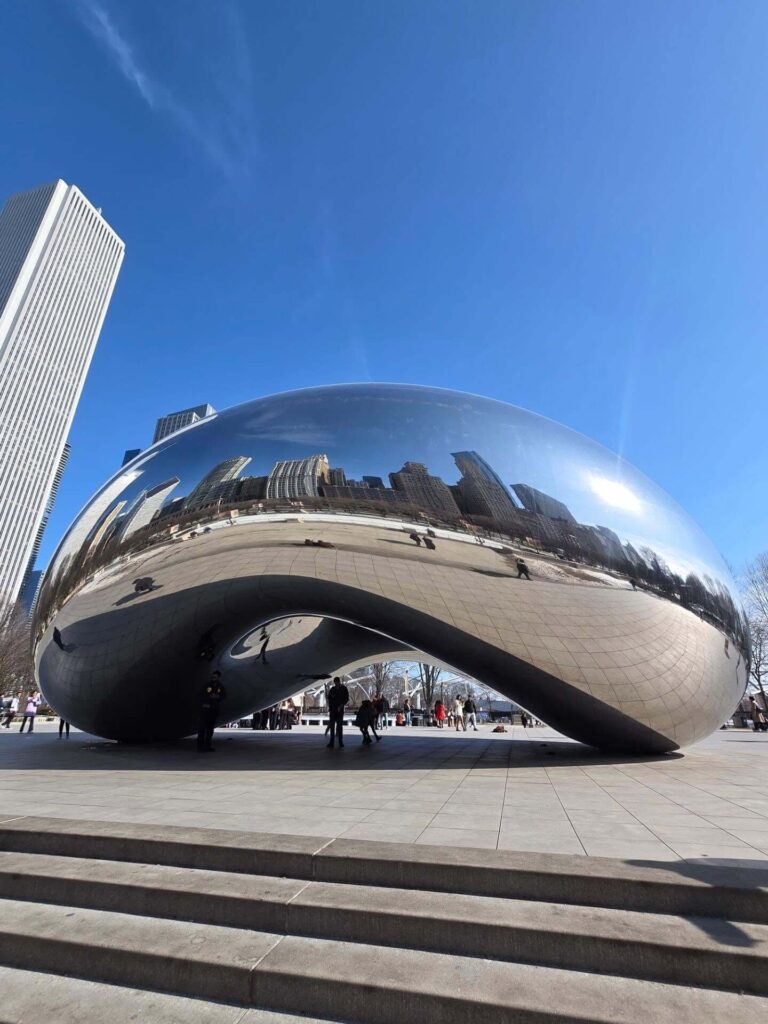
Why it’s Instagrammable: The reflective surface creates unlimited photography possibilities. From self-portraits where you appear elongated and distorted, to landscape shots where the entire skyline is reimagined in the polished steel, Cloud Gate offers something different from every angle. Instagram content creators love this spot because the novelty of the distorted reflections never gets old.
Best Time to Visit: Arrive between 6:30-7:30 AM before crowds gather. The early morning light creates stunning reflections, and you’ll have plenty of space for creative angles. Alternatively, visit on weekdays in late afternoon for shorter queues. Avoid midday and weekends when hundreds of tourists compete for the same shot.
Pro Tip: Get low and shoot upward to capture the Chicago skyline reflected in the Bean’s surface with dramatic perspective. For the best self-portraits, position yourself so the building reflections create interesting backgrounds. Try visiting after light rain when the surface is extra reflective and creates more vivid images.
Cost: Free
Location on Google Maps: 201 E Randolph St, Chicago, IL 60602
2. The Chicago Theatre
The Chicago Theatre is an architectural masterpiece and one of the most recognizable buildings in the city. Built in 1921, this ornate historic theater features a iconic marquee with brilliant lights that’s visible from blocks away. The grand French-style Baroque exterior and the famous vertical ‘CHICAGO THEATRE’ sign make it one of the most photographed buildings downtown. The illuminated marquee is particularly striking at dusk and nighttime, when the contrast against the dark sky creates dramatic, gallery-worthy shots.
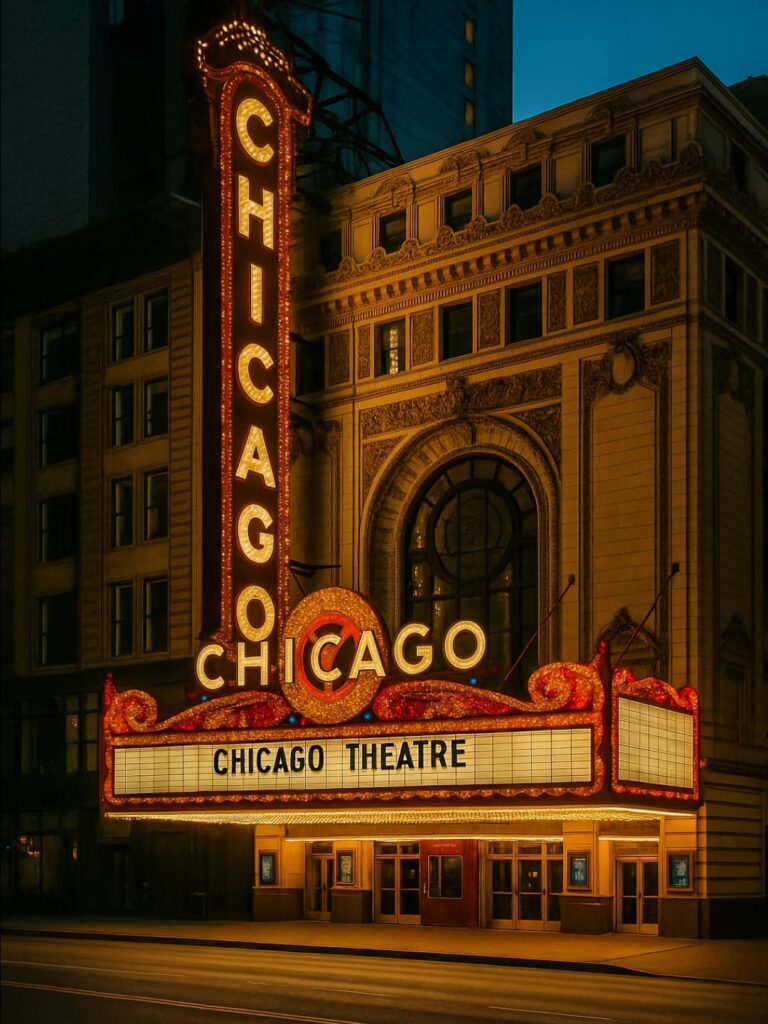
Why it’s Instagrammable: The vintage theater aesthetic, elegant architecture, and beautiful signage appeal to both minimalist photographers and those seeking bold architectural shots. The lighting creates instant drama and nostalgia, evoking a classic golden age of cinema. The building’s prominent position on State Street ensures you can find unique angles without special access.
Best Time to Visit: Twilight (just after sunset) is absolutely ideal, when the marquee lights pop against the darkening sky but there’s still ambient light in the surroundings. Avoid bright midday sunlight, which can wash out the building’s architectural details. Weekday evenings typically have fewer crowds than weekends.
Pro Tip: Shoot from directly across the street on State Street to capture the full marquee and vertical signage. Use a tripod during twilight for sharper night shots. Try capturing the reflection in nearby storefront windows for a creative, layered composition. The building’s ornate details are worth zooming in for close-up architectural shots.
Cost: Free (outdoor photography only)
Location on Google Maps: 175 N State St, Chicago, IL 60601
3. The Rookery Building
The Rookery is a stunning architectural gem designed by the legendary firm Burnham and Root in 1888, and later restored by Frank Lloyd Wright. The building’s interior atrium, featuring Wright’s distinctive geometric design, skylights, and ornamental details, is a photographer’s dream. The soaring ceilings, marble floors, and intricate architectural elements create a sense of grand elegance that photographs beautifully from virtually any angle. The natural light pouring through the skylight creates beautiful patterns and shadows throughout the day.
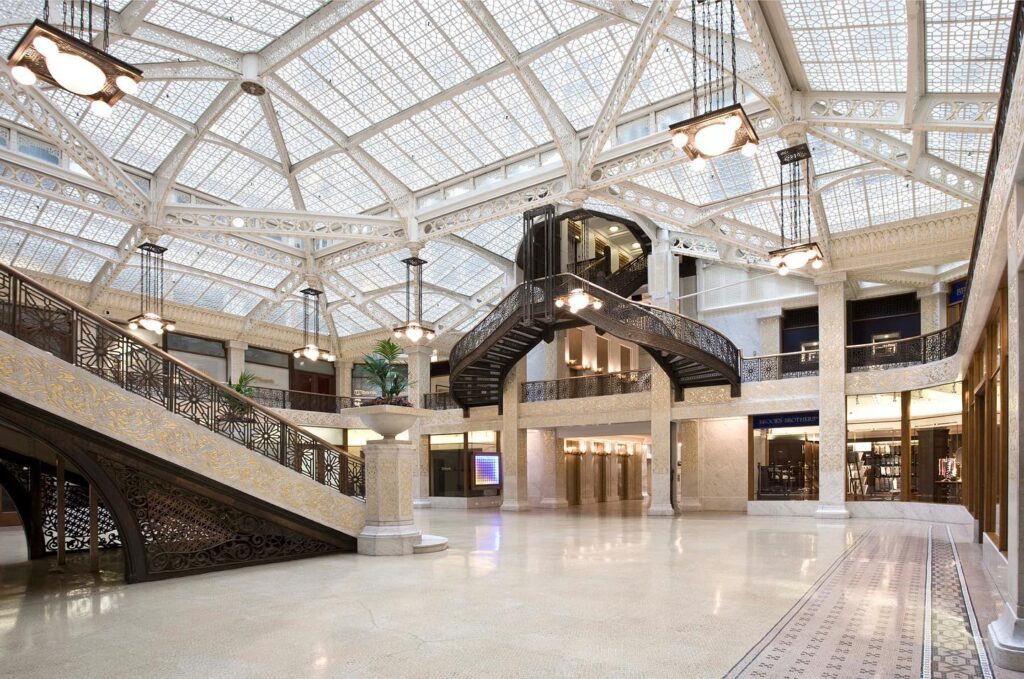
Why it’s Instagrammable: Unlike many historic buildings that require special viewing, The Rookery’s lobby is accessible during business hours and remains strikingly beautiful. The combination of old-world elegance and Wright’s geometric design elements offers sophisticated, artistic photo opportunities. The light and shadow play creates dynamic compositions that work well in both color and black-and-white photography.
Best Time to Visit: Visit mid-morning (10 AM – 12 PM) when sunlight from the skylight is most dramatic but the space isn’t overly crowded with office workers. Weekdays tend to be quieter than weekends. The quality of light changes throughout the day, so experimentation is worthwhile.
Pro Tip: Look up and capture the geometric patterns of the skylight overhead, which creates beautiful symmetrical compositions. Get down low and shoot upward to emphasize the soaring height of the atrium. The marble floors create excellent leading lines, compose your shots to guide the viewer’s eye deeper into the space. Visit multiple times if possible, as the changing light throughout the day offers completely different looks.
Cost: Free
Location on Google Maps: 209 S LaSalle St, Chicago, IL 60604
4. Willis Tower Skydeck & The Ledge
Willis Tower, formerly known as the Sears Tower, is Chicago’s tallest building and was once the tallest in the world. At 1,450 feet, it offers unparalleled city views from the 103rd-floor Skydeck. The recent addition of The Ledge, a glass platform that extends 4.3 feet outside the building, provides an adrenaline-pumping photography experience where you’ll feel suspended over the Chicago streets below. The 360-degree views allow you to capture virtually every neighborhood in Chicago from one location.
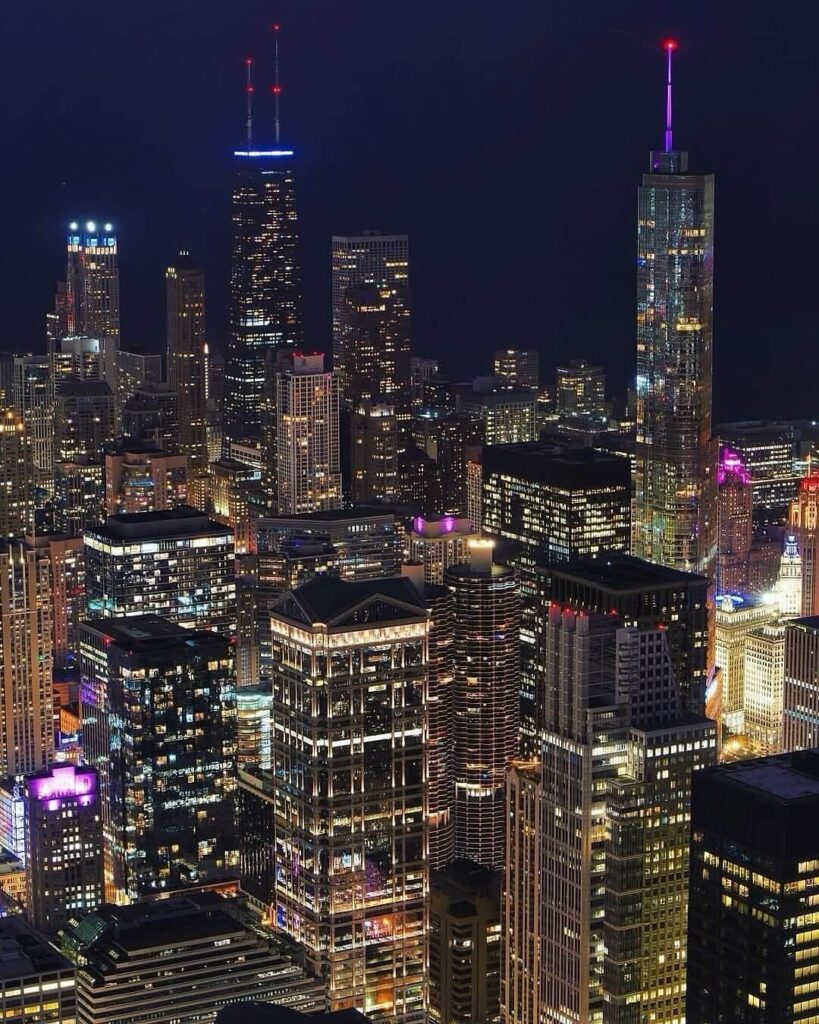
Why it’s Instagrammable: The combination of dramatic height and unprecedented city views creates compelling content. The Ledge offers uniquely thrilling photos where you appear to be standing in thin air above the city, a guaranteed way to generate engagement. Day and night views are equally spectacular, offering completely different aesthetics.
Best Time to Visit: Clear days provide the most dramatic long-distance views, but the tower offers different beauty in any weather. Sunset and early evening (2-4 hours before sunset) provide the best light balance for capturing both the cityscape and foreground details. Arrive early to beat crowds, especially on weekends. Sunset can be crowded but offers magical golden and blue hour lighting.
Pro Tip: The Ledge photos require courage but deliver viral-worthy content; lean in close and use wide-angle lenses to emphasize the height and emptiness below. Capture reflections in the glass platform itself for layered compositions. Wide-angle lenses work best for panoramic city views, while telephoto lenses can isolate specific neighborhoods and landmarks. Visit on a clear day for the most impressive distant views.
Cost: $32.25 adults (prices vary by booking option)
Location on Google Maps: 233 S Wacker Dr, Chicago, IL 60606
5. The Art Institute Lions
Standing guard at the main entrance of the Art Institute of Chicago are two iconic bronze lion statues, affectionately nicknamed ‘Northerly’ and ‘Southerly’ by locals. These magnificent sculptures have been watching over Michigan Avenue since 1894 and have become one of Chicago’s most beloved symbols. The imposing lions, each weighing over 6 tons, are particularly stunning when you include the architectural details of the Art Institute’s building in your compositions.
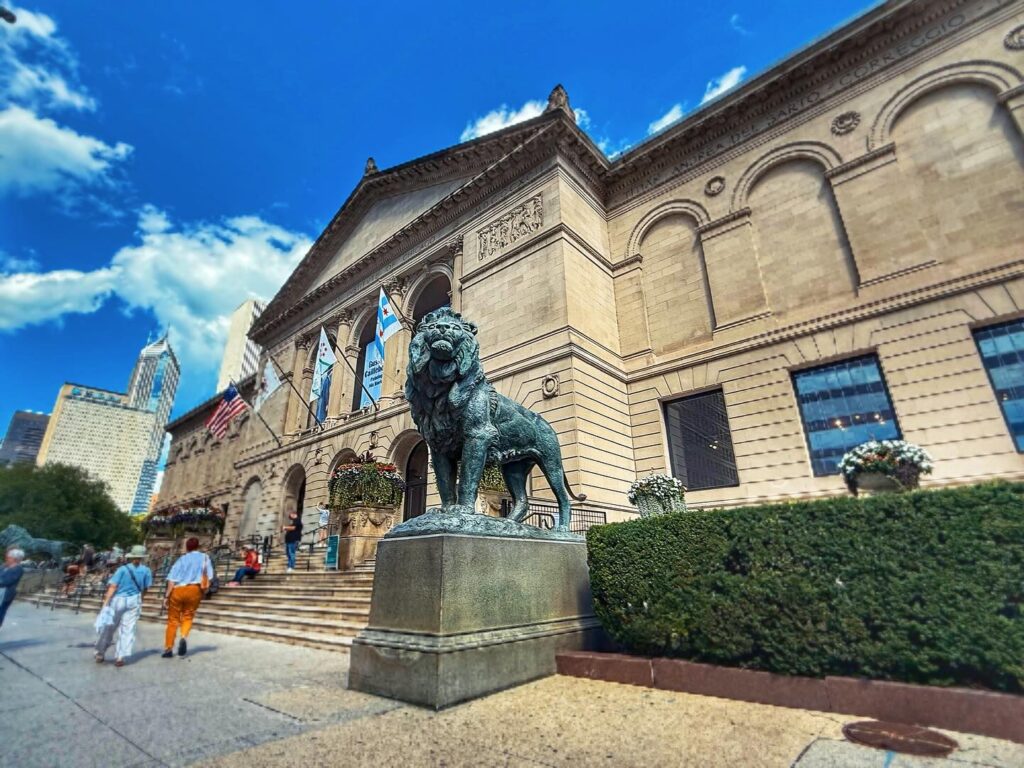
Why it’s Instagrammable: The lions offer a classic, iconic Chicago photo opportunity with history and grandeur. They serve as a perfect foreground element with the beautiful Beaux-Arts architecture of the museum behind them. The sculptures are textured beautifully by natural light, and their dignified poses create compelling compositions. These lions are instantly recognizable to Chicagoans and tourists alike, giving your photos immediate context.
Best Time to Visit: Visit in the morning or late afternoon to avoid harsh midday shadows on the sculptures. Spring and fall lighting is particularly flattering, and the greenery adds natural color to compositions. Weekday afternoons are typically less crowded than weekends. The lions photograph beautifully in overcast conditions when the light is diffuse and even.
Pro Tip: Don’t just shoot straight-on, try low-angle shots that make the lions appear more imposing and powerful. Include the architectural details of the museum to contextualize the shot. Capture people interacting with the statues (touching the paws, posing) for a more dynamic narrative. Wide-angle shots showing both lions work well, as do tighter cropped shots on individual faces.
Cost: Free (outdoor public space)
Location on Google Maps: 111 S Michigan Ave, Chicago, IL 60603
6. Chicago Cultural Center & The Tiffany Dome
The Chicago Cultural Center houses the world’s largest Tiffany dome ceiling, a breathtaking 38-foot diameter masterpiece created in 1897 with over 30,000 individual glass pieces. The dome’s intricate mosaic of colored glass catches light beautifully throughout the day, creating ever-changing patterns of illumination. This stunning architectural interior serves as both a cultural institution and a world-class photography location that rivals any paid venue.
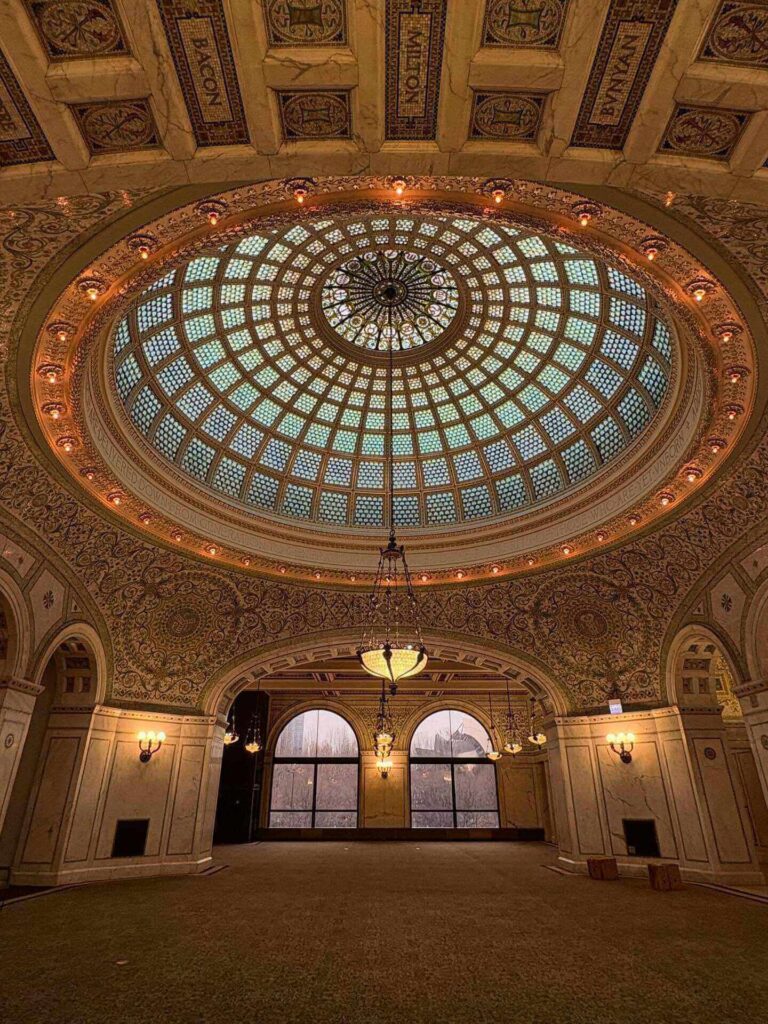
Why it’s Instagrammable: The Tiffany dome is genuinely one of the most beautiful things you can photograph in Chicago, and the pure visual drama makes for impressive photos. The colors are vivid, the details are intricate, and the scale is genuinely impressive. Symmetry lovers particularly adore this location, as the dome’s geometry creates naturally compelling compositions. Best of all, it’s completely free and open to the public.
Best Time to Visit: Visit between 11 AM and 3 PM when natural light streams through the dome most dramatically. This timing illuminates the glass in vibrant colors. Weekday visits mean fewer people blocking your shots. The dome’s lighting is less impressive on very overcast days, so partly cloudy days with some sun are ideal.
Pro Tip: Bring a wide-angle lens to capture the entire dome in a single shot, or use a telephoto lens to isolate specific sections of the dome’s intricate tilework for abstract compositions. Shoot in RAW format to capture the dome’s colors most accurately. Try positioning yourself directly underneath the dome and shooting straight up for a symmetrical, centered composition. Polarizing filters can help reduce reflections on any glass protecting the dome.
Cost: Free
Location on Google Maps: 78 E Washington St, Chicago, IL 60602
River North & Magnificent Mile
7. The Wrigley Building
The Wrigley Building is an architectural icon featuring stunning Spanish Colonial Revival design with a distinctive white glazed terra-cotta exterior. Completed in 1921 and standing on the north bank of the Chicago River, this building is particularly magical when illuminated at night. The illuminated architecture against the dark sky creates one of Chicago’s most gorgeous nighttime photos, especially when reflected in the river below. The building’s intricate details are highlighted beautifully by professional lighting.
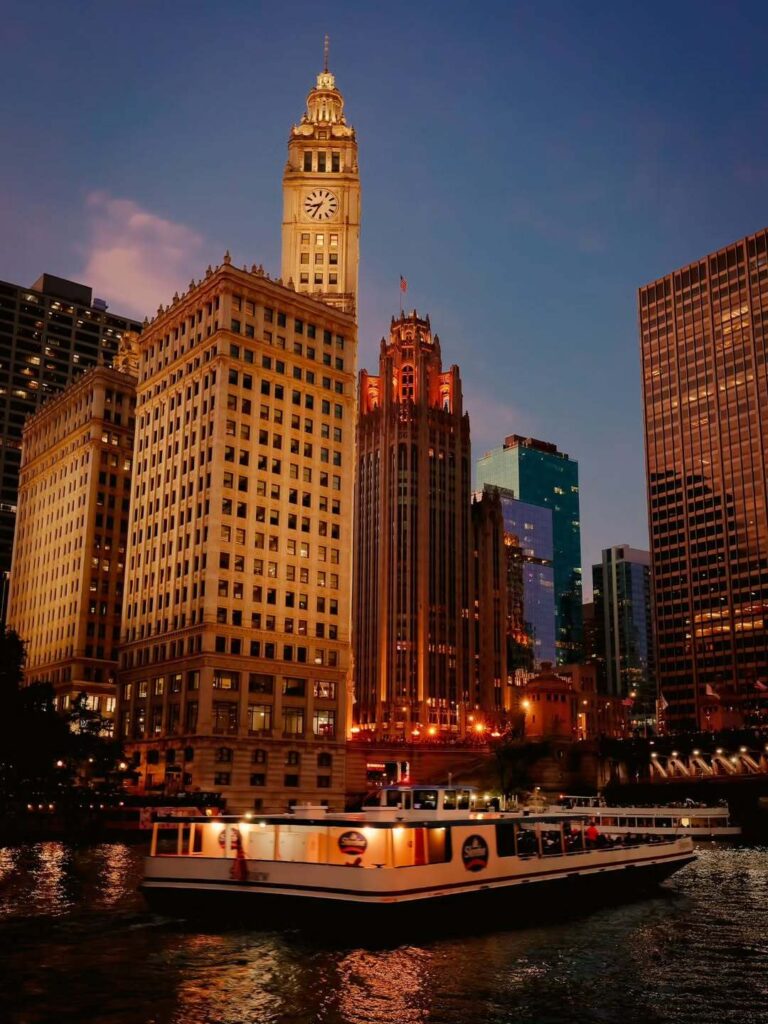
Why it’s Instagrammable: The Wrigley Building stands out from Chicago’s modern skyscrapers with its distinctive classical elegance. The white terra-cotta exterior photographs beautifully in any light but reaches peak photogenic status when it’s illuminated after dark. The ornate details and the reflection in the river create multiple compositional opportunities. Night photographers particularly love this location for its dramatic contrast and warm lighting.
Best Time to Visit: The building is most spectacular in twilight and full darkness when the architectural lighting activates. Visit 30-45 minutes after sunset for the best balance of building illumination and remaining ambient light. Blue hour (20-40 minutes after sunset) creates particularly beautiful skies behind the lit building. Weekday evenings are less crowded than weekends.
Pro Tip: Shoot from across the Chicago River to capture the building with its water reflection; the Michigan Avenue bridge area offers great vantage points. Use a tripod for night photography to avoid motion blur. Frame the building against the night sky to emphasize its distinctive silhouette and ornamental details. Arrive before full darkness to capture the transition from twilight to night, which often produces the most interesting color palettes.
Cost: Free
Location on Google Maps: 400 N Michigan Ave, Chicago, IL 60611
8. DuSable Bridge with Wrigley Building Backdrop
The DuSable Bridge is a historic bascule bridge spanning the Chicago River and provides one of the most beautiful vantage points in the city, particularly for capturing the Wrigley Building illuminated against the night sky. The bridge itself features distinctive leaf-shaped pylons and ornate tilework that adds architectural interest to your compositions. From this location, you can capture the Wrigley Building, historic skyline, and the river all together.
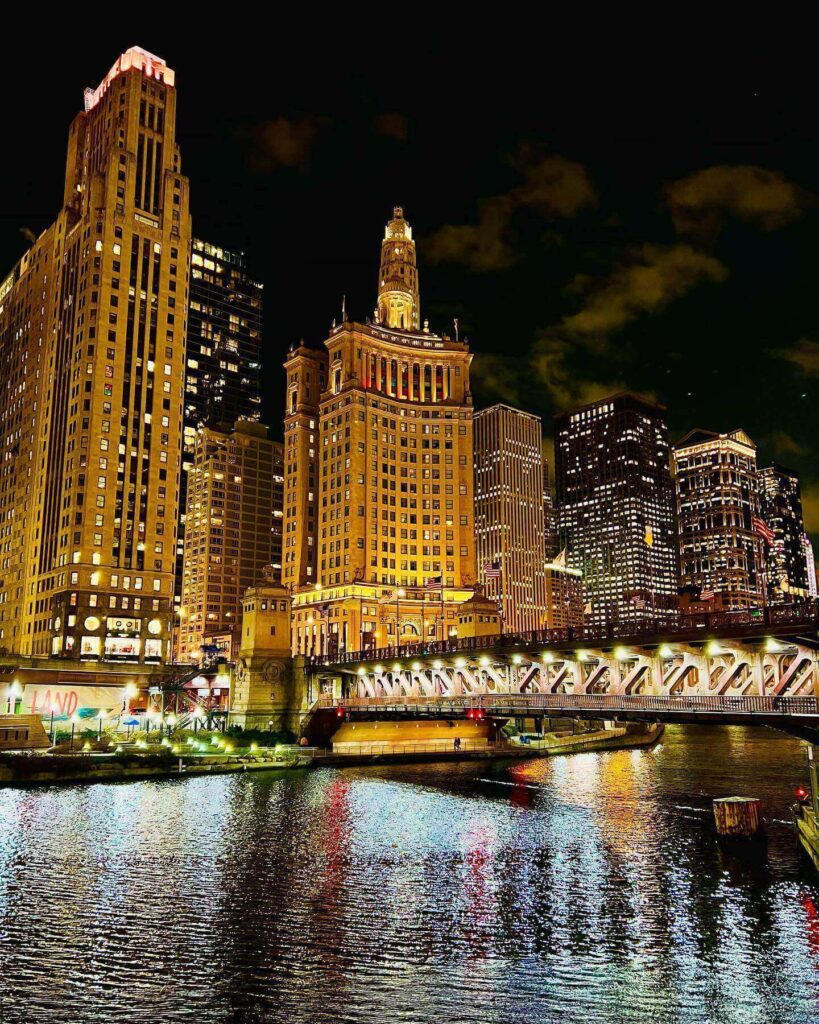
Why it’s Instagrammable: The composition of the DuSable Bridge in the foreground with the illuminated Wrigley Building and Chicago River creates a stunning layered photograph with multiple points of interest. The bridge’s architectural elements add texture and depth to the image. This location offers something different from cloud-level observation deck shots, providing a street-level perspective of the city’s grandeur.
Best Time to Visit: Evening and nighttime hours are most spectacular when the Wrigley Building’s lights are activated and the river reflects the surrounding architecture. Arrive just before sunset and stay through the blue hour for the best color palette. Weekday evenings are typically less crowded than weekends, giving you more space to compose shots.
Pro Tip: Position yourself at the bridge’s center or edges to frame the Wrigley Building through the bridge’s structure. Use the bridge’s architectural elements as framing devices in your composition. Try shooting at different focal lengths, wide angles capture context, while telephoto lenses isolate the Wrigley Building. The reflection of lights in the water below creates additional visual interest.
Cost: Free
Location on Google Maps: Michigan Ave at Chicago River (intersection)
9. Marina City (The Corncob Buildings)
Marina City’s twin towers, completed in 1964, are instantly recognizable as Chicago’s distinctive ‘corncob’ buildings. These cylindrical towers feature curved balconies that spiral around the structure, creating a unique silhouette unlike any other building in the city. The circular form and repetitive balcony pattern create natural geometric compositions that appeal to architectural photographers. The buildings photograph beautifully from water-level vantage points on the Chicago River or from street level looking up.
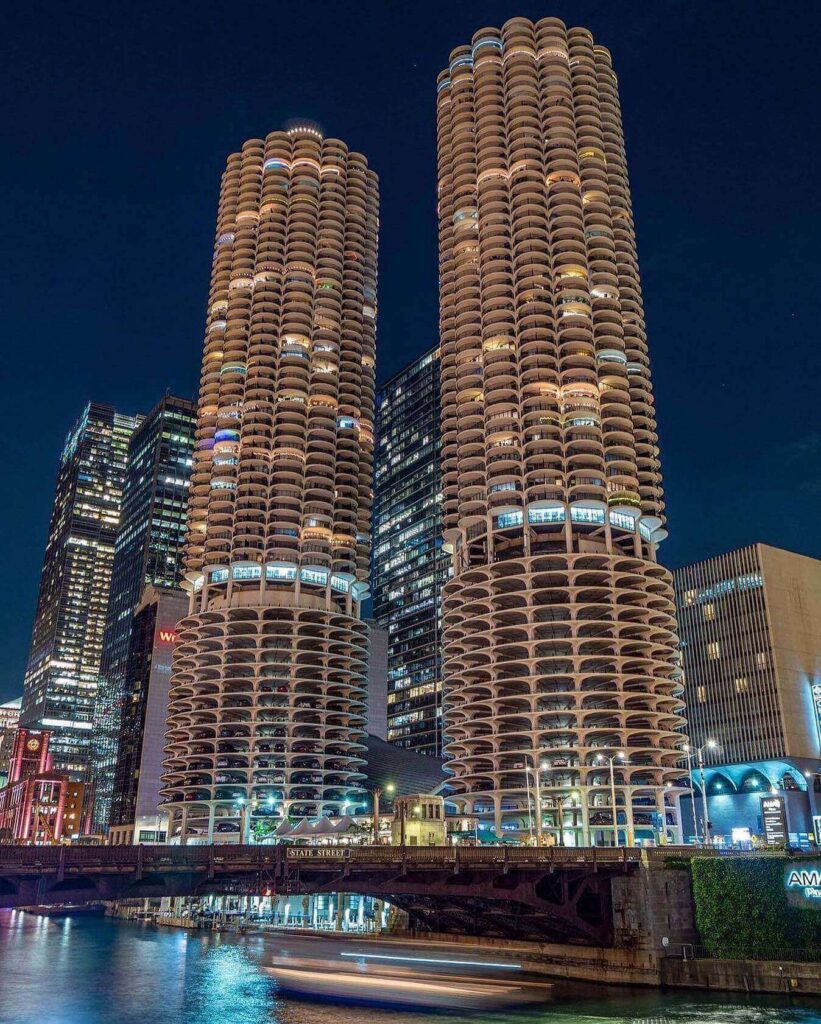
Why it’s Instagrammable: The distinctive circular design and repetitive curved patterns are inherently photogenic and Instagram-friendly. The unusual architecture stands out from typical rectangular skyscrapers, providing instantly recognizable Chicago imagery. The buildings’ curved balconies create natural leading lines that guide the viewer’s eye through your photograph. Both minimalist and compositional photographers find compelling elements here.
Best Time to Visit: The buildings look great in any weather, but dramatic skies in the background make for more interesting photos. Morning light casts shadows that emphasize the building’s three-dimensional form. Blue hour and early evening shots create beautiful mood and atmosphere. Visit weekdays for fewer crowds and easier access to prime shooting locations along the river.
Pro Tip: Position yourself at water level on the Chicago Riverwalk to capture the towers’ full height and circular form. Wide-angle lenses work well for showing the buildings’ scale and dominance in the skyline. Zoom in on the curved balconies to capture abstract compositions that emphasize the geometric patterns. The reflections in the river below create additional compositional opportunities.
Cost: Free
Location on Google Maps: 300 N State St, Chicago, IL 60654
10. Trump Tower Riverwalk
Trump Tower’s Riverwalk section offers stunning reflections of the Chicago skyline in its polished surfaces and glass features. This modern waterfront development combines contemporary architecture with river views, creating photography opportunities that showcase Chicago’s modern face. The building’s sleek glass and metal surfaces create interesting reflections and patterns, while the riverwalk location provides elevated vantage points for capturing the river and surrounding skyscrapers.
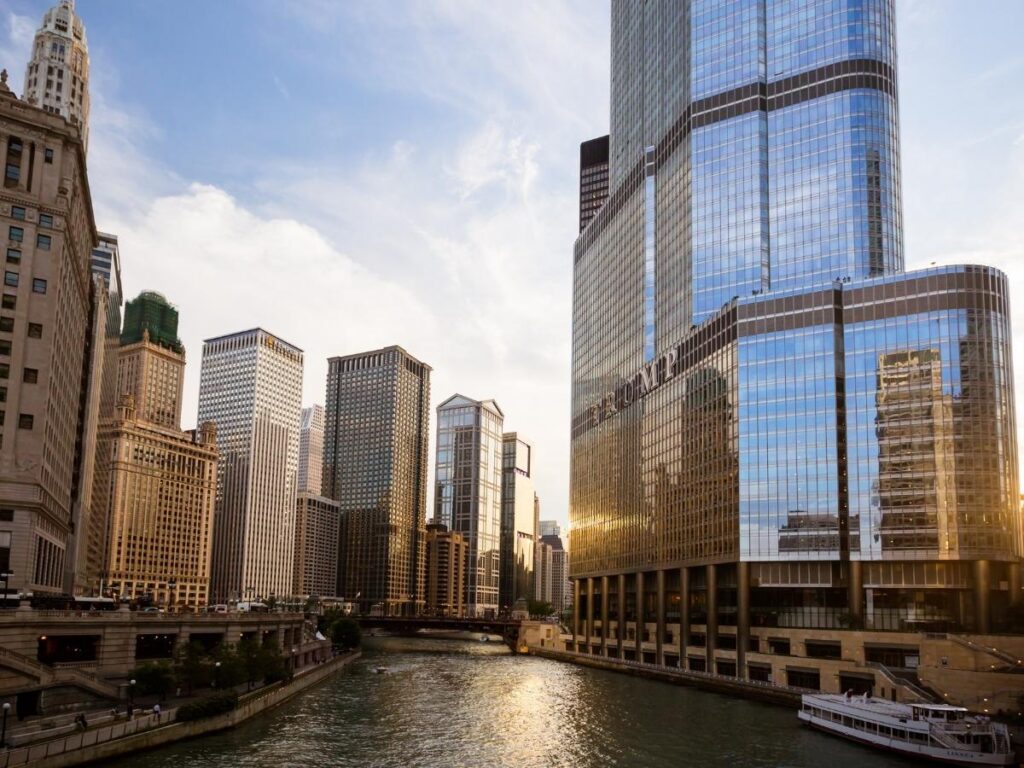
Why it’s Instagrammable: The polished surfaces create clean, modern reflections that appeal to contemporary architectural photographers. The river walk location provides a public vantage point to capture both modern and historic Chicago architecture together. The water views add dynamic elements to compositions. The area is less crowded than some other downtown spots, allowing for creative freedom.
Best Time to Visit: Visit in the morning or late afternoon for the most flattering light angles. The reflective surfaces create interesting effects in any weather, but clear days provide the most dramatic reflections. Weekday mornings and afternoons are quieter than evenings and weekends. Golden hour creates particularly warm and flattering light on the building’s surfaces.
Pro Tip: Focus on the reflections in the polished surfaces; sometimes the reflection is more interesting than the subject itself. Get close to glass surfaces to capture abstract compositions. Include the river in the foreground to show the Trump Tower’s relationship to the waterfront. The elevated riverwalk provides unique angles looking down onto the river and surrounding architecture.
Cost: Free
Location on Google Maps: 401 N Wabash Ave, Chicago, IL 60611
The Riverwalk & Lakefront
11. Chicago Riverwalk
The Chicago Riverwalk is a 1.25-mile-long waterfront path that transformed the Chicago River into a public gathering space and photography destination. The riverwalk features a mix of restaurants, parks, art installations, and river access, all with skyline views in the background. Whether you’re photographing the architectural reflections in the water, people kayaking, or the illuminated buildings at night, the Riverwalk offers constantly changing visual interest. Multiple plazas and viewing areas provide different vantage points throughout the walk.
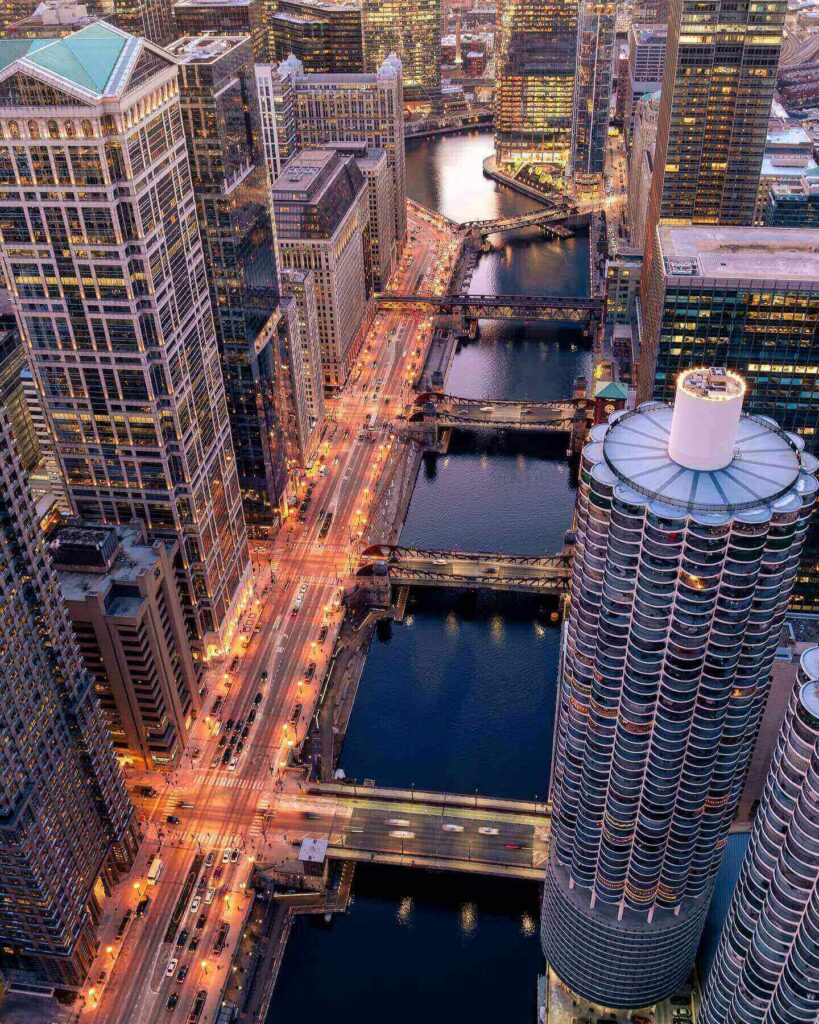
Why it’s Instagrammable: The Riverwalk combines people, activities, architecture, and water into one location, providing multiple storytelling angles. You can capture lively people shots, architectural details, food and drink moments, and serene water reflections all in the same location. The constantly-changing lighting throughout the day provides different moods. The water reflections of the buildings create stunning mirror images.
Best Time to Visit: Visit during golden hour (sunset time) for the most beautiful light on the buildings and riverwalk. The Riverwalk is lovely at any time of day, but evening visits offer restaurant atmosphere and cooler temperatures. Sunny days provide more dramatic reflections in the water. Weekend afternoons are lively with people, while weekday mornings are more peaceful and less crowded.
Pro Tip: Capture reflections of the skyline in the still water; polarizing filters enhance these. Frame shots with the architecture in the upper portion and water reflections in the lower portion for balanced compositions. Include kayakers and people to add human interest and scale to your architectural shots. Shoot at different times to capture the transformation from day to night, showing how the scene changes with light.
Cost: Free
Location on Google Maps: Multiple access points along E Upper Wacker Dr, Chicago, IL 60601
12. Buckingham Fountain in Grant Park
Buckingham Fountain is one of the world’s largest fountains and a quintessential Chicago landmark since 1927. The massive central fountain operates daily from spring through fall, shooting water up to 150 feet into the air. The fountain is illuminated at night with a colorful light show, creating a spectacular image against the night sky. During the day, the fountain’s white marble basin and bronze sculptural elements are striking architectural features. The surrounding Grant Park location provides open space for creative compositions.
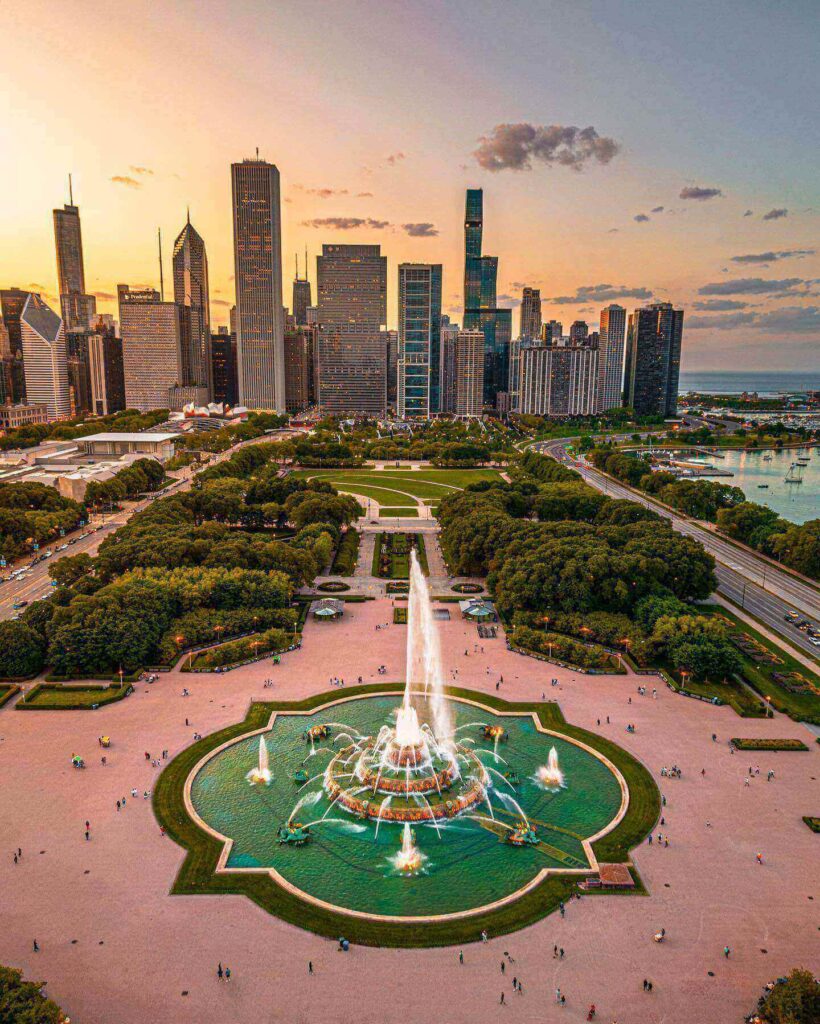
Why it’s Instagrammable: The fountain’s massive scale and dramatic water jets create inherently dynamic photographs. The colorful night illumination is particularly Instagram-friendly, creating vibrant imagery. The fountain’s position in open Grant Park allows for clean backgrounds and multiple composition options. The combination of the fountain with the Chicago skyline in the background creates iconic cityscape shots.
Best Time to Visit: Evening and night visits show off the colorful light show (typically from 8 PM onward). Twilight, just after sunset, provides a balance of fountain illumination and remaining sky color. Arrive 30-45 minutes before the light show starts to secure good positions. Weekday visits are less crowded than weekends. Clear nights provide the best contrast between the illuminated fountain and dark sky.
Pro Tip: Use a fast shutter speed to freeze the fountain’s water jets in mid-air, or use a slower shutter speed to create a dreamy, flowing water effect. Include the skyline in the background for context and scale. The colorful night lighting is most interesting when it’s fully dark, so arrive after sunset. Position yourself at different distances to capture both close-up fountain details and wide-angle cityscape shots.
Cost: Free
Location on Google Maps: 301 S Columbus Dr, Chicago, IL 60604
13. North Avenue Beach
North Avenue Beach offers a rare combination of authentic sandy beach and dramatic Chicago skyline views, making it one of the most scenic beaches in the country. This lakefront location provides a different perspective on Chicago, showing the city from the water looking in. The beach features lifeguard stations, volleyball courts, and open sand that create interesting foreground elements. The sunset views over the city skyline are particularly spectacular from this vantage point.
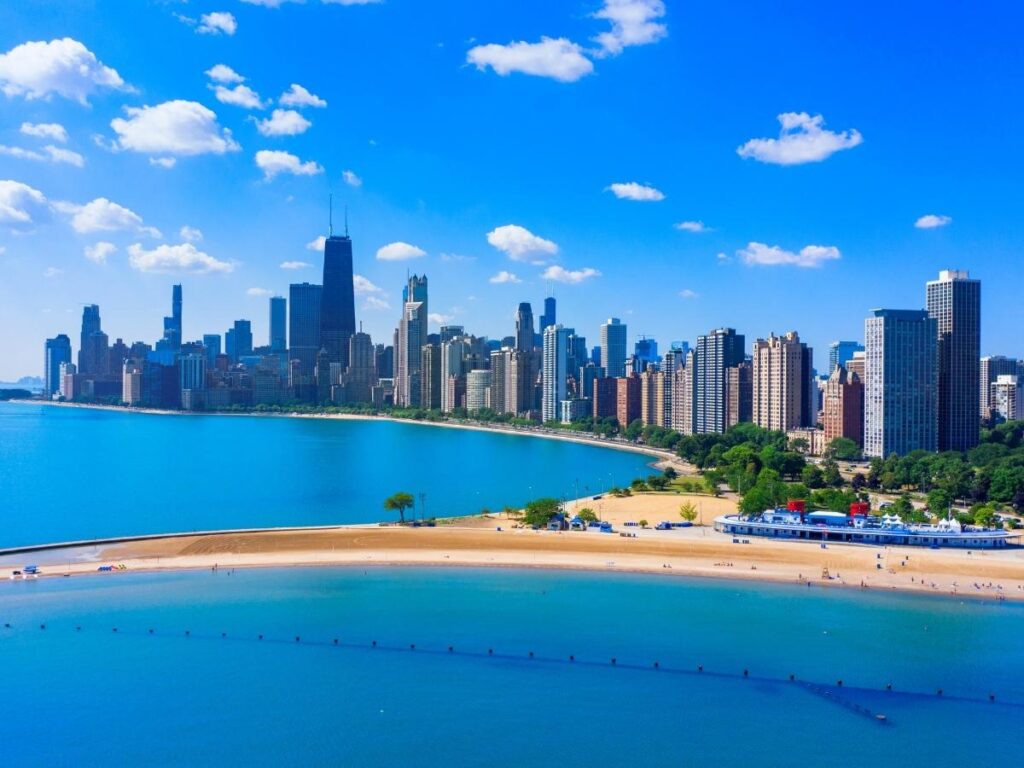
Why it’s Instagrammable: The unique combination of beach, water, and urban skyline creates visually interesting compositions that feel both vacation-like and urban. The beach element makes for refreshing content that contrasts with typical city photography. People engaging in beach activities (volleyball, swimming, lounging) add human interest and dynamic energy. Golden hour sunset photography is particularly striking here.
Best Time to Visit: Visit in summer (June-August) when water conditions are pleasant and beach crowds provide activity. Sunset is the most beautiful time, offering warm golden light and silhouetted skylines. Late afternoon through evening provides the best photography conditions. Weekday visits are less crowded than weekends, but weekend beach activity creates more interesting imagery.
Pro Tip: Include the sandy beach in the foreground, the water in the middle ground, and the skyline in the background for layered depth. The lifeguard stations provide interesting architectural and compositional elements. Capture people playing volleyball or swimming for dynamic action shots. Sunset reflections in the wet sand create beautiful compositional opportunities. Try both wide-angle shots showing the full scene and telephoto shots isolating the skyline.
Cost: Free
Location on Google Maps: 1600 N Lake Shore Dr, Chicago, IL 60614
14. Milton Lee Olive Park
Milton Lee Olive Park is a hidden gem on Chicago’s lakefront that offers stunning views of Navy Pier and the downtown skyline without the typical tourist crowds. This quiet, green space provides a peaceful alternative to more crowded attractions while still offering excellent photography opportunities. The park features waterfront paths, green spaces, and multiple vantage points for capturing Navy Pier’s iconic Ferris wheel and the surrounding cityscape. The reduced foot traffic makes it easier to find clear sightlines and unique compositions.
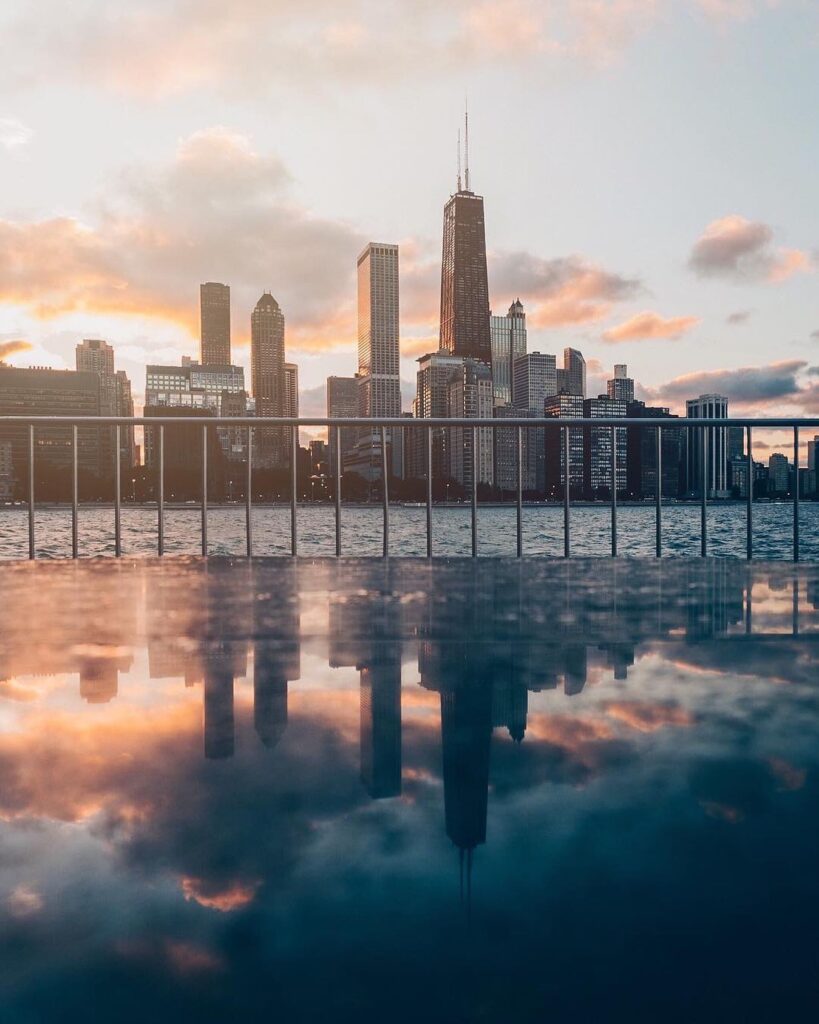
Why it’s Instagrammable: The park offers authentic Chicago waterfront beauty without the hyper-touristy atmosphere of other locations. The views of Navy Pier are just as impressive as from more crowded spots but with more photographic freedom. The natural setting combined with city views provides interesting compositional contrast. Fewer crowds mean you can take your time and experiment with different angles.
Best Time to Visit: Visit during golden hour (1-2 hours before sunset) for the most beautiful light. Weekday afternoons are typically quiet, offering peaceful photography conditions. Clear days with blue skies provide the most dramatic backdrop for city shots. Summer and early fall offer the most pleasant weather and longest daylight hours.
Pro Tip: Position yourself along the waterfront path to capture Navy Pier with the water in the foreground. The park’s vegetation can frame your shots naturally. Look for interesting foreground elements like rocks, plants, or paths to add depth. Different vantage points throughout the park offer varying perspectives on Navy Pier and the skyline. The reduced crowds mean you can set up for longer exposures or more deliberate compositions.
Cost: Free
Location on Google Maps: 645 E 15th Pl, Chicago, IL 60616
Lincoln Park & Old Town
15. Lincoln Park Conservatory
Lincoln Park Conservatory is a stunning Victorian-era greenhouse featuring lush tropical plants, exotic flowers, and botanical beauty year-round. The glass structure creates a humid, plant-filled environment that offers a completely different aesthetic from Chicago’s urban landscape. The conservatory features distinct sections including a Palm House, Orchid House, Tropical House, and seasonal plant displays. The glass architecture combined with vibrant green plants creates naturally Instagram-worthy compositions.
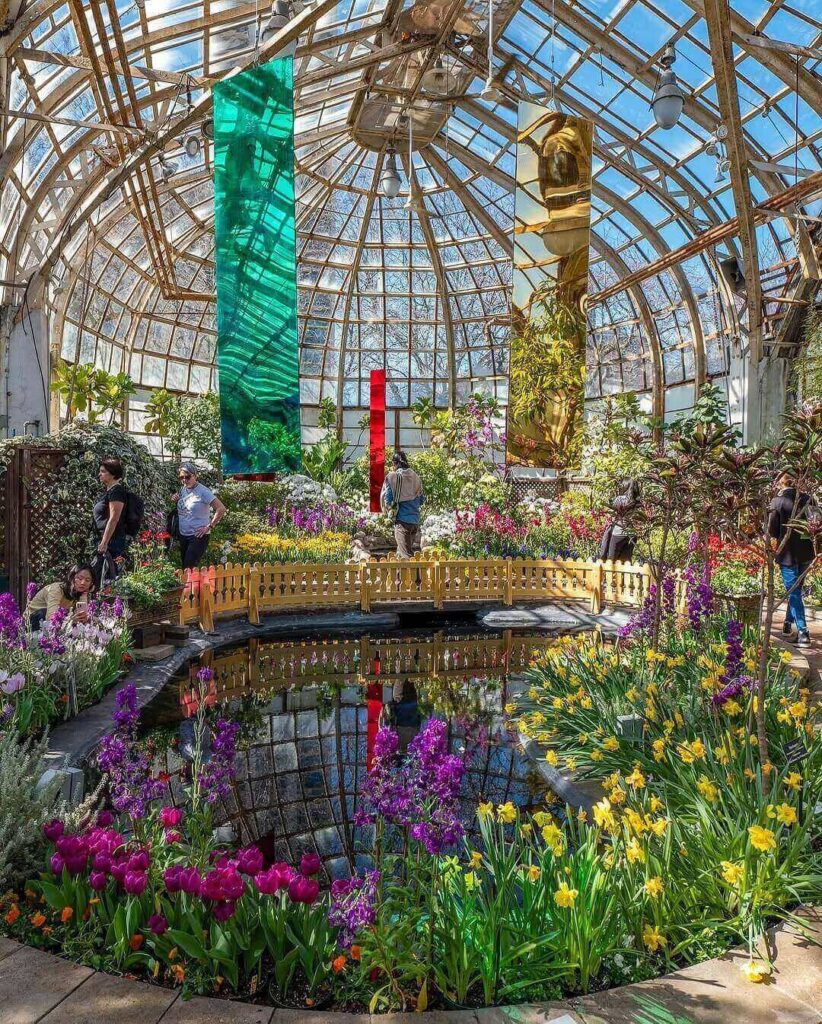
Why it’s Instagrammable: The combination of botanical beauty and architectural glass creates stunning, colorful photographs. The lush greenery provides a refreshing contrast to typical urban Chicago shots. Flowers and exotic plants offer vibrant color and interesting textures. The glass architecture creates interesting reflections and patterns. The location is perfect for rainy day photography when you want to stay indoors and still get great shots.
Best Time to Visit: Visit on overcast days when diffused light is ideal for plant photography; harsh direct sunlight can create difficult shadows among dense foliage. Spring (March-May) and summer (June-August) feature the most vibrant plant displays and flowers. Weekday visits are quieter and less crowded than weekends. Early morning or late afternoon light filters beautifully through the glass.
Pro Tip: The glass structure creates opportunities for reflections and layered compositions, capture both the plants and the glass reflections together. Macro lenses work beautifully for detailed flower and plant close-ups. The abundant greenery can create monochromatic green compositions or focus on individual flowers for pops of color. The glass creates interesting light patterns. Use these to your compositional advantage.
Cost: Free
Location on Google Maps: 2391 N Stockton Dr, Chicago, IL 60614
16. Lincoln Park Zoo Honeycomb (Education Pavilion)
The Honeycomb is a modern architectural addition to the Lincoln Park Zoo, featuring beautiful curved wooden arches that create a striking geometric structure. This Education Pavilion’s distinctive design uses repeating arch patterns that create compelling visual compositions from virtually any angle. The natural wood material and organic curves contrast beautifully with the surrounding urban environment. The structure is particularly photogenic in morning light when shadows emphasize the curved forms.
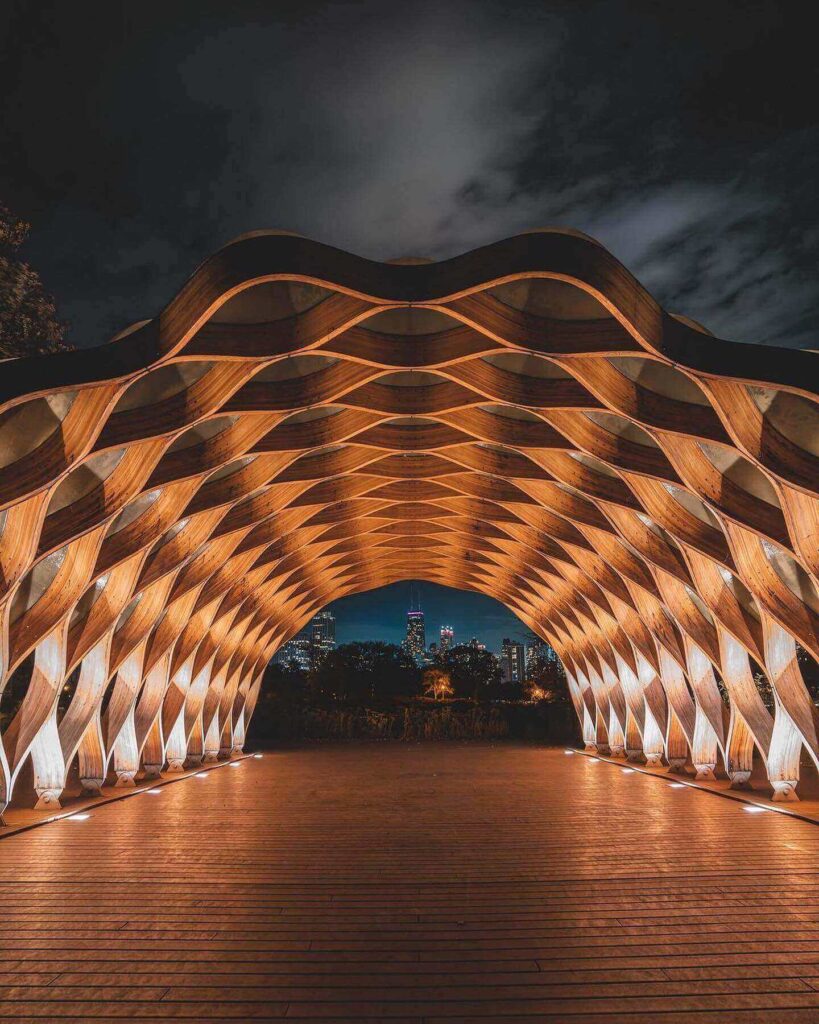
Why it’s Instagrammable: The Honeycomb’s distinctive architecture is inherently photogenic with its repeating curved patterns. The structure creates natural frames and leading lines that guide viewers through compositions. The organic wood material provides warmth and texture. The minimalist, geometric design appeals to contemporary architectural photographers. The structure photographs beautifully in both color and black-and-white.
Best Time to Visit: Visit in morning hours (8-10 AM) when the low sun angle creates dramatic shadows that emphasize the curved architecture. Cloudy days provide even, diffuse light that’s ideal for capturing the structure’s form. Weekday visits are less crowded than weekends. The shadows constantly change throughout the day, so consider multiple visits for different perspectives.
Pro Tip: The repeating arches create natural rhythmic patterns that compose shots to emphasize this geometric repetition. Wide-angle lenses work well for capturing the full structure and its scale. Zoom in on specific arch sections for abstract compositions emphasizing the curves and shadows. Shoot from underneath to capture the arch structure against the sky. Both color and black-and-white photography work beautifully here.
Cost: Free (zoo admission not required for this outdoor pavilion)
Location on Google Maps: 2001 N Clark St, Chicago, IL 60614
17. Alfred Caldwell Lily Pool
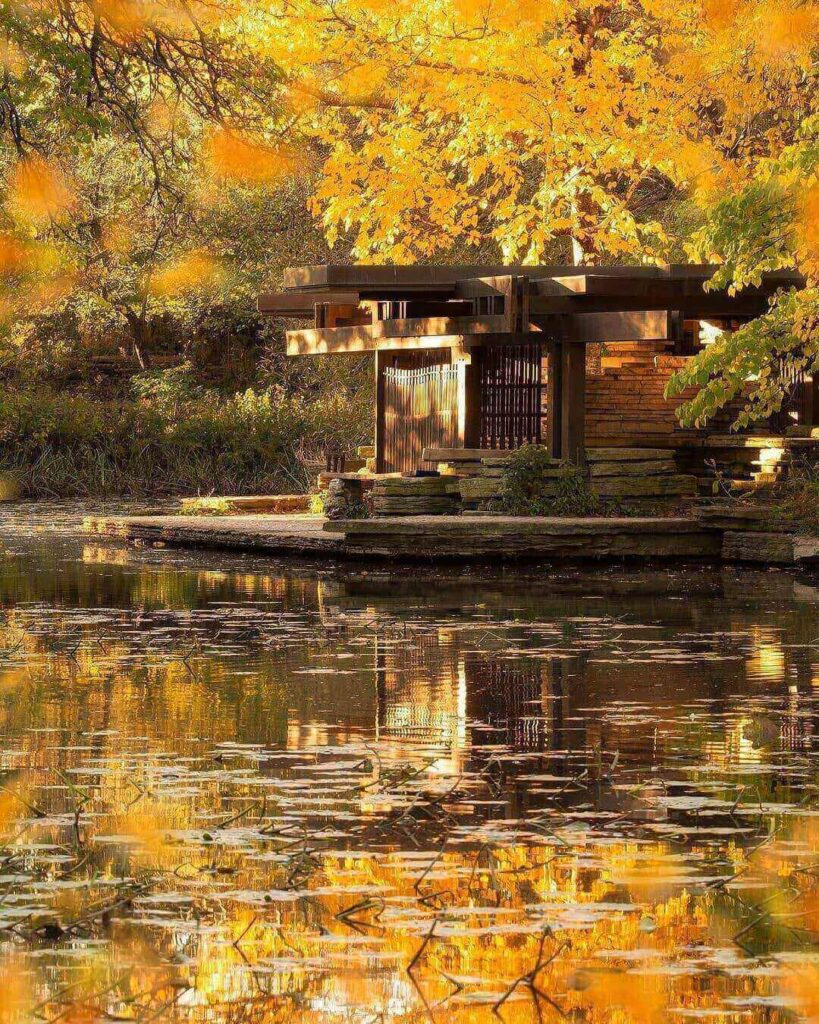
Alfred Caldwell Lily Pool is a hidden oasis within Lincoln Park, a serene, naturalistic water feature designed by the legendary landscape architect Alfred Caldwell. This intimate garden space feels removed from the busy city, featuring a lily pool surrounded by native plants, rocks, and a beautiful stone bridge. The pool creates mirror-like reflections of surrounding vegetation and sky. The naturalistic design and careful plant selection create a peaceful setting that photographers describe as magical.
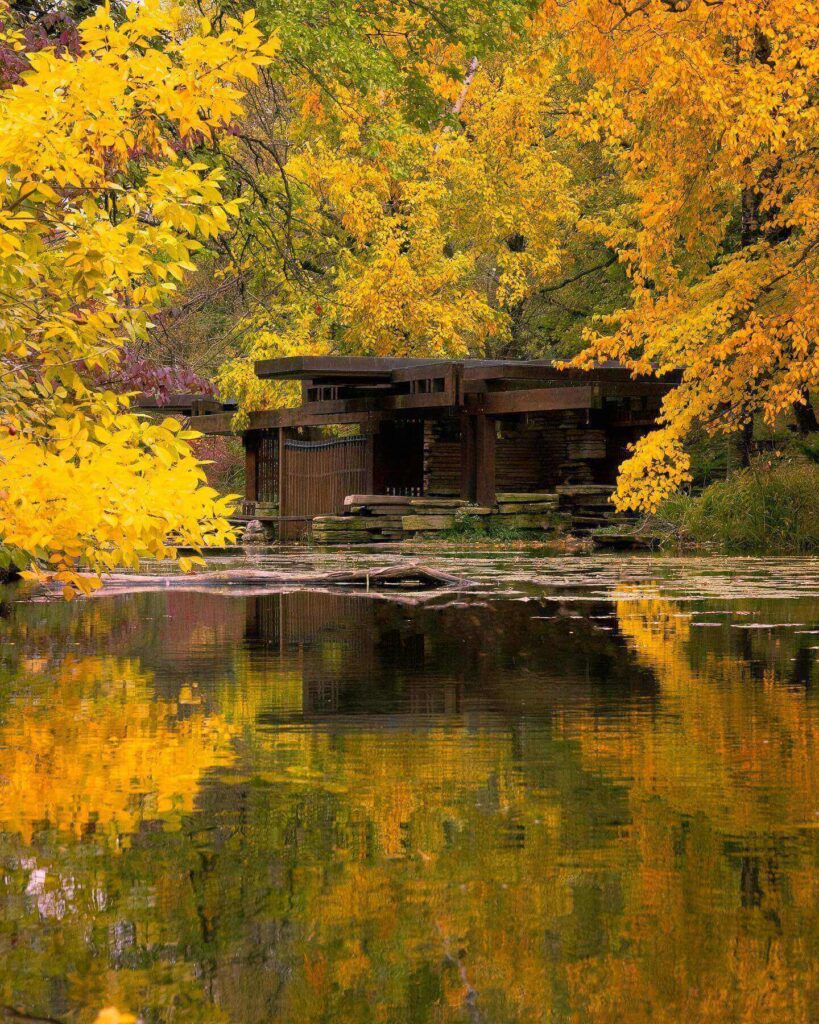
Why it’s Instagrammable: The Lily Pool’s natural beauty and designed aesthetics create photographs that feel more like nature photography than typical urban Chicago shots. The water reflections are absolutely stunning, creating mirror images of plants and sky. The intimate, quiet nature of the space allows for more meditative, artistic photography. The location feels like a secret garden, which adds to its appeal.
Best Time to Visit: Visit in spring (April-May) and early summer (June-July) when aquatic plants are blooming and the landscape is at its most lush. Late afternoon light filtering through the trees creates magical illumination. Weekday visits ensure a peaceful, quiet experience with minimal crowds. The pool photographs beautifully in overcast light when reflections are most distinct.
Pro Tip: Capture the water reflections; sometimes the reflections are more interesting than the actual landscape. The stone bridge offers a classic composition point. Use the natural framing created by surrounding trees and vegetation. Macro lenses work well for detail shots of plants and flowers. Visit multiple times at different times of day and seasons to explore the location’s changing appearance.
Cost: Free
Location on Google Maps: 1310 W Fullerton Ave, Chicago, IL 60614
Wicker Park & Logan Square
18. The 606 Trail (The Bloomingdale Trail)
The 606 Trail is an elevated greenway that stretches 2.3 miles through Chicago’s hip neighborhoods of Wicker Park, Bucktown, and Pilsen. This former freight railroad line has been transformed into a beautiful park and gathering space featuring native plants, public art installations, and neighborhood views. The elevated perspective allows photography from a unique vantage point, capturing street-level activity below and neighborhood rooflines above. The trail is particularly beautiful with the urban landscape visible from an unconventional angle.
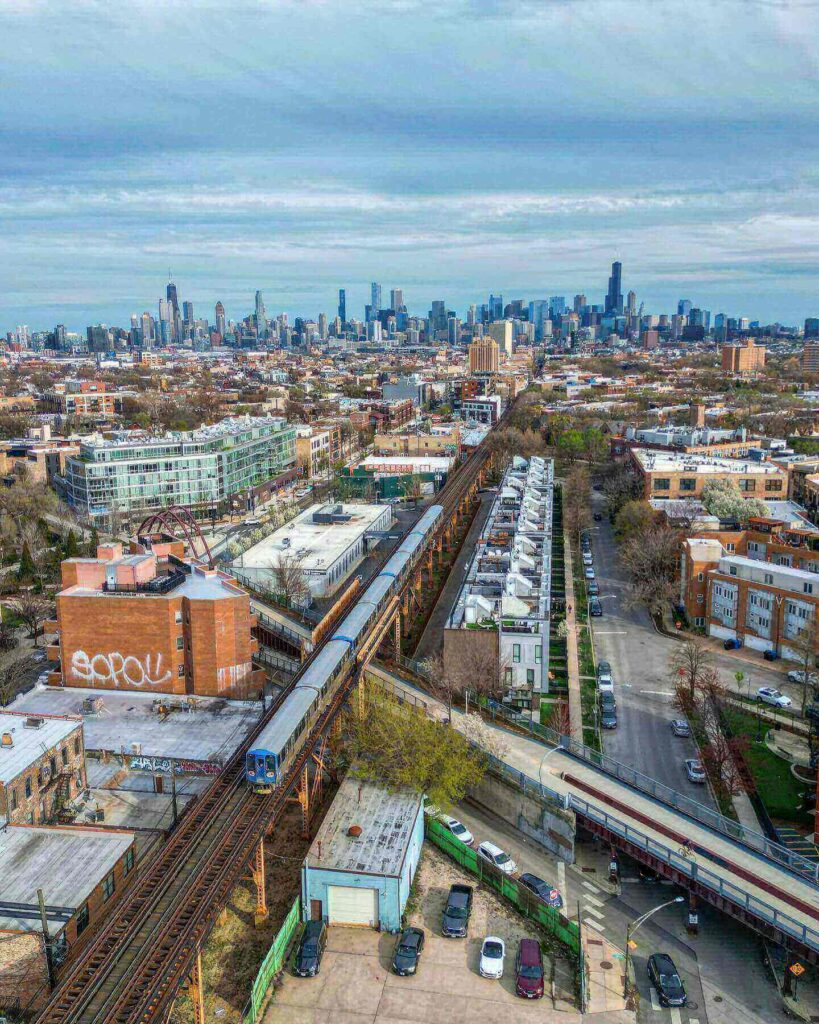
Why it’s Instagrammable: The 606 offers a fresh perspective on Chicago neighborhoods with its elevated vantage point. The trail features street art, native plantings, and architectural elements that photograph beautifully. The elevated perspective creates unique compositions impossible from street level. The neighborhood views from the trail show authentic Chicago character. The trail’s landscaping and public art installations are constantly interesting.
Best Time to Visit: Visit during spring and summer when vegetation is lush and flowers are blooming. Golden hour photography (sunrise or sunset) is particularly beautiful on the elevated trail. Weekday visits offer a quieter experience, while weekends bring more people and energy. Explore different sections of the trail for varying aesthetics and neighborhood characteristics.
Pro Tip: The elevated perspective allows unique downward angles onto streets and rooftops below. Capture the architectural layering visible from the trail, foreground greenery, mid-ground buildings, background skyline. Street art and public installations provide colorful focal points. The trail offers natural framing through railings and vegetation. Different sections of the trail have distinct neighborhood characteristics, so explore multiple areas.
Cost: Free
Location on Google Maps: Multiple access points throughout the trail; main entrance at 1400 N Kingsbury St, Chicago, IL 60610
19. Greetings from Chicago Mural (Victor Ving Postcard Mural)
Victor Ving’s iconic “Greetings from Chicago” mural is a massive, colorful postcard-style artwork that features vintage lettering and Chicago landmarks in vibrant hues of pink, green, yellow, and blue. Located in Logan Square, this 12,000-square-foot mural has become one of Chicago’s most photographed pieces of street art. The bold colors and retro aesthetic photograph beautifully and are guaranteed to pop on Instagram. The mural celebrates Chicago’s culture and has become an iconic symbol of the city’s vibrant street art scene.
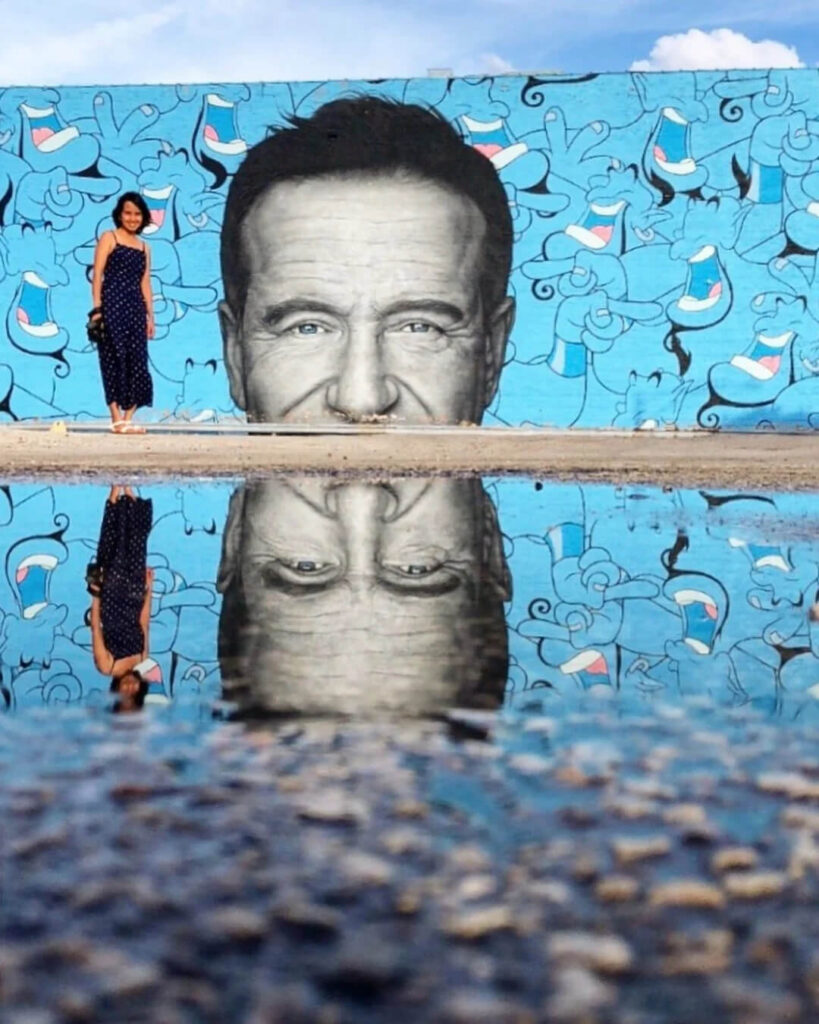
Why it’s Instagrammable: The mural’s bold colors are immediately eye-catching and photograph beautifully in any light. The vintage postcard aesthetic has nostalgic appeal. The massive scale is impressive and creates dramatic compositions. The mural’s fame means virtually every angle makes for a shareable, recognizable Chicago image. The surrounding Logan Square neighborhood provides additional interesting architecture.
Best Time to Visit: Visit in bright, sunny weather to make the colors pop maximally. Any time of day works, but morning light often provides better visibility from multiple angles. Weekday visits typically have fewer crowds than weekends, though this is a popular location regardless. The mural’s colors remain vibrant year-round, though overcast days may require some color adjustment in post-processing.
Pro Tip: Capture the full mural from across the street for the complete composition. Get close to capture individual sections and letter details. Include people posing in front of the mural for scale and human interest. The colors are saturated and rich in good light, try to capture this saturation to showcase the mural’s beauty. Different focal lengths provide different perspectives on this massive installation.
Cost: Free
Location on Google Maps: 2226 N Milwaukee Ave, Chicago, IL 60647
20. Pilsen Street Art District (18th Street Corridor)
Pilsen, Chicago’s historic Mexican and Mexican-American neighborhood, is renowned for its vibrant street art murals that cover entire building facades along 18th Street and surrounding blocks. The constantly-evolving street art scene features works by local and international artists, creating an ever-changing outdoor gallery. The murals range from large-scale pieces to intricate detailed work, all celebrating cultural themes, social issues, and artistic expression. Walking through Pilsen, you’ll encounter dozens of photographable murals within a few blocks.
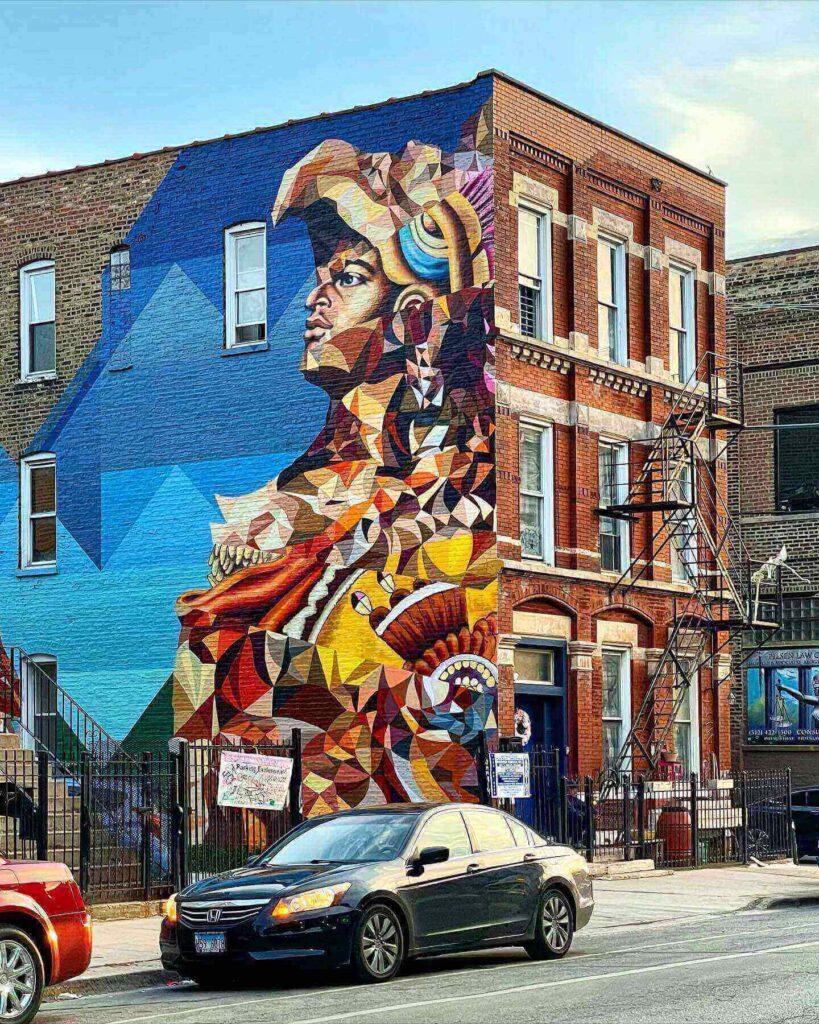
Why it’s Instagrammable: Pilsen’s street art is authentically beautiful and constantly evolving, ensuring you’ll always find fresh content. The murals are large-scale and colorful, photograph beautifully, and tell stories about Chicago’s culture and communities. Unlike curated art galleries, the street art is free and accessible. The neighborhood itself has interesting architecture and character that complements the art. Supporting local artists through photography feels meaningful.
Best Time to Visit: Visit on days with bright, clear light to make the mural colors vivid and visible. Morning or afternoon light is generally better than harsh midday sun. Weekday mornings are quieter than weekend afternoons. Explore the neighborhood on foot to discover murals, many are tucked down side streets and alleys. The art changes seasonally and year-round, so return visits reveal new pieces.
Pro Tip: Walk the full length of 18th Street and surrounding blocks to discover the full range of murals. Capture murals with interesting architectural framing. Include people or street-level elements for context and scale. Don’t just focus on the murals, the neighborhood’s storefronts, signage, and streetscape tell a story. Many murals are meant to be experienced as part of the neighborhood, so capture them in context rather than isolation.
Cost: Free
Location on Google Maps: 18th Street from Ashland Ave to Halsted St, Chicago, IL 60608
West Loop & Pilsen (Continued)
21. Randolph Street Restaurant Row
Randolph Street in the West Loop has transformed into one of Chicago’s premier dining destinations, featuring hundreds of trendy restaurants, cafes, and food establishments with increasingly Instagram-worthy designs. From flower walls and colorful facades to modern minimalist interiors, the restaurants along this corridor are designed to be photographed. The exteriors feature eye-catching signage, outdoor seating areas, and architectural details. Inside, many restaurants feature distinctive design elements that make for engaging food and interior photography.
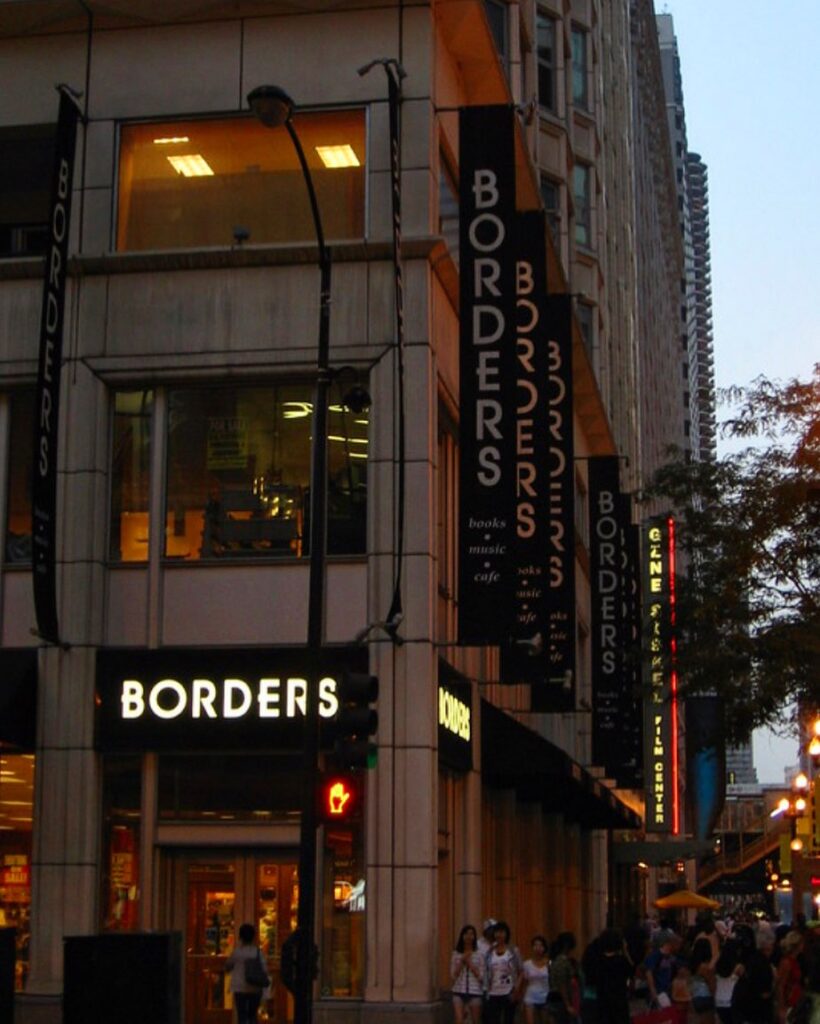
Why it’s Instagrammable: Restaurants are inherently Instagram-friendly, and Randolph Street establishments are designed with photography in mind. The colorful exteriors, beautiful plating, and artfully designed interiors make every aspect shareable. Food photography allows for creative composition and styling. The neighborhood itself has character and energy. A single walk down Randolph Street offers dozens of photographic opportunities.
Best Time to Visit: Visit during meal times when restaurants are lively and outdoor seating is active. Golden hour (around sunset) provides beautiful light for exterior shots and food photography. Lunch offers lighter crowds than dinner. Consider visiting on different days to explore different restaurants and seasonal menus. Early evening provides a balance of good light and active restaurant energy.
Pro Tip: Photograph the restaurants’ exteriors and signage as architectural elements, not just restaurant advertising. Capture outdoor seating and the neighborhood energy. If dining, ask permission before photographing food and other diners. The restaurant designs are meant to be beautiful, so capture them from flattering angles. Different times of day offer different aesthetics, daytime shows architecture and details, while evening shows atmosphere and lighting.
Cost: Free for exterior/street photography (dining costs vary by restaurant)
Location on Google Maps: Randolph Street from Halsted St to Morgan St, Chicago, IL 60661
22. National Museum of Mexican Art
The National Museum of Mexican Art in Pilsen features beautiful architecture with colorful details and an extensive collection of Mexican and Chicano art. The museum’s exterior and courtyard are visually striking with warm earth tones and architectural interest. Inside, the galleries feature vibrant artworks that photograph beautifully. The museum celebrates Mexican and Mexican-American culture through visual art, creating an inspiring environment for photography.
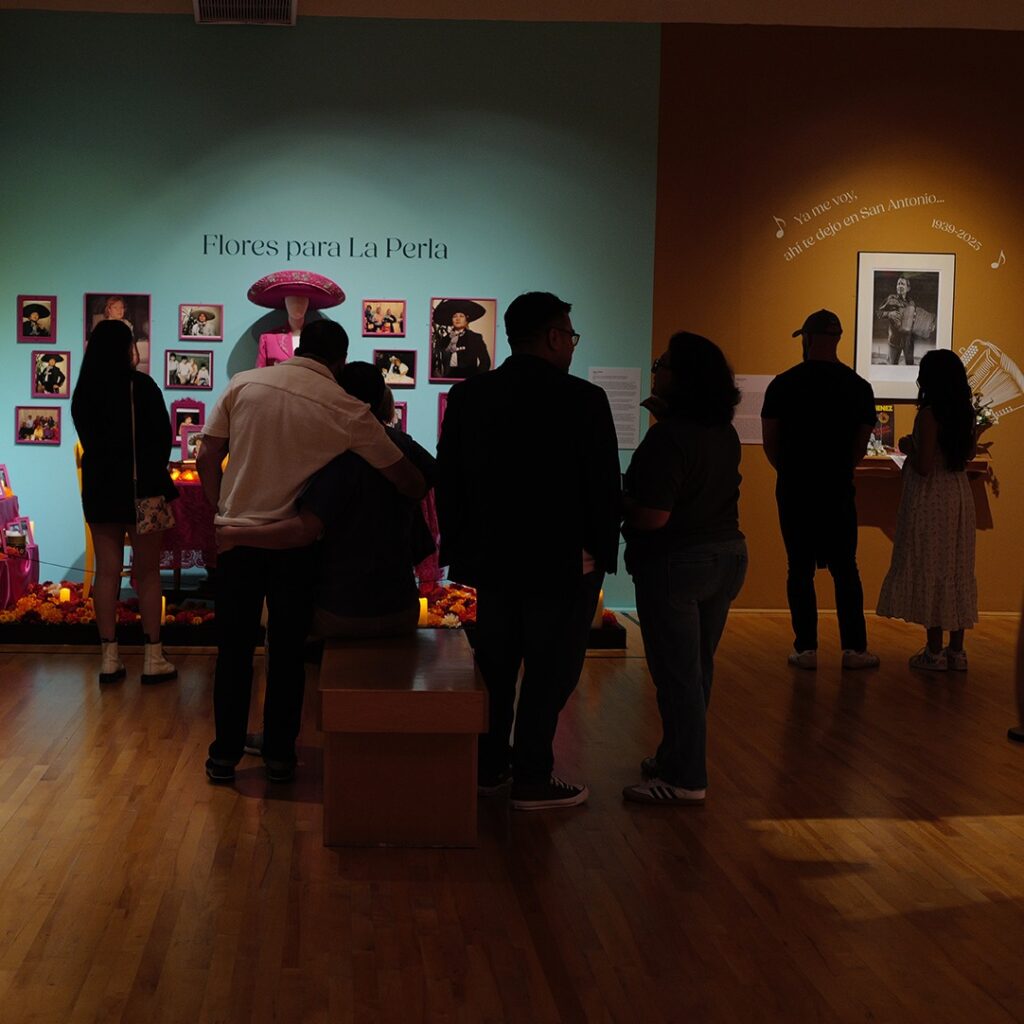
Why it’s Instagrammable: The museum’s architecture and exterior courtyard are photogenic and accessible to the public. The vibrant artwork inside creates visually interesting content. The cultural significance and beauty of the art make for meaningful photography. The museum’s commitment to representation and community provides context for your images.
Best Time to Visit: Visit during museum hours (typically 10 AM – 5 PM, closed Mondays). Good natural light in the courtyard and galleries works best during daylight hours. Weekday visits are typically quieter than weekends. Check their website for special exhibitions or installations that might offer additional photographic opportunities.
Pro Tip: The exterior courtyard provides good public photography opportunities. Inside the museum, check their photo policy; many institutions allow personal photography but not commercial use. The artwork inside is meant to be appreciated, so capture it in ways that respect the artists’ intentions. The museum’s architecture itself is worth photographing as a representation of cultural pride and community investment.
Cost: Free admission (donations accepted)
Location on Google Maps: 1852 W 19th St, Chicago, IL 60608
Hidden Gems & Night Photography Spots
23. Adler Planetarium Steps
The steps of the Adler Planetarium offer what many consider the best skyline view in the entire city. This vantage point on the Museum Campus provides an unobstructed view across Lake Michigan to the downtown Chicago skyline, creating a dramatic frame of water, city lights, and architecture. From this location on the lakefront, the skyline appears almost surreal in its scale and beauty. The steps themselves provide natural leading lines and composition opportunities.
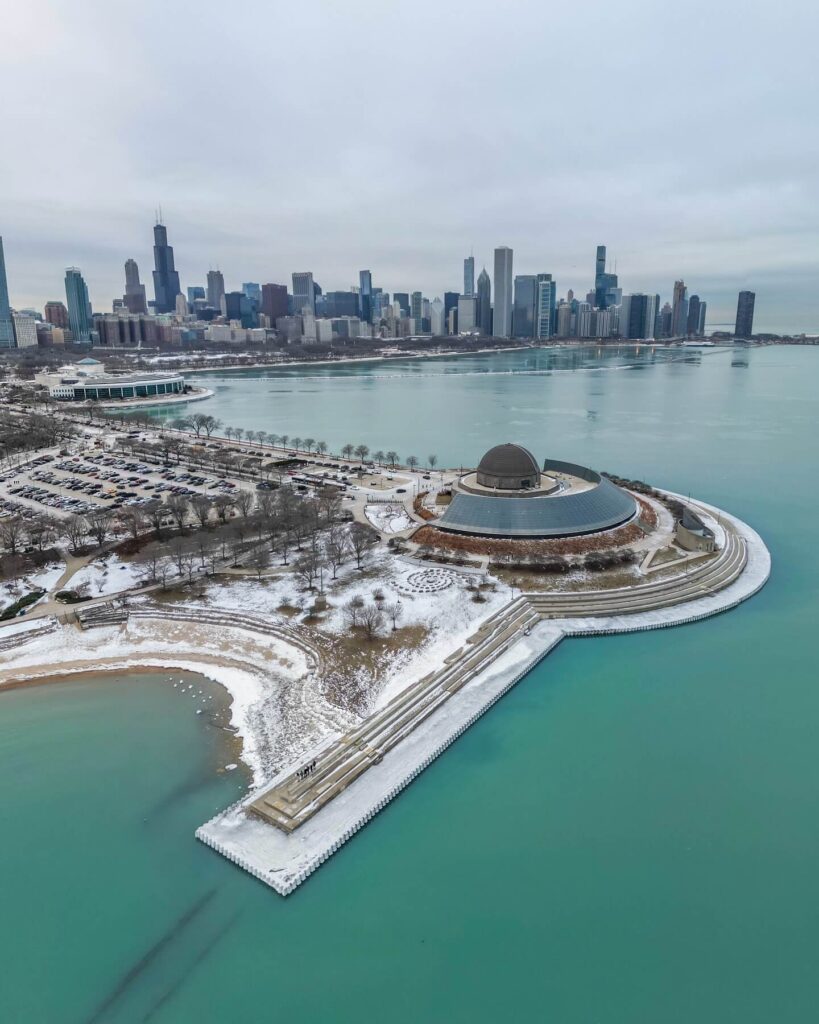
Why it’s Instagrammable: This location offers what might be the single most impressive Chicago skyline view. The water in the foreground adds depth and beauty. The unobstructed view means you can capture the full span of iconic buildings. Both daytime and nighttime views are spectacular. The location is less crowded than other famous skyline viewpoints, giving you more compositional freedom.
Best Time to Visit: Golden hour (sunset) provides warm, beautiful light on the skyline and reflecting in the water. Blue hour (20-40 minutes after sunset) offers a magical balance of sky color and building illumination. Night photography shows the city fully illuminated. Clear days provide the most dramatic views. Visit before major holidays or cultural events when the skyline might have special illumination.
Pro Tip: Use the foreground water and steps to create depth in your composition. The wide expanse of the skyline benefits from wide-angle lenses. Zoom in on specific iconic buildings (Willis Tower, Hancock Building) with telephoto lenses. The steps create natural leading lines that draw viewers into the scene. Arrive before sunset and stay through blue hour to capture multiple perspectives.
Cost: Free
Location on Google Maps: 1300 S Lake Shore Dr, Chicago, IL 60605
24. Chicago Board of Trade Building
The Chicago Board of Trade Building is a masterpiece of Art Deco architecture completed in 1930. Its distinctive pyramid roof topped with an iconic statue is visible throughout downtown and creates a striking visual element in the skyline. The building’s façade features beautiful limestone and granite with ornamental details. The structure is located at the foot of LaSalle Street, one of Chicago’s most important financial thoroughfares. The building photographs beautifully, especially when lit at night.
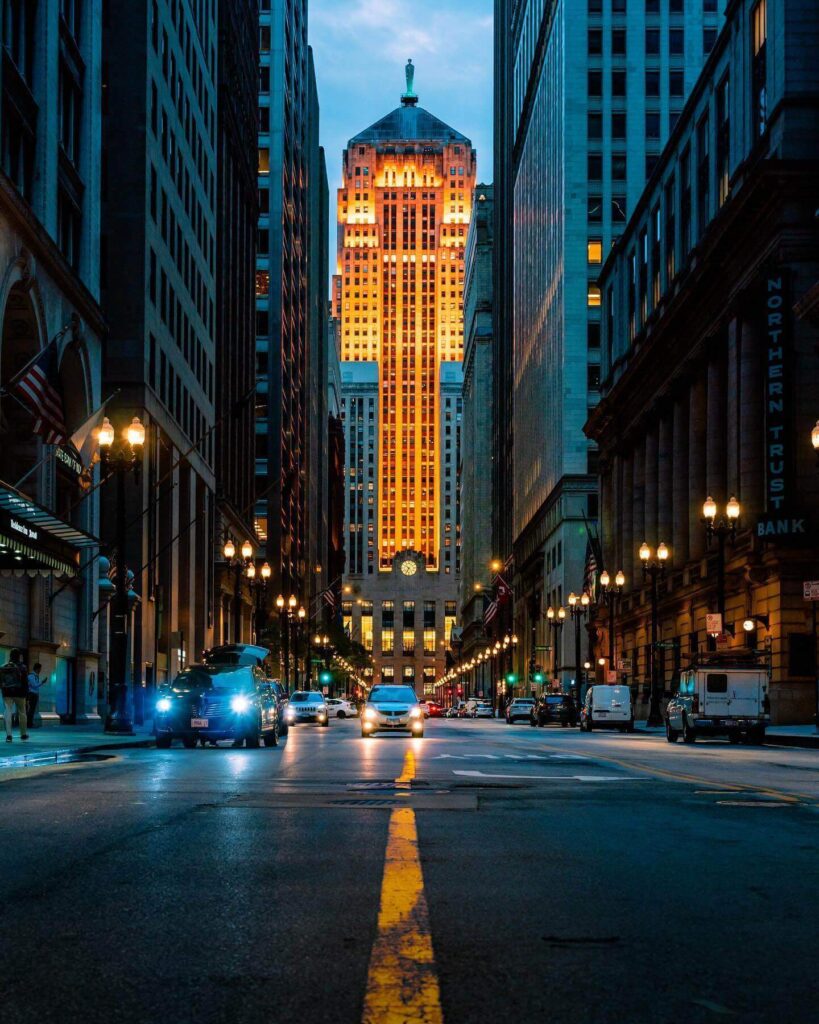
Why it’s Instagrammable: The Art Deco architecture is distinctive and immediately recognizable. The pyramid roof is a unique architectural feature visible from many downtown locations. The building’s details are beautiful and intricate, rewarding close-up photography. Nighttime illumination highlights the building’s structure dramatically. The building represents Chicago’s financial and architectural heritage.
Best Time to Visit: Twilight and nighttime offer the most dramatic views when the building’s architectural lighting activates. The pyramid roof stands out beautifully against the darkening sky. Daytime photography captures the building’s details but lacks the drama of night shots. Weekday visits offer clearer views with less street activity. The building’s lighting is consistent throughout the year, making any evening visit rewarding.
Pro Tip: The pyramid roof is the most distinctive element. Frame your shots to emphasize this feature. Shoot from different distances to capture the entire building as well as detailed architectural elements. The surrounding buildings can frame the structure interestingly. LaSalle Street provides a natural vantage line for photography. Nighttime shots benefit from tripod stabilization.
Cost: Free (exterior photography only)
Location on Google Maps: 141 W Jackson Blvd, Chicago, IL 60604
25. Navy Pier at Sunset
Navy Pier extends 3,300 feet into Lake Michigan and features Chicago’s iconic 196-foot Ferris wheel along with restaurants, shops, and entertainment venues. The pier offers spectacular views of the lake and skyline, particularly at sunset when the sky fills with warm colors and the city lights begin to illuminate. The Ferris wheel is especially photogenic when illuminated against the darkening sky. The pier bustles with activity and energy, particularly during evening hours when visitors come to watch the sunset.
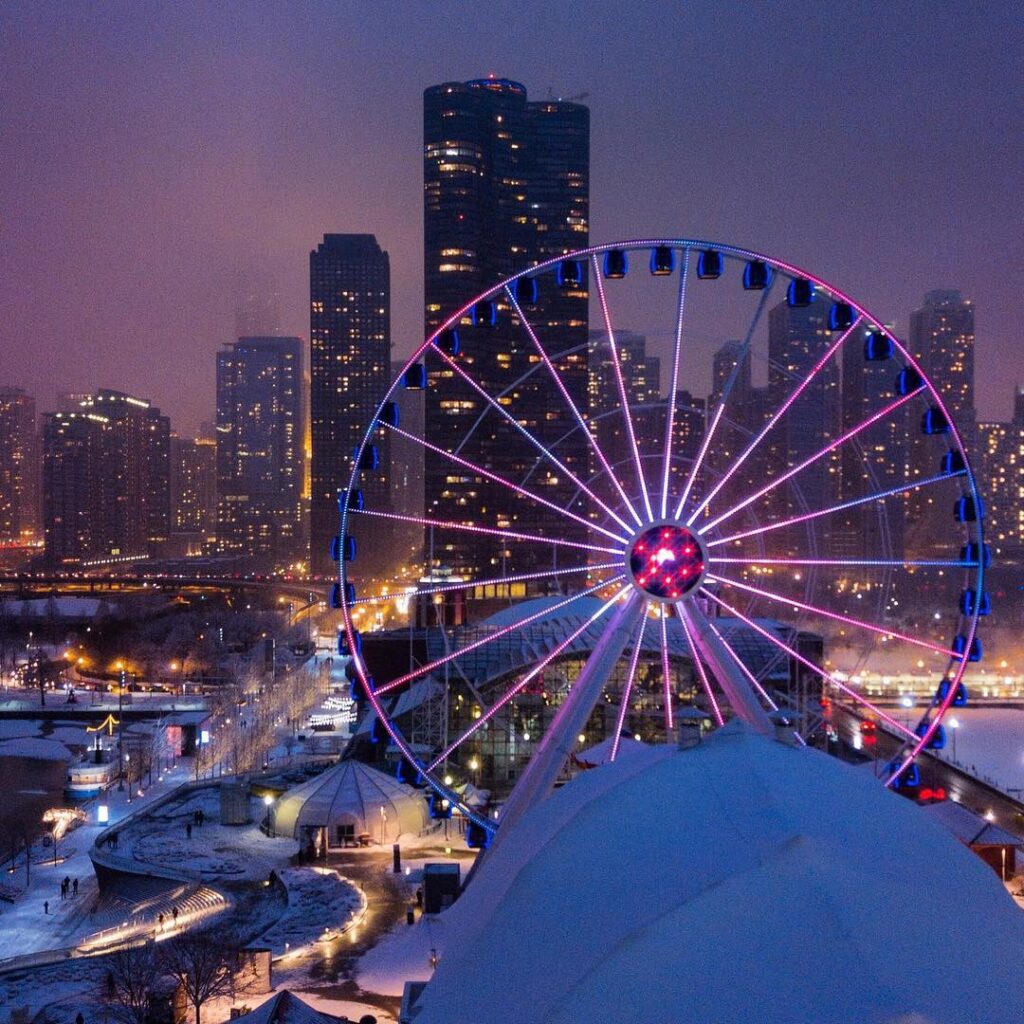
Why it’s Instagrammable: The Ferris wheel is an iconic Chicago image, instantly recognizable and visually striking. The sunset views over the lake are romantic and beautiful. The pier’s activity and architecture provide dynamic content. The combination of water, sky, and city creates naturally appealing compositions. Navy Pier at sunset combines multiple photographic interests: architecture, landscape, activity, and light.
Best Time to Visit: Sunset and evening hours are clearly optimal, as the light and atmosphere are at their peak. Arrive 30-60 minutes before sunset to claim good positions and capture the entire light transition. Clear days provide the most dramatic sunsets. Weekday evenings are less crowded than weekends, offering better photography conditions. Summer offers the latest sunsets and most pleasant temperatures.
Pro Tip: Position yourself to capture the Ferris wheel with water in the foreground and the sunset sky in the background. The Ferris wheel’s lights are most visible and dramatic when it’s fully dark. Include people and pier activity to show the vibrant atmosphere. Different focal lengths offer different perspectives, wide-angle captures the full pier scene, while telephoto isolates the Ferris wheel. Arrive early to find good compositions.
Cost: Free to walk the pier (specific attractions and rides have additional costs)
Location on Google Maps: 600 E Grand Ave, Chicago, IL 60611
Quick Reference: All 25 Instagrammable Chicago Locations
| Location Name | Area | Best Time | Cost |
| Cloud Gate (The Bean) | Downtown | 6:30-7:30 AM | Free |
| The Chicago Theatre | Downtown | Twilight | Free |
| The Rookery Building | Downtown | 10 AM-12 PM | Free |
| Willis Tower Skydeck | Downtown | Sunset | $32.25 |
| Art Institute Lions | Downtown | Morning/Afternoon | Free |
| Chicago Cultural Center | Downtown | 11 AM-3 PM | Free |
| Wrigley Building | River North | Evening | Free |
| DuSable Bridge | River North | Evening | Free |
| Marina City | River North | Any time | Free |
| Trump Tower Riverwalk | River North | Morning/Afternoon | Free |
| Chicago Riverwalk | Riverwalk | Golden hour | Free |
| Buckingham Fountain | Lakefront | Evening | Free |
| North Avenue Beach | Lakefront | Sunset | Free |
| Milton Lee Olive Park | Lakefront | Golden hour | Free |
| Lincoln Park Conservatory | Lincoln Park | Overcast days | Free |
| Lincoln Park Zoo Honeycomb | Lincoln Park | Morning | Free |
| Alfred Caldwell Lily Pool | Lincoln Park | Spring/Summer | Free |
| The 606 Trail | Wicker Park | Golden hour | Free |
| Greetings from Chicago Mural | Logan Square | Sunny day | Free |
| Pilsen Street Art | Pilsen | Sunny day | Free |
| Randolph Street Restaurant Row | West Loop | Golden hour | Free |
| National Museum of Mexican Art | Pilsen | Daytime | Free |
| Adler Planetarium Steps | Lakefront | Golden hour | Free |
| Chicago Board of Trade Building | Downtown | Evening | Free |
| Navy Pier at Sunset | Lakefront | Sunset | Free |
Bonus: Most Instagrammable Restaurants in Chicago
While architectural landmarks and street art are captivating, Chicago’s restaurant scene has become increasingly Instagram-worthy. Many modern establishments are designed with photography in mind, featuring distinctive interior design, beautiful plating, and thoughtful presentation. Here are five of the most instagrammable restaurants in Chicago where the dining experience is as visually appealing as it is delicious.
Hampton Social
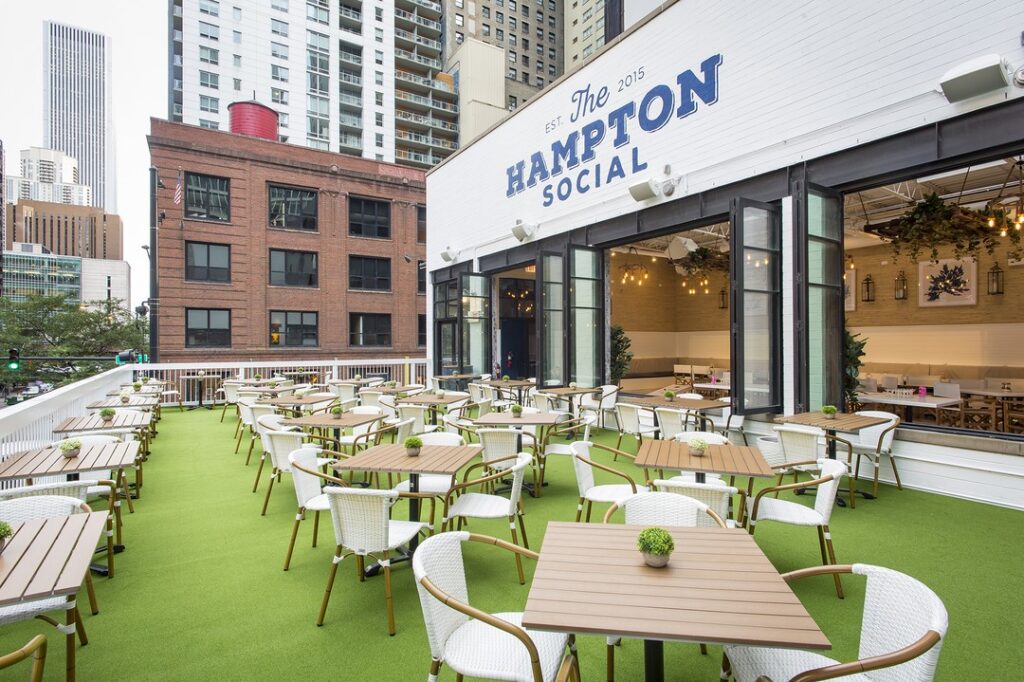
Hampton Social’s signature flower wall is an Instagram sensation. This trendy restaurant features a massive living wall of flowers and plants that serves as a perfect backdrop for photos. The bright, naturally-lit interior photographs beautifully, and the carefully plated food is visually stunning. Every angle of this restaurant seems designed to be photographed, making it a must-visit for content creators.
Beatnik
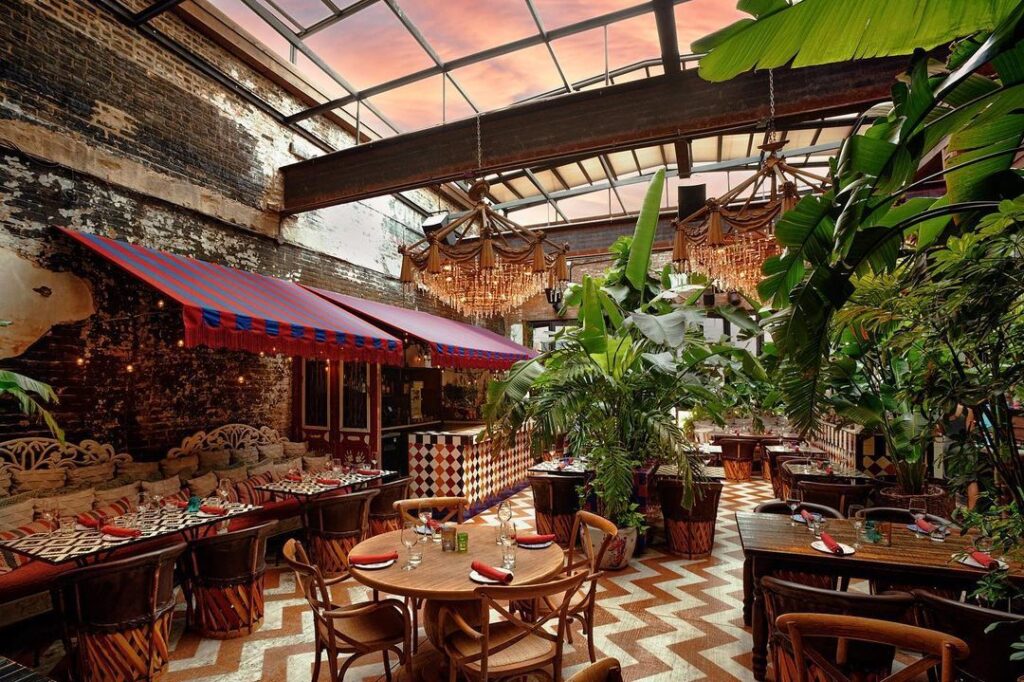
Beatnik combines modern minimalist design with vibrant pops of color. The restaurant’s artfully designed space and innovative dishes make it a photographer’s haven. The careful attention to presentation and aesthetic throughout the restaurant ensures that every photo feels curated and beautiful.
Paradise Park
Paradise Park’s whimsical, colorful design philosophy makes it inherently Instagram-friendly. From the vibrant wall colors to the creatively presented food, this restaurant celebrates playful aesthetics. The bright, energetic atmosphere translates beautifully to photographs.
Cindy’s Rooftop
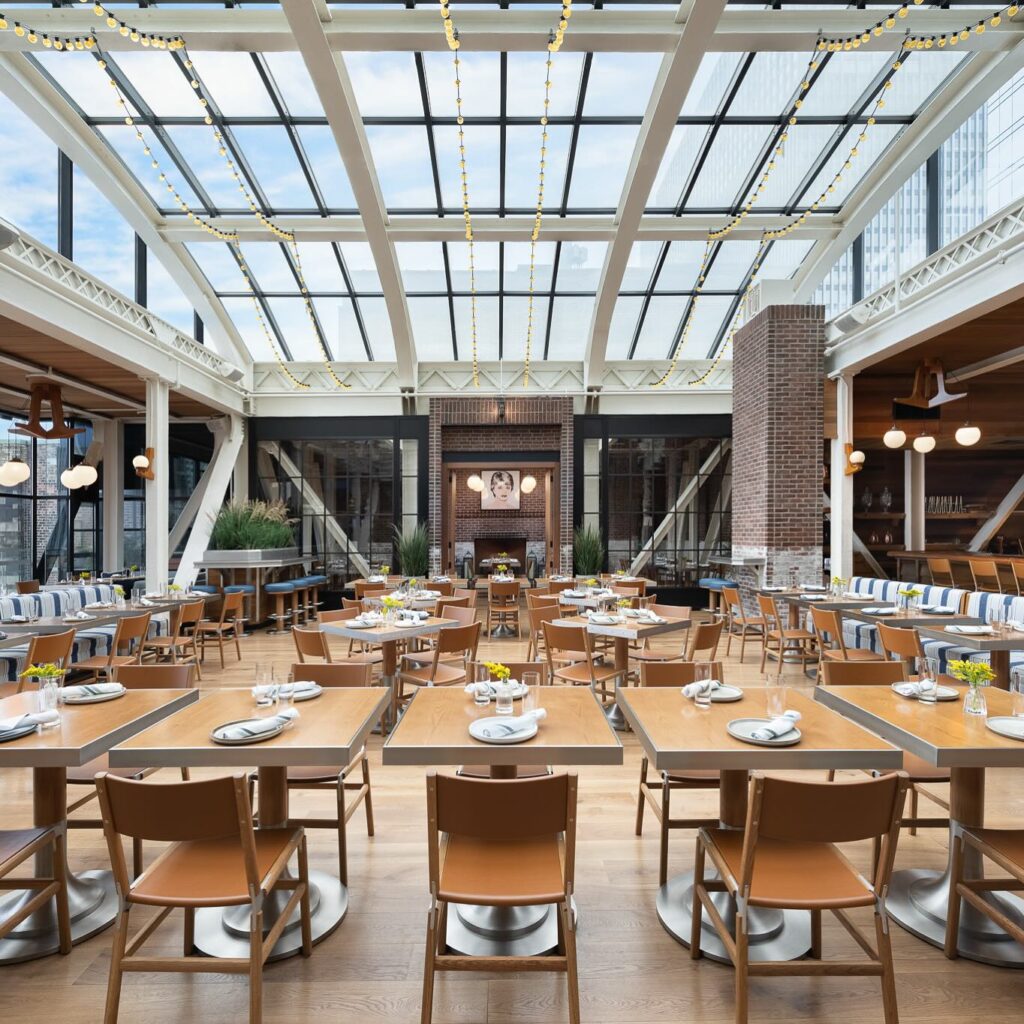
Located on a rooftop overlooking the city, Cindy’s combines beautiful interior design with panoramic Chicago skyline views. The elevated perspective and carefully curated interior create stunning photo opportunities. The combination of craft cocktails, food, and city views makes this one of Chicago’s most photographed dining destinations.
The Dearborn
The Dearborn’s commitment to beautiful presentation and atmospheric design makes it a favorite among food photographers. The restaurant’s thoughtful plating and distinctive interior design create visually compelling compositions. Every dish feels like it deserves a professional food photography shoot.
FAQs
What is the most photographed thing in Chicago?
Cloud Gate (The Bean) is undoubtedly the most photographed thing in Chicago. The iconic public sculpture receives thousands of visitors daily, all eager to capture their distorted reflection in its polished stainless steel surface. The Buckingham Fountain and Chicago Theatre marquee compete for second place in terms of photo popularity.
Where should I take pictures in downtown Chicago?
Downtown Chicago offers countless photo opportunities. Cloud Gate, the Chicago Theatre, the Art Institute Lions, Willis Tower Skydeck, and the Chicago Cultural Center are all top-tier destinations. The Riverwalk and the area around the river provides stunning reflections of the downtown skyline. Each location offers unique perspectives on the city’s architecture and character.
What are the best indoor photo spots in Chicago?
For indoor photography, the Chicago Cultural Center’s Tiffany dome is exceptional and free to visit. The Rookery Building’s interior atrium features stunning architectural details. Lincoln Park Conservatory provides lush botanical photography opportunities. Willis Tower Skydeck offers unmatched city views from above. Many museums feature beautiful galleries worth exploring for photography.
When is the best time to photograph Chicago?
May through October offers the most consistently beautiful Chicago weather and scenery. Summer provides long daylight hours and vibrant green vegetation. Fall offers golden-hour lighting and stunning foliage. Golden hour (sunrise and sunset) is optimal for any location throughout the year. Blue hour (just after sunset) is perfect for night cityscape photography. Visit during clear weather for the most dramatic images.
Final Photography Tips & Wrap-Up
Chicago’s 25 most instagrammable places offer something for every photographer and travel content creator. Whether you’re capturing the geometric perfection of the Chicago Theatre, the natural beauty of Alfred Caldwell Lily Pool, or the vibrant street art of Pilsen, you’ll find endless visual inspiration throughout the city. The key to successful Chicago photography is exploring these locations at different times, in various lighting conditions, and from multiple angles.
Don’t just rush through these locations checking them off a list, take time to really see them and find your unique perspective. Many photographers shoot the same locations from the same angles, so consider how you can add your personal style and vision. Arrive early to avoid crowds, stay late to capture different lighting, and visit multiple times to explore seasonal changes.
Remember that the best camera is the one you have with you, whether that’s a professional DSLR or your smartphone. Modern phone cameras are incredibly capable, and your ability to see interesting compositions matters more than your equipment. Share your Chicago photos on Instagram with relevant hashtags like
#InstagrammablePlacesinChicago #ChicagoPhotography #ChicagoInstagram #ExploreChicago, and join the global community celebrating this beautiful city. Chicago’s architecture, art, and natural beauty deserve to be shared with the world – and these 25 locations provide the perfect canvas for your creative expression.
Visit our blog for more Chicago travel guides and photography tips.