


If you’ve got a flight booked through Hong Kong, Taipei, Tokyo or Shanghai this week, check it twice before you leave for the airport. On Thursday alone, airlines across Asia logged 5,597 delays and 159 outright cancellations, according to FlightAware data compiled by Travel And Tour World. China Eastern took the biggest hit with 952 delayed flights. Air China cancelled 49. Guangzhou Baiyun airport, one of China’s busiest hubs, recorded 1,016 delays on its own.
The cause is Super Typhoon Bavi, and it isn’t finished yet.

A Category 5 Storm That Refuses to Quit
Bavi has already been one of the nastier storms of the year. The Joint Typhoon Warning Center clocked its peak sustained winds at 285 km/h (180 mph) on July 6, as it skirted the northern coast of Rota in the Northern Mariana Islands. Yale Climate Connections logged it as the third Category 5-equivalent storm of 2026 worldwide. That’s an unusually high number for this point in the season.
Bavi has since gone through an eyewall replacement cycle, the process where a storm’s inner wind core collapses and a new one forms further out. It knocked the typhoon down to a Category 3-equivalent, with sustained winds near 115 mph. Weaker than its peak, but still a serious storm, and it’s moving toward some of the most heavily trafficked airspace in the world.
Forecasters expect Bavi to pass near Taiwan and Japan’s Yaeyama and Sakishima islands around July 11, then track toward eastern China, with a possible landfall near Shanghai around July 12. Hong Kong Airlines has already warned that flights between Hong Kong and both Okinawa and Taipei could see delays or cancellations from July 9 through July 11.
It’s Not Just the Typhoon
Bavi is the headline, but it’s not acting alone. Monsoon rain is hammering parts of China and India at the same time, and that combination is what’s turning a regional weather event into a continent-wide scheduling mess.
Beijing Capital reported 365 delays and 25 cancellations Thursday. Delhi logged 383 delayed flights. Mumbai had 287. Bangkok’s Suvarnabhumi airport, Thailand’s main international gateway, recorded 303 delays, mostly hitting Thai Airways and Bangkok Airways. Jakarta’s Soekarno-Hatta airport wasn’t far behind with 298 delays, and Batik Air posted the most cancellations there.
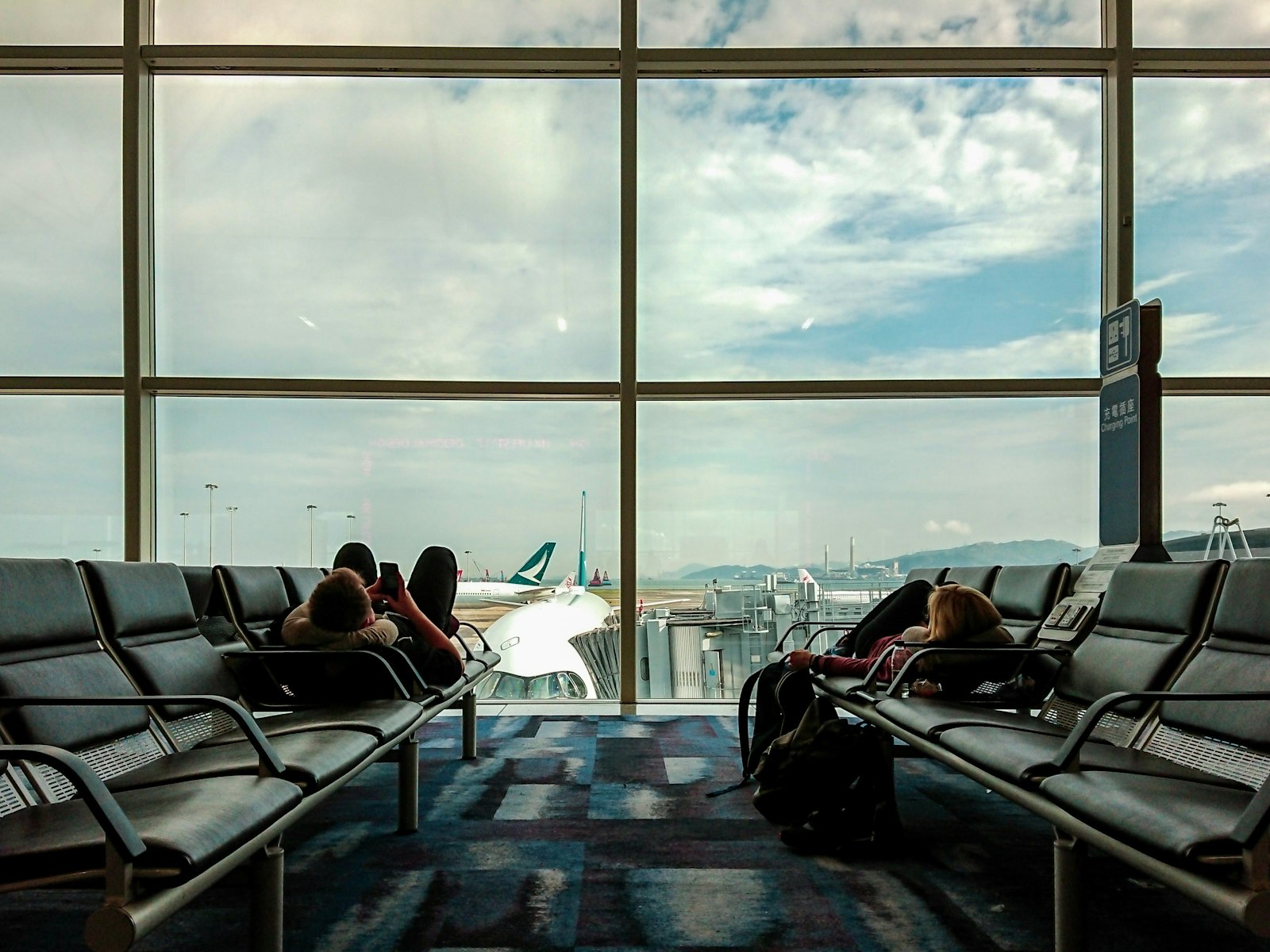
Here’s the part most travelers don’t think about: airplanes don’t stay in one place. A jet held up in Guangzhou in the morning might be scheduled to fly to Bangkok that afternoon and Delhi that night. Delay the first leg, and every flight down the line runs late, even at airports where the sky is completely clear. That’s why someone waiting at a sunny gate in Mumbai can still get a delay notice caused by weather 2,000 miles away.
Which Airlines Are Feeling It Most
Air China posted the highest cancellation count of any single carrier Thursday, at 49. China Eastern’s delay count of 952 is more than double the next closest airline. In India, Akasa Air has been hit hardest by cancellations, with disruptions concentrated at Bengaluru, Mumbai, Delhi, Ahmedabad and Kolkata. Cathay Pacific logged 115 delays, most of them tied to Hong Kong, where the airline is also managing the incoming Bavi advisory.
Japan Airlines and All Nippon Airways both saw disruption at Tokyo Haneda, with 145 combined delays reported at the airport. None of this is catastrophic on its own. Stacked together, across a region that handles some of the highest flight volumes on earth, it adds up fast.
What to Actually Do If You’re Flying Through the Region
Don’t just show up at the airport and hope. A few concrete steps make a real difference right now.
Check your specific flight status directly on the airline’s app, not a general news story, at least three hours before departure. If you’re connecting through Guangzhou, Beijing, Shanghai, Hong Kong, Bangkok, Delhi or Mumbai this week, build in extra time between legs. Two hours might not be enough if the inbound aircraft is running behind.
If your flight does get cancelled, most Asian carriers will try to keep your checked bag matched to whatever new flight they rebook you on. If you’re not flying that day at all, the bag typically comes back to you through baggage claim, but ask the desk directly rather than assuming. Pack medication, chargers and one change of clothes in your carry-on for exactly this reason.
Read the fine print on your airline’s rebooking and refund policy before you agree to anything at the counter. Rules vary a lot by carrier and by country, and agents are dealing with hundreds of rebookings at once. The calmer and more prepared you are, the faster they can help you.
The Bottom Line
Bavi is forecast to keep weakening as it approaches China, so this isn’t shaping up to be a historic disaster. But the timing is bad. It’s arriving in the middle of peak summer travel season, layered on top of monsoon flooding that was already slowing things down in China and India. If Hong Kong, Taipei, Okinawa or Shanghai are anywhere on your itinerary through July 12, assume there will be at least some disruption and plan your connections accordingly. Checking your flight status twice costs you nothing. Missing a rebooked connection because you didn’t costs you a day.
Photos by Ant Rozetsky and Briana Tozour on Unsplash.