
There’s a version of remote work that looks like opening your laptop from a sun-drenched café, finishing by early afternoon, and spending the rest of the day exploring a city you’ve never been to before. That’s the appeal of a workcation, and it’s more achievable than it sounds as long as you pick the right destination.

I’ve been thinking a lot about what separates a workcation that genuinely works from one that just sounds good on paper. The answer usually comes down to four things: reliable internet, affordable accommodation, good food that doesn’t drain your budget, and enough to do on your off-hours to make the trip feel like more than just a change of desk.
The countries on this list check all four. They’re affordable relative to the US and most of Western Europe, they have the infrastructure remote workers actually need, and they’re interesting enough that you’ll feel like you’re really somewhere when you close the laptop for the day.
Here’s where I’d go and what I’d expect to spend.
The 7 Best Affordable Workcation Countries
1. Argentina
Argentina is one of those destinations where your money genuinely goes further than you’d expect, partly because of the country’s ongoing currency situation. The informal exchange rate (commonly called the blue dollar rate) has historically been significantly more favorable for travelers holding US dollars than the official bank rate, which means your daily budget can stretch considerably in practice.
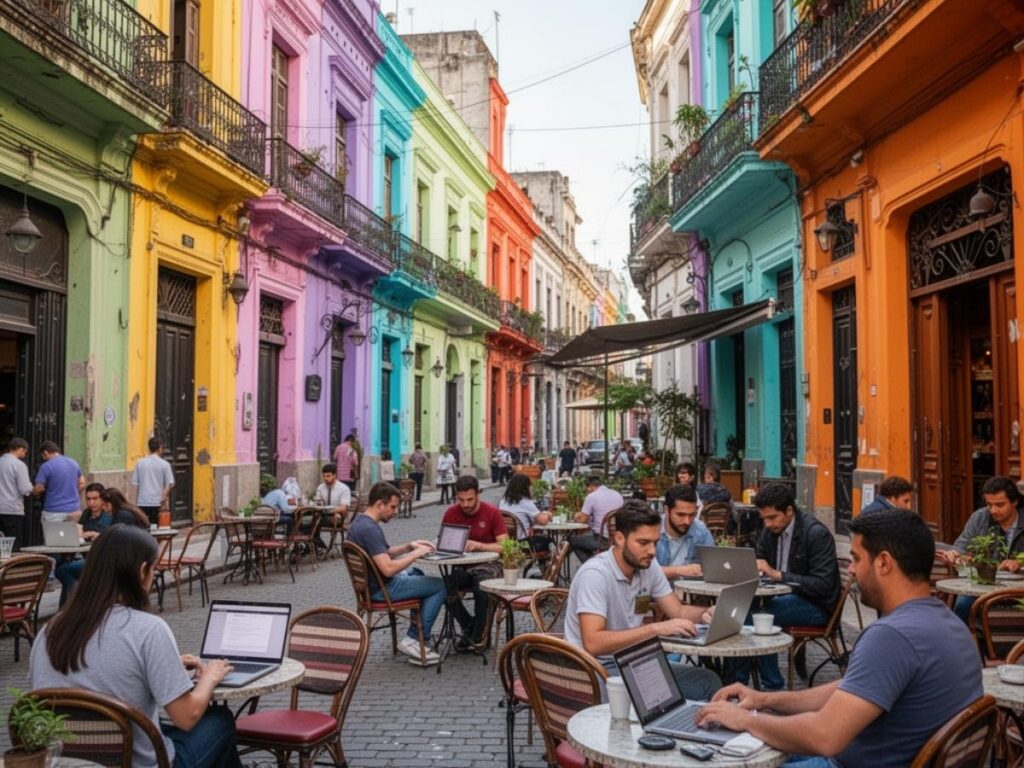
Travelers who have spent extended time there have reported spending well under $50 a day on accommodation, food, and everyday expenses, a figure that surprised even those who had researched costs beforehand. Buenos Aires in particular has a strong café culture with reliable WiFi in many spots, a rich food scene, and a walkable city layout that makes it easy to explore between meetings.
Best for: Digital nomads and remote workers who want a cosmopolitan city feel at a fraction of the cost.
What to budget: Roughly $30–$50 USD per day depending on your accommodation choice and lifestyle.
Worth knowing: Currency exchange practices in Argentina can be complex and change frequently. Research the current situation before you travel and be aware of local rules around currency exchange.
2. Hungary (Budapest)
Budapest is one of those European cities that consistently surprises people who visit expecting something ordinary. It’s architecturally impressive, genuinely easy to navigate, has a strong café and coworking culture, and costs a fraction of what you’d spend in London, Paris, or Amsterdam.

Food is a particular highlight. Local restaurants in Budapest serve filling, well-prepared meals at prices that feel like a different era compared to Western Europe. Many travelers who have spent time working from Budapest report spending around 45% less than they would have at home in the US, covering accommodation, food, and transport combined.
The thermal baths are genuinely one of the best things about the city, and they’re worth every forint after a long work week. The Széchenyi Baths in City Park are the most popular, with dozens of pools at different temperatures. It’s a good way to reset before the next work sprint.
Best for: Anyone who wants a proper European city experience without the Western Europe price tag.
What to budget: $50–$80 USD per day for a comfortable setup with accommodation, meals, and some activities.
Worth knowing: Hungary uses the Hungarian Forint, not the Euro, which works in your favor as a dollar-holder.
3. Portugal (Lisbon)
Lisbon has become one of the most popular workcation destinations in Europe, and it earns that reputation. It’s walkable, has excellent transport links, English is widely spoken, and it sits in a time zone that works reasonably well for those collaborating with US-based teams.

The cost savings compared to other Western European capitals are real. Accommodation in Lisbon typically runs 30–40% less than equivalent options in cities like Paris or Barcelona, and food, whether you’re eating at local tascas or cooking from the market, costs noticeably less too. A full month living and working from Lisbon has come in cheaper than staying home in New York for people who have done the comparison properly.
Beyond the economics, Lisbon has a quality of life that makes the work feel less like work. The light in the city is genuinely special, the local food is understated and good, and the tram rides between neighborhoods feel like a reward for getting through the morning’s emails.
Best for: Remote workers with US or European company hours who want a Western European base without the cost.
What to budget: $70–$110 USD per day, depending on neighborhood and accommodation type.
Worth knowing: Portugal has introduced a Digital Nomad Visa for longer stays. Worth looking into if you plan to spend more than 90 days there.
4. Romania
Romania doesn’t always make the top of workcation lists, which I think is a genuine mistake. It’s affordable, the locals tend to speak good English, WiFi is treated as a basic necessity rather than a premium amenity (which matters when you’re working remotely), and the country has both cities with proper café infrastructure and rural areas that are worth the detour on days off.
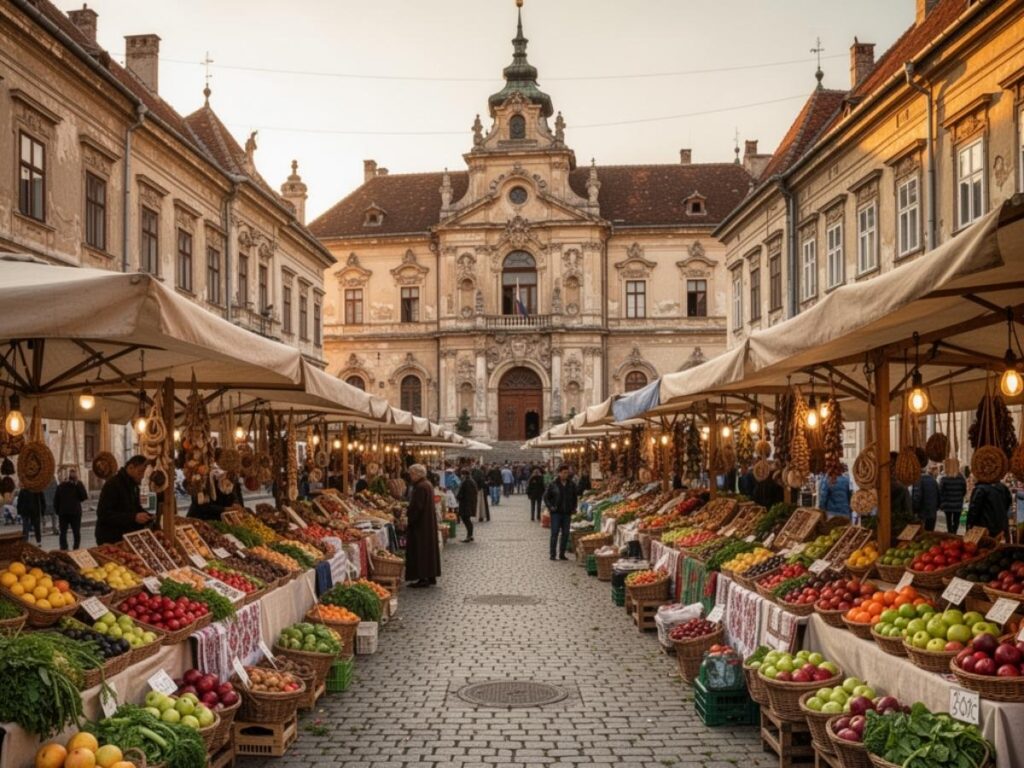
Accommodation options range from modern hotels to charming guesthouses and well-priced Airbnbs. Local food is substantial and inexpensive. If you want to spend even less, farmers’ markets in most Romanian cities sell fresh, largely organic produce at low prices, making it easy to eat well while cooking for yourself some of the time.
Museums are generally affordable, walking tours are common, and the landscape outside the cities, particularly in Transylvania, is the kind of thing that makes a workcation feel like a real adventure rather than just a relocation of your desk.
Best for: Travelers who want an affordable European workcation with genuine cultural depth and easy WiFi.
What to budget: $35–$60 USD per day for a comfortable, well-connected setup.
Worth knowing: Romania is part of the EU but uses the Romanian Leu, not the Euro, keeping costs lower than neighboring Eurozone countries.
5. Spain
Spain works particularly well for workcationers based in the US because of a timing quirk that most people don’t think about. If you’re working US hours from Spain, you have your mornings free. That’s when the weather is best, the crowds are smallest, and the best local markets and neighborhoods are at their quietest. By the time Spain slows down for the afternoon, it’s time to start your own workday.

Outside of Madrid and Barcelona, Spanish cities are significantly more affordable. Málaga, Valencia, Seville, and San Sebastián all offer real city experiences, good food, and interesting neighborhoods at a fraction of the cost of the capital. Accommodation outside the major cities is easy to find at competitive prices, and food costs, both eating out and cooking at home, are lower than most of Western Europe.
Spain also has strong café culture, reliable internet in most urban areas, and an outdoor lifestyle that makes it easy to step away from the screen and feel genuinely recharged.
Best for: US-based remote workers who want Western Europe with manageable costs and built-in morning free time.
What to budget: $70–$120 USD per day in secondary cities, more in Madrid or Barcelona.
Worth knowing: Spain has been developing a Digital Nomad Visa. Check current eligibility requirements before planning a longer stay.
6. Thailand
Thailand has been a favorite workcation destination for remote workers for well over a decade, and the reasons are straightforward: the cost of living is low, the infrastructure in major cities is solid, and the quality of life, good weather, great food, and beautiful surroundings, is genuinely hard to match at the price point.
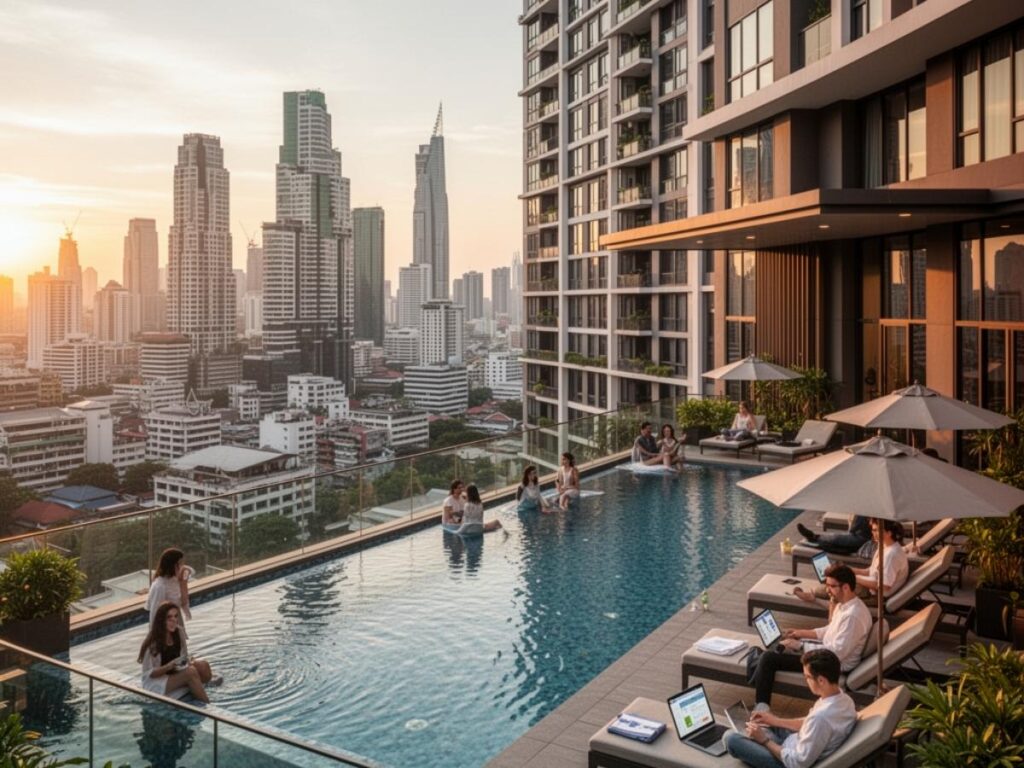
In Bangkok, a furnished apartment near the metro costs around $450–500 USD per month and typically includes a pool, gym, and fast internet. That’s not a typo. Street food is available everywhere and a proper meal often costs $3–4. If you want more variety, international food options are plentiful and still affordable by Western standards. 7-Elevens are genuinely on every corner, which sounds like a small thing but becomes very convenient on busy work days.
Chiang Mai is a popular alternative to Bangkok for workcationers, with a slower pace, a larger community of long-term remote workers, and cooler temperatures in the north. Krabi and other coastal areas work better as a place to decompress than a long-term base, but are well worth a long weekend from wherever you’re working.
Best for: Remote workers who want maximum value for money and don’t mind being further from their home time zone.
What to budget: $1,000–$1,500 USD per month all-in is achievable with a comfortable lifestyle. Under $1,000 is possible if you’re intentional about spending.
Worth knowing: Thailand has introduced a Long-Term Resident Visa aimed at remote workers and digital nomads. Research current requirements to see if you qualify.
7. Turkey (Istanbul)
Istanbul is one of those cities that earns its reputation the moment you arrive. It’s genuinely unlike anywhere else, split across two continents, with a food culture that stands on its own, architecture that covers centuries, and a pace of life that somehow manages to feel both busy and relaxed depending on which neighborhood you’re in.

From a practical workcation standpoint, Turkey is affordable and well-connected. Coworking spaces exist across Istanbul if you need a more structured environment. Public transport is inexpensive and covers the city well. Food costs are low, with a daily budget of around 25 euros covering meals comfortably, and often leaving room for more.
The shoulder seasons, particularly April and October, are the periods I’d most recommend. The weather is comfortable, the major tourist sites are quieter, and accommodation rates drop noticeably compared to the peak summer months. April in particular is a good time to be in Istanbul, with the city’s famous tulip season in full effect across its parks and public spaces.
Best for: Travelers who want a culturally rich, affordable city that feels completely different from anywhere in Europe or Asia.
What to budget: $50–$80 USD per day for a comfortable setup with accommodation, food, transport, and some activities.
Worth knowing: Turkey uses the Turkish Lira. Exchange rates have fluctuated significantly in recent years, so check current rates and keep your finances flexible.
Tips for Making Your Workcation Actually Work
Picking the right country gets you halfway there. The other half is setting yourself up so the work actually gets done and the trip feels like more than a stressful relocation.

A few things that help: confirm your accommodation’s internet speed before you book, not just whether WiFi is listed as an amenity. Research coworking spaces in your destination as a backup option if the apartment connection isn’t reliable enough for video calls. Be honest with your employer or clients about your time zone if it’s significantly different from theirs, and build in buffer time for the first few days while you get settled.
Set boundaries with yourself too. One of the risks of a workcation is that the lines between work and exploration blur in a way that leaves you feeling like you didn’t fully do either. Decide in advance which hours are work hours and protect them, so the time outside those hours genuinely feels like a trip.
Conclusion
A workcation works best when the destination feels like a real choice, not just a change of background. The seven countries on this list each offer something specific: Argentina’s favorable exchange rate, Budapest’s European character at a fraction of the cost, Lisbon’s quality of life, Romania’s underrated affordability, Spain’s built-in morning freedom for US workers, Thailand’s unbeatable value for money, and Istanbul’s one-of-a-kind culture.
The practical reality is that working remotely from any of these places costs less than staying home for many people, once accommodation, food, and cost of living are factored against what they’d spend at their home base.
If you’re planning a workcation and want destination-specific advice on where to stay, what to expect, and how to budget, browse the full Travel with Zee guides for honest, first-hand recommendations.
What is a workcation?
A workcation is a trip where you work remotely from a destination you’d otherwise visit purely for leisure. You maintain your regular work schedule while being based somewhere new, effectively combining work and travel without taking time off.
Which country is the cheapest for a workcation?
Thailand and Romania tend to offer the lowest day-to-day costs, with a comfortable monthly budget well under $1,500 USD in Thailand and around $35–$60 per day in Romania. Argentina can also be extremely affordable depending on the exchange rate at the time of your trip.
Do I need a special visa to work remotely from another country?
It depends on the country and the length of your stay. For short stays under 90 days, many countries allow remote work on a standard tourist visa. For longer stays, several countries including Portugal, Spain, and Thailand now offer Digital Nomad or Long-Term Resident visas. Always check the current requirements before you travel.
How do I find good WiFi for a workcation?
Research your accommodation carefully and ask specifically about upload and download speeds, not just whether WiFi is available. Identify a coworking space near your accommodation as a backup. In most of the cities on this list, reliable coworking spaces are easy to find and reasonably priced.
What is the best time of year to take a workcation in Europe?
Spring (April to June) and early autumn (September to October) are generally the best windows. The weather is comfortable, accommodation costs are lower than peak summer, and popular areas are noticeably less crowded. Turkey and Spain in particular are worth visiting in April and October specifically.