
I used to dread packing for cold-weather trips. It felt like no matter how carefully I arranged everything, I’d end up sitting on my suitcase trying to force it shut, or worse, getting hit with an overweight bag fee at the airport check-in counter.
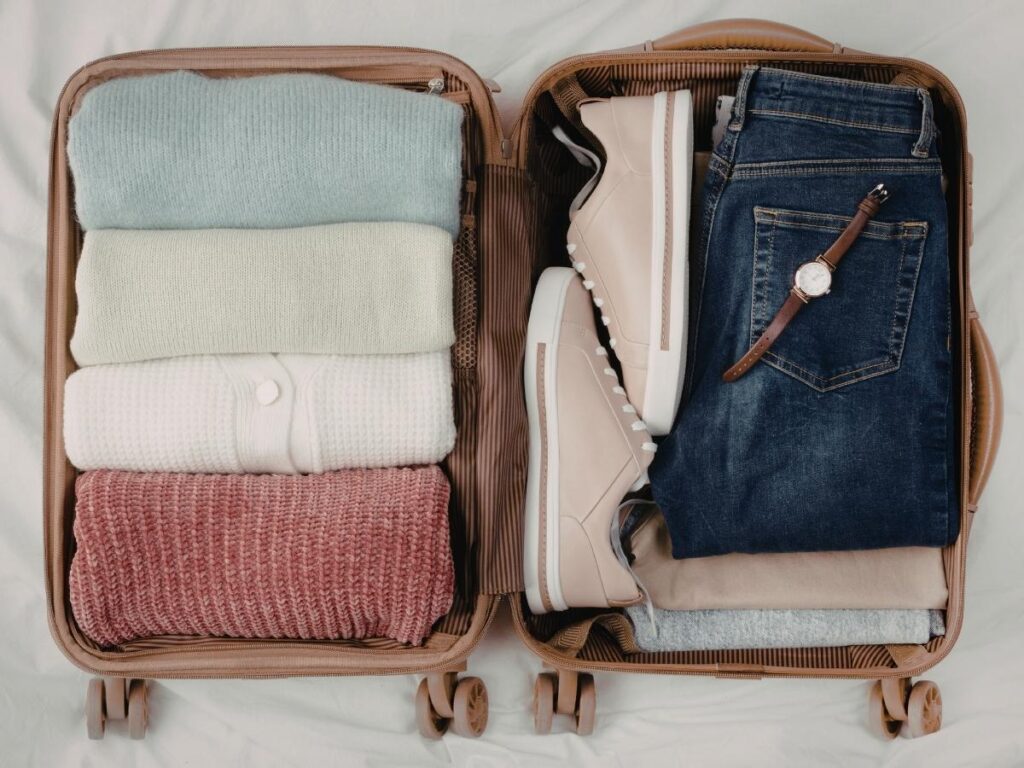
If you’re heading somewhere that actually requires a coat, thick sweaters, and real jeans, packing light feels almost impossible. But I’ve picked up enough tricks over the years that it genuinely doesn’t stress me out anymore.
Whether you’re heading to Iceland in October, Paris in January, or a ski resort for the week, here’s my honest guide to how to pack heavy clothes for travel without losing your mind or your baggage allowance.
Tips to Pack Heavy Clothes for Travel
Before getting into the folding techniques for specific items, there are a few general rules I always follow when packing for a cold-weather trip. These make a bigger difference than any single folding hack.
Swap bulky items for packable alternatives where you can. This one sounds obvious, but it genuinely changes the game. A well-made athletic zip-up can keep you just as warm as a thick hoodie while packing down to a fraction of the size. A waist-length packable down jacket takes up far less space than a full-length wool coat and handles cold weather just as well in most destinations. Before you pack something heavy, ask yourself if a lighter version would do the same job.
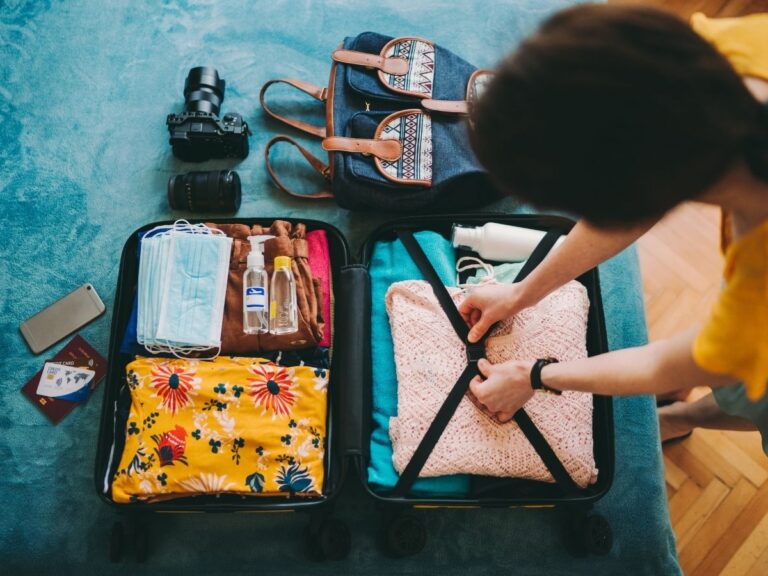
Use compression packing cubes. I started using these a few trips ago and I genuinely don’t know how I packed without them. The key detail most people miss is this: fold your bulky items to match the dimensions of the packing cube before you put them in. That way, everything sits flat and you fit more in without creating lumpy, uneven stacks.
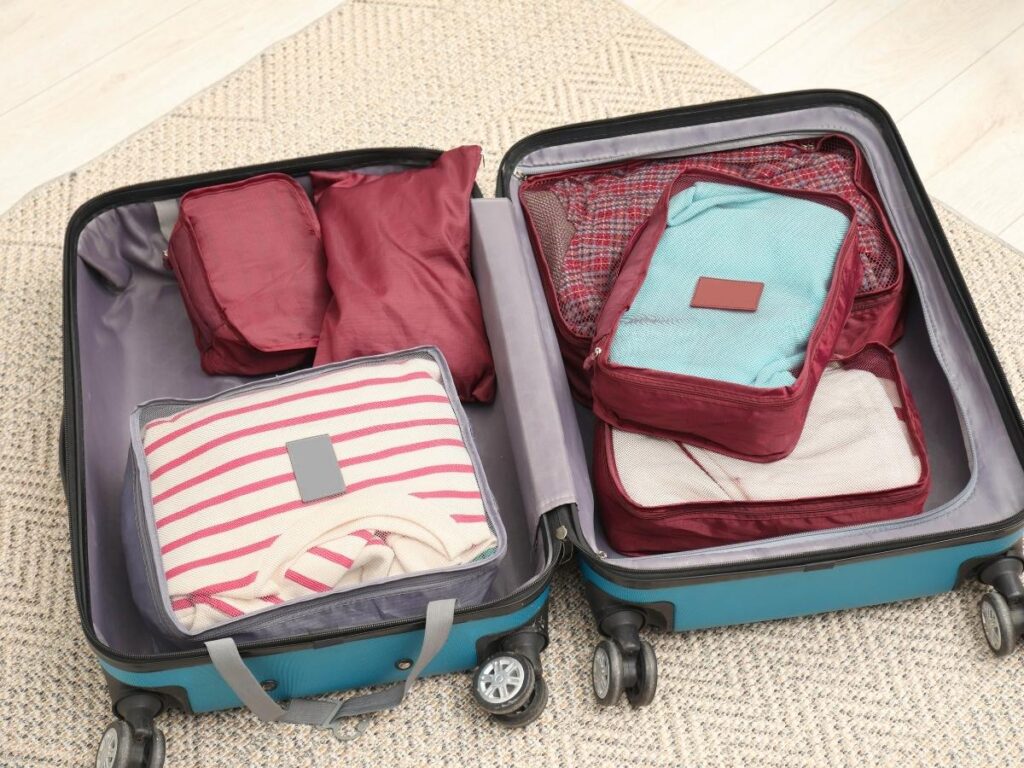
Fold thick clothes, roll thin ones. You’ve probably heard “roll everything” as a packing tip. I’d push back on that for heavy items. Rolling works well for thin fabrics like t-shirts and lightweight trousers, but thick sweaters and sweatshirts roll into awkward cylinders that don’t actually save much space. Folding them flat and stacking them is far more efficient.
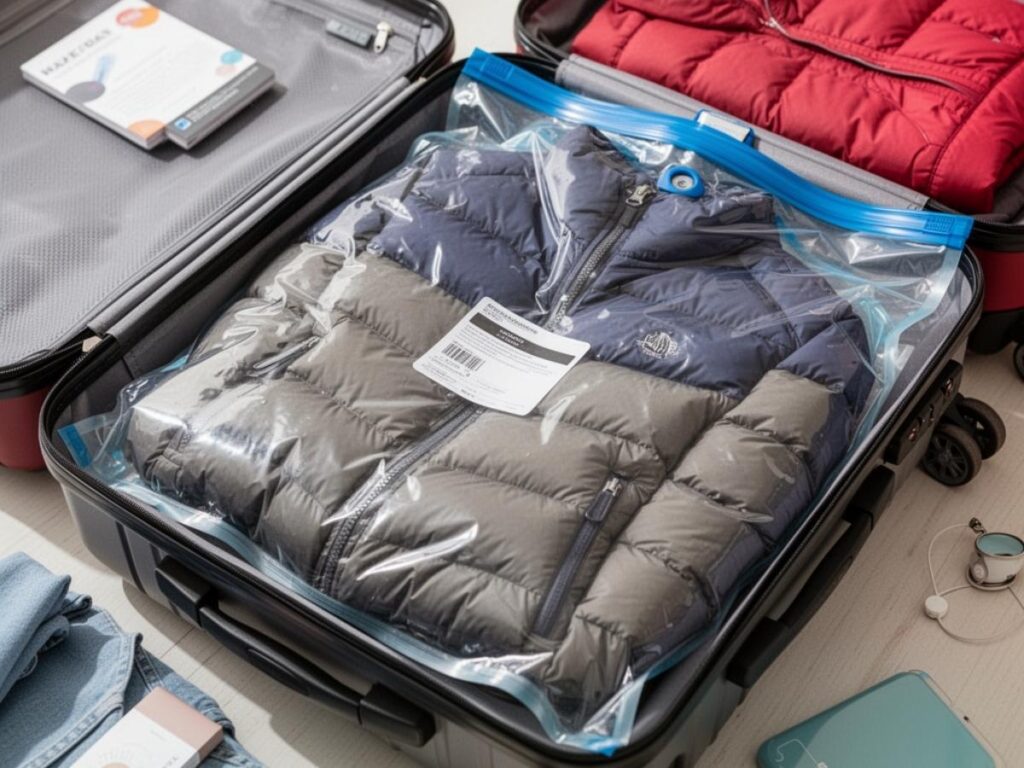
Use vacuum seal bags for serious winter gear. If you’re bringing a puffer coat, insulated snow pants, or anything with significant insulation, vacuum sealing is worth it. Many travel vacuum bags come with a small hand pump so you can repack them for the trip home too.
How to Pack Bulky Sweaters for Travel
My first suggestion is always to ask whether you actually need the chunky knit or whether a thinner merino wool option would keep you just as warm. But when the bulky sweater is non-negotiable, here’s the folding method that works best for me.
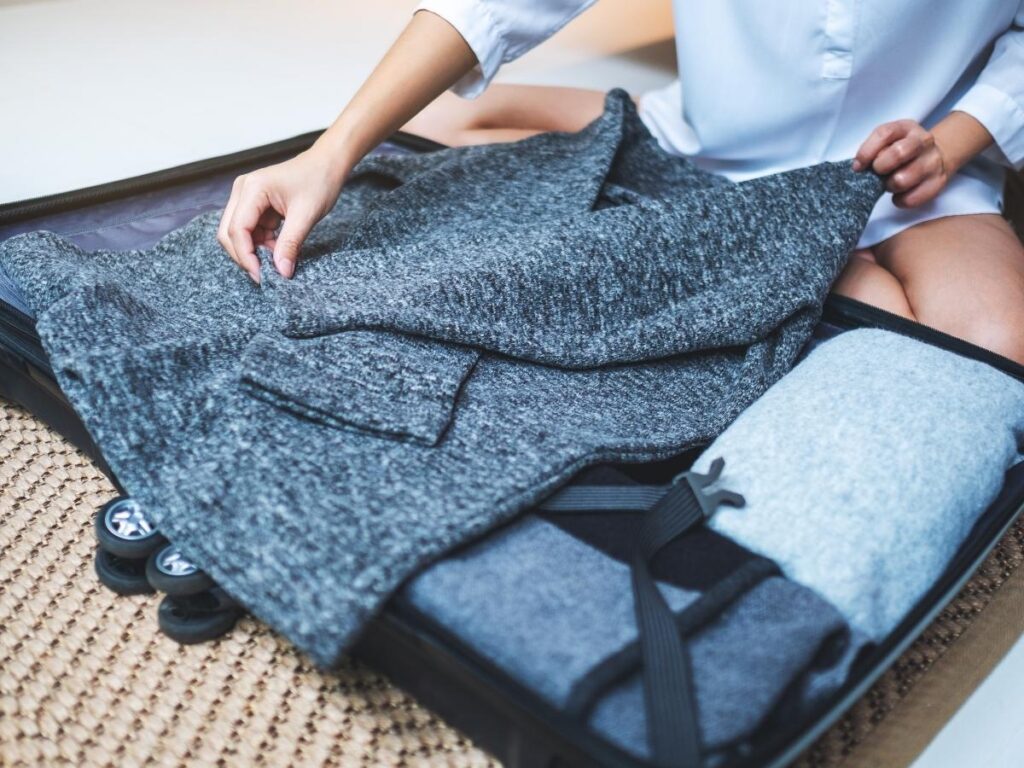
Step-by-step:
- Lay the sweater face down on a flat surface and spread it out completely flat. Smoothing it properly at this stage prevents wrinkles later and makes every fold cleaner.
- Pull one sleeve across the body of the sweater until roughly one third of the sweater is folded over.
- Fold the end of that same sleeve down toward the bottom hem.
- Repeat steps 2 and 3 with the other sleeve, smoothing the sweater flat again before you start.
- Fold the sweater horizontally into thirds, working from the bottom up.
- Tuck the bottom edge into the neckline of the sweater to keep everything in place inside your suitcase.
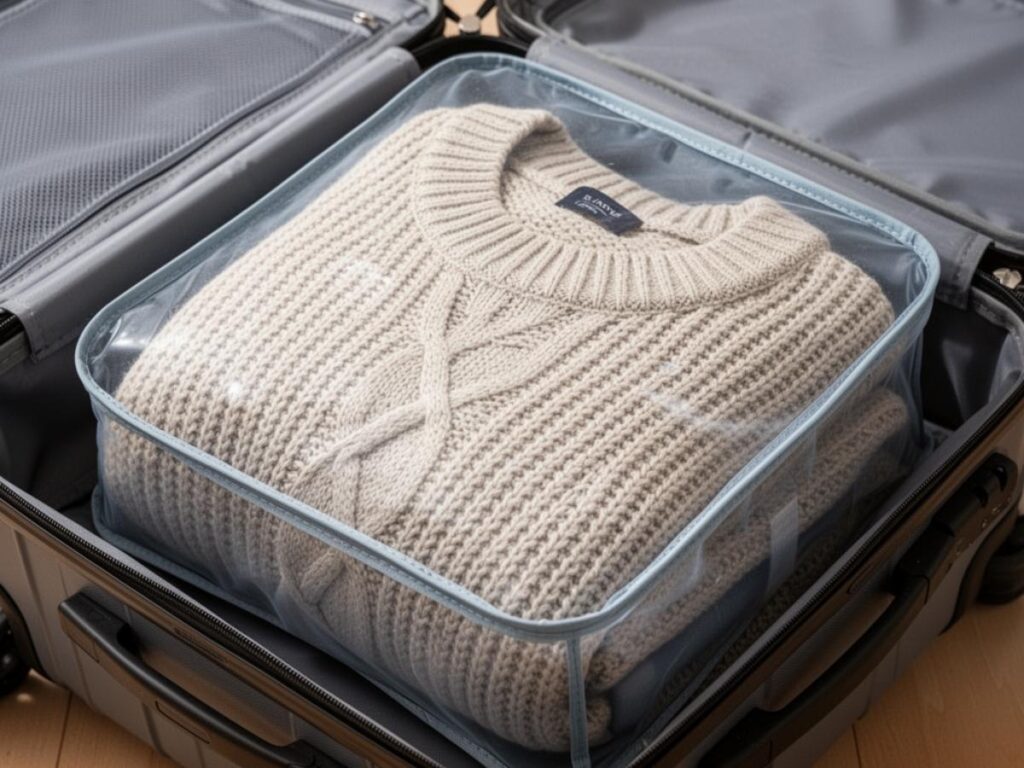
This method keeps the sweater compact and flat, which is exactly what you want when it needs to sit inside a packing cube without pushing everything else out of shape.
How to Pack Hoodies and Sweatshirts for Travel
The folding method for hoodies follows the same steps as sweaters, with two small adjustments worth noting.
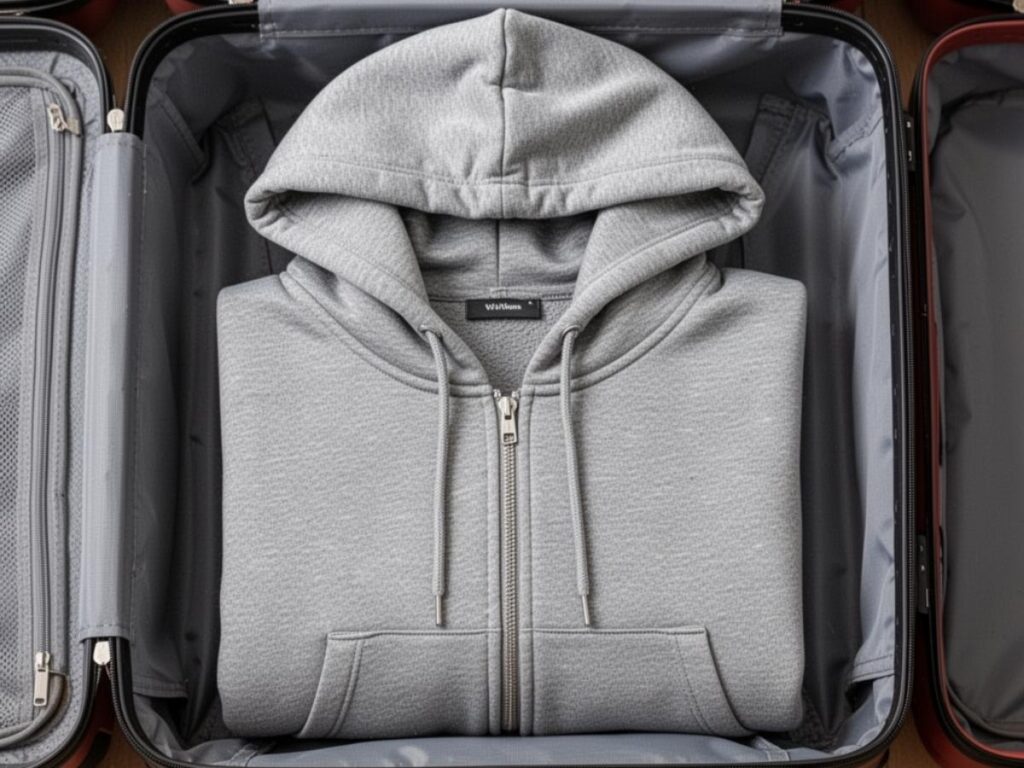
Before you get to the horizontal fold in step 5, fold the hood down toward the center of the sweatshirt. This keeps it from adding unnecessary bulk at the top of the folded item. Also, tuck the drawstrings inside the pocket or fold them in before you start. Loose strings have a way of snagging on other clothes and unravelling your neatly folded pile.
One thing I’d genuinely recommend: if you’re going somewhere cold but not arctic, consider leaving the thick hoodie at home and packing a quarter-zip fleece instead. Same warmth, half the space, and no hood creating an awkward lump in your packing cube. It’s a trade-off I’ve never regretted.
A quick note on weight: airlines are strict about checked baggage limits, and some are now stricter about carry-on weight too. Sweatshirts and hoodies are surprisingly heavy once you have two or three in your bag. It’s worth stepping on a luggage scale before you leave the house rather than finding out at the airport.
How to Pack Heavy Coats for Travel
Coats are where most people run out of suitcase space entirely, and honestly it’s the one category where I’d most strongly encourage swapping before you pack. A packable down jacket compresses to a fraction of the size of a full-length wool coat, handles cold and wet conditions well, and still looks put-together enough for most travel situations. It’s my go-to for almost every cold-weather trip I take.
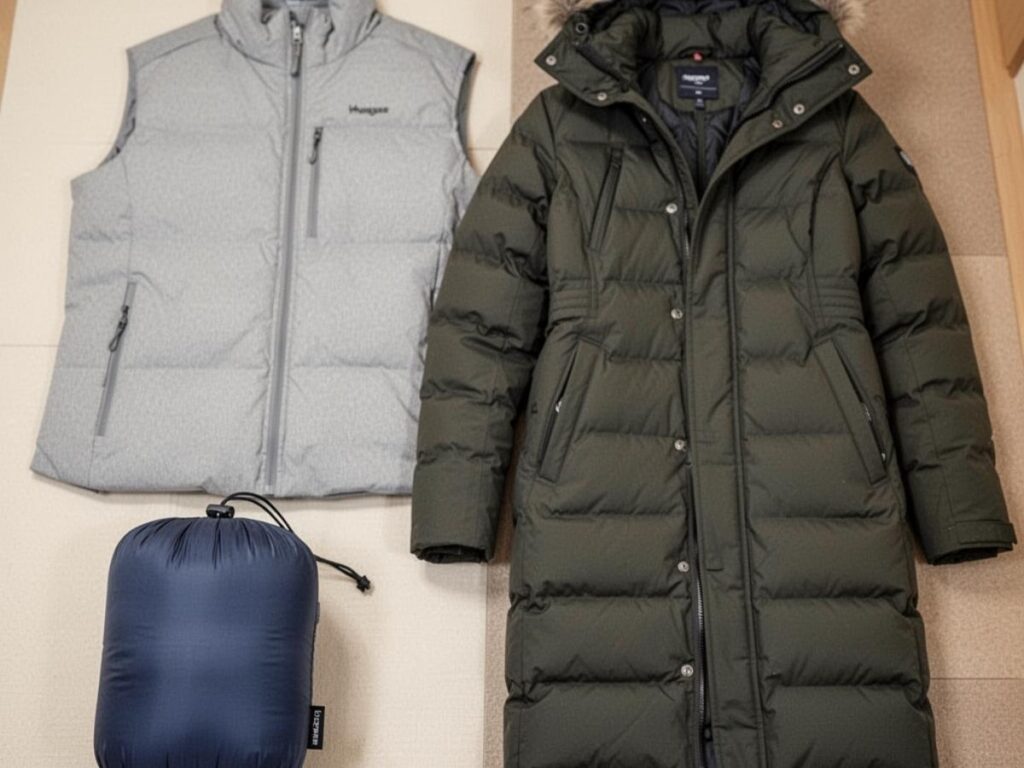
That said, sometimes the full coat is necessary. Here’s what I do depending on the situation.
If you have the suitcase space and weight to spare: fold the coat using the same steps as the sweater method, then lay it flat across the top of your packed packing cubes. This keeps it accessible when you land.
If space is tight: try laying the coat flat across your already-packed cubes and tucking the sleeves and edges down the sides of the suitcase. It acts almost like a second layer that conforms to the shape of your bag.
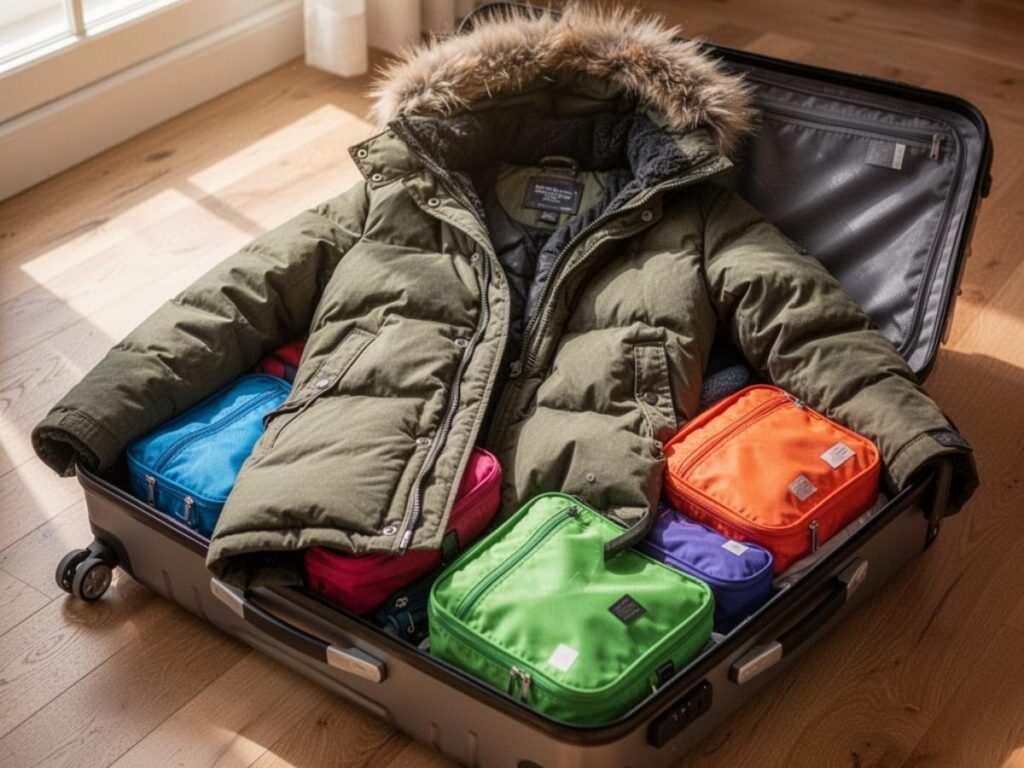
If you’re packing a puffer: vacuum seal it. Puffer jackets respond brilliantly to compression bags and can shrink down to a surprisingly small size. Wool coats don’t compress as well, so vacuum sealing is less effective there.
If your suitcase is full or already at the weight limit: wear the coat through the airport. Coats don’t count toward your personal item or carry-on allowance on most airlines, so this is a completely valid move. It’s not the most comfortable airport experience, but it’s a lot better than a $75 overweight bag fee.
How to Pack Jeans for Travel
The good news about jeans is that they’re generally easier to pack than sweaters or coats, even though they’re heavy. Denim folds flat, holds its shape reasonably well, and doesn’t crumple the way knitwear can.
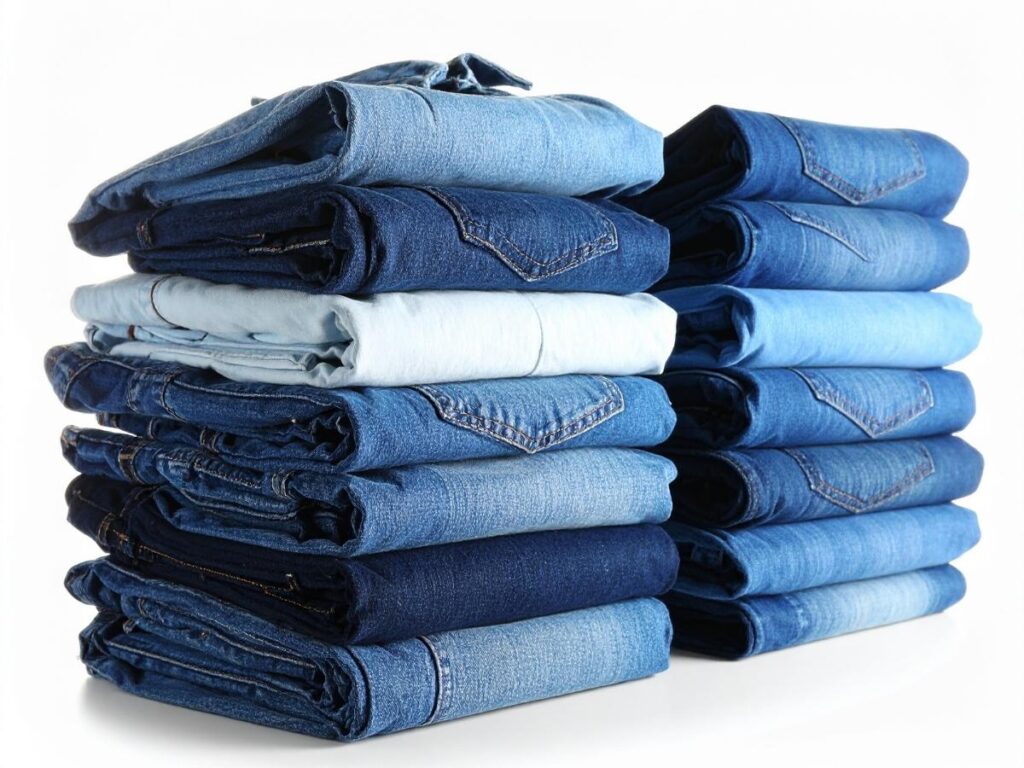
My approach depends on the type of denim. For thin, stretchy jeans, rolling works well and saves space. For thick, rigid, no-stretch denim, folding is better.
o fold thick jeans:
- Fold the jeans in half vertically along the inseam, with the zip facing inward and the back pocket facing out.
- Fold the lower section of denim (below the zip) toward the center of the jeans.
- Pull the bottom hem up to meet the bottom of the back pocket.
- Fold the waistband down to the midpoint of the folded legs.
- Tuck the remaining folded leg section into the waistband to hold everything together.
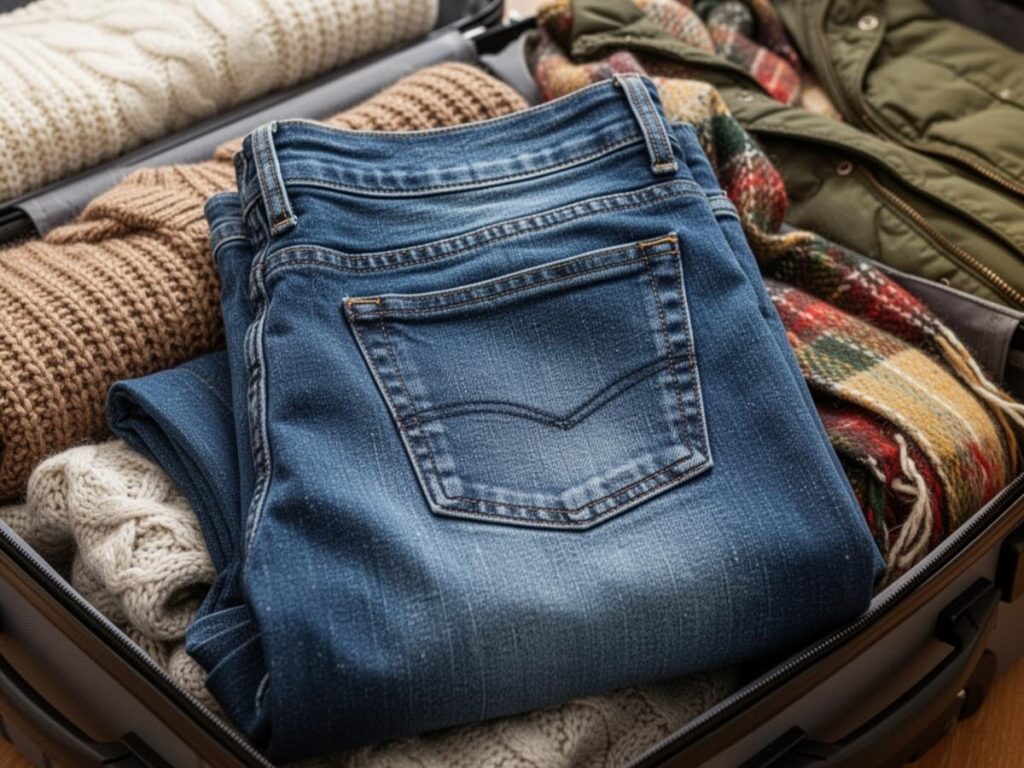
One extra tip regardless of denim type: always fold along the seams. It reduces wrinkling and keeps your jeans looking presentable when you pull them out at your destination.
Should You Just Wear It Instead?
Honestly, yes, sometimes. If you’re flying on a day when your suitcase is already at its limit, wearing your heaviest jeans and bulkiest sweater on the plane is a completely legitimate strategy. It’s not glamorous, but it works.
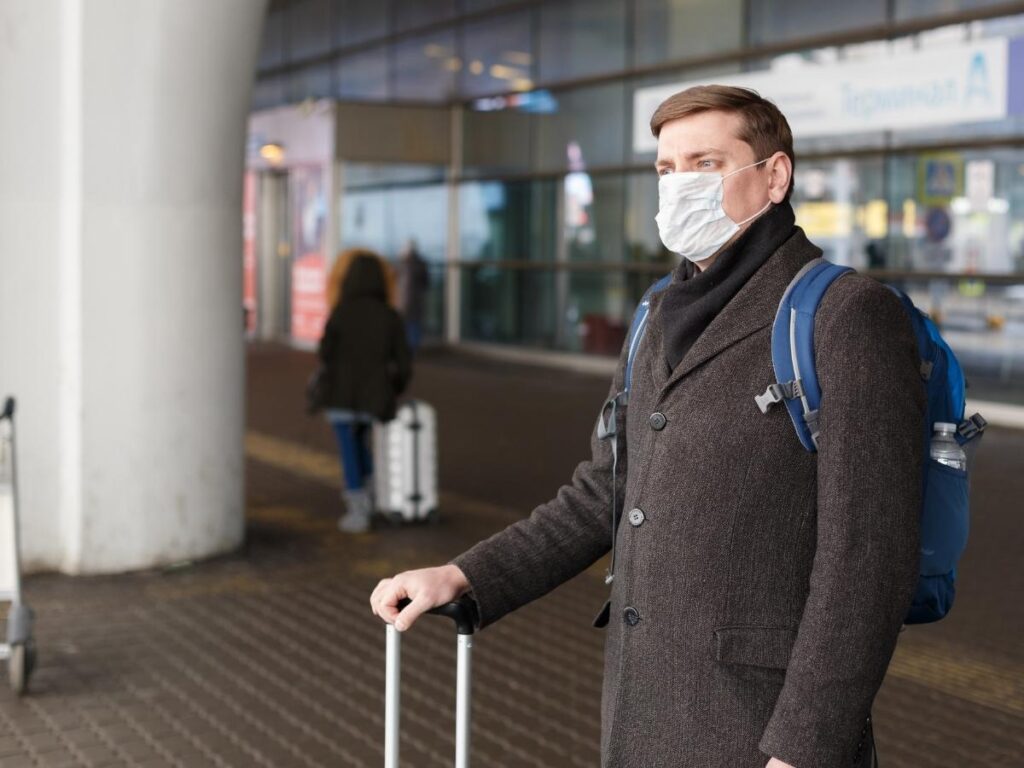
You can layer up quite a bit without anyone at security blinking an eye. A pair of thick jeans, a base layer, a sweater, and a coat can account for a significant chunk of what would otherwise be taking up space and weight in your bag. Once you’re on the plane, shed the layers and tuck them in the overhead bin.
Conclusion
Packing for cold weather doesn’t have to mean choosing between everything you need and staying under your baggage limit. The combination of smart swaps, good folding technique, compression cubes, and knowing when to just wear the coat through the airport covers almost every situation I’ve encountered.
Start with what you can replace or leave behind, then use these folding methods for what’s genuinely non-negotiable. You’ll be surprised how much fits when everything is packed flat and intentionally.
If you’re still figuring out what to actually bring on a cold-weather trip, check out more of my packing guides and travel tips at travelwithzee.com for destination-specific lists and honest recommendations.
What is the best way to pack heavy clothes for travel?
The most effective approach combines smart swaps (replacing bulky items with packable alternatives where possible), compression packing cubes, and folding thick items flat rather than rolling them. For serious winter gear like puffer jackets, vacuum seal bags help significantly.
Should you roll or fold heavy clothes when packing?
Fold thick, heavy clothes and roll thin ones. Rolling works well for lightweight fabrics like t-shirts, but bulky sweaters and sweatshirts fold flatter and pack more efficiently than rolled.
How do you pack a heavy winter coat in a suitcase?
Your best option is replacing a full-length coat with a packable down jacket, which compresses to a fraction of the size. If you need the full coat, either fold it flat across your packed items, use vacuum seal bags for puffer styles, or wear it through the airport since coats don’t count toward your baggage allowance on most airlines.
How do you pack jeans to save space?
Fold thick, rigid denim along the seams into a compact rectangle and tuck the legs into the waistband. For thin, stretchy denim, rolling is more space-efficient. Either way, folding along the seams keeps wrinkling to a minimum.
How do you pack a hoodie for travel?
Use the same folding method as a sweater: fold sleeves across the body, then fold the hoodie into thirds. Fold the hood down toward the center before the final horizontal fold, and tuck the drawstrings inside so they don’t come loose in your bag.